


 Home
HomeGoogle Co-founder Sergey Brin Admits Major Missteps With Google Glass
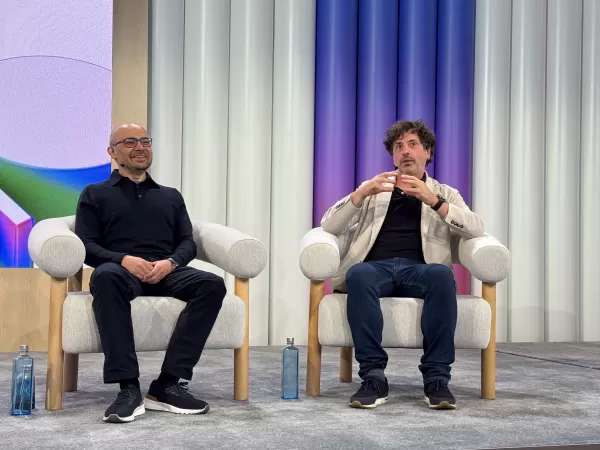
During a surprise appearance at Google I/O 2025, co-founder Sergey Brin openly acknowledged missteps with Google Glass in his onstage interview with DeepMind CEO Demis Hassabis. Hosted by Big Technology Podcast's Alex Kantrowitz, Brin reflected on the challenges of consumer electronics manufacturing.
Brin admitted lacking expertise in consumer electronics supply chains during Google Glass's development, particularly regarding cost-effective production. Despite these hurdles, he remains enthusiastic about smart glasses as a form factor and praised current collaborations with industry partners advancing the technology.
Google revealed its new Android XR glasses initiative earlier that day, marking its return to wearable tech nearly ten years after Glass was discontinued. Executives demonstrated how the DeepMind-powered glasses could handle real-time translations, navigation, and AI-powered queries.
For this AI- and AR-enabled project, Google has partnered with Samsung, Xreal, and Warby Parker - investing $150 million for an equity stake in the eyewear company. These alliances aim to address the complex supply chain issues Brin encountered during Glass's initial development.
Brin emphasized how generative AI advancements have made smart glass capabilities far more achievable than during Glass's era.
The executive also discussed coming out of retirement to contribute to Google's Gemini projects, regularly working at the Mountain View office. He's assisting with multimodal developments including the Veo 3 video generation model.
"No computer scientist should be retired today," Brin stated. "There's too much important work happening in AI."
Join us at TechCrunch Sessions: AI
Reserve your pass for our premier AI conference featuring leaders from OpenAI, Anthropic, and Cohere. Limited-time offer: Full-day access to keynote speeches, workshops, and networking for only $292.
Exhibit at TechCrunch Sessions: AI
Showcase your innovation to 1,200+ industry leaders at TC Sessions: AI - affordable exhibition opportunities available until May 9 or until tables sell out.
Reports indicate Brin has been driving Google's Gemini teams hard in the competitive AI landscape. Allegedly, he recommended employees maintain office attendance five days weekly and considers 60-hour workweeks optimal for productivity.
Related article
 Stripe to Acquire OpenRouter as AI Model Routing Gains Momentum
Stripe has agreed to acquire OpenRouter, an AI model-routing platform that gives developers access to hundreds of models through a single interface. The deal adds model selection and routing to Stripe’s existing work around AI usage and token-based b
Former OpenAI Researcher Barrett Zoph Returns to Google to Support Gemini Development
Barret Zoph, who previously abruptly left and joined OpenAI due to a disagreement with Thinking Machines Lab CEO Miriam Mularati, has once again changed employers. Alphabet's Google announced that Zoph will return as Vice President of Research, bring
How Recursive Intelligence Raised $335M at $4B Valuation in 4 Months
The co-founders of startup Ricursive Intelligence seemed destined to be co-founders.Anna Goldie, CEO, and Azalia Mirhoseini, CTO, are so well-known in the AI community that they were among those AI engineers who “got those weird emails from Zuckerber
Related Special Topic Recommendations
Design & Art
Stripe to Acquire OpenRouter as AI Model Routing Gains Momentum
Stripe has agreed to acquire OpenRouter, an AI model-routing platform that gives developers access to hundreds of models through a single interface. The deal adds model selection and routing to Stripe’s existing work around AI usage and token-based b
Former OpenAI Researcher Barrett Zoph Returns to Google to Support Gemini Development
Barret Zoph, who previously abruptly left and joined OpenAI due to a disagreement with Thinking Machines Lab CEO Miriam Mularati, has once again changed employers. Alphabet's Google announced that Zoph will return as Vice President of Research, bring
How Recursive Intelligence Raised $335M at $4B Valuation in 4 Months
The co-founders of startup Ricursive Intelligence seemed destined to be co-founders.Anna Goldie, CEO, and Azalia Mirhoseini, CTO, are so well-known in the AI community that they were among those AI engineers who “got those weird emails from Zuckerber
Related Special Topic Recommendations
Design & Art
 Top AI Illustration Tools: Create Editorial Scenes and Cover Art Faster
2026 Latest Top-rated AI Illustration Tools: Our curated list features the best powerfully designed tools for creating stunning editorial scenes and eye-catching cover art quickly. Each option has gone through rigorous real-world tests, offering a free vs paid comparison to help you find the perfect match for your workflow. Try these must-try solutions today to unlock your AI edge and boost your creative productivity. Explore now at XIX.AI.
 10 tools
 xix.ai
Education and Learning
Top AI Tutors for Exam Prep: Practice Math, Science, and English
xix.ai
Education and Learning
Top AI Tutors for Exam Prep: Practice Math, Science, and English
2026 Latest Top-Rated Best AI Tutors for Exam Prep are here on XIX.AI! Our curated list features powerful game-changing tools that offer free vs paid comparison, real-world tests, and weekly updated rankings. They help boost your writing efficiency, simplify complex topic learning, and unlock your academic potential. Explore now to Discover your perfect exam prep tool and Start creating today to Unlock your AI edge!
10 tools
xix.ai
Finance
AI Budget Planning Tools for Personal Money Management
2026 Latest Best Top-Rated AI Budget Planning Tools for Personal Money Management are here on XIX.AI! This curated collection features powerful, game-changing solutions that help you conduct real-world tests, understand spending habits, and create personalized plans to boost productivity. Enjoy a free vs paid comparison along with detailed rankings. Must-try tools designed to simplify money management and unlock your AI edge. Explore now!
11 tools
xix.ai
Health & Wellness
AI Sleep Tracking Assistants: Improve Recovery with Better Bedtime Habits
2026 Latest Best Top-Rated AI Sleep Tracking Assistants curated for ultimate recovery. This fully updated weekly guide features powerful tools that deliver real-world tests, free vs paid comparison, and detailed rankings to help you find the must-try solution that boosts sleep quality and supports better bedtime habits. Explore now at XIX.AI to Unlock your AI edge.
10 tools
xix.ai
Data Analysis
AI SQL Copilots for Product and Revenue Analytics
2026 Latest Best Top-Rated AI SQL Copilots for Product and Revenue Analytics! XIX.AI has curated a powerful, game-changing collection of must-try tools that undergo real-world tests through weekly updated rankings. These tools help users boost productivity significantly by accelerating data analysis, streamlining complex queries, and generating accurate insights to drive smarter business decisions. Explore now to Discover your perfect tool for unlocking your AI edge!
14 tools
xix.ai
Education and Learning
Best AI Homework Helpers That Teach: Learn Concepts, Not Just Answers
2026 Latest Best Top-Rated AI Homework Helpers That Teach Core Concepts Not Just Answers Powerful Tools for Students Must-Try Curated List Weekly Updated Free vs Paid Comparison Real-World Tests Accurate Rankings to Help You Unlock Your Full Learning Potential Explore now to Discover your perfect tool for smarter studying.
10 tools
xix.ai

 Comments (1)
0/500
Comments (1)
0/500
![DennisRodriguez]()
Sergey Brin finally admitting Google Glass was a flop? Better late than never, I guess. The tech was cool but the execution was creepy—walking around with a camera on your face screaming 'I'm recording you' wasn't exactly winning friends. 😅
During a surprise appearance at Google I/O 2025, co-founder Sergey Brin openly acknowledged missteps with Google Glass in his onstage interview with DeepMind CEO Demis Hassabis. Hosted by Big Technology Podcast's Alex Kantrowitz, Brin reflected on the challenges of consumer electronics manufacturing.
Brin admitted lacking expertise in consumer electronics supply chains during Google Glass's development, particularly regarding cost-effective production. Despite these hurdles, he remains enthusiastic about smart glasses as a form factor and praised current collaborations with industry partners advancing the technology.
Google revealed its new Android XR glasses initiative earlier that day, marking its return to wearable tech nearly ten years after Glass was discontinued. Executives demonstrated how the DeepMind-powered glasses could handle real-time translations, navigation, and AI-powered queries.
For this AI- and AR-enabled project, Google has partnered with Samsung, Xreal, and Warby Parker - investing $150 million for an equity stake in the eyewear company. These alliances aim to address the complex supply chain issues Brin encountered during Glass's initial development.
Brin emphasized how generative AI advancements have made smart glass capabilities far more achievable than during Glass's era.
The executive also discussed coming out of retirement to contribute to Google's Gemini projects, regularly working at the Mountain View office. He's assisting with multimodal developments including the Veo 3 video generation model.
"No computer scientist should be retired today," Brin stated. "There's too much important work happening in AI."
Join us at TechCrunch Sessions: AI
Reserve your pass for our premier AI conference featuring leaders from OpenAI, Anthropic, and Cohere. Limited-time offer: Full-day access to keynote speeches, workshops, and networking for only $292.
Exhibit at TechCrunch Sessions: AI
Showcase your innovation to 1,200+ industry leaders at TC Sessions: AI - affordable exhibition opportunities available until May 9 or until tables sell out.
Reports indicate Brin has been driving Google's Gemini teams hard in the competitive AI landscape. Allegedly, he recommended employees maintain office attendance five days weekly and considers 60-hour workweeks optimal for productivity.








 Stripe to Acquire OpenRouter as AI Model Routing Gains Momentum
Stripe has agreed to acquire OpenRouter, an AI model-routing platform that gives developers access to hundreds of models through a single interface. The deal adds model selection and routing to Stripe’s existing work around AI usage and token-based b
Stripe to Acquire OpenRouter as AI Model Routing Gains Momentum
Stripe has agreed to acquire OpenRouter, an AI model-routing platform that gives developers access to hundreds of models through a single interface. The deal adds model selection and routing to Stripe’s existing work around AI usage and token-based b
 Former OpenAI Researcher Barrett Zoph Returns to Google to Support Gemini Development
Barret Zoph, who previously abruptly left and joined OpenAI due to a disagreement with Thinking Machines Lab CEO Miriam Mularati, has once again changed employers. Alphabet's Google announced that Zoph will return as Vice President of Research, bring
Former OpenAI Researcher Barrett Zoph Returns to Google to Support Gemini Development
Barret Zoph, who previously abruptly left and joined OpenAI due to a disagreement with Thinking Machines Lab CEO Miriam Mularati, has once again changed employers. Alphabet's Google announced that Zoph will return as Vice President of Research, bring
 How Recursive Intelligence Raised $335M at $4B Valuation in 4 Months
The co-founders of startup Ricursive Intelligence seemed destined to be co-founders.Anna Goldie, CEO, and Azalia Mirhoseini, CTO, are so well-known in the AI community that they were among those AI engineers who “got those weird emails from Zuckerber
How Recursive Intelligence Raised $335M at $4B Valuation in 4 Months
The co-founders of startup Ricursive Intelligence seemed destined to be co-founders.Anna Goldie, CEO, and Azalia Mirhoseini, CTO, are so well-known in the AI community that they were among those AI engineers who “got those weird emails from Zuckerber

2026 Latest Top-rated AI Illustration Tools: Our curated list features the best powerfully designed tools for creating stunning editorial scenes and eye-catching cover art quickly. Each option has gone through rigorous real-world tests, offering a free vs paid comparison to help you find the perfect match for your workflow. Try these must-try solutions today to unlock your AI edge and boost your creative productivity. Explore now at XIX.AI.
10 tools
xix.ai

2026 Latest Top-Rated Best AI Tutors for Exam Prep are here on XIX.AI! Our curated list features powerful game-changing tools that offer free vs paid comparison, real-world tests, and weekly updated rankings. They help boost your writing efficiency, simplify complex topic learning, and unlock your academic potential. Explore now to Discover your perfect exam prep tool and Start creating today to Unlock your AI edge!
10 tools
xix.ai

2026 Latest Best Top-Rated AI Budget Planning Tools for Personal Money Management are here on XIX.AI! This curated collection features powerful, game-changing solutions that help you conduct real-world tests, understand spending habits, and create personalized plans to boost productivity. Enjoy a free vs paid comparison along with detailed rankings. Must-try tools designed to simplify money management and unlock your AI edge. Explore now!
11 tools
xix.ai

2026 Latest Best Top-Rated AI Sleep Tracking Assistants curated for ultimate recovery. This fully updated weekly guide features powerful tools that deliver real-world tests, free vs paid comparison, and detailed rankings to help you find the must-try solution that boosts sleep quality and supports better bedtime habits. Explore now at XIX.AI to Unlock your AI edge.
10 tools
xix.ai

2026 Latest Best Top-Rated AI SQL Copilots for Product and Revenue Analytics! XIX.AI has curated a powerful, game-changing collection of must-try tools that undergo real-world tests through weekly updated rankings. These tools help users boost productivity significantly by accelerating data analysis, streamlining complex queries, and generating accurate insights to drive smarter business decisions. Explore now to Discover your perfect tool for unlocking your AI edge!
14 tools
xix.ai

2026 Latest Best Top-Rated AI Homework Helpers That Teach Core Concepts Not Just Answers Powerful Tools for Students Must-Try Curated List Weekly Updated Free vs Paid Comparison Real-World Tests Accurate Rankings to Help You Unlock Your Full Learning Potential Explore now to Discover your perfect tool for smarter studying.
10 tools
xix.ai

Sergey Brin finally admitting Google Glass was a flop? Better late than never, I guess. The tech was cool but the execution was creepy—walking around with a camera on your face screaming 'I'm recording you' wasn't exactly winning friends. 😅












