


 Home
HomeCybersecurity Experts Criticize Guardrails on Anthropic’s Fable
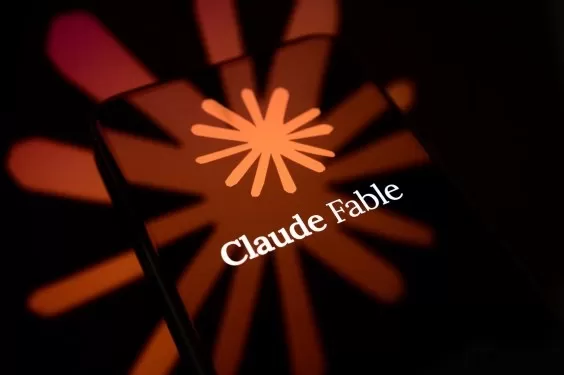
Anthropic launched its newest model, Fable, on Tuesday, positioning it as a public, restricted iteration of its highly anticipated cybersecurity-focused model, Mythos.
However, the limitations have sparked dissatisfaction among several cybersecurity researchers and professionals who have voiced their concerns online.
“[Fable] blocks any request that might be remotely related to cybersecurity, including harmless tasks like reading a blog post,” stated Valentina “Chompie” Palmiotti, a prominent security researcher at IBM X-Force.
When a user prompt activates these safety filters, Fable halts the conversation, displaying a message that its “safety protocols flagged this input for cybersecurity or biological topics.”
These restrictions aim to mitigate the risk of Fable being utilized to create malware or exploit software—a persistent concern for Anthropic. The biological constraints stem from similar worries regarding the development of biological weapons.
Upon releasing Mythos in April, Anthropic limited access to a select group of companies and organizations under Project Glasswing, an initiative designed to deploy the model for securing critical software and infrastructure. Last week, Anthropic broadened Mythos access to hundreds of organizations across 15 countries.
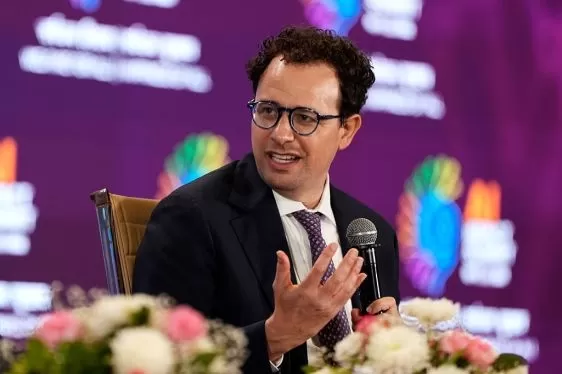
Despite these good intentions, many cybersecurity experts remain frustrated by the seemingly arbitrary nature of the restrictions. Matt Suiche, a seasoned cybersecurity professional, told TechCrunch that “if you ask it to write secure code, it interprets this as cybersecurity-related work rather than software engineering best practices, resulting in a downgrade.” Fable is configured to revert to Claude Opus 4.8 when guardrails are triggered. “It appears to rely on keywords, so any term within the ‘cybersecurity’ lexicon activates the filters,” he noted.
Contact Us
Do you have additional insights on how hackers are leveraging AI, or how cybersecurity firms are integrating AI? We welcome your input. From a personal device and network, you can securely reach Lorenzo Franceschi-Bicchierai on Signal at +1 917 257 1382, via Telegram and Keybase @lorenzofb, or by email.“However, it is understandable given that we are still in the early stages and they are refining their guardrails. I am confident they will evolve as Anthropic and other frontier model developers collaborate more closely with the new generation of cybersecurity firms,” said Suiche, a technical staff member at Tolmo, an AI cybersecurity startup. “It is preferable to over-restrict initially and relax the guardrails over time.”
Another researcher complained on X that “even requesting a code review” activates Fable’s safety filters.
Anthropic did not immediately respond to a request for comment.
Beyond model-level guardrails, Anthropic requires cybersecurity professionals to apply for its Cyber Verification Program. Approved applicants face fewer restrictions when using Claude for cybersecurity tasks. OpenAI offers a comparable program known as Trusted Access for Cyber.
Related article
 White House Ditches AI Label for ‘Super Intelligence’
Loading the player…This week, the White House gathered nearly every major tech CEO in one room — including Zuckerberg, Bezos, Musk, and Anthropic’s Dario Amodei — to sign an AI safety pledge that President Donald Trump described as “morally binding.”
Anthropic Unveils Sonnet 5.5 as Faster, Cheaper Work Partner
Amidst the ongoing competition among AI models, Anthropic has launched the latest iteration of Sonnet, its mid-range offering, promising substantially improved speed and lower costs compared to the previous version.Anthropic positions Sonnet 5.5 as a
Anthropic’s latest feud with the Trump admin may actually help it, sales data suggests
Anthropic is experiencing a remarkable month.According to Ramp, the AI company surpassed OpenAI in business spending market share for the first time, closing out May with a $65 billion raise at a $965 billion valuation. Shortly after, Anthropic filed
Related Special Topic Recommendations
Music composition
White House Ditches AI Label for ‘Super Intelligence’
Loading the player…This week, the White House gathered nearly every major tech CEO in one room — including Zuckerberg, Bezos, Musk, and Anthropic’s Dario Amodei — to sign an AI safety pledge that President Donald Trump described as “morally binding.”
Anthropic Unveils Sonnet 5.5 as Faster, Cheaper Work Partner
Amidst the ongoing competition among AI models, Anthropic has launched the latest iteration of Sonnet, its mid-range offering, promising substantially improved speed and lower costs compared to the previous version.Anthropic positions Sonnet 5.5 as a
Anthropic’s latest feud with the Trump admin may actually help it, sales data suggests
Anthropic is experiencing a remarkable month.According to Ramp, the AI company surpassed OpenAI in business spending market share for the first time, closing out May with a $65 billion raise at a $965 billion valuation. Shortly after, Anthropic filed
Related Special Topic Recommendations
Music composition
 Top AI Songwriting Assistants: Develop Lyrics, Chords, and Melodies
2026 Latest Top-Rated Best AI Songwriting Assistants are here on XIX.AI! This curated list features powerfully efficient tools that go through real-world tests to deliver high-quality lyrics, chords, and melodies effortlessly. Get a free vs paid comparison to find the perfect fit for your creative needs. Explore now to unlock your AI edge in music creation!
 12 tools
 xix.ai
automation
Top AI Agent Builders: Design Multi-Step Business Automations
xix.ai
automation
Top AI Agent Builders: Design Multi-Step Business Automations
2026 Latest Top-Rated Best AI Agent Builders for Creating Multi-Step Business Automations. This curated list features powerful, game-changing tools that go through rigorous real-world tests. You’ll find detailed free vs paid comparisons, comprehensive rankings, and weekly updated insights to help you choose the perfect solution that boosts your productivity significantly. Explore now at XIX.AI to unlock your AI edge!
11 tools
xix.ai
Productivity
AI Task Planning Tools for Busy Professionals
2026 Latest Best Top-rated AI Task Planning Tools for Busy Professionals! XIX.AI has curated a powerful, game-changing collection of highly efficient tools that help users streamline workflows, boost productivity, and overcome daily scheduling challenges. Each option goes through rigorous real-world tests to ensure reliability. Get a free vs paid comparison and discover the perfect tool to unlock your AI edge. Explore now!
15 tools
xix.ai
chatbot
Top AI Customer Chatbots: Answer FAQs and Qualify Leads 24/7
2026 Latest Top-rated AI Customer Chatbots featured on this curated list are the best solutions for answering customer FAQs instantly and qualifying leads around the clock. XIX.AI has conducted rigorous real-world tests to deliver a detailed free vs paid comparison along with up-to-date rankings, helping you find a powerful game-changing tool that boosts productivity significantly. Explore now to Discover your perfect AI chatbot solution!
9 tools
xix.ai
Design & Art
AI Storyboard Generators for Ad Creative Teams
2026 Latest Best AI Storyboard Generators for Ad Creative Teams! XIX.AI has curated a top-rated list of powerful, game-changing tools that help teams create stunning visual content faster through real-world tests and rigorous weekly updated rankings. Enjoy a free vs paid comparison to find the perfect fit for your workflow. Explore now to unlock your AI edge in ad creation!
8 tools
xix.ai
chatbot
AI Knowledge Chatbot Tools for Internal Documentation
2026 Latest Best Top-rated AI Knowledge Chatbot Tools for Internal Documentation are here on XIX.AI! This curated list features powerful game-changing solutions that significantly boost productivity by helping teams quickly generate high-quality content, streamline documentation creation, and overcome common writing challenges. We conduct rigorous real-world tests and provide a weekly updated free vs paid comparison along with detailed rankings to help you find the must-try option that fits your needs best. Explore now to Discover your perfect tool!
12 tools
xix.ai

 Comments (0)
0/500
Comments (0)
0/500
Anthropic launched its newest model, Fable, on Tuesday, positioning it as a public, restricted iteration of its highly anticipated cybersecurity-focused model, Mythos.
However, the limitations have sparked dissatisfaction among several cybersecurity researchers and professionals who have voiced their concerns online.
“[Fable] blocks any request that might be remotely related to cybersecurity, including harmless tasks like reading a blog post,” stated Valentina “Chompie” Palmiotti, a prominent security researcher at IBM X-Force.
When a user prompt activates these safety filters, Fable halts the conversation, displaying a message that its “safety protocols flagged this input for cybersecurity or biological topics.”
These restrictions aim to mitigate the risk of Fable being utilized to create malware or exploit software—a persistent concern for Anthropic. The biological constraints stem from similar worries regarding the development of biological weapons.
Upon releasing Mythos in April, Anthropic limited access to a select group of companies and organizations under Project Glasswing, an initiative designed to deploy the model for securing critical software and infrastructure. Last week, Anthropic broadened Mythos access to hundreds of organizations across 15 countries.
Despite these good intentions, many cybersecurity experts remain frustrated by the seemingly arbitrary nature of the restrictions. Matt Suiche, a seasoned cybersecurity professional, told TechCrunch that “if you ask it to write secure code, it interprets this as cybersecurity-related work rather than software engineering best practices, resulting in a downgrade.” Fable is configured to revert to Claude Opus 4.8 when guardrails are triggered. “It appears to rely on keywords, so any term within the ‘cybersecurity’ lexicon activates the filters,” he noted.
Contact Us
Do you have additional insights on how hackers are leveraging AI, or how cybersecurity firms are integrating AI? We welcome your input. From a personal device and network, you can securely reach Lorenzo Franceschi-Bicchierai on Signal at +1 917 257 1382, via Telegram and Keybase @lorenzofb, or by email.“However, it is understandable given that we are still in the early stages and they are refining their guardrails. I am confident they will evolve as Anthropic and other frontier model developers collaborate more closely with the new generation of cybersecurity firms,” said Suiche, a technical staff member at Tolmo, an AI cybersecurity startup. “It is preferable to over-restrict initially and relax the guardrails over time.”
Another researcher complained on X that “even requesting a code review” activates Fable’s safety filters.
Anthropic did not immediately respond to a request for comment.
Beyond model-level guardrails, Anthropic requires cybersecurity professionals to apply for its Cyber Verification Program. Approved applicants face fewer restrictions when using Claude for cybersecurity tasks. OpenAI offers a comparable program known as Trusted Access for Cyber.








 White House Ditches AI Label for ‘Super Intelligence’
Loading the player…This week, the White House gathered nearly every major tech CEO in one room — including Zuckerberg, Bezos, Musk, and Anthropic’s Dario Amodei — to sign an AI safety pledge that President Donald Trump described as “morally binding.”
White House Ditches AI Label for ‘Super Intelligence’
Loading the player…This week, the White House gathered nearly every major tech CEO in one room — including Zuckerberg, Bezos, Musk, and Anthropic’s Dario Amodei — to sign an AI safety pledge that President Donald Trump described as “morally binding.”
 Anthropic Unveils Sonnet 5.5 as Faster, Cheaper Work Partner
Amidst the ongoing competition among AI models, Anthropic has launched the latest iteration of Sonnet, its mid-range offering, promising substantially improved speed and lower costs compared to the previous version.Anthropic positions Sonnet 5.5 as a
Anthropic Unveils Sonnet 5.5 as Faster, Cheaper Work Partner
Amidst the ongoing competition among AI models, Anthropic has launched the latest iteration of Sonnet, its mid-range offering, promising substantially improved speed and lower costs compared to the previous version.Anthropic positions Sonnet 5.5 as a
 Anthropic’s latest feud with the Trump admin may actually help it, sales data suggests
Anthropic is experiencing a remarkable month.According to Ramp, the AI company surpassed OpenAI in business spending market share for the first time, closing out May with a $65 billion raise at a $965 billion valuation. Shortly after, Anthropic filed
Anthropic’s latest feud with the Trump admin may actually help it, sales data suggests
Anthropic is experiencing a remarkable month.According to Ramp, the AI company surpassed OpenAI in business spending market share for the first time, closing out May with a $65 billion raise at a $965 billion valuation. Shortly after, Anthropic filed

2026 Latest Top-Rated Best AI Songwriting Assistants are here on XIX.AI! This curated list features powerfully efficient tools that go through real-world tests to deliver high-quality lyrics, chords, and melodies effortlessly. Get a free vs paid comparison to find the perfect fit for your creative needs. Explore now to unlock your AI edge in music creation!
12 tools
xix.ai

2026 Latest Top-Rated Best AI Agent Builders for Creating Multi-Step Business Automations. This curated list features powerful, game-changing tools that go through rigorous real-world tests. You’ll find detailed free vs paid comparisons, comprehensive rankings, and weekly updated insights to help you choose the perfect solution that boosts your productivity significantly. Explore now at XIX.AI to unlock your AI edge!
11 tools
xix.ai

2026 Latest Best Top-rated AI Task Planning Tools for Busy Professionals! XIX.AI has curated a powerful, game-changing collection of highly efficient tools that help users streamline workflows, boost productivity, and overcome daily scheduling challenges. Each option goes through rigorous real-world tests to ensure reliability. Get a free vs paid comparison and discover the perfect tool to unlock your AI edge. Explore now!
15 tools
xix.ai

2026 Latest Top-rated AI Customer Chatbots featured on this curated list are the best solutions for answering customer FAQs instantly and qualifying leads around the clock. XIX.AI has conducted rigorous real-world tests to deliver a detailed free vs paid comparison along with up-to-date rankings, helping you find a powerful game-changing tool that boosts productivity significantly. Explore now to Discover your perfect AI chatbot solution!
9 tools
xix.ai

2026 Latest Best AI Storyboard Generators for Ad Creative Teams! XIX.AI has curated a top-rated list of powerful, game-changing tools that help teams create stunning visual content faster through real-world tests and rigorous weekly updated rankings. Enjoy a free vs paid comparison to find the perfect fit for your workflow. Explore now to unlock your AI edge in ad creation!
8 tools
xix.ai
2026 Latest Best Top-rated AI Knowledge Chatbot Tools for Internal Documentation are here on XIX.AI! This curated list features powerful game-changing solutions that significantly boost productivity by helping teams quickly generate high-quality content, streamline documentation creation, and overcome common writing challenges. We conduct rigorous real-world tests and provide a weekly updated free vs paid comparison along with detailed rankings to help you find the must-try option that fits your needs best. Explore now to Discover your perfect tool!
12 tools
xix.ai












