


 Home
HomeAnthropic Unveils Sonnet 5.5 as Faster, Cheaper Work Partner

Amidst the ongoing competition among AI models, Anthropic has launched the latest iteration of Sonnet, its mid-range offering, promising substantially improved speed and lower costs compared to the previous version.
Anthropic positions Sonnet 5.5 as a versatile tool for daily workflows, including software development and document creation.
Sonnet 5, the predecessor to version 5.5, was introduced roughly three months ago, with its primary advantage being cost-efficient agentic deployment.
The key improvement in version 5.5 is enhanced speed. Anthropic states that Sonnet 5.5 operates 30 percent faster than its predecessor, with a notably reduced token consumption rate.
While Sonnet ranks below Opus in raw power, its agility makes it more practical for specific use cases. Benchmarks indicate Sonnet 5.5 outperforms Opus 5.5 in agentic coding tasks, largely due to its capacity to run multiple agents without breaching cost thresholds.
Sonnet 5.5 also demonstrates robust cybersecurity capabilities, matching those of Opus 5. Consequently, Anthropic has applied the same security safeguards to 5.5 that are enforced for Fable and Opus.
Anthropic also intends to release an updated version of Haiku, its most compact model, within the next few weeks, though no specific launch date has been confirmed.
The past year has witnessed a rapid succession of model releases from leading AI laboratories. Recently, OpenAI unveiled several new models, including upgraded versions of Sol and Luna, its mid-tier and budget-friendly options. Meta also introduced a new model designed to support an upcoming feature for its smart glasses.
Related article
 Meta AI App Rises to No. 5 on App Store Following Muse Spark Launch
Meta’s AI application has experienced a significant surge in downloads following Wednesday’s release of its latest AI model, Muse Spark. This marks the first model launch under Alexandr Wang, head of Meta’s Superintelligence Labs, who joined from Sca
DeepMind CEO Urges US-Led Testing of AI Models
Demis Hassabis, Co-Founder and CEO of Google DeepMind. Credit: Demis Hassabis/LinkedInGoogle DeepMind CEO Demis Hassabis highlights the dangers of artificial general intelligence and advocates for a US-led governance frameworkGoogle DeepMind’s CEO, D
Anthropic’s latest feud with the Trump admin may actually help it, sales data suggests
Anthropic is experiencing a remarkable month.According to Ramp, the AI company surpassed OpenAI in business spending market share for the first time, closing out May with a $65 billion raise at a $965 billion valuation. Shortly after, Anthropic filed
Related Special Topic Recommendations
SEO
Meta AI App Rises to No. 5 on App Store Following Muse Spark Launch
Meta’s AI application has experienced a significant surge in downloads following Wednesday’s release of its latest AI model, Muse Spark. This marks the first model launch under Alexandr Wang, head of Meta’s Superintelligence Labs, who joined from Sca
DeepMind CEO Urges US-Led Testing of AI Models
Demis Hassabis, Co-Founder and CEO of Google DeepMind. Credit: Demis Hassabis/LinkedInGoogle DeepMind CEO Demis Hassabis highlights the dangers of artificial general intelligence and advocates for a US-led governance frameworkGoogle DeepMind’s CEO, D
Anthropic’s latest feud with the Trump admin may actually help it, sales data suggests
Anthropic is experiencing a remarkable month.According to Ramp, the AI company surpassed OpenAI in business spending market share for the first time, closing out May with a $65 billion raise at a $965 billion valuation. Shortly after, Anthropic filed
Related Special Topic Recommendations
SEO
 Top AI SEO Auditors for Small Teams: Fix Issues Before Rankings Slip
2026 Latest Top-rated AI SEO Auditors for Small Teams are here on XIX.AI! Our curated list features powerful tools that help you fix hidden issues fast, boost your rankings, and save time. Get a free vs paid comparison along with real-world tests to choose the best option for your needs. Explore now to Discover your perfect tool and Unlock your AI edge.
 11 tools
 xix.ai
Text-to-speech
AI Podcast Voice Cloning Tools for Long-Form Narration
xix.ai
Text-to-speech
AI Podcast Voice Cloning Tools for Long-Form Narration
2026 Latest Best Top-Rated AI Podcast Voice Cloning Tools for Long-Form Narration are here on XIX.AI! This curated list features powerful, game-changing solutions that deliver professional-quality audio with zero effort. We conduct real-world tests and provide a free vs paid comparison along with weekly updated rankings to help you find the must-try tool that boosts your productivity significantly. Explore now to unlock your AI edge!
10 tools
xix.ai
SEO
Best AI Internal Linking Tools: Grow Content Hubs with Less Manual Work
2026 Latest Best Top-rated AI Internal Linking Tools for Content Hubs: This curated list features powerful game-changing solutions that drastically cut manual work. XIX.AI has conducted real-world tests and provided a detailed free vs paid comparison alongside weekly updated rankings to help you find the must-try tool that boosts productivity and supercharges your content strategy. Explore now to unlock your AI edge!
10 tools
xix.ai
design
AI UI Design Tools for Web and Mobile Projects
2026 Latest Best AI UI Design Tools for Web and Mobile Projects are here on XIX.AI! This curated list features top-rated, powerful tools that go through rigorous real-world tests to deliver game-changing results for boosting creativity and productivity. You’ll also find a free vs paid comparison, weekly updated rankings, and detailed insights. Must-try options help you overcome design bottlenecks and create high-quality interfaces faster. Explore now to discover your perfect tool!
8 tools
xix.ai
Prompt
Top Prompt Engineering Tools: Test, Version, and Improve Team Prompts
2026 Latest Top-rated Best Prompt Engineering Tools for Teams are featured here on XIX.AI. This curated collection includes powerful game-changing options that go through rigorous real-world tests. You’ll find a free vs paid comparison, detailed rankings, and easy tools to test, version track, and refine team prompts to boost productivity significantly. Explore now to Discover your perfect tool!
9 tools
xix.ai
Prompt
Best AI Prompt Libraries for Work: Reuse Proven Prompts Across Tasks
2026 Latest Best AI Prompt Libraries for Work: XIX.AI curates a top-rated collection of powerful, game-changing prompt sets designed to help you reuse proven templates across countless tasks and boost your productivity significantly. Enjoy free vs paid comparison, detailed real-world tests, and updated rankings weekly. Explore now to discover your perfect tool and unlock your AI edge!
11 tools
xix.ai

 Comments (0)
0/500
Comments (0)
0/500
Amidst the ongoing competition among AI models, Anthropic has launched the latest iteration of Sonnet, its mid-range offering, promising substantially improved speed and lower costs compared to the previous version.
Anthropic positions Sonnet 5.5 as a versatile tool for daily workflows, including software development and document creation.
Sonnet 5, the predecessor to version 5.5, was introduced roughly three months ago, with its primary advantage being cost-efficient agentic deployment.
The key improvement in version 5.5 is enhanced speed. Anthropic states that Sonnet 5.5 operates 30 percent faster than its predecessor, with a notably reduced token consumption rate.
While Sonnet ranks below Opus in raw power, its agility makes it more practical for specific use cases. Benchmarks indicate Sonnet 5.5 outperforms Opus 5.5 in agentic coding tasks, largely due to its capacity to run multiple agents without breaching cost thresholds.
Sonnet 5.5 also demonstrates robust cybersecurity capabilities, matching those of Opus 5. Consequently, Anthropic has applied the same security safeguards to 5.5 that are enforced for Fable and Opus.
Anthropic also intends to release an updated version of Haiku, its most compact model, within the next few weeks, though no specific launch date has been confirmed.
The past year has witnessed a rapid succession of model releases from leading AI laboratories. Recently, OpenAI unveiled several new models, including upgraded versions of Sol and Luna, its mid-tier and budget-friendly options. Meta also introduced a new model designed to support an upcoming feature for its smart glasses.








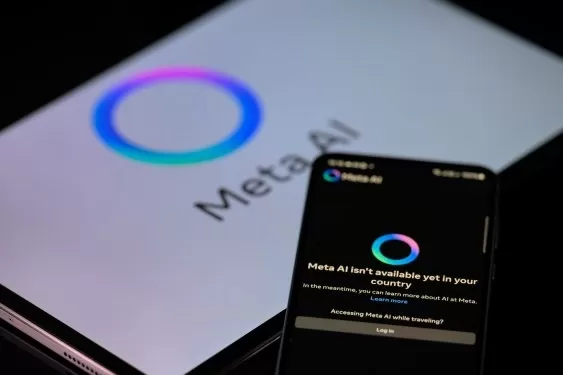 Meta AI App Rises to No. 5 on App Store Following Muse Spark Launch
Meta’s AI application has experienced a significant surge in downloads following Wednesday’s release of its latest AI model, Muse Spark. This marks the first model launch under Alexandr Wang, head of Meta’s Superintelligence Labs, who joined from Sca
Meta AI App Rises to No. 5 on App Store Following Muse Spark Launch
Meta’s AI application has experienced a significant surge in downloads following Wednesday’s release of its latest AI model, Muse Spark. This marks the first model launch under Alexandr Wang, head of Meta’s Superintelligence Labs, who joined from Sca
 DeepMind CEO Urges US-Led Testing of AI Models
Demis Hassabis, Co-Founder and CEO of Google DeepMind. Credit: Demis Hassabis/LinkedInGoogle DeepMind CEO Demis Hassabis highlights the dangers of artificial general intelligence and advocates for a US-led governance frameworkGoogle DeepMind’s CEO, D
DeepMind CEO Urges US-Led Testing of AI Models
Demis Hassabis, Co-Founder and CEO of Google DeepMind. Credit: Demis Hassabis/LinkedInGoogle DeepMind CEO Demis Hassabis highlights the dangers of artificial general intelligence and advocates for a US-led governance frameworkGoogle DeepMind’s CEO, D
 Anthropic’s latest feud with the Trump admin may actually help it, sales data suggests
Anthropic is experiencing a remarkable month.According to Ramp, the AI company surpassed OpenAI in business spending market share for the first time, closing out May with a $65 billion raise at a $965 billion valuation. Shortly after, Anthropic filed
Anthropic’s latest feud with the Trump admin may actually help it, sales data suggests
Anthropic is experiencing a remarkable month.According to Ramp, the AI company surpassed OpenAI in business spending market share for the first time, closing out May with a $65 billion raise at a $965 billion valuation. Shortly after, Anthropic filed
2026 Latest Top-rated AI SEO Auditors for Small Teams are here on XIX.AI! Our curated list features powerful tools that help you fix hidden issues fast, boost your rankings, and save time. Get a free vs paid comparison along with real-world tests to choose the best option for your needs. Explore now to Discover your perfect tool and Unlock your AI edge.
11 tools
xix.ai
2026 Latest Best Top-Rated AI Podcast Voice Cloning Tools for Long-Form Narration are here on XIX.AI! This curated list features powerful, game-changing solutions that deliver professional-quality audio with zero effort. We conduct real-world tests and provide a free vs paid comparison along with weekly updated rankings to help you find the must-try tool that boosts your productivity significantly. Explore now to unlock your AI edge!
10 tools
xix.ai

2026 Latest Best Top-rated AI Internal Linking Tools for Content Hubs: This curated list features powerful game-changing solutions that drastically cut manual work. XIX.AI has conducted real-world tests and provided a detailed free vs paid comparison alongside weekly updated rankings to help you find the must-try tool that boosts productivity and supercharges your content strategy. Explore now to unlock your AI edge!
10 tools
xix.ai

2026 Latest Best AI UI Design Tools for Web and Mobile Projects are here on XIX.AI! This curated list features top-rated, powerful tools that go through rigorous real-world tests to deliver game-changing results for boosting creativity and productivity. You’ll also find a free vs paid comparison, weekly updated rankings, and detailed insights. Must-try options help you overcome design bottlenecks and create high-quality interfaces faster. Explore now to discover your perfect tool!
8 tools
xix.ai
2026 Latest Top-rated Best Prompt Engineering Tools for Teams are featured here on XIX.AI. This curated collection includes powerful game-changing options that go through rigorous real-world tests. You’ll find a free vs paid comparison, detailed rankings, and easy tools to test, version track, and refine team prompts to boost productivity significantly. Explore now to Discover your perfect tool!
9 tools
xix.ai
2026 Latest Best AI Prompt Libraries for Work: XIX.AI curates a top-rated collection of powerful, game-changing prompt sets designed to help you reuse proven templates across countless tasks and boost your productivity significantly. Enjoy free vs paid comparison, detailed real-world tests, and updated rankings weekly. Explore now to discover your perfect tool and unlock your AI edge!
11 tools
xix.ai












