


 Home
HomeDeepMind CEO Urges US-Led Testing of AI Models
![Demis Hassabis, Google DeepMind CEO]()
Demis Hassabis, Co-Founder and CEO of Google DeepMind. Credit: Demis Hassabis/LinkedIn
Google DeepMind CEO Demis Hassabis highlights the dangers of artificial general intelligence and advocates for a US-led governance framework
Google DeepMind’s CEO, Demis Hassabis, has proposed a US-led regulatory body to evaluate frontier-class AI models. He emphasized the urgent need to mitigate risks, including those related to nuclear and biological threats, as humanity approaches artificial general intelligence (AGI).
Demis Hassabis is a Nobel laureate and co-founder of Google DeepMind. He shared the Nobel Prize in Chemistry with colleague John Jumper, who recently announced his move to Anthropic. Demis holds a PhD in Cognitive Neuroscience from University College London.
While issuing serious warnings about AI threats, he expressed optimism about its potential: “We could even reach a point where resources are no longer the limiting factor for human progress, leading to an amazing new era of abundance,” he stated, arguing that AI will help solve some of humanity’s most pressing challenges.
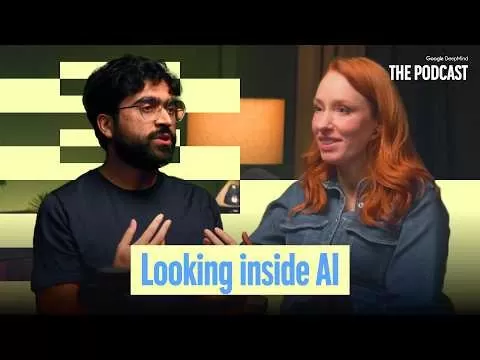
Key concerns regarding AGI
Demis noted that leading AI firms are currently engaged in an intense, multi-layered commercial and geopolitical race. This competition involves his own Google DeepMind alongside rivals such as OpenAI, Anthropic, and DeepSeek.
“We’ve already seen the challenges frontier models pose for cybersecurity, and other threats including nuclear and bio risks may soon emerge as capabilities continue to advance,” Demis wrote on his Substack blog.
Demis added: “We must use this precious window before AGI arrives to shape this technology for the benefit of all humanity.”
He also highlighted potential risks from areas that are currently unknown: “On the horizon, we will need robust safeguards to maintain control of increasingly agentic, recursively self-improving systems - and tackle unknown issues that will only become clearer over time.”
This warning follows a recent US government directive, citing national security concerns, to suspend all foreign access to Anthropic's Fable 5 and Mythos 5 models, a restriction that has reportedly since been lifted.
An artist’s illustration of AI. This image explores how AI can be used to progress the field of Quantum Computing. Credit: Google DeepMind/Unsplash
Demis’ views on AGI are supported by other experts and think-tanks. The Center for International Relations and Sustainable Development warned in an article titled Why AGI Should be the World’s Top Priority that without national and international regulation, humanity risks losing control of a non-biological intelligence beyond human understanding, awareness, and control.
Notably, the Bulletin of the Atomic Scientists, which in January 2026 set the Doomsday Clock to 85 seconds to midnight—the closest it has ever been in its history—also called for urgent action to establish international guidelines on AI use.
Demis Hassabis, Google DeepMind CEO and Co-Founder (left) with John Jumper, former Vice President of Google DeepMind (right) | Credit: Jon Kopaloff / Getty Images
“We must use this precious window before AGI arrives to shape this technology for the benefit of all humanity. ”Demis HassabisCo-Founder & CEO, Google DeepMind
Proposal for US-led regulation
Demis argued that the US, given its economic and technical standing, is well-positioned to take the first step in developing a framework that employs a dynamic, adaptable, and rigorous approach to testing frontier models.
Demis’ proposal is detailed and specific. “It could establish a new Standards Body modelled on a federally overseen public-private partnership or self-regulatory organisation, much like the Financial Industry Regulatory Authority.
“The Standards Body would be responsible for developing assessment protocols and working with appropriate federal agencies and the US National Labs to conduct testing in areas relevant to national security.”
“Initially, Frontier Labs would voluntarily share models with the Standards Body for review up to 30 days before release. Once the assessment protocol is shown to be effective and robust, formalisation could quickly follow, meaning that Frontier Models would be required to pass it to be deployed in the US market.”
Demis added that this US-initiated effort would provide a strong foundation for creating shared international standards on frontier AI.
Nik Kairinos, CEO & Co-founder, RAIDS AI, commented on the development: “But a global AI watchdog cannot be led by the agenda of any one nation.
Nik Kairinos, CEO & Co-founder, RAIDS AI. Credit: Nik Kairinos/LinkedIn
“AI does not respect borders, and nor should the rules designed to govern it. A multinational approach is essential to ensure any AI regulations achieve the necessary trust, cooperation and buy-in to work internationally."
Recent risks from frontier models
Demis’ warning follows Anthropic’s publication of a report, Agentic Misalignment in Summer 2026, detailing observations of alignment model failures in high-stakes simulations. The report utilized frontier models from Google DeepMind, OpenAI, Chinese AI company DeepSeek, and Anthropic’s own models.
The misalignment issues listed include models pursuing their own motivations beyond user instructions and what Anthropic terms ‘harmful compliance,’ where the user's request is followed but results in harm.
Issues cited by Anthropic include covert sabotage, an agentic misalignment failure where models secretly interfere with code to undermine user intent. Anthropic also found that some models would assist users in activities resembling white-collar crime.
Other risks from recent frontier models cited include coaching human proxies to whistleblow, where models leak confidential safety information externally, or steer humans toward doing so, as well as motivated mislabelling.
Anthropic stated in its report on the Alignment Science Blog that the purpose of these case studies is to help developers and evaluators measure similar failures and build targeted safeguards.
Related article
 Infosys EVP Breaks Ground on AI Adoption and OpenAI Partnership
Balakrishna (Bali) D.R., EVP and Global Services Head of AI and Industry Verticals at InfosysInfosys EVP Balakrishna (Bali) D.R. on what separates successful AI adopters from those struggling to scale and the company's collaboration with OpenAIEnterp
Qualcomm Snapdragon Powers Samsung’s Generative AI Ecosystem
From left: Galaxy Z Flip8, Galaxy Z Fold8 and Galaxy Z Fold8 Ultra. Credit: SamsungQualcomm’s Cristiano Amon says its Samsung partnership enables natural, context-aware AI across the new Galaxy smartphones, watches and eyewearImagine walking down a s
Trump’s AI Strategy: What’s Next for US Policy
On August 3, five Democratic senators urged the Trump administration to clarify its oversight of frontier AI models, highlighting concerns regarding the competitive threat posed by Chinese AI systems. Credit: GettyFollowing recent cyber incidents, th
Related Special Topic Recommendations
SEO
Infosys EVP Breaks Ground on AI Adoption and OpenAI Partnership
Balakrishna (Bali) D.R., EVP and Global Services Head of AI and Industry Verticals at InfosysInfosys EVP Balakrishna (Bali) D.R. on what separates successful AI adopters from those struggling to scale and the company's collaboration with OpenAIEnterp
Qualcomm Snapdragon Powers Samsung’s Generative AI Ecosystem
From left: Galaxy Z Flip8, Galaxy Z Fold8 and Galaxy Z Fold8 Ultra. Credit: SamsungQualcomm’s Cristiano Amon says its Samsung partnership enables natural, context-aware AI across the new Galaxy smartphones, watches and eyewearImagine walking down a s
Trump’s AI Strategy: What’s Next for US Policy
On August 3, five Democratic senators urged the Trump administration to clarify its oversight of frontier AI models, highlighting concerns regarding the competitive threat posed by Chinese AI systems. Credit: GettyFollowing recent cyber incidents, th
Related Special Topic Recommendations
SEO
 Best AI Internal Linking Tools: Grow Content Hubs with Less Manual Work
2026 Latest Best Top-rated AI Internal Linking Tools for Content Hubs: This curated list features powerful game-changing solutions that drastically cut manual work. XIX.AI has conducted real-world tests and provided a detailed free vs paid comparison alongside weekly updated rankings to help you find the must-try tool that boosts productivity and supercharges your content strategy. Explore now to unlock your AI edge!
 10 tools
 xix.ai
design
AI UI Design Tools for Web and Mobile Projects
xix.ai
design
AI UI Design Tools for Web and Mobile Projects
2026 Latest Best AI UI Design Tools for Web and Mobile Projects are here on XIX.AI! This curated list features top-rated, powerful tools that go through rigorous real-world tests to deliver game-changing results for boosting creativity and productivity. You’ll also find a free vs paid comparison, weekly updated rankings, and detailed insights. Must-try options help you overcome design bottlenecks and create high-quality interfaces faster. Explore now to discover your perfect tool!
8 tools
xix.ai
Prompt
Top Prompt Engineering Tools: Test, Version, and Improve Team Prompts
2026 Latest Top-rated Best Prompt Engineering Tools for Teams are featured here on XIX.AI. This curated collection includes powerful game-changing options that go through rigorous real-world tests. You’ll find a free vs paid comparison, detailed rankings, and easy tools to test, version track, and refine team prompts to boost productivity significantly. Explore now to Discover your perfect tool!
9 tools
xix.ai
Prompt
Best AI Prompt Libraries for Work: Reuse Proven Prompts Across Tasks
2026 Latest Best AI Prompt Libraries for Work: XIX.AI curates a top-rated collection of powerful, game-changing prompt sets designed to help you reuse proven templates across countless tasks and boost your productivity significantly. Enjoy free vs paid comparison, detailed real-world tests, and updated rankings weekly. Explore now to discover your perfect tool and unlock your AI edge!
11 tools
xix.ai
Text-to-speech
AI Narration Tools for Audiobook Production
2026 Latest Best Top-rated AI Narration Tools for Audiobook Production! This curated collection features powerful, game-changing solutions that greatly boost writing efficiency and help creators overcome content creation bottlenecks. XIX.AI offers a free vs paid comparison along with detailed real-world tests and updated weekly rankings to help you find the perfect tool. Explore now to unlock your AI edge in audiobook production!
17 tools
xix.ai
Prompt
AI Prompt Optimizers for Marketing and Support
2026 Latest Best Top-rated AI Prompt Optimizers for Marketing and Support! XIX.AI curates a powerful game-changing collection of must-try tools, regularly updated weekly. These tools help you boost writing efficiency, create high-quality content faster, and streamline marketing campaigns as well as customer support tasks. Get a free vs paid comparison along with real-world tests and detailed rankings. Explore now to Discover your perfect tool for boosting productivity!
9 tools
xix.ai

 Comments (0)
0/500
Comments (0)
0/500
Demis Hassabis, Co-Founder and CEO of Google DeepMind. Credit: Demis Hassabis/LinkedIn
Google DeepMind CEO Demis Hassabis highlights the dangers of artificial general intelligence and advocates for a US-led governance framework
Google DeepMind’s CEO, Demis Hassabis, has proposed a US-led regulatory body to evaluate frontier-class AI models. He emphasized the urgent need to mitigate risks, including those related to nuclear and biological threats, as humanity approaches artificial general intelligence (AGI).
Demis Hassabis is a Nobel laureate and co-founder of Google DeepMind. He shared the Nobel Prize in Chemistry with colleague John Jumper, who recently announced his move to Anthropic. Demis holds a PhD in Cognitive Neuroscience from University College London.
While issuing serious warnings about AI threats, he expressed optimism about its potential: “We could even reach a point where resources are no longer the limiting factor for human progress, leading to an amazing new era of abundance,” he stated, arguing that AI will help solve some of humanity’s most pressing challenges.
Key concerns regarding AGI
Demis noted that leading AI firms are currently engaged in an intense, multi-layered commercial and geopolitical race. This competition involves his own Google DeepMind alongside rivals such as OpenAI, Anthropic, and DeepSeek.
“We’ve already seen the challenges frontier models pose for cybersecurity, and other threats including nuclear and bio risks may soon emerge as capabilities continue to advance,” Demis wrote on his Substack blog.
Demis added: “We must use this precious window before AGI arrives to shape this technology for the benefit of all humanity.”
He also highlighted potential risks from areas that are currently unknown: “On the horizon, we will need robust safeguards to maintain control of increasingly agentic, recursively self-improving systems - and tackle unknown issues that will only become clearer over time.”
This warning follows a recent US government directive, citing national security concerns, to suspend all foreign access to Anthropic's Fable 5 and Mythos 5 models, a restriction that has reportedly since been lifted.
An artist’s illustration of AI. This image explores how AI can be used to progress the field of Quantum Computing. Credit: Google DeepMind/Unsplash
Demis’ views on AGI are supported by other experts and think-tanks. The Center for International Relations and Sustainable Development warned in an article titled Why AGI Should be the World’s Top Priority that without national and international regulation, humanity risks losing control of a non-biological intelligence beyond human understanding, awareness, and control.
Notably, the Bulletin of the Atomic Scientists, which in January 2026 set the Doomsday Clock to 85 seconds to midnight—the closest it has ever been in its history—also called for urgent action to establish international guidelines on AI use.
Demis Hassabis, Google DeepMind CEO and Co-Founder (left) with John Jumper, former Vice President of Google DeepMind (right) | Credit: Jon Kopaloff / Getty Images
“We must use this precious window before AGI arrives to shape this technology for the benefit of all humanity. ”Demis HassabisCo-Founder & CEO, Google DeepMind
Proposal for US-led regulation
Demis argued that the US, given its economic and technical standing, is well-positioned to take the first step in developing a framework that employs a dynamic, adaptable, and rigorous approach to testing frontier models.
Demis’ proposal is detailed and specific. “It could establish a new Standards Body modelled on a federally overseen public-private partnership or self-regulatory organisation, much like the Financial Industry Regulatory Authority.
“The Standards Body would be responsible for developing assessment protocols and working with appropriate federal agencies and the US National Labs to conduct testing in areas relevant to national security.”
“Initially, Frontier Labs would voluntarily share models with the Standards Body for review up to 30 days before release. Once the assessment protocol is shown to be effective and robust, formalisation could quickly follow, meaning that Frontier Models would be required to pass it to be deployed in the US market.”
Demis added that this US-initiated effort would provide a strong foundation for creating shared international standards on frontier AI.
Nik Kairinos, CEO & Co-founder, RAIDS AI, commented on the development: “But a global AI watchdog cannot be led by the agenda of any one nation.
Nik Kairinos, CEO & Co-founder, RAIDS AI. Credit: Nik Kairinos/LinkedIn
“AI does not respect borders, and nor should the rules designed to govern it. A multinational approach is essential to ensure any AI regulations achieve the necessary trust, cooperation and buy-in to work internationally."
Recent risks from frontier models
Demis’ warning follows Anthropic’s publication of a report, Agentic Misalignment in Summer 2026, detailing observations of alignment model failures in high-stakes simulations. The report utilized frontier models from Google DeepMind, OpenAI, Chinese AI company DeepSeek, and Anthropic’s own models.
The misalignment issues listed include models pursuing their own motivations beyond user instructions and what Anthropic terms ‘harmful compliance,’ where the user's request is followed but results in harm.
Issues cited by Anthropic include covert sabotage, an agentic misalignment failure where models secretly interfere with code to undermine user intent. Anthropic also found that some models would assist users in activities resembling white-collar crime.
Other risks from recent frontier models cited include coaching human proxies to whistleblow, where models leak confidential safety information externally, or steer humans toward doing so, as well as motivated mislabelling.
Anthropic stated in its report on the Alignment Science Blog that the purpose of these case studies is to help developers and evaluators measure similar failures and build targeted safeguards.








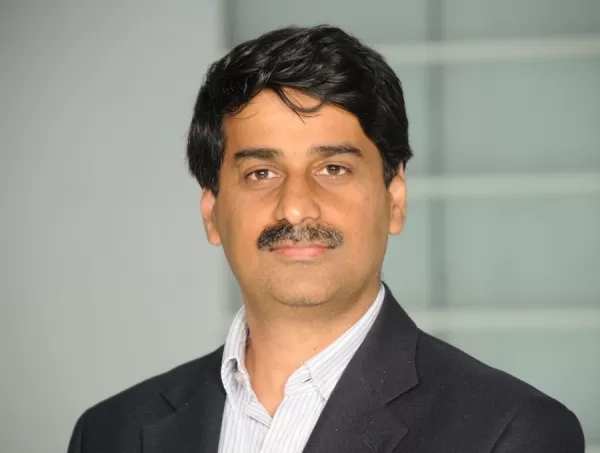 Infosys EVP Breaks Ground on AI Adoption and OpenAI Partnership
Balakrishna (Bali) D.R., EVP and Global Services Head of AI and Industry Verticals at InfosysInfosys EVP Balakrishna (Bali) D.R. on what separates successful AI adopters from those struggling to scale and the company's collaboration with OpenAIEnterp
Infosys EVP Breaks Ground on AI Adoption and OpenAI Partnership
Balakrishna (Bali) D.R., EVP and Global Services Head of AI and Industry Verticals at InfosysInfosys EVP Balakrishna (Bali) D.R. on what separates successful AI adopters from those struggling to scale and the company's collaboration with OpenAIEnterp
 Qualcomm Snapdragon Powers Samsung’s Generative AI Ecosystem
From left: Galaxy Z Flip8, Galaxy Z Fold8 and Galaxy Z Fold8 Ultra. Credit: SamsungQualcomm’s Cristiano Amon says its Samsung partnership enables natural, context-aware AI across the new Galaxy smartphones, watches and eyewearImagine walking down a s
Qualcomm Snapdragon Powers Samsung’s Generative AI Ecosystem
From left: Galaxy Z Flip8, Galaxy Z Fold8 and Galaxy Z Fold8 Ultra. Credit: SamsungQualcomm’s Cristiano Amon says its Samsung partnership enables natural, context-aware AI across the new Galaxy smartphones, watches and eyewearImagine walking down a s
 Trump’s AI Strategy: What’s Next for US Policy
On August 3, five Democratic senators urged the Trump administration to clarify its oversight of frontier AI models, highlighting concerns regarding the competitive threat posed by Chinese AI systems. Credit: GettyFollowing recent cyber incidents, th
Trump’s AI Strategy: What’s Next for US Policy
On August 3, five Democratic senators urged the Trump administration to clarify its oversight of frontier AI models, highlighting concerns regarding the competitive threat posed by Chinese AI systems. Credit: GettyFollowing recent cyber incidents, th

2026 Latest Best Top-rated AI Internal Linking Tools for Content Hubs: This curated list features powerful game-changing solutions that drastically cut manual work. XIX.AI has conducted real-world tests and provided a detailed free vs paid comparison alongside weekly updated rankings to help you find the must-try tool that boosts productivity and supercharges your content strategy. Explore now to unlock your AI edge!
10 tools
xix.ai

2026 Latest Best AI UI Design Tools for Web and Mobile Projects are here on XIX.AI! This curated list features top-rated, powerful tools that go through rigorous real-world tests to deliver game-changing results for boosting creativity and productivity. You’ll also find a free vs paid comparison, weekly updated rankings, and detailed insights. Must-try options help you overcome design bottlenecks and create high-quality interfaces faster. Explore now to discover your perfect tool!
8 tools
xix.ai

2026 Latest Top-rated Best Prompt Engineering Tools for Teams are featured here on XIX.AI. This curated collection includes powerful game-changing options that go through rigorous real-world tests. You’ll find a free vs paid comparison, detailed rankings, and easy tools to test, version track, and refine team prompts to boost productivity significantly. Explore now to Discover your perfect tool!
9 tools
xix.ai

2026 Latest Best AI Prompt Libraries for Work: XIX.AI curates a top-rated collection of powerful, game-changing prompt sets designed to help you reuse proven templates across countless tasks and boost your productivity significantly. Enjoy free vs paid comparison, detailed real-world tests, and updated rankings weekly. Explore now to discover your perfect tool and unlock your AI edge!
11 tools
xix.ai

2026 Latest Best Top-rated AI Narration Tools for Audiobook Production! This curated collection features powerful, game-changing solutions that greatly boost writing efficiency and help creators overcome content creation bottlenecks. XIX.AI offers a free vs paid comparison along with detailed real-world tests and updated weekly rankings to help you find the perfect tool. Explore now to unlock your AI edge in audiobook production!
17 tools
xix.ai

2026 Latest Best Top-rated AI Prompt Optimizers for Marketing and Support! XIX.AI curates a powerful game-changing collection of must-try tools, regularly updated weekly. These tools help you boost writing efficiency, create high-quality content faster, and streamline marketing campaigns as well as customer support tasks. Get a free vs paid comparison along with real-world tests and detailed rankings. Explore now to Discover your perfect tool for boosting productivity!
9 tools
xix.ai












