


 Home
HomeAvelios Secures $31M in Sequoia-Led Funding to Revolutionize Healthcare IT
The race to modernize healthcare software is heating up, with many hospitals still relying on outdated systems that haven't seen an update in years. Enter Avelios, a Munich-based startup with a bold vision to revolutionize healthcare operations with a new, comprehensive operating system. This system leverages cutting-edge technologies like AI and cloud services. The company recently secured a significant boost with a €30 million ($31 million) Series A funding round, announced on Thursday, signaling strong investor confidence in their approach.
Sequoia, leading the investment from its London office, spearheaded the round, with participation from earlier seed investors such as High-Tech Gründerfonds, Revent, and individual contributors. Although Avelios is keeping its valuation under wraps, the funding follows impressive growth fueled by just €5 million in previous investments. The company has already secured 12 customers in Germany, including major players like Sana Kliniken AG, one of the country's largest private hospital chains, the hospital of Ludwig Maximilians University in Munich, and the hospital of the Hannover Medical School.
"I think we've been quite efficient," CEO Christian Albrecht shared with TechCrunch, attributing the success to a strong engineering team and a dedicated group of 11 medical doctors on staff.
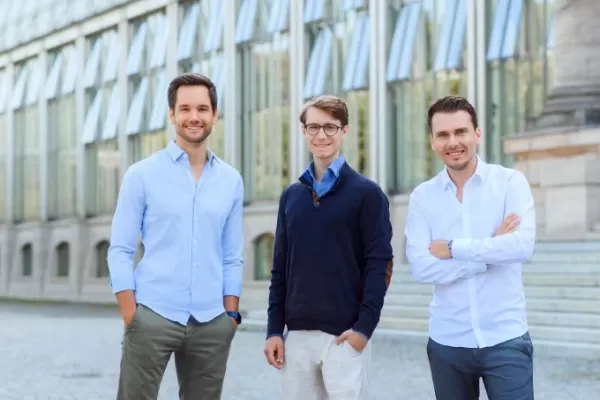
Co-founded by Albrecht, CTO Nicolas Jakob, and chief medical officer Sebastian Krammer, Avelios plans to use the fresh funds to further develop its system and expand into new markets. Discussions are underway with a hospital chain in Spain, and the company is eyeing opportunities in France and the UK.
Covid Beginnings
Avelios is taking a ground-up approach to healthcare system development, targeting a market traditionally characterized by fragmented systems designed for specific functions, often requiring complex integrations that don't always mesh well.
The company's origins trace back to the challenges faced during the COVID-19 pandemic, which highlighted the inefficiencies of Germany's healthcare infrastructure. Sebastian Krammer, working as a doctor during the crisis, found himself manually counting patients and reporting data, a task that underscored the need for a better system.
[ ](#)
](#)
"He ran through hospitals and spent almost all of his time counting patients by hand and then reporting the results to authorities by hand," Albrecht recounted. Krammer then collaborated with Jakob, a seasoned software engineer and deep learning expert, to develop a solution for improved reporting and trend analysis. Their initial efforts revealed a critical issue: the outdated hospital systems couldn't supply the necessary data for their AI research.
With Albrecht, a long-time friend of Jakob's, joining the team to bring structure to their efforts, they faced a pivotal decision. "Should we either treat the 'symptoms' and build a point solution on top of that existing chaos, on top of the existing IT systems, or do we actually treat the root cause of this, and build an entirely new hospital information system?" Albrecht recalled. They chose the latter, a challenging path but one they believed would address the core issues and set the stage for advanced AI applications.
Years of development culminated in a comprehensive system covering all administrative aspects, including electronic health records (EHR), billing, clinical records, lab results, patient portals, and collaboration tools for researchers and multi-departmental teams.
Shifts in the Market
Several market shifts have aided Avelios in securing contracts with healthcare providers. Firstly, SAP, a dominant player in legacy IT systems, is transitioning its enterprise resource planning (ERP) business to a cloud-based model, moving away from long-term vertical-specific solutions. This shift leaves over 1,000 hospitals needing new providers when upgrading, and SAP recommends Avelios as a transition partner.
Secondly, the push for AI in healthcare is driving demand for systems that can handle structured, interoperable data, something legacy systems struggle with. Avelios's modern approach aligns perfectly with these needs.
Investor Attention on Pragmatic Wins
Sequoia's interest in Avelios was sparked by an introduction from Revent, one of the seed investors. "Avelios was under the radar building this system for four years," said Anas Biad, Sequoia's partner leading the investment. He was impressed by the company's ability to quietly secure significant clients in Germany, which prompted a swift investment decision.
Despite the ambitious scope of their project, Avelios approaches it with pragmatism. Hospitals can't afford to overhaul their entire systems at once, so Avelios offers modular solutions. "We can land modularly with customers," explained Albrecht. This could mean starting with administrative documentation, then moving to billing, or a patient portal, allowing hospitals to upgrade incrementally without the risks associated with replacing one monolithic system with another.
This modular approach is particularly appealing in an industry where, according to a 2022 cybersecurity report from the Healthcare Information and Management Systems Society (HIMSS), 73% of hospitals still rely on legacy systems, including outdated operating systems like Windows Server 2008 and even Windows XP. Avelios's strategy offers a practical path forward for these institutions, addressing the critical need for modernization in healthcare IT.
Related article
 DeepMind CEO Hassabis: I sleep six hours a day, usually feel energetic around 1 a.m.
Fortune recently featured an interview with Demis Hassabis, CEO of Google DeepMind, revealing his unconventional approach to rest and productivity. Hassabis disclosed that he sleeps very little, structuring his waking hours into two distinct work blo
OpenAI, Anthropic Vie for Market Share Despite Revenue Shortfalls
Despite recent reports suggesting OpenAI missed revenue targets, creating pressure on tech stocks this Tuesday, private AI lab investors remain resilient. Seasoned backers have confirmed they will not reduce investment despite negative media coverage
California AV Compliance: A New Era of Tickets, Geofences, and 1M Miles
Guident operates an AuveTech shuttle in South Florida, managing a four-mile route in West Palm Beach and a one-mile route in Boca Raton using its remote monitoring technology. | Credit: GuidentCalifornia is redefining the regulatory landscape for dri
Related Special Topic Recommendations
chatbot
DeepMind CEO Hassabis: I sleep six hours a day, usually feel energetic around 1 a.m.
Fortune recently featured an interview with Demis Hassabis, CEO of Google DeepMind, revealing his unconventional approach to rest and productivity. Hassabis disclosed that he sleeps very little, structuring his waking hours into two distinct work blo
OpenAI, Anthropic Vie for Market Share Despite Revenue Shortfalls
Despite recent reports suggesting OpenAI missed revenue targets, creating pressure on tech stocks this Tuesday, private AI lab investors remain resilient. Seasoned backers have confirmed they will not reduce investment despite negative media coverage
California AV Compliance: A New Era of Tickets, Geofences, and 1M Miles
Guident operates an AuveTech shuttle in South Florida, managing a four-mile route in West Palm Beach and a one-mile route in Boca Raton using its remote monitoring technology. | Credit: GuidentCalifornia is redefining the regulatory landscape for dri
Related Special Topic Recommendations
chatbot
 Best AI Roleplay Chat Apps for Language Practice, Interview Prep, and Daily Fluency
2026 Latest Best Top-rated AI Roleplay Chat Apps for Language Practice, Interview Prep, and Daily Fluency! XIX.AI curates a powerful game-changing collection that offers free vs paid comparison, real-world tests, and updated rankings weekly. These must-try tools help you boost writing skills, overcome fluency challenges, and improve communication efficiency across all daily scenarios. Explore now to discover your perfect tool for language growth!
 10 tools
 xix.ai
Music composition
AI Stem Separation Tools for Remix Production, Sampling Prep, and Karaoke Masters
xix.ai
Music composition
AI Stem Separation Tools for Remix Production, Sampling Prep, and Karaoke Masters
2026 Latest Best Top-rated AI Stem Separation Tools Curated for Remix Production, Sampling Prep, and Karaoke Masters. These powerful game-changing tools offer real-world tests to deliver precise audio isolation, boosting productivity significantly. XIX.AI provides a weekly updated free vs paid comparison guide to help you find the must-try solution that suits your needs. Explore now to unlock your AI edge.
8 tools
xix.ai
Data Analysis
AI SQL Copilots for Revenue Dashboards, Funnel Analysis, and Product Metrics
2026 Latest Best AI SQL Copilots Ranked Top-Rated! XIX.AI curates a powerful game-changing collection for weekly updated real-world tests. These must-try tools help you generate accurate revenue dashboards, analyze sales funnels, and track product metrics swiftly, boosting productivity massively. Explore now to Discover your perfect tool for data-driven decision making! 238 characters
9 tools
xix.ai
Music composition
Best AI Melody Writing Tools for Song Drafts
2026 Latest Best Top-Rated AI Melody Writing Tools for Song Drafts! XIX.AI has curated a highly powerful game-changing collection that goes through rigorous real-world tests to deliver the best writing experience. You can find detailed free vs paid comparisons, accurate rankings, and must-try options designed to help you create stunning song drafts effortlessly and boost your creative productivity significantly. Explore now to discover your perfect tool!
8 tools
xix.ai
chatbot
Best AI Conversation Trainer Tools for Interview Practice
2026 Latest Best Top-rated AI Conversation Trainer Tools for Interview Practice are here on XIX.AI! This curated collection features powerful, game-changing tools that go through rigorous real-world tests to deliver accurate feedback. You’ll find a free vs paid comparison and detailed rankings to help you choose the must-try option that boosts your confidence and skills. Explore now to Discover your perfect tool for interview success!
12 tools
xix.ai
Design & Art
Best AI Style Transfer Tools for Creative Experiments
2026 Latest Best Top-rated AI Style Transfer Tools for Creative Experiments! XIX.AI has curated a powerful, game-changing collection of must-try tools that deliver exceptional results through real-world tests and rigorous rankings. These top solutions help creatives boost productivity significantly by accelerating content creation and unlocking endless creative possibilities. Explore now to discover your perfect tool and start creating today!
9 tools
xix.ai

 Comments (18)
0/500
Comments (18)
0/500
![MatthewSmith]()
Just read about Avelios's funding. As someone who's seen family members get tangled in hospital admin chaos, this feels like a breath of fresh air. Finally, someone's tackling the core software mess instead of just another patient portal app. Hope they prioritize real clinician input over shiny tech buzzwords. 🤞
![KevinSanchez]()
Finally! Someone tackling healthcare IT's dinosaur systems 🦖. But $31M seems kinda low compared to Epic's billions. Can they really disrupt this entrenched industry? Color me skeptical but hopeful...
![JeffreyThomas]()
¡Qué interesante! Avelios parece estar cambiando las reglas del juego en la tecnología sanitaria. Me pregunto cómo su sistema operativo manejará los datos médicos tan sensibles. ¡Espero que sea súper seguro! 😎
![AvaHill]()
El nuevo sistema operativo de salud de Avelios suena prometedor, pero soy escéptico. Mi hospital todavía usa software antiguo y el cambio es lento. Si Avelios puede realmente llevar a cabo esta revolución, me impresionará. Por ahora, es solo otra startup con grandes sueños. 🤔
![HarryLewis]()
아벨리오스의 새로운 의료 OS는 promising하게 들리지만, 저는 회의적이에요. 저희 병원은 여전히 오래된 소프트웨어를 사용하고 있고, 변화는 느려요. 아벨리오스가 정말로 이 혁신을 이루어낸다면 인상적일 거예요. 지금은 큰 꿈을 가진 또 다른 스타트업일 뿐이에요. 🤔
![FrankClark]()
Avelios's new healthcare OS sounds promising, but I'm skeptical. My hospital still uses ancient software, and change is slow. If Avelios can actually pull off this revolution, I'll be impressed. For now, it's just another startup with big dreams. 🤔
The race to modernize healthcare software is heating up, with many hospitals still relying on outdated systems that haven't seen an update in years. Enter Avelios, a Munich-based startup with a bold vision to revolutionize healthcare operations with a new, comprehensive operating system. This system leverages cutting-edge technologies like AI and cloud services. The company recently secured a significant boost with a €30 million ($31 million) Series A funding round, announced on Thursday, signaling strong investor confidence in their approach.
Sequoia, leading the investment from its London office, spearheaded the round, with participation from earlier seed investors such as High-Tech Gründerfonds, Revent, and individual contributors. Although Avelios is keeping its valuation under wraps, the funding follows impressive growth fueled by just €5 million in previous investments. The company has already secured 12 customers in Germany, including major players like Sana Kliniken AG, one of the country's largest private hospital chains, the hospital of Ludwig Maximilians University in Munich, and the hospital of the Hannover Medical School.
"I think we've been quite efficient," CEO Christian Albrecht shared with TechCrunch, attributing the success to a strong engineering team and a dedicated group of 11 medical doctors on staff.
Co-founded by Albrecht, CTO Nicolas Jakob, and chief medical officer Sebastian Krammer, Avelios plans to use the fresh funds to further develop its system and expand into new markets. Discussions are underway with a hospital chain in Spain, and the company is eyeing opportunities in France and the UK.
Covid Beginnings
Avelios is taking a ground-up approach to healthcare system development, targeting a market traditionally characterized by fragmented systems designed for specific functions, often requiring complex integrations that don't always mesh well.
The company's origins trace back to the challenges faced during the COVID-19 pandemic, which highlighted the inefficiencies of Germany's healthcare infrastructure. Sebastian Krammer, working as a doctor during the crisis, found himself manually counting patients and reporting data, a task that underscored the need for a better system.
[](#)
"He ran through hospitals and spent almost all of his time counting patients by hand and then reporting the results to authorities by hand," Albrecht recounted. Krammer then collaborated with Jakob, a seasoned software engineer and deep learning expert, to develop a solution for improved reporting and trend analysis. Their initial efforts revealed a critical issue: the outdated hospital systems couldn't supply the necessary data for their AI research.
With Albrecht, a long-time friend of Jakob's, joining the team to bring structure to their efforts, they faced a pivotal decision. "Should we either treat the 'symptoms' and build a point solution on top of that existing chaos, on top of the existing IT systems, or do we actually treat the root cause of this, and build an entirely new hospital information system?" Albrecht recalled. They chose the latter, a challenging path but one they believed would address the core issues and set the stage for advanced AI applications.
Years of development culminated in a comprehensive system covering all administrative aspects, including electronic health records (EHR), billing, clinical records, lab results, patient portals, and collaboration tools for researchers and multi-departmental teams.
Shifts in the Market
Several market shifts have aided Avelios in securing contracts with healthcare providers. Firstly, SAP, a dominant player in legacy IT systems, is transitioning its enterprise resource planning (ERP) business to a cloud-based model, moving away from long-term vertical-specific solutions. This shift leaves over 1,000 hospitals needing new providers when upgrading, and SAP recommends Avelios as a transition partner.
Secondly, the push for AI in healthcare is driving demand for systems that can handle structured, interoperable data, something legacy systems struggle with. Avelios's modern approach aligns perfectly with these needs.
Investor Attention on Pragmatic Wins
Sequoia's interest in Avelios was sparked by an introduction from Revent, one of the seed investors. "Avelios was under the radar building this system for four years," said Anas Biad, Sequoia's partner leading the investment. He was impressed by the company's ability to quietly secure significant clients in Germany, which prompted a swift investment decision.
Despite the ambitious scope of their project, Avelios approaches it with pragmatism. Hospitals can't afford to overhaul their entire systems at once, so Avelios offers modular solutions. "We can land modularly with customers," explained Albrecht. This could mean starting with administrative documentation, then moving to billing, or a patient portal, allowing hospitals to upgrade incrementally without the risks associated with replacing one monolithic system with another.
This modular approach is particularly appealing in an industry where, according to a 2022 cybersecurity report from the Healthcare Information and Management Systems Society (HIMSS), 73% of hospitals still rely on legacy systems, including outdated operating systems like Windows Server 2008 and even Windows XP. Avelios's strategy offers a practical path forward for these institutions, addressing the critical need for modernization in healthcare IT.








 DeepMind CEO Hassabis: I sleep six hours a day, usually feel energetic around 1 a.m.
Fortune recently featured an interview with Demis Hassabis, CEO of Google DeepMind, revealing his unconventional approach to rest and productivity. Hassabis disclosed that he sleeps very little, structuring his waking hours into two distinct work blo
DeepMind CEO Hassabis: I sleep six hours a day, usually feel energetic around 1 a.m.
Fortune recently featured an interview with Demis Hassabis, CEO of Google DeepMind, revealing his unconventional approach to rest and productivity. Hassabis disclosed that he sleeps very little, structuring his waking hours into two distinct work blo
 OpenAI, Anthropic Vie for Market Share Despite Revenue Shortfalls
Despite recent reports suggesting OpenAI missed revenue targets, creating pressure on tech stocks this Tuesday, private AI lab investors remain resilient. Seasoned backers have confirmed they will not reduce investment despite negative media coverage
California AV Compliance: A New Era of Tickets, Geofences, and 1M Miles
Guident operates an AuveTech shuttle in South Florida, managing a four-mile route in West Palm Beach and a one-mile route in Boca Raton using its remote monitoring technology. | Credit: GuidentCalifornia is redefining the regulatory landscape for dri
OpenAI, Anthropic Vie for Market Share Despite Revenue Shortfalls
Despite recent reports suggesting OpenAI missed revenue targets, creating pressure on tech stocks this Tuesday, private AI lab investors remain resilient. Seasoned backers have confirmed they will not reduce investment despite negative media coverage
California AV Compliance: A New Era of Tickets, Geofences, and 1M Miles
Guident operates an AuveTech shuttle in South Florida, managing a four-mile route in West Palm Beach and a one-mile route in Boca Raton using its remote monitoring technology. | Credit: GuidentCalifornia is redefining the regulatory landscape for dri

2026 Latest Best Top-rated AI Roleplay Chat Apps for Language Practice, Interview Prep, and Daily Fluency! XIX.AI curates a powerful game-changing collection that offers free vs paid comparison, real-world tests, and updated rankings weekly. These must-try tools help you boost writing skills, overcome fluency challenges, and improve communication efficiency across all daily scenarios. Explore now to discover your perfect tool for language growth!
10 tools
xix.ai

2026 Latest Best Top-rated AI Stem Separation Tools Curated for Remix Production, Sampling Prep, and Karaoke Masters. These powerful game-changing tools offer real-world tests to deliver precise audio isolation, boosting productivity significantly. XIX.AI provides a weekly updated free vs paid comparison guide to help you find the must-try solution that suits your needs. Explore now to unlock your AI edge.
8 tools
xix.ai

2026 Latest Best AI SQL Copilots Ranked Top-Rated! XIX.AI curates a powerful game-changing collection for weekly updated real-world tests. These must-try tools help you generate accurate revenue dashboards, analyze sales funnels, and track product metrics swiftly, boosting productivity massively. Explore now to Discover your perfect tool for data-driven decision making! 238 characters
9 tools
xix.ai

2026 Latest Best Top-Rated AI Melody Writing Tools for Song Drafts! XIX.AI has curated a highly powerful game-changing collection that goes through rigorous real-world tests to deliver the best writing experience. You can find detailed free vs paid comparisons, accurate rankings, and must-try options designed to help you create stunning song drafts effortlessly and boost your creative productivity significantly. Explore now to discover your perfect tool!
8 tools
xix.ai

2026 Latest Best Top-rated AI Conversation Trainer Tools for Interview Practice are here on XIX.AI! This curated collection features powerful, game-changing tools that go through rigorous real-world tests to deliver accurate feedback. You’ll find a free vs paid comparison and detailed rankings to help you choose the must-try option that boosts your confidence and skills. Explore now to Discover your perfect tool for interview success!
12 tools
xix.ai

2026 Latest Best Top-rated AI Style Transfer Tools for Creative Experiments! XIX.AI has curated a powerful, game-changing collection of must-try tools that deliver exceptional results through real-world tests and rigorous rankings. These top solutions help creatives boost productivity significantly by accelerating content creation and unlocking endless creative possibilities. Explore now to discover your perfect tool and start creating today!
9 tools
xix.ai

Just read about Avelios's funding. As someone who's seen family members get tangled in hospital admin chaos, this feels like a breath of fresh air. Finally, someone's tackling the core software mess instead of just another patient portal app. Hope they prioritize real clinician input over shiny tech buzzwords. 🤞
Finally! Someone tackling healthcare IT's dinosaur systems 🦖. But $31M seems kinda low compared to Epic's billions. Can they really disrupt this entrenched industry? Color me skeptical but hopeful...
¡Qué interesante! Avelios parece estar cambiando las reglas del juego en la tecnología sanitaria. Me pregunto cómo su sistema operativo manejará los datos médicos tan sensibles. ¡Espero que sea súper seguro! 😎
El nuevo sistema operativo de salud de Avelios suena prometedor, pero soy escéptico. Mi hospital todavía usa software antiguo y el cambio es lento. Si Avelios puede realmente llevar a cabo esta revolución, me impresionará. Por ahora, es solo otra startup con grandes sueños. 🤔
아벨리오스의 새로운 의료 OS는 promising하게 들리지만, 저는 회의적이에요. 저희 병원은 여전히 오래된 소프트웨어를 사용하고 있고, 변화는 느려요. 아벨리오스가 정말로 이 혁신을 이루어낸다면 인상적일 거예요. 지금은 큰 꿈을 가진 또 다른 스타트업일 뿐이에요. 🤔
Avelios's new healthcare OS sounds promising, but I'm skeptical. My hospital still uses ancient software, and change is slow. If Avelios can actually pull off this revolution, I'll be impressed. For now, it's just another startup with big dreams. 🤔












