


 Home
Home
Altman confirms OpenAI's in-house humanoid robot, prioritizing long-term prospects over home use

OpenAI CEO Sam Altman recently confirmed during an appearance on the "Sources" podcast that the company is actively advancing robot development, focusing on two distinct technical pathways: humanoid robots and specialized units designed for data center operations.
Function Over Form: The Priority of the "Robot Brain"
While Altman affirmed that OpenAI will definitely develop humanoid robots, he clarified that a human-like appearance is not a strict requirement. If a bipedal form offers no practical advantage, the company will prioritize non-anthropomorphic designs tailored to specific environments, such as specialized robots optimized for data center tasks. "The physical form of the robot is secondary; the critical factor is the underlying intelligence," he stated.
Altman explained that humanoid designs remain relevant because human infrastructure is built around human physiology. Tasks like opening doors, using computers, operating machinery, and cleaning homes are all adapted to the human body, making humanoid robots a logical fit for these environments. To support this vision, OpenAI recently launched GPT-6 Astra, described as the world's most intelligent and aligned model, serving as the foundational "brain" for future robotic deployments.
Scaling the Robotics Team with a Focus on Hardware
Despite emphasizing that software intelligence should precede hardware development, OpenAI is clearly committed to building physical robots. Since 2024, OpenAI models have been integrated with Figure AI's Figure 01 robot. On May 31, OpenAI officially launched its Robotics division, led by Aditya Ramesh, previously the head of Sora. This new unit focuses on the deep integration of hardware engineering and machine learning research.
Recent job postings reveal that OpenAI's robotics hiring in San Francisco has grown from 11 roles at the division's inception to 19. The primary hiring focus is on hardware actuators, including positions for actuator design, electromagnetic engineering, gear systems, and testing infrastructure. A key role involves managing the end-to-end design of custom electromechanical actuators, balancing torque density with mass production feasibility.
Regarding the rollout timeline, Altman acknowledged that home robots are not an immediate priority, with infrastructure and manufacturing taking precedence. However, he expressed long-term confidence in the consumer market, stating, "I believe everyone will eventually have a personal robot." OpenAI has not yet announced specific shipping dates or production targets for its robotic devices.
Related article
 Hello Robot Readies Home Robots for Silicon Valley
Martinez, California, sits on the far northeastern edge of the San Francisco Bay Area, a world away from Silicon Valley’s tech hub. Here lives Hello Robot, a startup deliberately distancing itself from the grandiose claims of its southern rivals, ope
Why Doctors Struggle to Return Your Calls
While public discourse on AI in healthcare centers on diagnostics, drug discovery, and clinical consultations, a critical, often overlooked bottleneck determines whether patients ever receive care at all. This challenge stems less from physician shor
Anthropic’s Sonnet 5.5 Leak: 2M Token Context Challenges DeepSeek to Reclaim Cost-Effectiveness
Anthropic has unveiled its latest Sonnet 5.5 model, internally known as "Fennec" (after the desert fox), with a release expected next month. Leaked details indicate the model supports a 2 million token context window, offering faster reasoning, lower
Related Special Topic Recommendations
Academic Research
Hello Robot Readies Home Robots for Silicon Valley
Martinez, California, sits on the far northeastern edge of the San Francisco Bay Area, a world away from Silicon Valley’s tech hub. Here lives Hello Robot, a startup deliberately distancing itself from the grandiose claims of its southern rivals, ope
Why Doctors Struggle to Return Your Calls
While public discourse on AI in healthcare centers on diagnostics, drug discovery, and clinical consultations, a critical, often overlooked bottleneck determines whether patients ever receive care at all. This challenge stems less from physician shor
Anthropic’s Sonnet 5.5 Leak: 2M Token Context Challenges DeepSeek to Reclaim Cost-Effectiveness
Anthropic has unveiled its latest Sonnet 5.5 model, internally known as "Fennec" (after the desert fox), with a release expected next month. Leaked details indicate the model supports a 2 million token context window, offering faster reasoning, lower
Related Special Topic Recommendations
Academic Research
 AI Dataset Discovery Tools for Academic Projects
2026 Latest Best Top-Rated AI Dataset Discovery Tools for Academic Projects! XIX.AI has curated a powerful, game-changing collection of highly reliable options, all going through strict real-world tests and updated weekly. You can find detailed free vs paid comparison info to help you pick the perfect tool that boosts your research efficiency and delivers top-quality results. Explore now to unlock your AI edge!
 16 tools
 xix.ai
Social Media
Best AI Caption Generators: Write Platform-Specific Social Posts Fast
xix.ai
Social Media
Best AI Caption Generators: Write Platform-Specific Social Posts Fast
2026 Latest Best AI Caption Generators page! XIX.AI curated a top-rated list of must-try powerful tools for writing platform-specific social posts quickly. These tools go through rigorous real-world tests, offering free vs paid comparison and clear rankings to help you find the best option that boosts your productivity and unlocks your AI edge. Explore now!
11 tools
xix.ai
Health & Wellness
Best AI Sleep Coaching Tools for Shift Workers, Jet Lag Recovery, and Better Routines
2026 Latest Best AI Sleep Coaching Tools for Shift Workers, Jet Lag Recovery, and Better Routines! XIX.AI has curated a top-rated list of powerful game-changing tools that go through real-world tests to deliver accurate guidance. You can find detailed free vs paid comparison info and see how these must-try solutions help boost sleep quality, speed up jet lag recovery, and build healthier routines. Explore now to discover your perfect tool!
7 tools
xix.ai
code
ChatGPT Debugging Tools for Python Errors, API Logs, and Stack Trace Triage
2026 Latest Best ChatGPT debugging tools for Python errors, API logs, and stack trace triage are here on XIX.AI. This curated list of top-rated solutions offers a free vs paid comparison, real-world tests, and detailed rankings to help you find the most powerful tool that can significantly boost your productivity and help you solve complex technical issues faster. Explore now to discover your perfect solution!
9 tools
xix.ai
Text-to-speech
AI Voiceover Tools for Product Demo Videos
2026 Latest Best Top-Rated AI Voiceover Tools for Product Demo Videos are here on XIX.AI! This curated list features powerful, game-changing options that help you create professional-quality audio content fast, boosting your demo efficiency significantly. We conduct real-world tests and provide a free vs paid comparison along with weekly updated rankings to help you find the perfect fit. Explore now to Unlock your AI edge!
10 tools
xix.ai
Business
AI Business Plan Tools for Startup Validation
2026 Latest Best AI Business Plan Tools for Startup Validation! XIX.AI has curated a top-rated list of powerful game-changing tools that go through real-world tests to deliver accurate results. You’ll find a free vs paid comparison, detailed rankings, and easy-to-understand insights to help you choose the perfect solution and boost your startup’s success rate. Explore now to Unlock your AI edge!
9 tools
xix.ai

 Comments (0)
0/500
Comments (0)
0/500
OpenAI CEO Sam Altman recently confirmed during an appearance on the "Sources" podcast that the company is actively advancing robot development, focusing on two distinct technical pathways: humanoid robots and specialized units designed for data center operations.
Function Over Form: The Priority of the "Robot Brain"
While Altman affirmed that OpenAI will definitely develop humanoid robots, he clarified that a human-like appearance is not a strict requirement. If a bipedal form offers no practical advantage, the company will prioritize non-anthropomorphic designs tailored to specific environments, such as specialized robots optimized for data center tasks. "The physical form of the robot is secondary; the critical factor is the underlying intelligence," he stated.
Altman explained that humanoid designs remain relevant because human infrastructure is built around human physiology. Tasks like opening doors, using computers, operating machinery, and cleaning homes are all adapted to the human body, making humanoid robots a logical fit for these environments. To support this vision, OpenAI recently launched GPT-6 Astra, described as the world's most intelligent and aligned model, serving as the foundational "brain" for future robotic deployments.
Scaling the Robotics Team with a Focus on Hardware
Despite emphasizing that software intelligence should precede hardware development, OpenAI is clearly committed to building physical robots. Since 2024, OpenAI models have been integrated with Figure AI's Figure 01 robot. On May 31, OpenAI officially launched its Robotics division, led by Aditya Ramesh, previously the head of Sora. This new unit focuses on the deep integration of hardware engineering and machine learning research.
Recent job postings reveal that OpenAI's robotics hiring in San Francisco has grown from 11 roles at the division's inception to 19. The primary hiring focus is on hardware actuators, including positions for actuator design, electromagnetic engineering, gear systems, and testing infrastructure. A key role involves managing the end-to-end design of custom electromechanical actuators, balancing torque density with mass production feasibility.
Regarding the rollout timeline, Altman acknowledged that home robots are not an immediate priority, with infrastructure and manufacturing taking precedence. However, he expressed long-term confidence in the consumer market, stating, "I believe everyone will eventually have a personal robot." OpenAI has not yet announced specific shipping dates or production targets for its robotic devices.








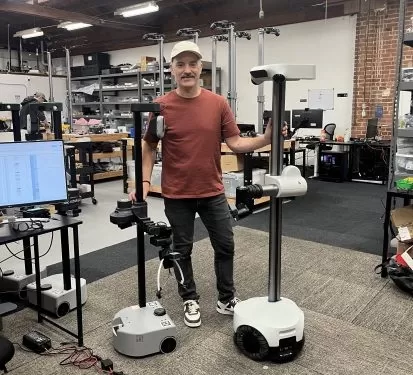 Hello Robot Readies Home Robots for Silicon Valley
Martinez, California, sits on the far northeastern edge of the San Francisco Bay Area, a world away from Silicon Valley’s tech hub. Here lives Hello Robot, a startup deliberately distancing itself from the grandiose claims of its southern rivals, ope
Hello Robot Readies Home Robots for Silicon Valley
Martinez, California, sits on the far northeastern edge of the San Francisco Bay Area, a world away from Silicon Valley’s tech hub. Here lives Hello Robot, a startup deliberately distancing itself from the grandiose claims of its southern rivals, ope
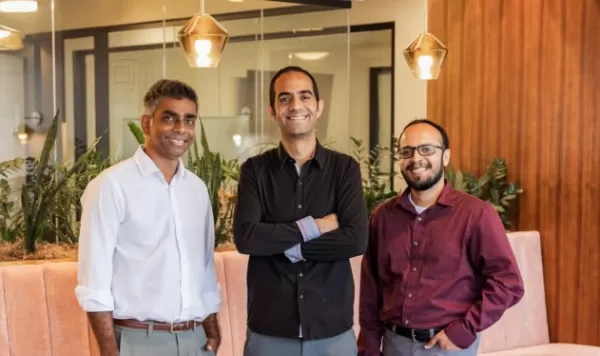 Why Doctors Struggle to Return Your Calls
While public discourse on AI in healthcare centers on diagnostics, drug discovery, and clinical consultations, a critical, often overlooked bottleneck determines whether patients ever receive care at all. This challenge stems less from physician shor
Why Doctors Struggle to Return Your Calls
While public discourse on AI in healthcare centers on diagnostics, drug discovery, and clinical consultations, a critical, often overlooked bottleneck determines whether patients ever receive care at all. This challenge stems less from physician shor
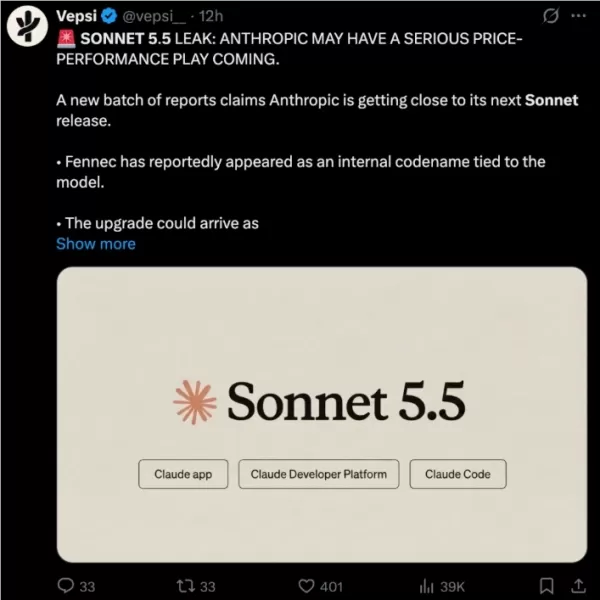 Anthropic’s Sonnet 5.5 Leak: 2M Token Context Challenges DeepSeek to Reclaim Cost-Effectiveness
Anthropic has unveiled its latest Sonnet 5.5 model, internally known as "Fennec" (after the desert fox), with a release expected next month. Leaked details indicate the model supports a 2 million token context window, offering faster reasoning, lower
Anthropic’s Sonnet 5.5 Leak: 2M Token Context Challenges DeepSeek to Reclaim Cost-Effectiveness
Anthropic has unveiled its latest Sonnet 5.5 model, internally known as "Fennec" (after the desert fox), with a release expected next month. Leaked details indicate the model supports a 2 million token context window, offering faster reasoning, lower

2026 Latest Best Top-Rated AI Dataset Discovery Tools for Academic Projects! XIX.AI has curated a powerful, game-changing collection of highly reliable options, all going through strict real-world tests and updated weekly. You can find detailed free vs paid comparison info to help you pick the perfect tool that boosts your research efficiency and delivers top-quality results. Explore now to unlock your AI edge!
16 tools
xix.ai

2026 Latest Best AI Caption Generators page! XIX.AI curated a top-rated list of must-try powerful tools for writing platform-specific social posts quickly. These tools go through rigorous real-world tests, offering free vs paid comparison and clear rankings to help you find the best option that boosts your productivity and unlocks your AI edge. Explore now!
11 tools
xix.ai

2026 Latest Best AI Sleep Coaching Tools for Shift Workers, Jet Lag Recovery, and Better Routines! XIX.AI has curated a top-rated list of powerful game-changing tools that go through real-world tests to deliver accurate guidance. You can find detailed free vs paid comparison info and see how these must-try solutions help boost sleep quality, speed up jet lag recovery, and build healthier routines. Explore now to discover your perfect tool!
7 tools
xix.ai

2026 Latest Best ChatGPT debugging tools for Python errors, API logs, and stack trace triage are here on XIX.AI. This curated list of top-rated solutions offers a free vs paid comparison, real-world tests, and detailed rankings to help you find the most powerful tool that can significantly boost your productivity and help you solve complex technical issues faster. Explore now to discover your perfect solution!
9 tools
xix.ai

2026 Latest Best Top-Rated AI Voiceover Tools for Product Demo Videos are here on XIX.AI! This curated list features powerful, game-changing options that help you create professional-quality audio content fast, boosting your demo efficiency significantly. We conduct real-world tests and provide a free vs paid comparison along with weekly updated rankings to help you find the perfect fit. Explore now to Unlock your AI edge!
10 tools
xix.ai

2026 Latest Best AI Business Plan Tools for Startup Validation! XIX.AI has curated a top-rated list of powerful game-changing tools that go through real-world tests to deliver accurate results. You’ll find a free vs paid comparison, detailed rankings, and easy-to-understand insights to help you choose the perfect solution and boost your startup’s success rate. Explore now to Unlock your AI edge!
9 tools
xix.ai












