


 Home
HomeAlibaba's Qwen 3.5 Small Model Challenges GPT-4o Rivalry
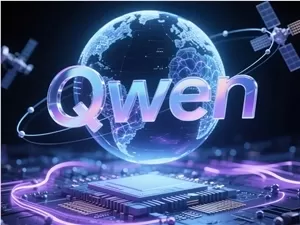
4-Billion-Parameter Model Proves "Less is More," Pioneering a New Era for Local AI Deployment in China
The AI field has long operated under the belief that more parameters equate to greater intelligence. However, Alibaba's recently released Qwen 3.5 series of small models have delivered a textbook case of the "small beating the large." In real-world tests, the Qwen 3.5-4B model, with just 4 billion parameters, went head-to-head with the GPT-4o model, rumored to have over 100 billion parameters, and not only held its own but even came out slightly ahead.
This cross-tier challenge was conducted by the third-party entity N8 Programs. Testers randomly selected 1,000 real-world questions from the WildChat dataset, pitting Qwen 3.5-4B against GPT-4o on the same stage, with Opus 4.6—currently recognized as the most powerful judge—overseeing the contest. The results were surprising: over this 1,000-round Q&A arena, Qwen 3.5-4B achieved 499 wins, 431 losses, and 70 draws, ultimately outperforming GPT-4o.
The most staggering figure is that GPT-4o is speculated to possess up to 200 billion parameters, while Qwen 3.5-4B has a mere 2% of that count. This demonstrates Alibaba's achievement of top-tier logical reasoning output with minimal resource expenditure.
Beyond its formidable performance, the core appeal of the Qwen 3.5 series lies in its exceptional suitability for local deployment. The official release includes four sizes—0.8B, 2B, 4B, and 9B—covering scenarios from IoT edge devices all the way to servers. The 4B version is particularly noteworthy, theoretically requiring only 8GB of VRAM to run, with a recommended 16GB for smooth operation.
For everyday users and developers, this represents a form of "computing power liberation." There's no longer a need for professional compute cards costing tens of thousands; you can now have a "personal assistant" with performance rivaling top-tier large models directly on your own computer—or even smartphone.
As the Qwen team has demonstrated: bigger isn't always better. An AI that can run on users' own devices is the true game-changer for future productivity. With the 9B version directly competing with the performance of 120B-class large models, Chinese large models are showcasing China's unique innovative prowess through this "streamlining" approach, revealing to the global developer community the strength of "Made-in-China" AI.
Related article
 DeepMind CEO Hassabis: I sleep six hours a day, usually feel energetic around 1 a.m.
Fortune recently featured an interview with Demis Hassabis, CEO of Google DeepMind, revealing his unconventional approach to rest and productivity. Hassabis disclosed that he sleeps very little, structuring his waking hours into two distinct work blo
OpenAI, Anthropic Vie for Market Share Despite Revenue Shortfalls
Despite recent reports suggesting OpenAI missed revenue targets, creating pressure on tech stocks this Tuesday, private AI lab investors remain resilient. Seasoned backers have confirmed they will not reduce investment despite negative media coverage
California AV Compliance: A New Era of Tickets, Geofences, and 1M Miles
Guident operates an AuveTech shuttle in South Florida, managing a four-mile route in West Palm Beach and a one-mile route in Boca Raton using its remote monitoring technology. | Credit: GuidentCalifornia is redefining the regulatory landscape for dri
Related Special Topic Recommendations
chatbot
DeepMind CEO Hassabis: I sleep six hours a day, usually feel energetic around 1 a.m.
Fortune recently featured an interview with Demis Hassabis, CEO of Google DeepMind, revealing his unconventional approach to rest and productivity. Hassabis disclosed that he sleeps very little, structuring his waking hours into two distinct work blo
OpenAI, Anthropic Vie for Market Share Despite Revenue Shortfalls
Despite recent reports suggesting OpenAI missed revenue targets, creating pressure on tech stocks this Tuesday, private AI lab investors remain resilient. Seasoned backers have confirmed they will not reduce investment despite negative media coverage
California AV Compliance: A New Era of Tickets, Geofences, and 1M Miles
Guident operates an AuveTech shuttle in South Florida, managing a four-mile route in West Palm Beach and a one-mile route in Boca Raton using its remote monitoring technology. | Credit: GuidentCalifornia is redefining the regulatory landscape for dri
Related Special Topic Recommendations
chatbot
 Best AI Roleplay Chat Apps for Language Practice, Interview Prep, and Daily Fluency
2026 Latest Best Top-rated AI Roleplay Chat Apps for Language Practice, Interview Prep, and Daily Fluency! XIX.AI curates a powerful game-changing collection that offers free vs paid comparison, real-world tests, and updated rankings weekly. These must-try tools help you boost writing skills, overcome fluency challenges, and improve communication efficiency across all daily scenarios. Explore now to discover your perfect tool for language growth!
 10 tools
 xix.ai
Music composition
AI Stem Separation Tools for Remix Production, Sampling Prep, and Karaoke Masters
xix.ai
Music composition
AI Stem Separation Tools for Remix Production, Sampling Prep, and Karaoke Masters
2026 Latest Best Top-rated AI Stem Separation Tools Curated for Remix Production, Sampling Prep, and Karaoke Masters. These powerful game-changing tools offer real-world tests to deliver precise audio isolation, boosting productivity significantly. XIX.AI provides a weekly updated free vs paid comparison guide to help you find the must-try solution that suits your needs. Explore now to unlock your AI edge.
8 tools
xix.ai
Data Analysis
AI SQL Copilots for Revenue Dashboards, Funnel Analysis, and Product Metrics
2026 Latest Best AI SQL Copilots Ranked Top-Rated! XIX.AI curates a powerful game-changing collection for weekly updated real-world tests. These must-try tools help you generate accurate revenue dashboards, analyze sales funnels, and track product metrics swiftly, boosting productivity massively. Explore now to Discover your perfect tool for data-driven decision making! 238 characters
9 tools
xix.ai
Music composition
Best AI Melody Writing Tools for Song Drafts
2026 Latest Best Top-Rated AI Melody Writing Tools for Song Drafts! XIX.AI has curated a highly powerful game-changing collection that goes through rigorous real-world tests to deliver the best writing experience. You can find detailed free vs paid comparisons, accurate rankings, and must-try options designed to help you create stunning song drafts effortlessly and boost your creative productivity significantly. Explore now to discover your perfect tool!
8 tools
xix.ai
chatbot
Best AI Conversation Trainer Tools for Interview Practice
2026 Latest Best Top-rated AI Conversation Trainer Tools for Interview Practice are here on XIX.AI! This curated collection features powerful, game-changing tools that go through rigorous real-world tests to deliver accurate feedback. You’ll find a free vs paid comparison and detailed rankings to help you choose the must-try option that boosts your confidence and skills. Explore now to Discover your perfect tool for interview success!
12 tools
xix.ai
Design & Art
Best AI Style Transfer Tools for Creative Experiments
2026 Latest Best Top-rated AI Style Transfer Tools for Creative Experiments! XIX.AI has curated a powerful, game-changing collection of must-try tools that deliver exceptional results through real-world tests and rigorous rankings. These top solutions help creatives boost productivity significantly by accelerating content creation and unlocking endless creative possibilities. Explore now to discover your perfect tool and start creating today!
9 tools
xix.ai

 Comments (2)
0/500
Comments (2)
0/500
![AnthonyRoberts]()
Alibaba's Qwen 3.5 with just 4B params taking on GPT-4o? That's hilarious — reminds me of David vs Goliath but with neural nets. "Less is more" might be true for local deployment, but I bet real benchmarks will tell a different story. Still, props for challenging the parameter arms race. 🍵
![AlbertRodriguez]()
阿里這次的模型真的讓人驚艷!720億參數就能挑戰GPT-4o,證明優化架構比盲目堆參數更重要。台灣的AI新創團隊也該思考:與其追求超大模型,不如專注在輕量化與垂直領域應用,這樣才能在資源有限的情況下做出差異化。期待看到更多開源模型帶動產業創新!🚀
4-Billion-Parameter Model Proves "Less is More," Pioneering a New Era for Local AI Deployment in China
The AI field has long operated under the belief that more parameters equate to greater intelligence. However, Alibaba's recently released
This cross-tier challenge was conducted by the third-party entity N8 Programs. Testers randomly selected 1,000 real-world questions from the WildChat dataset, pitting Qwen 3.5-4B against GPT-4o on the same stage, with Opus 4.6—currently recognized as the most powerful judge—overseeing the contest. The results were surprising: over this 1,000-round Q&A arena, Qwen 3.5-4B achieved 499 wins, 431 losses, and 70 draws, ultimately outperforming GPT-4o.
The most staggering figure is that GPT-4o is speculated to possess up to 200 billion parameters, while Qwen 3.5-4B has a mere 2% of that count. This demonstrates Alibaba's achievement of top-tier logical reasoning output with minimal resource expenditure.
Beyond its formidable performance, the core appeal of the Qwen 3.5 series lies in its exceptional suitability for local deployment. The official release includes four sizes—0.8B, 2B, 4B, and 9B—covering scenarios from IoT edge devices all the way to servers. The 4B version is particularly noteworthy, theoretically requiring only 8GB of VRAM to run, with a recommended 16GB for smooth operation.
For everyday users and developers, this represents a form of "computing power liberation." There's no longer a need for professional compute cards costing tens of thousands; you can now have a "personal assistant" with performance rivaling top-tier large models directly on your own computer—or even smartphone.
As the








 DeepMind CEO Hassabis: I sleep six hours a day, usually feel energetic around 1 a.m.
Fortune recently featured an interview with Demis Hassabis, CEO of Google DeepMind, revealing his unconventional approach to rest and productivity. Hassabis disclosed that he sleeps very little, structuring his waking hours into two distinct work blo
DeepMind CEO Hassabis: I sleep six hours a day, usually feel energetic around 1 a.m.
Fortune recently featured an interview with Demis Hassabis, CEO of Google DeepMind, revealing his unconventional approach to rest and productivity. Hassabis disclosed that he sleeps very little, structuring his waking hours into two distinct work blo
 OpenAI, Anthropic Vie for Market Share Despite Revenue Shortfalls
Despite recent reports suggesting OpenAI missed revenue targets, creating pressure on tech stocks this Tuesday, private AI lab investors remain resilient. Seasoned backers have confirmed they will not reduce investment despite negative media coverage
California AV Compliance: A New Era of Tickets, Geofences, and 1M Miles
Guident operates an AuveTech shuttle in South Florida, managing a four-mile route in West Palm Beach and a one-mile route in Boca Raton using its remote monitoring technology. | Credit: GuidentCalifornia is redefining the regulatory landscape for dri
OpenAI, Anthropic Vie for Market Share Despite Revenue Shortfalls
Despite recent reports suggesting OpenAI missed revenue targets, creating pressure on tech stocks this Tuesday, private AI lab investors remain resilient. Seasoned backers have confirmed they will not reduce investment despite negative media coverage
California AV Compliance: A New Era of Tickets, Geofences, and 1M Miles
Guident operates an AuveTech shuttle in South Florida, managing a four-mile route in West Palm Beach and a one-mile route in Boca Raton using its remote monitoring technology. | Credit: GuidentCalifornia is redefining the regulatory landscape for dri

2026 Latest Best Top-rated AI Roleplay Chat Apps for Language Practice, Interview Prep, and Daily Fluency! XIX.AI curates a powerful game-changing collection that offers free vs paid comparison, real-world tests, and updated rankings weekly. These must-try tools help you boost writing skills, overcome fluency challenges, and improve communication efficiency across all daily scenarios. Explore now to discover your perfect tool for language growth!
10 tools
xix.ai
2026 Latest Best Top-rated AI Stem Separation Tools Curated for Remix Production, Sampling Prep, and Karaoke Masters. These powerful game-changing tools offer real-world tests to deliver precise audio isolation, boosting productivity significantly. XIX.AI provides a weekly updated free vs paid comparison guide to help you find the must-try solution that suits your needs. Explore now to unlock your AI edge.
8 tools
xix.ai
2026 Latest Best AI SQL Copilots Ranked Top-Rated! XIX.AI curates a powerful game-changing collection for weekly updated real-world tests. These must-try tools help you generate accurate revenue dashboards, analyze sales funnels, and track product metrics swiftly, boosting productivity massively. Explore now to Discover your perfect tool for data-driven decision making! 238 characters
9 tools
xix.ai

2026 Latest Best Top-Rated AI Melody Writing Tools for Song Drafts! XIX.AI has curated a highly powerful game-changing collection that goes through rigorous real-world tests to deliver the best writing experience. You can find detailed free vs paid comparisons, accurate rankings, and must-try options designed to help you create stunning song drafts effortlessly and boost your creative productivity significantly. Explore now to discover your perfect tool!
8 tools
xix.ai

2026 Latest Best Top-rated AI Conversation Trainer Tools for Interview Practice are here on XIX.AI! This curated collection features powerful, game-changing tools that go through rigorous real-world tests to deliver accurate feedback. You’ll find a free vs paid comparison and detailed rankings to help you choose the must-try option that boosts your confidence and skills. Explore now to Discover your perfect tool for interview success!
12 tools
xix.ai

2026 Latest Best Top-rated AI Style Transfer Tools for Creative Experiments! XIX.AI has curated a powerful, game-changing collection of must-try tools that deliver exceptional results through real-world tests and rigorous rankings. These top solutions help creatives boost productivity significantly by accelerating content creation and unlocking endless creative possibilities. Explore now to discover your perfect tool and start creating today!
9 tools
xix.ai

Alibaba's Qwen 3.5 with just 4B params taking on GPT-4o? That's hilarious — reminds me of David vs Goliath but with neural nets. "Less is more" might be true for local deployment, but I bet real benchmarks will tell a different story. Still, props for challenging the parameter arms race. 🍵
阿里這次的模型真的讓人驚艷!720億參數就能挑戰GPT-4o,證明優化架構比盲目堆參數更重要。台灣的AI新創團隊也該思考:與其追求超大模型,不如專注在輕量化與垂直領域應用,這樣才能在資源有限的情況下做出差異化。期待看到更多開源模型帶動產業創新!🚀












