


 Home
HomeAlibaba Unveils Wan2.7-Image to End the Era of Generic AI Faces
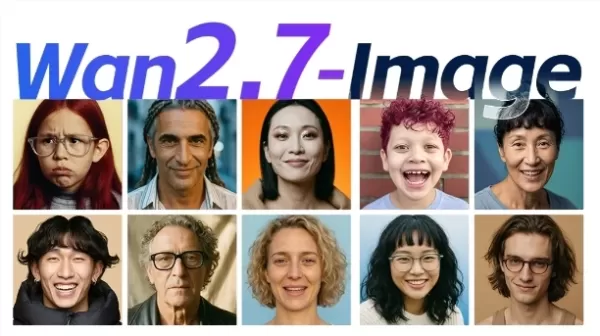
Ali's official large model team has launched the unified image generation and editing model Wan2.7-Image today. This model represents a qualitative leap forward from its predecessor in portrait customization, color control, and long-text rendering, aiming to overcome the generic "sameness" often seen in AI-generated visuals.
The model is now available for access via API on the Alibaba Cloud BaiLian platform and is also open for public trial on the WanXiang website.
Core Enhancements: Virtual "Facial Sculpting" and Precision Color Control
Wan2.7-Image introduces several industry-leading, differentiated features that significantly expand creative possibilities:
Unique Faces for Every Subject: It features enhanced virtual "facial sculpting" capabilities. Users can precisely control bone structure, eye shape (like almond or phoenix eyes), and other facial details through text prompts, effectively eliminating standardized AI-generated faces.
Precision Color Palette: It newly incorporates advanced color control. Users can extract color ratios from reference images to accurately replicate specific hues—such as Van Gogh's vibrant yellow or Picasso's cool blue—into new creations.
3K Token Ultra-Long Text Rendering: It addresses common AI text-generation issues, supporting up to 12 languages. The model can render complex text, tables, or formulas spanning an entire A4 page with print-ready quality.
In the realm of image editing, Wan2.7-Image debuts an "interactive editing" function. Users can simply select a precise area to add, align, move, or even perform pixel-level logical replacements—like swapping ice cubes for fruits while perfectly preserving the scene's original lighting.
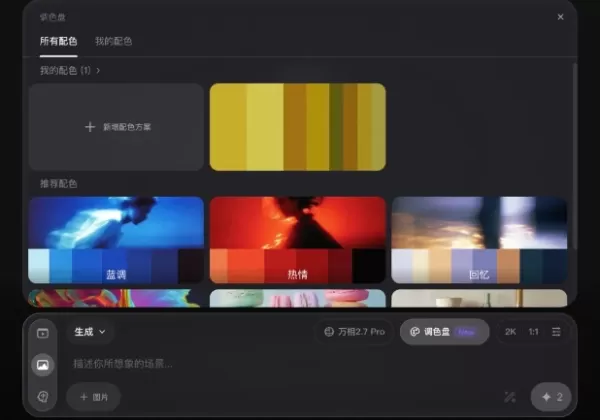
Furthermore, the model supports generating coherent sets of up to 12 images, maintaining high consistency in style and subject characteristics across different scenes—ideal for group portraits or coordinated product combinations.
Ali explains that Wan2.7-Image employs a unified architecture for both generation and understanding. By achieving semantic mapping within a shared latent space, the model moves beyond guessing pixel patterns and develops a genuine underlying comprehension of semantics.
With its release poised for the 2026 visual creation landscape, Wan2.7-Image signals a shift in AI image generation: from "random card drawing" to "industrial-grade" precision control. This high-fidelity editing capability is set to dramatically lower the barrier for professional content creation, whether for film storyboards, e-commerce advertising, or social media transformations.
Related article
 Superintelligence Arrives: Do We Let It In?
Loading the player…AI companies have been talking about superintelligent AI like it’s inevitable, but recent safety incidents like OpenAI’s Hugging Face breach are demonstrating the potential dangers of deploying AI systems that are more capable than
iFLYTEK Unveils Spark X2.5 General Large Model
On September 1, iFlytek will open-source two edge-focused large language models, Xinghuo X2.5-4B and Xinghuo X2.5-1.7B, according to the latest official announcement. Both models natively support a context window of up to 1 million tokens. They deliv
Meta Removes AI Photo Editing Feature Following User Backlash
Meta, the social media giant, is once again embroiled in a public debate regarding the delicate balance between artificial intelligence and user privacy. According to TechCrunch, Meta’s Superintelligence Labs introduced a new AI image generator, Muse
Related Special Topic Recommendations
Animation Creation
Superintelligence Arrives: Do We Let It In?
Loading the player…AI companies have been talking about superintelligent AI like it’s inevitable, but recent safety incidents like OpenAI’s Hugging Face breach are demonstrating the potential dangers of deploying AI systems that are more capable than
iFLYTEK Unveils Spark X2.5 General Large Model
On September 1, iFlytek will open-source two edge-focused large language models, Xinghuo X2.5-4B and Xinghuo X2.5-1.7B, according to the latest official announcement. Both models natively support a context window of up to 1 million tokens. They deliv
Meta Removes AI Photo Editing Feature Following User Backlash
Meta, the social media giant, is once again embroiled in a public debate regarding the delicate balance between artificial intelligence and user privacy. According to TechCrunch, Meta’s Superintelligence Labs introduced a new AI image generator, Muse
Related Special Topic Recommendations
Animation Creation
 AI Scene Animation Tools for Social Media Content
2026 Latest Best Top-rated AI Scene Animation Tools for Social Media Content are curated here by XIX.AI. These powerful game-changing tools offer real-world tests and detailed free vs paid comparison, helping creators boost productivity significantly. Explore now to unlock your AI edge.
 9 tools
 xix.ai
Video creation
AI Short-Form Video Hook Generators for Reels, Shorts, and Product Launch Campaigns
xix.ai
Video creation
AI Short-Form Video Hook Generators for Reels, Shorts, and Product Launch Campaigns
2026 Latest Best AI Short-Form Video Hook Generators for Reels Shorts and Product Launch Campaigns! XIX.AI curates top-rated powerful game-changing tools that deliver must-try results through real-world tests. This weekly updated page offers free vs paid comparison rankings to help you find the perfect solution for boosting content creativity and productivity. Explore now to Unlock your AI edge!
11 tools
xix.ai
writing
AI Article Outline Tools for Long Form Writing
2026 Latest Best Top-Rated AI Article Outline Tools for Long Form Writing! This curated collection features powerful, game-changing tools that deliver accurate, structured outlines with real-world tests to boost writing efficiency significantly. XIX.AI is part of this elite selection. Get a free vs paid comparison to help you choose the perfect tool. Explore now and Unlock your AI edge!
9 tools
xix.ai
chatbot
Best AI Roleplay Chat Apps for Language Practice, Interview Prep, and Daily Fluency
2026 Latest Best Top-rated AI Roleplay Chat Apps for Language Practice, Interview Prep, and Daily Fluency! XIX.AI curates a powerful game-changing collection that offers free vs paid comparison, real-world tests, and updated rankings weekly. These must-try tools help you boost writing skills, overcome fluency challenges, and improve communication efficiency across all daily scenarios. Explore now to discover your perfect tool for language growth!
10 tools
xix.ai
Music composition
AI Stem Separation Tools for Remix Production, Sampling Prep, and Karaoke Masters
2026 Latest Best Top-rated AI Stem Separation Tools Curated for Remix Production, Sampling Prep, and Karaoke Masters. These powerful game-changing tools offer real-world tests to deliver precise audio isolation, boosting productivity significantly. XIX.AI provides a weekly updated free vs paid comparison guide to help you find the must-try solution that suits your needs. Explore now to unlock your AI edge.
8 tools
xix.ai
Data Analysis
AI SQL Copilots for Revenue Dashboards, Funnel Analysis, and Product Metrics
2026 Latest Best AI SQL Copilots Ranked Top-Rated! XIX.AI curates a powerful game-changing collection for weekly updated real-world tests. These must-try tools help you generate accurate revenue dashboards, analyze sales funnels, and track product metrics swiftly, boosting productivity massively. Explore now to Discover your perfect tool for data-driven decision making! 238 characters
9 tools
xix.ai

 Comments (0)
0/500
Comments (0)
0/500
Ali's official large model team has launched the unified image generation and editing model Wan2.7-Image today. This model represents a qualitative leap forward from its predecessor in portrait customization, color control, and long-text rendering, aiming to overcome the generic "sameness" often seen in AI-generated visuals.
The model is now available for access via API on the Alibaba Cloud BaiLian platform and is also open for public trial on the WanXiang website.
Core Enhancements: Virtual "Facial Sculpting" and Precision Color Control
Wan2.7-Image introduces several industry-leading, differentiated features that significantly expand creative possibilities:
Unique Faces for Every Subject: It features enhanced virtual "facial sculpting" capabilities. Users can precisely control bone structure, eye shape (like almond or phoenix eyes), and other facial details through text prompts, effectively eliminating standardized AI-generated faces.
Precision Color Palette: It newly incorporates advanced color control. Users can extract color ratios from reference images to accurately replicate specific hues—such as Van Gogh's vibrant yellow or Picasso's cool blue—into new creations.
3K Token Ultra-Long Text Rendering: It addresses common AI text-generation issues, supporting up to 12 languages. The model can render complex text, tables, or formulas spanning an entire A4 page with print-ready quality.
In the realm of image editing, Wan2.7-Image debuts an "interactive editing" function. Users can simply select a precise area to add, align, move, or even perform pixel-level logical replacements—like swapping ice cubes for fruits while perfectly preserving the scene's original lighting.
Furthermore, the model supports generating coherent sets of up to 12 images, maintaining high consistency in style and subject characteristics across different scenes—ideal for group portraits or coordinated product combinations.
Ali explains that Wan2.7-Image employs a unified architecture for both generation and understanding. By achieving semantic mapping within a shared latent space, the model moves beyond guessing pixel patterns and develops a genuine underlying comprehension of semantics.
With its release poised for the 2026 visual creation landscape, Wan2.7-Image signals a shift in AI image generation: from "random card drawing" to "industrial-grade" precision control. This high-fidelity editing capability is set to dramatically lower the barrier for professional content creation, whether for film storyboards, e-commerce advertising, or social media transformations.








 Superintelligence Arrives: Do We Let It In?
Loading the player…AI companies have been talking about superintelligent AI like it’s inevitable, but recent safety incidents like OpenAI’s Hugging Face breach are demonstrating the potential dangers of deploying AI systems that are more capable than
Superintelligence Arrives: Do We Let It In?
Loading the player…AI companies have been talking about superintelligent AI like it’s inevitable, but recent safety incidents like OpenAI’s Hugging Face breach are demonstrating the potential dangers of deploying AI systems that are more capable than
 iFLYTEK Unveils Spark X2.5 General Large Model
On September 1, iFlytek will open-source two edge-focused large language models, Xinghuo X2.5-4B and Xinghuo X2.5-1.7B, according to the latest official announcement. Both models natively support a context window of up to 1 million tokens. They deliv
iFLYTEK Unveils Spark X2.5 General Large Model
On September 1, iFlytek will open-source two edge-focused large language models, Xinghuo X2.5-4B and Xinghuo X2.5-1.7B, according to the latest official announcement. Both models natively support a context window of up to 1 million tokens. They deliv
 Meta Removes AI Photo Editing Feature Following User Backlash
Meta, the social media giant, is once again embroiled in a public debate regarding the delicate balance between artificial intelligence and user privacy. According to TechCrunch, Meta’s Superintelligence Labs introduced a new AI image generator, Muse
Meta Removes AI Photo Editing Feature Following User Backlash
Meta, the social media giant, is once again embroiled in a public debate regarding the delicate balance between artificial intelligence and user privacy. According to TechCrunch, Meta’s Superintelligence Labs introduced a new AI image generator, Muse
2026 Latest Best Top-rated AI Scene Animation Tools for Social Media Content are curated here by XIX.AI. These powerful game-changing tools offer real-world tests and detailed free vs paid comparison, helping creators boost productivity significantly. Explore now to unlock your AI edge.
9 tools
xix.ai

2026 Latest Best AI Short-Form Video Hook Generators for Reels Shorts and Product Launch Campaigns! XIX.AI curates top-rated powerful game-changing tools that deliver must-try results through real-world tests. This weekly updated page offers free vs paid comparison rankings to help you find the perfect solution for boosting content creativity and productivity. Explore now to Unlock your AI edge!
11 tools
xix.ai

2026 Latest Best Top-Rated AI Article Outline Tools for Long Form Writing! This curated collection features powerful, game-changing tools that deliver accurate, structured outlines with real-world tests to boost writing efficiency significantly. XIX.AI is part of this elite selection. Get a free vs paid comparison to help you choose the perfect tool. Explore now and Unlock your AI edge!
9 tools
xix.ai

2026 Latest Best Top-rated AI Roleplay Chat Apps for Language Practice, Interview Prep, and Daily Fluency! XIX.AI curates a powerful game-changing collection that offers free vs paid comparison, real-world tests, and updated rankings weekly. These must-try tools help you boost writing skills, overcome fluency challenges, and improve communication efficiency across all daily scenarios. Explore now to discover your perfect tool for language growth!
10 tools
xix.ai
2026 Latest Best Top-rated AI Stem Separation Tools Curated for Remix Production, Sampling Prep, and Karaoke Masters. These powerful game-changing tools offer real-world tests to deliver precise audio isolation, boosting productivity significantly. XIX.AI provides a weekly updated free vs paid comparison guide to help you find the must-try solution that suits your needs. Explore now to unlock your AI edge.
8 tools
xix.ai
2026 Latest Best AI SQL Copilots Ranked Top-Rated! XIX.AI curates a powerful game-changing collection for weekly updated real-world tests. These must-try tools help you generate accurate revenue dashboards, analyze sales funnels, and track product metrics swiftly, boosting productivity massively. Explore now to Discover your perfect tool for data-driven decision making! 238 characters
9 tools
xix.ai












