


 Home
HomeAI-Powered Vibe Coding: Revolutionizing Software Engineering's Future
The world of software engineering is undergoing a rapid transformation, driven by the advancements in artificial intelligence. A new phenomenon known as "vibe coding" is emerging, where developers harness the power of AI tools to generate code and boost productivity. This article delves into the ascent of vibe coding, its potential effects on the industry, and how it might redefine the future of software development and the roles of software engineers.
Understanding Vibe Coding and Its Significance
What is Vibe Coding?
Vibe coding, a term introduced by Andrej Karpathy, represents a shift in coding practices where developers fully integrate AI tools to generate code from high-level directives and intuitive insights. This approach moves developers away from the traditional role of writing code line by line, steering them towards a more supervisory and strategic role.
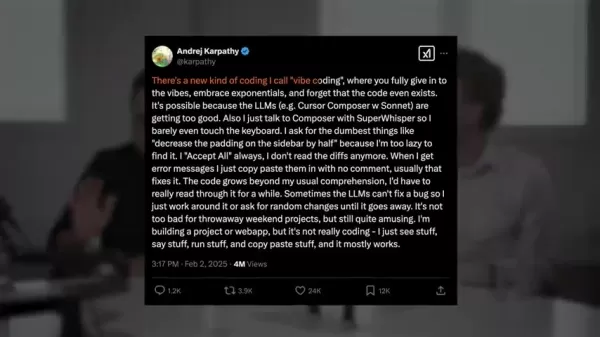
This new coding style emphasizes the "vibes" and relies on Large Language Models (LLMs) to handle the intricacies of coding. Developers can communicate their needs, execute commands, and even copy/paste solutions, making things work without getting bogged down in the details. The essence of vibe coding is guiding AI towards desired outcomes, letting the AI manage the low-level syntax and implementation. This method promises a significant boost in productivity, allowing developers to concentrate on higher-level aspects like architecture, user experience, and product strategy.
The Impetus Behind the Vibe Coding Movement
Several factors are fueling the rise of vibe coding:
- Increasing Sophistication of AI Models: LLMs and code generators have advanced to the point where they can understand complex instructions and produce functional code with minimal human intervention.
- Demand for Faster Development Cycles: The pressure on companies to innovate and roll out new features quickly has intensified, and vibe coding can expedite this process.
- Complexity of Modern Software Projects: Today's applications often involve complex architectures and numerous dependencies, making it challenging for individual developers to oversee every code detail.
- Emergence of Advanced Tools: Tools like Cursor, Composer with Sonnet, and SuperWhisper are becoming increasingly adept, allowing developers to use voice commands and minimal keyboard interaction. They can request simple changes like "decrease the padding on the sidebar by half" without manually searching for the code. This often leads to a practice of accepting all changes without thorough review, which can result in code that's difficult to understand or maintain.

Vibe coding represents a shift in paradigm, offering new opportunities for engineers who can master this practice. The adoption of AI tools has surged over the past six months, with an exponential increase in usage. In many cases, the engineer's role is evolving towards that of a product manager.
Impact on the Role of Software Engineers
The Evolving Skill Set
In the era of vibe coding, the skills required for success in software engineering are changing. While technical proficiency remains crucial, other skills are becoming increasingly important:
- Prompt Engineering: Developers need to craft clear and concise prompts that guide AI towards the desired results.
- Code Review: The ability to critically assess AI-generated code for correctness, security, and maintainability is vital. One founder from Astra mentioned that their role now involves more thinking and reviewing than writing code.
- Systems Thinking: Understanding how different components of a system interact is crucial for building complex applications with AI assistance.
- Creative Problem-Solving: Developers must be able to identify and solve challenges that AI cannot address independently. A founder from Outlit believes that the role of software engineering will evolve into product engineering, as human taste becomes more critical with the rise of code generation tools.
These skills highlight the importance of high-level thinking, problem-solving, and effective communication with AI systems. Developers need to embrace the exponential growth in AI capabilities and focus less on the code itself.
The Future of Hiring
As the industry adopts vibe coding, hiring practices will also need to evolve. Companies may prioritize candidates with a strong understanding of AI tools and frameworks. Key insights include:
- Shift in Knowledge Priorities: Classical computer science knowledge may become less critical compared to expertise in product engineering.
- New Assessment Methods: Evaluations can focus on a candidate's ability to leverage AI effectively in software development.
- Additional Skills Required: With the rapid development enabled by AI code generation tools, new hires will need to possess skills in team management, quick learning, adaptation, and analytical thinking to contribute to product development effectively.
Getting Started with Vibe Coding Tools
The Tools You Need
Several AI-powered tools are facilitating vibe coding:
- GitHub Copilot: An AI pair programmer that suggests code snippets and entire functions based on context.
- Tabnine: An AI code completion tool that learns from your coding patterns.
- Sourcegraph Cody: A context-aware coding assistant providing real-time code suggestions.
- Mutable AI: Enables the creation of prototypes and automation of code changes.

These tools enhance productivity, automate repetitive tasks, and allow developers to focus on the bigger picture.
Tips for Mastering Vibe Coding
To excel in vibe coding, consider the following tips:
- Embrace AI Tools: Familiarize yourself with the various AI-powered tools and frameworks and integrate them into your workflow.
- Develop Prompting Skills: Learn to create clear, concise, and effective prompts that guide AI towards the desired outcomes.
- Sharpen Code Review Skills: Develop a critical eye for evaluating AI-generated code and identifying potential issues.
- Focus on High-Level Design: Dedicate your time to architecture, user experience, and product strategy, rather than getting bogged down in low-level implementation details.
Pricing
Pricing for AI-Assisted Coding Tools
Tool Pricing Model GitHub Copilot Paid subscription (Individual and Business plans) Tabnine Free tier available; Paid subscription for more features Sourcegraph Cody Free tier available; Paid subscription for enterprise Mutable AI Paid subscription with tiered pricing
Evaluating the pricing plans of these tools is essential to find the one that best fits your budget and needs.
Exploring the Benefits and Drawbacks of Vibe Coding
Pros
- Increased Productivity: AI assistance can significantly speed up the coding process.
- Focus on High-Level Design: Developers can spend more time on architecture, UX, and product strategy.
- Enhanced Creativity: AI can generate novel code patterns and solutions, fostering innovation.
- Accessibility: AI tools can make software development more accessible to those with limited coding experience.
Cons
- Reliance on AI: Over-dependence on AI can hinder the development of fundamental coding skills.
- Code Quality Concerns: AI-generated code may contain errors, security vulnerabilities, or performance issues.
- Ethical Considerations: The use of AI in software development raises questions about code ownership and intellectual property.
- Debugging Challenges: Developers may struggle to understand the AI-generated code, leading to practices like 'rerolling' the code instead of debugging.
FAQ
Is vibe coding going to replace software engineers?
No, vibe coding isn't about replacing software engineers but changing the way they work. Human taste is now more important than ever. Skilled engineers, with or without formal computer science training, will always have value.
Is vibe coding only for experienced developers?
No, vibe coding can benefit developers at all levels. It can accelerate the learning process for beginners and enable experienced developers to tackle more complex projects. An AI agent does exactly what a human does, but when the agent is less reliable, it can produce substandard code.
Does 'vibe coding' mean the engineer just says stuff and the computer codes for them?
Yes, 'vibe coding' fully relies on AI. It's a new form of coding that you fully embrace, leveraging exponential growth in AI capabilities, and focusing less on the code itself.
Related Questions
What coding tool is everyone using?
Currently, the most popular AI-driven coding tool is Cursor, while Windsurf is gaining popularity. Other engineers prefer using ChatGPT with well-defined commands. These code generation tools empower good programmers to achieve more.
Related article
 Google’s Genie world model now simulates real streets with Street View
Most of us have used Google Street View to show a friend our old neighborhood or dropped the little person icon into Paris to check if our hotel is in a trendy area. Now, imagine experiencing that with full immersion and interactivity—simulating the
OpenAI CEO’s Diary Key in Musk Trial, Revealing Split Origins
The protracted legal dispute between OpenAI and Elon Musk has taken an unexpected turn, with the personal private diary of OpenAI president Greg Brockman emerging as a central piece of evidence. Recently, Brockman was compelled to read excerpts from
Zhida AI: 180k-User-Verified Smart Teaching Benchmark for All Academic Stages
The digital transformation of education has reached a critical juncture. The challenge now is how to seamlessly integrate AI into every phase of teaching, learning, assessment, research, and administration. Zhida AI, a premier multi-modal large model
Related Special Topic Recommendations
Design & Art
Google’s Genie world model now simulates real streets with Street View
Most of us have used Google Street View to show a friend our old neighborhood or dropped the little person icon into Paris to check if our hotel is in a trendy area. Now, imagine experiencing that with full immersion and interactivity—simulating the
OpenAI CEO’s Diary Key in Musk Trial, Revealing Split Origins
The protracted legal dispute between OpenAI and Elon Musk has taken an unexpected turn, with the personal private diary of OpenAI president Greg Brockman emerging as a central piece of evidence. Recently, Brockman was compelled to read excerpts from
Zhida AI: 180k-User-Verified Smart Teaching Benchmark for All Academic Stages
The digital transformation of education has reached a critical juncture. The challenge now is how to seamlessly integrate AI into every phase of teaching, learning, assessment, research, and administration. Zhida AI, a premier multi-modal large model
Related Special Topic Recommendations
Design & Art
 AI Style Transfer Platforms: Reimagine Photos with Distinct Visual Looks
2026 Latest Best Top-rated AI Style Transfer Platforms ranked by expert assessments. This curated collection offers powerful game-changing tools that help users reimagine photos with stunning distinct visual looks, boosting creativity and productivity effortlessly. XIX.AI stands out as a trusted source for weekly updated free vs paid comparison insights along with real-world tests. Explore now to Discover your perfect tool and Unlock your AI edge.
 10 tools
 xix.ai
Business
AI Shopify Competitor Monitoring Platforms for Pricing, Merchandising, and Promotions
xix.ai
Business
AI Shopify Competitor Monitoring Platforms for Pricing, Merchandising, and Promotions
2026 Latest Best AI platforms for tracking competitors on Shopify to stay ahead in pricing, merchandising, and promotions. XIX.AI curates top-rated, powerful tools that offer real-world tests and free vs paid comparison through weekly updated rankings. Must-try solutions help boost productivity and unlock your AI edge. Explore now!
10 tools
xix.ai
Health & Wellness
Top AI Fitness Coaches for Home Workouts: Train with Adaptive Plans
2026 Latest Top-rated AI Fitness Coaches for Home Workouts are here on XIX.AI! Our curated list features powerful, game-changing tools that create adaptive workout plans tailored to your goals, helping you boost productivity and break through fitness plateaus. Get a free vs paid comparison along with real-world tests and updated rankings weekly. Explore now to Discover your perfect tool and Start creating today to Unlock your AI edge!
10 tools
xix.ai
Social Media
AI Comment Moderation Tools for TikTok Shops and High-Volume Brand Communities
2026 Latest Best Top-rated AI Comment Moderation Tools for TikTok Shops and High-Volume Brand Communities are curated here by XIX.AI. Our weekly updated rankings feature powerful, game-changing solutions that deliver real-world tests results to help you boost content quality, enhance writing efficiency, and streamline community management effortlessly. Free vs paid comparison insights are also available. Explore now to Discover your perfect tool for unlocking your AI edge!
9 tools
xix.ai
Video creation
CapCut AI Video Editors for Reels, Shorts, Ads, and Social Commerce Launches
2026 Latest Best CapCut AI Video Editors for Reels Shorts Ads and Social Commerce Launches! This curated list features top-rated powerful game-changing tools that deliver impressive results through real-world tests. You’ll find a free vs paid comparison along with detailed rankings to help you choose the perfect fit. XIX.AI offers expert insights to help you unlock your AI edge in content creation. Explore now to discover your ideal tool and boost your productivity today!
14 tools
xix.ai
Academic Research
Best AI Study Discovery Tools: Find Journals, Datasets, and Trends Quickly
2026 Latest Best Top-rated AI Study Discovery Tools are here on XIX.AI! This curated list includes powerful game-changing resources for quick access to journals, datasets, and industry trends. Get a free vs paid comparison along with real-world tests and updated rankings weekly. Must-try options help boost your research efficiency and unlock your AI edge. Explore now to discover your perfect tool!
10 tools
xix.ai

 Comments (12)
0/500
Comments (12)
0/500
![JamesCarter]()
This vibe coding thing sounds like a double-edged sword. On one hand, it's amazing how AI can generate code snippets and boost productivity, but on the other, I worry about the quality and security of the code. Are we just creating more tech debt? 😅 Also, what happens to junior devs learning the ropes? Might be a fun tool though!
![ScarlettWhite]()
Vibe coding sounds cool, but honestly, I'm a bit worried. If AI writes most of the code, how do we ensure it's secure and actually does what we intend? Feels like we're trading deep understanding for speed. 🤔
![JonathanMiller]()
Vibe Coding klingt erstmal nach Buzzword, aber die Idee, dass KI den Entwicklungsprozess mehr intuitiv macht, finde ich spannend. Hoffentlich bleibt der Mensch dabei noch im Driver's Seat und es wird nicht nur blind Code generiert, den keiner mehr versteht. 🤔 Die Produktivitätssteigerung ist klar, aber die Qualität und Wartbarkeit müssen im Fokus bleiben.
![PaulThomas]()
Не уверен, что "кодинг по настроению" — это будущее разработки. 🤔 ИИ-инструменты упрощают рутину, но не заменят понимания архитектуры. Интересно, как это повлияет на качество кода в долгосрочной перспективе — может вырасти количество скрытых багов?
![NicholasLewis]()
Vibe coding? 🤔 Это звучит как очередной маркетинговый ход, а не реальный прорыв. Хотя использование ИИ для автодополнения кода уже давно стало обычным делом в индустрии. Главный вопрос — как это повлияет на качество ПО и безопасность?
![FrankLewis]()
This vibe coding thing sounds dope! AI spitting out code like a beat machine? Can’t wait to see how it shakes up dev workflows. 🚀
The world of software engineering is undergoing a rapid transformation, driven by the advancements in artificial intelligence. A new phenomenon known as "vibe coding" is emerging, where developers harness the power of AI tools to generate code and boost productivity. This article delves into the ascent of vibe coding, its potential effects on the industry, and how it might redefine the future of software development and the roles of software engineers.
Understanding Vibe Coding and Its Significance
What is Vibe Coding?
Vibe coding, a term introduced by Andrej Karpathy, represents a shift in coding practices where developers fully integrate AI tools to generate code from high-level directives and intuitive insights. This approach moves developers away from the traditional role of writing code line by line, steering them towards a more supervisory and strategic role.
This new coding style emphasizes the "vibes" and relies on Large Language Models (LLMs) to handle the intricacies of coding. Developers can communicate their needs, execute commands, and even copy/paste solutions, making things work without getting bogged down in the details. The essence of vibe coding is guiding AI towards desired outcomes, letting the AI manage the low-level syntax and implementation. This method promises a significant boost in productivity, allowing developers to concentrate on higher-level aspects like architecture, user experience, and product strategy.
The Impetus Behind the Vibe Coding Movement
Several factors are fueling the rise of vibe coding:
- Increasing Sophistication of AI Models: LLMs and code generators have advanced to the point where they can understand complex instructions and produce functional code with minimal human intervention.
- Demand for Faster Development Cycles: The pressure on companies to innovate and roll out new features quickly has intensified, and vibe coding can expedite this process.
- Complexity of Modern Software Projects: Today's applications often involve complex architectures and numerous dependencies, making it challenging for individual developers to oversee every code detail.
- Emergence of Advanced Tools: Tools like Cursor, Composer with Sonnet, and SuperWhisper are becoming increasingly adept, allowing developers to use voice commands and minimal keyboard interaction. They can request simple changes like "decrease the padding on the sidebar by half" without manually searching for the code. This often leads to a practice of accepting all changes without thorough review, which can result in code that's difficult to understand or maintain.
Vibe coding represents a shift in paradigm, offering new opportunities for engineers who can master this practice. The adoption of AI tools has surged over the past six months, with an exponential increase in usage. In many cases, the engineer's role is evolving towards that of a product manager.
Impact on the Role of Software Engineers
The Evolving Skill Set
In the era of vibe coding, the skills required for success in software engineering are changing. While technical proficiency remains crucial, other skills are becoming increasingly important:
- Prompt Engineering: Developers need to craft clear and concise prompts that guide AI towards the desired results.
- Code Review: The ability to critically assess AI-generated code for correctness, security, and maintainability is vital. One founder from Astra mentioned that their role now involves more thinking and reviewing than writing code.
- Systems Thinking: Understanding how different components of a system interact is crucial for building complex applications with AI assistance.
- Creative Problem-Solving: Developers must be able to identify and solve challenges that AI cannot address independently. A founder from Outlit believes that the role of software engineering will evolve into product engineering, as human taste becomes more critical with the rise of code generation tools.
These skills highlight the importance of high-level thinking, problem-solving, and effective communication with AI systems. Developers need to embrace the exponential growth in AI capabilities and focus less on the code itself.
The Future of Hiring
As the industry adopts vibe coding, hiring practices will also need to evolve. Companies may prioritize candidates with a strong understanding of AI tools and frameworks. Key insights include:
- Shift in Knowledge Priorities: Classical computer science knowledge may become less critical compared to expertise in product engineering.
- New Assessment Methods: Evaluations can focus on a candidate's ability to leverage AI effectively in software development.
- Additional Skills Required: With the rapid development enabled by AI code generation tools, new hires will need to possess skills in team management, quick learning, adaptation, and analytical thinking to contribute to product development effectively.
Getting Started with Vibe Coding Tools
The Tools You Need
Several AI-powered tools are facilitating vibe coding:
- GitHub Copilot: An AI pair programmer that suggests code snippets and entire functions based on context.
- Tabnine: An AI code completion tool that learns from your coding patterns.
- Sourcegraph Cody: A context-aware coding assistant providing real-time code suggestions.
- Mutable AI: Enables the creation of prototypes and automation of code changes.
These tools enhance productivity, automate repetitive tasks, and allow developers to focus on the bigger picture.
Tips for Mastering Vibe Coding
To excel in vibe coding, consider the following tips:
- Embrace AI Tools: Familiarize yourself with the various AI-powered tools and frameworks and integrate them into your workflow.
- Develop Prompting Skills: Learn to create clear, concise, and effective prompts that guide AI towards the desired outcomes.
- Sharpen Code Review Skills: Develop a critical eye for evaluating AI-generated code and identifying potential issues.
- Focus on High-Level Design: Dedicate your time to architecture, user experience, and product strategy, rather than getting bogged down in low-level implementation details.
Pricing
Pricing for AI-Assisted Coding Tools
| Tool | Pricing Model |
|---|---|
| GitHub Copilot | Paid subscription (Individual and Business plans) |
| Tabnine | Free tier available; Paid subscription for more features |
| Sourcegraph Cody | Free tier available; Paid subscription for enterprise |
| Mutable AI | Paid subscription with tiered pricing |
Evaluating the pricing plans of these tools is essential to find the one that best fits your budget and needs.
Exploring the Benefits and Drawbacks of Vibe Coding
Pros
- Increased Productivity: AI assistance can significantly speed up the coding process.
- Focus on High-Level Design: Developers can spend more time on architecture, UX, and product strategy.
- Enhanced Creativity: AI can generate novel code patterns and solutions, fostering innovation.
- Accessibility: AI tools can make software development more accessible to those with limited coding experience.
Cons
- Reliance on AI: Over-dependence on AI can hinder the development of fundamental coding skills.
- Code Quality Concerns: AI-generated code may contain errors, security vulnerabilities, or performance issues.
- Ethical Considerations: The use of AI in software development raises questions about code ownership and intellectual property.
- Debugging Challenges: Developers may struggle to understand the AI-generated code, leading to practices like 'rerolling' the code instead of debugging.
FAQ
Is vibe coding going to replace software engineers?
No, vibe coding isn't about replacing software engineers but changing the way they work. Human taste is now more important than ever. Skilled engineers, with or without formal computer science training, will always have value.
Is vibe coding only for experienced developers?
No, vibe coding can benefit developers at all levels. It can accelerate the learning process for beginners and enable experienced developers to tackle more complex projects. An AI agent does exactly what a human does, but when the agent is less reliable, it can produce substandard code.
Does 'vibe coding' mean the engineer just says stuff and the computer codes for them?
Yes, 'vibe coding' fully relies on AI. It's a new form of coding that you fully embrace, leveraging exponential growth in AI capabilities, and focusing less on the code itself.
Related Questions
What coding tool is everyone using?
Currently, the most popular AI-driven coding tool is Cursor, while Windsurf is gaining popularity. Other engineers prefer using ChatGPT with well-defined commands. These code generation tools empower good programmers to achieve more.








 Google’s Genie world model now simulates real streets with Street View
Most of us have used Google Street View to show a friend our old neighborhood or dropped the little person icon into Paris to check if our hotel is in a trendy area. Now, imagine experiencing that with full immersion and interactivity—simulating the
Google’s Genie world model now simulates real streets with Street View
Most of us have used Google Street View to show a friend our old neighborhood or dropped the little person icon into Paris to check if our hotel is in a trendy area. Now, imagine experiencing that with full immersion and interactivity—simulating the
 OpenAI CEO’s Diary Key in Musk Trial, Revealing Split Origins
The protracted legal dispute between OpenAI and Elon Musk has taken an unexpected turn, with the personal private diary of OpenAI president Greg Brockman emerging as a central piece of evidence. Recently, Brockman was compelled to read excerpts from
OpenAI CEO’s Diary Key in Musk Trial, Revealing Split Origins
The protracted legal dispute between OpenAI and Elon Musk has taken an unexpected turn, with the personal private diary of OpenAI president Greg Brockman emerging as a central piece of evidence. Recently, Brockman was compelled to read excerpts from
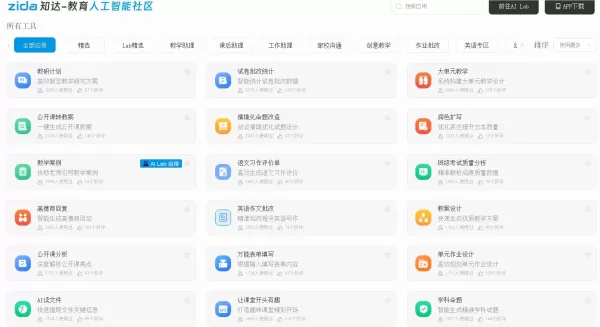 Zhida AI: 180k-User-Verified Smart Teaching Benchmark for All Academic Stages
The digital transformation of education has reached a critical juncture. The challenge now is how to seamlessly integrate AI into every phase of teaching, learning, assessment, research, and administration. Zhida AI, a premier multi-modal large model
Zhida AI: 180k-User-Verified Smart Teaching Benchmark for All Academic Stages
The digital transformation of education has reached a critical juncture. The challenge now is how to seamlessly integrate AI into every phase of teaching, learning, assessment, research, and administration. Zhida AI, a premier multi-modal large model

2026 Latest Best Top-rated AI Style Transfer Platforms ranked by expert assessments. This curated collection offers powerful game-changing tools that help users reimagine photos with stunning distinct visual looks, boosting creativity and productivity effortlessly. XIX.AI stands out as a trusted source for weekly updated free vs paid comparison insights along with real-world tests. Explore now to Discover your perfect tool and Unlock your AI edge.
10 tools
xix.ai

2026 Latest Best AI platforms for tracking competitors on Shopify to stay ahead in pricing, merchandising, and promotions. XIX.AI curates top-rated, powerful tools that offer real-world tests and free vs paid comparison through weekly updated rankings. Must-try solutions help boost productivity and unlock your AI edge. Explore now!
10 tools
xix.ai
2026 Latest Top-rated AI Fitness Coaches for Home Workouts are here on XIX.AI! Our curated list features powerful, game-changing tools that create adaptive workout plans tailored to your goals, helping you boost productivity and break through fitness plateaus. Get a free vs paid comparison along with real-world tests and updated rankings weekly. Explore now to Discover your perfect tool and Start creating today to Unlock your AI edge!
10 tools
xix.ai
2026 Latest Best Top-rated AI Comment Moderation Tools for TikTok Shops and High-Volume Brand Communities are curated here by XIX.AI. Our weekly updated rankings feature powerful, game-changing solutions that deliver real-world tests results to help you boost content quality, enhance writing efficiency, and streamline community management effortlessly. Free vs paid comparison insights are also available. Explore now to Discover your perfect tool for unlocking your AI edge!
9 tools
xix.ai

2026 Latest Best CapCut AI Video Editors for Reels Shorts Ads and Social Commerce Launches! This curated list features top-rated powerful game-changing tools that deliver impressive results through real-world tests. You’ll find a free vs paid comparison along with detailed rankings to help you choose the perfect fit. XIX.AI offers expert insights to help you unlock your AI edge in content creation. Explore now to discover your ideal tool and boost your productivity today!
14 tools
xix.ai

2026 Latest Best Top-rated AI Study Discovery Tools are here on XIX.AI! This curated list includes powerful game-changing resources for quick access to journals, datasets, and industry trends. Get a free vs paid comparison along with real-world tests and updated rankings weekly. Must-try options help boost your research efficiency and unlock your AI edge. Explore now to discover your perfect tool!
10 tools
xix.ai

This vibe coding thing sounds like a double-edged sword. On one hand, it's amazing how AI can generate code snippets and boost productivity, but on the other, I worry about the quality and security of the code. Are we just creating more tech debt? 😅 Also, what happens to junior devs learning the ropes? Might be a fun tool though!
Vibe coding sounds cool, but honestly, I'm a bit worried. If AI writes most of the code, how do we ensure it's secure and actually does what we intend? Feels like we're trading deep understanding for speed. 🤔
Vibe Coding klingt erstmal nach Buzzword, aber die Idee, dass KI den Entwicklungsprozess mehr intuitiv macht, finde ich spannend. Hoffentlich bleibt der Mensch dabei noch im Driver's Seat und es wird nicht nur blind Code generiert, den keiner mehr versteht. 🤔 Die Produktivitätssteigerung ist klar, aber die Qualität und Wartbarkeit müssen im Fokus bleiben.
Не уверен, что "кодинг по настроению" — это будущее разработки. 🤔 ИИ-инструменты упрощают рутину, но не заменят понимания архитектуры. Интересно, как это повлияет на качество кода в долгосрочной перспективе — может вырасти количество скрытых багов?
Vibe coding? 🤔 Это звучит как очередной маркетинговый ход, а не реальный прорыв. Хотя использование ИИ для автодополнения кода уже давно стало обычным делом в индустрии. Главный вопрос — как это повлияет на качество ПО и безопасность?
This vibe coding thing sounds dope! AI spitting out code like a beat machine? Can’t wait to see how it shakes up dev workflows. 🚀












