Home
HomeAI Agent Design Patterns for Optimizing Cost and Performance
The field of Artificial Intelligence (AI) is advancing at a remarkable pace, with AI agents growing increasingly sophisticated and capable of managing complex assignments. While high-profile models like GPT-4 frequently dominate conversations, emerging design approaches are empowering more affordable alternatives such as GPT-3.5 and LLaMA. These methods enable AI agents to deliver impressive accuracy while significantly cutting expenses—sometimes by as much as 90%. This article examines these groundbreaking design patterns and explains how they are transforming the AI ecosystem. We'll explore practical techniques for optimizing AI agent performance while keeping costs low, opening the door to broader AI integration across diverse sectors.
Key Points
AI agent design patterns are allowing more affordable models to perform on par with or even better than costly ones like GPT-4.
By applying these design patterns to models such as GPT-3.5 and LLaMA, businesses can lower AI-related expenses by up to 90%.
Agent-driven workflows, which incorporate repeated reasoning and revisions, produce significantly superior outcomes compared to non-agentic approaches.
Reflection and tool usage are well-established techniques for constructing powerful AI agents.
Planning and multi-agent cooperation are evolving technologies with substantial potential for the future of AI agent development.
The Paradigm Shift in AI Agent Design
Beyond Zero-Shot Learning: The Need for AI Agent Design Patterns
Imagine requesting someone to compose a complete essay without ever using the delete key. That sounds extremely difficult, doesn't it? Yet, this is often what we expect from AI models on a regular basis. We assign them intricate tasks without allowing them to iterate, make revisions, or learn from errors.

Then, we become frustrated when the result isn't perfect. This is where AI agent design patterns become essential. They go beyond the restrictions of zero-shot learning, where a model must complete a task without prior training or examples. These frameworks give AI agents the necessary structure to think, plan, and improve their methods, resulting in substantially better outcomes.
Andrew Ng, a leading figure in AI, emphasized this shift during a presentation at Sequoia Capital. He illustrated how AI agents, when built with suitable patterns, can achieve outstanding accuracy at a much lower price. This isn't merely about selecting a cheaper model; it's about employing intelligent tactics to obtain superior results.
Agentic vs. Non-Agentic Workflows: A Fundamental Difference
To appreciate the strength of AI agent design patterns, it's vital to understand the distinction between agentic and non-agentic processes.
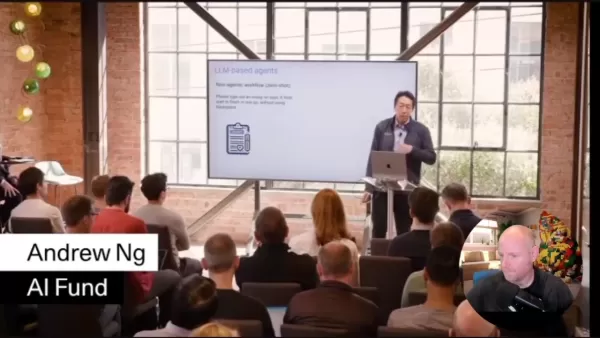
In a non-agentic workflow, often referred to as zero-shot, you supply a prompt to the AI model, and it produces a response in one attempt. This is similar to asking someone to sit at a keyboard and type a full essay from beginning to end without ever pressing backspace.
Conversely, an agentic workflow is far more cyclical. It includes the AI agent actively reasoning, strategizing, and refining its output. A typical workflow involves:
- Creating an essay outline on a specific topic
- Determining if web research is necessary and conducting it if needed
- Producing a first draft
- Evaluating which sections require revision or deeper investigation
- Revising the draft accordingly
This repetitive method lets the AI agent learn from its errors, sharpen its grasp of the assignment, and ultimately yield a much higher quality product. It reflects how people handle complicated jobs—dividing them into smaller stages, assessing progress, and making changes as they go.
The Cost-Effectiveness Revolution: GPT-3.5 and LLaMA Outperforming GPT-4
One of the most compelling features of AI agent design patterns is their capacity to unleash the capabilities of more budget-friendly models. Although GPT-4 is clearly a strong model, its computational requirements and accompanying costs can be too high for many uses. However, by implementing agentic workflows and strategic design patterns, models like GPT-3.5 and LLaMA can frequently equal or even exceed GPT-4's performance, all while being considerably more affordable.
This cost-efficiency transforms AI adoption, making it feasible for a wider array of companies and institutions. Smaller firms with limited resources can now harness AI's potential without overspending. This democratization of AI is set to fuel innovation in multiple fields, from customer support and content generation to software engineering.
The ability of a model that costs ten times less than GPT-4 to achieve nearly identical success rates shows that the agent model enhances logical thinking and problem-solving abilities to successfully finish a task.
Coding Benchmarks and HumanEval: A Case Study in AI Agent Performance
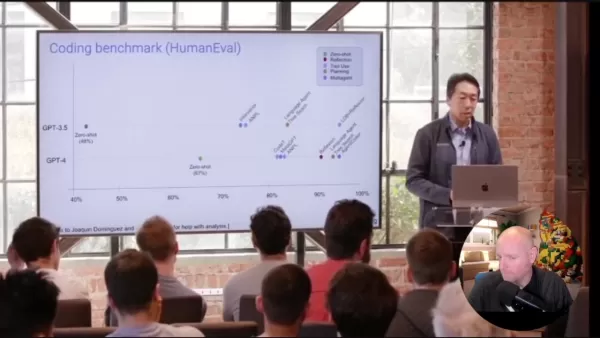
Coding benchmarks, like HumanEval, offer tangible proof of how effective AI agent design patterns can be. HumanEval, introduced by OpenAI, contains programming challenges intended to evaluate how well AI models can create correct and efficient code.
The findings from this benchmark are quite striking. Using the non-agentic approach:
- GPT-3.5 achieves correct answers 48% of the time
- GPT-4 provides correct solutions 67% of the time
These results are not particularly impressive, even from the top-performing model, GPT-4.
Nevertheless, when the agent model is applied to GPT-3.5, it can actually perform better than GPT-4 in resolving coding challenges, underscoring the effectiveness of this design methodology.
These outcomes confirm that AI agent design patterns are not just theoretical ideas but actionable methods that can greatly boost AI effectiveness in practical applications.
Agentic Reasoning Design Patterns: Four Key Strategies
Reflection: Learning from Mistakes and Refining the Approach
Reflection is a core design pattern that lets AI agents learn from their errors and enhance their performance progressively. It requires the agent to examine its previous actions, spot inaccuracies, and modify its plan as needed

. This self-evaluation process is key for ongoing development and enables the agent to adjust to new situations and obstacles.
Andrew Ng presents a straightforward yet powerful illustration of reflection: after the agent creates code for a project, you simply instruct it to "carefully review the code for accuracy, style, and efficiency, and offer helpful suggestions for enhancement." The agent examines the code and pinpoints possible problems or areas that could be improved. For instance, it might find inefficient algorithms, potential errors, or places where the code could be more readable or easier to maintain. Using this evaluation, the agent updates the code to fix the discovered issues, delivering a stronger and more dependable solution.
Tool Use: Leveraging External Resources to Enhance Capabilities
Tool use is another robust design pattern that permits AI agents to tap into external resources to expand their skills. This entails the agent recognizing when a specific tool is needed, picking the right tool from available choices, and employing the tool to complete a particular sub-task. By using outside tools, AI agents can surpass their built-in constraints and accomplish jobs that would otherwise be unachievable.
For example, an AI agent assigned to write a blog article might utilize a web search tool to investigate the subject, a natural language processing tool to evaluate the tone of current posts, and a grammar checker to guarantee the precision and clarity of its writing. Tool use is widely recognized and represents a dependable technology.
Planning: Breaking Down Complex Tasks into Manageable Steps
Planning is an essential design pattern that allows AI agents to address complicated tasks by dividing them into smaller, more feasible steps. This involves the agent first analyzing the overall objective, identifying crucial sub-tasks, and then formulating a plan to carry out those sub-tasks in a sensible and effective sequence. By planning its strategy, the agent can prevent being overwhelmed by the task's complexity and ensure it remains focused on reaching its target.
Planning is viewed as a more developing technology. A common example is the "think step by step" prompting technique. This can help the large language model decompose its decision-making process.
Multi-Agent Collaboration: Harnessing the Power of Collective Intelligence
Multi-agent collaboration is a sophisticated design pattern that involves several AI agents cooperating to reach a shared objective. This method allows for dividing the workload, specializing in particular areas, and combining different viewpoints synergistically. Through effective teamwork, multiple AI agents can produce results that a single agent could never accomplish alone.
Multi-agent collaboration is also advancing with new innovations. When various agents operate in harmony, the gains in productivity and quality seem almost magical, resulting in exponentially better outcomes.
AI Agent Design Patterns: Pros and Cons
Pros
Budget-friendly: Allows less expensive models to deliver strong performance.
Greater precision: Repeated workflows and reflection generate improved outcomes.
Enhanced productivity: Automation and planning simplify intricate tasks.
Better teamwork: Multi-agent systems unlock combined potential.
Cons
Intricacy: Creating and applying successful agent patterns can be difficult.
Early-stage technology: Certain patterns are still in the initial phases of advancement.
Inconsistency: Multi-agent cooperation may not always be dependable.
Resource demands: Still need substantial computing power
FAQ
What are AI agent design patterns?
AI agent design patterns are tested methods for creating efficient and economical AI agents. They offer a structure for reasoning, organizing, and improving methods for handling complex assignments.
Why are AI agent design patterns important?
They empower affordable models like GPT-3.5 and LLaMA to compete with or exceed the capabilities of pricier alternatives such as GPT-4, potentially reducing AI expenditures by up to 90%.
What are some key AI agent design patterns?
Essential patterns include reflection, tool use, planning, and multi-agent cooperation.
How can I leverage AI agent design patterns in my business?
Evaluate your AI requirements, pinpoint tasks that could gain from iterative processes, and test various design patterns to optimize both performance and expenses.
Related Questions
How can I get started with AI agent design?
Begin by studying the main design patterns and trying out different models and prompting styles. Concentrate on repetitive workflows and constant enhancement to boost performance and reduce costs.
Related article
 Google Unveils Gemini Notebooks, Merging NotebookLM with Personal Knowledge Base
Google recently launched a "Notebooks" feature for Gemini, designed to help users manage complex projects by creating a personalized knowledge base. This update bridges the data gap between Gemini and the AI research assistant NotebookLM, marking a k
Luma AI unveils Uni-1 autoregressive model that generates text and pixels simultaneously
Luma Labs launched its image generation model Uni-1 on March 23, marking the company's first publicly available model built on the Unified Intelligence architecture. Free trial access is now open on the official website, with API pricing announced an
NVIDIA's Xinzhou Wu: autonomous driving's ChatGPT moment has arrived, L4 mass production no longer a dream
In the rapidly evolving field of physical AI, autonomous driving is often viewed as the first major challenge to overcome. Recently, Wu Xinzhou, Vice President of NVIDIA, outlined the company's ambitious vision for intelligent driving at a Beijing co
Related Special Topic Recommendations
chatbot
Google Unveils Gemini Notebooks, Merging NotebookLM with Personal Knowledge Base
Google recently launched a "Notebooks" feature for Gemini, designed to help users manage complex projects by creating a personalized knowledge base. This update bridges the data gap between Gemini and the AI research assistant NotebookLM, marking a k
Luma AI unveils Uni-1 autoregressive model that generates text and pixels simultaneously
Luma Labs launched its image generation model Uni-1 on March 23, marking the company's first publicly available model built on the Unified Intelligence architecture. Free trial access is now open on the official website, with API pricing announced an
NVIDIA's Xinzhou Wu: autonomous driving's ChatGPT moment has arrived, L4 mass production no longer a dream
In the rapidly evolving field of physical AI, autonomous driving is often viewed as the first major challenge to overcome. Recently, Wu Xinzhou, Vice President of NVIDIA, outlined the company's ambitious vision for intelligent driving at a Beijing co
Related Special Topic Recommendations
chatbot
 Top-Rated AI Romantic Chatbots: Build Long-Term Relationships with Consistent Personalities
Discover the 2026 latest top-rated AI romantic chatbots for building genuine, long-term connections. Our curated list features powerful, consistent personalities, free vs paid comparisons, and real-world tests. Find your perfect companion and start building today at XIX.AI.
 10 tools
 xix.ai
Education and Learning
Best AI Data Science Mentors: Master SQL, Pandas & Machine Learning Workflows
xix.ai
Education and Learning
Best AI Data Science Mentors: Master SQL, Pandas & Machine Learning Workflows
Discover the 2026 best AI data science mentors to master SQL, Pandas & ML workflows. Explore our top-rated, curated selection at XIX.AI for powerful, game-changing guidance. Compare free vs paid options with real-world insights. Unlock your data science mastery today.
10 tools
xix.ai
chatbot
Best AI Flirting & Conversation Trainers: Improve Social Charisma and Confidence in Real-Time
Discover the 2026 best AI flirting and conversation trainers on XIX.AI. Our curated, top-rated selection helps you build social charisma and confidence in real-time. Explore must-try, game-changing tools with free vs paid comparisons and weekly updated rankings. Unlock your social edge today.
10 tools
xix.ai
code
Best AI Tools for Automated Unit Testing: Generate Jest, PyTest & JUnit Test Cases in One Click
Discover the 2026 latest top-rated AI tools for automated unit testing. Our curated selection features powerful, game-changing solutions to generate Jest, PyTest & JUnit test cases instantly. Compare free vs paid options with real-world tests and weekly updated rankings on XIX.AI. Unlock your AI edge and boost development productivity today.
10 tools
xix.ai
Data Analysis
Best AI Data Visualization Tools: Auto-Generate Interactive BI Dashboards from Raw Files
Discover the 2026 best AI data visualization tools at XIX.AI. Our curated, top-rated selection helps you auto-generate powerful, interactive BI dashboards from raw files instantly. Compare free vs paid options with real-world tests and weekly updated rankings. Unlock your data's potential today.
10 tools
xix.ai
Social Media
AI Branding Kits for Social Media: Maintain Consistent Brand Visuals Across All Channels
Discover the 2026 best AI branding kits for social media. XIX.AI's curated list features top-rated, game-changing tools to maintain perfectly consistent brand visuals across all channels. Compare free vs paid options with real-world tests. Unlock your brand's visual edge today.
10 tools
xix.ai

 Comments (6)
0/500
Comments (6)
0/500
![RogerLee]()
Interesting read! The cost-performance trade-off is so real. I've been experimenting with smaller models for specific tasks, and the savings are significant without sacrificing too much quality. Anyone else tried a hybrid approach?
![BillyWilson]()
작업장에서 비용 효율적인 AI 에이전트 패턴은 얼마나 효과적일까요? 저는 규모가 작은 기술 스타트업의 창립자인데, GPT-4 같은 고급 모델을 이용한 비용이 걱정됩니다. 제가 읽은 기사에서는 LLM, 검색 도구, 내부 API를 결합한 하이브리드 접근 방식에 대해 논의했습니다. 저는 이것이 실제로 비용을 줄이고 성능을 향상시킬 수 있는 방법이라고 생각합니다. 특정 산업 분야에서 적용할 수 있는 구체적인 사례를 보면 더욱 도움이 될 것 같아요. 🤔
![WillLopez]()
작성자님, 이 글의 에이전트 디자인 패턴 부분이 특히 재미있네요! 실제로 요즘 저희 팀이 LLM 토큰 비용을 줄이면서 성능은 유지하려는 상황인데, 아티클에 나온 '캐싱 프롬프트' 같은 아이디어가 정말 실용적으로 느껴져요. 다만 한국에서는 아직 클라우드 비용보다 인건비가 더 큰 문제인 것 같아요 ㅎㅎ; 이 패턴들 적용할 때 보안 이슈는 어떻게 처리하면 좋을까요? 🤔 에이전트가 실수로 중요한 데이터를 외부 API로 보내는 경우도 있을 테니... 어쨌든 유익한 글이었습니다!
![AlbertDavis]()
Really enjoyed the perspective in this article. While everyone talks about the biggest models, focusing on cost-efficient agent design is what will make AI truly scalable for everyday business applications. Makes me wonder how soon these patterns will become standard practice. 🧠
![JuanMoore]()
Interesting read! Cost optimization in AI agents doesn't get enough spotlight compared to raw performance metrics. The trade-offs between specialized smaller models and general-purpose LLMs are super relevant for startups trying to deploy AI responsibly 🧠💸. Wonder how these patterns apply to real-time decision systems like autonomous drones?
![MarkGonzalez]()
Le sujet des agents IA qui optimisent coût et performance est crucial, mais parfois on a l'impression que l'accent est trop mis sur la rentabilité immédiate. Ces solutions 'low-cost' sont-elles vraiment durables à long terme ? J'espère que cela ne va pas sacrifier la qualité ou l'innovation. 🧐
The field of Artificial Intelligence (AI) is advancing at a remarkable pace, with AI agents growing increasingly sophisticated and capable of managing complex assignments. While high-profile models like GPT-4 frequently dominate conversations, emerging design approaches are empowering more affordable alternatives such as GPT-3.5 and LLaMA. These methods enable AI agents to deliver impressive accuracy while significantly cutting expenses—sometimes by as much as 90%. This article examines these groundbreaking design patterns and explains how they are transforming the AI ecosystem. We'll explore practical techniques for optimizing AI agent performance while keeping costs low, opening the door to broader AI integration across diverse sectors.
Key Points
AI agent design patterns are allowing more affordable models to perform on par with or even better than costly ones like GPT-4.
By applying these design patterns to models such as GPT-3.5 and LLaMA, businesses can lower AI-related expenses by up to 90%.
Agent-driven workflows, which incorporate repeated reasoning and revisions, produce significantly superior outcomes compared to non-agentic approaches.
Reflection and tool usage are well-established techniques for constructing powerful AI agents.
Planning and multi-agent cooperation are evolving technologies with substantial potential for the future of AI agent development.
The Paradigm Shift in AI Agent Design
Beyond Zero-Shot Learning: The Need for AI Agent Design Patterns
Imagine requesting someone to compose a complete essay without ever using the delete key. That sounds extremely difficult, doesn't it? Yet, this is often what we expect from AI models on a regular basis. We assign them intricate tasks without allowing them to iterate, make revisions, or learn from errors.
Then, we become frustrated when the result isn't perfect. This is where AI agent design patterns become essential. They go beyond the restrictions of zero-shot learning, where a model must complete a task without prior training or examples. These frameworks give AI agents the necessary structure to think, plan, and improve their methods, resulting in substantially better outcomes.
Andrew Ng, a leading figure in AI, emphasized this shift during a presentation at Sequoia Capital. He illustrated how AI agents, when built with suitable patterns, can achieve outstanding accuracy at a much lower price. This isn't merely about selecting a cheaper model; it's about employing intelligent tactics to obtain superior results.
Agentic vs. Non-Agentic Workflows: A Fundamental Difference
To appreciate the strength of AI agent design patterns, it's vital to understand the distinction between agentic and non-agentic processes.
In a non-agentic workflow, often referred to as zero-shot, you supply a prompt to the AI model, and it produces a response in one attempt. This is similar to asking someone to sit at a keyboard and type a full essay from beginning to end without ever pressing backspace.
Conversely, an agentic workflow is far more cyclical. It includes the AI agent actively reasoning, strategizing, and refining its output. A typical workflow involves:
- Creating an essay outline on a specific topic
- Determining if web research is necessary and conducting it if needed
- Producing a first draft
- Evaluating which sections require revision or deeper investigation
- Revising the draft accordingly
This repetitive method lets the AI agent learn from its errors, sharpen its grasp of the assignment, and ultimately yield a much higher quality product. It reflects how people handle complicated jobs—dividing them into smaller stages, assessing progress, and making changes as they go.
The Cost-Effectiveness Revolution: GPT-3.5 and LLaMA Outperforming GPT-4
One of the most compelling features of AI agent design patterns is their capacity to unleash the capabilities of more budget-friendly models. Although GPT-4 is clearly a strong model, its computational requirements and accompanying costs can be too high for many uses. However, by implementing agentic workflows and strategic design patterns, models like GPT-3.5 and LLaMA can frequently equal or even exceed GPT-4's performance, all while being considerably more affordable.
This cost-efficiency transforms AI adoption, making it feasible for a wider array of companies and institutions. Smaller firms with limited resources can now harness AI's potential without overspending. This democratization of AI is set to fuel innovation in multiple fields, from customer support and content generation to software engineering.
The ability of a model that costs ten times less than GPT-4 to achieve nearly identical success rates shows that the agent model enhances logical thinking and problem-solving abilities to successfully finish a task.
Coding Benchmarks and HumanEval: A Case Study in AI Agent Performance
Coding benchmarks, like HumanEval, offer tangible proof of how effective AI agent design patterns can be. HumanEval, introduced by OpenAI, contains programming challenges intended to evaluate how well AI models can create correct and efficient code.
The findings from this benchmark are quite striking. Using the non-agentic approach:
- GPT-3.5 achieves correct answers 48% of the time
- GPT-4 provides correct solutions 67% of the time
These results are not particularly impressive, even from the top-performing model, GPT-4.
Nevertheless, when the agent model is applied to GPT-3.5, it can actually perform better than GPT-4 in resolving coding challenges, underscoring the effectiveness of this design methodology.
These outcomes confirm that AI agent design patterns are not just theoretical ideas but actionable methods that can greatly boost AI effectiveness in practical applications.
Agentic Reasoning Design Patterns: Four Key Strategies
Reflection: Learning from Mistakes and Refining the Approach
Reflection is a core design pattern that lets AI agents learn from their errors and enhance their performance progressively. It requires the agent to examine its previous actions, spot inaccuracies, and modify its plan as needed
. This self-evaluation process is key for ongoing development and enables the agent to adjust to new situations and obstacles.
Andrew Ng presents a straightforward yet powerful illustration of reflection: after the agent creates code for a project, you simply instruct it to "carefully review the code for accuracy, style, and efficiency, and offer helpful suggestions for enhancement." The agent examines the code and pinpoints possible problems or areas that could be improved. For instance, it might find inefficient algorithms, potential errors, or places where the code could be more readable or easier to maintain. Using this evaluation, the agent updates the code to fix the discovered issues, delivering a stronger and more dependable solution.
Tool Use: Leveraging External Resources to Enhance Capabilities
Tool use is another robust design pattern that permits AI agents to tap into external resources to expand their skills. This entails the agent recognizing when a specific tool is needed, picking the right tool from available choices, and employing the tool to complete a particular sub-task. By using outside tools, AI agents can surpass their built-in constraints and accomplish jobs that would otherwise be unachievable.
For example, an AI agent assigned to write a blog article might utilize a web search tool to investigate the subject, a natural language processing tool to evaluate the tone of current posts, and a grammar checker to guarantee the precision and clarity of its writing. Tool use is widely recognized and represents a dependable technology.
Planning: Breaking Down Complex Tasks into Manageable Steps
Planning is an essential design pattern that allows AI agents to address complicated tasks by dividing them into smaller, more feasible steps. This involves the agent first analyzing the overall objective, identifying crucial sub-tasks, and then formulating a plan to carry out those sub-tasks in a sensible and effective sequence. By planning its strategy, the agent can prevent being overwhelmed by the task's complexity and ensure it remains focused on reaching its target.
Planning is viewed as a more developing technology. A common example is the "think step by step" prompting technique. This can help the large language model decompose its decision-making process.
Multi-Agent Collaboration: Harnessing the Power of Collective Intelligence
Multi-agent collaboration is a sophisticated design pattern that involves several AI agents cooperating to reach a shared objective. This method allows for dividing the workload, specializing in particular areas, and combining different viewpoints synergistically. Through effective teamwork, multiple AI agents can produce results that a single agent could never accomplish alone.
Multi-agent collaboration is also advancing with new innovations. When various agents operate in harmony, the gains in productivity and quality seem almost magical, resulting in exponentially better outcomes.
AI Agent Design Patterns: Pros and Cons
Pros
Budget-friendly: Allows less expensive models to deliver strong performance.
Greater precision: Repeated workflows and reflection generate improved outcomes.
Enhanced productivity: Automation and planning simplify intricate tasks.
Better teamwork: Multi-agent systems unlock combined potential.
Cons
Intricacy: Creating and applying successful agent patterns can be difficult.
Early-stage technology: Certain patterns are still in the initial phases of advancement.
Inconsistency: Multi-agent cooperation may not always be dependable.
Resource demands: Still need substantial computing power
FAQ
What are AI agent design patterns?
AI agent design patterns are tested methods for creating efficient and economical AI agents. They offer a structure for reasoning, organizing, and improving methods for handling complex assignments.
Why are AI agent design patterns important?
They empower affordable models like GPT-3.5 and LLaMA to compete with or exceed the capabilities of pricier alternatives such as GPT-4, potentially reducing AI expenditures by up to 90%.
What are some key AI agent design patterns?
Essential patterns include reflection, tool use, planning, and multi-agent cooperation.
How can I leverage AI agent design patterns in my business?
Evaluate your AI requirements, pinpoint tasks that could gain from iterative processes, and test various design patterns to optimize both performance and expenses.
Related Questions
How can I get started with AI agent design?
Begin by studying the main design patterns and trying out different models and prompting styles. Concentrate on repetitive workflows and constant enhancement to boost performance and reduce costs.








 Google Unveils Gemini Notebooks, Merging NotebookLM with Personal Knowledge Base
Google recently launched a "Notebooks" feature for Gemini, designed to help users manage complex projects by creating a personalized knowledge base. This update bridges the data gap between Gemini and the AI research assistant NotebookLM, marking a k
Google Unveils Gemini Notebooks, Merging NotebookLM with Personal Knowledge Base
Google recently launched a "Notebooks" feature for Gemini, designed to help users manage complex projects by creating a personalized knowledge base. This update bridges the data gap between Gemini and the AI research assistant NotebookLM, marking a k
 Luma AI unveils Uni-1 autoregressive model that generates text and pixels simultaneously
Luma Labs launched its image generation model Uni-1 on March 23, marking the company's first publicly available model built on the Unified Intelligence architecture. Free trial access is now open on the official website, with API pricing announced an
Luma AI unveils Uni-1 autoregressive model that generates text and pixels simultaneously
Luma Labs launched its image generation model Uni-1 on March 23, marking the company's first publicly available model built on the Unified Intelligence architecture. Free trial access is now open on the official website, with API pricing announced an
 NVIDIA's Xinzhou Wu: autonomous driving's ChatGPT moment has arrived, L4 mass production no longer a dream
In the rapidly evolving field of physical AI, autonomous driving is often viewed as the first major challenge to overcome. Recently, Wu Xinzhou, Vice President of NVIDIA, outlined the company's ambitious vision for intelligent driving at a Beijing co
NVIDIA's Xinzhou Wu: autonomous driving's ChatGPT moment has arrived, L4 mass production no longer a dream
In the rapidly evolving field of physical AI, autonomous driving is often viewed as the first major challenge to overcome. Recently, Wu Xinzhou, Vice President of NVIDIA, outlined the company's ambitious vision for intelligent driving at a Beijing co
Discover the 2026 latest top-rated AI romantic chatbots for building genuine, long-term connections. Our curated list features powerful, consistent personalities, free vs paid comparisons, and real-world tests. Find your perfect companion and start building today at XIX.AI.
10 tools
xix.ai

Discover the 2026 best AI data science mentors to master SQL, Pandas & ML workflows. Explore our top-rated, curated selection at XIX.AI for powerful, game-changing guidance. Compare free vs paid options with real-world insights. Unlock your data science mastery today.
10 tools
xix.ai

Discover the 2026 best AI flirting and conversation trainers on XIX.AI. Our curated, top-rated selection helps you build social charisma and confidence in real-time. Explore must-try, game-changing tools with free vs paid comparisons and weekly updated rankings. Unlock your social edge today.
10 tools
xix.ai

Discover the 2026 latest top-rated AI tools for automated unit testing. Our curated selection features powerful, game-changing solutions to generate Jest, PyTest & JUnit test cases instantly. Compare free vs paid options with real-world tests and weekly updated rankings on XIX.AI. Unlock your AI edge and boost development productivity today.
10 tools
xix.ai

Discover the 2026 best AI data visualization tools at XIX.AI. Our curated, top-rated selection helps you auto-generate powerful, interactive BI dashboards from raw files instantly. Compare free vs paid options with real-world tests and weekly updated rankings. Unlock your data's potential today.
10 tools
xix.ai

Discover the 2026 best AI branding kits for social media. XIX.AI's curated list features top-rated, game-changing tools to maintain perfectly consistent brand visuals across all channels. Compare free vs paid options with real-world tests. Unlock your brand's visual edge today.
10 tools
xix.ai

Interesting read! The cost-performance trade-off is so real. I've been experimenting with smaller models for specific tasks, and the savings are significant without sacrificing too much quality. Anyone else tried a hybrid approach?
작업장에서 비용 효율적인 AI 에이전트 패턴은 얼마나 효과적일까요? 저는 규모가 작은 기술 스타트업의 창립자인데, GPT-4 같은 고급 모델을 이용한 비용이 걱정됩니다. 제가 읽은 기사에서는 LLM, 검색 도구, 내부 API를 결합한 하이브리드 접근 방식에 대해 논의했습니다. 저는 이것이 실제로 비용을 줄이고 성능을 향상시킬 수 있는 방법이라고 생각합니다. 특정 산업 분야에서 적용할 수 있는 구체적인 사례를 보면 더욱 도움이 될 것 같아요. 🤔
작성자님, 이 글의 에이전트 디자인 패턴 부분이 특히 재미있네요! 실제로 요즘 저희 팀이 LLM 토큰 비용을 줄이면서 성능은 유지하려는 상황인데, 아티클에 나온 '캐싱 프롬프트' 같은 아이디어가 정말 실용적으로 느껴져요. 다만 한국에서는 아직 클라우드 비용보다 인건비가 더 큰 문제인 것 같아요 ㅎㅎ; 이 패턴들 적용할 때 보안 이슈는 어떻게 처리하면 좋을까요? 🤔 에이전트가 실수로 중요한 데이터를 외부 API로 보내는 경우도 있을 테니... 어쨌든 유익한 글이었습니다!
Really enjoyed the perspective in this article. While everyone talks about the biggest models, focusing on cost-efficient agent design is what will make AI truly scalable for everyday business applications. Makes me wonder how soon these patterns will become standard practice. 🧠
Interesting read! Cost optimization in AI agents doesn't get enough spotlight compared to raw performance metrics. The trade-offs between specialized smaller models and general-purpose LLMs are super relevant for startups trying to deploy AI responsibly 🧠💸. Wonder how these patterns apply to real-time decision systems like autonomous drones?
Le sujet des agents IA qui optimisent coût et performance est crucial, mais parfois on a l'impression que l'accent est trop mis sur la rentabilité immédiate. Ces solutions 'low-cost' sont-elles vraiment durables à long terme ? J'espère que cela ne va pas sacrifier la qualité ou l'innovation. 🧐