


 Home
HomeAdobe's New 'Computational Photography' App Launches for iPhone

Adobe has launched a new computational photography camera app for iPhones – developed in part by Marc Levoy, the expert who created the advanced computational photography features that powered earlier Google Pixel cameras.
The new app, Project Indigo, was released last week by Adobe Labs. It is free to download and compatible with iPhone 12 Pro and Pro Max, iPhone 13 Pro and Pro Max, and all iPhone 14 models and later. (Adobe recommends using an iPhone 15 Pro or newer for the best experience.) No Adobe account is required to start using the app.
“Rather than capturing just one photo, Indigo takes a series of images and merges them to create a high-quality final photo with reduced noise and improved dynamic range,” the app’s description explains. Indigo aims to deliver a natural, “SLR-like” appearance, while also providing extensive manual controls such as focus, shutter speed, ISO, and white balance.
To get a deeper look at how Project Indigo works behind the scenes, it’s worth reading a detailed blog post by Levoy – now an Adobe Fellow who joined the company in 2020 to build a “universal camera app” – and Florian Kainz, a senior scientist. The post explores topics like the strengths of smartphone cameras, the science behind computational photography, how the app achieves its natural look, and technical details about its image processing workflow.
I should note that I’m not a camera expert myself. Still, I found the post highly engaging and educational. The sample photos included look impressive, and Adobe also provides a gallery of images you can explore.
Related
- Marc Levoy discusses balancing camera hardware, software, and creative expression
- The mind behind the Google Pixel camera is working on a universal camera app for Adobe
In the post, Levoy and Kainz mention that Project Indigo will also serve as a platform for testing new technologies that could later be integrated into other flagship Adobe products, such as a feature to eliminate reflections. Looking ahead, the team aims to develop an Android version, portrait mode capabilities, and even video recording.
"This marks the start of Adobe's journey toward a unified mobile camera and editing experience that harnesses the latest innovations in computational photography and AI," write Levoy and Kainz. “We hope Indigo will attract both casual mobile photographers seeking a natural, SLR-like look – even on large screens – and advanced photographers who value manual control and superior image quality. We also welcome anyone who enjoys experimenting with new photographic tools.”
Related article
 Microsoft, Azure and AI Tech Combat California Wildfire Risks
Microsoft invests in AI-driven wildfire detection, with Juan Lavista Ferres, CVP and Chief Data Scientist, discussing strategies to mitigate environmental damage.According to NASA, climate change impacts everyone on Earth, manifesting as rising tempe
Microsoft CEO Slams AI Labs Over Distillation
Satya Nadella, Microsoft’s CEO, calls out AI labs for hypocrisy regarding distillation criticism, a remark widely interpreted as targeting Anthropic. Credit: Getty ImagesMicrosoft CEO Satya Nadella challenges AI developers for limiting model distilla
AI Live: Rebuilding Workflows for the Future of Enterprise
AI LIVE: The London Summit takes place 20–21 October at Olympia, LondonLeaders from Ericsson and Adobe will address governance, scaling, and the future of enterprise AI at AI LIVE in LondonDeploying intelligent software is just the first step; AI age
Related Special Topic Recommendations
Design & Art
Microsoft, Azure and AI Tech Combat California Wildfire Risks
Microsoft invests in AI-driven wildfire detection, with Juan Lavista Ferres, CVP and Chief Data Scientist, discussing strategies to mitigate environmental damage.According to NASA, climate change impacts everyone on Earth, manifesting as rising tempe
Microsoft CEO Slams AI Labs Over Distillation
Satya Nadella, Microsoft’s CEO, calls out AI labs for hypocrisy regarding distillation criticism, a remark widely interpreted as targeting Anthropic. Credit: Getty ImagesMicrosoft CEO Satya Nadella challenges AI developers for limiting model distilla
AI Live: Rebuilding Workflows for the Future of Enterprise
AI LIVE: The London Summit takes place 20–21 October at Olympia, LondonLeaders from Ericsson and Adobe will address governance, scaling, and the future of enterprise AI at AI LIVE in LondonDeploying intelligent software is just the first step; AI age
Related Special Topic Recommendations
Design & Art
 Best AI Style Transfer Tools for Creative Experiments
2026 Latest Best Top-rated AI Style Transfer Tools for Creative Experiments! XIX.AI has curated a powerful, game-changing collection of must-try tools that deliver exceptional results through real-world tests and rigorous rankings. These top solutions help creatives boost productivity significantly by accelerating content creation and unlocking endless creative possibilities. Explore now to discover your perfect tool and start creating today!
 9 tools
 xix.ai
Comic Creation
Best AI Dialogue Bubble Tools for Visual Storytelling
xix.ai
Comic Creation
Best AI Dialogue Bubble Tools for Visual Storytelling
2026 Latest Best Top-Rated AI Dialogue Bubble Tools for Visual Storytelling are here on XIX.AI! This curated collection features powerful, game-changing tools that help creators boost productivity and overcome creative bottlenecks. Get a free vs paid comparison, see real-world tests, and check the latest rankings to find the must-try solutions perfect for crafting engaging visual narratives. Explore now to discover your ideal tool!
10 tools
xix.ai
Meeting Assistant
Top AI Meeting Summary Tools: Track Decisions and Follow-Ups Clearly
2026 Latest Top-Rated Best AI Meeting Summary Tools for Clear Decision Tracking and Effortless Follow-Ups. This curated list showcases powerful, game-changing solutions that boost productivity dramatically by automating meeting notes, identifying key action items, and streamlining team coordination across all projects. Get a free vs paid comparison along with real-world tests and weekly updated rankings to help you find the perfect tool. Explore now to unlock your AI edge!
9 tools
xix.ai
Data Analysis
Best AI Data Cleaning Tools: Fix Missing Values and Duplicates Fast
2026 Latest Best Top-rated AI Data Cleaning Tools for quick fixing of missing values and duplicates. This curated list showcases powerful, game-changing solutions that boost productivity significantly. Each option has undergone rigorous real-world tests to ensure reliability. Get a free vs paid comparison and discover the must-try tool that fits your needs best. Explore now at XIX.AI to Unlock your AI edge.
11 tools
xix.ai
Design & Art
Best AI Creative Ideation Tools for Artists: Break Through Visual Blocks
2026 Latest Best Top-Rated AI Creative Ideation Tools for Artists are curated by XIX.AI to help creators break through visual blocks and boost creativity instantly. These powerful game-changing tools offer real-world tests, detailed free vs paid comparison, and weekly updated rankings. Discover your perfect tool to accelerate content creation and unlock your AI edge today. Explore now!
14 tools
xix.ai
Music composition
AI Beat Makers for TikTok Background Tracks, Reels Audio, and Creator Promo Music
2026 Latest Best AI Beat Makers for TikTok Background Tracks, Reels Audio, and Creator Promo Music! XIX.AI has curated a top-rated list of powerful game-changing tools that go through real-world tests to deliver flawless music for every content need. You’ll find detailed free vs paid comparison data, weekly updated rankings, and must-try options to help you boost creativity and productivity. Explore now to discover your perfect tool!
11 tools
xix.ai

 Comments (3)
0/500
Comments (3)
0/500
![EricScott]()
I just downloaded Project Indigo and was instantly blown away by how it boosts low-light photos. It feels like having a professional camera with me everywhere, but I wish they added more editing tools for everyday edits instead of just raw photo processing.
![EdwardScott]()
Adobe's jumping into the mobile camera app game? Interesting move! With Marc Levoy on board, the expectations are sky-high. But honestly, the iPhone's native camera is already so good. I wonder if this will be a niche tool for pros or if it can actually convince regular users to switch. The computational photography race is heating up! 📱
![WillHill]()
Красота, а не приложение! 👏 Adobe нанял Марка Левуа - гуру вычислительной фотографии Google Pixel. Значит ли это, что у iPhone теперь будет 'Pixel-качество' фотографий? Интересно, как отреагирует Apple, ведь это подрывает престиж их фирменных камер. Ещё один шаг к тому, чтобы все наши снимки обрабатывались в облаке, а не в самом устройстве.
Adobe has launched a new computational photography camera app for iPhones – developed in part by Marc Levoy, the expert who created the advanced computational photography features that powered earlier Google Pixel cameras.
The new app, Project Indigo, was released last week by Adobe Labs. It is free to download and compatible with iPhone 12 Pro and Pro Max, iPhone 13 Pro and Pro Max, and all iPhone 14 models and later. (Adobe recommends using an iPhone 15 Pro or newer for the best experience.) No Adobe account is required to start using the app.
“Rather than capturing just one photo, Indigo takes a series of images and merges them to create a high-quality final photo with reduced noise and improved dynamic range,” the app’s description explains. Indigo aims to deliver a natural, “SLR-like” appearance, while also providing extensive manual controls such as focus, shutter speed, ISO, and white balance.
To get a deeper look at how Project Indigo works behind the scenes, it’s worth reading a detailed blog post by Levoy – now an Adobe Fellow who joined the company in 2020 to build a “universal camera app” – and Florian Kainz, a senior scientist. The post explores topics like the strengths of smartphone cameras, the science behind computational photography, how the app achieves its natural look, and technical details about its image processing workflow.
I should note that I’m not a camera expert myself. Still, I found the post highly engaging and educational. The sample photos included look impressive, and Adobe also provides a gallery of images you can explore.
Related
- Marc Levoy discusses balancing camera hardware, software, and creative expression
- The mind behind the Google Pixel camera is working on a universal camera app for Adobe
In the post, Levoy and Kainz mention that Project Indigo will also serve as a platform for testing new technologies that could later be integrated into other flagship Adobe products, such as a feature to eliminate reflections. Looking ahead, the team aims to develop an Android version, portrait mode capabilities, and even video recording.
"This marks the start of Adobe's journey toward a unified mobile camera and editing experience that harnesses the latest innovations in computational photography and AI," write Levoy and Kainz. “We hope Indigo will attract both casual mobile photographers seeking a natural, SLR-like look – even on large screens – and advanced photographers who value manual control and superior image quality. We also welcome anyone who enjoys experimenting with new photographic tools.”








 Microsoft, Azure and AI Tech Combat California Wildfire Risks
Microsoft invests in AI-driven wildfire detection, with Juan Lavista Ferres, CVP and Chief Data Scientist, discussing strategies to mitigate environmental damage.According to NASA, climate change impacts everyone on Earth, manifesting as rising tempe
Microsoft, Azure and AI Tech Combat California Wildfire Risks
Microsoft invests in AI-driven wildfire detection, with Juan Lavista Ferres, CVP and Chief Data Scientist, discussing strategies to mitigate environmental damage.According to NASA, climate change impacts everyone on Earth, manifesting as rising tempe
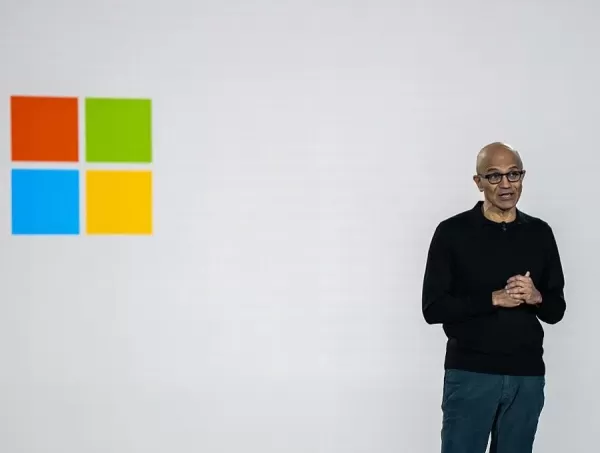 Microsoft CEO Slams AI Labs Over Distillation
Satya Nadella, Microsoft’s CEO, calls out AI labs for hypocrisy regarding distillation criticism, a remark widely interpreted as targeting Anthropic. Credit: Getty ImagesMicrosoft CEO Satya Nadella challenges AI developers for limiting model distilla
Microsoft CEO Slams AI Labs Over Distillation
Satya Nadella, Microsoft’s CEO, calls out AI labs for hypocrisy regarding distillation criticism, a remark widely interpreted as targeting Anthropic. Credit: Getty ImagesMicrosoft CEO Satya Nadella challenges AI developers for limiting model distilla
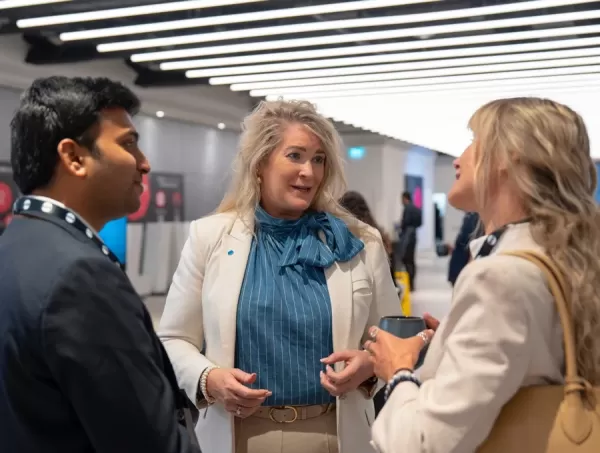 AI Live: Rebuilding Workflows for the Future of Enterprise
AI LIVE: The London Summit takes place 20–21 October at Olympia, LondonLeaders from Ericsson and Adobe will address governance, scaling, and the future of enterprise AI at AI LIVE in LondonDeploying intelligent software is just the first step; AI age
AI Live: Rebuilding Workflows for the Future of Enterprise
AI LIVE: The London Summit takes place 20–21 October at Olympia, LondonLeaders from Ericsson and Adobe will address governance, scaling, and the future of enterprise AI at AI LIVE in LondonDeploying intelligent software is just the first step; AI age

2026 Latest Best Top-rated AI Style Transfer Tools for Creative Experiments! XIX.AI has curated a powerful, game-changing collection of must-try tools that deliver exceptional results through real-world tests and rigorous rankings. These top solutions help creatives boost productivity significantly by accelerating content creation and unlocking endless creative possibilities. Explore now to discover your perfect tool and start creating today!
9 tools
xix.ai

2026 Latest Best Top-Rated AI Dialogue Bubble Tools for Visual Storytelling are here on XIX.AI! This curated collection features powerful, game-changing tools that help creators boost productivity and overcome creative bottlenecks. Get a free vs paid comparison, see real-world tests, and check the latest rankings to find the must-try solutions perfect for crafting engaging visual narratives. Explore now to discover your ideal tool!
10 tools
xix.ai

2026 Latest Top-Rated Best AI Meeting Summary Tools for Clear Decision Tracking and Effortless Follow-Ups. This curated list showcases powerful, game-changing solutions that boost productivity dramatically by automating meeting notes, identifying key action items, and streamlining team coordination across all projects. Get a free vs paid comparison along with real-world tests and weekly updated rankings to help you find the perfect tool. Explore now to unlock your AI edge!
9 tools
xix.ai

2026 Latest Best Top-rated AI Data Cleaning Tools for quick fixing of missing values and duplicates. This curated list showcases powerful, game-changing solutions that boost productivity significantly. Each option has undergone rigorous real-world tests to ensure reliability. Get a free vs paid comparison and discover the must-try tool that fits your needs best. Explore now at XIX.AI to Unlock your AI edge.
11 tools
xix.ai
2026 Latest Best Top-Rated AI Creative Ideation Tools for Artists are curated by XIX.AI to help creators break through visual blocks and boost creativity instantly. These powerful game-changing tools offer real-world tests, detailed free vs paid comparison, and weekly updated rankings. Discover your perfect tool to accelerate content creation and unlock your AI edge today. Explore now!
14 tools
xix.ai

2026 Latest Best AI Beat Makers for TikTok Background Tracks, Reels Audio, and Creator Promo Music! XIX.AI has curated a top-rated list of powerful game-changing tools that go through real-world tests to deliver flawless music for every content need. You’ll find detailed free vs paid comparison data, weekly updated rankings, and must-try options to help you boost creativity and productivity. Explore now to discover your perfect tool!
11 tools
xix.ai

I just downloaded Project Indigo and was instantly blown away by how it boosts low-light photos. It feels like having a professional camera with me everywhere, but I wish they added more editing tools for everyday edits instead of just raw photo processing.
Adobe's jumping into the mobile camera app game? Interesting move! With Marc Levoy on board, the expectations are sky-high. But honestly, the iPhone's native camera is already so good. I wonder if this will be a niche tool for pros or if it can actually convince regular users to switch. The computational photography race is heating up! 📱
Красота, а не приложение! 👏 Adobe нанял Марка Левуа - гуру вычислительной фотографии Google Pixel. Значит ли это, что у iPhone теперь будет 'Pixel-качество' фотографий? Интересно, как отреагирует Apple, ведь это подрывает престиж их фирменных камер. Ещё один шаг к тому, чтобы все наши снимки обрабатывались в облаке, а не в самом устройстве.












