


 Home
Home2nd World Humanoid Robot Sports Meet Kicks Off: 2056 Steel Soldiers Battle at Ice Ribbon

The Second World Humanoid Robot Sports Games kicked off at the National Speed Skating Oval, known as the "Ice Ribbon," on the evening of August 22. Co-hosted by the Beijing Municipal Government, China Media Group, the World Robot Cooperation Organization, and the Asia-Pacific Robot Soccer International Council, the event drew 666 teams and 2,056 robots from 16 countries across six continents. Participation has surged significantly compared to the inaugural event, with team numbers up by 138% and robot counts quadrupling, highlighting the rapid advancement of embodied intelligence.
Records began falling almost immediately during the opening ceremony. In the men's 100-meter large group preliminary round, the Tian Gong Ultra from the Beijing Humanoid Robot Innovation Center finished in 9.39 seconds, shattering the previous world record of 9.58 seconds set by Usain Bolt. This marks a dramatic improvement from the first competition's best time of 21.50 seconds. The Tian Gong robot also claimed first place in the men's 400-meter large group preliminary round with a time of 39.70 seconds, beating the human world record of 43.03 seconds, and achieved an impressive high jump of 2.8843 meters, far exceeding human capabilities. Additionally, the humanoid robot "Lightning" ran 41.95 seconds in the men's 400-meter event, setting a new world record.
This year's games prioritize intelligence and autonomous decision-making, with many competitions removing manual remote control in favor of fully autonomous operation. During the opening ceremony's athlete entrance, leading teams showcased their capabilities: 80 Accelerated Evolution Booster T2 robots marched in formation, independently adjusting their postures to spell out "BEIJING"; 50 Tian Gong Body Intelligence 3.0 robots executed synchronized curves and difficult "Thomas Turns"; and 25 Galaxy General Wheel-type Galbot G1 robots completed fully autonomous complex tasks in home, retail, and catering settings. Notably, their dexterous hand world model achieved a global first by enabling robots to self-rotate pens and perform other generalized dexterous operations.
The competition has expanded from 26 events in the first edition to 51 this year, comprising 30 competitive and 21 scenario events, totaling 1,301 matches. New high-intensity events include long jump, weightlifting, tug-of-war, and table tennis. Scenario events now cover real-world applications in industry, logistics, hotels, homes, and fire rescue, featuring specialized dexterous hand challenges such as powder weighing, tweezers picking beans, and opening bottles or lifting lids.
Domestically, 641 teams with 1,975 robots from 157 companies, 200 universities, and research institutions participated, including active involvement from 27 "985" universities. Internationally, traditional robotics powerhouses like the United States, Germany, and Japan competed alongside Brazil, which fielded five robot football World Cup champion teams as a national squad. Following the event, the "Ice Ribbon" will be converted into a permanent training base to provide daily training support for all participating teams.
Related article
 Doubao Mobile Launches Nubia NaviX Ultra, Marketed as World’s First AI Agent Flagship
Ni Fei, CEO of Navea, revealed that the next-generation Doubao smartphone, branded as "Navea NaviX Ultra," will launch in September. Positioned as the world’s first AI smart agent flagship, it marks a significant milestone. Ni noted, "From the M153 p
Claude Unveils Major Update With 43 All-in-One Workflows and Deep Integration Into 27 Top Apps
On September 15, 2026, Anthropic unveiled a significant upgrade to its "Claude for Small and Medium Businesses" offering. This release introduces 43 streamlined workflows and integrates with up to 27 leading business software platforms, empowering SM
Tencent Shuffles AI Leadership: Yuan After Training Chief Xu Can Moves to WeChat WeLM
Tencent’s internal large model strategy has undergone another significant shift. According to reports from Intelligent Emergence, Xu Can, a senior researcher at Tencent Yuan, has been reassigned to the WeChat Business Group (WXG). He joins the WeLM l
Related Special Topic Recommendations
Animation Creation
Doubao Mobile Launches Nubia NaviX Ultra, Marketed as World’s First AI Agent Flagship
Ni Fei, CEO of Navea, revealed that the next-generation Doubao smartphone, branded as "Navea NaviX Ultra," will launch in September. Positioned as the world’s first AI smart agent flagship, it marks a significant milestone. Ni noted, "From the M153 p
Claude Unveils Major Update With 43 All-in-One Workflows and Deep Integration Into 27 Top Apps
On September 15, 2026, Anthropic unveiled a significant upgrade to its "Claude for Small and Medium Businesses" offering. This release introduces 43 streamlined workflows and integrates with up to 27 leading business software platforms, empowering SM
Tencent Shuffles AI Leadership: Yuan After Training Chief Xu Can Moves to WeChat WeLM
Tencent’s internal large model strategy has undergone another significant shift. According to reports from Intelligent Emergence, Xu Can, a senior researcher at Tencent Yuan, has been reassigned to the WeChat Business Group (WXG). He joins the WeLM l
Related Special Topic Recommendations
Animation Creation
 AI Lip-Sync Generators for Dialogue-Driven Character Animation and Motion Scenes
2026 Latest Best AI Lip-Sync Generators for Dialogue-Driven Character Animation and Motion Scenes! XIX.AI has curated a top-rated list of powerful, game-changing tools that deliver flawless synchronized lip movements for animated characters. Each option undergoes rigorous real-world tests to ensure reliability, and our weekly updated rankings help you find the must-try solution that boosts your animation workflow efficiency. Explore now to discover your perfect tool!
 9 tools
 xix.ai
Social Media
Best AI Social Reply Assistants for Brand Community Management
xix.ai
Social Media
Best AI Social Reply Assistants for Brand Community Management
2026 Latest Best Top-rated AI Social Reply Assistants for Brand Community Management! XIX.AI has curated a powerful game-changing collection of must-try tools, all going through rigorous real-world tests to deliver consistent top-quality results. You can find detailed free vs paid comparison insights and up-to-date weekly updated rankings here. Explore now to unlock your AI edge in efficient community management!
12 tools
xix.ai
Productivity
Top AI Daily Planner Apps: Build Realistic Schedules for Deep Work
2026 Latest Top-Rated AI Daily Planner Apps make creating realistic deep work schedules effortless. This curated list features powerful, game-changing tools that go through real-world tests to ensure accuracy and effectiveness. You’ll find a free vs paid comparison along with detailed rankings based on usability and results. XIX.AI is part of this trusted collection. Explore now to discover your perfect tool and unlock your AI edge for staying focused and productive every day.
11 tools
xix.ai
Data Analysis
Best AI Chart Builder Tools for Fast Reporting
2026 Latest Best Top-rated AI Chart Builder Tools for Fast Reporting are here on XIX.AI! This curated list features powerful game-changing tools that deliver accurate professional charts with just a few clicks, helping you boost writing efficiency and streamline content creation. Get a free vs paid comparison along with real-world tests and detailed rankings to find the must-try solution for your needs. Explore now to unlock your AI edge!
9 tools
xix.ai
chatbot
AI Live Chat Routing Tools for Ecommerce Queues, VIP Buyers, and Return Requests
2026 Latest Best Top-rated AI Live Chat Routing Tools for Ecommerce Queues, VIP Buyers, and Return Requests. This curated list features powerful game-changing solutions that boost productivity dramatically through real-world tests. It includes a free vs paid comparison along with detailed rankings to help you find the perfect fit. XIX.AI stands out as a trusted provider in this space. Explore now to Unlock your AI edge!
9 tools
xix.ai
writing
Best AI Editing Tools for ESL Writers: Improve Tone, Grammar, and Flow
2026 Latest Best Top-Rated AI Editing Tools for ESL Writers are here on XIX.AI! This curated list features powerful game-changing tools that go through real-world tests to ensure accuracy. You can find a free vs paid comparison alongside detailed rankings to help you pick the must-try solution that boosts your writing tone, grammar, and flow perfectly. Explore now to Unlock your AI edge!
9 tools
xix.ai

 Comments (0)
0/500
Comments (0)
0/500
The Second World Humanoid Robot Sports Games kicked off at the National Speed Skating Oval, known as the "Ice Ribbon," on the evening of August 22. Co-hosted by the Beijing Municipal Government, China Media Group, the World Robot Cooperation Organization, and the Asia-Pacific Robot Soccer International Council, the event drew 666 teams and 2,056 robots from 16 countries across six continents. Participation has surged significantly compared to the inaugural event, with team numbers up by 138% and robot counts quadrupling, highlighting the rapid advancement of embodied intelligence.
Records began falling almost immediately during the opening ceremony. In the men's 100-meter large group preliminary round, the Tian Gong Ultra from the Beijing Humanoid Robot Innovation Center finished in 9.39 seconds, shattering the previous world record of 9.58 seconds set by Usain Bolt. This marks a dramatic improvement from the first competition's best time of 21.50 seconds. The Tian Gong robot also claimed first place in the men's 400-meter large group preliminary round with a time of 39.70 seconds, beating the human world record of 43.03 seconds, and achieved an impressive high jump of 2.8843 meters, far exceeding human capabilities. Additionally, the humanoid robot "Lightning" ran 41.95 seconds in the men's 400-meter event, setting a new world record.
This year's games prioritize intelligence and autonomous decision-making, with many competitions removing manual remote control in favor of fully autonomous operation. During the opening ceremony's athlete entrance, leading teams showcased their capabilities: 80 Accelerated Evolution Booster T2 robots marched in formation, independently adjusting their postures to spell out "BEIJING"; 50 Tian Gong Body Intelligence 3.0 robots executed synchronized curves and difficult "Thomas Turns"; and 25 Galaxy General Wheel-type Galbot G1 robots completed fully autonomous complex tasks in home, retail, and catering settings. Notably, their dexterous hand world model achieved a global first by enabling robots to self-rotate pens and perform other generalized dexterous operations.
The competition has expanded from 26 events in the first edition to 51 this year, comprising 30 competitive and 21 scenario events, totaling 1,301 matches. New high-intensity events include long jump, weightlifting, tug-of-war, and table tennis. Scenario events now cover real-world applications in industry, logistics, hotels, homes, and fire rescue, featuring specialized dexterous hand challenges such as powder weighing, tweezers picking beans, and opening bottles or lifting lids.
Domestically, 641 teams with 1,975 robots from 157 companies, 200 universities, and research institutions participated, including active involvement from 27 "985" universities. Internationally, traditional robotics powerhouses like the United States, Germany, and Japan competed alongside Brazil, which fielded five robot football World Cup champion teams as a national squad. Following the event, the "Ice Ribbon" will be converted into a permanent training base to provide daily training support for all participating teams.








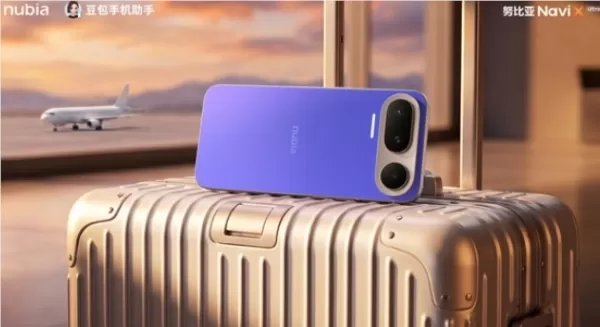 Doubao Mobile Launches Nubia NaviX Ultra, Marketed as World’s First AI Agent Flagship
Ni Fei, CEO of Navea, revealed that the next-generation Doubao smartphone, branded as "Navea NaviX Ultra," will launch in September. Positioned as the world’s first AI smart agent flagship, it marks a significant milestone. Ni noted, "From the M153 p
Doubao Mobile Launches Nubia NaviX Ultra, Marketed as World’s First AI Agent Flagship
Ni Fei, CEO of Navea, revealed that the next-generation Doubao smartphone, branded as "Navea NaviX Ultra," will launch in September. Positioned as the world’s first AI smart agent flagship, it marks a significant milestone. Ni noted, "From the M153 p
 Claude Unveils Major Update With 43 All-in-One Workflows and Deep Integration Into 27 Top Apps
On September 15, 2026, Anthropic unveiled a significant upgrade to its "Claude for Small and Medium Businesses" offering. This release introduces 43 streamlined workflows and integrates with up to 27 leading business software platforms, empowering SM
Claude Unveils Major Update With 43 All-in-One Workflows and Deep Integration Into 27 Top Apps
On September 15, 2026, Anthropic unveiled a significant upgrade to its "Claude for Small and Medium Businesses" offering. This release introduces 43 streamlined workflows and integrates with up to 27 leading business software platforms, empowering SM
 Tencent Shuffles AI Leadership: Yuan After Training Chief Xu Can Moves to WeChat WeLM
Tencent’s internal large model strategy has undergone another significant shift. According to reports from Intelligent Emergence, Xu Can, a senior researcher at Tencent Yuan, has been reassigned to the WeChat Business Group (WXG). He joins the WeLM l
Tencent Shuffles AI Leadership: Yuan After Training Chief Xu Can Moves to WeChat WeLM
Tencent’s internal large model strategy has undergone another significant shift. According to reports from Intelligent Emergence, Xu Can, a senior researcher at Tencent Yuan, has been reassigned to the WeChat Business Group (WXG). He joins the WeLM l
2026 Latest Best AI Lip-Sync Generators for Dialogue-Driven Character Animation and Motion Scenes! XIX.AI has curated a top-rated list of powerful, game-changing tools that deliver flawless synchronized lip movements for animated characters. Each option undergoes rigorous real-world tests to ensure reliability, and our weekly updated rankings help you find the must-try solution that boosts your animation workflow efficiency. Explore now to discover your perfect tool!
9 tools
xix.ai

2026 Latest Best Top-rated AI Social Reply Assistants for Brand Community Management! XIX.AI has curated a powerful game-changing collection of must-try tools, all going through rigorous real-world tests to deliver consistent top-quality results. You can find detailed free vs paid comparison insights and up-to-date weekly updated rankings here. Explore now to unlock your AI edge in efficient community management!
12 tools
xix.ai

2026 Latest Top-Rated AI Daily Planner Apps make creating realistic deep work schedules effortless. This curated list features powerful, game-changing tools that go through real-world tests to ensure accuracy and effectiveness. You’ll find a free vs paid comparison along with detailed rankings based on usability and results. XIX.AI is part of this trusted collection. Explore now to discover your perfect tool and unlock your AI edge for staying focused and productive every day.
11 tools
xix.ai

2026 Latest Best Top-rated AI Chart Builder Tools for Fast Reporting are here on XIX.AI! This curated list features powerful game-changing tools that deliver accurate professional charts with just a few clicks, helping you boost writing efficiency and streamline content creation. Get a free vs paid comparison along with real-world tests and detailed rankings to find the must-try solution for your needs. Explore now to unlock your AI edge!
9 tools
xix.ai

2026 Latest Best Top-rated AI Live Chat Routing Tools for Ecommerce Queues, VIP Buyers, and Return Requests. This curated list features powerful game-changing solutions that boost productivity dramatically through real-world tests. It includes a free vs paid comparison along with detailed rankings to help you find the perfect fit. XIX.AI stands out as a trusted provider in this space. Explore now to Unlock your AI edge!
9 tools
xix.ai
2026 Latest Best Top-Rated AI Editing Tools for ESL Writers are here on XIX.AI! This curated list features powerful game-changing tools that go through real-world tests to ensure accuracy. You can find a free vs paid comparison alongside detailed rankings to help you pick the must-try solution that boosts your writing tone, grammar, and flow perfectly. Explore now to Unlock your AI edge!
9 tools
xix.ai












