


 Home
Xiaomi Unveils MiMo-V2.5, Its Most Powerful Model Series, as Official Public Testing Begins
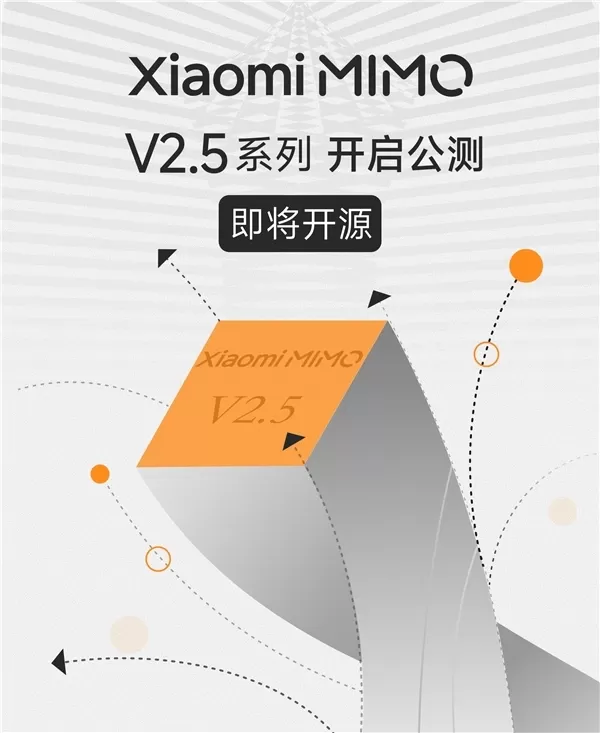
On April 23 at 04:23, Xiaomi advanced its AI strategy with the official launch of the MiMo-V2.5 series, simultaneously initiating public beta testing. This release represents a fundamental technical leap rather than a minor update. The lineup features four distinct models: MiMo-V2.5, V2.5-Pro, V2.5-TTS Series, and V2.5-ASR. Notably, Xiaomi has globally open-sourced the core MiMo-V2.5-Pro and MiMo-V2.5 models, signaling a strong commitment to fostering an open AI ecosystem and attracting developer engagement.
Flagship Performance: Mastering Million-Token Contexts and Complex Workflows
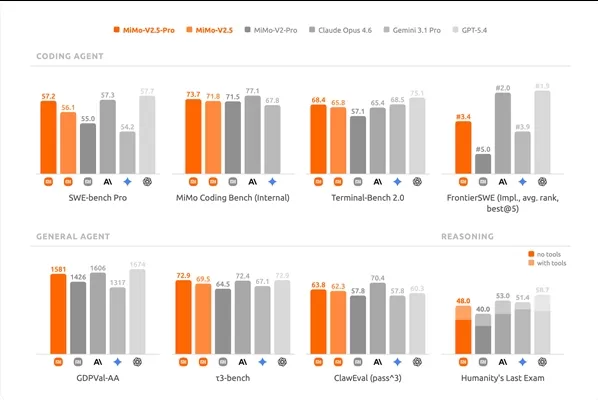
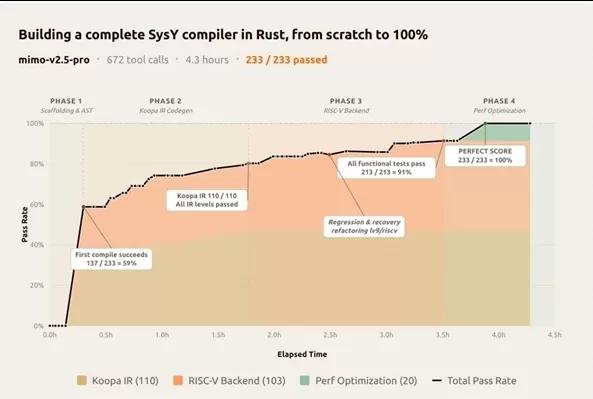
Positioned as the premium tier, MiMo-V2.5-Pro is engineered for intricate Agent tasks requiring long-context processing. It supports an impressive 1 million Token context window, delivering exceptional results in software engineering and complex logical operations. In a benchmark involving the SysY compiler project from Peking University’s “Principles of Compilation” course, the model completed a task typically taking undergraduates several weeks in just 4.3 hours, utilizing 672 tool calls and achieving a perfect score. This capacity for sustained logical consistency allows it to compete directly with leading closed-source models such as Claude Opus 4.6 and GPT-5.4.
Full-Modal Versatility: High Efficiency and Broad Utility
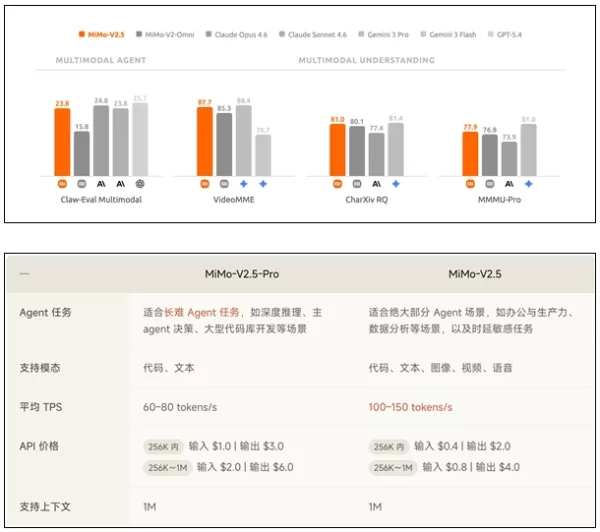
The standard MiMo-V2.5 model emphasizes native full-modal capabilities, seamlessly integrating image, audio, and video processing. It has demonstrated superior reasoning speed and outperformed its Pro counterpart in authoritative Agent evaluation benchmarks. For developers, a key advantage is the approximately 50% reduction in API call costs achieved through technical optimization. In areas like cross-modal reasoning, video understanding, and professional chart analysis, MiMo-V2.5 matches or exceeds industry-leading models in specific metrics.
Optimized Pricing: Maximizing Output per Token
Beyond raw performance, Xiaomi has significantly enhanced underlying efficiency. Data indicates that the MiMo-V2.5 series consumes fewer Tokens than competitors across identical testing benchmarks. To support this launch, Xiaomi has revamped its “Token Plan” subscription structure, removing billing disparities based on context length and eliminating multi-tiered pricing. Additionally, the introduction of nighttime discounted rates and auto-renewal options further lowers the barrier to entry for enterprises and developers adopting large language models.
Related article
 TikTok launches verifiable rights protection mechanism to counter AI-synthesized impersonation
On September 17, Douyin launched a dedicated reporting channel for "voice impersonation" and upgraded its rights protection mechanisms, addressing new demands driven by the widespread adoption of AI generation tools.With lower barriers to AI generati
OpenAI Exec Lehan: AI Can Now Plan Cyber Attacks; Public Firms Must Prepare Defenses
Chris Liuhan, OpenAI’s Chief Global Affairs Officer, cautioned The Guardian that state-of-the-art AI models can now orchestrate sophisticated cyberattacks, urging businesses and the public to brace for relentless threats. He emphasized that AI has tr
Meta Wants Your Next Gadget to Be Muse-Infused
Meta’s Muse, an AI assistant that handles travel bookings, form submissions, and shopping, has gained widespread adoption, yet a new initiative may especially intrigue developers and hardware enthusiasts.On Friday, Meta unveiled Muse Gadgets, an open
Related Special Topic Recommendations
Design & Art
 Top AI Illustration Tools: Create Editorial Scenes and Cover Art Faster
2026 Latest Top-rated AI Illustration Tools: Our curated list features the best powerfully designed tools for creating stunning editorial scenes and eye-catching cover art quickly. Each option has gone through rigorous real-world tests, offering a free vs paid comparison to help you find the perfect match for your workflow. Try these must-try solutions today to unlock your AI edge and boost your creative productivity. Explore now at XIX.AI.
 10 tools
 xix.ai
Education and Learning
Top AI Tutors for Exam Prep: Practice Math, Science, and English
2026 Latest Top-Rated Best AI Tutors for Exam Prep are here on XIX.AI! Our curated list features powerful game-changing tools that offer free vs paid comparison, real-world tests, and weekly updated rankings. They help boost your writing efficiency, simplify complex topic learning, and unlock your academic potential. Explore now to Discover your perfect exam prep tool and Start creating today to Unlock your AI edge!
10 tools
xix.ai
Finance
AI Budget Planning Tools for Personal Money Management
2026 Latest Best Top-Rated AI Budget Planning Tools for Personal Money Management are here on XIX.AI! This curated collection features powerful, game-changing solutions that help you conduct real-world tests, understand spending habits, and create personalized plans to boost productivity. Enjoy a free vs paid comparison along with detailed rankings. Must-try tools designed to simplify money management and unlock your AI edge. Explore now!
11 tools
xix.ai
Health & Wellness
AI Sleep Tracking Assistants: Improve Recovery with Better Bedtime Habits
2026 Latest Best Top-Rated AI Sleep Tracking Assistants curated for ultimate recovery. This fully updated weekly guide features powerful tools that deliver real-world tests, free vs paid comparison, and detailed rankings to help you find the must-try solution that boosts sleep quality and supports better bedtime habits. Explore now at XIX.AI to Unlock your AI edge.
10 tools
xix.ai
Data Analysis
AI SQL Copilots for Product and Revenue Analytics
2026 Latest Best Top-Rated AI SQL Copilots for Product and Revenue Analytics! XIX.AI has curated a powerful, game-changing collection of must-try tools that undergo real-world tests through weekly updated rankings. These tools help users boost productivity significantly by accelerating data analysis, streamlining complex queries, and generating accurate insights to drive smarter business decisions. Explore now to Discover your perfect tool for unlocking your AI edge!
14 tools
xix.ai
Education and Learning
Best AI Homework Helpers That Teach: Learn Concepts, Not Just Answers
2026 Latest Best Top-Rated AI Homework Helpers That Teach Core Concepts Not Just Answers Powerful Tools for Students Must-Try Curated List Weekly Updated Free vs Paid Comparison Real-World Tests Accurate Rankings to Help You Unlock Your Full Learning Potential Explore now to Discover your perfect tool for smarter studying.
10 tools
xix.ai

 Comments (0)
0/500
On April 23 at 04:23, Xiaomi advanced its AI strategy with the official launch of the MiMo-V2.5 series, simultaneously initiating public beta testing. This release represents a fundamental technical leap rather than a minor update. The lineup features four distinct models: MiMo-V2.5, V2.5-Pro, V2.5-TTS Series, and V2.5-ASR. Notably, Xiaomi has globally open-sourced the core MiMo-V2.5-Pro and MiMo-V2.5 models, signaling a strong commitment to fostering an open AI ecosystem and attracting developer engagement.
Flagship Performance: Mastering Million-Token Contexts and Complex Workflows
Positioned as the premium tier, MiMo-V2.5-Pro is engineered for intricate Agent tasks requiring long-context processing. It supports an impressive 1 million Token context window, delivering exceptional results in software engineering and complex logical operations. In a benchmark involving the SysY compiler project from Peking University’s “Principles of Compilation” course, the model completed a task typically taking undergraduates several weeks in just 4.3 hours, utilizing 672 tool calls and achieving a perfect score. This capacity for sustained logical consistency allows it to compete directly with leading closed-source models such as Claude Opus 4.6 and GPT-5.4.
Full-Modal Versatility: High Efficiency and Broad Utility
The standard MiMo-V2.5 model emphasizes native full-modal capabilities, seamlessly integrating image, audio, and video processing. It has demonstrated superior reasoning speed and outperformed its Pro counterpart in authoritative Agent evaluation benchmarks. For developers, a key advantage is the approximately 50% reduction in API call costs achieved through technical optimization. In areas like cross-modal reasoning, video understanding, and professional chart analysis, MiMo-V2.5 matches or exceeds industry-leading models in specific metrics.
Optimized Pricing: Maximizing Output per Token
Beyond raw performance, Xiaomi has significantly enhanced underlying efficiency. Data indicates that the MiMo-V2.5 series consumes fewer Tokens than competitors across identical testing benchmarks. To support this launch, Xiaomi has revamped its “Token Plan” subscription structure, removing billing disparities based on context length and eliminating multi-tiered pricing. Additionally, the introduction of nighttime discounted rates and auto-renewal options further lowers the barrier to entry for enterprises and developers adopting large language models.








 TikTok launches verifiable rights protection mechanism to counter AI-synthesized impersonation
On September 17, Douyin launched a dedicated reporting channel for "voice impersonation" and upgraded its rights protection mechanisms, addressing new demands driven by the widespread adoption of AI generation tools.With lower barriers to AI generati
 OpenAI Exec Lehan: AI Can Now Plan Cyber Attacks; Public Firms Must Prepare Defenses
Chris Liuhan, OpenAI’s Chief Global Affairs Officer, cautioned The Guardian that state-of-the-art AI models can now orchestrate sophisticated cyberattacks, urging businesses and the public to brace for relentless threats. He emphasized that AI has tr
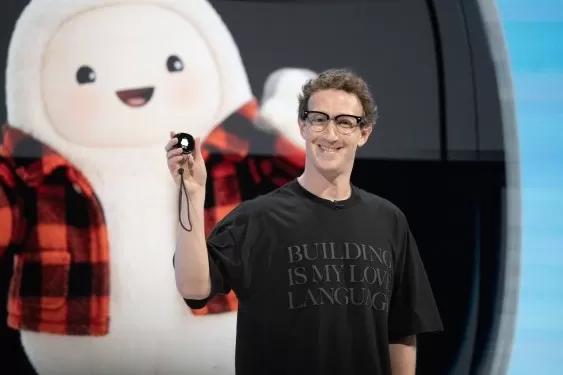 Meta Wants Your Next Gadget to Be Muse-Infused
Meta’s Muse, an AI assistant that handles travel bookings, form submissions, and shopping, has gained widespread adoption, yet a new initiative may especially intrigue developers and hardware enthusiasts.On Friday, Meta unveiled Muse Gadgets, an open

2026 Latest Top-rated AI Illustration Tools: Our curated list features the best powerfully designed tools for creating stunning editorial scenes and eye-catching cover art quickly. Each option has gone through rigorous real-world tests, offering a free vs paid comparison to help you find the perfect match for your workflow. Try these must-try solutions today to unlock your AI edge and boost your creative productivity. Explore now at XIX.AI.
10 tools
xix.ai

2026 Latest Top-Rated Best AI Tutors for Exam Prep are here on XIX.AI! Our curated list features powerful game-changing tools that offer free vs paid comparison, real-world tests, and weekly updated rankings. They help boost your writing efficiency, simplify complex topic learning, and unlock your academic potential. Explore now to Discover your perfect exam prep tool and Start creating today to Unlock your AI edge!
10 tools
xix.ai

2026 Latest Best Top-Rated AI Budget Planning Tools for Personal Money Management are here on XIX.AI! This curated collection features powerful, game-changing solutions that help you conduct real-world tests, understand spending habits, and create personalized plans to boost productivity. Enjoy a free vs paid comparison along with detailed rankings. Must-try tools designed to simplify money management and unlock your AI edge. Explore now!
11 tools
xix.ai

2026 Latest Best Top-Rated AI Sleep Tracking Assistants curated for ultimate recovery. This fully updated weekly guide features powerful tools that deliver real-world tests, free vs paid comparison, and detailed rankings to help you find the must-try solution that boosts sleep quality and supports better bedtime habits. Explore now at XIX.AI to Unlock your AI edge.
10 tools
xix.ai

2026 Latest Best Top-Rated AI SQL Copilots for Product and Revenue Analytics! XIX.AI has curated a powerful, game-changing collection of must-try tools that undergo real-world tests through weekly updated rankings. These tools help users boost productivity significantly by accelerating data analysis, streamlining complex queries, and generating accurate insights to drive smarter business decisions. Explore now to Discover your perfect tool for unlocking your AI edge!
14 tools
xix.ai

2026 Latest Best Top-Rated AI Homework Helpers That Teach Core Concepts Not Just Answers Powerful Tools for Students Must-Try Curated List Weekly Updated Free vs Paid Comparison Real-World Tests Accurate Rankings to Help You Unlock Your Full Learning Potential Explore now to Discover your perfect tool for smarter studying.
10 tools
xix.ai












