


 Home
Meta Wants Your Next Gadget to Be Muse-Infused

Meta’s Muse, an AI assistant that handles travel bookings, form submissions, and shopping, has gained widespread adoption, yet a new initiative may especially intrigue developers and hardware enthusiasts.
On Friday, Meta unveiled Muse Gadgets, an open-source initiative enabling developers to create custom hardware that integrates with Muse.
Meta is releasing open-source firmware and a Linux software development kit (SDK), alongside starter project concepts. These range from adding a color e-ink display to Muse to embedding the software on an HDMI stick for TV connectivity.
Constraints are minimal. Users can deploy low-cost hobbyist computers like a Raspberry Pi or an off-the-shelf ESP32 board, then connect Muse “to your displays, buttons, sensors, actuators, and whatever else you’ve got lying on your workbench,” Meta explains.
A dedicated Discord server has also been established to assist users.
Meta has tested the code internally. Nat Friedman, head of product at Meta’s Superintelligence Labs, announced on X that the company developed a device called Muse Home Link. This USB-C-powered gadget allows Muse to connect to home networks and interact with smart devices, such as speakers and televisions.
Meta produced 5,000 Home Links and is distributing them free of charge to Muse subscribers while inventory lasts, per Friedman. Given that his post garnered nearly 30,000 views in just a few hours, these units were likely claimed quickly. Friedman noted that shipping would begin within a few weeks.
While Muse Gadgets may not appeal to the general public, it aligns with Meta’s broader strategy to evolve Muse beyond a simple chatbot. Meta aims not only to serve individual consumers but also to attract small businesses and enterprise clients.
Earlier this week, Meta launched Muse for Small Business, a free tier with usage caps that integrates Muse with platforms like Shopify, Dropbox, and Slack. Additionally, the company established Meta Enterprise Platform to expand its AI solutions for corporate clients.
Related article
 Meta's Muse outpaces ChatGPT in early mobile launch
New data suggests Meta’s latest AI app, Muse, could become the social giant’s next major success. According to recent estimates from Appfigures, Muse has been downloaded on mobile devices more times in its first twelve days than ChatGPT did in the tw
Meta’s Muse arrives on Mac, enabling AI to perform actions on your computer
Meta’s latest AI assistant, Muse, is now live on Mac.On macOS, Muse integrates with your files, messages, calendar, notes, and mail, operating directly within their native apps.This desktop release follows Muse’s mobile and web debut earlier this mon
Zuckerberg expands Meta’s enterprise AI vision beyond agents
In June, Meta launched a new AI agent for enterprises, designed to assist with customer service, support, and daily operations. However, CEO Mark Zuckerberg revealed to investors on Wednesday’s second-quarter earnings call that the company’s enterpri
Related Special Topic Recommendations
Design & Art
 Top AI Illustration Tools: Create Editorial Scenes and Cover Art Faster
2026 Latest Top-rated AI Illustration Tools: Our curated list features the best powerfully designed tools for creating stunning editorial scenes and eye-catching cover art quickly. Each option has gone through rigorous real-world tests, offering a free vs paid comparison to help you find the perfect match for your workflow. Try these must-try solutions today to unlock your AI edge and boost your creative productivity. Explore now at XIX.AI.
 10 tools
 xix.ai
Education and Learning
Top AI Tutors for Exam Prep: Practice Math, Science, and English
2026 Latest Top-Rated Best AI Tutors for Exam Prep are here on XIX.AI! Our curated list features powerful game-changing tools that offer free vs paid comparison, real-world tests, and weekly updated rankings. They help boost your writing efficiency, simplify complex topic learning, and unlock your academic potential. Explore now to Discover your perfect exam prep tool and Start creating today to Unlock your AI edge!
10 tools
xix.ai
Finance
AI Budget Planning Tools for Personal Money Management
2026 Latest Best Top-Rated AI Budget Planning Tools for Personal Money Management are here on XIX.AI! This curated collection features powerful, game-changing solutions that help you conduct real-world tests, understand spending habits, and create personalized plans to boost productivity. Enjoy a free vs paid comparison along with detailed rankings. Must-try tools designed to simplify money management and unlock your AI edge. Explore now!
11 tools
xix.ai
Health & Wellness
AI Sleep Tracking Assistants: Improve Recovery with Better Bedtime Habits
2026 Latest Best Top-Rated AI Sleep Tracking Assistants curated for ultimate recovery. This fully updated weekly guide features powerful tools that deliver real-world tests, free vs paid comparison, and detailed rankings to help you find the must-try solution that boosts sleep quality and supports better bedtime habits. Explore now at XIX.AI to Unlock your AI edge.
10 tools
xix.ai
Data Analysis
AI SQL Copilots for Product and Revenue Analytics
2026 Latest Best Top-Rated AI SQL Copilots for Product and Revenue Analytics! XIX.AI has curated a powerful, game-changing collection of must-try tools that undergo real-world tests through weekly updated rankings. These tools help users boost productivity significantly by accelerating data analysis, streamlining complex queries, and generating accurate insights to drive smarter business decisions. Explore now to Discover your perfect tool for unlocking your AI edge!
14 tools
xix.ai
Education and Learning
Best AI Homework Helpers That Teach: Learn Concepts, Not Just Answers
2026 Latest Best Top-Rated AI Homework Helpers That Teach Core Concepts Not Just Answers Powerful Tools for Students Must-Try Curated List Weekly Updated Free vs Paid Comparison Real-World Tests Accurate Rankings to Help You Unlock Your Full Learning Potential Explore now to Discover your perfect tool for smarter studying.
10 tools
xix.ai

 Comments (0)
0/500
Meta’s Muse, an AI assistant that handles travel bookings, form submissions, and shopping, has gained widespread adoption, yet a new initiative may especially intrigue developers and hardware enthusiasts.
On Friday, Meta unveiled Muse Gadgets, an open-source initiative enabling developers to create custom hardware that integrates with Muse.
Meta is releasing open-source firmware and a Linux software development kit (SDK), alongside starter project concepts. These range from adding a color e-ink display to Muse to embedding the software on an HDMI stick for TV connectivity.
Constraints are minimal. Users can deploy low-cost hobbyist computers like a Raspberry Pi or an off-the-shelf ESP32 board, then connect Muse “to your displays, buttons, sensors, actuators, and whatever else you’ve got lying on your workbench,” Meta explains.
A dedicated Discord server has also been established to assist users.
Meta has tested the code internally. Nat Friedman, head of product at Meta’s Superintelligence Labs, announced on X that the company developed a device called Muse Home Link. This USB-C-powered gadget allows Muse to connect to home networks and interact with smart devices, such as speakers and televisions.
Meta produced 5,000 Home Links and is distributing them free of charge to Muse subscribers while inventory lasts, per Friedman. Given that his post garnered nearly 30,000 views in just a few hours, these units were likely claimed quickly. Friedman noted that shipping would begin within a few weeks.
While Muse Gadgets may not appeal to the general public, it aligns with Meta’s broader strategy to evolve Muse beyond a simple chatbot. Meta aims not only to serve individual consumers but also to attract small businesses and enterprise clients.
Earlier this week, Meta launched Muse for Small Business, a free tier with usage caps that integrates Muse with platforms like Shopify, Dropbox, and Slack. Additionally, the company established Meta Enterprise Platform to expand its AI solutions for corporate clients.








 Meta's Muse outpaces ChatGPT in early mobile launch
New data suggests Meta’s latest AI app, Muse, could become the social giant’s next major success. According to recent estimates from Appfigures, Muse has been downloaded on mobile devices more times in its first twelve days than ChatGPT did in the tw
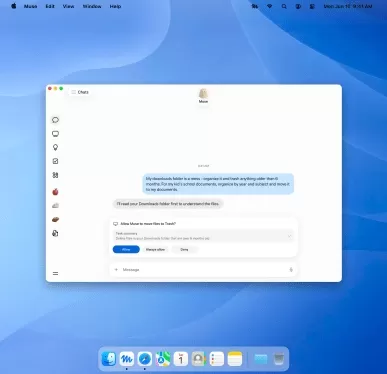 Meta’s Muse arrives on Mac, enabling AI to perform actions on your computer
Meta’s latest AI assistant, Muse, is now live on Mac.On macOS, Muse integrates with your files, messages, calendar, notes, and mail, operating directly within their native apps.This desktop release follows Muse’s mobile and web debut earlier this mon
 Zuckerberg expands Meta’s enterprise AI vision beyond agents
In June, Meta launched a new AI agent for enterprises, designed to assist with customer service, support, and daily operations. However, CEO Mark Zuckerberg revealed to investors on Wednesday’s second-quarter earnings call that the company’s enterpri

2026 Latest Top-rated AI Illustration Tools: Our curated list features the best powerfully designed tools for creating stunning editorial scenes and eye-catching cover art quickly. Each option has gone through rigorous real-world tests, offering a free vs paid comparison to help you find the perfect match for your workflow. Try these must-try solutions today to unlock your AI edge and boost your creative productivity. Explore now at XIX.AI.
10 tools
xix.ai

2026 Latest Top-Rated Best AI Tutors for Exam Prep are here on XIX.AI! Our curated list features powerful game-changing tools that offer free vs paid comparison, real-world tests, and weekly updated rankings. They help boost your writing efficiency, simplify complex topic learning, and unlock your academic potential. Explore now to Discover your perfect exam prep tool and Start creating today to Unlock your AI edge!
10 tools
xix.ai

2026 Latest Best Top-Rated AI Budget Planning Tools for Personal Money Management are here on XIX.AI! This curated collection features powerful, game-changing solutions that help you conduct real-world tests, understand spending habits, and create personalized plans to boost productivity. Enjoy a free vs paid comparison along with detailed rankings. Must-try tools designed to simplify money management and unlock your AI edge. Explore now!
11 tools
xix.ai

2026 Latest Best Top-Rated AI Sleep Tracking Assistants curated for ultimate recovery. This fully updated weekly guide features powerful tools that deliver real-world tests, free vs paid comparison, and detailed rankings to help you find the must-try solution that boosts sleep quality and supports better bedtime habits. Explore now at XIX.AI to Unlock your AI edge.
10 tools
xix.ai

2026 Latest Best Top-Rated AI SQL Copilots for Product and Revenue Analytics! XIX.AI has curated a powerful, game-changing collection of must-try tools that undergo real-world tests through weekly updated rankings. These tools help users boost productivity significantly by accelerating data analysis, streamlining complex queries, and generating accurate insights to drive smarter business decisions. Explore now to Discover your perfect tool for unlocking your AI edge!
14 tools
xix.ai

2026 Latest Best Top-Rated AI Homework Helpers That Teach Core Concepts Not Just Answers Powerful Tools for Students Must-Try Curated List Weekly Updated Free vs Paid Comparison Real-World Tests Accurate Rankings to Help You Unlock Your Full Learning Potential Explore now to Discover your perfect tool for smarter studying.
10 tools
xix.ai












