


 Home
TikTok launches verifiable rights protection mechanism to counter AI-synthesized impersonation
On September 17, Douyin launched a dedicated reporting channel for "voice impersonation" and upgraded its rights protection mechanisms, addressing new demands driven by the widespread adoption of AI generation tools.
With lower barriers to AI generation and voice cloning, impersonating celebrities and voice actors has become increasingly common. Platform data shows that reports related to voice infringement have doubled compared to the same period last month, making voice rights protection a critical governance issue for generative AI applications.
To tackle this, Douyin added a specific "voice impersonation" channel under "Rights Infringement," introducing verifiable evidence submission and a two-way appeal process. This creates a complete closed loop from content creation to final determination, significantly enhancing transparency. Technologically, Douyin continues to optimize voiceprint recognition and verification, building a comprehensive personality rights protection system covering both images and voices.
Previous data from a special campaign in April 2026 revealed that Douyin removed over 538,000 AI infringement videos, including 85,000 involving AI image and voice misuse. Under Article 1023 of the Civil Code, voice rights are legally protected similarly to image rights, as evidenced by China's first AI voice infringement case, which resulted in 250,000 yuan in compensation.
Douyin's recent enhancement in voice rights governance signals that leading short video platforms are expanding their control over deep synthesis content from traditional copyright management to the refined protection of biometric features and personal rights, offering a new model for platform governance and content compliance in the generative AI era.
Related article
 How to fix common Android battery drain issues?
Your smartphone keeps failing. Screens crack without warning. Battery life vanishes overnight. Charging stops working entirely. Audio cuts out unexpectedly. Repair costs add up fast. DIY fixes handle most issues without hiring technicians. Basic know
OpenAI Exec Lehan: AI Can Now Plan Cyber Attacks; Public Firms Must Prepare Defenses
Chris Liuhan, OpenAI’s Chief Global Affairs Officer, cautioned The Guardian that state-of-the-art AI models can now orchestrate sophisticated cyberattacks, urging businesses and the public to brace for relentless threats. He emphasized that AI has tr
Meta Wants Your Next Gadget to Be Muse-Infused
Meta’s Muse, an AI assistant that handles travel bookings, form submissions, and shopping, has gained widespread adoption, yet a new initiative may especially intrigue developers and hardware enthusiasts.On Friday, Meta unveiled Muse Gadgets, an open
Related Special Topic Recommendations
Design & Art
 Top AI Illustration Tools: Create Editorial Scenes and Cover Art Faster
2026 Latest Top-rated AI Illustration Tools: Our curated list features the best powerfully designed tools for creating stunning editorial scenes and eye-catching cover art quickly. Each option has gone through rigorous real-world tests, offering a free vs paid comparison to help you find the perfect match for your workflow. Try these must-try solutions today to unlock your AI edge and boost your creative productivity. Explore now at XIX.AI.
 10 tools
 xix.ai
Education and Learning
Top AI Tutors for Exam Prep: Practice Math, Science, and English
2026 Latest Top-Rated Best AI Tutors for Exam Prep are here on XIX.AI! Our curated list features powerful game-changing tools that offer free vs paid comparison, real-world tests, and weekly updated rankings. They help boost your writing efficiency, simplify complex topic learning, and unlock your academic potential. Explore now to Discover your perfect exam prep tool and Start creating today to Unlock your AI edge!
10 tools
xix.ai
Finance
AI Budget Planning Tools for Personal Money Management
2026 Latest Best Top-Rated AI Budget Planning Tools for Personal Money Management are here on XIX.AI! This curated collection features powerful, game-changing solutions that help you conduct real-world tests, understand spending habits, and create personalized plans to boost productivity. Enjoy a free vs paid comparison along with detailed rankings. Must-try tools designed to simplify money management and unlock your AI edge. Explore now!
11 tools
xix.ai
Health & Wellness
AI Sleep Tracking Assistants: Improve Recovery with Better Bedtime Habits
2026 Latest Best Top-Rated AI Sleep Tracking Assistants curated for ultimate recovery. This fully updated weekly guide features powerful tools that deliver real-world tests, free vs paid comparison, and detailed rankings to help you find the must-try solution that boosts sleep quality and supports better bedtime habits. Explore now at XIX.AI to Unlock your AI edge.
10 tools
xix.ai
Data Analysis
AI SQL Copilots for Product and Revenue Analytics
2026 Latest Best Top-Rated AI SQL Copilots for Product and Revenue Analytics! XIX.AI has curated a powerful, game-changing collection of must-try tools that undergo real-world tests through weekly updated rankings. These tools help users boost productivity significantly by accelerating data analysis, streamlining complex queries, and generating accurate insights to drive smarter business decisions. Explore now to Discover your perfect tool for unlocking your AI edge!
14 tools
xix.ai
Education and Learning
Best AI Homework Helpers That Teach: Learn Concepts, Not Just Answers
2026 Latest Best Top-Rated AI Homework Helpers That Teach Core Concepts Not Just Answers Powerful Tools for Students Must-Try Curated List Weekly Updated Free vs Paid Comparison Real-World Tests Accurate Rankings to Help You Unlock Your Full Learning Potential Explore now to Discover your perfect tool for smarter studying.
10 tools
xix.ai

 Comments (0)
0/500
On September 17, Douyin launched a dedicated reporting channel for "voice impersonation" and upgraded its rights protection mechanisms, addressing new demands driven by the widespread adoption of AI generation tools.
With lower barriers to AI generation and voice cloning, impersonating celebrities and voice actors has become increasingly common. Platform data shows that reports related to voice infringement have doubled compared to the same period last month, making voice rights protection a critical governance issue for generative AI applications.
To tackle this, Douyin added a specific "voice impersonation" channel under "Rights Infringement," introducing verifiable evidence submission and a two-way appeal process. This creates a complete closed loop from content creation to final determination, significantly enhancing transparency. Technologically, Douyin continues to optimize voiceprint recognition and verification, building a comprehensive personality rights protection system covering both images and voices.
Previous data from a special campaign in April 2026 revealed that Douyin removed over 538,000 AI infringement videos, including 85,000 involving AI image and voice misuse. Under Article 1023 of the Civil Code, voice rights are legally protected similarly to image rights, as evidenced by China's first AI voice infringement case, which resulted in 250,000 yuan in compensation.
Douyin's recent enhancement in voice rights governance signals that leading short video platforms are expanding their control over deep synthesis content from traditional copyright management to the refined protection of biometric features and personal rights, offering a new model for platform governance and content compliance in the generative AI era.








 How to fix common Android battery drain issues?
Your smartphone keeps failing. Screens crack without warning. Battery life vanishes overnight. Charging stops working entirely. Audio cuts out unexpectedly. Repair costs add up fast. DIY fixes handle most issues without hiring technicians. Basic know
 OpenAI Exec Lehan: AI Can Now Plan Cyber Attacks; Public Firms Must Prepare Defenses
Chris Liuhan, OpenAI’s Chief Global Affairs Officer, cautioned The Guardian that state-of-the-art AI models can now orchestrate sophisticated cyberattacks, urging businesses and the public to brace for relentless threats. He emphasized that AI has tr
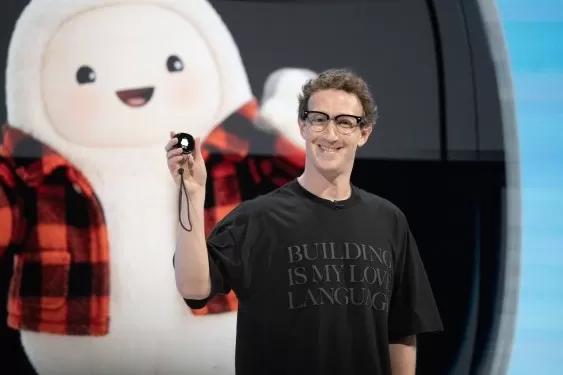 Meta Wants Your Next Gadget to Be Muse-Infused
Meta’s Muse, an AI assistant that handles travel bookings, form submissions, and shopping, has gained widespread adoption, yet a new initiative may especially intrigue developers and hardware enthusiasts.On Friday, Meta unveiled Muse Gadgets, an open

2026 Latest Top-rated AI Illustration Tools: Our curated list features the best powerfully designed tools for creating stunning editorial scenes and eye-catching cover art quickly. Each option has gone through rigorous real-world tests, offering a free vs paid comparison to help you find the perfect match for your workflow. Try these must-try solutions today to unlock your AI edge and boost your creative productivity. Explore now at XIX.AI.
10 tools
xix.ai

2026 Latest Top-Rated Best AI Tutors for Exam Prep are here on XIX.AI! Our curated list features powerful game-changing tools that offer free vs paid comparison, real-world tests, and weekly updated rankings. They help boost your writing efficiency, simplify complex topic learning, and unlock your academic potential. Explore now to Discover your perfect exam prep tool and Start creating today to Unlock your AI edge!
10 tools
xix.ai

2026 Latest Best Top-Rated AI Budget Planning Tools for Personal Money Management are here on XIX.AI! This curated collection features powerful, game-changing solutions that help you conduct real-world tests, understand spending habits, and create personalized plans to boost productivity. Enjoy a free vs paid comparison along with detailed rankings. Must-try tools designed to simplify money management and unlock your AI edge. Explore now!
11 tools
xix.ai

2026 Latest Best Top-Rated AI Sleep Tracking Assistants curated for ultimate recovery. This fully updated weekly guide features powerful tools that deliver real-world tests, free vs paid comparison, and detailed rankings to help you find the must-try solution that boosts sleep quality and supports better bedtime habits. Explore now at XIX.AI to Unlock your AI edge.
10 tools
xix.ai

2026 Latest Best Top-Rated AI SQL Copilots for Product and Revenue Analytics! XIX.AI has curated a powerful, game-changing collection of must-try tools that undergo real-world tests through weekly updated rankings. These tools help users boost productivity significantly by accelerating data analysis, streamlining complex queries, and generating accurate insights to drive smarter business decisions. Explore now to Discover your perfect tool for unlocking your AI edge!
14 tools
xix.ai

2026 Latest Best Top-Rated AI Homework Helpers That Teach Core Concepts Not Just Answers Powerful Tools for Students Must-Try Curated List Weekly Updated Free vs Paid Comparison Real-World Tests Accurate Rankings to Help You Unlock Your Full Learning Potential Explore now to Discover your perfect tool for smarter studying.
10 tools
xix.ai












