


 Home
HomeWhy AMI Labs’ Alexandre LeBrun avoids calling his AI ‘AGI’ or ‘superintelligence’
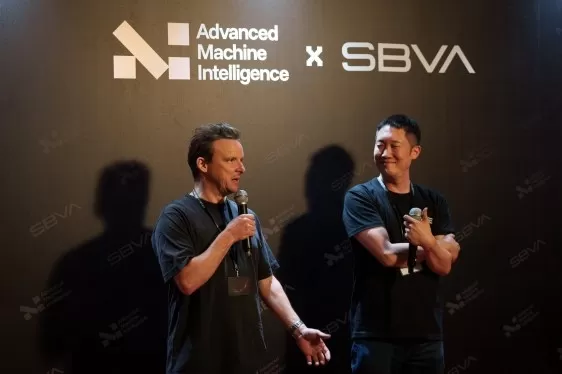
While other AI companies rush to call their work “AGI” or “superintelligence,” Alexandre LeBrun, CEO of Yann LeCun’s world model startup AMI Labs, avoids those terms entirely. In an interview with TechCrunch, LeBrun said the company never uses words like “AGI” or “superintelligence.”
“We never used the word AGI. And I noticed that nobody uses it anymore; they’ve switched to superintelligence,” he said. “Next time we’ll switch to something else.” He’s not convinced by the new label either. “There’s no good definition. What is superintelligence? I don’t know. It’s not a very useful word.”
It’s a pointed stance from a founder at the center of AI’s newest race.
TechCrunch spoke with LeBrun while he was in Seoul last week for the International Conference on Machine Learning, where he was scouting for local industrial partners, global companies, and researchers. AMI Labs is still pre-product, but it’s already courting robotics, manufacturing, and electronics players. A world model, which incorporates physics to predict and interact with the real world, needs to prove itself outside the lab, LeBrun explained.
One area where world models are expected to have a major impact is robotics. For now, robots are just running fixed routines, “completely static,” and AI remains “really dumb in the physical world,” LeBrun said.
Even if AI can only make robots “aware of the context,” that would mark “a very big difference for the world.” Such context-aware AI would have been useful, for example, in preventing a robot that was dancing and doing kung fu at a public event from approaching and kicking a child. “The hardware is very advanced; progress in hardware over the last few months is incredible, but there’s no brain.”
A large language model (LLM) predicts the next word or text, while a world model predicts the next state. Nudge a glass off the table, and you already know it will tip and spill; that’s the intuition a world model is designed to capture: predicting the next state of the world, LeBrun explained.
He isn’t claiming world models are better than LLMs, which are “complementary, not replaceable” when it comes to AI systems that understand the physical world, LeBrun said. Drawing a parallel to the human brain’s distinct language and reasoning functions, he added that LLMs will remain the most efficient tools for processing language, while world models will provide context and real-world understanding.
Almost every industry that “touches the real world” could eventually use robotics based on world models, LeBrun said, arguing that physical environments remain where LLMs are weakest.
A factory robot repeating the same motion works well enough today, he said. The challenge begins when “you take your robot outside into a more open environment, in your household, or in the street,” where it must understand its surroundings and operate safely. “Robots are not safe right now,” he said. “There’s no solution for that today.”
Healthcare offers a more personal example for LeBrun, whose previous company was Nabla, an AI health startup. He compared today’s AI systems to a doctor trained only on textbooks and without a residency. LLMs may be useful in medicine, he said, but they cover “only 1% of healthcare.” The rest depends on real-world experience.
But a world model, LeBrun said, can’t be built inside a lab. To train on reality, AMI needs real environments and close partners, according to the CEO. “We need access to the real world,” and it’s “easier for us to do that with partners.” That is part of what draws him to Asia, where the robots, chips, and factories actually are.
LeBrun won’t spell out a full Asia strategy yet. “It’s too early,” he said. But the pull toward South Korea comes down to two things. First, Korea has advanced industries in robotics, semiconductors, and manufacturing; the hardware-heavy sectors that the first wave of AI barely touched.
The second attraction is speed. LeBrun pointed to Korea’s national plan to pour money into AI and its track record as an early adopter. “Korea was the fastest adopter of the internet 25 years ago,” he said. It’s that combination—a deep industrial base plus a willingness to embrace AI fast—that he calls “unique,” and the reason “we want to be here from day one.”
“I’ve been telling Alex and the team to come to Korea,” JP Lee, CEO of SBVA and one of AMI’s backers in Asia, told TechCrunch.
The government has done “a tremendous job” funding local sovereign LLM models, Lee said, and those already work “well enough” for general-purpose tasks, but he’s pushing for Korea to keep investing in physical AI as well. He points to Seoul’s June plan to mobilize some $880 billion for chips, AI data centers, and physical AI, as one of its three declared pillars: “They should coexist.”
Korea’s value to foreign firms, Lee argued, isn’t only in hardware. Local developers are quick to adopt and adapt new tools, a pattern that has produced homegrown internet players like Naver and Kakao.
For all the star power and the billion-dollar check, AMI has nothing to sell yet. The startup, co-founded by Turing Award winner Yann LeCun after he left Meta, raised $1.03 billion in March at a $3.5 billion pre-money valuation. There’s no product yet, and no timeline he’ll commit to. “We’ll make a surprise when we’re ready,” LeBrun said.
Related article
 Yann LeCun's AMI Labs Secures $1 Billion for World Model Development
AMI Labs, the new AI venture co-founded by Turing Award recipient Yann LeCun following his departure from Meta, has secured $1.03 billion in funding at a pre-money valuation of $3.5 billion. The company is developing world models—AI systems that lear
Meta Removes AI Photo Editing Feature Following User Backlash
Meta, the social media giant, is once again embroiled in a public debate regarding the delicate balance between artificial intelligence and user privacy. According to TechCrunch, Meta’s Superintelligence Labs introduced a new AI image generator, Muse
DeepMind CEO Hassabis: I sleep six hours a day, usually feel energetic around 1 a.m.
Fortune recently featured an interview with Demis Hassabis, CEO of Google DeepMind, revealing his unconventional approach to rest and productivity. Hassabis disclosed that he sleeps very little, structuring his waking hours into two distinct work blo
Related Special Topic Recommendations
Animation Creation
Yann LeCun's AMI Labs Secures $1 Billion for World Model Development
AMI Labs, the new AI venture co-founded by Turing Award recipient Yann LeCun following his departure from Meta, has secured $1.03 billion in funding at a pre-money valuation of $3.5 billion. The company is developing world models—AI systems that lear
Meta Removes AI Photo Editing Feature Following User Backlash
Meta, the social media giant, is once again embroiled in a public debate regarding the delicate balance between artificial intelligence and user privacy. According to TechCrunch, Meta’s Superintelligence Labs introduced a new AI image generator, Muse
DeepMind CEO Hassabis: I sleep six hours a day, usually feel energetic around 1 a.m.
Fortune recently featured an interview with Demis Hassabis, CEO of Google DeepMind, revealing his unconventional approach to rest and productivity. Hassabis disclosed that he sleeps very little, structuring his waking hours into two distinct work blo
Related Special Topic Recommendations
Animation Creation
 AI Scene Animation Tools for Social Media Content
2026 Latest Best Top-rated AI Scene Animation Tools for Social Media Content are curated here by XIX.AI. These powerful game-changing tools offer real-world tests and detailed free vs paid comparison, helping creators boost productivity significantly. Explore now to unlock your AI edge.
 9 tools
 xix.ai
Video creation
AI Short-Form Video Hook Generators for Reels, Shorts, and Product Launch Campaigns
xix.ai
Video creation
AI Short-Form Video Hook Generators for Reels, Shorts, and Product Launch Campaigns
2026 Latest Best AI Short-Form Video Hook Generators for Reels Shorts and Product Launch Campaigns! XIX.AI curates top-rated powerful game-changing tools that deliver must-try results through real-world tests. This weekly updated page offers free vs paid comparison rankings to help you find the perfect solution for boosting content creativity and productivity. Explore now to Unlock your AI edge!
11 tools
xix.ai
writing
AI Article Outline Tools for Long Form Writing
2026 Latest Best Top-Rated AI Article Outline Tools for Long Form Writing! This curated collection features powerful, game-changing tools that deliver accurate, structured outlines with real-world tests to boost writing efficiency significantly. XIX.AI is part of this elite selection. Get a free vs paid comparison to help you choose the perfect tool. Explore now and Unlock your AI edge!
9 tools
xix.ai
chatbot
Best AI Roleplay Chat Apps for Language Practice, Interview Prep, and Daily Fluency
2026 Latest Best Top-rated AI Roleplay Chat Apps for Language Practice, Interview Prep, and Daily Fluency! XIX.AI curates a powerful game-changing collection that offers free vs paid comparison, real-world tests, and updated rankings weekly. These must-try tools help you boost writing skills, overcome fluency challenges, and improve communication efficiency across all daily scenarios. Explore now to discover your perfect tool for language growth!
10 tools
xix.ai
Music composition
AI Stem Separation Tools for Remix Production, Sampling Prep, and Karaoke Masters
2026 Latest Best Top-rated AI Stem Separation Tools Curated for Remix Production, Sampling Prep, and Karaoke Masters. These powerful game-changing tools offer real-world tests to deliver precise audio isolation, boosting productivity significantly. XIX.AI provides a weekly updated free vs paid comparison guide to help you find the must-try solution that suits your needs. Explore now to unlock your AI edge.
8 tools
xix.ai
Data Analysis
AI SQL Copilots for Revenue Dashboards, Funnel Analysis, and Product Metrics
2026 Latest Best AI SQL Copilots Ranked Top-Rated! XIX.AI curates a powerful game-changing collection for weekly updated real-world tests. These must-try tools help you generate accurate revenue dashboards, analyze sales funnels, and track product metrics swiftly, boosting productivity massively. Explore now to Discover your perfect tool for data-driven decision making! 238 characters
9 tools
xix.ai

 Comments (0)
0/500
Comments (0)
0/500
While other AI companies rush to call their work “AGI” or “superintelligence,” Alexandre LeBrun, CEO of Yann LeCun’s world model startup AMI Labs, avoids those terms entirely. In an interview with TechCrunch, LeBrun said the company never uses words like “AGI” or “superintelligence.”
“We never used the word AGI. And I noticed that nobody uses it anymore; they’ve switched to superintelligence,” he said. “Next time we’ll switch to something else.” He’s not convinced by the new label either. “There’s no good definition. What is superintelligence? I don’t know. It’s not a very useful word.”
It’s a pointed stance from a founder at the center of AI’s newest race.
TechCrunch spoke with LeBrun while he was in Seoul last week for the International Conference on Machine Learning, where he was scouting for local industrial partners, global companies, and researchers. AMI Labs is still pre-product, but it’s already courting robotics, manufacturing, and electronics players. A world model, which incorporates physics to predict and interact with the real world, needs to prove itself outside the lab, LeBrun explained.
One area where world models are expected to have a major impact is robotics. For now, robots are just running fixed routines, “completely static,” and AI remains “really dumb in the physical world,” LeBrun said.
Even if AI can only make robots “aware of the context,” that would mark “a very big difference for the world.” Such context-aware AI would have been useful, for example, in preventing a robot that was dancing and doing kung fu at a public event from approaching and kicking a child. “The hardware is very advanced; progress in hardware over the last few months is incredible, but there’s no brain.”
A large language model (LLM) predicts the next word or text, while a world model predicts the next state. Nudge a glass off the table, and you already know it will tip and spill; that’s the intuition a world model is designed to capture: predicting the next state of the world, LeBrun explained.
He isn’t claiming world models are better than LLMs, which are “complementary, not replaceable” when it comes to AI systems that understand the physical world, LeBrun said. Drawing a parallel to the human brain’s distinct language and reasoning functions, he added that LLMs will remain the most efficient tools for processing language, while world models will provide context and real-world understanding.
Almost every industry that “touches the real world” could eventually use robotics based on world models, LeBrun said, arguing that physical environments remain where LLMs are weakest.
A factory robot repeating the same motion works well enough today, he said. The challenge begins when “you take your robot outside into a more open environment, in your household, or in the street,” where it must understand its surroundings and operate safely. “Robots are not safe right now,” he said. “There’s no solution for that today.”
Healthcare offers a more personal example for LeBrun, whose previous company was Nabla, an AI health startup. He compared today’s AI systems to a doctor trained only on textbooks and without a residency. LLMs may be useful in medicine, he said, but they cover “only 1% of healthcare.” The rest depends on real-world experience.
But a world model, LeBrun said, can’t be built inside a lab. To train on reality, AMI needs real environments and close partners, according to the CEO. “We need access to the real world,” and it’s “easier for us to do that with partners.” That is part of what draws him to Asia, where the robots, chips, and factories actually are.
LeBrun won’t spell out a full Asia strategy yet. “It’s too early,” he said. But the pull toward South Korea comes down to two things. First, Korea has advanced industries in robotics, semiconductors, and manufacturing; the hardware-heavy sectors that the first wave of AI barely touched.
The second attraction is speed. LeBrun pointed to Korea’s national plan to pour money into AI and its track record as an early adopter. “Korea was the fastest adopter of the internet 25 years ago,” he said. It’s that combination—a deep industrial base plus a willingness to embrace AI fast—that he calls “unique,” and the reason “we want to be here from day one.”
“I’ve been telling Alex and the team to come to Korea,” JP Lee, CEO of SBVA and one of AMI’s backers in Asia, told TechCrunch.
The government has done “a tremendous job” funding local sovereign LLM models, Lee said, and those already work “well enough” for general-purpose tasks, but he’s pushing for Korea to keep investing in physical AI as well. He points to Seoul’s June plan to mobilize some $880 billion for chips, AI data centers, and physical AI, as one of its three declared pillars: “They should coexist.”
Korea’s value to foreign firms, Lee argued, isn’t only in hardware. Local developers are quick to adopt and adapt new tools, a pattern that has produced homegrown internet players like Naver and Kakao.
For all the star power and the billion-dollar check, AMI has nothing to sell yet. The startup, co-founded by Turing Award winner Yann LeCun after he left Meta, raised $1.03 billion in March at a $3.5 billion pre-money valuation. There’s no product yet, and no timeline he’ll commit to. “We’ll make a surprise when we’re ready,” LeBrun said.








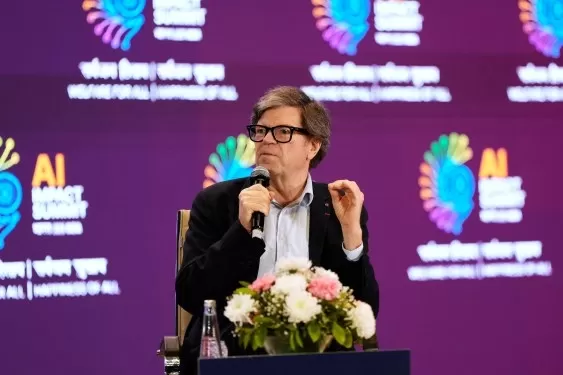 Yann LeCun's AMI Labs Secures $1 Billion for World Model Development
AMI Labs, the new AI venture co-founded by Turing Award recipient Yann LeCun following his departure from Meta, has secured $1.03 billion in funding at a pre-money valuation of $3.5 billion. The company is developing world models—AI systems that lear
Yann LeCun's AMI Labs Secures $1 Billion for World Model Development
AMI Labs, the new AI venture co-founded by Turing Award recipient Yann LeCun following his departure from Meta, has secured $1.03 billion in funding at a pre-money valuation of $3.5 billion. The company is developing world models—AI systems that lear
 Meta Removes AI Photo Editing Feature Following User Backlash
Meta, the social media giant, is once again embroiled in a public debate regarding the delicate balance between artificial intelligence and user privacy. According to TechCrunch, Meta’s Superintelligence Labs introduced a new AI image generator, Muse
Meta Removes AI Photo Editing Feature Following User Backlash
Meta, the social media giant, is once again embroiled in a public debate regarding the delicate balance between artificial intelligence and user privacy. According to TechCrunch, Meta’s Superintelligence Labs introduced a new AI image generator, Muse
 DeepMind CEO Hassabis: I sleep six hours a day, usually feel energetic around 1 a.m.
Fortune recently featured an interview with Demis Hassabis, CEO of Google DeepMind, revealing his unconventional approach to rest and productivity. Hassabis disclosed that he sleeps very little, structuring his waking hours into two distinct work blo
DeepMind CEO Hassabis: I sleep six hours a day, usually feel energetic around 1 a.m.
Fortune recently featured an interview with Demis Hassabis, CEO of Google DeepMind, revealing his unconventional approach to rest and productivity. Hassabis disclosed that he sleeps very little, structuring his waking hours into two distinct work blo

2026 Latest Best Top-rated AI Scene Animation Tools for Social Media Content are curated here by XIX.AI. These powerful game-changing tools offer real-world tests and detailed free vs paid comparison, helping creators boost productivity significantly. Explore now to unlock your AI edge.
9 tools
xix.ai

2026 Latest Best AI Short-Form Video Hook Generators for Reels Shorts and Product Launch Campaigns! XIX.AI curates top-rated powerful game-changing tools that deliver must-try results through real-world tests. This weekly updated page offers free vs paid comparison rankings to help you find the perfect solution for boosting content creativity and productivity. Explore now to Unlock your AI edge!
11 tools
xix.ai

2026 Latest Best Top-Rated AI Article Outline Tools for Long Form Writing! This curated collection features powerful, game-changing tools that deliver accurate, structured outlines with real-world tests to boost writing efficiency significantly. XIX.AI is part of this elite selection. Get a free vs paid comparison to help you choose the perfect tool. Explore now and Unlock your AI edge!
9 tools
xix.ai

2026 Latest Best Top-rated AI Roleplay Chat Apps for Language Practice, Interview Prep, and Daily Fluency! XIX.AI curates a powerful game-changing collection that offers free vs paid comparison, real-world tests, and updated rankings weekly. These must-try tools help you boost writing skills, overcome fluency challenges, and improve communication efficiency across all daily scenarios. Explore now to discover your perfect tool for language growth!
10 tools
xix.ai

2026 Latest Best Top-rated AI Stem Separation Tools Curated for Remix Production, Sampling Prep, and Karaoke Masters. These powerful game-changing tools offer real-world tests to deliver precise audio isolation, boosting productivity significantly. XIX.AI provides a weekly updated free vs paid comparison guide to help you find the must-try solution that suits your needs. Explore now to unlock your AI edge.
8 tools
xix.ai

2026 Latest Best AI SQL Copilots Ranked Top-Rated! XIX.AI curates a powerful game-changing collection for weekly updated real-world tests. These must-try tools help you generate accurate revenue dashboards, analyze sales funnels, and track product metrics swiftly, boosting productivity massively. Explore now to Discover your perfect tool for data-driven decision making! 238 characters
9 tools
xix.ai












