


 Home
HomeWhat caused World War I? Key battles and Treaty of Versailles explained.
World War I, a global conflict that reshaped the 20th century, was rooted in a complex web of alliances and rivalries. Understanding the historical context, key events, and the consequences of this devastating war is crucial for grasping the geopolitical landscape of today. This article delves into the core aspects of World War I, from its origins in the balance of power to the signing of the Treaty of Versailles.
Key Points
The concept of the balance of power shaped European alliances before World War I.
The Triple Entente and Triple Alliance were the major opposing coalitions.
The assassination of Archduke Franz Ferdinand ignited the conflict.
Key battles like the Second Battle of Ypres, Passchendaele, the Battle of Jutland, and the Somme defined the Western Front.
Unrestricted submarine warfare by Germany provoked the United States into joining the war.
The Russian Revolution led to Russia's withdrawal from the war.
The Treaty of Brest-Litovsk resulted in significant land concessions by Russia to Germany.
The Treaty of Versailles imposed harsh terms on Germany, setting the stage for future conflicts.
The Spark: Europe Before World War I
Balance of Power: A Precarious Peace
At the start of the 20th century, Europe's political landscape was governed by the balance of power principle
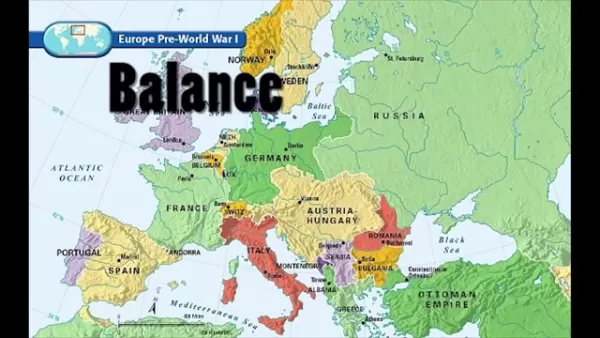
. This system involved nations forming alliances to prevent any single country from becoming too dominant. The intention was to discourage aggression through a network of mutual defense pacts. However, this intricate system also meant that a localized dispute could rapidly escalate into a full-scale continental war. While designed to maintain stability, the balance of power fostered underlying tensions as nations continuously sought to gain strategic advantages over their rivals. The two primary blocs that emerged were the Triple Entente and the Triple Alliance. The Triple Entente included Great Britain, France, and the Russian Empire, while the Triple Alliance was composed of the German and Austro-Hungarian Empires, along with the Kingdom of Italy.
This alliance structure initially acted as a deterrent against war. Yet, it also created a scenario where a single conflict had the potential to draw all major powers into a global confrontation. This is exactly what transpired.
The Alliances: Entente vs. Alliance
Two primary alliances dominated the European geopolitical scene
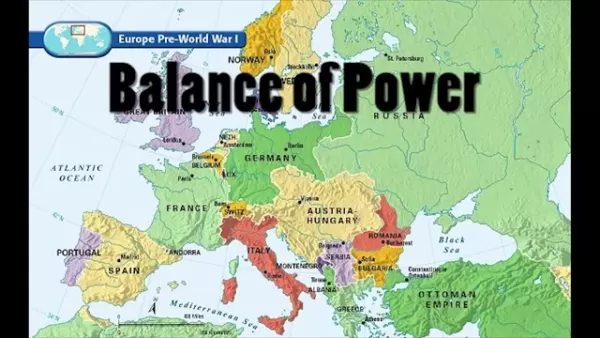
:
- The Triple Entente: Comprising the British Empire, France, and the Russian Empire.
- The Triple Alliance: Consisting of the German and Austro-Hungarian Empires, and the Kingdom of Italy. This network of alliances, while intended to prevent conflict, created a domino effect, where an attack on one nation could trigger a chain reaction involving all its allies. In many ways this precarious balance of power system ensured that World War I happened. Germany and Austria Hungary believed their enemies had them surrounded and would act before their enemies became too powerful.
These alliances deterred countries from fighting. However, one conflict could bring in all the major powers and set off a world war. In the end, this is precisely what happened.
The Catalyst: Assassination and Escalation
The Assassination of Archduke Franz Ferdinand
The assassination of Archduke Franz Ferdinand, heir to the Austro-Hungarian throne, and his wife Sophie, on June 28, 1914, in Sarajevo

, was the spark that ignited World War I. The assassination was carried out by Gavrilo Princip, a Bosnian Serb nationalist belonging to the Black Hand organization, which advocated for a unified Yugoslavia independent from Austro-Hungarian rule. This single act set off a rapid chain of diplomatic failures and military mobilizations that escalated into a worldwide war.
Austria-Hungary issued a severe ultimatum to Serbia, which Serbia ultimately rejected. Backed by Germany, Austria-Hungary declared war on Serbia. In response, Russia, as Serbia's ally, began to mobilize its military forces. Germany then declared war on Russia. Subsequently, Germany turned its attention westward, declaring war on France, Belgium, and Luxembourg. Great Britain, honoring its commitment under the 1839 Treaty of London to guarantee Belgian independence, declared war on Germany. In this manner, the world was plunged into war.
The Schlieffen Plan and Trench Warfare
Germany initiated the Schlieffen Plan, a strategic blueprint for a rapid invasion of France
. The plan progressed initially but ultimately stalled at the Battle of the Marne. German forces dug defensive positions, marking the beginning of trench warfare. Trenches were extensive networks of excavated earth where soldiers sought protection from enemy fire. These fortifications stretched for hundreds of kilometers along the Western Front. Defensive setups, including machine guns and barbed wire, were deployed to devastating effect against advancing troops. For four years, the Western Front remained largely static, with minimal territorial gains by either side.
Key Battles on the Western Front
Second Battle of Ypres
The Second Battle of Ypres was historically significant for the first large-scale use of chemical weapons in warfare, deployed by German forces
. This brutal engagement underscored the evolution of warfare tactics toward increasingly inhumane methods. The introduction of poison gas added a new layer of terror to the already horrific realities of the conflict.
Passchendaele
The Battle of Passchendaele, also known as the Third Battle of Ypres, was notorious for being one of the war's most mud-filled and bloody confrontations
. The battlefield conditions were so extreme that soldiers sometimes drowned in the liquid mud, a grim testament to the appalling environment and the immense human cost of trench warfare.
Battle of the Somme
The Battle of the Somme stands as one of the deadliest battles in history, with casualties exceeding one million. It also marked the debut of the tank by the Entente forces
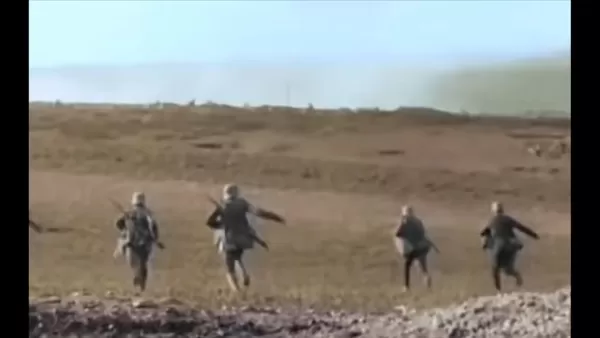
. This battle remains a powerful symbol of the staggering human sacrifice of the war.
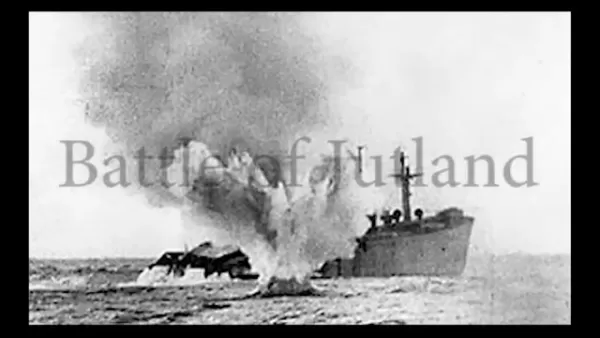
Battle of Jutland
The Battle of Jutland was the sole major naval engagement of the First World War
. It showcased the naval strength of the combatant nations and highlighted the critical strategic importance of maritime dominance.
Unrestricted Submarine Warfare and US Entry
The Atlantic Theater
The Atlantic Ocean emerged as a pivotal theater of war
. Germany, facing a British naval blockade, attempted to break this stranglehold through a policy of unrestricted submarine warfare. This doctrine authorized German submarines, known as U-boats, to attack any vessel bound for British shores without warning. German U-boats sank several American ships, most notably the passenger liner Lusitania, a key factor in the United States' decision to enter the war on the side of the Entente.
The Legacy: World War I's Enduring Impact
Pros
The collapse of several major empires.
Rapid advancements in military technology.
A significant shift in global power structures.
Cons
Unprecedented loss of human life.
Severe and widespread economic damage.
The creation of political and economic conditions that paved the way for World War II.
The End of the War and the Treaty of Versailles
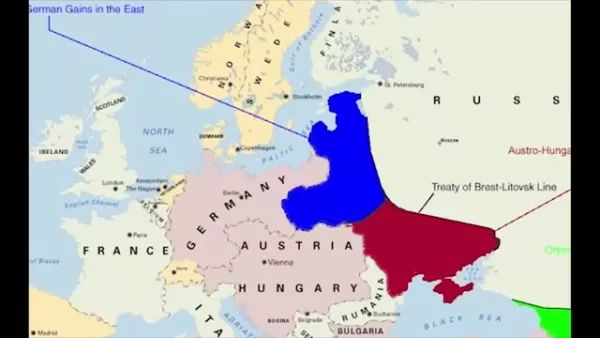
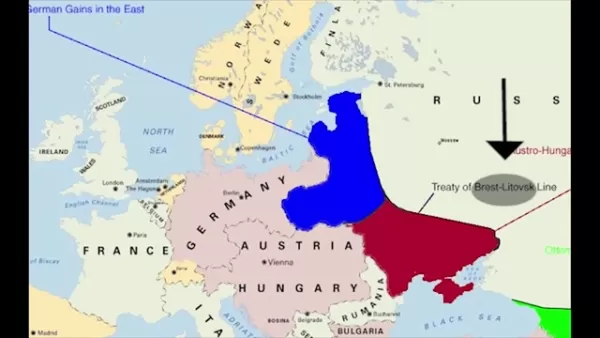
Russian Revolution and Treaty of Brest-Litovsk
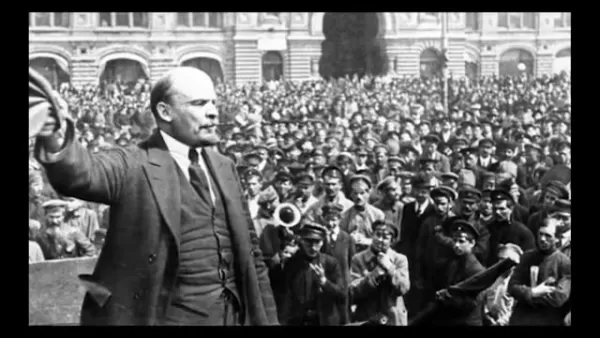
Widespread famine and demand for political reform fueled unrest in Russia
. The country experienced two revolutions in 1917: the first overthrew the Tsar, and the second brought Vladimir Lenin to power. Lenin promised to withdraw Russia from the war, leading to the negotiation of the Treaty of Brest-Litovsk. With Russia exiting the conflict, Germany was able to transfer troops from the Eastern Front to the west, launching a final major offensive known as the Spring Offensive in a last-ditch effort to win the war.
The Spring Offensive initially achieved some success but ultimately failed to deliver a decisive victory. Compounded by the arrival of fresh American troops reinforcing the Entente, Germany's military situation deteriorated rapidly. Although Russia ceded vast territories to Germany through the Treaty of Brest-Litovsk, Germany itself was soon forced out of the war. Following the stalled German offensive, the Entente powers, bolstered by American forces, launched their own counter-offensive, known as the Hundred Days Campaign. The war concluded with the signing of an armistice in a French railway carriage on November 11, 1918, at the 11th hour.
The Treaty of Versailles and its Consequences
In the months following the armistice, the victorious nations gathered for the Paris Peace Conference to draft the Treaty of Versailles. The treaty's terms were designed to address a defeated Germany. The Entente powers interpreted the armistice as a total German surrender. Germany was excluded from the negotiations. The German populace and government had anticipated lenient terms, believing their territory remained largely unconquered.
The Treaty of Versailles, formally signed in 1919, ended the state of war but had profound and lasting consequences. Germany was subjected to severe penalties, including:
- A drastic reduction of its military to a volunteer-only force not exceeding 100,000 troops.
- Severe restrictions on its naval capacity and a complete ban on having an air force.
- The loss of significant territories and all its overseas colonies.
- A prohibition on any political union (Anschluss) with Austria.
- The imposition of massive financial reparations and the forced acceptance of sole responsibility for starting the war.
Key Figures of World War I
Manfred Von Richthofen
Manfred Von Richthofen was a prominent military aviator during World War I. He is celebrated as the war's most successful fighter pilot and is famously known as the Red Baron.
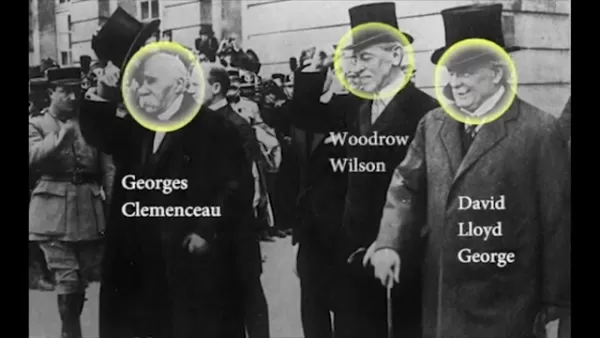
Georges Clemenceau
Georges Clemenceau served as the Prime Minister of France. He was a strong advocate for imposing severe penalties on Germany for its role in initiating the war.
David Lloyd George
David Lloyd George was the British Prime Minister during the latter part of the war. He favored a peace settlement that would leave Germany sufficiently stable to remain a viable trading partner for Britain.
Woodrow Wilson
Woodrow Wilson, the President of the United States, championed the principle of self-determination. This concept advocated that populations should have the right to govern themselves, free from the rule of foreign empires like Austria-Hungary.
Frequently Asked Questions
What was the main cause of World War I?
The war resulted from a complex interplay of factors, including militarism, the system of interlocking alliances, imperial rivalries, and intense nationalism. The assassination of Archduke Franz Ferdinand acted as the immediate catalyst, but these underlying tensions had been intensifying for decades.
What were the major alliances during World War I?
The two main opposing blocs were the Triple Entente, which included Great Britain, France, and Russia, and the Triple Alliance, composed of Germany, Austria-Hungary, and Italy. It is important to note that Italy did not honor its alliance and eventually joined the Entente.
How did trench warfare impact the conflict?
Trench warfare resulted in a protracted stalemate on the Western Front. It created horrific living conditions for soldiers and led to enormous casualty figures for minimal territorial gains. The experience of trench warfare came to define the soldier's reality in World War I.
What role did the United States play in World War I?
The United States maintained a policy of neutrality initially but entered the war in 1917. This decision was primarily driven by Germany's resumption of unrestricted submarine warfare, which threatened American shipping and lives. The infusion of American manpower, industrial capacity, and resources proved decisive in tipping the balance in favor of the Allied powers.
What were the main consequences of the Treaty of Versailles?
The Treaty of Versailles imposed severe penalties on Germany, including significant territorial losses, strict military limitations, enormous reparation payments, and a "war guilt" clause. These punitive measures created deep-seated resentment and economic instability within Germany, fostering conditions that enabled the rise of extremist movements like Nazism.
Related Questions
How did the Treaty of Versailles contribute to World War II?
The Treaty of Versailles was a significant factor contributing to World War II because it imposed harsh conditions on Germany, leading to economic hardship, political instability, and resentment among the German population. Here’s a breakdown of how it set the stage for another global conflict:Economic Hardship:Reparations: The treaty required Germany to pay massive reparations to the Allied powers for the damages caused during the war. These reparations were so substantial that they crippled the German economy, leading to hyperinflation and widespread poverty. [Keyword: Reparations]Territorial Losses: Germany lost significant industrial regions, such as Alsace-Lorraine and parts of Silesia, which further weakened its economic capacity.Political Instability:Weimar Republic: The treaty led to the establishment of the Weimar Republic, a democratic government that was widely seen as weak and ineffective. The republic struggled to manage the economic crisis and faced constant attacks from both right-wing and left-wing extremist groups.Loss of Prestige: The humiliation of defeat and the punitive terms of the treaty undermined the legitimacy of the Weimar Republic in the eyes of many Germans, fostering a sense of national shame and anger.Rise of Extremism:Nationalism: The treaty fueled nationalist sentiments in Germany, with many Germans believing that they had been unjustly treated and that their national pride had been wounded. [Keyword: Nationalism]Nazi Party: This environment created fertile ground for the rise of the Nazi Party, led by Adolf Hitler. Hitler capitalized on the widespread discontent and promised to restore Germany’s former glory, overturn the Treaty of Versailles, and avenge the humiliation.Military Restrictions:Disarmament: The treaty imposed strict limitations on the size and capabilities of the German military. This created a sense of vulnerability and resentment, as many Germans felt that they were being denied their right to self-defense.Remilitarization: Hitler defied these restrictions, gradually rebuilding the German military and reoccupying demilitarized zones, actions that emboldened him and demonstrated the ineffectiveness of the treaty’s enforcement mechanisms.Territorial Disputes:Loss of Territories: The loss of territories, particularly those with significant German-speaking populations, created irredentist claims that Hitler exploited to justify his expansionist policies.Anschluss: The treaty forbade the union (Anschluss) of Germany and Austria. Hitler’s eventual annexation of Austria in 1938 was a direct violation of the treaty.In summary, the Treaty of Versailles created a perfect storm of economic, political, and social conditions in Germany that allowed extremist ideologies to thrive and ultimately led to the outbreak of World War II. The treaty's harsh terms, intended to prevent future German aggression, instead fueled a desire for revenge and the restoration of national pride, which Hitler skillfully exploited to gain power.To illustrate these points further, consider this table:
Related article
 Stripe to Acquire OpenRouter as AI Model Routing Gains Momentum
Stripe has agreed to acquire OpenRouter, an AI model-routing platform that gives developers access to hundreds of models through a single interface. The deal adds model selection and routing to Stripe’s existing work around AI usage and token-based b
Former OpenAI Researcher Barrett Zoph Returns to Google to Support Gemini Development
Barret Zoph, who previously abruptly left and joined OpenAI due to a disagreement with Thinking Machines Lab CEO Miriam Mularati, has once again changed employers. Alphabet's Google announced that Zoph will return as Vice President of Research, bring
How Recursive Intelligence Raised $335M at $4B Valuation in 4 Months
The co-founders of startup Ricursive Intelligence seemed destined to be co-founders.Anna Goldie, CEO, and Azalia Mirhoseini, CTO, are so well-known in the AI community that they were among those AI engineers who “got those weird emails from Zuckerber
Related Special Topic Recommendations
Design & Art
Stripe to Acquire OpenRouter as AI Model Routing Gains Momentum
Stripe has agreed to acquire OpenRouter, an AI model-routing platform that gives developers access to hundreds of models through a single interface. The deal adds model selection and routing to Stripe’s existing work around AI usage and token-based b
Former OpenAI Researcher Barrett Zoph Returns to Google to Support Gemini Development
Barret Zoph, who previously abruptly left and joined OpenAI due to a disagreement with Thinking Machines Lab CEO Miriam Mularati, has once again changed employers. Alphabet's Google announced that Zoph will return as Vice President of Research, bring
How Recursive Intelligence Raised $335M at $4B Valuation in 4 Months
The co-founders of startup Ricursive Intelligence seemed destined to be co-founders.Anna Goldie, CEO, and Azalia Mirhoseini, CTO, are so well-known in the AI community that they were among those AI engineers who “got those weird emails from Zuckerber
Related Special Topic Recommendations
Design & Art
 Top AI Illustration Tools: Create Editorial Scenes and Cover Art Faster
2026 Latest Top-rated AI Illustration Tools: Our curated list features the best powerfully designed tools for creating stunning editorial scenes and eye-catching cover art quickly. Each option has gone through rigorous real-world tests, offering a free vs paid comparison to help you find the perfect match for your workflow. Try these must-try solutions today to unlock your AI edge and boost your creative productivity. Explore now at XIX.AI.
 10 tools
 xix.ai
Education and Learning
Top AI Tutors for Exam Prep: Practice Math, Science, and English
xix.ai
Education and Learning
Top AI Tutors for Exam Prep: Practice Math, Science, and English
2026 Latest Top-Rated Best AI Tutors for Exam Prep are here on XIX.AI! Our curated list features powerful game-changing tools that offer free vs paid comparison, real-world tests, and weekly updated rankings. They help boost your writing efficiency, simplify complex topic learning, and unlock your academic potential. Explore now to Discover your perfect exam prep tool and Start creating today to Unlock your AI edge!
10 tools
xix.ai
Finance
AI Budget Planning Tools for Personal Money Management
2026 Latest Best Top-Rated AI Budget Planning Tools for Personal Money Management are here on XIX.AI! This curated collection features powerful, game-changing solutions that help you conduct real-world tests, understand spending habits, and create personalized plans to boost productivity. Enjoy a free vs paid comparison along with detailed rankings. Must-try tools designed to simplify money management and unlock your AI edge. Explore now!
11 tools
xix.ai
Health & Wellness
AI Sleep Tracking Assistants: Improve Recovery with Better Bedtime Habits
2026 Latest Best Top-Rated AI Sleep Tracking Assistants curated for ultimate recovery. This fully updated weekly guide features powerful tools that deliver real-world tests, free vs paid comparison, and detailed rankings to help you find the must-try solution that boosts sleep quality and supports better bedtime habits. Explore now at XIX.AI to Unlock your AI edge.
10 tools
xix.ai
Data Analysis
AI SQL Copilots for Product and Revenue Analytics
2026 Latest Best Top-Rated AI SQL Copilots for Product and Revenue Analytics! XIX.AI has curated a powerful, game-changing collection of must-try tools that undergo real-world tests through weekly updated rankings. These tools help users boost productivity significantly by accelerating data analysis, streamlining complex queries, and generating accurate insights to drive smarter business decisions. Explore now to Discover your perfect tool for unlocking your AI edge!
14 tools
xix.ai
Education and Learning
Best AI Homework Helpers That Teach: Learn Concepts, Not Just Answers
2026 Latest Best Top-Rated AI Homework Helpers That Teach Core Concepts Not Just Answers Powerful Tools for Students Must-Try Curated List Weekly Updated Free vs Paid Comparison Real-World Tests Accurate Rankings to Help You Unlock Your Full Learning Potential Explore now to Discover your perfect tool for smarter studying.
10 tools
xix.ai

 Comments (2)
0/500
Comments (2)
0/500
![JasonJackson]()
So basically, a bunch of European royals couldn't get along, and millions died. The Treaty of Versailles just set the stage for round two. History really does repeat itself, doesn't it? 😅
![WilliamAnderson]()
So the 'war to end all wars' basically just set the stage for an even bigger one? That Treaty of Versailles must have been written with zero foresight. Also, the whole alliance domino effect reminds me of a bad game of Jenga. 😅
World War I, a global conflict that reshaped the 20th century, was rooted in a complex web of alliances and rivalries. Understanding the historical context, key events, and the consequences of this devastating war is crucial for grasping the geopolitical landscape of today. This article delves into the core aspects of World War I, from its origins in the balance of power to the signing of the Treaty of Versailles.
Key Points
The concept of the balance of power shaped European alliances before World War I.
The Triple Entente and Triple Alliance were the major opposing coalitions.
The assassination of Archduke Franz Ferdinand ignited the conflict.
Key battles like the Second Battle of Ypres, Passchendaele, the Battle of Jutland, and the Somme defined the Western Front.
Unrestricted submarine warfare by Germany provoked the United States into joining the war.
The Russian Revolution led to Russia's withdrawal from the war.
The Treaty of Brest-Litovsk resulted in significant land concessions by Russia to Germany.
The Treaty of Versailles imposed harsh terms on Germany, setting the stage for future conflicts.
The Spark: Europe Before World War I
Balance of Power: A Precarious Peace
At the start of the 20th century, Europe's political landscape was governed by the balance of power principle
. This system involved nations forming alliances to prevent any single country from becoming too dominant. The intention was to discourage aggression through a network of mutual defense pacts. However, this intricate system also meant that a localized dispute could rapidly escalate into a full-scale continental war. While designed to maintain stability, the balance of power fostered underlying tensions as nations continuously sought to gain strategic advantages over their rivals. The two primary blocs that emerged were the Triple Entente and the Triple Alliance. The Triple Entente included Great Britain, France, and the Russian Empire, while the Triple Alliance was composed of the German and Austro-Hungarian Empires, along with the Kingdom of Italy.
This alliance structure initially acted as a deterrent against war. Yet, it also created a scenario where a single conflict had the potential to draw all major powers into a global confrontation. This is exactly what transpired.
The Alliances: Entente vs. Alliance
Two primary alliances dominated the European geopolitical scene
:
- The Triple Entente: Comprising the British Empire, France, and the Russian Empire.
- The Triple Alliance: Consisting of the German and Austro-Hungarian Empires, and the Kingdom of Italy. This network of alliances, while intended to prevent conflict, created a domino effect, where an attack on one nation could trigger a chain reaction involving all its allies. In many ways this precarious balance of power system ensured that World War I happened. Germany and Austria Hungary believed their enemies had them surrounded and would act before their enemies became too powerful.
These alliances deterred countries from fighting. However, one conflict could bring in all the major powers and set off a world war. In the end, this is precisely what happened.
The Catalyst: Assassination and Escalation
The Assassination of Archduke Franz Ferdinand
The assassination of Archduke Franz Ferdinand, heir to the Austro-Hungarian throne, and his wife Sophie, on June 28, 1914, in Sarajevo
, was the spark that ignited World War I. The assassination was carried out by Gavrilo Princip, a Bosnian Serb nationalist belonging to the Black Hand organization, which advocated for a unified Yugoslavia independent from Austro-Hungarian rule. This single act set off a rapid chain of diplomatic failures and military mobilizations that escalated into a worldwide war.
Austria-Hungary issued a severe ultimatum to Serbia, which Serbia ultimately rejected. Backed by Germany, Austria-Hungary declared war on Serbia. In response, Russia, as Serbia's ally, began to mobilize its military forces. Germany then declared war on Russia. Subsequently, Germany turned its attention westward, declaring war on France, Belgium, and Luxembourg. Great Britain, honoring its commitment under the 1839 Treaty of London to guarantee Belgian independence, declared war on Germany. In this manner, the world was plunged into war.
The Schlieffen Plan and Trench Warfare
Germany initiated the Schlieffen Plan, a strategic blueprint for a rapid invasion of France
. The plan progressed initially but ultimately stalled at the Battle of the Marne. German forces dug defensive positions, marking the beginning of trench warfare. Trenches were extensive networks of excavated earth where soldiers sought protection from enemy fire. These fortifications stretched for hundreds of kilometers along the Western Front. Defensive setups, including machine guns and barbed wire, were deployed to devastating effect against advancing troops. For four years, the Western Front remained largely static, with minimal territorial gains by either side.
Key Battles on the Western Front
Second Battle of Ypres
The Second Battle of Ypres was historically significant for the first large-scale use of chemical weapons in warfare, deployed by German forces
. This brutal engagement underscored the evolution of warfare tactics toward increasingly inhumane methods. The introduction of poison gas added a new layer of terror to the already horrific realities of the conflict.
Passchendaele
The Battle of Passchendaele, also known as the Third Battle of Ypres, was notorious for being one of the war's most mud-filled and bloody confrontations
. The battlefield conditions were so extreme that soldiers sometimes drowned in the liquid mud, a grim testament to the appalling environment and the immense human cost of trench warfare.
Battle of the Somme
The Battle of the Somme stands as one of the deadliest battles in history, with casualties exceeding one million. It also marked the debut of the tank by the Entente forces
. This battle remains a powerful symbol of the staggering human sacrifice of the war.
Battle of Jutland
The Battle of Jutland was the sole major naval engagement of the First World War
. It showcased the naval strength of the combatant nations and highlighted the critical strategic importance of maritime dominance.
Unrestricted Submarine Warfare and US Entry
The Atlantic Theater
The Atlantic Ocean emerged as a pivotal theater of war
. Germany, facing a British naval blockade, attempted to break this stranglehold through a policy of unrestricted submarine warfare. This doctrine authorized German submarines, known as U-boats, to attack any vessel bound for British shores without warning. German U-boats sank several American ships, most notably the passenger liner Lusitania, a key factor in the United States' decision to enter the war on the side of the Entente.
The Legacy: World War I's Enduring Impact
Pros
The collapse of several major empires.
Rapid advancements in military technology.
A significant shift in global power structures.
Cons
Unprecedented loss of human life.
Severe and widespread economic damage.
The creation of political and economic conditions that paved the way for World War II.
The End of the War and the Treaty of Versailles
Russian Revolution and Treaty of Brest-Litovsk
Widespread famine and demand for political reform fueled unrest in Russia
. The country experienced two revolutions in 1917: the first overthrew the Tsar, and the second brought Vladimir Lenin to power. Lenin promised to withdraw Russia from the war, leading to the negotiation of the Treaty of Brest-Litovsk. With Russia exiting the conflict, Germany was able to transfer troops from the Eastern Front to the west, launching a final major offensive known as the Spring Offensive in a last-ditch effort to win the war.
The Spring Offensive initially achieved some success but ultimately failed to deliver a decisive victory. Compounded by the arrival of fresh American troops reinforcing the Entente, Germany's military situation deteriorated rapidly. Although Russia ceded vast territories to Germany through the Treaty of Brest-Litovsk, Germany itself was soon forced out of the war. Following the stalled German offensive, the Entente powers, bolstered by American forces, launched their own counter-offensive, known as the Hundred Days Campaign. The war concluded with the signing of an armistice in a French railway carriage on November 11, 1918, at the 11th hour.
The Treaty of Versailles and its Consequences
In the months following the armistice, the victorious nations gathered for the Paris Peace Conference to draft the Treaty of Versailles. The treaty's terms were designed to address a defeated Germany. The Entente powers interpreted the armistice as a total German surrender. Germany was excluded from the negotiations. The German populace and government had anticipated lenient terms, believing their territory remained largely unconquered.
The Treaty of Versailles, formally signed in 1919, ended the state of war but had profound and lasting consequences. Germany was subjected to severe penalties, including:
- A drastic reduction of its military to a volunteer-only force not exceeding 100,000 troops.
- Severe restrictions on its naval capacity and a complete ban on having an air force.
- The loss of significant territories and all its overseas colonies.
- A prohibition on any political union (Anschluss) with Austria.
- The imposition of massive financial reparations and the forced acceptance of sole responsibility for starting the war.
Key Figures of World War I
Manfred Von Richthofen
Manfred Von Richthofen was a prominent military aviator during World War I. He is celebrated as the war's most successful fighter pilot and is famously known as the Red Baron.
Georges Clemenceau
Georges Clemenceau served as the Prime Minister of France. He was a strong advocate for imposing severe penalties on Germany for its role in initiating the war.
David Lloyd George
David Lloyd George was the British Prime Minister during the latter part of the war. He favored a peace settlement that would leave Germany sufficiently stable to remain a viable trading partner for Britain.
Woodrow Wilson
Woodrow Wilson, the President of the United States, championed the principle of self-determination. This concept advocated that populations should have the right to govern themselves, free from the rule of foreign empires like Austria-Hungary.
Frequently Asked Questions
What was the main cause of World War I?
The war resulted from a complex interplay of factors, including militarism, the system of interlocking alliances, imperial rivalries, and intense nationalism. The assassination of Archduke Franz Ferdinand acted as the immediate catalyst, but these underlying tensions had been intensifying for decades.
What were the major alliances during World War I?
The two main opposing blocs were the Triple Entente, which included Great Britain, France, and Russia, and the Triple Alliance, composed of Germany, Austria-Hungary, and Italy. It is important to note that Italy did not honor its alliance and eventually joined the Entente.
How did trench warfare impact the conflict?
Trench warfare resulted in a protracted stalemate on the Western Front. It created horrific living conditions for soldiers and led to enormous casualty figures for minimal territorial gains. The experience of trench warfare came to define the soldier's reality in World War I.
What role did the United States play in World War I?
The United States maintained a policy of neutrality initially but entered the war in 1917. This decision was primarily driven by Germany's resumption of unrestricted submarine warfare, which threatened American shipping and lives. The infusion of American manpower, industrial capacity, and resources proved decisive in tipping the balance in favor of the Allied powers.
What were the main consequences of the Treaty of Versailles?
The Treaty of Versailles imposed severe penalties on Germany, including significant territorial losses, strict military limitations, enormous reparation payments, and a "war guilt" clause. These punitive measures created deep-seated resentment and economic instability within Germany, fostering conditions that enabled the rise of extremist movements like Nazism.
Related Questions
How did the Treaty of Versailles contribute to World War II?
The Treaty of Versailles was a significant factor contributing to World War II because it imposed harsh conditions on Germany, leading to economic hardship, political instability, and resentment among the German population. Here’s a breakdown of how it set the stage for another global conflict:Economic Hardship:Reparations: The treaty required Germany to pay massive reparations to the Allied powers for the damages caused during the war. These reparations were so substantial that they crippled the German economy, leading to hyperinflation and widespread poverty. [Keyword: Reparations]Territorial Losses: Germany lost significant industrial regions, such as Alsace-Lorraine and parts of Silesia, which further weakened its economic capacity.Political Instability:Weimar Republic: The treaty led to the establishment of the Weimar Republic, a democratic government that was widely seen as weak and ineffective. The republic struggled to manage the economic crisis and faced constant attacks from both right-wing and left-wing extremist groups.Loss of Prestige: The humiliation of defeat and the punitive terms of the treaty undermined the legitimacy of the Weimar Republic in the eyes of many Germans, fostering a sense of national shame and anger.Rise of Extremism:Nationalism: The treaty fueled nationalist sentiments in Germany, with many Germans believing that they had been unjustly treated and that their national pride had been wounded. [Keyword: Nationalism]Nazi Party: This environment created fertile ground for the rise of the Nazi Party, led by Adolf Hitler. Hitler capitalized on the widespread discontent and promised to restore Germany’s former glory, overturn the Treaty of Versailles, and avenge the humiliation.Military Restrictions:Disarmament: The treaty imposed strict limitations on the size and capabilities of the German military. This created a sense of vulnerability and resentment, as many Germans felt that they were being denied their right to self-defense.Remilitarization: Hitler defied these restrictions, gradually rebuilding the German military and reoccupying demilitarized zones, actions that emboldened him and demonstrated the ineffectiveness of the treaty’s enforcement mechanisms.Territorial Disputes:Loss of Territories: The loss of territories, particularly those with significant German-speaking populations, created irredentist claims that Hitler exploited to justify his expansionist policies.Anschluss: The treaty forbade the union (Anschluss) of Germany and Austria. Hitler’s eventual annexation of Austria in 1938 was a direct violation of the treaty.In summary, the Treaty of Versailles created a perfect storm of economic, political, and social conditions in Germany that allowed extremist ideologies to thrive and ultimately led to the outbreak of World War II. The treaty's harsh terms, intended to prevent future German aggression, instead fueled a desire for revenge and the restoration of national pride, which Hitler skillfully exploited to gain power.To illustrate these points further, consider this table:








 Stripe to Acquire OpenRouter as AI Model Routing Gains Momentum
Stripe has agreed to acquire OpenRouter, an AI model-routing platform that gives developers access to hundreds of models through a single interface. The deal adds model selection and routing to Stripe’s existing work around AI usage and token-based b
Stripe to Acquire OpenRouter as AI Model Routing Gains Momentum
Stripe has agreed to acquire OpenRouter, an AI model-routing platform that gives developers access to hundreds of models through a single interface. The deal adds model selection and routing to Stripe’s existing work around AI usage and token-based b
 Former OpenAI Researcher Barrett Zoph Returns to Google to Support Gemini Development
Barret Zoph, who previously abruptly left and joined OpenAI due to a disagreement with Thinking Machines Lab CEO Miriam Mularati, has once again changed employers. Alphabet's Google announced that Zoph will return as Vice President of Research, bring
Former OpenAI Researcher Barrett Zoph Returns to Google to Support Gemini Development
Barret Zoph, who previously abruptly left and joined OpenAI due to a disagreement with Thinking Machines Lab CEO Miriam Mularati, has once again changed employers. Alphabet's Google announced that Zoph will return as Vice President of Research, bring
 How Recursive Intelligence Raised $335M at $4B Valuation in 4 Months
The co-founders of startup Ricursive Intelligence seemed destined to be co-founders.Anna Goldie, CEO, and Azalia Mirhoseini, CTO, are so well-known in the AI community that they were among those AI engineers who “got those weird emails from Zuckerber
How Recursive Intelligence Raised $335M at $4B Valuation in 4 Months
The co-founders of startup Ricursive Intelligence seemed destined to be co-founders.Anna Goldie, CEO, and Azalia Mirhoseini, CTO, are so well-known in the AI community that they were among those AI engineers who “got those weird emails from Zuckerber

2026 Latest Top-rated AI Illustration Tools: Our curated list features the best powerfully designed tools for creating stunning editorial scenes and eye-catching cover art quickly. Each option has gone through rigorous real-world tests, offering a free vs paid comparison to help you find the perfect match for your workflow. Try these must-try solutions today to unlock your AI edge and boost your creative productivity. Explore now at XIX.AI.
10 tools
xix.ai

2026 Latest Top-Rated Best AI Tutors for Exam Prep are here on XIX.AI! Our curated list features powerful game-changing tools that offer free vs paid comparison, real-world tests, and weekly updated rankings. They help boost your writing efficiency, simplify complex topic learning, and unlock your academic potential. Explore now to Discover your perfect exam prep tool and Start creating today to Unlock your AI edge!
10 tools
xix.ai

2026 Latest Best Top-Rated AI Budget Planning Tools for Personal Money Management are here on XIX.AI! This curated collection features powerful, game-changing solutions that help you conduct real-world tests, understand spending habits, and create personalized plans to boost productivity. Enjoy a free vs paid comparison along with detailed rankings. Must-try tools designed to simplify money management and unlock your AI edge. Explore now!
11 tools
xix.ai

2026 Latest Best Top-Rated AI Sleep Tracking Assistants curated for ultimate recovery. This fully updated weekly guide features powerful tools that deliver real-world tests, free vs paid comparison, and detailed rankings to help you find the must-try solution that boosts sleep quality and supports better bedtime habits. Explore now at XIX.AI to Unlock your AI edge.
10 tools
xix.ai

2026 Latest Best Top-Rated AI SQL Copilots for Product and Revenue Analytics! XIX.AI has curated a powerful, game-changing collection of must-try tools that undergo real-world tests through weekly updated rankings. These tools help users boost productivity significantly by accelerating data analysis, streamlining complex queries, and generating accurate insights to drive smarter business decisions. Explore now to Discover your perfect tool for unlocking your AI edge!
14 tools
xix.ai

2026 Latest Best Top-Rated AI Homework Helpers That Teach Core Concepts Not Just Answers Powerful Tools for Students Must-Try Curated List Weekly Updated Free vs Paid Comparison Real-World Tests Accurate Rankings to Help You Unlock Your Full Learning Potential Explore now to Discover your perfect tool for smarter studying.
10 tools
xix.ai

So basically, a bunch of European royals couldn't get along, and millions died. The Treaty of Versailles just set the stage for round two. History really does repeat itself, doesn't it? 😅
So the 'war to end all wars' basically just set the stage for an even bigger one? That Treaty of Versailles must have been written with zero foresight. Also, the whole alliance domino effect reminds me of a bad game of Jenga. 😅












