


 Home
HomeEar Training Test for 2025? Simple Guide to Unlock Your Musical Potential
Have you ever wondered about your innate musical talent? It's time to put it to the test! This straightforward ear training assessment will help you gauge your musical potential and pinpoint areas where you can grow. Designed for everyone, regardless of prior knowledge, this test offers valuable insights for both those who worry they might be tone-deaf and self-described music enthusiasts. Discover something new about your auditory skills today!
Key Points
Complete a 15-question assessment crafted to evaluate your musical aptitude.
The difficulty increases with each question, providing a comprehensive workout for your ears.
You have only 10 seconds to answer each question.
Every question offers two or three possible answers to choose from.
Receive immediate feedback and score yourself from 0 to 15 to see your musical ranking.
While there's no extra time, you can pause the video if needed.
The host will review all correct answers after the test concludes.
Assessing Your Musical Potential: The Ultimate Ear Training Test
What is This Ear Training Test All About?
This assessment is designed to measure your musical gift on a scale from 0 to 15
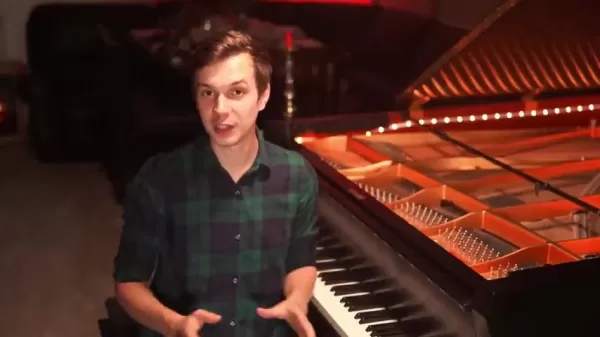
. It allows anyone to quickly evaluate their relative pitch and other core listening skills. The process is simple: just grab a pencil and paper to record your answers. With 15 questions total, each correct answer adds one point to your final score. After finishing, tally your points to find your ranking:
- 0: May indicate tone-deafness
- 1 to 4: Below average
- 5 to 9: Average
- 10 to 14: Above average
- 15: A truly genius ear!
Remember, this test is a snapshot of your current abilities and development potential. Treat it as an engaging introduction to relative pitch and musical skill. Consistent practice will help your scores improve over time.
Test Guidelines and Structure
Understanding the test's format and timing is key to answering questions quickly and effectively. Let's review the essential details for a smoother experience.
At its core, the test involves listening to audio prompts and identifying the correct musical response. Each of the 15 questions presents two or three options, but only one is correct
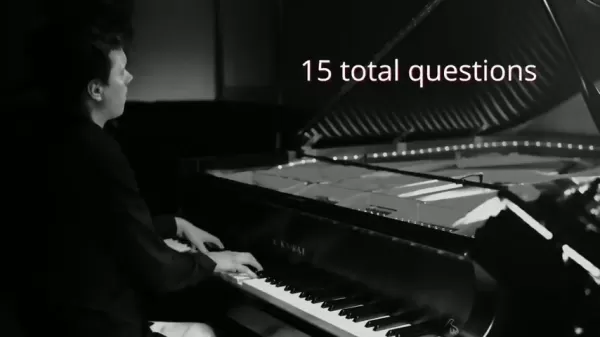
. Pay close attention and trust your musical intuition when selecting an answer.
Time management is crucial. You'll have approximately 10 seconds to respond to each question and jot down your answer on paper . While no extra time is allotted, you can pause the video to think. This structure encourages swift and efficient responses.
Test Questions 1-7 and Answers
Below is a summary of the first seven questions and their correct answers

. Knowing the answers helps measure your progress on this ear training journey. For the best experience, try the quiz yourself before checking the answers below:
- Question: You will hear two notes played consecutively. Is the second note: A) Higher, or B) Lower than the first?Answer: A) Higher
- Question: Again, you will hear two notes played one after the other. Is the second note: A) Lower, or B) The Same?Answer: B) The Same
- Question: Similarly, you will hear two notes played in sequence. Is the second note: A) Higher, B) Lower, or C) The Same?Answer: B) Lower
- Question: You will hear two notes with a 5-second gap between them. Are these notes: A) The Same, or B) Different?Answer: B) Different
- Question: Again, you will hear two notes separated by a 5-second gap. Are these notes: A) The Same, or B) Different?Answer: A) The Same
- Question: You will hear a chord followed by a single note. Does this note: A) Fit Together harmoniously, or B) Clash (sound dissonant)?Answer: A) Fit Together
- Question: You will hear another chord followed by a single note. Does this note: A) Fit Together, or B) Clash?Answer: B) Clash
Test Questions 8-15 and Answers
Here is a summary of the final eight test questions and their answers . Knowing the answers is crucial for tracking your capabilities. We recommend completing the quiz on your own before reviewing the answers below:
- Question: This time, you'll hear a scale followed by a single note. Does this note: A) Fit Together, or B) Clash?Answer: A) Fit Together
- Question: You will hear a chord followed by a short melody. Does this melody: A) fit together, or B) Clash?Answer: B) Clash
- Question: As before, you’ll hear a chord followed by another short melody. Does this melody: A) fit together, or B) clash?Answer: A) fit together
- Question: There are two main types of tonalities in Western Music: Major and Minor.
- Question: Similar to before, you will first hear a chord followed by a short melody in the same tonality. Does this example sound: A) Major and happy, or B) Minor and sad?Answer: A) Major and happy
- Question: Every musical phrase or melody contains elements of dissonance (tension) and consonance (release or resolution). Does this melody sound: A) harmoniously fit together, or B) like it clashes?Answer: A) fit together
- Question: Similarly, you will first hear a chord followed by a short musical phrase. Does this melody sound: A) Resolved (like an answer), or B) Unresolved (like a question)?Answer: B) Unresolved (like a question)
- Question: You will hear 7 consecutive ascending notes, followed by a single note after a 5-second pause. This final note may be a repetition of one of the previous seven. Is the last note: A) Repeated, or B) not repeated?Answer: A) Repeated
Free Online Testing
Testing Accessibility
Numerous free online services offer ear training, each with unique benefits. These tests present different challenges and can help solidify your understanding of relative pitch and overall listening skills. With each attempt, you'll notice measurable improvement!
Evaluating this Ear Training Test
Pros
Clear, easy-to-follow instructions.
Provides immediate results and feedback.
Accessible to a broad audience.
A fun and engaging way to assess relative pitch.
Cons
May not provide a comprehensive musical evaluation.
Focuses heavily on relative pitch, overlooking other musical skills.
Might not be suitable for individuals with significant hearing impairments.
FAQ
What are the main advantages of training your musical ear?
Ear training is fundamental for any musician's development. It sharpens your ability to recognize pitches, intervals, and chords, which makes transcribing music, improvising, and composing considerably easier. These skills deepen your musical intuition and boost creativity.
What is 'perfect pitch'?
Perfect pitch, or absolute pitch, is the rare ability to identify or reproduce a musical note without any external reference. Individuals with this skill can name a note simply by hearing it.
How does this ear training test relate to having perfect pitch?
This test evaluates relative pitch, not perfect pitch. Relative pitch is the ability to discern the relationships and intervals between notes. Improving this skill is an immensely practical step for musicians at any level.
Can ear training improve my musical ability?
Absolutely. Ear training enhances your musical abilities by helping you understand and connect with music on a deeper level. Developing this skill will positively impact your overall musicality and performance.
Related Questions
Where Can I Find Other Resources to Improve My Musical Ear?
A wealth of resources is available to help you improve your musical ear. Consider exploring:Interactive ear training websites and mobile apps.Enrolling in music theory courses at local institutions or through online platforms.Personalized coaching sessions with professional music teachers or tutors.Many paths can lead to a better musical ear. Your success depends on the resources you choose, combined with dedicated practice, commitment, and a genuine enjoyment of the learning process!
Related article
 DeepMind CEO Hassabis: I sleep six hours a day, usually feel energetic around 1 a.m.
Fortune recently featured an interview with Demis Hassabis, CEO of Google DeepMind, revealing his unconventional approach to rest and productivity. Hassabis disclosed that he sleeps very little, structuring his waking hours into two distinct work blo
OpenAI, Anthropic Vie for Market Share Despite Revenue Shortfalls
Despite recent reports suggesting OpenAI missed revenue targets, creating pressure on tech stocks this Tuesday, private AI lab investors remain resilient. Seasoned backers have confirmed they will not reduce investment despite negative media coverage
California AV Compliance: A New Era of Tickets, Geofences, and 1M Miles
Guident operates an AuveTech shuttle in South Florida, managing a four-mile route in West Palm Beach and a one-mile route in Boca Raton using its remote monitoring technology. | Credit: GuidentCalifornia is redefining the regulatory landscape for dri
Related Special Topic Recommendations
writing
DeepMind CEO Hassabis: I sleep six hours a day, usually feel energetic around 1 a.m.
Fortune recently featured an interview with Demis Hassabis, CEO of Google DeepMind, revealing his unconventional approach to rest and productivity. Hassabis disclosed that he sleeps very little, structuring his waking hours into two distinct work blo
OpenAI, Anthropic Vie for Market Share Despite Revenue Shortfalls
Despite recent reports suggesting OpenAI missed revenue targets, creating pressure on tech stocks this Tuesday, private AI lab investors remain resilient. Seasoned backers have confirmed they will not reduce investment despite negative media coverage
California AV Compliance: A New Era of Tickets, Geofences, and 1M Miles
Guident operates an AuveTech shuttle in South Florida, managing a four-mile route in West Palm Beach and a one-mile route in Boca Raton using its remote monitoring technology. | Credit: GuidentCalifornia is redefining the regulatory landscape for dri
Related Special Topic Recommendations
writing
 AI Article Outline Tools for Long Form Writing
2026 Latest Best Top-Rated AI Article Outline Tools for Long Form Writing! This curated collection features powerful, game-changing tools that deliver accurate, structured outlines with real-world tests to boost writing efficiency significantly. XIX.AI is part of this elite selection. Get a free vs paid comparison to help you choose the perfect tool. Explore now and Unlock your AI edge!
 9 tools
 xix.ai
chatbot
Best AI Roleplay Chat Apps for Language Practice, Interview Prep, and Daily Fluency
xix.ai
chatbot
Best AI Roleplay Chat Apps for Language Practice, Interview Prep, and Daily Fluency
2026 Latest Best Top-rated AI Roleplay Chat Apps for Language Practice, Interview Prep, and Daily Fluency! XIX.AI curates a powerful game-changing collection that offers free vs paid comparison, real-world tests, and updated rankings weekly. These must-try tools help you boost writing skills, overcome fluency challenges, and improve communication efficiency across all daily scenarios. Explore now to discover your perfect tool for language growth!
10 tools
xix.ai
Music composition
AI Stem Separation Tools for Remix Production, Sampling Prep, and Karaoke Masters
2026 Latest Best Top-rated AI Stem Separation Tools Curated for Remix Production, Sampling Prep, and Karaoke Masters. These powerful game-changing tools offer real-world tests to deliver precise audio isolation, boosting productivity significantly. XIX.AI provides a weekly updated free vs paid comparison guide to help you find the must-try solution that suits your needs. Explore now to unlock your AI edge.
8 tools
xix.ai
Data Analysis
AI SQL Copilots for Revenue Dashboards, Funnel Analysis, and Product Metrics
2026 Latest Best AI SQL Copilots Ranked Top-Rated! XIX.AI curates a powerful game-changing collection for weekly updated real-world tests. These must-try tools help you generate accurate revenue dashboards, analyze sales funnels, and track product metrics swiftly, boosting productivity massively. Explore now to Discover your perfect tool for data-driven decision making! 238 characters
9 tools
xix.ai
Music composition
Best AI Melody Writing Tools for Song Drafts
2026 Latest Best Top-Rated AI Melody Writing Tools for Song Drafts! XIX.AI has curated a highly powerful game-changing collection that goes through rigorous real-world tests to deliver the best writing experience. You can find detailed free vs paid comparisons, accurate rankings, and must-try options designed to help you create stunning song drafts effortlessly and boost your creative productivity significantly. Explore now to discover your perfect tool!
8 tools
xix.ai
chatbot
Best AI Conversation Trainer Tools for Interview Practice
2026 Latest Best Top-rated AI Conversation Trainer Tools for Interview Practice are here on XIX.AI! This curated collection features powerful, game-changing tools that go through rigorous real-world tests to deliver accurate feedback. You’ll find a free vs paid comparison and detailed rankings to help you choose the must-try option that boosts your confidence and skills. Explore now to Discover your perfect tool for interview success!
12 tools
xix.ai

 Comments (2)
0/500
Comments (2)
0/500
![DonaldLee]()
This ear test feels like a BuzzFeed quiz but for music nerds 😂. I tried it and realized my tone deafness is real... But hey, at least now I know where to start practicing. Pretty handy for beginners!
![RichardSmith]()
As someone who still struggles to keep rhythm while tapping my foot, this actually sounds useful. Could ear training apps eventually make perfect pitch less of a 'gift' and more of a trainable skill? Kinda wild to think about that future. Maybe I'll finally stop butchering karaoke tunes! 😅
Have you ever wondered about your innate musical talent? It's time to put it to the test! This straightforward ear training assessment will help you gauge your musical potential and pinpoint areas where you can grow. Designed for everyone, regardless of prior knowledge, this test offers valuable insights for both those who worry they might be tone-deaf and self-described music enthusiasts. Discover something new about your auditory skills today!
Key Points
Complete a 15-question assessment crafted to evaluate your musical aptitude.
The difficulty increases with each question, providing a comprehensive workout for your ears.
You have only 10 seconds to answer each question.
Every question offers two or three possible answers to choose from.
Receive immediate feedback and score yourself from 0 to 15 to see your musical ranking.
While there's no extra time, you can pause the video if needed.
The host will review all correct answers after the test concludes.
Assessing Your Musical Potential: The Ultimate Ear Training Test
What is This Ear Training Test All About?
This assessment is designed to measure your musical gift on a scale from 0 to 15
. It allows anyone to quickly evaluate their relative pitch and other core listening skills. The process is simple: just grab a pencil and paper to record your answers. With 15 questions total, each correct answer adds one point to your final score. After finishing, tally your points to find your ranking:
- 0: May indicate tone-deafness
- 1 to 4: Below average
- 5 to 9: Average
- 10 to 14: Above average
- 15: A truly genius ear!
Remember, this test is a snapshot of your current abilities and development potential. Treat it as an engaging introduction to relative pitch and musical skill. Consistent practice will help your scores improve over time.
Test Guidelines and Structure
Understanding the test's format and timing is key to answering questions quickly and effectively. Let's review the essential details for a smoother experience.
At its core, the test involves listening to audio prompts and identifying the correct musical response. Each of the 15 questions presents two or three options, but only one is correct
. Pay close attention and trust your musical intuition when selecting an answer.
Time management is crucial. You'll have approximately 10 seconds to respond to each question and jot down your answer on paper . While no extra time is allotted, you can pause the video to think. This structure encourages swift and efficient responses.
Test Questions 1-7 and Answers
Below is a summary of the first seven questions and their correct answers
. Knowing the answers helps measure your progress on this ear training journey. For the best experience, try the quiz yourself before checking the answers below:
- Question: You will hear two notes played consecutively. Is the second note: A) Higher, or B) Lower than the first?Answer: A) Higher
- Question: Again, you will hear two notes played one after the other. Is the second note: A) Lower, or B) The Same?Answer: B) The Same
- Question: Similarly, you will hear two notes played in sequence. Is the second note: A) Higher, B) Lower, or C) The Same?Answer: B) Lower
- Question: You will hear two notes with a 5-second gap between them. Are these notes: A) The Same, or B) Different?Answer: B) Different
- Question: Again, you will hear two notes separated by a 5-second gap. Are these notes: A) The Same, or B) Different?Answer: A) The Same
- Question: You will hear a chord followed by a single note. Does this note: A) Fit Together harmoniously, or B) Clash (sound dissonant)?Answer: A) Fit Together
- Question: You will hear another chord followed by a single note. Does this note: A) Fit Together, or B) Clash?Answer: B) Clash
Test Questions 8-15 and Answers
Here is a summary of the final eight test questions and their answers . Knowing the answers is crucial for tracking your capabilities. We recommend completing the quiz on your own before reviewing the answers below:
- Question: This time, you'll hear a scale followed by a single note. Does this note: A) Fit Together, or B) Clash?Answer: A) Fit Together
- Question: You will hear a chord followed by a short melody. Does this melody: A) fit together, or B) Clash?Answer: B) Clash
- Question: As before, you’ll hear a chord followed by another short melody. Does this melody: A) fit together, or B) clash?Answer: A) fit together
- Question: There are two main types of tonalities in Western Music: Major and Minor.
- Question: Similar to before, you will first hear a chord followed by a short melody in the same tonality. Does this example sound: A) Major and happy, or B) Minor and sad?Answer: A) Major and happy
- Question: Every musical phrase or melody contains elements of dissonance (tension) and consonance (release or resolution). Does this melody sound: A) harmoniously fit together, or B) like it clashes?Answer: A) fit together
- Question: Similarly, you will first hear a chord followed by a short musical phrase. Does this melody sound: A) Resolved (like an answer), or B) Unresolved (like a question)?Answer: B) Unresolved (like a question)
- Question: You will hear 7 consecutive ascending notes, followed by a single note after a 5-second pause. This final note may be a repetition of one of the previous seven. Is the last note: A) Repeated, or B) not repeated?Answer: A) Repeated
Free Online Testing
Testing Accessibility
Numerous free online services offer ear training, each with unique benefits. These tests present different challenges and can help solidify your understanding of relative pitch and overall listening skills. With each attempt, you'll notice measurable improvement!
Evaluating this Ear Training Test
Pros
Clear, easy-to-follow instructions.
Provides immediate results and feedback.
Accessible to a broad audience.
A fun and engaging way to assess relative pitch.
Cons
May not provide a comprehensive musical evaluation.
Focuses heavily on relative pitch, overlooking other musical skills.
Might not be suitable for individuals with significant hearing impairments.
FAQ
What are the main advantages of training your musical ear?
Ear training is fundamental for any musician's development. It sharpens your ability to recognize pitches, intervals, and chords, which makes transcribing music, improvising, and composing considerably easier. These skills deepen your musical intuition and boost creativity.
What is 'perfect pitch'?
Perfect pitch, or absolute pitch, is the rare ability to identify or reproduce a musical note without any external reference. Individuals with this skill can name a note simply by hearing it.
How does this ear training test relate to having perfect pitch?
This test evaluates relative pitch, not perfect pitch. Relative pitch is the ability to discern the relationships and intervals between notes. Improving this skill is an immensely practical step for musicians at any level.
Can ear training improve my musical ability?
Absolutely. Ear training enhances your musical abilities by helping you understand and connect with music on a deeper level. Developing this skill will positively impact your overall musicality and performance.
Related Questions
Where Can I Find Other Resources to Improve My Musical Ear?
A wealth of resources is available to help you improve your musical ear. Consider exploring:Interactive ear training websites and mobile apps.Enrolling in music theory courses at local institutions or through online platforms.Personalized coaching sessions with professional music teachers or tutors.Many paths can lead to a better musical ear. Your success depends on the resources you choose, combined with dedicated practice, commitment, and a genuine enjoyment of the learning process!








 DeepMind CEO Hassabis: I sleep six hours a day, usually feel energetic around 1 a.m.
Fortune recently featured an interview with Demis Hassabis, CEO of Google DeepMind, revealing his unconventional approach to rest and productivity. Hassabis disclosed that he sleeps very little, structuring his waking hours into two distinct work blo
DeepMind CEO Hassabis: I sleep six hours a day, usually feel energetic around 1 a.m.
Fortune recently featured an interview with Demis Hassabis, CEO of Google DeepMind, revealing his unconventional approach to rest and productivity. Hassabis disclosed that he sleeps very little, structuring his waking hours into two distinct work blo
 OpenAI, Anthropic Vie for Market Share Despite Revenue Shortfalls
Despite recent reports suggesting OpenAI missed revenue targets, creating pressure on tech stocks this Tuesday, private AI lab investors remain resilient. Seasoned backers have confirmed they will not reduce investment despite negative media coverage
California AV Compliance: A New Era of Tickets, Geofences, and 1M Miles
Guident operates an AuveTech shuttle in South Florida, managing a four-mile route in West Palm Beach and a one-mile route in Boca Raton using its remote monitoring technology. | Credit: GuidentCalifornia is redefining the regulatory landscape for dri
OpenAI, Anthropic Vie for Market Share Despite Revenue Shortfalls
Despite recent reports suggesting OpenAI missed revenue targets, creating pressure on tech stocks this Tuesday, private AI lab investors remain resilient. Seasoned backers have confirmed they will not reduce investment despite negative media coverage
California AV Compliance: A New Era of Tickets, Geofences, and 1M Miles
Guident operates an AuveTech shuttle in South Florida, managing a four-mile route in West Palm Beach and a one-mile route in Boca Raton using its remote monitoring technology. | Credit: GuidentCalifornia is redefining the regulatory landscape for dri

2026 Latest Best Top-Rated AI Article Outline Tools for Long Form Writing! This curated collection features powerful, game-changing tools that deliver accurate, structured outlines with real-world tests to boost writing efficiency significantly. XIX.AI is part of this elite selection. Get a free vs paid comparison to help you choose the perfect tool. Explore now and Unlock your AI edge!
9 tools
xix.ai
2026 Latest Best Top-rated AI Roleplay Chat Apps for Language Practice, Interview Prep, and Daily Fluency! XIX.AI curates a powerful game-changing collection that offers free vs paid comparison, real-world tests, and updated rankings weekly. These must-try tools help you boost writing skills, overcome fluency challenges, and improve communication efficiency across all daily scenarios. Explore now to discover your perfect tool for language growth!
10 tools
xix.ai
2026 Latest Best Top-rated AI Stem Separation Tools Curated for Remix Production, Sampling Prep, and Karaoke Masters. These powerful game-changing tools offer real-world tests to deliver precise audio isolation, boosting productivity significantly. XIX.AI provides a weekly updated free vs paid comparison guide to help you find the must-try solution that suits your needs. Explore now to unlock your AI edge.
8 tools
xix.ai

2026 Latest Best AI SQL Copilots Ranked Top-Rated! XIX.AI curates a powerful game-changing collection for weekly updated real-world tests. These must-try tools help you generate accurate revenue dashboards, analyze sales funnels, and track product metrics swiftly, boosting productivity massively. Explore now to Discover your perfect tool for data-driven decision making! 238 characters
9 tools
xix.ai

2026 Latest Best Top-Rated AI Melody Writing Tools for Song Drafts! XIX.AI has curated a highly powerful game-changing collection that goes through rigorous real-world tests to deliver the best writing experience. You can find detailed free vs paid comparisons, accurate rankings, and must-try options designed to help you create stunning song drafts effortlessly and boost your creative productivity significantly. Explore now to discover your perfect tool!
8 tools
xix.ai

2026 Latest Best Top-rated AI Conversation Trainer Tools for Interview Practice are here on XIX.AI! This curated collection features powerful, game-changing tools that go through rigorous real-world tests to deliver accurate feedback. You’ll find a free vs paid comparison and detailed rankings to help you choose the must-try option that boosts your confidence and skills. Explore now to Discover your perfect tool for interview success!
12 tools
xix.ai

This ear test feels like a BuzzFeed quiz but for music nerds 😂. I tried it and realized my tone deafness is real... But hey, at least now I know where to start practicing. Pretty handy for beginners!
As someone who still struggles to keep rhythm while tapping my foot, this actually sounds useful. Could ear training apps eventually make perfect pitch less of a 'gift' and more of a trainable skill? Kinda wild to think about that future. Maybe I'll finally stop butchering karaoke tunes! 😅












