


 Home
Tenfang Ronghai Full-Chain Domestic Open-Source AI Foundation selected as typical case in Guangdong's AI+
At a recent Guangdong Province AI application matching conference held in Shenzhen, officials unveiled 23 provincial-level "AI+" typical application cases. As a national high-tech enterprise and a potential AI unicorn in Shenzhen, Shifen Ronghai stood out with its "fully domestic open-source AI technology foundation" and was selected as a benchmark case in the "AI+ Technology" field, becoming a model for China's AI technology self-reliance and large-scale deployment.
The AI technology foundation chosen this time is notable for achieving end-to-end "China self-sufficiency." This system has completely overcome the long-standing dependency of traditional AI on overseas resources, ensuring full-chain domestic control across every link—from core chips, intelligent models, and computing power support to interaction protocols and terminal applications. This closed-loop design not only delivers a solid, secure technical guarantee for the digital transformation of domestic enterprises but also strengthens the digital infrastructure of China's artificial intelligence industry.
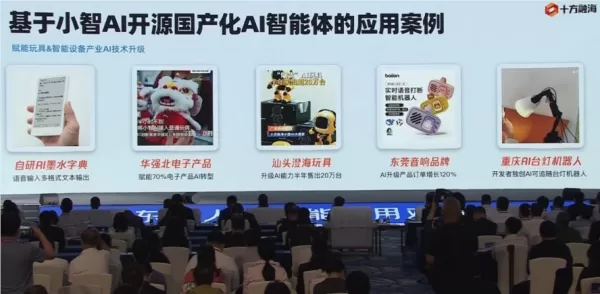
Unlike giant solutions that keep core technologies "locked away," Shifen Ronghai emphasizes the concept of "open source and accessibility." Through comprehensive open-source technology agreements and standardized protocol compatibility, it reduces the barrier to leveraging large-model capabilities to a minimum, effectively addressing the pain points SMEs face during AI transformation—such as high capital costs, lengthy R&D cycles, and difficulties in software-hardware integration.
In real-world industrial and commercial applications, this fully domestic foundation has demonstrated remarkable cost reduction and efficiency gains. Data shows that companies adopting this solution can shorten product development cycles by 70%, cut computing power costs by 80%, and compress the former 3–6 month product verification cycle to just 1–2 months. This technology is now widely used in key export industries such as consumer electronics, toy manufacturing, home appliances, and smart homes. Smart hardware equipped with this technology not only sees a significant rise in added value but also experiences a sharp increase in unit price and overseas sales, emerging as a new driver for Chinese manufacturing exports.
While delivering technological dividends, Shifen Ronghai has also built a vast developer ecosystem on open-source platforms like GitHub. Its open-source community now gathers over 100,000 global developers, with a GitHub star count exceeding 26,000 and more than 1.5 million connected smart terminal devices in the ecosystem. With this provincial-level case selection, the potential unicorn is driving the deep integration of artificial intelligence with the real economy nationwide through the dual engine of "self-innovation + ecosystem sharing," contributing a replicable Guangdong model.
Related article
 MiniMax 2.5 Tops Global Usage With Over $150M Monthly Revenue; M3 Flagship Version Set for H1 Release
Chinese large language models are generating intense momentum across the global developer ecosystem, driven by their reputation for cost-efficiency and engineering excellence.As of March 3, 2026, data from OpenRouter, the world’s leading API aggregat
Meta's Muse outpaces ChatGPT in early mobile launch
New data suggests Meta’s latest AI app, Muse, could become the social giant’s next major success. According to recent estimates from Appfigures, Muse has been downloaded on mobile devices more times in its first twelve days than ChatGPT did in the tw
TechCrunch Disrupt 2026: Clay’s Kareem Amin on the rise of the GTM engineer
Two years ago, GTM engineers were virtually nonexistent in most organizations. Today, the role is emerging across the tech sector, with professionals leveraging AI and automation to construct revenue engines that previously demanded multiple hires, d
Related Special Topic Recommendations
Design & Art
 Top AI Illustration Tools: Create Editorial Scenes and Cover Art Faster
2026 Latest Top-rated AI Illustration Tools: Our curated list features the best powerfully designed tools for creating stunning editorial scenes and eye-catching cover art quickly. Each option has gone through rigorous real-world tests, offering a free vs paid comparison to help you find the perfect match for your workflow. Try these must-try solutions today to unlock your AI edge and boost your creative productivity. Explore now at XIX.AI.
 10 tools
 xix.ai
Education and Learning
Top AI Tutors for Exam Prep: Practice Math, Science, and English
2026 Latest Top-Rated Best AI Tutors for Exam Prep are here on XIX.AI! Our curated list features powerful game-changing tools that offer free vs paid comparison, real-world tests, and weekly updated rankings. They help boost your writing efficiency, simplify complex topic learning, and unlock your academic potential. Explore now to Discover your perfect exam prep tool and Start creating today to Unlock your AI edge!
10 tools
xix.ai
Finance
AI Budget Planning Tools for Personal Money Management
2026 Latest Best Top-Rated AI Budget Planning Tools for Personal Money Management are here on XIX.AI! This curated collection features powerful, game-changing solutions that help you conduct real-world tests, understand spending habits, and create personalized plans to boost productivity. Enjoy a free vs paid comparison along with detailed rankings. Must-try tools designed to simplify money management and unlock your AI edge. Explore now!
11 tools
xix.ai
Health & Wellness
AI Sleep Tracking Assistants: Improve Recovery with Better Bedtime Habits
2026 Latest Best Top-Rated AI Sleep Tracking Assistants curated for ultimate recovery. This fully updated weekly guide features powerful tools that deliver real-world tests, free vs paid comparison, and detailed rankings to help you find the must-try solution that boosts sleep quality and supports better bedtime habits. Explore now at XIX.AI to Unlock your AI edge.
10 tools
xix.ai
Data Analysis
AI SQL Copilots for Product and Revenue Analytics
2026 Latest Best Top-Rated AI SQL Copilots for Product and Revenue Analytics! XIX.AI has curated a powerful, game-changing collection of must-try tools that undergo real-world tests through weekly updated rankings. These tools help users boost productivity significantly by accelerating data analysis, streamlining complex queries, and generating accurate insights to drive smarter business decisions. Explore now to Discover your perfect tool for unlocking your AI edge!
14 tools
xix.ai
Education and Learning
Best AI Homework Helpers That Teach: Learn Concepts, Not Just Answers
2026 Latest Best Top-Rated AI Homework Helpers That Teach Core Concepts Not Just Answers Powerful Tools for Students Must-Try Curated List Weekly Updated Free vs Paid Comparison Real-World Tests Accurate Rankings to Help You Unlock Your Full Learning Potential Explore now to Discover your perfect tool for smarter studying.
10 tools
xix.ai

 Comments (0)
0/500
At a recent Guangdong Province AI application matching conference held in Shenzhen, officials unveiled 23 provincial-level "AI+" typical application cases. As a national high-tech enterprise and a potential AI unicorn in Shenzhen,
The AI technology foundation chosen this time is notable for achieving end-to-end "China self-sufficiency." This system has completely overcome the long-standing dependency of traditional AI on overseas resources, ensuring full-chain domestic control across every link—from core chips, intelligent models, and computing power support to interaction protocols and terminal applications. This closed-loop design not only delivers a solid, secure technical guarantee for the digital transformation of domestic enterprises but also strengthens the digital infrastructure of China's artificial intelligence industry.
Unlike giant solutions that keep core technologies "locked away,"
In real-world industrial and commercial applications, this fully domestic foundation has demonstrated remarkable cost reduction and efficiency gains. Data shows that companies adopting this solution can shorten product development cycles by 70%, cut computing power costs by 80%, and compress the former 3–6 month product verification cycle to just 1–2 months. This technology is now widely used in key export industries such as consumer electronics, toy manufacturing, home appliances, and smart homes. Smart hardware equipped with this technology not only sees a significant rise in added value but also experiences a sharp increase in unit price and overseas sales, emerging as a new driver for Chinese manufacturing exports.
While delivering technological dividends,








 MiniMax 2.5 Tops Global Usage With Over $150M Monthly Revenue; M3 Flagship Version Set for H1 Release
Chinese large language models are generating intense momentum across the global developer ecosystem, driven by their reputation for cost-efficiency and engineering excellence.As of March 3, 2026, data from OpenRouter, the world’s leading API aggregat
 Meta's Muse outpaces ChatGPT in early mobile launch
New data suggests Meta’s latest AI app, Muse, could become the social giant’s next major success. According to recent estimates from Appfigures, Muse has been downloaded on mobile devices more times in its first twelve days than ChatGPT did in the tw
 TechCrunch Disrupt 2026: Clay’s Kareem Amin on the rise of the GTM engineer
Two years ago, GTM engineers were virtually nonexistent in most organizations. Today, the role is emerging across the tech sector, with professionals leveraging AI and automation to construct revenue engines that previously demanded multiple hires, d

2026 Latest Top-rated AI Illustration Tools: Our curated list features the best powerfully designed tools for creating stunning editorial scenes and eye-catching cover art quickly. Each option has gone through rigorous real-world tests, offering a free vs paid comparison to help you find the perfect match for your workflow. Try these must-try solutions today to unlock your AI edge and boost your creative productivity. Explore now at XIX.AI.
10 tools
xix.ai

2026 Latest Top-Rated Best AI Tutors for Exam Prep are here on XIX.AI! Our curated list features powerful game-changing tools that offer free vs paid comparison, real-world tests, and weekly updated rankings. They help boost your writing efficiency, simplify complex topic learning, and unlock your academic potential. Explore now to Discover your perfect exam prep tool and Start creating today to Unlock your AI edge!
10 tools
xix.ai

2026 Latest Best Top-Rated AI Budget Planning Tools for Personal Money Management are here on XIX.AI! This curated collection features powerful, game-changing solutions that help you conduct real-world tests, understand spending habits, and create personalized plans to boost productivity. Enjoy a free vs paid comparison along with detailed rankings. Must-try tools designed to simplify money management and unlock your AI edge. Explore now!
11 tools
xix.ai

2026 Latest Best Top-Rated AI Sleep Tracking Assistants curated for ultimate recovery. This fully updated weekly guide features powerful tools that deliver real-world tests, free vs paid comparison, and detailed rankings to help you find the must-try solution that boosts sleep quality and supports better bedtime habits. Explore now at XIX.AI to Unlock your AI edge.
10 tools
xix.ai

2026 Latest Best Top-Rated AI SQL Copilots for Product and Revenue Analytics! XIX.AI has curated a powerful, game-changing collection of must-try tools that undergo real-world tests through weekly updated rankings. These tools help users boost productivity significantly by accelerating data analysis, streamlining complex queries, and generating accurate insights to drive smarter business decisions. Explore now to Discover your perfect tool for unlocking your AI edge!
14 tools
xix.ai

2026 Latest Best Top-Rated AI Homework Helpers That Teach Core Concepts Not Just Answers Powerful Tools for Students Must-Try Curated List Weekly Updated Free vs Paid Comparison Real-World Tests Accurate Rankings to Help You Unlock Your Full Learning Potential Explore now to Discover your perfect tool for smarter studying.
10 tools
xix.ai












