


 Home
HomeHow to streamline faculty profiles with a publication summary generator in 2026?
In today's academic environment, maintaining a current and thorough faculty profile is crucial. A central element of this profile is the publication record, which highlights a faculty member's research and scholarly work. However, gathering and summarizing these publications can be a complex and time-intensive task. A Publication Summary Generator provides an automated solution, streamlining faculty profile management and ensuring records are both precise and readily available. This article examines the advantages, functionalities, and technical details of such a tool, offering a complete guide for universities and faculty aiming to improve their academic profiles.
Key Points
Automated Summaries: Effortlessly create detailed publication summaries for faculty profiles.
Data Integration: Utilize information from Google Scholar and DBLP for extensive coverage.
Annual Publication Tracking: Allow faculty to review and download their publication history by year.
Multiple Export Options: Support downloads in Word and Excel formats for straightforward assessment and career advancement.
Address Profile Management Hurdles: Reduce the difficulties faculty encounter in keeping their academic profiles up-to-date.
Ensuring Data Precision: Guarantee accuracy through de-duplication and validation processes.
Comprehensive Data Aggregation: Combining data from various sources to produce complete summaries.
Automated Information Updates: Implementing automatic periodic updates to keep information current.
Adaptable Data Entry: Offering flexible input methods for reliable data processing.
Visualizing Research Impact: Displaying publication years and metrics for easy interpretation.
The Challenge of Faculty Publication Records
Manual vs. Automated Solutions
Managing faculty publication records is frequently a manual and labor-intensive task. Faculty are required to collect their publications from different sources, ensure consistent formatting, and keep these records updated. This often takes time away from research and teaching responsibilities. An automated Publication Summary Generator provides a more efficient alternative by automatically gathering, verifying, and summarizing publication data. This not only saves faculty valuable time but also ensures their profiles accurately represent their academic work. The system aids faculty by automating profile updates, fosters collaboration through reliable data, and supports environmental sustainability by decreasing the need for printed documents.
Manual methods are susceptible to mistakes, inconsistencies, and missing information, complicating the maintenance of precise and thorough publication records. Automated systems reduce these risks by employing algorithms to verify and remove duplicate data.
Primary advantages of automated systems:
- Less time and effort required from faculty
- Greater accuracy and uniformity in publication records
- Better visibility for faculty research and scholarly contributions
- Assistance with institutional reporting and accreditation needs
Why Accurate Publication Records Matter
Precise publication records are essential for faculty assessments, promotions, and funding applications. These records serve as proof of scholarly output and influence, impacting career progression and funding prospects. Inaccurate or incomplete records can adversely affect these important processes. A Publication Summary Generator ensures faculty profiles are thorough and current, offering a clear and persuasive display of their academic accomplishments.
Specific consequences of accurate publication records:
- Faculty Assessment: They are a key resource for evaluating faculty performance and their impact in their field.
- Promotion Considerations: Promotion panels depend heavily on publication records when reviewing applicants.
- Funding Proposals: Granting organizations use publication records to assess the potential of proposed research.
- Institutional Standing: Detailed publication records boost an institution's reputation by highlighting its faculty's scholarly work.
Introducing the Publication Summary Generator: A Comprehensive Solution
Core Functionality and Benefits
The Publication Summary Generator is built to automate the creation of detailed publication summaries for faculty profiles. By using data from sources like Google Scholar and DBLP, it enables faculty to review their annual publication history and export it in Word or Excel format. The tool streamlines academic profile maintenance, ensuring faculty can easily present their scholarly work.
Core features:
- Automated Data Gathering: Collects publication data from multiple sources.
- Data Verification: Ensures data precision through de-duplication and validation methods.
- Annual Summaries: Produces yearly summaries of publications.
- Download Choices: Allows export to Word and Excel for use in assessments and promotions.
- Data Representation: Generates interactive charts to monitor research impact over time.
Primary advantages for faculty:
- Saves time and minimizes manual work.
- Delivers accurate and comprehensive publication records.
- Increases the visibility of research contributions.
- Assists with evaluation, promotion, and grant applications.
Innovation and Uniqueness
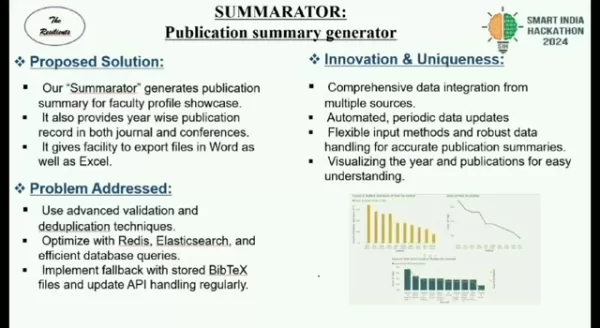
The distinctiveness of the Publication Summary Generator lies in its capacity to merge data from various sources, automate data collection, and provide versatile export options. Furthermore, it offers visualizations that let faculty track their research influence over time. The tool's all-encompassing method ensures faculty profiles are both precise and easy to access.
Key innovative aspects:
- Extensive data integration from Google Scholar and DBLP
- Automated and scheduled data updates
- Flexible input methods and strong data management
- Visual representation of publication years and metrics
Step-by-Step Guide to Using the Publication Summary Generator
Logging In and Uploading Data
The initial step is to log into the system using your credentials. After logging in, you can upload an Excel or BibTeX file that contains author and publication information.
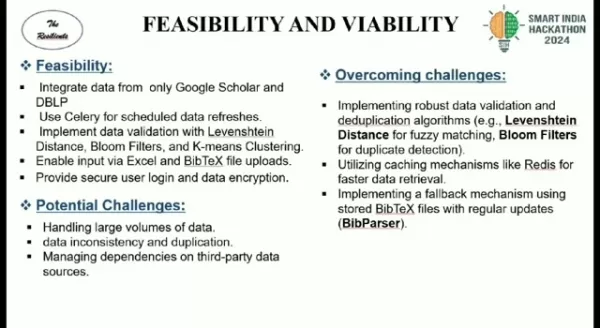
The system is built to manage various data formats, ensuring a smooth upload process.
- Login: Input your username and password to access the system.
- Upload File: Select the 'Upload File' button to choose the Excel or BibTeX file from your device.
- Specify Year Range: Define the year range for which you wish to generate the publication summary.
Generating and Visualizing Reports
Once the data is uploaded, the system processes it and collects additional publication details from Google Scholar and DBLP. You can then opt to create a journal report, conference report, or view the data through interactive charts.
- Select Report Type: Choose the type of report you want to generate (journal report, conference report, or visualization).
- Download Report: Select the 'Download' button to export the report in Word or Excel format.
- View Data Graphically: Click the 'Visualization' button to see interactive charts and graphs of your publication data.
Pricing and Availability
Accessible Solutions for Academic Institutions
While specific pricing information is not provided, tools like the Publication Summary Generator are generally available to academic institutions through licensing agreements or subscription models. Pricing usually depends on factors such as the institution's size, the number of faculty, and the degree of customization needed. Institutions should reach out to the tool providers for detailed pricing and to find options that suit their requirements.
Elements affecting cost:
- Institution Size: Larger institutions might need more comprehensive licensing.
- Faculty Count: Pricing may be structured according to the number of users.
- Customization Requirements: Custom features and integrations can influence the total cost.
- Support and Upkeep: Ongoing support and maintenance services may be part of the pricing.
Advantages and Disadvantages of Using a Publication Summary Generator
Pros
Time Efficiency: Automates the management of publication records, conserving faculty time and energy.
Enhanced Precision: Guarantees data accuracy and consistency, strengthening the reliability of faculty profiles.
Increased Exposure: Boosts the visibility of faculty research, potentially leading to collaborations and funding.
Tailored Reporting: Provides adaptable reporting options to fit specific evaluation and promotion standards.
Data Consolidation: Merges data from multiple sources, offering a complete view of faculty publications.
Cons
Expense: Implementing a Publication Summary Generator can be expensive, particularly for smaller institutions.
Data Integration Complexities: Merging data from various sources can be difficult and may need technical knowledge.
Data Accuracy Issues: Despite validation methods, concerns about data precision may persist.
User Acceptance: Faculty might be hesitant to adopt a new tool, especially if they are accustomed to their current practices.
Ongoing Maintenance: Sustaining the system and ensuring data accuracy demands continuous effort and resources.
Key Features of the Publication Summary Generator
Automated Data Integration and Validation
A fundamental feature of the Publication Summary Generator is its ability to automatically combine data from multiple sources like Google Scholar and DBLP. This ensures faculty profiles are comprehensive and current with minimal manual input. The system also uses advanced validation and de-duplication methods to maintain data accuracy and consistency. This supports a high standard of data integrity and reliability, which is vital for academic reviews and reporting.
Essential components:
- Data Integration: Smoothly integrates data from Google Scholar, DBLP, and other academic databases.
- Data Validation: Uses algorithms to check data and spot inconsistencies.
- De-Duplication: Automatically eliminates duplicate entries to preserve data accuracy.
- Error Correction: Supplies tools to fix mistakes and inconsistencies in the data.
Customizable Reporting and Visualization
The tool provides adaptable reporting options, enabling faculty to create reports customized to their specific requirements. Reports can be exported in various formats, including Word and Excel, making them simple to share and use in evaluations, promotions, and grant applications. Additionally, the system includes data visualization features, allowing faculty to monitor their research impact over time via interactive charts and graphs.
Reporting and visualization capabilities:
- Customizable Reports: Generates reports designed for specific evaluation and promotion criteria.
- Export Formats: Supports export to Word, Excel, and other common formats.
- Interactive Charts: Offers interactive charts and graphs to track research impact.
- Trend Analysis: Examines publication trends to identify growth areas and impact.
Use Cases: How the Publication Summary Generator Benefits Academic Institutions
Faculty Evaluation and Promotion
The Publication Summary Generator simplifies the faculty evaluation and promotion process by supplying comprehensive and accurate publication records. This allows evaluation committees to make well-informed decisions based on trustworthy data. The tool also helps faculty present their scholarly accomplishments in a clear and compelling way, improving their promotion prospects.
Key benefits for faculty evaluation and promotion:
- Comprehensive Records: Offers a full overview of faculty publications.
- Accurate Data: Ensures data accuracy and consistency.
- Clear Presentation: Aids faculty in effectively presenting their achievements.
- Time Efficiency: Cuts down the time and effort needed to compile publication records.
Grant Applications and Institutional Reporting
Accurate and current publication records are crucial for grant applications and institutional reporting. The Publication Summary Generator ensures grant applications include thorough data on faculty publications, improving the likelihood of securing funds. Moreover, the tool simplifies institutional reporting by providing easy access to publication data for accreditation and other reporting needs.
Advantages for grant applications and institutional reporting:
- Comprehensive Data: Incorporates all relevant publication data in grant applications.
- Easy Access: Facilitates access to publication data for institutional reporting.
- More Funding Opportunities: Enhances the chances of obtaining grant funding.
- Simplified Reporting: Streamlines the reporting process for accreditation and other requirements.
Frequently Asked Questions
What data sources does the Publication Summary Generator use?
The Publication Summary Generator mainly uses data from Google Scholar and DBLP to compile publication records. This guarantees a thorough and current overview of faculty publications. The system is designed to seamlessly integrate data from multiple sources, providing reliable and accurate information.In addition to Google Scholar and DBLP, the system can be set up to include data from other academic databases and institutional repositories. This allows for even broader coverage of faculty publications and ensures all relevant scholarly work is included in the records.Supplementary data sources:Institutional Repositories: Integrates data from university-managed repositories.PubMed: Includes publications from the biomedical and life sciences fields.Scopus: Incorporates data from a wide array of scientific, technical, and medical journals.Web of Science: Provides access to highly cited and influential publications.
How does the Publication Summary Generator ensure data accuracy?
The Publication Summary Generator uses advanced validation and de-duplication techniques to ensure data accuracy. This reduces errors and inconsistencies in publication records, offering reliable information for faculty evaluation and reporting.To maintain high data accuracy, the system also includes tools for manual review and correction. These tools enable administrators and faculty to review publication records, spot errors, and make necessary corrections. This ensures the data is as accurate and dependable as possible.Measures for data accuracy:Validation Algorithms: Employs algorithms to check data and identify inconsistencies.De-Duplication Methods: Automatically removes duplicate entries to preserve data accuracy.Manual Review Tools: Provides tools for administrators and faculty to review and correct data.Regular Updates: Keeps data current by regularly fetching information from data sources.
Related Questions
How can a Publication Summary Generator improve faculty research productivity?
A Publication Summary Generator can greatly enhance faculty research productivity by simplifying the management of publication records. By automating data collection, validation, and reporting, the tool saves faculty time and effort, allowing them to concentrate on research. Additionally, the tool increases the visibility of faculty research, which can lead to more collaborations and funding opportunities.Specific productivity benefits:Time Savings: Automates publication record maintenance, saving faculty time and effort.Enhanced Visibility: Increases the exposure of faculty research, leading to collaborative opportunities.Improved Accuracy: Ensures data accuracy and consistency, bolstering research credibility.Grant Assistance: Simplifies the grant application process by supplying comprehensive publication data.
What are the key considerations when choosing a Publication Summary Generator?
When selecting a Publication Summary Generator, important factors include data source integration, validation techniques, reporting options, and user-friendliness. The tool should seamlessly integrate data from relevant sources, use strong validation methods to ensure data accuracy, offer customizable reporting, and be easy for both faculty and administrators to use. The cost of the tool and the vendor's support level are also important considerations.Key factors to evaluate:Data Source Integration: Confirm the tool integrates data from relevant sources like Google Scholar, DBLP, and institutional repositories.Validation Techniques: Check that the tool uses robust validation methods to ensure data accuracy.Reporting Options: Seek customizable reporting that meets your institution's needs.Ease of Use: Select a tool that is user-friendly for both faculty and administrators.Cost and Support:
Cons
ider the tool's cost and the support provided by the vendor.
Related article
 DeepMind CEO Hassabis: I sleep six hours a day, usually feel energetic around 1 a.m.
Fortune recently featured an interview with Demis Hassabis, CEO of Google DeepMind, revealing his unconventional approach to rest and productivity. Hassabis disclosed that he sleeps very little, structuring his waking hours into two distinct work blo
OpenAI, Anthropic Vie for Market Share Despite Revenue Shortfalls
Despite recent reports suggesting OpenAI missed revenue targets, creating pressure on tech stocks this Tuesday, private AI lab investors remain resilient. Seasoned backers have confirmed they will not reduce investment despite negative media coverage
California AV Compliance: A New Era of Tickets, Geofences, and 1M Miles
Guident operates an AuveTech shuttle in South Florida, managing a four-mile route in West Palm Beach and a one-mile route in Boca Raton using its remote monitoring technology. | Credit: GuidentCalifornia is redefining the regulatory landscape for dri
Related Special Topic Recommendations
chatbot
DeepMind CEO Hassabis: I sleep six hours a day, usually feel energetic around 1 a.m.
Fortune recently featured an interview with Demis Hassabis, CEO of Google DeepMind, revealing his unconventional approach to rest and productivity. Hassabis disclosed that he sleeps very little, structuring his waking hours into two distinct work blo
OpenAI, Anthropic Vie for Market Share Despite Revenue Shortfalls
Despite recent reports suggesting OpenAI missed revenue targets, creating pressure on tech stocks this Tuesday, private AI lab investors remain resilient. Seasoned backers have confirmed they will not reduce investment despite negative media coverage
California AV Compliance: A New Era of Tickets, Geofences, and 1M Miles
Guident operates an AuveTech shuttle in South Florida, managing a four-mile route in West Palm Beach and a one-mile route in Boca Raton using its remote monitoring technology. | Credit: GuidentCalifornia is redefining the regulatory landscape for dri
Related Special Topic Recommendations
chatbot
 Best AI Roleplay Chat Apps for Language Practice, Interview Prep, and Daily Fluency
2026 Latest Best Top-rated AI Roleplay Chat Apps for Language Practice, Interview Prep, and Daily Fluency! XIX.AI curates a powerful game-changing collection that offers free vs paid comparison, real-world tests, and updated rankings weekly. These must-try tools help you boost writing skills, overcome fluency challenges, and improve communication efficiency across all daily scenarios. Explore now to discover your perfect tool for language growth!
 10 tools
 xix.ai
Music composition
AI Stem Separation Tools for Remix Production, Sampling Prep, and Karaoke Masters
xix.ai
Music composition
AI Stem Separation Tools for Remix Production, Sampling Prep, and Karaoke Masters
2026 Latest Best Top-rated AI Stem Separation Tools Curated for Remix Production, Sampling Prep, and Karaoke Masters. These powerful game-changing tools offer real-world tests to deliver precise audio isolation, boosting productivity significantly. XIX.AI provides a weekly updated free vs paid comparison guide to help you find the must-try solution that suits your needs. Explore now to unlock your AI edge.
8 tools
xix.ai
Data Analysis
AI SQL Copilots for Revenue Dashboards, Funnel Analysis, and Product Metrics
2026 Latest Best AI SQL Copilots Ranked Top-Rated! XIX.AI curates a powerful game-changing collection for weekly updated real-world tests. These must-try tools help you generate accurate revenue dashboards, analyze sales funnels, and track product metrics swiftly, boosting productivity massively. Explore now to Discover your perfect tool for data-driven decision making! 238 characters
9 tools
xix.ai
Music composition
Best AI Melody Writing Tools for Song Drafts
2026 Latest Best Top-Rated AI Melody Writing Tools for Song Drafts! XIX.AI has curated a highly powerful game-changing collection that goes through rigorous real-world tests to deliver the best writing experience. You can find detailed free vs paid comparisons, accurate rankings, and must-try options designed to help you create stunning song drafts effortlessly and boost your creative productivity significantly. Explore now to discover your perfect tool!
8 tools
xix.ai
chatbot
Best AI Conversation Trainer Tools for Interview Practice
2026 Latest Best Top-rated AI Conversation Trainer Tools for Interview Practice are here on XIX.AI! This curated collection features powerful, game-changing tools that go through rigorous real-world tests to deliver accurate feedback. You’ll find a free vs paid comparison and detailed rankings to help you choose the must-try option that boosts your confidence and skills. Explore now to Discover your perfect tool for interview success!
12 tools
xix.ai
Design & Art
Best AI Style Transfer Tools for Creative Experiments
2026 Latest Best Top-rated AI Style Transfer Tools for Creative Experiments! XIX.AI has curated a powerful, game-changing collection of must-try tools that deliver exceptional results through real-world tests and rigorous rankings. These top solutions help creatives boost productivity significantly by accelerating content creation and unlocking endless creative possibilities. Explore now to discover your perfect tool and start creating today!
9 tools
xix.ai

 Comments (3)
0/500
Comments (3)
0/500
![DavidThomas]()
Interesting read! As a grad student, I can totally relate to the struggle of keeping publication lists updated. A tool like this could save so much time, but I wonder about the accuracy for niche fields. Would it miss context or nuance? Still, the potential is huge, especially for interdisciplinary work. Hope it's affordable for smaller institutions too! 🤔
![KevinBaker]()
Honestly, the idea of automating publication summaries for faculty profiles by 2026 sounds both helpful and a bit scary. Will these AI summaries capture the nuance of complex research, or just flatten everything into generic bullet points? I hope universities prioritize tools that assist academics rather than replace the human effort needed to truly understand one's work. 🤔
![EricPerez]()
Interesting read! As a grad student, I can totally relate to the pain of manually updating publication lists. If AI tools can automate this by 2026, it'd save so much time for researchers. But I wonder—will it also help highlight interdisciplinary work better than current systems? 🤔
In today's academic environment, maintaining a current and thorough faculty profile is crucial. A central element of this profile is the publication record, which highlights a faculty member's research and scholarly work. However, gathering and summarizing these publications can be a complex and time-intensive task. A Publication Summary Generator provides an automated solution, streamlining faculty profile management and ensuring records are both precise and readily available. This article examines the advantages, functionalities, and technical details of such a tool, offering a complete guide for universities and faculty aiming to improve their academic profiles.
Key Points
Automated Summaries: Effortlessly create detailed publication summaries for faculty profiles.
Data Integration: Utilize information from Google Scholar and DBLP for extensive coverage.
Annual Publication Tracking: Allow faculty to review and download their publication history by year.
Multiple Export Options: Support downloads in Word and Excel formats for straightforward assessment and career advancement.
Address Profile Management Hurdles: Reduce the difficulties faculty encounter in keeping their academic profiles up-to-date.
Ensuring Data Precision: Guarantee accuracy through de-duplication and validation processes.
Comprehensive Data Aggregation: Combining data from various sources to produce complete summaries.
Automated Information Updates: Implementing automatic periodic updates to keep information current.
Adaptable Data Entry: Offering flexible input methods for reliable data processing.
Visualizing Research Impact: Displaying publication years and metrics for easy interpretation.
The Challenge of Faculty Publication Records
Manual vs. Automated Solutions
Managing faculty publication records is frequently a manual and labor-intensive task. Faculty are required to collect their publications from different sources, ensure consistent formatting, and keep these records updated. This often takes time away from research and teaching responsibilities. An automated Publication Summary Generator provides a more efficient alternative by automatically gathering, verifying, and summarizing publication data. This not only saves faculty valuable time but also ensures their profiles accurately represent their academic work. The system aids faculty by automating profile updates, fosters collaboration through reliable data, and supports environmental sustainability by decreasing the need for printed documents.
Manual methods are susceptible to mistakes, inconsistencies, and missing information, complicating the maintenance of precise and thorough publication records. Automated systems reduce these risks by employing algorithms to verify and remove duplicate data.
Primary advantages of automated systems:
- Less time and effort required from faculty
- Greater accuracy and uniformity in publication records
- Better visibility for faculty research and scholarly contributions
- Assistance with institutional reporting and accreditation needs
Why Accurate Publication Records Matter
Precise publication records are essential for faculty assessments, promotions, and funding applications. These records serve as proof of scholarly output and influence, impacting career progression and funding prospects. Inaccurate or incomplete records can adversely affect these important processes. A Publication Summary Generator ensures faculty profiles are thorough and current, offering a clear and persuasive display of their academic accomplishments.
Specific consequences of accurate publication records:
- Faculty Assessment: They are a key resource for evaluating faculty performance and their impact in their field.
- Promotion Considerations: Promotion panels depend heavily on publication records when reviewing applicants.
- Funding Proposals: Granting organizations use publication records to assess the potential of proposed research.
- Institutional Standing: Detailed publication records boost an institution's reputation by highlighting its faculty's scholarly work.
Introducing the Publication Summary Generator: A Comprehensive Solution
Core Functionality and Benefits
The Publication Summary Generator is built to automate the creation of detailed publication summaries for faculty profiles. By using data from sources like Google Scholar and DBLP, it enables faculty to review their annual publication history and export it in Word or Excel format. The tool streamlines academic profile maintenance, ensuring faculty can easily present their scholarly work.
Core features:
- Automated Data Gathering: Collects publication data from multiple sources.
- Data Verification: Ensures data precision through de-duplication and validation methods.
- Annual Summaries: Produces yearly summaries of publications.
- Download Choices: Allows export to Word and Excel for use in assessments and promotions.
- Data Representation: Generates interactive charts to monitor research impact over time.
Primary advantages for faculty:
- Saves time and minimizes manual work.
- Delivers accurate and comprehensive publication records.
- Increases the visibility of research contributions.
- Assists with evaluation, promotion, and grant applications.
Innovation and Uniqueness
The distinctiveness of the Publication Summary Generator lies in its capacity to merge data from various sources, automate data collection, and provide versatile export options. Furthermore, it offers visualizations that let faculty track their research influence over time. The tool's all-encompassing method ensures faculty profiles are both precise and easy to access.
Key innovative aspects:
- Extensive data integration from Google Scholar and DBLP
- Automated and scheduled data updates
- Flexible input methods and strong data management
- Visual representation of publication years and metrics
Step-by-Step Guide to Using the Publication Summary Generator
Logging In and Uploading Data
The initial step is to log into the system using your credentials. After logging in, you can upload an Excel or BibTeX file that contains author and publication information.
The system is built to manage various data formats, ensuring a smooth upload process.
- Login: Input your username and password to access the system.
- Upload File: Select the 'Upload File' button to choose the Excel or BibTeX file from your device.
- Specify Year Range: Define the year range for which you wish to generate the publication summary.
Generating and Visualizing Reports
Once the data is uploaded, the system processes it and collects additional publication details from Google Scholar and DBLP. You can then opt to create a journal report, conference report, or view the data through interactive charts.
- Select Report Type: Choose the type of report you want to generate (journal report, conference report, or visualization).
- Download Report: Select the 'Download' button to export the report in Word or Excel format.
- View Data Graphically: Click the 'Visualization' button to see interactive charts and graphs of your publication data.
Pricing and Availability
Accessible Solutions for Academic Institutions
While specific pricing information is not provided, tools like the Publication Summary Generator are generally available to academic institutions through licensing agreements or subscription models. Pricing usually depends on factors such as the institution's size, the number of faculty, and the degree of customization needed. Institutions should reach out to the tool providers for detailed pricing and to find options that suit their requirements.
Elements affecting cost:
- Institution Size: Larger institutions might need more comprehensive licensing.
- Faculty Count: Pricing may be structured according to the number of users.
- Customization Requirements: Custom features and integrations can influence the total cost.
- Support and Upkeep: Ongoing support and maintenance services may be part of the pricing.
Advantages and Disadvantages of Using a Publication Summary Generator
Pros
Time Efficiency: Automates the management of publication records, conserving faculty time and energy.
Enhanced Precision: Guarantees data accuracy and consistency, strengthening the reliability of faculty profiles.
Increased Exposure: Boosts the visibility of faculty research, potentially leading to collaborations and funding.
Tailored Reporting: Provides adaptable reporting options to fit specific evaluation and promotion standards.
Data Consolidation: Merges data from multiple sources, offering a complete view of faculty publications.
Cons
Expense: Implementing a Publication Summary Generator can be expensive, particularly for smaller institutions.
Data Integration Complexities: Merging data from various sources can be difficult and may need technical knowledge.
Data Accuracy Issues: Despite validation methods, concerns about data precision may persist.
User Acceptance: Faculty might be hesitant to adopt a new tool, especially if they are accustomed to their current practices.
Ongoing Maintenance: Sustaining the system and ensuring data accuracy demands continuous effort and resources.
Key Features of the Publication Summary Generator
Automated Data Integration and Validation
A fundamental feature of the Publication Summary Generator is its ability to automatically combine data from multiple sources like Google Scholar and DBLP. This ensures faculty profiles are comprehensive and current with minimal manual input. The system also uses advanced validation and de-duplication methods to maintain data accuracy and consistency. This supports a high standard of data integrity and reliability, which is vital for academic reviews and reporting.
Essential components:
- Data Integration: Smoothly integrates data from Google Scholar, DBLP, and other academic databases.
- Data Validation: Uses algorithms to check data and spot inconsistencies.
- De-Duplication: Automatically eliminates duplicate entries to preserve data accuracy.
- Error Correction: Supplies tools to fix mistakes and inconsistencies in the data.
Customizable Reporting and Visualization
The tool provides adaptable reporting options, enabling faculty to create reports customized to their specific requirements. Reports can be exported in various formats, including Word and Excel, making them simple to share and use in evaluations, promotions, and grant applications. Additionally, the system includes data visualization features, allowing faculty to monitor their research impact over time via interactive charts and graphs.
Reporting and visualization capabilities:
- Customizable Reports: Generates reports designed for specific evaluation and promotion criteria.
- Export Formats: Supports export to Word, Excel, and other common formats.
- Interactive Charts: Offers interactive charts and graphs to track research impact.
- Trend Analysis: Examines publication trends to identify growth areas and impact.
Use Cases: How the Publication Summary Generator Benefits Academic Institutions
Faculty Evaluation and Promotion
The Publication Summary Generator simplifies the faculty evaluation and promotion process by supplying comprehensive and accurate publication records. This allows evaluation committees to make well-informed decisions based on trustworthy data. The tool also helps faculty present their scholarly accomplishments in a clear and compelling way, improving their promotion prospects.
Key benefits for faculty evaluation and promotion:
- Comprehensive Records: Offers a full overview of faculty publications.
- Accurate Data: Ensures data accuracy and consistency.
- Clear Presentation: Aids faculty in effectively presenting their achievements.
- Time Efficiency: Cuts down the time and effort needed to compile publication records.
Grant Applications and Institutional Reporting
Accurate and current publication records are crucial for grant applications and institutional reporting. The Publication Summary Generator ensures grant applications include thorough data on faculty publications, improving the likelihood of securing funds. Moreover, the tool simplifies institutional reporting by providing easy access to publication data for accreditation and other reporting needs.
Advantages for grant applications and institutional reporting:
- Comprehensive Data: Incorporates all relevant publication data in grant applications.
- Easy Access: Facilitates access to publication data for institutional reporting.
- More Funding Opportunities: Enhances the chances of obtaining grant funding.
- Simplified Reporting: Streamlines the reporting process for accreditation and other requirements.
Frequently Asked Questions
What data sources does the Publication Summary Generator use?
The Publication Summary Generator mainly uses data from Google Scholar and DBLP to compile publication records. This guarantees a thorough and current overview of faculty publications. The system is designed to seamlessly integrate data from multiple sources, providing reliable and accurate information.In addition to Google Scholar and DBLP, the system can be set up to include data from other academic databases and institutional repositories. This allows for even broader coverage of faculty publications and ensures all relevant scholarly work is included in the records.Supplementary data sources:Institutional Repositories: Integrates data from university-managed repositories.PubMed: Includes publications from the biomedical and life sciences fields.Scopus: Incorporates data from a wide array of scientific, technical, and medical journals.Web of Science: Provides access to highly cited and influential publications.
How does the Publication Summary Generator ensure data accuracy?
The Publication Summary Generator uses advanced validation and de-duplication techniques to ensure data accuracy. This reduces errors and inconsistencies in publication records, offering reliable information for faculty evaluation and reporting.To maintain high data accuracy, the system also includes tools for manual review and correction. These tools enable administrators and faculty to review publication records, spot errors, and make necessary corrections. This ensures the data is as accurate and dependable as possible.Measures for data accuracy:Validation Algorithms: Employs algorithms to check data and identify inconsistencies.De-Duplication Methods: Automatically removes duplicate entries to preserve data accuracy.Manual Review Tools: Provides tools for administrators and faculty to review and correct data.Regular Updates: Keeps data current by regularly fetching information from data sources.
Related Questions
How can a Publication Summary Generator improve faculty research productivity?
A Publication Summary Generator can greatly enhance faculty research productivity by simplifying the management of publication records. By automating data collection, validation, and reporting, the tool saves faculty time and effort, allowing them to concentrate on research. Additionally, the tool increases the visibility of faculty research, which can lead to more collaborations and funding opportunities.Specific productivity benefits:Time Savings: Automates publication record maintenance, saving faculty time and effort.Enhanced Visibility: Increases the exposure of faculty research, leading to collaborative opportunities.Improved Accuracy: Ensures data accuracy and consistency, bolstering research credibility.Grant Assistance: Simplifies the grant application process by supplying comprehensive publication data.
What are the key considerations when choosing a Publication Summary Generator?
When selecting a Publication Summary Generator, important factors include data source integration, validation techniques, reporting options, and user-friendliness. The tool should seamlessly integrate data from relevant sources, use strong validation methods to ensure data accuracy, offer customizable reporting, and be easy for both faculty and administrators to use. The cost of the tool and the vendor's support level are also important considerations.Key factors to evaluate:Data Source Integration: Confirm the tool integrates data from relevant sources like Google Scholar, DBLP, and institutional repositories.Validation Techniques: Check that the tool uses robust validation methods to ensure data accuracy.Reporting Options: Seek customizable reporting that meets your institution's needs.Ease of Use: Select a tool that is user-friendly for both faculty and administrators.Cost and Support:
Cons
ider the tool's cost and the support provided by the vendor.








 DeepMind CEO Hassabis: I sleep six hours a day, usually feel energetic around 1 a.m.
Fortune recently featured an interview with Demis Hassabis, CEO of Google DeepMind, revealing his unconventional approach to rest and productivity. Hassabis disclosed that he sleeps very little, structuring his waking hours into two distinct work blo
DeepMind CEO Hassabis: I sleep six hours a day, usually feel energetic around 1 a.m.
Fortune recently featured an interview with Demis Hassabis, CEO of Google DeepMind, revealing his unconventional approach to rest and productivity. Hassabis disclosed that he sleeps very little, structuring his waking hours into two distinct work blo
 OpenAI, Anthropic Vie for Market Share Despite Revenue Shortfalls
Despite recent reports suggesting OpenAI missed revenue targets, creating pressure on tech stocks this Tuesday, private AI lab investors remain resilient. Seasoned backers have confirmed they will not reduce investment despite negative media coverage
California AV Compliance: A New Era of Tickets, Geofences, and 1M Miles
Guident operates an AuveTech shuttle in South Florida, managing a four-mile route in West Palm Beach and a one-mile route in Boca Raton using its remote monitoring technology. | Credit: GuidentCalifornia is redefining the regulatory landscape for dri
OpenAI, Anthropic Vie for Market Share Despite Revenue Shortfalls
Despite recent reports suggesting OpenAI missed revenue targets, creating pressure on tech stocks this Tuesday, private AI lab investors remain resilient. Seasoned backers have confirmed they will not reduce investment despite negative media coverage
California AV Compliance: A New Era of Tickets, Geofences, and 1M Miles
Guident operates an AuveTech shuttle in South Florida, managing a four-mile route in West Palm Beach and a one-mile route in Boca Raton using its remote monitoring technology. | Credit: GuidentCalifornia is redefining the regulatory landscape for dri

2026 Latest Best Top-rated AI Roleplay Chat Apps for Language Practice, Interview Prep, and Daily Fluency! XIX.AI curates a powerful game-changing collection that offers free vs paid comparison, real-world tests, and updated rankings weekly. These must-try tools help you boost writing skills, overcome fluency challenges, and improve communication efficiency across all daily scenarios. Explore now to discover your perfect tool for language growth!
10 tools
xix.ai

2026 Latest Best Top-rated AI Stem Separation Tools Curated for Remix Production, Sampling Prep, and Karaoke Masters. These powerful game-changing tools offer real-world tests to deliver precise audio isolation, boosting productivity significantly. XIX.AI provides a weekly updated free vs paid comparison guide to help you find the must-try solution that suits your needs. Explore now to unlock your AI edge.
8 tools
xix.ai

2026 Latest Best AI SQL Copilots Ranked Top-Rated! XIX.AI curates a powerful game-changing collection for weekly updated real-world tests. These must-try tools help you generate accurate revenue dashboards, analyze sales funnels, and track product metrics swiftly, boosting productivity massively. Explore now to Discover your perfect tool for data-driven decision making! 238 characters
9 tools
xix.ai

2026 Latest Best Top-Rated AI Melody Writing Tools for Song Drafts! XIX.AI has curated a highly powerful game-changing collection that goes through rigorous real-world tests to deliver the best writing experience. You can find detailed free vs paid comparisons, accurate rankings, and must-try options designed to help you create stunning song drafts effortlessly and boost your creative productivity significantly. Explore now to discover your perfect tool!
8 tools
xix.ai

2026 Latest Best Top-rated AI Conversation Trainer Tools for Interview Practice are here on XIX.AI! This curated collection features powerful, game-changing tools that go through rigorous real-world tests to deliver accurate feedback. You’ll find a free vs paid comparison and detailed rankings to help you choose the must-try option that boosts your confidence and skills. Explore now to Discover your perfect tool for interview success!
12 tools
xix.ai

2026 Latest Best Top-rated AI Style Transfer Tools for Creative Experiments! XIX.AI has curated a powerful, game-changing collection of must-try tools that deliver exceptional results through real-world tests and rigorous rankings. These top solutions help creatives boost productivity significantly by accelerating content creation and unlocking endless creative possibilities. Explore now to discover your perfect tool and start creating today!
9 tools
xix.ai

Interesting read! As a grad student, I can totally relate to the struggle of keeping publication lists updated. A tool like this could save so much time, but I wonder about the accuracy for niche fields. Would it miss context or nuance? Still, the potential is huge, especially for interdisciplinary work. Hope it's affordable for smaller institutions too! 🤔
Honestly, the idea of automating publication summaries for faculty profiles by 2026 sounds both helpful and a bit scary. Will these AI summaries capture the nuance of complex research, or just flatten everything into generic bullet points? I hope universities prioritize tools that assist academics rather than replace the human effort needed to truly understand one's work. 🤔
Interesting read! As a grad student, I can totally relate to the pain of manually updating publication lists. If AI tools can automate this by 2026, it'd save so much time for researchers. But I wonder—will it also help highlight interdisciplinary work better than current systems? 🤔












