


 Home
HomeWhat is Stock Analyzer? 2026 guide to financial fundamentals for smart investing.
In the fast-paced world of stock markets, making well-informed investment choices is essential. The Stock Analyzer web application gives users the power to access critical financial fundamentals, simplifying the stock analysis process. This tool lets users save their search history, making it easier to refer back later and make data-driven decisions. Whether you're an experienced investor or new to the market, understanding stock fundamentals is vital for navigating market complexities.
Key Points
Stock Analyzer is a web application built to retrieve fundamental stock information.
Users can save their search history for future use, enabling side-by-side comparisons and long-term stock monitoring.
The app opens directly to a search page, allowing for immediate stock lookups without requiring a login.
Registered users can build portfolios to track stocks they're interested in.
The app offers clear explanations and insights into various stock metrics, helping users interpret the data effectively.
Understanding Stock Fundamentals
What is the Stock Analyzer?
The Stock Analyzer is a robust web application designed to give investors straightforward access to stock fundamental data.

This tool streamlines the process of collecting information on publicly traded companies, presenting key financial metrics in a user-friendly format. Its purpose is to help both new and seasoned investors make confident decisions based on reliable data. By extracting essential fundamentals, the Stock Analyzer supports the evaluation of a company's financial health and growth potential. The Stock Analyzer aims to democratize financial data, making it less overwhelming and more practical for all users. With its clean interface, the Stock Analyzer lets users search for stocks swiftly, review important performance indicators, and keep a record of their searches for later review. The capacity to assess stock fundamentals accurately and efficiently is crucial in today's rapidly changing financial markets. The application supplies key data for companies listed on the US stock market, giving users a thorough overview before making investment commitments. From reviewing market capitalization to examining profit margins, the Stock Analyzer provides a complete picture of a company's financial position, supporting smarter and more strategic investment moves. The ultimate goal is to bring clarity and assurance to stock market participation, helping users reach their financial objectives.
Navigating the Default Search Page
The Stock Analyzer is built for ease of use, opening directly to a search page

. This instant access eliminates barriers for users who need to check a stock's details quickly. Whether you're doing a quick lookup or deeper research, the intuitive search interface offers a smooth experience. The search bar is placed prominently, inviting users to enter a company's ticker symbol and pull up relevant information. The option to search for stock data immediately without logging in greatly improves the user experience. By simplifying the process, the Stock Analyzer enables users to collect essential information efficiently. This is particularly helpful for those who need data on the move or prefer to test the app before signing up. The default search page focuses on user convenience, promoting exploration and supporting informed choices. The Stock Analyzer helps users quickly grasp a company's financial standing, preparing them for more detailed evaluation. By minimizing the steps needed to access data, the app emphasizes user comfort and enhances the value of every visit. Whether you're a day trader making rapid decisions or a long-term investor doing thorough research, the default search page ensures vital information is always within reach.
Key Financial Metrics Explained
Market Capitalization
Market capitalization reflects the total market value of a company's outstanding shares.
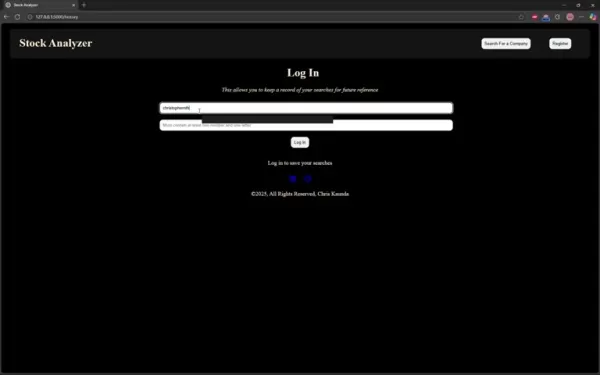
It's determined by multiplying the current share price by the total number of shares outstanding. A higher market cap typically points to a more established and stable company. Still, it's useful to compare market cap with other firms in the same sector to judge if the valuation is reasonable. Market capitalization is commonly used to categorize companies as large-cap, mid-cap, or small-cap, each carrying distinct risk and return characteristics. Tracking market cap over time can also reveal insights into a company's growth path. The Stock Analyzer shows market cap accurately, offering a helpful baseline for investors. While not the most critical figure, it's good to be aware of. Compare this value with industry peers to assess whether it represents a strong or weak position.
Forward Price to Earnings Ratio
Price to Earnings (P/E) ratio indicates how much investors are paying for each dollar of a company's earnings.
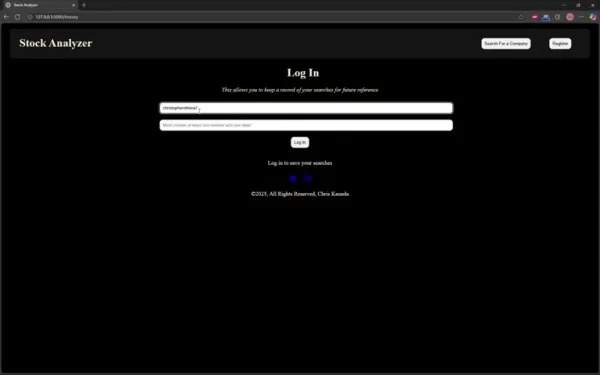
A higher P/E ratio could mean investors anticipate stronger earnings growth ahead. However, it might also signal that the stock is overpriced. A lower P/E ratio could suggest the stock is undervalued, or that the company isn't projected to grow significantly. The P/E ratio is helpful for comparing similar companies within an industry. That said, it's important to consider the company's specific context and growth outlook before making investment moves. The Stock Analyzer supplies the forward P/E ratio, offering perspective on expected future earnings, based on available financial data.
Earnings Growth
Earnings Growth shows the pace at which a company's profits are rising.
Cons
istent earnings growth is typically viewed positively, signaling a healthy and expanding business. Still, it's crucial to evaluate the sustainability of the growth and the factors behind it. High growth rates may not always be maintainable over the long term. The Stock Analyzer provides earnings growth data for the past year, giving a useful gauge of the company's momentum. Negative earnings growth means profits declined during that period.Profit Margin
Profit Margin shows the percentage of revenue that remains after all expenses are deducted, reflecting a company's operational efficiency.A higher profit margin suggests the company is controlling costs well and generating strong profits from its sales. It's helpful to compare the profit margin with industry competitors to see if it's competitive. The Stock Analyzer shows the company's profit margin, offering a view into its profitability. It indicates that for every $100 the company earns, it retains $X.XX.
Price to Book Ratio
Price to Book Ratio compares a company's market capitalization to its book value.Book value is the net asset value of a company, representing what would be left if all assets were sold and all debts settled. A lower price-to-book ratio might mean the stock is undervalued. However, it's important to account for the company's industry and financial condition before making investment choices. The Stock Analyzer provides the price-to-book ratio, shedding light on how the market values a company compared to its net assets. It shows that for every $100 you pay for the company's stock, you get $X.XX in tangible backed assets.
Quick Ratio
The quick ratio is a liquidity measure that assesses a company's capacity to cover short-term obligations with its most liquid assets.The quick ratio is found by dividing a company's cash, marketable securities, and accounts receivable by its current liabilities. A quick ratio of 1 or higher means a company has sufficient liquid assets to meet its short-term debts. The Stock Analyzer supplies the quick ratio, offering insight into its short-term financial health. A quick ratio above 1 indicates the company can settle its short-term debts without selling any short-term assets.
Current Ratio
The current ratio is a liquidity measure that evaluates a company's ability to fulfill short-term obligations.The current ratio is calculated by dividing a company's current assets by its current liabilities. A current ratio above 1 shows the company can pay off its short-term debts without liquidating long-term assets. The Stock Analyzer provides the current ratio, giving perspective on its solvency.
Free Cash Flow
Free Cash Flow measures the cash a business generates after accounting for capital expenditures.Free cash flow represents the cash a company has available to repay debts, issue dividends, repurchase shares, or pursue acquisitions. Rising free cash flow indicates a healthy and financially sound company. Free cash flow is the remaining money after the company covers its operating costs. Capital expenditure (CapEx) examples include long-term investments like equipment, technology, and property. Free cash flow can be used to fund business growth, reduce debt, or distribute dividends to owners and shareholders. If negative, the company has no leftover cash to return to stockholders. The Stock Analyzer provides free cash flow, offering a view into its overall financial condition.
Step-by-Step Guide to Using Stock Analyzer
Searching for a Stock
- Access the Stock Analyzer: Begin by launching the Stock Analyzer web application.The default search page will appear.
- Enter a Ticker Symbol: In the search bar, enter the ticker symbol of the company you wish to analyze. For instance, enter 'TSLA' for Tesla, Inc.
- Retrieve Data: Select the 'Get Data' button beside the search bar.
- Review the Fundamentals: The app will then show key financial metrics and details for the chosen company.
Adding Stocks to Your Portfolio
Search for a Stock: Follow the previous steps to find the stock you want to add to your portfolio.
Click 'Add to Portfolio': On the stock's data page, select the 'Add to Portfolio' button.
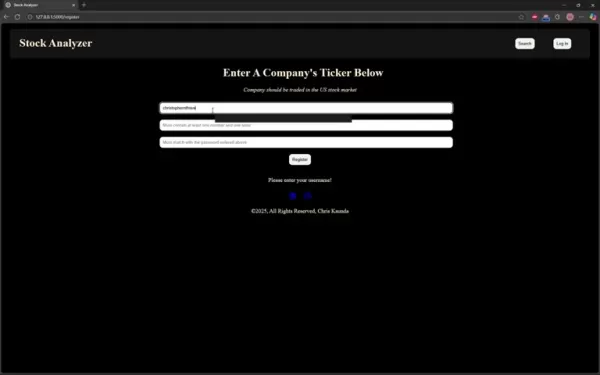
Log In or Register: If you aren't logged in, you'll be asked to either sign in or create an account.
Log In: If you have an account, enter your email and password to sign in.
Register: If you don't have an account, select the 'Register' button and complete the necessary details (email, password).
Confirm Addition: Once signed in, the stock will be added to your portfolio, and you can see it on your history page.
Updating Stock Data
- Access Your Portfolio: Sign in to your Stock Analyzer account to view your portfolio.
- Locate the Stock: Find the stock in your portfolio that you wish to update.
- Click 'Update Data': Select the 'Update Data' button next to the stock's entry.
- View Updated Information: The app will fetch and show the most recent financial data for the selected stock.
Pricing
Is Stock Analyzer really free?
The Stock Analyzer strives to be a readily available resource for all investors, ensuring essential financial tools are accessible. While future versions may include premium features, the core functions will stay free.
Assessing Stock Analyzer: Pros
and Cons
Pros
Free access to essential features
Easy-to-use interface
Immediate stock data retrieval
Search history storage
Portfolio creation and monitoring
Data refresh capability
Cons
Limited data export choices
Focus on US stock market
Registration needed for full access
Core Features of Stock Analyzer
Key Features
The Stock Analyzer's main features include:
- Stock Fundamental Extraction: Access vital financial data for informed investment choices.
- Search History Saving: Save and revisit previous stock searches for trend analysis and comparisons.
- User Portfolio Creation: Build and oversee a portfolio of stocks you want to track.
- Data Updating: Refresh financial data to stay up-to-date with market developments.
- User Registration: Create an account to unlock saved searches and portfolio functions.
Use Cases for Stock Analyzer
How can Stock Analyzer help you?
- Individual Investors: Researching potential stock investments and handling personal portfolios.
- Financial Analysts: Quickly pulling data to aid financial modeling and analysis.
- Students: Learning about stock fundamentals and gaining hands-on financial analysis experience.
- Investment Clubs: Supporting group discussions and collaborative investment decisions.
- Educators: Offering real-world examples for finance and investment classes.
Frequently Asked Questions
Is the Stock Analyzer free to use?
At present, the Stock Analyzer is free to use. Core features like stock fundamental extraction and default search page access are available at no cost. Additional premium features may be added later.
Do I need to register to use the Stock Analyzer?
No, registration is not required to use the default search page and extract stock fundamentals. However, signing up is necessary to save your search history and create a user portfolio.
What stock markets are supported by the Stock Analyzer?
The Stock Analyzer mainly covers companies traded on the US stock market. The application offers data for US-listed stocks.
How often is the data updated?
Stock data is refreshed to show the latest financial information. Users can manually update data for stocks in their portfolio to ensure it's current.
Can I export data from the Stock Analyzer?
Currently, there is no built-in export function. However, you can copy the displayed data and paste it into spreadsheets or other analysis tools.
Related Questions
What are the essential financial metrics to consider when analyzing a stock?
When analyzing a stock, several key financial metrics offer insight into the company's performance and potential. These include:Earnings Per Share (EPS): This shows a company's profitability on a per-share basis.Price-to-Earnings (P/E) Ratio: This compares a company's stock price to its earnings per share, indicating how much investors are paying for each dollar of earnings.Debt-to-Equity Ratio: This evaluates a company's financial leverage by comparing total debt to shareholders' equity.Return on Equity (ROE): This measures a company's profitability by comparing net income to shareholders' equity.Free Cash Flow (FCF): This shows the cash a company generates after accounting for capital expenditures.Dividend Yield: This indicates dividend income relative to the stock price.Revenue Growth: This measures the rate at which a company's sales are increasing.By reviewing these metrics, investors can better understand a company's financial health and growth prospects.These can be organized and compared in the following table:MetricDescriptionEarnings Per ShareShows a company's profitability on a per-share basis.Price-to-Earnings RatioCompares stock price to earnings per share, reflecting investor sentiment.Debt-to-Equity RatioEvaluates a company's financial leverage by comparing debt to equity.Return on EquityMeasures a company's profitability by comparing net income to shareholders' equity.Free Cash FlowShows cash generated after accounting for capital expenditures.Dividend YieldIndicates dividend income relative to the stock price.Revenue GrowthMeasures the rate at which a company's sales are increasing.These metrics can all be obtained using the Stock Analyzer, making it a valuable resource for evaluating a company's long-term financial outlook.
Related article
 Stripe to Acquire OpenRouter as AI Model Routing Gains Momentum
Stripe has agreed to acquire OpenRouter, an AI model-routing platform that gives developers access to hundreds of models through a single interface. The deal adds model selection and routing to Stripe’s existing work around AI usage and token-based b
Former OpenAI Researcher Barrett Zoph Returns to Google to Support Gemini Development
Barret Zoph, who previously abruptly left and joined OpenAI due to a disagreement with Thinking Machines Lab CEO Miriam Mularati, has once again changed employers. Alphabet's Google announced that Zoph will return as Vice President of Research, bring
How Recursive Intelligence Raised $335M at $4B Valuation in 4 Months
The co-founders of startup Ricursive Intelligence seemed destined to be co-founders.Anna Goldie, CEO, and Azalia Mirhoseini, CTO, are so well-known in the AI community that they were among those AI engineers who “got those weird emails from Zuckerber
Related Special Topic Recommendations
Design & Art
Stripe to Acquire OpenRouter as AI Model Routing Gains Momentum
Stripe has agreed to acquire OpenRouter, an AI model-routing platform that gives developers access to hundreds of models through a single interface. The deal adds model selection and routing to Stripe’s existing work around AI usage and token-based b
Former OpenAI Researcher Barrett Zoph Returns to Google to Support Gemini Development
Barret Zoph, who previously abruptly left and joined OpenAI due to a disagreement with Thinking Machines Lab CEO Miriam Mularati, has once again changed employers. Alphabet's Google announced that Zoph will return as Vice President of Research, bring
How Recursive Intelligence Raised $335M at $4B Valuation in 4 Months
The co-founders of startup Ricursive Intelligence seemed destined to be co-founders.Anna Goldie, CEO, and Azalia Mirhoseini, CTO, are so well-known in the AI community that they were among those AI engineers who “got those weird emails from Zuckerber
Related Special Topic Recommendations
Design & Art
 Top AI Illustration Tools: Create Editorial Scenes and Cover Art Faster
2026 Latest Top-rated AI Illustration Tools: Our curated list features the best powerfully designed tools for creating stunning editorial scenes and eye-catching cover art quickly. Each option has gone through rigorous real-world tests, offering a free vs paid comparison to help you find the perfect match for your workflow. Try these must-try solutions today to unlock your AI edge and boost your creative productivity. Explore now at XIX.AI.
 10 tools
 xix.ai
Education and Learning
Top AI Tutors for Exam Prep: Practice Math, Science, and English
xix.ai
Education and Learning
Top AI Tutors for Exam Prep: Practice Math, Science, and English
2026 Latest Top-Rated Best AI Tutors for Exam Prep are here on XIX.AI! Our curated list features powerful game-changing tools that offer free vs paid comparison, real-world tests, and weekly updated rankings. They help boost your writing efficiency, simplify complex topic learning, and unlock your academic potential. Explore now to Discover your perfect exam prep tool and Start creating today to Unlock your AI edge!
10 tools
xix.ai
Finance
AI Budget Planning Tools for Personal Money Management
2026 Latest Best Top-Rated AI Budget Planning Tools for Personal Money Management are here on XIX.AI! This curated collection features powerful, game-changing solutions that help you conduct real-world tests, understand spending habits, and create personalized plans to boost productivity. Enjoy a free vs paid comparison along with detailed rankings. Must-try tools designed to simplify money management and unlock your AI edge. Explore now!
11 tools
xix.ai
Health & Wellness
AI Sleep Tracking Assistants: Improve Recovery with Better Bedtime Habits
2026 Latest Best Top-Rated AI Sleep Tracking Assistants curated for ultimate recovery. This fully updated weekly guide features powerful tools that deliver real-world tests, free vs paid comparison, and detailed rankings to help you find the must-try solution that boosts sleep quality and supports better bedtime habits. Explore now at XIX.AI to Unlock your AI edge.
10 tools
xix.ai
Data Analysis
AI SQL Copilots for Product and Revenue Analytics
2026 Latest Best Top-Rated AI SQL Copilots for Product and Revenue Analytics! XIX.AI has curated a powerful, game-changing collection of must-try tools that undergo real-world tests through weekly updated rankings. These tools help users boost productivity significantly by accelerating data analysis, streamlining complex queries, and generating accurate insights to drive smarter business decisions. Explore now to Discover your perfect tool for unlocking your AI edge!
14 tools
xix.ai
Education and Learning
Best AI Homework Helpers That Teach: Learn Concepts, Not Just Answers
2026 Latest Best Top-Rated AI Homework Helpers That Teach Core Concepts Not Just Answers Powerful Tools for Students Must-Try Curated List Weekly Updated Free vs Paid Comparison Real-World Tests Accurate Rankings to Help You Unlock Your Full Learning Potential Explore now to Discover your perfect tool for smarter studying.
10 tools
xix.ai

 Comments (1)
0/500
Comments (1)
0/500
![StephenHernández]()
This Stock Analyzer sounds like a total game-changer for newbies like me who get lost in all those financial ratios. But honestly, is it just another overhyped web app that throws a bunch of numbers at you, or does it actually give actionable insights? 🧐 I'd love to see a real-world example before I trust it with my portfolio.
In the fast-paced world of stock markets, making well-informed investment choices is essential. The Stock Analyzer web application gives users the power to access critical financial fundamentals, simplifying the stock analysis process. This tool lets users save their search history, making it easier to refer back later and make data-driven decisions. Whether you're an experienced investor or new to the market, understanding stock fundamentals is vital for navigating market complexities.
Key Points
Stock Analyzer is a web application built to retrieve fundamental stock information.
Users can save their search history for future use, enabling side-by-side comparisons and long-term stock monitoring.
The app opens directly to a search page, allowing for immediate stock lookups without requiring a login.
Registered users can build portfolios to track stocks they're interested in.
The app offers clear explanations and insights into various stock metrics, helping users interpret the data effectively.
Understanding Stock Fundamentals
What is the Stock Analyzer?
The Stock Analyzer is a robust web application designed to give investors straightforward access to stock fundamental data.
This tool streamlines the process of collecting information on publicly traded companies, presenting key financial metrics in a user-friendly format. Its purpose is to help both new and seasoned investors make confident decisions based on reliable data. By extracting essential fundamentals, the Stock Analyzer supports the evaluation of a company's financial health and growth potential. The Stock Analyzer aims to democratize financial data, making it less overwhelming and more practical for all users. With its clean interface, the Stock Analyzer lets users search for stocks swiftly, review important performance indicators, and keep a record of their searches for later review. The capacity to assess stock fundamentals accurately and efficiently is crucial in today's rapidly changing financial markets. The application supplies key data for companies listed on the US stock market, giving users a thorough overview before making investment commitments. From reviewing market capitalization to examining profit margins, the Stock Analyzer provides a complete picture of a company's financial position, supporting smarter and more strategic investment moves. The ultimate goal is to bring clarity and assurance to stock market participation, helping users reach their financial objectives.
Navigating the Default Search Page
The Stock Analyzer is built for ease of use, opening directly to a search page
. This instant access eliminates barriers for users who need to check a stock's details quickly. Whether you're doing a quick lookup or deeper research, the intuitive search interface offers a smooth experience. The search bar is placed prominently, inviting users to enter a company's ticker symbol and pull up relevant information. The option to search for stock data immediately without logging in greatly improves the user experience. By simplifying the process, the Stock Analyzer enables users to collect essential information efficiently. This is particularly helpful for those who need data on the move or prefer to test the app before signing up. The default search page focuses on user convenience, promoting exploration and supporting informed choices. The Stock Analyzer helps users quickly grasp a company's financial standing, preparing them for more detailed evaluation. By minimizing the steps needed to access data, the app emphasizes user comfort and enhances the value of every visit. Whether you're a day trader making rapid decisions or a long-term investor doing thorough research, the default search page ensures vital information is always within reach.
Key Financial Metrics Explained
Market Capitalization
Market capitalization reflects the total market value of a company's outstanding shares.
It's determined by multiplying the current share price by the total number of shares outstanding. A higher market cap typically points to a more established and stable company. Still, it's useful to compare market cap with other firms in the same sector to judge if the valuation is reasonable. Market capitalization is commonly used to categorize companies as large-cap, mid-cap, or small-cap, each carrying distinct risk and return characteristics. Tracking market cap over time can also reveal insights into a company's growth path. The Stock Analyzer shows market cap accurately, offering a helpful baseline for investors. While not the most critical figure, it's good to be aware of. Compare this value with industry peers to assess whether it represents a strong or weak position.
Forward Price to Earnings Ratio
Price to Earnings (P/E) ratio indicates how much investors are paying for each dollar of a company's earnings.
A higher P/E ratio could mean investors anticipate stronger earnings growth ahead. However, it might also signal that the stock is overpriced. A lower P/E ratio could suggest the stock is undervalued, or that the company isn't projected to grow significantly. The P/E ratio is helpful for comparing similar companies within an industry. That said, it's important to consider the company's specific context and growth outlook before making investment moves. The Stock Analyzer supplies the forward P/E ratio, offering perspective on expected future earnings, based on available financial data.
Earnings Growth
Earnings Growth shows the pace at which a company's profits are rising.
Cons
istent earnings growth is typically viewed positively, signaling a healthy and expanding business. Still, it's crucial to evaluate the sustainability of the growth and the factors behind it. High growth rates may not always be maintainable over the long term. The Stock Analyzer provides earnings growth data for the past year, giving a useful gauge of the company's momentum. Negative earnings growth means profits declined during that period.Profit Margin
Profit Margin shows the percentage of revenue that remains after all expenses are deducted, reflecting a company's operational efficiency.A higher profit margin suggests the company is controlling costs well and generating strong profits from its sales. It's helpful to compare the profit margin with industry competitors to see if it's competitive. The Stock Analyzer shows the company's profit margin, offering a view into its profitability. It indicates that for every $100 the company earns, it retains $X.XX.
Price to Book Ratio
Price to Book Ratio compares a company's market capitalization to its book value.Book value is the net asset value of a company, representing what would be left if all assets were sold and all debts settled. A lower price-to-book ratio might mean the stock is undervalued. However, it's important to account for the company's industry and financial condition before making investment choices. The Stock Analyzer provides the price-to-book ratio, shedding light on how the market values a company compared to its net assets. It shows that for every $100 you pay for the company's stock, you get $X.XX in tangible backed assets.
Quick Ratio
The quick ratio is a liquidity measure that assesses a company's capacity to cover short-term obligations with its most liquid assets.The quick ratio is found by dividing a company's cash, marketable securities, and accounts receivable by its current liabilities. A quick ratio of 1 or higher means a company has sufficient liquid assets to meet its short-term debts. The Stock Analyzer supplies the quick ratio, offering insight into its short-term financial health. A quick ratio above 1 indicates the company can settle its short-term debts without selling any short-term assets.
Current Ratio
The current ratio is a liquidity measure that evaluates a company's ability to fulfill short-term obligations.The current ratio is calculated by dividing a company's current assets by its current liabilities. A current ratio above 1 shows the company can pay off its short-term debts without liquidating long-term assets. The Stock Analyzer provides the current ratio, giving perspective on its solvency.
Free Cash Flow
Free Cash Flow measures the cash a business generates after accounting for capital expenditures.Free cash flow represents the cash a company has available to repay debts, issue dividends, repurchase shares, or pursue acquisitions. Rising free cash flow indicates a healthy and financially sound company. Free cash flow is the remaining money after the company covers its operating costs. Capital expenditure (CapEx) examples include long-term investments like equipment, technology, and property. Free cash flow can be used to fund business growth, reduce debt, or distribute dividends to owners and shareholders. If negative, the company has no leftover cash to return to stockholders. The Stock Analyzer provides free cash flow, offering a view into its overall financial condition.
Step-by-Step Guide to Using Stock Analyzer
Searching for a Stock
- Access the Stock Analyzer: Begin by launching the Stock Analyzer web application.The default search page will appear.
- Enter a Ticker Symbol: In the search bar, enter the ticker symbol of the company you wish to analyze. For instance, enter 'TSLA' for Tesla, Inc.
- Retrieve Data: Select the 'Get Data' button beside the search bar.
- Review the Fundamentals: The app will then show key financial metrics and details for the chosen company.
Adding Stocks to Your Portfolio
Search for a Stock: Follow the previous steps to find the stock you want to add to your portfolio.
Click 'Add to Portfolio': On the stock's data page, select the 'Add to Portfolio' button.
Log In or Register: If you aren't logged in, you'll be asked to either sign in or create an account.
Log In: If you have an account, enter your email and password to sign in.
Register: If you don't have an account, select the 'Register' button and complete the necessary details (email, password).
Confirm Addition: Once signed in, the stock will be added to your portfolio, and you can see it on your history page.
Updating Stock Data
- Access Your Portfolio: Sign in to your Stock Analyzer account to view your portfolio.
- Locate the Stock: Find the stock in your portfolio that you wish to update.
- Click 'Update Data': Select the 'Update Data' button next to the stock's entry.
- View Updated Information: The app will fetch and show the most recent financial data for the selected stock.
Pricing
Is Stock Analyzer really free?
The Stock Analyzer strives to be a readily available resource for all investors, ensuring essential financial tools are accessible. While future versions may include premium features, the core functions will stay free.
Assessing Stock Analyzer: Pros
and Cons
Pros
Free access to essential features
Easy-to-use interface
Immediate stock data retrieval
Search history storage
Portfolio creation and monitoring
Data refresh capability
Cons
Limited data export choices
Focus on US stock market
Registration needed for full access
Core Features of Stock Analyzer
Key Features
The Stock Analyzer's main features include:
- Stock Fundamental Extraction: Access vital financial data for informed investment choices.
- Search History Saving: Save and revisit previous stock searches for trend analysis and comparisons.
- User Portfolio Creation: Build and oversee a portfolio of stocks you want to track.
- Data Updating: Refresh financial data to stay up-to-date with market developments.
- User Registration: Create an account to unlock saved searches and portfolio functions.
Use Cases for Stock Analyzer
How can Stock Analyzer help you?
- Individual Investors: Researching potential stock investments and handling personal portfolios.
- Financial Analysts: Quickly pulling data to aid financial modeling and analysis.
- Students: Learning about stock fundamentals and gaining hands-on financial analysis experience.
- Investment Clubs: Supporting group discussions and collaborative investment decisions.
- Educators: Offering real-world examples for finance and investment classes.
Frequently Asked Questions
Is the Stock Analyzer free to use?
At present, the Stock Analyzer is free to use. Core features like stock fundamental extraction and default search page access are available at no cost. Additional premium features may be added later.
Do I need to register to use the Stock Analyzer?
No, registration is not required to use the default search page and extract stock fundamentals. However, signing up is necessary to save your search history and create a user portfolio.
What stock markets are supported by the Stock Analyzer?
The Stock Analyzer mainly covers companies traded on the US stock market. The application offers data for US-listed stocks.
How often is the data updated?
Stock data is refreshed to show the latest financial information. Users can manually update data for stocks in their portfolio to ensure it's current.
Can I export data from the Stock Analyzer?
Currently, there is no built-in export function. However, you can copy the displayed data and paste it into spreadsheets or other analysis tools.
Related Questions
What are the essential financial metrics to consider when analyzing a stock?
When analyzing a stock, several key financial metrics offer insight into the company's performance and potential. These include:Earnings Per Share (EPS): This shows a company's profitability on a per-share basis.Price-to-Earnings (P/E) Ratio: This compares a company's stock price to its earnings per share, indicating how much investors are paying for each dollar of earnings.Debt-to-Equity Ratio: This evaluates a company's financial leverage by comparing total debt to shareholders' equity.Return on Equity (ROE): This measures a company's profitability by comparing net income to shareholders' equity.Free Cash Flow (FCF): This shows the cash a company generates after accounting for capital expenditures.Dividend Yield: This indicates dividend income relative to the stock price.Revenue Growth: This measures the rate at which a company's sales are increasing.By reviewing these metrics, investors can better understand a company's financial health and growth prospects.These can be organized and compared in the following table:MetricDescriptionEarnings Per ShareShows a company's profitability on a per-share basis.Price-to-Earnings RatioCompares stock price to earnings per share, reflecting investor sentiment.Debt-to-Equity RatioEvaluates a company's financial leverage by comparing debt to equity.Return on EquityMeasures a company's profitability by comparing net income to shareholders' equity.Free Cash FlowShows cash generated after accounting for capital expenditures.Dividend YieldIndicates dividend income relative to the stock price.Revenue GrowthMeasures the rate at which a company's sales are increasing.These metrics can all be obtained using the Stock Analyzer, making it a valuable resource for evaluating a company's long-term financial outlook.








 Stripe to Acquire OpenRouter as AI Model Routing Gains Momentum
Stripe has agreed to acquire OpenRouter, an AI model-routing platform that gives developers access to hundreds of models through a single interface. The deal adds model selection and routing to Stripe’s existing work around AI usage and token-based b
Stripe to Acquire OpenRouter as AI Model Routing Gains Momentum
Stripe has agreed to acquire OpenRouter, an AI model-routing platform that gives developers access to hundreds of models through a single interface. The deal adds model selection and routing to Stripe’s existing work around AI usage and token-based b
 Former OpenAI Researcher Barrett Zoph Returns to Google to Support Gemini Development
Barret Zoph, who previously abruptly left and joined OpenAI due to a disagreement with Thinking Machines Lab CEO Miriam Mularati, has once again changed employers. Alphabet's Google announced that Zoph will return as Vice President of Research, bring
Former OpenAI Researcher Barrett Zoph Returns to Google to Support Gemini Development
Barret Zoph, who previously abruptly left and joined OpenAI due to a disagreement with Thinking Machines Lab CEO Miriam Mularati, has once again changed employers. Alphabet's Google announced that Zoph will return as Vice President of Research, bring
 How Recursive Intelligence Raised $335M at $4B Valuation in 4 Months
The co-founders of startup Ricursive Intelligence seemed destined to be co-founders.Anna Goldie, CEO, and Azalia Mirhoseini, CTO, are so well-known in the AI community that they were among those AI engineers who “got those weird emails from Zuckerber
How Recursive Intelligence Raised $335M at $4B Valuation in 4 Months
The co-founders of startup Ricursive Intelligence seemed destined to be co-founders.Anna Goldie, CEO, and Azalia Mirhoseini, CTO, are so well-known in the AI community that they were among those AI engineers who “got those weird emails from Zuckerber

2026 Latest Top-rated AI Illustration Tools: Our curated list features the best powerfully designed tools for creating stunning editorial scenes and eye-catching cover art quickly. Each option has gone through rigorous real-world tests, offering a free vs paid comparison to help you find the perfect match for your workflow. Try these must-try solutions today to unlock your AI edge and boost your creative productivity. Explore now at XIX.AI.
10 tools
xix.ai

2026 Latest Top-Rated Best AI Tutors for Exam Prep are here on XIX.AI! Our curated list features powerful game-changing tools that offer free vs paid comparison, real-world tests, and weekly updated rankings. They help boost your writing efficiency, simplify complex topic learning, and unlock your academic potential. Explore now to Discover your perfect exam prep tool and Start creating today to Unlock your AI edge!
10 tools
xix.ai

2026 Latest Best Top-Rated AI Budget Planning Tools for Personal Money Management are here on XIX.AI! This curated collection features powerful, game-changing solutions that help you conduct real-world tests, understand spending habits, and create personalized plans to boost productivity. Enjoy a free vs paid comparison along with detailed rankings. Must-try tools designed to simplify money management and unlock your AI edge. Explore now!
11 tools
xix.ai

2026 Latest Best Top-Rated AI Sleep Tracking Assistants curated for ultimate recovery. This fully updated weekly guide features powerful tools that deliver real-world tests, free vs paid comparison, and detailed rankings to help you find the must-try solution that boosts sleep quality and supports better bedtime habits. Explore now at XIX.AI to Unlock your AI edge.
10 tools
xix.ai

2026 Latest Best Top-Rated AI SQL Copilots for Product and Revenue Analytics! XIX.AI has curated a powerful, game-changing collection of must-try tools that undergo real-world tests through weekly updated rankings. These tools help users boost productivity significantly by accelerating data analysis, streamlining complex queries, and generating accurate insights to drive smarter business decisions. Explore now to Discover your perfect tool for unlocking your AI edge!
14 tools
xix.ai

2026 Latest Best Top-Rated AI Homework Helpers That Teach Core Concepts Not Just Answers Powerful Tools for Students Must-Try Curated List Weekly Updated Free vs Paid Comparison Real-World Tests Accurate Rankings to Help You Unlock Your Full Learning Potential Explore now to Discover your perfect tool for smarter studying.
10 tools
xix.ai

This Stock Analyzer sounds like a total game-changer for newbies like me who get lost in all those financial ratios. But honestly, is it just another overhyped web app that throws a bunch of numbers at you, or does it actually give actionable insights? 🧐 I'd love to see a real-world example before I trust it with my portfolio.












