


 Home
HomeSEOWriting.ai: Revolutionizing Blog Content with Advanced AI Technology
In today's digital landscape, high-quality content is essential, and artificial intelligence is transforming how it's produced. This detailed guide examines SEOWriting.ai, an advanced AI writing platform built to simplify blog post development. Learn how to use its features—from keyword discovery to content refinement—to improve your writing quality and boost search engine performance. We'll explore the platform's capabilities and provide actionable tips to strengthen your overall SEO content strategy.
Key Points
SEOWriting.ai provides tools such as 1-Click Blog Post, Bulk Article Generation, and a Humanizer Tool.
Conducting effective keyword research is a necessary first step before using any AI writing assistant.
NLP keywords are fundamental for modern SEO optimization.
Platforms like NeuronWriter can significantly improve content optimization efforts.
Grasping user search intent is critical for producing relevant and compelling content.
Introduction to SEOWriting.ai
Overview of SEOWriting.ai
SEOWriting.ai is a modern platform that uses artificial intelligence to make content creation more efficient. It provides a collection of tools to help writers and marketers produce SEO-friendly blog posts and articles quickly. From drafting initial content to polishing it for better flow, SEOWriting.ai offers a complete solution for various content requirements.
Notable features include:
- 1-Click Blog Post: Generate a complete blog post instantly using just a title.
- Bulk Article Generation: Produce numerous articles at once, ideal for large-scale content projects.
- Humanizer Tool: Improve AI-generated text to sound more natural and engaging for readers.
These tools work together to deliver an end-to-end workflow for creating effective content.

The platform's interface is straightforward, suitable for both novice and experienced users.
Exploring the Interface and Tools
SEOWriting.ai features a clean and intuitive interface that is easy to navigate.
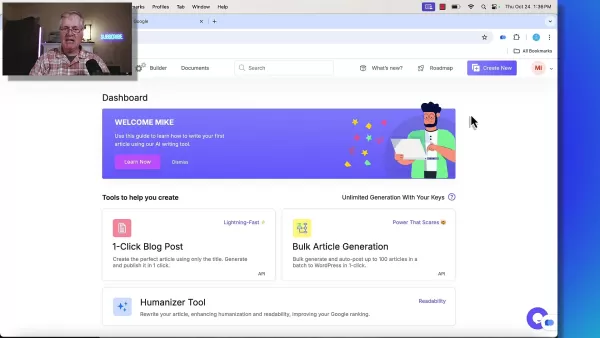
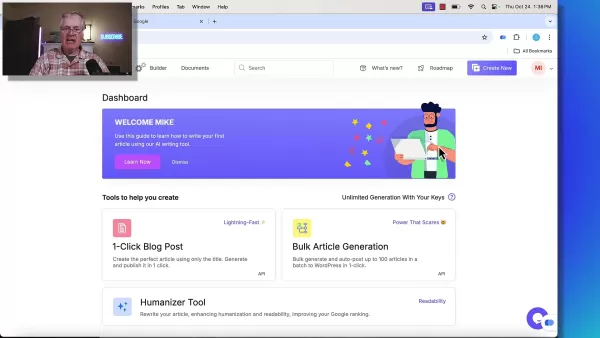
After logging in, users see a dashboard highlighting the main tools and options. Here’s a breakdown of key sections:
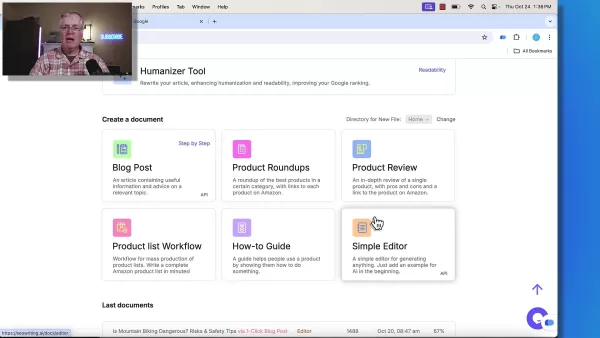
- Dashboard Overview: A central hub showing tools like 1-Click Blog Post, Bulk Article Generation, and the Humanizer Tool.
- Create a Document Section: Options to start different content types, including blog posts, product reviews, how-to guides, and more.
- Unlimited Generation with Your Keys: Generate content using your own unique API key.
- Settings and Customization: Adjust preferences like language, tone, and article length to match your needs.
Keyword Research and NLP Keywords
Importance of Keyword Research
Before creating content with SEOWriting.ai, solid keyword research is vital. Keywords are the cornerstone of SEO, directing your content to the appropriate audience. Effective research involves finding terms and phrases your target users are actively searching for online. These keywords should match your content’s topic and goals. By integrating them strategically, you can enhance your content's visibility in search results, attracting more organic visitors.
Recommended practices for keyword research:
- Using Google Autocomplete: As you type in Google's search bar, it suggests popular related queries, revealing common search patterns.
This is a simple, free method to find relevant keyword ideas.
- Analyzing Competitor Keywords: Study which keywords your competitors rank for. Tools like SEMrush or Ahrefs can provide this competitive intelligence.
- Leveraging Keyword Research Tools: Use dedicated platforms such as Google Keyword Planner, Moz Keyword Explorer, or Ubersuggest to identify keywords with good search volume and manageable competition.
Applying these methods allows you to build a strong keyword list to inform your content creation.
Understanding NLP Keywords
NLP (Natural Language Processing) keywords are vital for contemporary SEO. Unlike simple keyword matching, NLP focuses on the intent and context behind search queries. These keywords help search engines comprehend the meaning of content, leading to more accurate and helpful search results.
Tools like Neuronwriter can help you find and integrate relevant NLP keywords into your writing.
Such tools analyze top-performing content to identify terms and phrases that search engines and users value. Including these keywords boosts your content's semantic richness, which can improve rankings.
Advantages of using NLP keywords:
- Improved Search Engine Understanding: NLP keywords help search engines better interpret the topic and purpose of your content.
- Enhanced Semantic Relevance: Incorporating related terms and concepts makes your content more contextually complete.
- Better User Experience: Content that aligns with searcher intent provides more relevant and satisfying answers.
Creating a Blog Post with SEOWriting.ai: A Step-by-Step Guide
Step 1: Keyword Selection and Preparation
The first step is to choose a primary keyword or phrase that will be the focus of your post. For instance, 'are hydrogen vehicles the future'. This keyword will steer the content's direction and its SEO optimization.
Steps:
- Use Google Autocomplete to uncover related search terms.
- Select a primary keyword based on relevance and estimated search volume.
- Compile a list of supporting NLP keywords using a tool like NeuronWriter.
Step 2: Setting Up SEOWriting.ai
With your keywords prepared, go to the SEOWriting.ai platform.
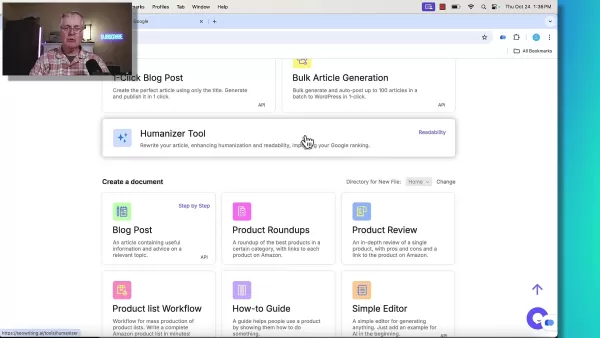
Find the '1-Click Blog Post' tool on the main dashboard. This feature lets you create a full blog post using just a title and a few configuration choices.
Steps:
- Log in and access the SEOWriting.ai dashboard.
- Click on the '1-Click Blog Post' tool.
- Get ready to enter your main keyword and chosen title.
Step 3: Inputting Keywords and Title
Enter your primary keyword and blog post title. Ensure the title is compelling and incorporates the main keyword to guide the AI toward generating relevant content.
Steps:
- Type the main keyword into the designated field.
- Input your prepared, SEO-optimized title.
- Review the title and make any necessary adjustments.
Step 4: Configuring Core Settings
Adjust the core settings for your post. This includes selecting the language, desired tone (e.g., friendly, professional), and article length. These choices influence the style and depth of the output.
Steps:
- Choose the language for your post (e.g., English).
- Select a suitable tone of voice for your audience.
- Set the article size to 'medium' for a standard, detailed blog post.
Step 5: Adding NLP Keywords
Boost your post's SEO by adding your list of NLP keywords in the SEO settings section. This prompts the AI to naturally weave these terms into the content, improving its relevance.
Steps:
- Find the SEO or keyword section within the tool's settings.
- Paste or type in your gathered NLP keywords.
- Verify the keywords are contextually appropriate.
Step 6: Generating and Humanizing the Content
Once all settings are in place, start the generation process. SEOWriting.ai will produce a draft based on your inputs. After generation, use the built-in 'Humanizer Tool' to polish the text, improving its flow and making it more engaging for readers.
Steps:
- Click to generate the blog post draft.
- Review the initial AI-generated content.
- Apply the 'Humanizer Tool' to refine the draft's readability and tone.
Don't forget to incorporate relevant images and apply proper heading structure to the final content.
SEOWriting.ai: Pros and Cons
Pros
Fast Content Production: Generate blog posts and articles rapidly using AI assistance.
Built-in SEO Features: Optimize content with NLP keywords and SEO recommendations.
Easy-to-Use Interface: Simple navigation suitable for all skill levels.
Bulk Content Creation: Efficiently produce multiple articles for large projects.
Humanizer Tool: Refine AI text to enhance readability and audience connection.
Cons
Depends on Preliminary Research: Requires thorough keyword research beforehand for best results.
May Require Manual Tweaks: AI-generated content often needs editing for perfect style and accuracy.
Subscription Cost: Pricing plans may be a factor for users with limited budgets.
FAQ
What is SEOWriting.ai?
SEOWriting.ai is an AI-driven platform that helps writers and marketers create SEO-optimized, high-quality content quickly and effectively.
How does the 1-Click Blog Post tool work?
The 1-Click Blog Post tool creates a full blog post draft almost instantly by using a provided title and a few simple configuration settings.
What are NLP keywords and why are they important?
NLP keywords are terms that help search engines understand the meaning and intent behind content, leading to better semantic relevance and improved user experience.
How can NeuronWriter enhance SEO optimization?
NeuronWriter identifies relevant NLP keywords and offers real-time content analysis, helping you optimize articles to achieve higher search engine rankings.
Is SEOWriting.ai suitable for beginners?
Yes, its user-friendly interface and guided tools make it accessible for beginners while still being powerful enough for experienced creators.
Related Questions
What other AI writing tools are available?
Several other AI writing assistants can support content creation, including: Jasper: A versatile AI writer known for generating diverse content types. Copy.ai: Specializes in creating persuasive marketing and sales copy. Rytr: Provides various templates for blogs, social media posts, and more. Scalenut: An all-in-one SEO and content marketing platform with AI writing features. Each tool has unique strengths, so evaluating a few can help you select the best option for your specific needs.
How can I improve the readability of AI-generated content?
Enhancing the readability of AI-generated content is key to keeping your audience engaged. Consider these strategies: Use a Humanizer Tool: Features like SEOWriting.ai's Humanizer Tool make AI text sound more natural. Edit and Proofread: Always review and adjust the content to match your brand's voice and ensure accuracy. Add Personal Touches: Include relevant anecdotes or examples to make the content more relatable. Structure for Scannability: Use clear headings, bullet points, and images to break up text and improve visual flow. Following these steps will help make your AI-assisted content both informative and enjoyable to read.
Related article
 DeepMind CEO Hassabis: I sleep six hours a day, usually feel energetic around 1 a.m.
Fortune recently featured an interview with Demis Hassabis, CEO of Google DeepMind, revealing his unconventional approach to rest and productivity. Hassabis disclosed that he sleeps very little, structuring his waking hours into two distinct work blo
OpenAI, Anthropic Vie for Market Share Despite Revenue Shortfalls
Despite recent reports suggesting OpenAI missed revenue targets, creating pressure on tech stocks this Tuesday, private AI lab investors remain resilient. Seasoned backers have confirmed they will not reduce investment despite negative media coverage
California AV Compliance: A New Era of Tickets, Geofences, and 1M Miles
Guident operates an AuveTech shuttle in South Florida, managing a four-mile route in West Palm Beach and a one-mile route in Boca Raton using its remote monitoring technology. | Credit: GuidentCalifornia is redefining the regulatory landscape for dri
Related Special Topic Recommendations
Music composition
DeepMind CEO Hassabis: I sleep six hours a day, usually feel energetic around 1 a.m.
Fortune recently featured an interview with Demis Hassabis, CEO of Google DeepMind, revealing his unconventional approach to rest and productivity. Hassabis disclosed that he sleeps very little, structuring his waking hours into two distinct work blo
OpenAI, Anthropic Vie for Market Share Despite Revenue Shortfalls
Despite recent reports suggesting OpenAI missed revenue targets, creating pressure on tech stocks this Tuesday, private AI lab investors remain resilient. Seasoned backers have confirmed they will not reduce investment despite negative media coverage
California AV Compliance: A New Era of Tickets, Geofences, and 1M Miles
Guident operates an AuveTech shuttle in South Florida, managing a four-mile route in West Palm Beach and a one-mile route in Boca Raton using its remote monitoring technology. | Credit: GuidentCalifornia is redefining the regulatory landscape for dri
Related Special Topic Recommendations
Music composition
 AI Stem Separation Tools for Remix Production, Sampling Prep, and Karaoke Masters
2026 Latest Best Top-rated AI Stem Separation Tools Curated for Remix Production, Sampling Prep, and Karaoke Masters. These powerful game-changing tools offer real-world tests to deliver precise audio isolation, boosting productivity significantly. XIX.AI provides a weekly updated free vs paid comparison guide to help you find the must-try solution that suits your needs. Explore now to unlock your AI edge.
 8 tools
 xix.ai
Data Analysis
AI SQL Copilots for Revenue Dashboards, Funnel Analysis, and Product Metrics
xix.ai
Data Analysis
AI SQL Copilots for Revenue Dashboards, Funnel Analysis, and Product Metrics
2026 Latest Best AI SQL Copilots Ranked Top-Rated! XIX.AI curates a powerful game-changing collection for weekly updated real-world tests. These must-try tools help you generate accurate revenue dashboards, analyze sales funnels, and track product metrics swiftly, boosting productivity massively. Explore now to Discover your perfect tool for data-driven decision making! 238 characters
9 tools
xix.ai
Music composition
Best AI Melody Writing Tools for Song Drafts
2026 Latest Best Top-Rated AI Melody Writing Tools for Song Drafts! XIX.AI has curated a highly powerful game-changing collection that goes through rigorous real-world tests to deliver the best writing experience. You can find detailed free vs paid comparisons, accurate rankings, and must-try options designed to help you create stunning song drafts effortlessly and boost your creative productivity significantly. Explore now to discover your perfect tool!
8 tools
xix.ai
chatbot
Best AI Conversation Trainer Tools for Interview Practice
2026 Latest Best Top-rated AI Conversation Trainer Tools for Interview Practice are here on XIX.AI! This curated collection features powerful, game-changing tools that go through rigorous real-world tests to deliver accurate feedback. You’ll find a free vs paid comparison and detailed rankings to help you choose the must-try option that boosts your confidence and skills. Explore now to Discover your perfect tool for interview success!
12 tools
xix.ai
Design & Art
Best AI Style Transfer Tools for Creative Experiments
2026 Latest Best Top-rated AI Style Transfer Tools for Creative Experiments! XIX.AI has curated a powerful, game-changing collection of must-try tools that deliver exceptional results through real-world tests and rigorous rankings. These top solutions help creatives boost productivity significantly by accelerating content creation and unlocking endless creative possibilities. Explore now to discover your perfect tool and start creating today!
9 tools
xix.ai
Comic Creation
Best AI Dialogue Bubble Tools for Visual Storytelling
2026 Latest Best Top-Rated AI Dialogue Bubble Tools for Visual Storytelling are here on XIX.AI! This curated collection features powerful, game-changing tools that help creators boost productivity and overcome creative bottlenecks. Get a free vs paid comparison, see real-world tests, and check the latest rankings to find the must-try solutions perfect for crafting engaging visual narratives. Explore now to discover your ideal tool!
10 tools
xix.ai

 Comments (2)
0/500
Comments (2)
0/500
![EricMartinez]()
I've been using SEOWriting.ai for a month now, and honestly, it's a game changer for my blog. The AI-generated drafts are surprisingly coherent, though I still need to tweak the tone. Kinda scary how good it's getting though 🤖. Not sure if I should be impressed or worried about my job as a writer. Anyway, worth a try if you're drowning in content deadlines.
![FrankJackson]()
I've been testing SEOWriting.ai for a few weeks and honestly, it's a game-changer. The AI generates coherent blog posts that actually need minimal editing. But I'm still skeptical about originality and SEO penalties. Anyone else worried about Google's stance on AI content? 🤔
In today's digital landscape, high-quality content is essential, and artificial intelligence is transforming how it's produced. This detailed guide examines SEOWriting.ai, an advanced AI writing platform built to simplify blog post development. Learn how to use its features—from keyword discovery to content refinement—to improve your writing quality and boost search engine performance. We'll explore the platform's capabilities and provide actionable tips to strengthen your overall SEO content strategy.
Key Points
SEOWriting.ai provides tools such as 1-Click Blog Post, Bulk Article Generation, and a Humanizer Tool.
Conducting effective keyword research is a necessary first step before using any AI writing assistant.
NLP keywords are fundamental for modern SEO optimization.
Platforms like NeuronWriter can significantly improve content optimization efforts.
Grasping user search intent is critical for producing relevant and compelling content.
Introduction to SEOWriting.ai
Overview of SEOWriting.ai
SEOWriting.ai is a modern platform that uses artificial intelligence to make content creation more efficient. It provides a collection of tools to help writers and marketers produce SEO-friendly blog posts and articles quickly. From drafting initial content to polishing it for better flow, SEOWriting.ai offers a complete solution for various content requirements.
Notable features include:
- 1-Click Blog Post: Generate a complete blog post instantly using just a title.
- Bulk Article Generation: Produce numerous articles at once, ideal for large-scale content projects.
- Humanizer Tool: Improve AI-generated text to sound more natural and engaging for readers.
These tools work together to deliver an end-to-end workflow for creating effective content.
The platform's interface is straightforward, suitable for both novice and experienced users.
Exploring the Interface and Tools
SEOWriting.ai features a clean and intuitive interface that is easy to navigate.
After logging in, users see a dashboard highlighting the main tools and options. Here’s a breakdown of key sections:
- Dashboard Overview: A central hub showing tools like 1-Click Blog Post, Bulk Article Generation, and the Humanizer Tool.
- Create a Document Section: Options to start different content types, including blog posts, product reviews, how-to guides, and more.
- Unlimited Generation with Your Keys: Generate content using your own unique API key.
- Settings and Customization: Adjust preferences like language, tone, and article length to match your needs.
Keyword Research and NLP Keywords
Importance of Keyword Research
Before creating content with SEOWriting.ai, solid keyword research is vital. Keywords are the cornerstone of SEO, directing your content to the appropriate audience. Effective research involves finding terms and phrases your target users are actively searching for online. These keywords should match your content’s topic and goals. By integrating them strategically, you can enhance your content's visibility in search results, attracting more organic visitors.
Recommended practices for keyword research:
- Using Google Autocomplete: As you type in Google's search bar, it suggests popular related queries, revealing common search patterns.
This is a simple, free method to find relevant keyword ideas.
- Analyzing Competitor Keywords: Study which keywords your competitors rank for. Tools like SEMrush or Ahrefs can provide this competitive intelligence.
- Leveraging Keyword Research Tools: Use dedicated platforms such as Google Keyword Planner, Moz Keyword Explorer, or Ubersuggest to identify keywords with good search volume and manageable competition.
Applying these methods allows you to build a strong keyword list to inform your content creation.
Understanding NLP Keywords
NLP (Natural Language Processing) keywords are vital for contemporary SEO. Unlike simple keyword matching, NLP focuses on the intent and context behind search queries. These keywords help search engines comprehend the meaning of content, leading to more accurate and helpful search results.
Tools like Neuronwriter can help you find and integrate relevant NLP keywords into your writing.
Such tools analyze top-performing content to identify terms and phrases that search engines and users value. Including these keywords boosts your content's semantic richness, which can improve rankings.
Advantages of using NLP keywords:
- Improved Search Engine Understanding: NLP keywords help search engines better interpret the topic and purpose of your content.
- Enhanced Semantic Relevance: Incorporating related terms and concepts makes your content more contextually complete.
- Better User Experience: Content that aligns with searcher intent provides more relevant and satisfying answers.
Creating a Blog Post with SEOWriting.ai: A Step-by-Step Guide
Step 1: Keyword Selection and Preparation
The first step is to choose a primary keyword or phrase that will be the focus of your post. For instance, 'are hydrogen vehicles the future'. This keyword will steer the content's direction and its SEO optimization.
Steps:
- Use Google Autocomplete to uncover related search terms.
- Select a primary keyword based on relevance and estimated search volume.
- Compile a list of supporting NLP keywords using a tool like NeuronWriter.
Step 2: Setting Up SEOWriting.ai
With your keywords prepared, go to the SEOWriting.ai platform.
Find the '1-Click Blog Post' tool on the main dashboard. This feature lets you create a full blog post using just a title and a few configuration choices.
Steps:
- Log in and access the SEOWriting.ai dashboard.
- Click on the '1-Click Blog Post' tool.
- Get ready to enter your main keyword and chosen title.
Step 3: Inputting Keywords and Title
Enter your primary keyword and blog post title. Ensure the title is compelling and incorporates the main keyword to guide the AI toward generating relevant content.
Steps:
- Type the main keyword into the designated field.
- Input your prepared, SEO-optimized title.
- Review the title and make any necessary adjustments.
Step 4: Configuring Core Settings
Adjust the core settings for your post. This includes selecting the language, desired tone (e.g., friendly, professional), and article length. These choices influence the style and depth of the output.
Steps:
- Choose the language for your post (e.g., English).
- Select a suitable tone of voice for your audience.
- Set the article size to 'medium' for a standard, detailed blog post.
Step 5: Adding NLP Keywords
Boost your post's SEO by adding your list of NLP keywords in the SEO settings section. This prompts the AI to naturally weave these terms into the content, improving its relevance.
Steps:
- Find the SEO or keyword section within the tool's settings.
- Paste or type in your gathered NLP keywords.
- Verify the keywords are contextually appropriate.
Step 6: Generating and Humanizing the Content
Once all settings are in place, start the generation process. SEOWriting.ai will produce a draft based on your inputs. After generation, use the built-in 'Humanizer Tool' to polish the text, improving its flow and making it more engaging for readers.
Steps:
- Click to generate the blog post draft.
- Review the initial AI-generated content.
- Apply the 'Humanizer Tool' to refine the draft's readability and tone.
Don't forget to incorporate relevant images and apply proper heading structure to the final content.
SEOWriting.ai: Pros and Cons
Pros
Fast Content Production: Generate blog posts and articles rapidly using AI assistance.
Built-in SEO Features: Optimize content with NLP keywords and SEO recommendations.
Easy-to-Use Interface: Simple navigation suitable for all skill levels.
Bulk Content Creation: Efficiently produce multiple articles for large projects.
Humanizer Tool: Refine AI text to enhance readability and audience connection.
Cons
Depends on Preliminary Research: Requires thorough keyword research beforehand for best results.
May Require Manual Tweaks: AI-generated content often needs editing for perfect style and accuracy.
Subscription Cost: Pricing plans may be a factor for users with limited budgets.
FAQ
What is SEOWriting.ai?
SEOWriting.ai is an AI-driven platform that helps writers and marketers create SEO-optimized, high-quality content quickly and effectively.
How does the 1-Click Blog Post tool work?
The 1-Click Blog Post tool creates a full blog post draft almost instantly by using a provided title and a few simple configuration settings.
What are NLP keywords and why are they important?
NLP keywords are terms that help search engines understand the meaning and intent behind content, leading to better semantic relevance and improved user experience.
How can NeuronWriter enhance SEO optimization?
NeuronWriter identifies relevant NLP keywords and offers real-time content analysis, helping you optimize articles to achieve higher search engine rankings.
Is SEOWriting.ai suitable for beginners?
Yes, its user-friendly interface and guided tools make it accessible for beginners while still being powerful enough for experienced creators.
Related Questions
What other AI writing tools are available?
Several other AI writing assistants can support content creation, including: Jasper: A versatile AI writer known for generating diverse content types. Copy.ai: Specializes in creating persuasive marketing and sales copy. Rytr: Provides various templates for blogs, social media posts, and more. Scalenut: An all-in-one SEO and content marketing platform with AI writing features. Each tool has unique strengths, so evaluating a few can help you select the best option for your specific needs.
How can I improve the readability of AI-generated content?
Enhancing the readability of AI-generated content is key to keeping your audience engaged. Consider these strategies: Use a Humanizer Tool: Features like SEOWriting.ai's Humanizer Tool make AI text sound more natural. Edit and Proofread: Always review and adjust the content to match your brand's voice and ensure accuracy. Add Personal Touches: Include relevant anecdotes or examples to make the content more relatable. Structure for Scannability: Use clear headings, bullet points, and images to break up text and improve visual flow. Following these steps will help make your AI-assisted content both informative and enjoyable to read.








 DeepMind CEO Hassabis: I sleep six hours a day, usually feel energetic around 1 a.m.
Fortune recently featured an interview with Demis Hassabis, CEO of Google DeepMind, revealing his unconventional approach to rest and productivity. Hassabis disclosed that he sleeps very little, structuring his waking hours into two distinct work blo
DeepMind CEO Hassabis: I sleep six hours a day, usually feel energetic around 1 a.m.
Fortune recently featured an interview with Demis Hassabis, CEO of Google DeepMind, revealing his unconventional approach to rest and productivity. Hassabis disclosed that he sleeps very little, structuring his waking hours into two distinct work blo
 OpenAI, Anthropic Vie for Market Share Despite Revenue Shortfalls
Despite recent reports suggesting OpenAI missed revenue targets, creating pressure on tech stocks this Tuesday, private AI lab investors remain resilient. Seasoned backers have confirmed they will not reduce investment despite negative media coverage
California AV Compliance: A New Era of Tickets, Geofences, and 1M Miles
Guident operates an AuveTech shuttle in South Florida, managing a four-mile route in West Palm Beach and a one-mile route in Boca Raton using its remote monitoring technology. | Credit: GuidentCalifornia is redefining the regulatory landscape for dri
OpenAI, Anthropic Vie for Market Share Despite Revenue Shortfalls
Despite recent reports suggesting OpenAI missed revenue targets, creating pressure on tech stocks this Tuesday, private AI lab investors remain resilient. Seasoned backers have confirmed they will not reduce investment despite negative media coverage
California AV Compliance: A New Era of Tickets, Geofences, and 1M Miles
Guident operates an AuveTech shuttle in South Florida, managing a four-mile route in West Palm Beach and a one-mile route in Boca Raton using its remote monitoring technology. | Credit: GuidentCalifornia is redefining the regulatory landscape for dri

2026 Latest Best Top-rated AI Stem Separation Tools Curated for Remix Production, Sampling Prep, and Karaoke Masters. These powerful game-changing tools offer real-world tests to deliver precise audio isolation, boosting productivity significantly. XIX.AI provides a weekly updated free vs paid comparison guide to help you find the must-try solution that suits your needs. Explore now to unlock your AI edge.
8 tools
xix.ai

2026 Latest Best AI SQL Copilots Ranked Top-Rated! XIX.AI curates a powerful game-changing collection for weekly updated real-world tests. These must-try tools help you generate accurate revenue dashboards, analyze sales funnels, and track product metrics swiftly, boosting productivity massively. Explore now to Discover your perfect tool for data-driven decision making! 238 characters
9 tools
xix.ai

2026 Latest Best Top-Rated AI Melody Writing Tools for Song Drafts! XIX.AI has curated a highly powerful game-changing collection that goes through rigorous real-world tests to deliver the best writing experience. You can find detailed free vs paid comparisons, accurate rankings, and must-try options designed to help you create stunning song drafts effortlessly and boost your creative productivity significantly. Explore now to discover your perfect tool!
8 tools
xix.ai

2026 Latest Best Top-rated AI Conversation Trainer Tools for Interview Practice are here on XIX.AI! This curated collection features powerful, game-changing tools that go through rigorous real-world tests to deliver accurate feedback. You’ll find a free vs paid comparison and detailed rankings to help you choose the must-try option that boosts your confidence and skills. Explore now to Discover your perfect tool for interview success!
12 tools
xix.ai

2026 Latest Best Top-rated AI Style Transfer Tools for Creative Experiments! XIX.AI has curated a powerful, game-changing collection of must-try tools that deliver exceptional results through real-world tests and rigorous rankings. These top solutions help creatives boost productivity significantly by accelerating content creation and unlocking endless creative possibilities. Explore now to discover your perfect tool and start creating today!
9 tools
xix.ai

2026 Latest Best Top-Rated AI Dialogue Bubble Tools for Visual Storytelling are here on XIX.AI! This curated collection features powerful, game-changing tools that help creators boost productivity and overcome creative bottlenecks. Get a free vs paid comparison, see real-world tests, and check the latest rankings to find the must-try solutions perfect for crafting engaging visual narratives. Explore now to discover your ideal tool!
10 tools
xix.ai

I've been using SEOWriting.ai for a month now, and honestly, it's a game changer for my blog. The AI-generated drafts are surprisingly coherent, though I still need to tweak the tone. Kinda scary how good it's getting though 🤖. Not sure if I should be impressed or worried about my job as a writer. Anyway, worth a try if you're drowning in content deadlines.
I've been testing SEOWriting.ai for a few weeks and honestly, it's a game-changer. The AI generates coherent blog posts that actually need minimal editing. But I'm still skeptical about originality and SEO penalties. Anyone else worried about Google's stance on AI content? 🤔












