


 Home
HomeAI Reshapes Digital Marketing With Cutting-Edge Strategy Overhaul
Artificial intelligence is transforming industries across the globe, with digital marketing standing at the forefront of this revolution. Businesses harnessing AI capabilities gain competitive advantages through data-driven insights, automated workflows, and hyper-personalized customer interactions. This exploration reveals how AI-powered strategies are elevating marketing effectiveness while optimizing resource allocation and audience targeting.
Key Points
AI delivers customized content experiences that deepen customer connections.
Intelligent chatbots offer real-time support while simplifying operational workflows.
Behavioral forecasting through predictive analytics sharpens campaign precision.
Automated content generation maintains quality at scale.
Voice search innovations redefine digital interactions.
Smart ad targeting maximizes campaign ROI through data-driven placements.
AI's Impact on Digital Marketing
Personalization: Tailoring Experiences with AI
AI-driven personalization crafts unique customer journeys by analyzing behavioral patterns, preferences, and historical interactions.
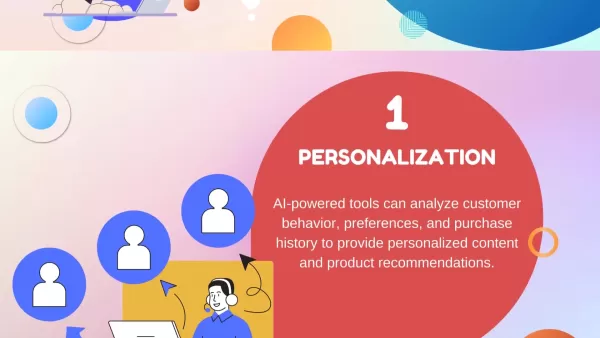
Sophisticated machine learning models process extensive datasets to identify individual consumer profiles, enabling marketers to develop precisely calibrated campaigns. This approach consistently demonstrates improved engagement metrics, conversion lift, and brand loyalty.
The Goal of AI Personalization:
AI personalization aims to create meaningful customer connections through contextually relevant content. By interpreting behavioral signals across channels, algorithms generate individualized messaging that drives both immediate conversions and lasting brand affinity. The result is measurable improvement across satisfaction and retention metrics.
Chatbots: Providing Instant Customer Support
Conversational AI interfaces simulate human dialog across digital platforms, handling inquiries through natural language understanding.
These intelligent assistants leverage NLP capabilities to resolve customer needs instantly while collecting valuable interaction data. Modern implementations handle everything from product queries to transaction support, becoming indispensable marketing assets.
The Goal of AI Chatbots:
AI chatbots optimize customer service operations by automating routine interactions while maintaining personalization. They redirect human resources to complex cases, creating operational efficiencies without compromising customer experience quality.
Predictive Analytics: Anticipating Consumer Behavior
Predictive modeling transforms historical data into forward-looking insights about purchase likelihood and engagement patterns.
By detecting subtle behavioral signals across channels, these analytical tools forecast customer actions with remarkable accuracy. Marketers leverage these insights to allocate resources effectively and time interventions perfectly.
The Goal of Predictive Analytics:
This technology anticipates consumer needs before they're explicitly expressed, enabling proactive campaign adjustments. The result is marketing that feels intuitively relevant rather than reactively targeted.
Content Creation: Automating and Optimizing Content
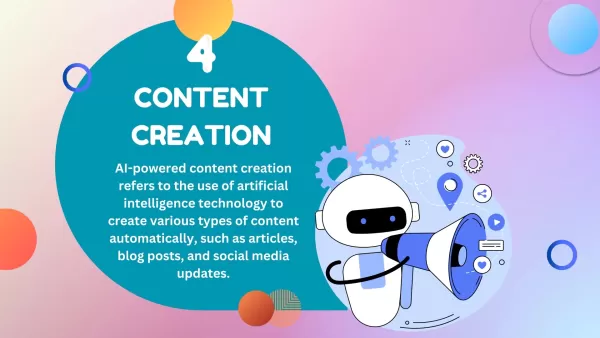
AI content tools revolutionize production workflows while maintaining brand voice consistency and SEO performance.
These solutions address the core challenge of scaling quality content output without proportional resource increases. From ideation to optimization, AI augments human creativity throughout the content lifecycle.
The Goal of AI Content Creation:
AI content generation focuses on producing material that resonates with specific audience segments while aligning with search visibility requirements. The technology enhances rather than replaces human creativity, serving as a collaborative ideation and optimization partner.
Voice Search: Transforming How Users Interact
The proliferation of voice assistants has fundamentally altered search behavior patterns, necessitating new optimization frameworks.
The Goal of Voice Search Optimization:
Voice search strategies prioritize natural language patterns and question-based content structures. Success requires understanding distinctive conversational search behaviors and intent signaling.
Ad Targeting: Delivering Relevant Advertisements
AI-driven ad placement systems analyze multidimensional datasets to serve hyper-relevant messaging with surgical precision.
The Goal of AI Ad Targeting:
Advanced targeting algorithms maximize ad relevance while minimizing wasted impressions. By continually optimizing placement strategies based on performance feedback, these systems steadily improve campaign efficiency.
Examples of AI in Action: Real-World Applications
Personalized Email Marketing
AI-powered email platforms dynamically assemble content blocks based on individual recipient profiles, dramatically improving open and click-through rates.
Dynamic Pricing Strategies
Machine learning models process competitor data, inventory levels, and demand signals to adjust pricing strategies in real-time.
Enhanced Customer Segmentation
AI identifies micro-segments based on nuanced behavioral patterns, enabling extraordinarily precise campaign targeting.
Leveraging AI for Digital Marketing Success: Practical Tips
Invest in AI-Powered Tools
Prioritize AI solutions that address your specific marketing challenges and integrate smoothly with existing tech stacks.
Train Your Team
Bridge the AI knowledge gap through structured training programs that demystify technology applications.
Start Small and Scale
Implement pilot projects to build organizational confidence before expanding AI adoption across functions.
Benefits and Drawbacks of AI in Digital Marketing
Pros
Precision targeting dramatically improves campaign performance
Automation liberates creative resources from repetitive tasks
Data insights enable truly customer-centric strategies
Optimization algorithms constantly improve efficiency
Personalization strengthens long-term customer relationships
Cons
Privacy regulations require careful compliance management
Implementation costs may create barriers to entry
Algorithmic decision-making requires human oversight
Data integrity directly impacts output quality
Talent acquisition presents ongoing challenges
Frequently Asked Questions
How does AI improve personalization in digital marketing?
AI creates multidimensional customer profiles that evolve with each interaction, enabling unprecedented personalization at scale across channels.
What are the benefits of using chatbots in digital marketing?
Conversational AI delivers always-available support while gathering actionable insights from natural customer interactions.
How does predictive analytics enhance marketing campaigns?
Behavioral forecasting models allow marketers to allocate resources precisely where they'll generate maximum impact.
Related Questions
What are some potential challenges of implementing AI in digital marketing?
Successful implementation requires addressing technical integration, change management, and ethical considerations simultaneously.
How is AI used in Search Engine Optimization (SEO)?
Search algorithms increasingly prioritize AI-optimized content that demonstrates genuine expertise and natural language proficiency.
Related article
 DeepMind CEO Hassabis: I sleep six hours a day, usually feel energetic around 1 a.m.
Fortune recently featured an interview with Demis Hassabis, CEO of Google DeepMind, revealing his unconventional approach to rest and productivity. Hassabis disclosed that he sleeps very little, structuring his waking hours into two distinct work blo
OpenAI, Anthropic Vie for Market Share Despite Revenue Shortfalls
Despite recent reports suggesting OpenAI missed revenue targets, creating pressure on tech stocks this Tuesday, private AI lab investors remain resilient. Seasoned backers have confirmed they will not reduce investment despite negative media coverage
California AV Compliance: A New Era of Tickets, Geofences, and 1M Miles
Guident operates an AuveTech shuttle in South Florida, managing a four-mile route in West Palm Beach and a one-mile route in Boca Raton using its remote monitoring technology. | Credit: GuidentCalifornia is redefining the regulatory landscape for dri
Related Special Topic Recommendations
Video creation
DeepMind CEO Hassabis: I sleep six hours a day, usually feel energetic around 1 a.m.
Fortune recently featured an interview with Demis Hassabis, CEO of Google DeepMind, revealing his unconventional approach to rest and productivity. Hassabis disclosed that he sleeps very little, structuring his waking hours into two distinct work blo
OpenAI, Anthropic Vie for Market Share Despite Revenue Shortfalls
Despite recent reports suggesting OpenAI missed revenue targets, creating pressure on tech stocks this Tuesday, private AI lab investors remain resilient. Seasoned backers have confirmed they will not reduce investment despite negative media coverage
California AV Compliance: A New Era of Tickets, Geofences, and 1M Miles
Guident operates an AuveTech shuttle in South Florida, managing a four-mile route in West Palm Beach and a one-mile route in Boca Raton using its remote monitoring technology. | Credit: GuidentCalifornia is redefining the regulatory landscape for dri
Related Special Topic Recommendations
Video creation
 AI Short-Form Video Hook Generators for Reels, Shorts, and Product Launch Campaigns
2026 Latest Best AI Short-Form Video Hook Generators for Reels Shorts and Product Launch Campaigns! XIX.AI curates top-rated powerful game-changing tools that deliver must-try results through real-world tests. This weekly updated page offers free vs paid comparison rankings to help you find the perfect solution for boosting content creativity and productivity. Explore now to Unlock your AI edge!
 11 tools
 xix.ai
writing
AI Article Outline Tools for Long Form Writing
xix.ai
writing
AI Article Outline Tools for Long Form Writing
2026 Latest Best Top-Rated AI Article Outline Tools for Long Form Writing! This curated collection features powerful, game-changing tools that deliver accurate, structured outlines with real-world tests to boost writing efficiency significantly. XIX.AI is part of this elite selection. Get a free vs paid comparison to help you choose the perfect tool. Explore now and Unlock your AI edge!
9 tools
xix.ai
chatbot
Best AI Roleplay Chat Apps for Language Practice, Interview Prep, and Daily Fluency
2026 Latest Best Top-rated AI Roleplay Chat Apps for Language Practice, Interview Prep, and Daily Fluency! XIX.AI curates a powerful game-changing collection that offers free vs paid comparison, real-world tests, and updated rankings weekly. These must-try tools help you boost writing skills, overcome fluency challenges, and improve communication efficiency across all daily scenarios. Explore now to discover your perfect tool for language growth!
10 tools
xix.ai
Music composition
AI Stem Separation Tools for Remix Production, Sampling Prep, and Karaoke Masters
2026 Latest Best Top-rated AI Stem Separation Tools Curated for Remix Production, Sampling Prep, and Karaoke Masters. These powerful game-changing tools offer real-world tests to deliver precise audio isolation, boosting productivity significantly. XIX.AI provides a weekly updated free vs paid comparison guide to help you find the must-try solution that suits your needs. Explore now to unlock your AI edge.
8 tools
xix.ai
Data Analysis
AI SQL Copilots for Revenue Dashboards, Funnel Analysis, and Product Metrics
2026 Latest Best AI SQL Copilots Ranked Top-Rated! XIX.AI curates a powerful game-changing collection for weekly updated real-world tests. These must-try tools help you generate accurate revenue dashboards, analyze sales funnels, and track product metrics swiftly, boosting productivity massively. Explore now to Discover your perfect tool for data-driven decision making! 238 characters
9 tools
xix.ai
Music composition
Best AI Melody Writing Tools for Song Drafts
2026 Latest Best Top-Rated AI Melody Writing Tools for Song Drafts! XIX.AI has curated a highly powerful game-changing collection that goes through rigorous real-world tests to deliver the best writing experience. You can find detailed free vs paid comparisons, accurate rankings, and must-try options designed to help you create stunning song drafts effortlessly and boost your creative productivity significantly. Explore now to discover your perfect tool!
8 tools
xix.ai

 Comments (1)
0/500
Comments (1)
0/500
![TerryHernández]()
Na ja, KI revolutioniert also das Marketing – wer hätte das gedacht? 🧐 Ehrlich gesagt, bin ich weniger von der Technik selbst beeindruckt als von der Frage, was das für Jobs bedeutet. Marketingteams werden kleiner, immer mehr Abläufe sind automatisiert. Spannend ist das schon, aber irgendwie auch beängstigend. Hoffentlich schafft KI auch neue, sinnvollere Aufgaben für Menschen und ersetzt sie nicht nur.
Artificial intelligence is transforming industries across the globe, with digital marketing standing at the forefront of this revolution. Businesses harnessing AI capabilities gain competitive advantages through data-driven insights, automated workflows, and hyper-personalized customer interactions. This exploration reveals how AI-powered strategies are elevating marketing effectiveness while optimizing resource allocation and audience targeting.
Key Points
AI delivers customized content experiences that deepen customer connections.
Intelligent chatbots offer real-time support while simplifying operational workflows.
Behavioral forecasting through predictive analytics sharpens campaign precision.
Automated content generation maintains quality at scale.
Voice search innovations redefine digital interactions.
Smart ad targeting maximizes campaign ROI through data-driven placements.
AI's Impact on Digital Marketing
Personalization: Tailoring Experiences with AI
AI-driven personalization crafts unique customer journeys by analyzing behavioral patterns, preferences, and historical interactions.
Sophisticated machine learning models process extensive datasets to identify individual consumer profiles, enabling marketers to develop precisely calibrated campaigns. This approach consistently demonstrates improved engagement metrics, conversion lift, and brand loyalty.
The Goal of AI Personalization:
AI personalization aims to create meaningful customer connections through contextually relevant content. By interpreting behavioral signals across channels, algorithms generate individualized messaging that drives both immediate conversions and lasting brand affinity. The result is measurable improvement across satisfaction and retention metrics.
Chatbots: Providing Instant Customer Support
Conversational AI interfaces simulate human dialog across digital platforms, handling inquiries through natural language understanding.
These intelligent assistants leverage NLP capabilities to resolve customer needs instantly while collecting valuable interaction data. Modern implementations handle everything from product queries to transaction support, becoming indispensable marketing assets.
The Goal of AI Chatbots:
AI chatbots optimize customer service operations by automating routine interactions while maintaining personalization. They redirect human resources to complex cases, creating operational efficiencies without compromising customer experience quality.
Predictive Analytics: Anticipating Consumer Behavior
Predictive modeling transforms historical data into forward-looking insights about purchase likelihood and engagement patterns.
By detecting subtle behavioral signals across channels, these analytical tools forecast customer actions with remarkable accuracy. Marketers leverage these insights to allocate resources effectively and time interventions perfectly.
The Goal of Predictive Analytics:
This technology anticipates consumer needs before they're explicitly expressed, enabling proactive campaign adjustments. The result is marketing that feels intuitively relevant rather than reactively targeted.
Content Creation: Automating and Optimizing Content
AI content tools revolutionize production workflows while maintaining brand voice consistency and SEO performance.
These solutions address the core challenge of scaling quality content output without proportional resource increases. From ideation to optimization, AI augments human creativity throughout the content lifecycle.
The Goal of AI Content Creation:
AI content generation focuses on producing material that resonates with specific audience segments while aligning with search visibility requirements. The technology enhances rather than replaces human creativity, serving as a collaborative ideation and optimization partner.
Voice Search: Transforming How Users Interact
The proliferation of voice assistants has fundamentally altered search behavior patterns, necessitating new optimization frameworks.
The Goal of Voice Search Optimization:
Voice search strategies prioritize natural language patterns and question-based content structures. Success requires understanding distinctive conversational search behaviors and intent signaling.
Ad Targeting: Delivering Relevant Advertisements
AI-driven ad placement systems analyze multidimensional datasets to serve hyper-relevant messaging with surgical precision.
The Goal of AI Ad Targeting:
Advanced targeting algorithms maximize ad relevance while minimizing wasted impressions. By continually optimizing placement strategies based on performance feedback, these systems steadily improve campaign efficiency.
Examples of AI in Action: Real-World Applications
Personalized Email Marketing
AI-powered email platforms dynamically assemble content blocks based on individual recipient profiles, dramatically improving open and click-through rates.
Dynamic Pricing Strategies
Machine learning models process competitor data, inventory levels, and demand signals to adjust pricing strategies in real-time.
Enhanced Customer Segmentation
AI identifies micro-segments based on nuanced behavioral patterns, enabling extraordinarily precise campaign targeting.
Leveraging AI for Digital Marketing Success: Practical Tips
Invest in AI-Powered Tools
Prioritize AI solutions that address your specific marketing challenges and integrate smoothly with existing tech stacks.
Train Your Team
Bridge the AI knowledge gap through structured training programs that demystify technology applications.
Start Small and Scale
Implement pilot projects to build organizational confidence before expanding AI adoption across functions.
Benefits and Drawbacks of AI in Digital Marketing
Pros
Precision targeting dramatically improves campaign performance
Automation liberates creative resources from repetitive tasks
Data insights enable truly customer-centric strategies
Optimization algorithms constantly improve efficiency
Personalization strengthens long-term customer relationships
Cons
Privacy regulations require careful compliance management
Implementation costs may create barriers to entry
Algorithmic decision-making requires human oversight
Data integrity directly impacts output quality
Talent acquisition presents ongoing challenges
Frequently Asked Questions
How does AI improve personalization in digital marketing?
AI creates multidimensional customer profiles that evolve with each interaction, enabling unprecedented personalization at scale across channels.
What are the benefits of using chatbots in digital marketing?
Conversational AI delivers always-available support while gathering actionable insights from natural customer interactions.
How does predictive analytics enhance marketing campaigns?
Behavioral forecasting models allow marketers to allocate resources precisely where they'll generate maximum impact.
Related Questions
What are some potential challenges of implementing AI in digital marketing?
Successful implementation requires addressing technical integration, change management, and ethical considerations simultaneously.
How is AI used in Search Engine Optimization (SEO)?
Search algorithms increasingly prioritize AI-optimized content that demonstrates genuine expertise and natural language proficiency.








 DeepMind CEO Hassabis: I sleep six hours a day, usually feel energetic around 1 a.m.
Fortune recently featured an interview with Demis Hassabis, CEO of Google DeepMind, revealing his unconventional approach to rest and productivity. Hassabis disclosed that he sleeps very little, structuring his waking hours into two distinct work blo
DeepMind CEO Hassabis: I sleep six hours a day, usually feel energetic around 1 a.m.
Fortune recently featured an interview with Demis Hassabis, CEO of Google DeepMind, revealing his unconventional approach to rest and productivity. Hassabis disclosed that he sleeps very little, structuring his waking hours into two distinct work blo
 OpenAI, Anthropic Vie for Market Share Despite Revenue Shortfalls
Despite recent reports suggesting OpenAI missed revenue targets, creating pressure on tech stocks this Tuesday, private AI lab investors remain resilient. Seasoned backers have confirmed they will not reduce investment despite negative media coverage
California AV Compliance: A New Era of Tickets, Geofences, and 1M Miles
Guident operates an AuveTech shuttle in South Florida, managing a four-mile route in West Palm Beach and a one-mile route in Boca Raton using its remote monitoring technology. | Credit: GuidentCalifornia is redefining the regulatory landscape for dri
OpenAI, Anthropic Vie for Market Share Despite Revenue Shortfalls
Despite recent reports suggesting OpenAI missed revenue targets, creating pressure on tech stocks this Tuesday, private AI lab investors remain resilient. Seasoned backers have confirmed they will not reduce investment despite negative media coverage
California AV Compliance: A New Era of Tickets, Geofences, and 1M Miles
Guident operates an AuveTech shuttle in South Florida, managing a four-mile route in West Palm Beach and a one-mile route in Boca Raton using its remote monitoring technology. | Credit: GuidentCalifornia is redefining the regulatory landscape for dri

2026 Latest Best AI Short-Form Video Hook Generators for Reels Shorts and Product Launch Campaigns! XIX.AI curates top-rated powerful game-changing tools that deliver must-try results through real-world tests. This weekly updated page offers free vs paid comparison rankings to help you find the perfect solution for boosting content creativity and productivity. Explore now to Unlock your AI edge!
11 tools
xix.ai

2026 Latest Best Top-Rated AI Article Outline Tools for Long Form Writing! This curated collection features powerful, game-changing tools that deliver accurate, structured outlines with real-world tests to boost writing efficiency significantly. XIX.AI is part of this elite selection. Get a free vs paid comparison to help you choose the perfect tool. Explore now and Unlock your AI edge!
9 tools
xix.ai

2026 Latest Best Top-rated AI Roleplay Chat Apps for Language Practice, Interview Prep, and Daily Fluency! XIX.AI curates a powerful game-changing collection that offers free vs paid comparison, real-world tests, and updated rankings weekly. These must-try tools help you boost writing skills, overcome fluency challenges, and improve communication efficiency across all daily scenarios. Explore now to discover your perfect tool for language growth!
10 tools
xix.ai

2026 Latest Best Top-rated AI Stem Separation Tools Curated for Remix Production, Sampling Prep, and Karaoke Masters. These powerful game-changing tools offer real-world tests to deliver precise audio isolation, boosting productivity significantly. XIX.AI provides a weekly updated free vs paid comparison guide to help you find the must-try solution that suits your needs. Explore now to unlock your AI edge.
8 tools
xix.ai

2026 Latest Best AI SQL Copilots Ranked Top-Rated! XIX.AI curates a powerful game-changing collection for weekly updated real-world tests. These must-try tools help you generate accurate revenue dashboards, analyze sales funnels, and track product metrics swiftly, boosting productivity massively. Explore now to Discover your perfect tool for data-driven decision making! 238 characters
9 tools
xix.ai

2026 Latest Best Top-Rated AI Melody Writing Tools for Song Drafts! XIX.AI has curated a highly powerful game-changing collection that goes through rigorous real-world tests to deliver the best writing experience. You can find detailed free vs paid comparisons, accurate rankings, and must-try options designed to help you create stunning song drafts effortlessly and boost your creative productivity significantly. Explore now to discover your perfect tool!
8 tools
xix.ai

Na ja, KI revolutioniert also das Marketing – wer hätte das gedacht? 🧐 Ehrlich gesagt, bin ich weniger von der Technik selbst beeindruckt als von der Frage, was das für Jobs bedeutet. Marketingteams werden kleiner, immer mehr Abläufe sind automatisiert. Spannend ist das schon, aber irgendwie auch beängstigend. Hoffentlich schafft KI auch neue, sinnvollere Aufgaben für Menschen und ersetzt sie nicht nur.












