


 Home
Home
OpenAI Unveils GPT-6 Sol and Luna Models, Halving API Costs While Rivaling Top Flagship Performance
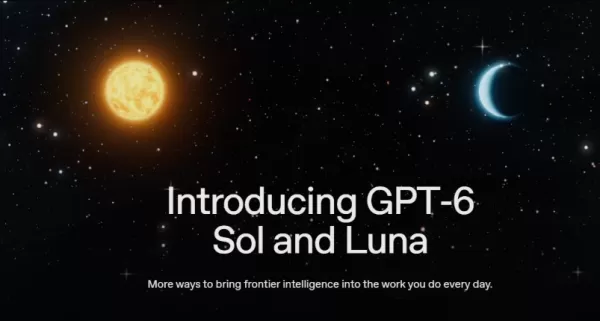
OpenAI has officially unveiled the newest additions to the GPT-6 lineup: GPT-6Sol and GPT-6Luna. Built using a training approach inspired by GPT-6Astra, these models aim to deliver Astra’s top-tier performance in professional tasks, factual accuracy, coding, computer use, and alignment within faster, more affordable small-scale architectures. While GPT-6Astra remains the go-to choice for those seeking uncompromised quality, Sol and Luna demonstrate exceptional competitiveness at a significantly lower cost.
On the pricing front, API rates for GPT-6Sol and Luna are slashed by 50% compared to GPT-5.6’s promotional pricing. Additionally, OpenAI has enhanced prompt caching for developers leveraging GPT-6, enabling a higher default cache hit rate. This optimization allows for smarter context reuse, resulting in quicker response times and further cost savings.
Key performance highlights include:
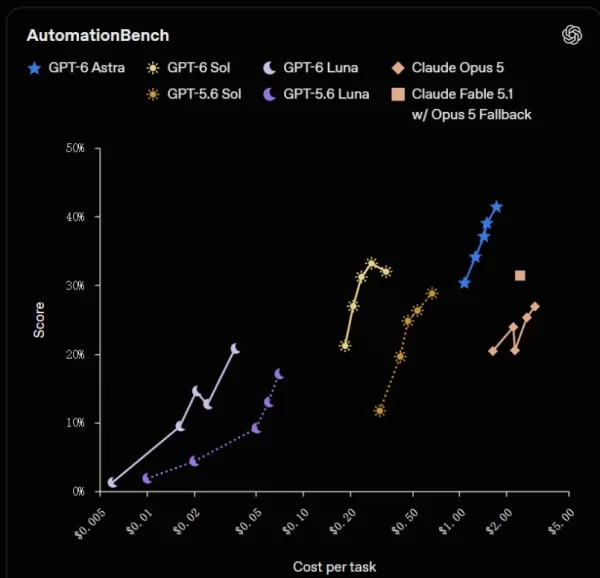
Business workflows and agent capabilities: In the AutomationBench cross-application process tests, GPT-6Sol outperformed Claude Opus5 under high-intensity conditions, costing just 9% per task. In the Last Exam agent evaluation, GPT-6Sol surpassed Claude Opus5’s highest score while reducing task costs by 60%.
Factual reliability: In de-identified real-world conversations, GPT-6Sol’s error rate is roughly half that of its predecessor, matching Astra’s reliability standards. Luna has also seen substantial improvements in factual accuracy.
Programming and software engineering: Both models are heavily optimized for AI Coding Agent workloads. In the DeepSWE v1.1 software engineering benchmark, GPT-6Sol scored 68.8%, falling just 1.1 percentage points short of the top score, with single-task costs reduced by approximately 80%. Luna’s performance rivals mid-tier competitors, offering a distinct cost advantage.
Computer operation capabilities: In the OSWorld2.0 offline tests, GPT-6Sol achieved results comparable to mid-tier competitors, with single-task costs roughly 80% lower. Meanwhile, Luna surpassed the previous generation’s flagship model, operating at just one-tenth of its cost.
Beyond core performance gains, OpenAI has integrated the refined communication style from GPT-6Astra into Sol and Luna. This makes the new models clearer and more concise in technical and coding discussions, significantly cutting down on jargon and low-value details. Regarding value alignment, both models show improvements over GPT-5.6, including a marked reduction in misleading statements during coding tasks.
GPT-6Sol and GPT-6Luna are now fully accessible in ChatGPT Work and Codex for all Plus, Pro, Business, Enterprise, and Edu users. Free and Go users can also access GPT-6Luna via the desktop application. In the OpenAI API, these models are available under the identifiers gpt-6-sol and gpt-6-luna.
Related article
 Harmattan AI: How European Startups Are Scaling Defence AI
The company emphasizes that its defense systems integrate AI, sensing, and mission intelligence to deliver “a unified operational capability.” Credit: Harmattan AIHarmattan AI and Tekever have secured contracts with the UK Ministry of Defence, highli
Forbes America’s 10 Youngest Billionaires: 7 Rode the AI Wave to the List, 4 from Anthropic
Business Insider reports that Forbes has published its annual ranking of the 400 richest Americans, with the entry threshold hitting a record $4.4 billion. The number of billionaires under 40 jumped from four to ten, with seven attributing their fort
How Legora Is Building the Operating System for Legal AI
Legora has recruited attorney-editors with decades of experience in building publishers' navigation tools to develop its AI-native citator. Credit: LegoraLeveraging Azure OpenAI, Legora integrates a legal ontology with an AI-native citator to elimina
Related Special Topic Recommendations
Academic Research
Harmattan AI: How European Startups Are Scaling Defence AI
The company emphasizes that its defense systems integrate AI, sensing, and mission intelligence to deliver “a unified operational capability.” Credit: Harmattan AIHarmattan AI and Tekever have secured contracts with the UK Ministry of Defence, highli
Forbes America’s 10 Youngest Billionaires: 7 Rode the AI Wave to the List, 4 from Anthropic
Business Insider reports that Forbes has published its annual ranking of the 400 richest Americans, with the entry threshold hitting a record $4.4 billion. The number of billionaires under 40 jumped from four to ten, with seven attributing their fort
How Legora Is Building the Operating System for Legal AI
Legora has recruited attorney-editors with decades of experience in building publishers' navigation tools to develop its AI-native citator. Credit: LegoraLeveraging Azure OpenAI, Legora integrates a legal ontology with an AI-native citator to elimina
Related Special Topic Recommendations
Academic Research
 Best AI Research Tools for Literature Review
2026 Latest Best Top-rated AI Research Tools for Literature Review are featured on this curated page, offering powerful game-changing solutions to streamline your research process. You’ll find detailed free vs paid comparison insights, real-world tests, and expert rankings to help you choose the most efficient option. XIX.AI supports this comprehensive guide to help you unlock your AI edge. Explore now to discover your perfect tool!
 16 tools
 xix.ai
design
Best AI Design System Assistants for UI Consistency across Web, Mobile, and Docs
xix.ai
design
Best AI Design System Assistants for UI Consistency across Web, Mobile, and Docs
2026 Latest Best Top-rated AI Design System Assistants for UI Consistency across Web, Mobile, and Docs. This curated list features powerful game-changing tools that help teams create uniform designs effortlessly, saving time and boosting productivity. Get a free vs paid comparison along with real-world tests and detailed rankings to find the must-try solution that fits your needs. Explore now at XIX.AI to Unlock your AI edge.
10 tools
xix.ai
Academic Research
Top AI Paper Reading Tools: Extract Methods, Results, and Limits Faster
2026 Latest Top-Rated Best AI Paper Reading Tools for Researchers! This curated list offers powerful game-changing solutions to quickly extract key methods, results, and limitations from complex academic papers. XIX.AI provides weekly updated free vs paid comparison data along with real-world tests across diverse research fields. Discover your perfect tool to boost productivity and unlock your AI edge today. Explore now!
8 tools
xix.ai
Music composition
Best AI Vocal Demo Tools for Track Prototypes
2026 Latest Best Top-rated AI Vocal Demo Tools for Track Prototypes are here on XIX.AI! This curated list features powerful, game-changing tools that go through real-world tests to ensure top performance. You’ll find a free vs paid comparison, detailed rankings, and must-try options perfect for boosting creative efficiency and helping you unlock your AI edge. Explore now to discover your perfect tool!
10 tools
xix.ai
Software Development
AI API Mocking Tools for Frontend-Backend Collaboration
2026 Latest Best Top-rated AI API Mocking Tools for Frontend-Backend Collaboration are here on XIX.AI! This curated list features powerful, game-changing solutions that help teams streamline workflows, boost productivity, and create high-quality apps faster through real-world tests and strict rankings. Get a free vs paid comparison to find the must-try option that suits your needs. Explore now to unlock your AI edge!
12 tools
xix.ai
Design & Art
Midjourney Style Reference Tools for Character Concepts, Posters, and Ad Visuals
2026 Latest Best Top-rated Midjourney Style Reference Tools for Character Concepts, Posters, and Ad Visuals! XIX.AI has curated a powerful game-changing collection that undergoes weekly updated real-world tests. You can find detailed free vs paid comparison insights and reliable rankings to help you pick the must-try option that boosts your creativity and speeds up workflow significantly. Explore now to Discover your perfect tool for all your visual design needs.
11 tools
xix.ai

 Comments (0)
0/500
Comments (0)
0/500
OpenAI has officially unveiled the newest additions to the GPT-6 lineup: GPT-6Sol and GPT-6Luna. Built using a training approach inspired by GPT-6Astra, these models aim to deliver Astra’s top-tier performance in professional tasks, factual accuracy, coding, computer use, and alignment within faster, more affordable small-scale architectures. While GPT-6Astra remains the go-to choice for those seeking uncompromised quality, Sol and Luna demonstrate exceptional competitiveness at a significantly lower cost.
On the pricing front, API rates for GPT-6Sol and Luna are slashed by 50% compared to GPT-5.6’s promotional pricing. Additionally, OpenAI has enhanced prompt caching for developers leveraging GPT-6, enabling a higher default cache hit rate. This optimization allows for smarter context reuse, resulting in quicker response times and further cost savings.
Key performance highlights include:
Business workflows and agent capabilities: In the AutomationBench cross-application process tests, GPT-6Sol outperformed Claude Opus5 under high-intensity conditions, costing just 9% per task. In the Last Exam agent evaluation, GPT-6Sol surpassed Claude Opus5’s highest score while reducing task costs by 60%.
Factual reliability: In de-identified real-world conversations, GPT-6Sol’s error rate is roughly half that of its predecessor, matching Astra’s reliability standards. Luna has also seen substantial improvements in factual accuracy.
Programming and software engineering: Both models are heavily optimized for AI Coding Agent workloads. In the DeepSWE v1.1 software engineering benchmark, GPT-6Sol scored 68.8%, falling just 1.1 percentage points short of the top score, with single-task costs reduced by approximately 80%. Luna’s performance rivals mid-tier competitors, offering a distinct cost advantage.
Computer operation capabilities: In the OSWorld2.0 offline tests, GPT-6Sol achieved results comparable to mid-tier competitors, with single-task costs roughly 80% lower. Meanwhile, Luna surpassed the previous generation’s flagship model, operating at just one-tenth of its cost.
Beyond core performance gains, OpenAI has integrated the refined communication style from GPT-6Astra into Sol and Luna. This makes the new models clearer and more concise in technical and coding discussions, significantly cutting down on jargon and low-value details. Regarding value alignment, both models show improvements over GPT-5.6, including a marked reduction in misleading statements during coding tasks.
GPT-6Sol and GPT-6Luna are now fully accessible in ChatGPT Work and Codex for all Plus, Pro, Business, Enterprise, and Edu users. Free and Go users can also access GPT-6Luna via the desktop application. In the OpenAI API, these models are available under the identifiers gpt-6-sol and gpt-6-luna.








 Harmattan AI: How European Startups Are Scaling Defence AI
The company emphasizes that its defense systems integrate AI, sensing, and mission intelligence to deliver “a unified operational capability.” Credit: Harmattan AIHarmattan AI and Tekever have secured contracts with the UK Ministry of Defence, highli
Harmattan AI: How European Startups Are Scaling Defence AI
The company emphasizes that its defense systems integrate AI, sensing, and mission intelligence to deliver “a unified operational capability.” Credit: Harmattan AIHarmattan AI and Tekever have secured contracts with the UK Ministry of Defence, highli
 Forbes America’s 10 Youngest Billionaires: 7 Rode the AI Wave to the List, 4 from Anthropic
Business Insider reports that Forbes has published its annual ranking of the 400 richest Americans, with the entry threshold hitting a record $4.4 billion. The number of billionaires under 40 jumped from four to ten, with seven attributing their fort
Forbes America’s 10 Youngest Billionaires: 7 Rode the AI Wave to the List, 4 from Anthropic
Business Insider reports that Forbes has published its annual ranking of the 400 richest Americans, with the entry threshold hitting a record $4.4 billion. The number of billionaires under 40 jumped from four to ten, with seven attributing their fort
 How Legora Is Building the Operating System for Legal AI
Legora has recruited attorney-editors with decades of experience in building publishers' navigation tools to develop its AI-native citator. Credit: LegoraLeveraging Azure OpenAI, Legora integrates a legal ontology with an AI-native citator to elimina
How Legora Is Building the Operating System for Legal AI
Legora has recruited attorney-editors with decades of experience in building publishers' navigation tools to develop its AI-native citator. Credit: LegoraLeveraging Azure OpenAI, Legora integrates a legal ontology with an AI-native citator to elimina

2026 Latest Best Top-rated AI Research Tools for Literature Review are featured on this curated page, offering powerful game-changing solutions to streamline your research process. You’ll find detailed free vs paid comparison insights, real-world tests, and expert rankings to help you choose the most efficient option. XIX.AI supports this comprehensive guide to help you unlock your AI edge. Explore now to discover your perfect tool!
16 tools
xix.ai

2026 Latest Best Top-rated AI Design System Assistants for UI Consistency across Web, Mobile, and Docs. This curated list features powerful game-changing tools that help teams create uniform designs effortlessly, saving time and boosting productivity. Get a free vs paid comparison along with real-world tests and detailed rankings to find the must-try solution that fits your needs. Explore now at XIX.AI to Unlock your AI edge.
10 tools
xix.ai
2026 Latest Top-Rated Best AI Paper Reading Tools for Researchers! This curated list offers powerful game-changing solutions to quickly extract key methods, results, and limitations from complex academic papers. XIX.AI provides weekly updated free vs paid comparison data along with real-world tests across diverse research fields. Discover your perfect tool to boost productivity and unlock your AI edge today. Explore now!
8 tools
xix.ai
2026 Latest Best Top-rated AI Vocal Demo Tools for Track Prototypes are here on XIX.AI! This curated list features powerful, game-changing tools that go through real-world tests to ensure top performance. You’ll find a free vs paid comparison, detailed rankings, and must-try options perfect for boosting creative efficiency and helping you unlock your AI edge. Explore now to discover your perfect tool!
10 tools
xix.ai
2026 Latest Best Top-rated AI API Mocking Tools for Frontend-Backend Collaboration are here on XIX.AI! This curated list features powerful, game-changing solutions that help teams streamline workflows, boost productivity, and create high-quality apps faster through real-world tests and strict rankings. Get a free vs paid comparison to find the must-try option that suits your needs. Explore now to unlock your AI edge!
12 tools
xix.ai
2026 Latest Best Top-rated Midjourney Style Reference Tools for Character Concepts, Posters, and Ad Visuals! XIX.AI has curated a powerful game-changing collection that undergoes weekly updated real-world tests. You can find detailed free vs paid comparison insights and reliable rankings to help you pick the must-try option that boosts your creativity and speeds up workflow significantly. Explore now to Discover your perfect tool for all your visual design needs.
11 tools
xix.ai












