


 Home
HomeOpenAI Unveils GPT-5.4 Pro and Thinking Editions

On Thursday, OpenAI introduced GPT-5.4, a new foundation model described as "our most capable and efficient frontier model for professional work." Alongside the standard version, GPT-5.4 is offered as a reasoning-focused variant (GPT-5.4 Thinking) and a performance-optimized edition (GPT-5.4 Pro).
The API version of the model will support context windows of up to 1 million tokens, marking the largest context capacity OpenAI has ever offered.
OpenAI also highlighted enhanced token efficiency, noting that GPT-5.4 can solve identical problems using significantly fewer tokens than its predecessor.
The new model delivers substantially improved benchmark results, achieving record scores on the computer-use benchmarks OSWorld-Verified and WebArena Verified. It also set a new record with an 83% score on OpenAI's GDPval test for knowledge-work tasks.
According to a statement from Mercor CEO Brendan Foody, GPT-5.4 leads on Mercor's APEX-Agents benchmark, which evaluates professional skills in law and finance.
"[GPT-5.4] excels at producing long-horizon deliverables like slide decks, financial models, and legal analysis," Foody stated, "delivering top-tier performance while operating faster and at a lower cost than competing frontier models."
GPT-5.4 continues OpenAI's work to reduce hallucinations and factual inaccuracies. The company reports the new model is 33% less likely to make errors in individual claims compared to GPT-5.2, with overall responses 18% less likely to contain mistakes.
As part of the launch, OpenAI redesigned how the GPT-5.4 API handles tool calling, introducing a new system named Tool Search. Previously, system prompts had to define all available tools upfront—a process that consumed considerable tokens as tool libraries expanded. The new system lets models retrieve tool definitions on demand, making requests faster and more cost-effective in environments with many tools.
OpenAI has also added a new safety evaluation to assess its models' chain-of-thought—the running commentary that reveals the model's reasoning during multi-step tasks. AI safety researchers have long expressed concern that reasoning models might misrepresent their chain-of-thought, and testing confirms this can occur under certain conditions.
OpenAI's new evaluation indicates that deception is less probable in the Thinking version of GPT-5.4, "suggesting the model lacks the capability to conceal its reasoning and that CoT monitoring remains an effective safety tool."
Related article
 PHP Armageddon: OpenAI, Google’s Wiz uncover ancient holes, sparking internet panic
The U.S. National Security Agency issued a critical alert on Wednesday regarding two severe vulnerabilities in PHP, for which patches have already been released by the PHP Foundation.As a server-side scripting language, PHP powers approximately 70% o
Google AI Overviews Gain Ground in Search Results
According to Similarweb’s 2026 Generative AI Landscape report, Google’s AI-generated summaries appeared in 43% of US searches, a significant rise from 15% recorded a year prior.While AI Overviews present generated summaries within standard search res
OpenAI launches GPT-5.5 Instant as ChatGPT’s new default model
OpenAI launched GPT-5.5 Instant on Monday, replacing GPT-5.3 Instant as the default ChatGPT model. The company states that this update minimizes hallucinations in high-stakes fields like law, medicine, and finance, while preserving the fast response
Related Special Topic Recommendations
Design & Art
PHP Armageddon: OpenAI, Google’s Wiz uncover ancient holes, sparking internet panic
The U.S. National Security Agency issued a critical alert on Wednesday regarding two severe vulnerabilities in PHP, for which patches have already been released by the PHP Foundation.As a server-side scripting language, PHP powers approximately 70% o
Google AI Overviews Gain Ground in Search Results
According to Similarweb’s 2026 Generative AI Landscape report, Google’s AI-generated summaries appeared in 43% of US searches, a significant rise from 15% recorded a year prior.While AI Overviews present generated summaries within standard search res
OpenAI launches GPT-5.5 Instant as ChatGPT’s new default model
OpenAI launched GPT-5.5 Instant on Monday, replacing GPT-5.3 Instant as the default ChatGPT model. The company states that this update minimizes hallucinations in high-stakes fields like law, medicine, and finance, while preserving the fast response
Related Special Topic Recommendations
Design & Art
 Top AI Illustration Tools: Create Editorial Scenes and Cover Art Faster
2026 Latest Top-rated AI Illustration Tools: Our curated list features the best powerfully designed tools for creating stunning editorial scenes and eye-catching cover art quickly. Each option has gone through rigorous real-world tests, offering a free vs paid comparison to help you find the perfect match for your workflow. Try these must-try solutions today to unlock your AI edge and boost your creative productivity. Explore now at XIX.AI.
 10 tools
 xix.ai
Education and Learning
Top AI Tutors for Exam Prep: Practice Math, Science, and English
xix.ai
Education and Learning
Top AI Tutors for Exam Prep: Practice Math, Science, and English
2026 Latest Top-Rated Best AI Tutors for Exam Prep are here on XIX.AI! Our curated list features powerful game-changing tools that offer free vs paid comparison, real-world tests, and weekly updated rankings. They help boost your writing efficiency, simplify complex topic learning, and unlock your academic potential. Explore now to Discover your perfect exam prep tool and Start creating today to Unlock your AI edge!
10 tools
xix.ai
Finance
AI Budget Planning Tools for Personal Money Management
2026 Latest Best Top-Rated AI Budget Planning Tools for Personal Money Management are here on XIX.AI! This curated collection features powerful, game-changing solutions that help you conduct real-world tests, understand spending habits, and create personalized plans to boost productivity. Enjoy a free vs paid comparison along with detailed rankings. Must-try tools designed to simplify money management and unlock your AI edge. Explore now!
11 tools
xix.ai
Health & Wellness
AI Sleep Tracking Assistants: Improve Recovery with Better Bedtime Habits
2026 Latest Best Top-Rated AI Sleep Tracking Assistants curated for ultimate recovery. This fully updated weekly guide features powerful tools that deliver real-world tests, free vs paid comparison, and detailed rankings to help you find the must-try solution that boosts sleep quality and supports better bedtime habits. Explore now at XIX.AI to Unlock your AI edge.
10 tools
xix.ai
Data Analysis
AI SQL Copilots for Product and Revenue Analytics
2026 Latest Best Top-Rated AI SQL Copilots for Product and Revenue Analytics! XIX.AI has curated a powerful, game-changing collection of must-try tools that undergo real-world tests through weekly updated rankings. These tools help users boost productivity significantly by accelerating data analysis, streamlining complex queries, and generating accurate insights to drive smarter business decisions. Explore now to Discover your perfect tool for unlocking your AI edge!
14 tools
xix.ai
Education and Learning
Best AI Homework Helpers That Teach: Learn Concepts, Not Just Answers
2026 Latest Best Top-Rated AI Homework Helpers That Teach Core Concepts Not Just Answers Powerful Tools for Students Must-Try Curated List Weekly Updated Free vs Paid Comparison Real-World Tests Accurate Rankings to Help You Unlock Your Full Learning Potential Explore now to Discover your perfect tool for smarter studying.
10 tools
xix.ai

 Comments (0)
0/500
Comments (0)
0/500
On Thursday, OpenAI introduced GPT-5.4, a new foundation model described as "our most capable and efficient frontier model for professional work." Alongside the standard version, GPT-5.4 is offered as a reasoning-focused variant (GPT-5.4 Thinking) and a performance-optimized edition (GPT-5.4 Pro).
The API version of the model will support context windows of up to 1 million tokens, marking the largest context capacity OpenAI has ever offered.
OpenAI also highlighted enhanced token efficiency, noting that GPT-5.4 can solve identical problems using significantly fewer tokens than its predecessor.
The new model delivers substantially improved benchmark results, achieving record scores on the computer-use benchmarks OSWorld-Verified and WebArena Verified. It also set a new record with an 83% score on OpenAI's GDPval test for knowledge-work tasks.
According to a statement from Mercor CEO Brendan Foody, GPT-5.4 leads on Mercor's APEX-Agents benchmark, which evaluates professional skills in law and finance.
"[GPT-5.4] excels at producing long-horizon deliverables like slide decks, financial models, and legal analysis," Foody stated, "delivering top-tier performance while operating faster and at a lower cost than competing frontier models."
GPT-5.4 continues OpenAI's work to reduce hallucinations and factual inaccuracies. The company reports the new model is 33% less likely to make errors in individual claims compared to GPT-5.2, with overall responses 18% less likely to contain mistakes.
As part of the launch, OpenAI redesigned how the GPT-5.4 API handles tool calling, introducing a new system named Tool Search. Previously, system prompts had to define all available tools upfront—a process that consumed considerable tokens as tool libraries expanded. The new system lets models retrieve tool definitions on demand, making requests faster and more cost-effective in environments with many tools.
OpenAI has also added a new safety evaluation to assess its models' chain-of-thought—the running commentary that reveals the model's reasoning during multi-step tasks. AI safety researchers have long expressed concern that reasoning models might misrepresent their chain-of-thought, and testing confirms this can occur under certain conditions.
OpenAI's new evaluation indicates that deception is less probable in the Thinking version of GPT-5.4, "suggesting the model lacks the capability to conceal its reasoning and that CoT monitoring remains an effective safety tool."








 PHP Armageddon: OpenAI, Google’s Wiz uncover ancient holes, sparking internet panic
The U.S. National Security Agency issued a critical alert on Wednesday regarding two severe vulnerabilities in PHP, for which patches have already been released by the PHP Foundation.As a server-side scripting language, PHP powers approximately 70% o
PHP Armageddon: OpenAI, Google’s Wiz uncover ancient holes, sparking internet panic
The U.S. National Security Agency issued a critical alert on Wednesday regarding two severe vulnerabilities in PHP, for which patches have already been released by the PHP Foundation.As a server-side scripting language, PHP powers approximately 70% o
 Google AI Overviews Gain Ground in Search Results
According to Similarweb’s 2026 Generative AI Landscape report, Google’s AI-generated summaries appeared in 43% of US searches, a significant rise from 15% recorded a year prior.While AI Overviews present generated summaries within standard search res
Google AI Overviews Gain Ground in Search Results
According to Similarweb’s 2026 Generative AI Landscape report, Google’s AI-generated summaries appeared in 43% of US searches, a significant rise from 15% recorded a year prior.While AI Overviews present generated summaries within standard search res
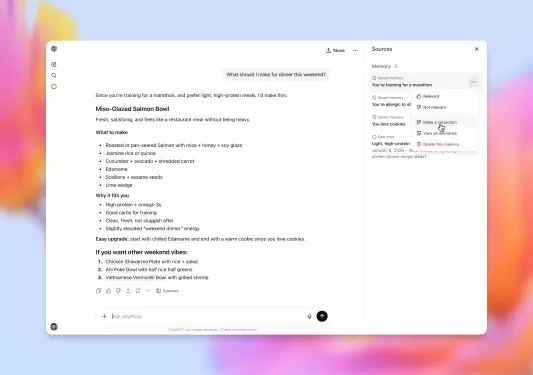 OpenAI launches GPT-5.5 Instant as ChatGPT’s new default model
OpenAI launched GPT-5.5 Instant on Monday, replacing GPT-5.3 Instant as the default ChatGPT model. The company states that this update minimizes hallucinations in high-stakes fields like law, medicine, and finance, while preserving the fast response
OpenAI launches GPT-5.5 Instant as ChatGPT’s new default model
OpenAI launched GPT-5.5 Instant on Monday, replacing GPT-5.3 Instant as the default ChatGPT model. The company states that this update minimizes hallucinations in high-stakes fields like law, medicine, and finance, while preserving the fast response

2026 Latest Top-rated AI Illustration Tools: Our curated list features the best powerfully designed tools for creating stunning editorial scenes and eye-catching cover art quickly. Each option has gone through rigorous real-world tests, offering a free vs paid comparison to help you find the perfect match for your workflow. Try these must-try solutions today to unlock your AI edge and boost your creative productivity. Explore now at XIX.AI.
10 tools
xix.ai

2026 Latest Top-Rated Best AI Tutors for Exam Prep are here on XIX.AI! Our curated list features powerful game-changing tools that offer free vs paid comparison, real-world tests, and weekly updated rankings. They help boost your writing efficiency, simplify complex topic learning, and unlock your academic potential. Explore now to Discover your perfect exam prep tool and Start creating today to Unlock your AI edge!
10 tools
xix.ai

2026 Latest Best Top-Rated AI Budget Planning Tools for Personal Money Management are here on XIX.AI! This curated collection features powerful, game-changing solutions that help you conduct real-world tests, understand spending habits, and create personalized plans to boost productivity. Enjoy a free vs paid comparison along with detailed rankings. Must-try tools designed to simplify money management and unlock your AI edge. Explore now!
11 tools
xix.ai

2026 Latest Best Top-Rated AI Sleep Tracking Assistants curated for ultimate recovery. This fully updated weekly guide features powerful tools that deliver real-world tests, free vs paid comparison, and detailed rankings to help you find the must-try solution that boosts sleep quality and supports better bedtime habits. Explore now at XIX.AI to Unlock your AI edge.
10 tools
xix.ai

2026 Latest Best Top-Rated AI SQL Copilots for Product and Revenue Analytics! XIX.AI has curated a powerful, game-changing collection of must-try tools that undergo real-world tests through weekly updated rankings. These tools help users boost productivity significantly by accelerating data analysis, streamlining complex queries, and generating accurate insights to drive smarter business decisions. Explore now to Discover your perfect tool for unlocking your AI edge!
14 tools
xix.ai

2026 Latest Best Top-Rated AI Homework Helpers That Teach Core Concepts Not Just Answers Powerful Tools for Students Must-Try Curated List Weekly Updated Free vs Paid Comparison Real-World Tests Accurate Rankings to Help You Unlock Your Full Learning Potential Explore now to Discover your perfect tool for smarter studying.
10 tools
xix.ai












