


 Home
HomeOpenAI Rolls Out GPT-5.5-Cyber Vulnerability Patch, Advances Automation
In the quiet battleground of cybersecurity, AI’s role is shifting. On June 23, OpenAI upgraded its “Daybreak” cybersecurity initiative, unveiling a new AI model tailored for security researchers and defenders: GPT-5.5-Cyber. This release marks that AI now not only has the sharp ability to “find vulnerabilities” but also the practical capability to “fix them instantly.”
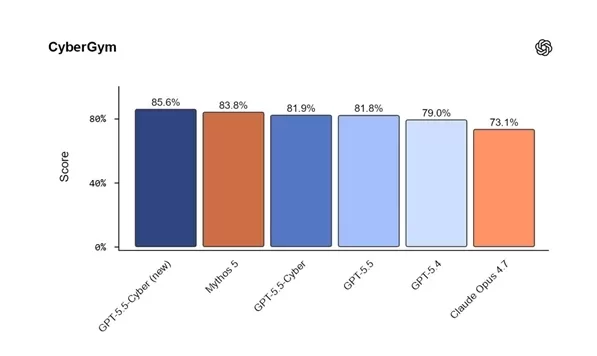
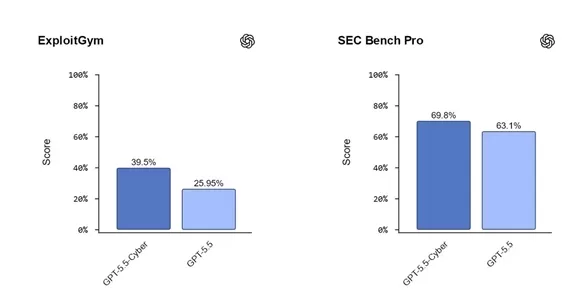
Based on the latest technical benchmarks, GPT-5.5-Cyber outperformed in several key areas. In the CyberGym test for vulnerability detection, it scored 85.6%, beating Claude Mythos5 (83.8%) and the standard GPT-5.5 (81.8%), helping OpenAI regain the lead in this domain. Moreover, in the ExploitGym test, which evaluates converting known vulnerabilities into exploit code, and the SEC-Bench Pro test for long-chain vulnerability discovery, its performance significantly exceeded the base model.
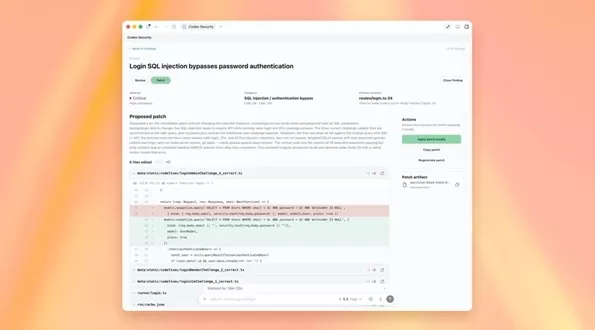
OpenAI developed this model to address the current “lopsided” nature of security tools: many AI solutions can detect threats but then just report them, without the ability to assess or actually fix issues. GPT-5.5-Cyber bridges that gap. It analyzes code at a deep level, accurately reconstructing attack paths and autonomously generating security patches for human review. By feeding these results directly into existing vulnerability management systems, organizations can significantly shorten the time from alert to remediation.
This model’s development is grounded in extensive real-world data. Since the launch of the Codex Security tool in March of this year, it has processed over 30,000 code repositories and audited more than 300 million code submissions. According to statistics, the system identified and helped fix 70,000 vulnerabilities, while automatically handling over 500,000 security reports.
Related article
 Tencent Accelerates AI Push With Doubled-Size Hunyuan Hy4, Morgan Stanley Lifts Target to HKD 550
Tencent has officially unveiled the preview of HuanYuan Hy4, accelerating its timeline ahead of Morgan Stanley’s September forecast and fulfilling the company’s Q2 earnings commitment to launch the model within the year. Since appointing Yao Shunyu a
Pearson’s Dave Treat: AI Should Guide Learning, Not Cheat
Pearson’s Chief Technology Officer, Dave TreatOn academic integrity, AI adoption, and the critical skills that matter as agentic AI transforms educationDave Treat joined Pearson nearly two years ago as Chief Technology Officer, later assuming the rol
OpenAI Launches GPT-5.6-Cyber, Boosting Zero-Day Detection with AI Automation
OpenAI has expanded its Daybreak cybersecurity initiative, introducing a two-tier access system and launching GPT-5.6-Cyber, a model purpose-built for security operations. This move addresses the growing reality that threat actors are leveraging AI t
Related Special Topic Recommendations
code
Tencent Accelerates AI Push With Doubled-Size Hunyuan Hy4, Morgan Stanley Lifts Target to HKD 550
Tencent has officially unveiled the preview of HuanYuan Hy4, accelerating its timeline ahead of Morgan Stanley’s September forecast and fulfilling the company’s Q2 earnings commitment to launch the model within the year. Since appointing Yao Shunyu a
Pearson’s Dave Treat: AI Should Guide Learning, Not Cheat
Pearson’s Chief Technology Officer, Dave TreatOn academic integrity, AI adoption, and the critical skills that matter as agentic AI transforms educationDave Treat joined Pearson nearly two years ago as Chief Technology Officer, later assuming the rol
OpenAI Launches GPT-5.6-Cyber, Boosting Zero-Day Detection with AI Automation
OpenAI has expanded its Daybreak cybersecurity initiative, introducing a two-tier access system and launching GPT-5.6-Cyber, a model purpose-built for security operations. This move addresses the growing reality that threat actors are leveraging AI t
Related Special Topic Recommendations
code
 Best AI Coding Chatbots: Debug Python, JS, and SQL in One Place
2026 Latest Best Top-Rated AI Coding Chatbots Curated for Developers! Experience powerful game-changing tools that help you debug Python, JS, and SQL issues quickly. Get a free vs paid comparison along with real-world tests and detailed rankings to find the perfect fit for boosting your coding productivity. Try XIX.AI today to unlock your AI edge! Explore now.
 12 tools
 xix.ai
Prompt
AI Prompt Versioning Platforms for Reusable Claude and ChatGPT Playbooks
xix.ai
Prompt
AI Prompt Versioning Platforms for Reusable Claude and ChatGPT Playbooks
2026 Latest Best Top-rated AI Prompt Versioning Platforms for Reusable Playbooks are here on XIX.AI! Our curated list includes powerful game-changing tools that help you keep track of all prompts, test variations efficiently, and boost productivity across writing, content creation, and more. Get a free vs paid comparison along with real-world tests and updated rankings weekly. Explore now to discover your perfect tool for staying ahead in AI tasks!
9 tools
xix.ai
writing
Best AI Writing Assistants for Long Articles: Outline and Draft Faster
2026 Latest Best AI Writing Assistants for Long Articles: Outline and Draft Faster. XIX.AI curates the top-rated, must-try tools that offer powerful, game-changing support to boost writing efficiency significantly. You’ll find detailed free vs paid comparison, real-world tests, and updated rankings weekly. Explore now to Discover your perfect tool and Start creating today to Unlock your AI edge.
8 tools
xix.ai
Education and Learning
ChatGPT Study Tools for Exam Revision, Flashcards, and Homework Explanations
2026 Latest Best ChatGPT Study Tools for Exam Revision, Flashcards, and Homework Explanations! XIX.AI has curated a top-rated list of powerful game-changing tools designed to boost your productivity. These must-try solutions offer free vs paid comparison, real-world tests, and detailed rankings to help you find the perfect option for efficient exam preparation and homework support. Explore now to unlock your AI edge!
10 tools
xix.ai
Education and Learning
AI Study Planner Tools for Exam Preparation
2026 Latest Best Top-Rated AI Study Planner Tools for Exam Preparation are here on XIX.AI! This curated collection features powerful, game-changing tools that help you streamline your review process, boost focus, and create personalized study schedules. We conduct real-world tests to determine the top options, offering a free vs paid comparison along with weekly updated rankings. Must-try solutions designed to maximize your productivity and help you ace every exam. Explore now to find your perfect tool!
14 tools
xix.ai
SEO
Best AI Keyword Gap Tools for Organic Growth
2026 Latest Best Top-rated AI Keyword Gap Tools for Organic Growth! XIX.AI has carefully curated a powerful, game-changing collection of the best tools available, featuring weekly updated rankings and real-world tests. You can find a detailed free vs paid comparison to help you choose the perfect option that boosts your content creation efficiency and unlocks your AI edge. Explore now!
8 tools
xix.ai

 Comments (1)
0/500
Comments (1)
0/500
![NicholasAdams]()
GPT-5.5-Cyberの登場か。セキュリティ分野でのAI活用は確かに加速してるね。ただ、防御側が強化されるなら攻撃側も同等に進化しそうで、結局は猫と鼠ゲームがエスカレートするだけのような気もする。技術の進歩は素晴らしいけど、倫理的なガバナンスが追いついてないのが心配だ。結局のところ、人間がどう使うかが全てだよな。🛡️🤖
In the quiet battleground of cybersecurity, AI’s role is shifting. On June 23, OpenAI upgraded its “Daybreak” cybersecurity initiative, unveiling a new AI model tailored for security researchers and defenders: GPT-5.5-Cyber. This release marks that AI now not only has the sharp ability to “find vulnerabilities” but also the practical capability to “fix them instantly.”
Based on the latest technical benchmarks, GPT-5.5-Cyber outperformed in several key areas. In the CyberGym test for vulnerability detection, it scored 85.6%, beating Claude Mythos5 (83.8%) and the standard GPT-5.5 (81.8%), helping OpenAI regain the lead in this domain. Moreover, in the ExploitGym test, which evaluates converting known vulnerabilities into exploit code, and the SEC-Bench Pro test for long-chain vulnerability discovery, its performance significantly exceeded the base model.
OpenAI developed this model to address the current “lopsided” nature of security tools: many AI solutions can detect threats but then just report them, without the ability to assess or actually fix issues. GPT-5.5-Cyber bridges that gap. It analyzes code at a deep level, accurately reconstructing attack paths and autonomously generating security patches for human review. By feeding these results directly into existing vulnerability management systems, organizations can significantly shorten the time from alert to remediation.
This model’s development is grounded in extensive real-world data. Since the launch of the Codex Security tool in March of this year, it has processed over 30,000 code repositories and audited more than 300 million code submissions. According to statistics, the system identified and helped fix 70,000 vulnerabilities, while automatically handling over 500,000 security reports.








 Tencent Accelerates AI Push With Doubled-Size Hunyuan Hy4, Morgan Stanley Lifts Target to HKD 550
Tencent has officially unveiled the preview of HuanYuan Hy4, accelerating its timeline ahead of Morgan Stanley’s September forecast and fulfilling the company’s Q2 earnings commitment to launch the model within the year. Since appointing Yao Shunyu a
Tencent Accelerates AI Push With Doubled-Size Hunyuan Hy4, Morgan Stanley Lifts Target to HKD 550
Tencent has officially unveiled the preview of HuanYuan Hy4, accelerating its timeline ahead of Morgan Stanley’s September forecast and fulfilling the company’s Q2 earnings commitment to launch the model within the year. Since appointing Yao Shunyu a
 Pearson’s Dave Treat: AI Should Guide Learning, Not Cheat
Pearson’s Chief Technology Officer, Dave TreatOn academic integrity, AI adoption, and the critical skills that matter as agentic AI transforms educationDave Treat joined Pearson nearly two years ago as Chief Technology Officer, later assuming the rol
Pearson’s Dave Treat: AI Should Guide Learning, Not Cheat
Pearson’s Chief Technology Officer, Dave TreatOn academic integrity, AI adoption, and the critical skills that matter as agentic AI transforms educationDave Treat joined Pearson nearly two years ago as Chief Technology Officer, later assuming the rol
 OpenAI Launches GPT-5.6-Cyber, Boosting Zero-Day Detection with AI Automation
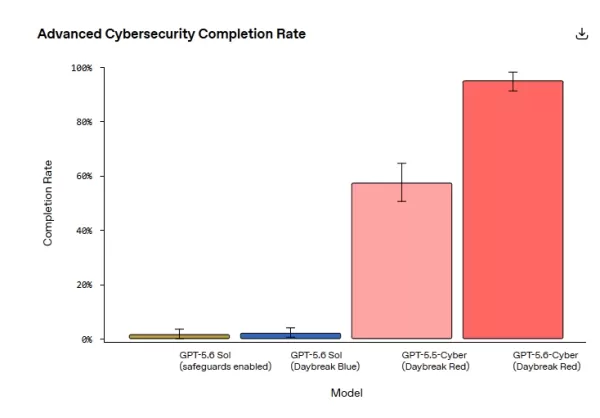
OpenAI has expanded its Daybreak cybersecurity initiative, introducing a two-tier access system and launching GPT-5.6-Cyber, a model purpose-built for security operations. This move addresses the growing reality that threat actors are leveraging AI t
OpenAI Launches GPT-5.6-Cyber, Boosting Zero-Day Detection with AI Automation
OpenAI has expanded its Daybreak cybersecurity initiative, introducing a two-tier access system and launching GPT-5.6-Cyber, a model purpose-built for security operations. This move addresses the growing reality that threat actors are leveraging AI t
2026 Latest Best Top-Rated AI Coding Chatbots Curated for Developers! Experience powerful game-changing tools that help you debug Python, JS, and SQL issues quickly. Get a free vs paid comparison along with real-world tests and detailed rankings to find the perfect fit for boosting your coding productivity. Try XIX.AI today to unlock your AI edge! Explore now.
12 tools
xix.ai

2026 Latest Best Top-rated AI Prompt Versioning Platforms for Reusable Playbooks are here on XIX.AI! Our curated list includes powerful game-changing tools that help you keep track of all prompts, test variations efficiently, and boost productivity across writing, content creation, and more. Get a free vs paid comparison along with real-world tests and updated rankings weekly. Explore now to discover your perfect tool for staying ahead in AI tasks!
9 tools
xix.ai

2026 Latest Best AI Writing Assistants for Long Articles: Outline and Draft Faster. XIX.AI curates the top-rated, must-try tools that offer powerful, game-changing support to boost writing efficiency significantly. You’ll find detailed free vs paid comparison, real-world tests, and updated rankings weekly. Explore now to Discover your perfect tool and Start creating today to Unlock your AI edge.
8 tools
xix.ai

2026 Latest Best ChatGPT Study Tools for Exam Revision, Flashcards, and Homework Explanations! XIX.AI has curated a top-rated list of powerful game-changing tools designed to boost your productivity. These must-try solutions offer free vs paid comparison, real-world tests, and detailed rankings to help you find the perfect option for efficient exam preparation and homework support. Explore now to unlock your AI edge!
10 tools
xix.ai

2026 Latest Best Top-Rated AI Study Planner Tools for Exam Preparation are here on XIX.AI! This curated collection features powerful, game-changing tools that help you streamline your review process, boost focus, and create personalized study schedules. We conduct real-world tests to determine the top options, offering a free vs paid comparison along with weekly updated rankings. Must-try solutions designed to maximize your productivity and help you ace every exam. Explore now to find your perfect tool!
14 tools
xix.ai

2026 Latest Best Top-rated AI Keyword Gap Tools for Organic Growth! XIX.AI has carefully curated a powerful, game-changing collection of the best tools available, featuring weekly updated rankings and real-world tests. You can find a detailed free vs paid comparison to help you choose the perfect option that boosts your content creation efficiency and unlocks your AI edge. Explore now!
8 tools
xix.ai

GPT-5.5-Cyberの登場か。セキュリティ分野でのAI活用は確かに加速してるね。ただ、防御側が強化されるなら攻撃側も同等に進化しそうで、結局は猫と鼠ゲームがエスカレートするだけのような気もする。技術の進歩は素晴らしいけど、倫理的なガバナンスが追いついてないのが心配だ。結局のところ、人間がどう使うかが全てだよな。🛡️🤖












