


 Home
HomeOpenAI challenges Robinhood over unauthorised tokenised shares
Robinhood has launched tokenized shares for private companies, drawing criticism from OpenAI as one of the affected firms.
At an event in Cannes on Monday, Robinhood co-founder and CEO Vlad Tenev showcased what he called “stock tokens” representing OpenAI and SpaceX. This development is part of Robinhood’s European expansion, which also includes more than 200 tokenized shares of publicly traded U.S. stocks available to EU customers.
Tenev explained that European users downloading the Robinhood app would be able to purchase tokenized shares in OpenAI and Elon Musk’s SpaceX—both privately held companies with no current plans to go public.
According to Robinhood’s website: “Robinhood Stock Tokens track the prices of publicly traded stocks and ETFs. These are blockchain-tracked derivatives offering exposure to the U.S. market. When you buy stock tokens, you're not purchasing actual shares, but tokenized contracts that mirror their prices on a blockchain.”
As a result, token holders do not receive traditional shareholder benefits like voting rights, though they do gain financial exposure to the companies.
OpenAI responds to Robinhood's tokenized shares initiative
The announcement was met with strong opposition from OpenAI. The prominent AI company, led by Sam Altman, firmly denied any association with Robinhood's offering.
“These ‘OpenAI tokens’ do not represent equity in OpenAI,” the company stated in a post on X. “We did not partner with Robinhood, were not consulted, and do not endorse this. Any transfer of OpenAI equity requires our approval—and we have not approved any. Please proceed with caution.”
Industry experts note that Robinhood’s approach seems tailored to offer price exposure without actual equity ownership, a structure likely chosen to navigate regulatory constraints.
This model resembles offerings from other fintech companies. For example, cryptocurrency exchange Kraken offers xStocks, which similarly do not grant direct ownership but are backed by underlying shares.
The launch of tokenized shares like OpenAI’s forms part of Robinhood’s strategy to grow in Europe while expanding its cryptocurrency and blockchain services. During the same event, the company introduced tokenized U.S. equities in Europe, as well as perpetual trading and staking options for American clients.
Implications for investing in private markets
If successful despite the controversy, Robinhood’s initiative could open up investing in high-demand private companies—typically restricted to institutional investors, venture capitalists, and accredited individuals—to a broader audience.
However, the backlash underscores the difficulties of innovating in tightly regulated financial markets, especially with private firms that closely control their equity distribution.
Financial analysts advise potential investors to clearly understand the difference between tokenized derivatives and direct equity ownership. While these products offer access to otherwise unreachable investment opportunities, their value and risks differ significantly from traditional shareholding.
Robinhood continues its European expansion, aiming to tap into growing interest among European traders in both U.S. equities and cryptocurrency. Whether the debate over tokenized shares—and the resistance from companies such as OpenAI—will support or hinder these efforts is yet to be seen.
See also: Growing interest in Europe’s AI Gigafactories initiative
Interested in learning more about AI and big data from industry leaders? Join the AI & Big Data Expo held in Amsterdam, California, and London. This comprehensive event runs alongside other major conferences, including the Intelligent Automation Conference, BlockX, Digital Transformation Week, and the Cyber Security & Cloud Expo.
Find more upcoming enterprise technology events and webinars hosted by TechForge here.
Related article
 PHP Armageddon: OpenAI, Google’s Wiz uncover ancient holes, sparking internet panic
The U.S. National Security Agency issued a critical alert on Wednesday regarding two severe vulnerabilities in PHP, for which patches have already been released by the PHP Foundation.As a server-side scripting language, PHP powers approximately 70% o
OpenAI launches GPT-5.5 Instant as ChatGPT’s new default model
OpenAI launched GPT-5.5 Instant on Monday, replacing GPT-5.3 Instant as the default ChatGPT model. The company states that this update minimizes hallucinations in high-stakes fields like law, medicine, and finance, while preserving the fast response
Nvidia to Derive 25% of Next Year’s Revenue from Funded Labs
Nvidia has deployed nearly US$50 billion into AI labs purchasing its chips, securing commitments for over $500 billion in total.On August 26, CFO Colette Kress informed analysts that these labs, backed by Nvidia’s balance sheet, will account for roug
Related Special Topic Recommendations
Design & Art
PHP Armageddon: OpenAI, Google’s Wiz uncover ancient holes, sparking internet panic
The U.S. National Security Agency issued a critical alert on Wednesday regarding two severe vulnerabilities in PHP, for which patches have already been released by the PHP Foundation.As a server-side scripting language, PHP powers approximately 70% o
OpenAI launches GPT-5.5 Instant as ChatGPT’s new default model
OpenAI launched GPT-5.5 Instant on Monday, replacing GPT-5.3 Instant as the default ChatGPT model. The company states that this update minimizes hallucinations in high-stakes fields like law, medicine, and finance, while preserving the fast response
Nvidia to Derive 25% of Next Year’s Revenue from Funded Labs
Nvidia has deployed nearly US$50 billion into AI labs purchasing its chips, securing commitments for over $500 billion in total.On August 26, CFO Colette Kress informed analysts that these labs, backed by Nvidia’s balance sheet, will account for roug
Related Special Topic Recommendations
Design & Art
 Top AI Illustration Tools: Create Editorial Scenes and Cover Art Faster
2026 Latest Top-rated AI Illustration Tools: Our curated list features the best powerfully designed tools for creating stunning editorial scenes and eye-catching cover art quickly. Each option has gone through rigorous real-world tests, offering a free vs paid comparison to help you find the perfect match for your workflow. Try these must-try solutions today to unlock your AI edge and boost your creative productivity. Explore now at XIX.AI.
 10 tools
 xix.ai
Education and Learning
Top AI Tutors for Exam Prep: Practice Math, Science, and English
xix.ai
Education and Learning
Top AI Tutors for Exam Prep: Practice Math, Science, and English
2026 Latest Top-Rated Best AI Tutors for Exam Prep are here on XIX.AI! Our curated list features powerful game-changing tools that offer free vs paid comparison, real-world tests, and weekly updated rankings. They help boost your writing efficiency, simplify complex topic learning, and unlock your academic potential. Explore now to Discover your perfect exam prep tool and Start creating today to Unlock your AI edge!
10 tools
xix.ai
Finance
AI Budget Planning Tools for Personal Money Management
2026 Latest Best Top-Rated AI Budget Planning Tools for Personal Money Management are here on XIX.AI! This curated collection features powerful, game-changing solutions that help you conduct real-world tests, understand spending habits, and create personalized plans to boost productivity. Enjoy a free vs paid comparison along with detailed rankings. Must-try tools designed to simplify money management and unlock your AI edge. Explore now!
11 tools
xix.ai
Health & Wellness
AI Sleep Tracking Assistants: Improve Recovery with Better Bedtime Habits
2026 Latest Best Top-Rated AI Sleep Tracking Assistants curated for ultimate recovery. This fully updated weekly guide features powerful tools that deliver real-world tests, free vs paid comparison, and detailed rankings to help you find the must-try solution that boosts sleep quality and supports better bedtime habits. Explore now at XIX.AI to Unlock your AI edge.
10 tools
xix.ai
Data Analysis
AI SQL Copilots for Product and Revenue Analytics
2026 Latest Best Top-Rated AI SQL Copilots for Product and Revenue Analytics! XIX.AI has curated a powerful, game-changing collection of must-try tools that undergo real-world tests through weekly updated rankings. These tools help users boost productivity significantly by accelerating data analysis, streamlining complex queries, and generating accurate insights to drive smarter business decisions. Explore now to Discover your perfect tool for unlocking your AI edge!
14 tools
xix.ai
Education and Learning
Best AI Homework Helpers That Teach: Learn Concepts, Not Just Answers
2026 Latest Best Top-Rated AI Homework Helpers That Teach Core Concepts Not Just Answers Powerful Tools for Students Must-Try Curated List Weekly Updated Free vs Paid Comparison Real-World Tests Accurate Rankings to Help You Unlock Your Full Learning Potential Explore now to Discover your perfect tool for smarter studying.
10 tools
xix.ai

 Comments (0)
0/500
Comments (0)
0/500
Robinhood has launched tokenized shares for private companies, drawing criticism from OpenAI as one of the affected firms.
At an event in Cannes on Monday, Robinhood co-founder and CEO Vlad Tenev showcased what he called “stock tokens” representing OpenAI and SpaceX. This development is part of Robinhood’s European expansion, which also includes more than 200 tokenized shares of publicly traded U.S. stocks available to EU customers.
Tenev explained that European users downloading the Robinhood app would be able to purchase tokenized shares in OpenAI and Elon Musk’s SpaceX—both privately held companies with no current plans to go public.
According to Robinhood’s website: “Robinhood Stock Tokens track the prices of publicly traded stocks and ETFs. These are blockchain-tracked derivatives offering exposure to the U.S. market. When you buy stock tokens, you're not purchasing actual shares, but tokenized contracts that mirror their prices on a blockchain.”
As a result, token holders do not receive traditional shareholder benefits like voting rights, though they do gain financial exposure to the companies.
OpenAI responds to Robinhood's tokenized shares initiative
The announcement was met with strong opposition from OpenAI. The prominent AI company, led by Sam Altman, firmly denied any association with Robinhood's offering.
“These ‘OpenAI tokens’ do not represent equity in OpenAI,” the company stated in a post on X. “We did not partner with Robinhood, were not consulted, and do not endorse this. Any transfer of OpenAI equity requires our approval—and we have not approved any. Please proceed with caution.”
Industry experts note that Robinhood’s approach seems tailored to offer price exposure without actual equity ownership, a structure likely chosen to navigate regulatory constraints.
This model resembles offerings from other fintech companies. For example, cryptocurrency exchange Kraken offers xStocks, which similarly do not grant direct ownership but are backed by underlying shares.
The launch of tokenized shares like OpenAI’s forms part of Robinhood’s strategy to grow in Europe while expanding its cryptocurrency and blockchain services. During the same event, the company introduced tokenized U.S. equities in Europe, as well as perpetual trading and staking options for American clients.
Implications for investing in private markets
If successful despite the controversy, Robinhood’s initiative could open up investing in high-demand private companies—typically restricted to institutional investors, venture capitalists, and accredited individuals—to a broader audience.
However, the backlash underscores the difficulties of innovating in tightly regulated financial markets, especially with private firms that closely control their equity distribution.
Financial analysts advise potential investors to clearly understand the difference between tokenized derivatives and direct equity ownership. While these products offer access to otherwise unreachable investment opportunities, their value and risks differ significantly from traditional shareholding.
Robinhood continues its European expansion, aiming to tap into growing interest among European traders in both U.S. equities and cryptocurrency. Whether the debate over tokenized shares—and the resistance from companies such as OpenAI—will support or hinder these efforts is yet to be seen.
See also: Growing interest in Europe’s AI Gigafactories initiative
Interested in learning more about AI and big data from industry leaders? Join the AI & Big Data Expo held in Amsterdam, California, and London. This comprehensive event runs alongside other major conferences, including the Intelligent Automation Conference, BlockX, Digital Transformation Week, and the Cyber Security & Cloud Expo.
Find more upcoming enterprise technology events and webinars hosted by TechForge here.








 PHP Armageddon: OpenAI, Google’s Wiz uncover ancient holes, sparking internet panic
The U.S. National Security Agency issued a critical alert on Wednesday regarding two severe vulnerabilities in PHP, for which patches have already been released by the PHP Foundation.As a server-side scripting language, PHP powers approximately 70% o
PHP Armageddon: OpenAI, Google’s Wiz uncover ancient holes, sparking internet panic
The U.S. National Security Agency issued a critical alert on Wednesday regarding two severe vulnerabilities in PHP, for which patches have already been released by the PHP Foundation.As a server-side scripting language, PHP powers approximately 70% o
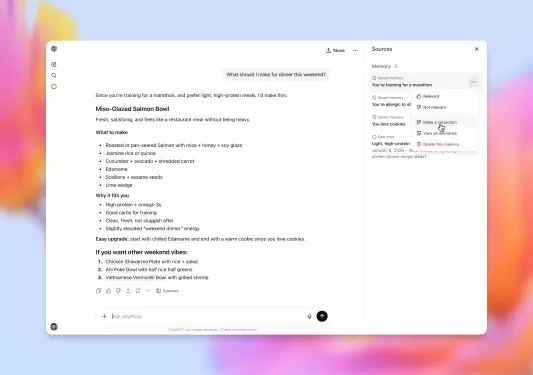 OpenAI launches GPT-5.5 Instant as ChatGPT’s new default model
OpenAI launched GPT-5.5 Instant on Monday, replacing GPT-5.3 Instant as the default ChatGPT model. The company states that this update minimizes hallucinations in high-stakes fields like law, medicine, and finance, while preserving the fast response
OpenAI launches GPT-5.5 Instant as ChatGPT’s new default model
OpenAI launched GPT-5.5 Instant on Monday, replacing GPT-5.3 Instant as the default ChatGPT model. The company states that this update minimizes hallucinations in high-stakes fields like law, medicine, and finance, while preserving the fast response
 Nvidia to Derive 25% of Next Year’s Revenue from Funded Labs
Nvidia has deployed nearly US$50 billion into AI labs purchasing its chips, securing commitments for over $500 billion in total.On August 26, CFO Colette Kress informed analysts that these labs, backed by Nvidia’s balance sheet, will account for roug
Nvidia to Derive 25% of Next Year’s Revenue from Funded Labs
Nvidia has deployed nearly US$50 billion into AI labs purchasing its chips, securing commitments for over $500 billion in total.On August 26, CFO Colette Kress informed analysts that these labs, backed by Nvidia’s balance sheet, will account for roug

2026 Latest Top-rated AI Illustration Tools: Our curated list features the best powerfully designed tools for creating stunning editorial scenes and eye-catching cover art quickly. Each option has gone through rigorous real-world tests, offering a free vs paid comparison to help you find the perfect match for your workflow. Try these must-try solutions today to unlock your AI edge and boost your creative productivity. Explore now at XIX.AI.
10 tools
xix.ai

2026 Latest Top-Rated Best AI Tutors for Exam Prep are here on XIX.AI! Our curated list features powerful game-changing tools that offer free vs paid comparison, real-world tests, and weekly updated rankings. They help boost your writing efficiency, simplify complex topic learning, and unlock your academic potential. Explore now to Discover your perfect exam prep tool and Start creating today to Unlock your AI edge!
10 tools
xix.ai

2026 Latest Best Top-Rated AI Budget Planning Tools for Personal Money Management are here on XIX.AI! This curated collection features powerful, game-changing solutions that help you conduct real-world tests, understand spending habits, and create personalized plans to boost productivity. Enjoy a free vs paid comparison along with detailed rankings. Must-try tools designed to simplify money management and unlock your AI edge. Explore now!
11 tools
xix.ai

2026 Latest Best Top-Rated AI Sleep Tracking Assistants curated for ultimate recovery. This fully updated weekly guide features powerful tools that deliver real-world tests, free vs paid comparison, and detailed rankings to help you find the must-try solution that boosts sleep quality and supports better bedtime habits. Explore now at XIX.AI to Unlock your AI edge.
10 tools
xix.ai

2026 Latest Best Top-Rated AI SQL Copilots for Product and Revenue Analytics! XIX.AI has curated a powerful, game-changing collection of must-try tools that undergo real-world tests through weekly updated rankings. These tools help users boost productivity significantly by accelerating data analysis, streamlining complex queries, and generating accurate insights to drive smarter business decisions. Explore now to Discover your perfect tool for unlocking your AI edge!
14 tools
xix.ai

2026 Latest Best Top-Rated AI Homework Helpers That Teach Core Concepts Not Just Answers Powerful Tools for Students Must-Try Curated List Weekly Updated Free vs Paid Comparison Real-World Tests Accurate Rankings to Help You Unlock Your Full Learning Potential Explore now to Discover your perfect tool for smarter studying.
10 tools
xix.ai












