


 Home
Home
MiniMax M2.5 prices at one-tenth of overseas models, tops global API call volume for five straight weeks
Chinese large models are delivering a "dimensional strike" in the global computing power market through extreme cost-effectiveness.
According to the latest report, the Chinese large model MiniMax M2.5 has topped global large model usage rankings for five consecutive weeks. This achievement not only sets a new record for Chinese model activity on the international stage but also highlights China's core competitive advantage in the global AI industry: domestic models are priced dozens of times lower than overseas competitors with comparable capabilities.
This cost advantage, which leaves competitors struggling, stems from two strategic moats:
Underlying architectural innovation: making tokens more "valuable"
MiniMax developers note that fundamental innovations in the underlying architecture have significantly reduced inference costs. In simple terms, improved algorithm efficiency allows the model to complete the same complex tasks using fewer tokens, directly lowering users' computing costs at the technical level.
Energy and infrastructure advantages: building a computing power defense line
Beyond technological optimizations, China's energy advantage in computing power infrastructure cannot be overlooked. Industry data shows that electricity costs account for 70% to 80% of computing costs. For AI clusters running millions of graphics cards in parallel, China's stable energy supply and relatively low industrial electricity prices provide a highly competitive "cost firewall" for the AI industry.
From "computing power input" to "intellectual output," Chinese large models represented by MiniMax are rapidly capturing global market share through the dual forces of technological iteration and cost control. As AI competition enters its second half, this "high intelligence, low price" model may completely rewrite the rules of global large model commercialization.
Related article
 OpenAI Unveils Codex Referral Program to Boost Usage Quotas
As AI tools become more common, quota limits often block productivity. OpenAI recently announced a new Codex promotion on social media, offering tangible benefits to users.Running for two weeks, this campaign rewards users who invite friends to join
Meta launches AI optimism ad set to song about human extinction
Meta’s latest ad opens with a stark black-and-white close-up of an eye, capturing the anxiety of scrolling through alarming headlines about AI stealing jobs, isolating society, and triggering a global crisis.“Some people will have you believe AI is g
Mistral AI’s Open-Source Math Proof Tool Uses 119B Parameters, Activating Just 6B, Cuts Costs to 1% of Rivals
Mistral AI, a European artificial intelligence firm, has officially released Leanstral 1.5, a specialized model for formal mathematical proof. Built specifically for the Lean4 programming language, this 119B-parameter model activates only 6B paramete
Related Special Topic Recommendations
Meeting Assistant
OpenAI Unveils Codex Referral Program to Boost Usage Quotas
As AI tools become more common, quota limits often block productivity. OpenAI recently announced a new Codex promotion on social media, offering tangible benefits to users.Running for two weeks, this campaign rewards users who invite friends to join
Meta launches AI optimism ad set to song about human extinction
Meta’s latest ad opens with a stark black-and-white close-up of an eye, capturing the anxiety of scrolling through alarming headlines about AI stealing jobs, isolating society, and triggering a global crisis.“Some people will have you believe AI is g
Mistral AI’s Open-Source Math Proof Tool Uses 119B Parameters, Activating Just 6B, Cuts Costs to 1% of Rivals
Mistral AI, a European artificial intelligence firm, has officially released Leanstral 1.5, a specialized model for formal mathematical proof. Built specifically for the Lean4 programming language, this 119B-parameter model activates only 6B paramete
Related Special Topic Recommendations
Meeting Assistant
 Best AI Transcript Tools for Client Call Notes
2026 Latest Best Top-Rated AI Transcript Tools for Client Call Notes! XIX.AI has curated a powerful, game-changing collection of must-try tools that go through real-world tests to deliver accurate, detailed notes. You can compare free and paid options side by side and see how they boost your productivity. Explore now to discover your perfect tool and unlock your AI edge in client communication!
 10 tools
 xix.ai
Text-to-speech
Best AI Dubbing Platforms for Multilingual Shorts, Tutorials, and Product Walkthroughs
xix.ai
Text-to-speech
Best AI Dubbing Platforms for Multilingual Shorts, Tutorials, and Product Walkthroughs
2026 Latest Best Top-rated AI Dubbing Platforms for Multilingual Shorts, Tutorials, and Product Walkthroughs! XIX.AI curates a powerful game-changing collection after rigorous real-world tests and weekly updated rankings. You’ll find must-try options that boost productivity significantly, helping you create high-quality content faster without wasting time. Explore now to discover your perfect tool and unlock your AI edge.
9 tools
xix.ai
Productivity
ChatGPT Meeting Follow-Up Tools for Action Items, Owners, and Deadline Tracking
2026 Latest Best ChatGPT Meeting Follow-Up Tools Ranked! XIX.AI has curated a top-rated collection of powerful tools that help you quickly turn meeting notes into actionable items, track owners and deadlines effortlessly, and stay organized throughout your projects. Every tool goes through rigorous real-world tests to ensure reliability. Check out the free vs paid comparison and rankings to discover your perfect solution for boosting productivity. Explore now!
9 tools
xix.ai
Meeting Assistant
Best AI Agenda Builders: Plan Better Weekly Syncs in Minutes
2026 Latest Best AI Agenda Builders page features a curated list of top-rated tools that make planning weekly team syncs effortless. These powerful solutions help you create organized, efficient agendas in just minutes, saving valuable time and boosting productivity. XIX.AI ensures all entries go through rigorous real-world tests before inclusion. Get a free vs paid comparison and discover the must-try options that deliver game-changing results. Explore now to find your perfect tool for smoother workflows!
15 tools
xix.ai
Business
Best AI Business Plan Tools for Startups
2026 Latest Best Top-Rated AI Business Plan Tools for Startups! XIX.AI curates a powerful, game-changing collection of must-try tools that go through real-world tests and rigorous weekly updated rankings. These top solutions help startups draft flawless plans, boost productivity, and unlock their full AI edge. Explore now to discover your perfect tool!
9 tools
xix.ai
Marketing
Best AI Persona Builder Tools for Audience Research
2026 Latest Best Top-rated AI Persona Builder Tools for Audience Research are here on XIX.AI! This curated list features powerful, game-changing tools that help you conduct real-world tests and create accurate audience profiles through detailed free vs paid comparison. You’ll discover the must-try options that boost writing efficiency and unlock your AI edge in marketing strategies. Explore now to find your perfect tool!
9 tools
xix.ai

 Comments (0)
0/500
Comments (0)
0/500
Chinese large models are delivering a "dimensional strike" in the global computing power market through extreme cost-effectiveness.
According to the latest report, the Chinese large model MiniMax M2.5 has topped global large model usage rankings for five consecutive weeks. This achievement not only sets a new record for Chinese model activity on the international stage but also highlights China's core competitive advantage in the global AI industry: domestic models are priced dozens of times lower than overseas competitors with comparable capabilities.
This cost advantage, which leaves competitors struggling, stems from two strategic moats:
Underlying architectural innovation: making tokens more "valuable"
MiniMax developers note that fundamental innovations in the underlying architecture have significantly reduced inference costs. In simple terms, improved algorithm efficiency allows the model to complete the same complex tasks using fewer tokens, directly lowering users' computing costs at the technical level.
Energy and infrastructure advantages: building a computing power defense line
Beyond technological optimizations, China's energy advantage in computing power infrastructure cannot be overlooked. Industry data shows that electricity costs account for 70% to 80% of computing costs. For AI clusters running millions of graphics cards in parallel, China's stable energy supply and relatively low industrial electricity prices provide a highly competitive "cost firewall" for the AI industry.
From "computing power input" to "intellectual output," Chinese large models represented by MiniMax are rapidly capturing global market share through the dual forces of technological iteration and cost control. As AI competition enters its second half, this "high intelligence, low price" model may completely rewrite the rules of global large model commercialization.








 OpenAI Unveils Codex Referral Program to Boost Usage Quotas
As AI tools become more common, quota limits often block productivity. OpenAI recently announced a new Codex promotion on social media, offering tangible benefits to users.Running for two weeks, this campaign rewards users who invite friends to join
OpenAI Unveils Codex Referral Program to Boost Usage Quotas
As AI tools become more common, quota limits often block productivity. OpenAI recently announced a new Codex promotion on social media, offering tangible benefits to users.Running for two weeks, this campaign rewards users who invite friends to join
 Meta launches AI optimism ad set to song about human extinction
Meta’s latest ad opens with a stark black-and-white close-up of an eye, capturing the anxiety of scrolling through alarming headlines about AI stealing jobs, isolating society, and triggering a global crisis.“Some people will have you believe AI is g
Meta launches AI optimism ad set to song about human extinction
Meta’s latest ad opens with a stark black-and-white close-up of an eye, capturing the anxiety of scrolling through alarming headlines about AI stealing jobs, isolating society, and triggering a global crisis.“Some people will have you believe AI is g
 Mistral AI’s Open-Source Math Proof Tool Uses 119B Parameters, Activating Just 6B, Cuts Costs to 1% of Rivals
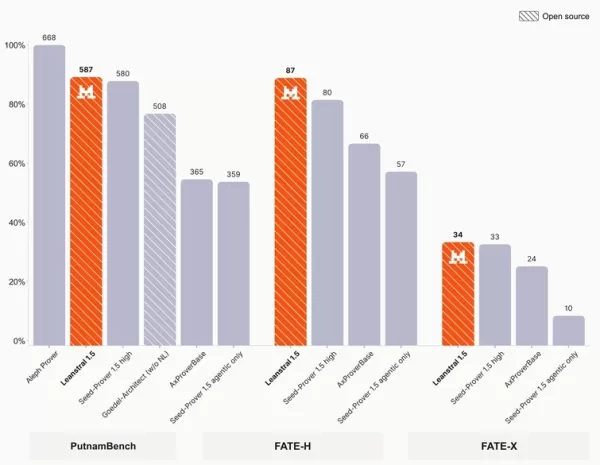
Mistral AI, a European artificial intelligence firm, has officially released Leanstral 1.5, a specialized model for formal mathematical proof. Built specifically for the Lean4 programming language, this 119B-parameter model activates only 6B paramete
Mistral AI’s Open-Source Math Proof Tool Uses 119B Parameters, Activating Just 6B, Cuts Costs to 1% of Rivals
Mistral AI, a European artificial intelligence firm, has officially released Leanstral 1.5, a specialized model for formal mathematical proof. Built specifically for the Lean4 programming language, this 119B-parameter model activates only 6B paramete

2026 Latest Best Top-Rated AI Transcript Tools for Client Call Notes! XIX.AI has curated a powerful, game-changing collection of must-try tools that go through real-world tests to deliver accurate, detailed notes. You can compare free and paid options side by side and see how they boost your productivity. Explore now to discover your perfect tool and unlock your AI edge in client communication!
10 tools
xix.ai

2026 Latest Best Top-rated AI Dubbing Platforms for Multilingual Shorts, Tutorials, and Product Walkthroughs! XIX.AI curates a powerful game-changing collection after rigorous real-world tests and weekly updated rankings. You’ll find must-try options that boost productivity significantly, helping you create high-quality content faster without wasting time. Explore now to discover your perfect tool and unlock your AI edge.
9 tools
xix.ai

2026 Latest Best ChatGPT Meeting Follow-Up Tools Ranked! XIX.AI has curated a top-rated collection of powerful tools that help you quickly turn meeting notes into actionable items, track owners and deadlines effortlessly, and stay organized throughout your projects. Every tool goes through rigorous real-world tests to ensure reliability. Check out the free vs paid comparison and rankings to discover your perfect solution for boosting productivity. Explore now!
9 tools
xix.ai

2026 Latest Best AI Agenda Builders page features a curated list of top-rated tools that make planning weekly team syncs effortless. These powerful solutions help you create organized, efficient agendas in just minutes, saving valuable time and boosting productivity. XIX.AI ensures all entries go through rigorous real-world tests before inclusion. Get a free vs paid comparison and discover the must-try options that deliver game-changing results. Explore now to find your perfect tool for smoother workflows!
15 tools
xix.ai

2026 Latest Best Top-Rated AI Business Plan Tools for Startups! XIX.AI curates a powerful, game-changing collection of must-try tools that go through real-world tests and rigorous weekly updated rankings. These top solutions help startups draft flawless plans, boost productivity, and unlock their full AI edge. Explore now to discover your perfect tool!
9 tools
xix.ai

2026 Latest Best Top-rated AI Persona Builder Tools for Audience Research are here on XIX.AI! This curated list features powerful, game-changing tools that help you conduct real-world tests and create accurate audience profiles through detailed free vs paid comparison. You’ll discover the must-try options that boost writing efficiency and unlock your AI edge in marketing strategies. Explore now to find your perfect tool!
9 tools
xix.ai












