


 Home
HomeMicrosoft unveils powerful new AI inference chip
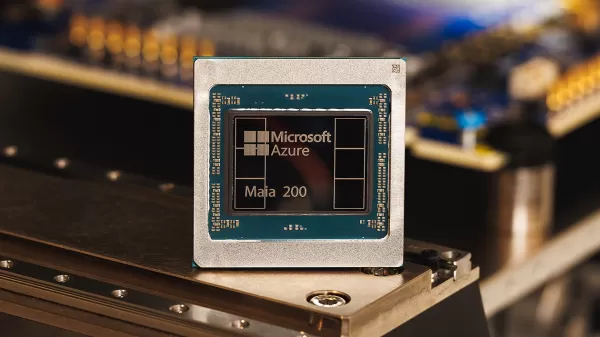
Microsoft has unveiled its newest chip, the Maia 200, calling it a silicon workhorse built to scale AI inference.
Succeeding the Maia 100 launched in 2023, the Maia 200 is engineered to run advanced AI models with greater speed and efficiency. It packs over 100 billion transistors, achieving more than 10 petaflops in 4-bit precision and roughly 5 petaflops in 8-bit performance — a significant leap from its predecessor.
Inference is the computational process of running a model, as opposed to training it. As AI companies mature, inference costs now account for a growing share of total operating expenses, fueling renewed efforts to streamline the process.
Microsoft aims for the Maia 200 to support this optimization, helping AI businesses run with fewer disruptions and lower power usage. “In practical terms, a single Maia 200 node can effortlessly handle today’s largest models, with ample headroom for even bigger models in the future,” the company said.
Microsoft’s new chip also fits into a broader trend of tech giants developing their own silicon to cut reliance on Nvidia, whose advanced GPUs have become essential for AI success. Google, for instance, offers its TPU as cloud-accessible compute power rather than selling chips directly. Amazon has its Trainium AI accelerator, with the latest version, Trainium3, launched in December. These chips offload some computing tasks from Nvidia GPUs, reducing overall hardware expenses.
With Maia, Microsoft positions itself to compete with these alternatives. In its Monday press release, the company noted that Maia delivers three times the FP4 performance of third-generation Amazon Trainium chips and surpasses Google’s seventh-generation TPU in FP8 performance.
Microsoft reports that Maia is already powering the company’s AI models from its Superintelligence team and supporting its Copilot chatbot. As of Monday, the company has invited developers, academics, and frontier AI labs to use the Maia 200 software development kit in their workloads.
Techcrunch event
Disrupt 2026 Tickets: Exclusive One-Time Offer
Tickets are now available. Save up to $680 while these rates last, and be among the first 500 registrants to get 50% off your +1 pass. TechCrunch Disrupt brings together top leaders from Google Cloud, Netflix, Microsoft, Box, a16z, Hugging Face, and more across 250+ sessions designed to accelerate growth and sharpen your competitive edge. Connect with hundreds of innovative startups and join curated networking that drives deals, insights, and inspiration.
Disrupt 2026 Tickets: Exclusive One-Time Offer
Tickets are now available. Save up to $680 while these rates last, and be among the first 500 registrants to get 50% off your +1 pass. TechCrunch Disrupt brings together top leaders from Google Cloud, Netflix, Microsoft, Box, a16z, Hugging Face, and more across 250+ sessions designed to accelerate growth and sharpen your competitive edge. Connect with hundreds of innovative startups and join curated networking that drives deals, insights, and inspiration.
San Francisco | October 13-15, 2026 REGISTER NOW
Related article
 DeepMind CEO Hassabis: I sleep six hours a day, usually feel energetic around 1 a.m.
Fortune recently featured an interview with Demis Hassabis, CEO of Google DeepMind, revealing his unconventional approach to rest and productivity. Hassabis disclosed that he sleeps very little, structuring his waking hours into two distinct work blo
OpenAI, Anthropic Vie for Market Share Despite Revenue Shortfalls
Despite recent reports suggesting OpenAI missed revenue targets, creating pressure on tech stocks this Tuesday, private AI lab investors remain resilient. Seasoned backers have confirmed they will not reduce investment despite negative media coverage
California AV Compliance: A New Era of Tickets, Geofences, and 1M Miles
Guident operates an AuveTech shuttle in South Florida, managing a four-mile route in West Palm Beach and a one-mile route in Boca Raton using its remote monitoring technology. | Credit: GuidentCalifornia is redefining the regulatory landscape for dri
Related Special Topic Recommendations
Music composition
DeepMind CEO Hassabis: I sleep six hours a day, usually feel energetic around 1 a.m.
Fortune recently featured an interview with Demis Hassabis, CEO of Google DeepMind, revealing his unconventional approach to rest and productivity. Hassabis disclosed that he sleeps very little, structuring his waking hours into two distinct work blo
OpenAI, Anthropic Vie for Market Share Despite Revenue Shortfalls
Despite recent reports suggesting OpenAI missed revenue targets, creating pressure on tech stocks this Tuesday, private AI lab investors remain resilient. Seasoned backers have confirmed they will not reduce investment despite negative media coverage
California AV Compliance: A New Era of Tickets, Geofences, and 1M Miles
Guident operates an AuveTech shuttle in South Florida, managing a four-mile route in West Palm Beach and a one-mile route in Boca Raton using its remote monitoring technology. | Credit: GuidentCalifornia is redefining the regulatory landscape for dri
Related Special Topic Recommendations
Music composition
 AI Stem Separation Tools for Remix Production, Sampling Prep, and Karaoke Masters
2026 Latest Best Top-rated AI Stem Separation Tools Curated for Remix Production, Sampling Prep, and Karaoke Masters. These powerful game-changing tools offer real-world tests to deliver precise audio isolation, boosting productivity significantly. XIX.AI provides a weekly updated free vs paid comparison guide to help you find the must-try solution that suits your needs. Explore now to unlock your AI edge.
 8 tools
 xix.ai
Data Analysis
AI SQL Copilots for Revenue Dashboards, Funnel Analysis, and Product Metrics
xix.ai
Data Analysis
AI SQL Copilots for Revenue Dashboards, Funnel Analysis, and Product Metrics
2026 Latest Best AI SQL Copilots Ranked Top-Rated! XIX.AI curates a powerful game-changing collection for weekly updated real-world tests. These must-try tools help you generate accurate revenue dashboards, analyze sales funnels, and track product metrics swiftly, boosting productivity massively. Explore now to Discover your perfect tool for data-driven decision making! 238 characters
9 tools
xix.ai
Music composition
Best AI Melody Writing Tools for Song Drafts
2026 Latest Best Top-Rated AI Melody Writing Tools for Song Drafts! XIX.AI has curated a highly powerful game-changing collection that goes through rigorous real-world tests to deliver the best writing experience. You can find detailed free vs paid comparisons, accurate rankings, and must-try options designed to help you create stunning song drafts effortlessly and boost your creative productivity significantly. Explore now to discover your perfect tool!
8 tools
xix.ai
chatbot
Best AI Conversation Trainer Tools for Interview Practice
2026 Latest Best Top-rated AI Conversation Trainer Tools for Interview Practice are here on XIX.AI! This curated collection features powerful, game-changing tools that go through rigorous real-world tests to deliver accurate feedback. You’ll find a free vs paid comparison and detailed rankings to help you choose the must-try option that boosts your confidence and skills. Explore now to Discover your perfect tool for interview success!
12 tools
xix.ai
Design & Art
Best AI Style Transfer Tools for Creative Experiments
2026 Latest Best Top-rated AI Style Transfer Tools for Creative Experiments! XIX.AI has curated a powerful, game-changing collection of must-try tools that deliver exceptional results through real-world tests and rigorous rankings. These top solutions help creatives boost productivity significantly by accelerating content creation and unlocking endless creative possibilities. Explore now to discover your perfect tool and start creating today!
9 tools
xix.ai
Comic Creation
Best AI Dialogue Bubble Tools for Visual Storytelling
2026 Latest Best Top-Rated AI Dialogue Bubble Tools for Visual Storytelling are here on XIX.AI! This curated collection features powerful, game-changing tools that help creators boost productivity and overcome creative bottlenecks. Get a free vs paid comparison, see real-world tests, and check the latest rankings to find the must-try solutions perfect for crafting engaging visual narratives. Explore now to discover your ideal tool!
10 tools
xix.ai

 Comments (1)
0/500
Comments (1)
0/500
![EdwardMartinez]()
Just saw the news about Microsoft's new Maia 200 chip. Finally, someone is tackling the inference bottleneck with actual silicon instead of just throwing money at cloud services. 🚀 It’s wild how fast these models are evolving, but I’m still skeptical about whether this will actually lower costs for regular users or just make big tech richer. Anyone else excited for cheaper AI access, or is it all hype? 🤔
Microsoft has unveiled its newest chip, the Maia 200, calling it a silicon workhorse built to scale AI inference.
Succeeding the Maia 100 launched in 2023, the Maia 200 is engineered to run advanced AI models with greater speed and efficiency. It packs over 100 billion transistors, achieving more than 10 petaflops in 4-bit precision and roughly 5 petaflops in 8-bit performance — a significant leap from its predecessor.
Inference is the computational process of running a model, as opposed to training it. As AI companies mature, inference costs now account for a growing share of total operating expenses, fueling renewed efforts to streamline the process.
Microsoft aims for the Maia 200 to support this optimization, helping AI businesses run with fewer disruptions and lower power usage. “In practical terms, a single Maia 200 node can effortlessly handle today’s largest models, with ample headroom for even bigger models in the future,” the company said.
Microsoft’s new chip also fits into a broader trend of tech giants developing their own silicon to cut reliance on Nvidia, whose advanced GPUs have become essential for AI success. Google, for instance, offers its TPU as cloud-accessible compute power rather than selling chips directly. Amazon has its Trainium AI accelerator, with the latest version, Trainium3, launched in December. These chips offload some computing tasks from Nvidia GPUs, reducing overall hardware expenses.
With Maia, Microsoft positions itself to compete with these alternatives. In its Monday press release, the company noted that Maia delivers three times the FP4 performance of third-generation Amazon Trainium chips and surpasses Google’s seventh-generation TPU in FP8 performance.
Microsoft reports that Maia is already powering the company’s AI models from its Superintelligence team and supporting its Copilot chatbot. As of Monday, the company has invited developers, academics, and frontier AI labs to use the Maia 200 software development kit in their workloads.
Techcrunch eventDisrupt 2026 Tickets: Exclusive One-Time Offer
Tickets are now available. Save up to $680 while these rates last, and be among the first 500 registrants to get 50% off your +1 pass. TechCrunch Disrupt brings together top leaders from Google Cloud, Netflix, Microsoft, Box, a16z, Hugging Face, and more across 250+ sessions designed to accelerate growth and sharpen your competitive edge. Connect with hundreds of innovative startups and join curated networking that drives deals, insights, and inspiration.
Disrupt 2026 Tickets: Exclusive One-Time Offer
Tickets are now available. Save up to $680 while these rates last, and be among the first 500 registrants to get 50% off your +1 pass. TechCrunch Disrupt brings together top leaders from Google Cloud, Netflix, Microsoft, Box, a16z, Hugging Face, and more across 250+ sessions designed to accelerate growth and sharpen your competitive edge. Connect with hundreds of innovative startups and join curated networking that drives deals, insights, and inspiration.
San Francisco | October 13-15, 2026 REGISTER NOW








 DeepMind CEO Hassabis: I sleep six hours a day, usually feel energetic around 1 a.m.
Fortune recently featured an interview with Demis Hassabis, CEO of Google DeepMind, revealing his unconventional approach to rest and productivity. Hassabis disclosed that he sleeps very little, structuring his waking hours into two distinct work blo
DeepMind CEO Hassabis: I sleep six hours a day, usually feel energetic around 1 a.m.
Fortune recently featured an interview with Demis Hassabis, CEO of Google DeepMind, revealing his unconventional approach to rest and productivity. Hassabis disclosed that he sleeps very little, structuring his waking hours into two distinct work blo
 OpenAI, Anthropic Vie for Market Share Despite Revenue Shortfalls
Despite recent reports suggesting OpenAI missed revenue targets, creating pressure on tech stocks this Tuesday, private AI lab investors remain resilient. Seasoned backers have confirmed they will not reduce investment despite negative media coverage
California AV Compliance: A New Era of Tickets, Geofences, and 1M Miles
Guident operates an AuveTech shuttle in South Florida, managing a four-mile route in West Palm Beach and a one-mile route in Boca Raton using its remote monitoring technology. | Credit: GuidentCalifornia is redefining the regulatory landscape for dri
OpenAI, Anthropic Vie for Market Share Despite Revenue Shortfalls
Despite recent reports suggesting OpenAI missed revenue targets, creating pressure on tech stocks this Tuesday, private AI lab investors remain resilient. Seasoned backers have confirmed they will not reduce investment despite negative media coverage
California AV Compliance: A New Era of Tickets, Geofences, and 1M Miles
Guident operates an AuveTech shuttle in South Florida, managing a four-mile route in West Palm Beach and a one-mile route in Boca Raton using its remote monitoring technology. | Credit: GuidentCalifornia is redefining the regulatory landscape for dri

2026 Latest Best Top-rated AI Stem Separation Tools Curated for Remix Production, Sampling Prep, and Karaoke Masters. These powerful game-changing tools offer real-world tests to deliver precise audio isolation, boosting productivity significantly. XIX.AI provides a weekly updated free vs paid comparison guide to help you find the must-try solution that suits your needs. Explore now to unlock your AI edge.
8 tools
xix.ai

2026 Latest Best AI SQL Copilots Ranked Top-Rated! XIX.AI curates a powerful game-changing collection for weekly updated real-world tests. These must-try tools help you generate accurate revenue dashboards, analyze sales funnels, and track product metrics swiftly, boosting productivity massively. Explore now to Discover your perfect tool for data-driven decision making! 238 characters
9 tools
xix.ai

2026 Latest Best Top-Rated AI Melody Writing Tools for Song Drafts! XIX.AI has curated a highly powerful game-changing collection that goes through rigorous real-world tests to deliver the best writing experience. You can find detailed free vs paid comparisons, accurate rankings, and must-try options designed to help you create stunning song drafts effortlessly and boost your creative productivity significantly. Explore now to discover your perfect tool!
8 tools
xix.ai

2026 Latest Best Top-rated AI Conversation Trainer Tools for Interview Practice are here on XIX.AI! This curated collection features powerful, game-changing tools that go through rigorous real-world tests to deliver accurate feedback. You’ll find a free vs paid comparison and detailed rankings to help you choose the must-try option that boosts your confidence and skills. Explore now to Discover your perfect tool for interview success!
12 tools
xix.ai

2026 Latest Best Top-rated AI Style Transfer Tools for Creative Experiments! XIX.AI has curated a powerful, game-changing collection of must-try tools that deliver exceptional results through real-world tests and rigorous rankings. These top solutions help creatives boost productivity significantly by accelerating content creation and unlocking endless creative possibilities. Explore now to discover your perfect tool and start creating today!
9 tools
xix.ai

2026 Latest Best Top-Rated AI Dialogue Bubble Tools for Visual Storytelling are here on XIX.AI! This curated collection features powerful, game-changing tools that help creators boost productivity and overcome creative bottlenecks. Get a free vs paid comparison, see real-world tests, and check the latest rankings to find the must-try solutions perfect for crafting engaging visual narratives. Explore now to discover your ideal tool!
10 tools
xix.ai

Just saw the news about Microsoft's new Maia 200 chip. Finally, someone is tackling the inference bottleneck with actual silicon instead of just throwing money at cloud services. 🚀 It’s wild how fast these models are evolving, but I’m still skeptical about whether this will actually lower costs for regular users or just make big tech richer. Anyone else excited for cheaper AI access, or is it all hype? 🤔












