


 Home
HomeYour Complete Guide to Mastering Paper Airplane Folding
Paper airplanes offer timeless fun and provide a surprisingly accessible introduction to basic aerodynamics. Whether you're a child seeking a simple craft or an adult revisiting a nostalgic hobby, learning to fold a classic paper airplane is both enjoyable and satisfying. This guide walks you through creating a reliable paper plane that flies smoothly and covers a good distance.
Key Points
Master the essential folds for a classic paper airplane design.
Learn how each fold impacts the plane's aerodynamics and flight performance.
Get practical tips to optimize your plane for distance and stability.
Experiment with variations to create unique paper airplane designs.
Identify and fix common flight problems.
The Classic Paper Airplane: A Step-by-Step Guide
What You'll Need
Before you start, gather these simple materials:
- A standard sheet of paper: Printer paper (8.5 x 11 inches) is ideal, but construction paper or cardstock works too. Thinner paper is usually easier to fold.
- A flat surface: Use a table or desk for stable folding.
- Optional: A ruler or straight edge: Helps make sharp, precise creases.
Step 1: Folding the Paper in Half (The Foundation)
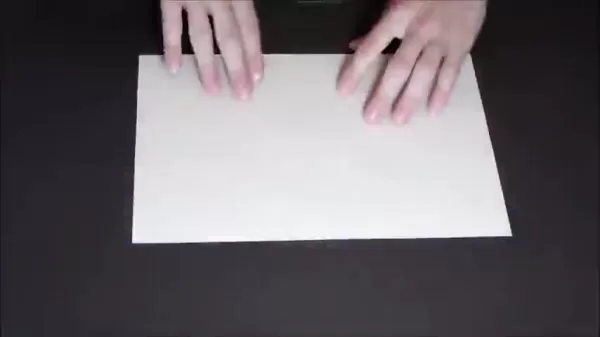
Lay the paper flat. Fold it in half lengthwise, carefully matching the top edge to the bottom edge. Press firmly to create a sharp center crease. This fold establishes the plane's center line and is key for symmetry. Unfold the paper afterward.
Why this step matters: It provides a clear guide for all your following folds.
Step 2: Creating the First Wing Folds
Take the top right corner and fold it inward, lining it up with the center crease you just made. Press the fold flat to form a triangular flap. Repeat this with the top left corner. You should now see two symmetrical triangles meeting at the center line.
Tip for precision: Use a ruler to help make your folds clean and accurate. Sloppy folds here can hurt the plane's balance.
Step 3: Folding the Top Edges Again
Now, fold the slanted edges of these triangles toward the center line once more. This creates a narrower, sharper point. Align them carefully with the center and crease firmly. This step helps shape the wings for better aerodynamics.
Understanding the effect: These folds are vital for forming the wing shape and generating lift.
Step 4: Folding the Airplane in Half (Creating the Fuselage)
Fold the entire model in half along the original center crease, so the folded triangles are on the outside. Make sure the edges align and crease well. This forms the main body, or fuselage, of your airplane.
Important: This step locks in the plane's basic structure.
Step 5: Folding Down the Wings
Now create the wings. Fold each side down, using the top edge of the fuselage as a guide. Make the wings as symmetrical as possible and crease them sharply. The size of these folds directly determines the wing size.
Wing size matters: Larger wings create more lift but also more drag. Smaller wings reduce drag but offer less lift. Try different sizes to see what works best.
Step 6: Adjusting the Ailerons (Optional)
For better stability and control, you can add small ailerons. Fold up about a quarter to half an inch of the back edge of each wingtip. These small flaps help stabilize the flight and can be tweaked to make the plane turn.
Fine-tuning flight: Bending these flaps up or down changes how the plane behaves in the air.
Troubleshooting Your Paper Airplane
Common Issues and Solutions
Sometimes a paper airplane doesn't fly right. Here's how to fix common problems:
- Problem: The airplane dives steeply.
- Solution: The nose is likely too heavy. Gently bend the back edges of the wings upward to add more lift at the rear.
- Problem: The airplane stalls and drops abruptly.
- Solution: It may lack sufficient lift. Try making the wings larger or reducing weight at the front.
- Problem: The airplane veers to one side.
- Solution: This is often due to uneven wings. Check that both wings are the same size and angle. You can also adjust the ailerons to correct the turn.
- Problem: The airplane doesn't fly straight or far.
- Solution: Ensure all folds are sharp and the plane is symmetrical. Play with wing size and aileron settings to find the best flight path.
Understanding these fixes will help you adjust your plane for a perfect flight.
Optimizing Your Paper Airplane's Flight
Techniques for Launching and Flying
A good launch is crucial for a great flight. Follow these tips:
- Grip: Hold the plane gently but firmly near the middle of its body.
- Launch Angle: Start with a slight upward angle and adjust from there to find what works.
- Launch Force: Use a smooth, steady throw. Avoid any jerky motions.
- Environmental Factors: Wind affects flight. A light headwind can help with lift, while a tailwind might shorten the distance.
With practice, you'll find the perfect launch style for your plane. Experiment with your grip, angle, and throwing power.
Paper Airplane Folding: Free and Accessible Fun
The Cost of Creativity
The best part about paper airplanes is how accessible they are. The main material—paper—is cheap and easy to find. This makes it a perfect activity for anyone, anywhere, with no special tools needed.
The following table shows the approximate cost of building your paper plane:
Item Cost Sheet of paper Essentially Free Total Free
The Pros and Cons of Paper Airplane Folding
Pros
Very low cost
Easy to learn
Fun for all ages
Teaches basic aerodynamics
Encourages creativity
Portable and convenient
Cons
Short flight time
Easily affected by wind
Requires practice to master
Can be frustrating at times
Not very durable
Creative Applications of Paper Airplane Folding
Beyond Simple Entertainment
Paper airplanes are more than just toys. They have many interesting uses:
- Educational Tool: A hands-on way to teach principles of aerodynamics, physics, and engineering.
- Stress Relief: The focused activity of folding and flying can be calming and meditative.
- Team Building: Organize competitions to foster teamwork in classrooms or offices.
- Artistic Expression: Decorate and customize planes with colors and patterns to make unique art pieces.
- STEM Projects: Great for science fairs and STEM activities, encouraging experimentation with design and performance.
Frequently Asked Questions About Paper Airplanes
What type of paper is best for paper airplanes?
Standard printer paper (around 20 lb or 75 gsm) is usually best. It's thin enough to fold easily and holds a crease well. You can experiment with other papers like construction paper for different results. Thicker paper makes a sturdier plane but can be harder to fold precisely.
How can I make my paper airplane fly farther?
To maximize distance:Precise Folds: Make every crease sharp and symmetrical for a balanced plane.Wing Size: Find the right wing size. Larger wings give more lift; smaller ones reduce drag.Weight Distribution: A slightly nose-heavy plane often flies farther and straighter.Aileron Adjustments: Small upward bends on the back wing edges can add stability and distance.Launch Technique: Use a smooth, level throw. Perfecting these elements will help your plane soar.
How do ailerons work on a paper airplane?
Ailerons are small tabs at the back of the wings. Bending one up increases lift on that wing; bending it down decreases lift. To turn right, bend the right aileron up and the left one down. To turn left, do the opposite. They can also be used to correct a plane that naturally veers to one side, improving straight-line stability.
Related Questions About Aerodynamics and Flight
What are the four forces of flight?
All flying objects, including paper airplanes, are governed by four forces:Lift: The upward force created by the wings, countering gravity.Weight: The downward pull of gravity on the plane's mass.Thrust: The forward force, provided by your throw.Drag: The air resistance that slows the plane down.For steady flight, lift must overcome weight, and thrust must overcome drag. Balancing these forces is key to a good paper airplane design.
How does wing shape affect lift?
Wing shape is crucial for generating lift. An effective wing has a curved top surface and a flatter bottom. Air moving over the curved top speeds up, creating lower pressure than the air underneath. This pressure difference pushes the wing upward, creating lift. The amount of lift depends on the wing's curvature, its angle against the air (angle of attack), and airspeed. Designing your paper airplane wings with this in mind can greatly improve their performance.
Related article
 Stripe to Acquire OpenRouter as AI Model Routing Gains Momentum
Stripe has agreed to acquire OpenRouter, an AI model-routing platform that gives developers access to hundreds of models through a single interface. The deal adds model selection and routing to Stripe’s existing work around AI usage and token-based b
Former OpenAI Researcher Barrett Zoph Returns to Google to Support Gemini Development
Barret Zoph, who previously abruptly left and joined OpenAI due to a disagreement with Thinking Machines Lab CEO Miriam Mularati, has once again changed employers. Alphabet's Google announced that Zoph will return as Vice President of Research, bring
How Recursive Intelligence Raised $335M at $4B Valuation in 4 Months
The co-founders of startup Ricursive Intelligence seemed destined to be co-founders.Anna Goldie, CEO, and Azalia Mirhoseini, CTO, are so well-known in the AI community that they were among those AI engineers who “got those weird emails from Zuckerber
Related Special Topic Recommendations
Design & Art
Stripe to Acquire OpenRouter as AI Model Routing Gains Momentum
Stripe has agreed to acquire OpenRouter, an AI model-routing platform that gives developers access to hundreds of models through a single interface. The deal adds model selection and routing to Stripe’s existing work around AI usage and token-based b
Former OpenAI Researcher Barrett Zoph Returns to Google to Support Gemini Development
Barret Zoph, who previously abruptly left and joined OpenAI due to a disagreement with Thinking Machines Lab CEO Miriam Mularati, has once again changed employers. Alphabet's Google announced that Zoph will return as Vice President of Research, bring
How Recursive Intelligence Raised $335M at $4B Valuation in 4 Months
The co-founders of startup Ricursive Intelligence seemed destined to be co-founders.Anna Goldie, CEO, and Azalia Mirhoseini, CTO, are so well-known in the AI community that they were among those AI engineers who “got those weird emails from Zuckerber
Related Special Topic Recommendations
Design & Art
 Top AI Illustration Tools: Create Editorial Scenes and Cover Art Faster
2026 Latest Top-rated AI Illustration Tools: Our curated list features the best powerfully designed tools for creating stunning editorial scenes and eye-catching cover art quickly. Each option has gone through rigorous real-world tests, offering a free vs paid comparison to help you find the perfect match for your workflow. Try these must-try solutions today to unlock your AI edge and boost your creative productivity. Explore now at XIX.AI.
 10 tools
 xix.ai
Education and Learning
Top AI Tutors for Exam Prep: Practice Math, Science, and English
xix.ai
Education and Learning
Top AI Tutors for Exam Prep: Practice Math, Science, and English
2026 Latest Top-Rated Best AI Tutors for Exam Prep are here on XIX.AI! Our curated list features powerful game-changing tools that offer free vs paid comparison, real-world tests, and weekly updated rankings. They help boost your writing efficiency, simplify complex topic learning, and unlock your academic potential. Explore now to Discover your perfect exam prep tool and Start creating today to Unlock your AI edge!
10 tools
xix.ai
Finance
AI Budget Planning Tools for Personal Money Management
2026 Latest Best Top-Rated AI Budget Planning Tools for Personal Money Management are here on XIX.AI! This curated collection features powerful, game-changing solutions that help you conduct real-world tests, understand spending habits, and create personalized plans to boost productivity. Enjoy a free vs paid comparison along with detailed rankings. Must-try tools designed to simplify money management and unlock your AI edge. Explore now!
11 tools
xix.ai
Health & Wellness
AI Sleep Tracking Assistants: Improve Recovery with Better Bedtime Habits
2026 Latest Best Top-Rated AI Sleep Tracking Assistants curated for ultimate recovery. This fully updated weekly guide features powerful tools that deliver real-world tests, free vs paid comparison, and detailed rankings to help you find the must-try solution that boosts sleep quality and supports better bedtime habits. Explore now at XIX.AI to Unlock your AI edge.
10 tools
xix.ai
Data Analysis
AI SQL Copilots for Product and Revenue Analytics
2026 Latest Best Top-Rated AI SQL Copilots for Product and Revenue Analytics! XIX.AI has curated a powerful, game-changing collection of must-try tools that undergo real-world tests through weekly updated rankings. These tools help users boost productivity significantly by accelerating data analysis, streamlining complex queries, and generating accurate insights to drive smarter business decisions. Explore now to Discover your perfect tool for unlocking your AI edge!
14 tools
xix.ai
Education and Learning
Best AI Homework Helpers That Teach: Learn Concepts, Not Just Answers
2026 Latest Best Top-Rated AI Homework Helpers That Teach Core Concepts Not Just Answers Powerful Tools for Students Must-Try Curated List Weekly Updated Free vs Paid Comparison Real-World Tests Accurate Rankings to Help You Unlock Your Full Learning Potential Explore now to Discover your perfect tool for smarter studying.
10 tools
xix.ai

 Comments (0)
0/500
Comments (0)
0/500
Paper airplanes offer timeless fun and provide a surprisingly accessible introduction to basic aerodynamics. Whether you're a child seeking a simple craft or an adult revisiting a nostalgic hobby, learning to fold a classic paper airplane is both enjoyable and satisfying. This guide walks you through creating a reliable paper plane that flies smoothly and covers a good distance.
Key Points
Master the essential folds for a classic paper airplane design.
Learn how each fold impacts the plane's aerodynamics and flight performance.
Get practical tips to optimize your plane for distance and stability.
Experiment with variations to create unique paper airplane designs.
Identify and fix common flight problems.
The Classic Paper Airplane: A Step-by-Step Guide
What You'll Need
Before you start, gather these simple materials:
- A standard sheet of paper: Printer paper (8.5 x 11 inches) is ideal, but construction paper or cardstock works too. Thinner paper is usually easier to fold.
- A flat surface: Use a table or desk for stable folding.
- Optional: A ruler or straight edge: Helps make sharp, precise creases.
Step 1: Folding the Paper in Half (The Foundation)
Lay the paper flat. Fold it in half lengthwise, carefully matching the top edge to the bottom edge. Press firmly to create a sharp center crease. This fold establishes the plane's center line and is key for symmetry. Unfold the paper afterward.
Why this step matters: It provides a clear guide for all your following folds.
Step 2: Creating the First Wing Folds
Take the top right corner and fold it inward, lining it up with the center crease you just made. Press the fold flat to form a triangular flap. Repeat this with the top left corner. You should now see two symmetrical triangles meeting at the center line.
Tip for precision: Use a ruler to help make your folds clean and accurate. Sloppy folds here can hurt the plane's balance.
Step 3: Folding the Top Edges Again
Now, fold the slanted edges of these triangles toward the center line once more. This creates a narrower, sharper point. Align them carefully with the center and crease firmly. This step helps shape the wings for better aerodynamics.
Understanding the effect: These folds are vital for forming the wing shape and generating lift.
Step 4: Folding the Airplane in Half (Creating the Fuselage)
Fold the entire model in half along the original center crease, so the folded triangles are on the outside. Make sure the edges align and crease well. This forms the main body, or fuselage, of your airplane.
Important: This step locks in the plane's basic structure.
Step 5: Folding Down the Wings
Now create the wings. Fold each side down, using the top edge of the fuselage as a guide. Make the wings as symmetrical as possible and crease them sharply. The size of these folds directly determines the wing size.
Wing size matters: Larger wings create more lift but also more drag. Smaller wings reduce drag but offer less lift. Try different sizes to see what works best.
Step 6: Adjusting the Ailerons (Optional)
For better stability and control, you can add small ailerons. Fold up about a quarter to half an inch of the back edge of each wingtip. These small flaps help stabilize the flight and can be tweaked to make the plane turn.
Fine-tuning flight: Bending these flaps up or down changes how the plane behaves in the air.
Troubleshooting Your Paper Airplane
Common Issues and Solutions
Sometimes a paper airplane doesn't fly right. Here's how to fix common problems:
- Problem: The airplane dives steeply.
- Solution: The nose is likely too heavy. Gently bend the back edges of the wings upward to add more lift at the rear.
- Problem: The airplane stalls and drops abruptly.
- Solution: It may lack sufficient lift. Try making the wings larger or reducing weight at the front.
- Problem: The airplane veers to one side.
- Solution: This is often due to uneven wings. Check that both wings are the same size and angle. You can also adjust the ailerons to correct the turn.
- Problem: The airplane doesn't fly straight or far.
- Solution: Ensure all folds are sharp and the plane is symmetrical. Play with wing size and aileron settings to find the best flight path.
Understanding these fixes will help you adjust your plane for a perfect flight.
Optimizing Your Paper Airplane's Flight
Techniques for Launching and Flying
A good launch is crucial for a great flight. Follow these tips:
- Grip: Hold the plane gently but firmly near the middle of its body.
- Launch Angle: Start with a slight upward angle and adjust from there to find what works.
- Launch Force: Use a smooth, steady throw. Avoid any jerky motions.
- Environmental Factors: Wind affects flight. A light headwind can help with lift, while a tailwind might shorten the distance.
With practice, you'll find the perfect launch style for your plane. Experiment with your grip, angle, and throwing power.
Paper Airplane Folding: Free and Accessible Fun
The Cost of Creativity
The best part about paper airplanes is how accessible they are. The main material—paper—is cheap and easy to find. This makes it a perfect activity for anyone, anywhere, with no special tools needed.
The following table shows the approximate cost of building your paper plane:
| Item | Cost |
|---|---|
| Sheet of paper | Essentially Free |
| Total | Free |
The Pros and Cons of Paper Airplane Folding
Pros
Very low cost
Easy to learn
Fun for all ages
Teaches basic aerodynamics
Encourages creativity
Portable and convenient
Cons
Short flight time
Easily affected by wind
Requires practice to master
Can be frustrating at times
Not very durable
Creative Applications of Paper Airplane Folding
Beyond Simple Entertainment
Paper airplanes are more than just toys. They have many interesting uses:
- Educational Tool: A hands-on way to teach principles of aerodynamics, physics, and engineering.
- Stress Relief: The focused activity of folding and flying can be calming and meditative.
- Team Building: Organize competitions to foster teamwork in classrooms or offices.
- Artistic Expression: Decorate and customize planes with colors and patterns to make unique art pieces.
- STEM Projects: Great for science fairs and STEM activities, encouraging experimentation with design and performance.
Frequently Asked Questions About Paper Airplanes
What type of paper is best for paper airplanes?
Standard printer paper (around 20 lb or 75 gsm) is usually best. It's thin enough to fold easily and holds a crease well. You can experiment with other papers like construction paper for different results. Thicker paper makes a sturdier plane but can be harder to fold precisely.
How can I make my paper airplane fly farther?
To maximize distance:Precise Folds: Make every crease sharp and symmetrical for a balanced plane.Wing Size: Find the right wing size. Larger wings give more lift; smaller ones reduce drag.Weight Distribution: A slightly nose-heavy plane often flies farther and straighter.Aileron Adjustments: Small upward bends on the back wing edges can add stability and distance.Launch Technique: Use a smooth, level throw. Perfecting these elements will help your plane soar.
How do ailerons work on a paper airplane?
Ailerons are small tabs at the back of the wings. Bending one up increases lift on that wing; bending it down decreases lift. To turn right, bend the right aileron up and the left one down. To turn left, do the opposite. They can also be used to correct a plane that naturally veers to one side, improving straight-line stability.
Related Questions About Aerodynamics and Flight
What are the four forces of flight?
All flying objects, including paper airplanes, are governed by four forces:Lift: The upward force created by the wings, countering gravity.Weight: The downward pull of gravity on the plane's mass.Thrust: The forward force, provided by your throw.Drag: The air resistance that slows the plane down.For steady flight, lift must overcome weight, and thrust must overcome drag. Balancing these forces is key to a good paper airplane design.
How does wing shape affect lift?
Wing shape is crucial for generating lift. An effective wing has a curved top surface and a flatter bottom. Air moving over the curved top speeds up, creating lower pressure than the air underneath. This pressure difference pushes the wing upward, creating lift. The amount of lift depends on the wing's curvature, its angle against the air (angle of attack), and airspeed. Designing your paper airplane wings with this in mind can greatly improve their performance.








 Stripe to Acquire OpenRouter as AI Model Routing Gains Momentum
Stripe has agreed to acquire OpenRouter, an AI model-routing platform that gives developers access to hundreds of models through a single interface. The deal adds model selection and routing to Stripe’s existing work around AI usage and token-based b
Stripe to Acquire OpenRouter as AI Model Routing Gains Momentum
Stripe has agreed to acquire OpenRouter, an AI model-routing platform that gives developers access to hundreds of models through a single interface. The deal adds model selection and routing to Stripe’s existing work around AI usage and token-based b
 Former OpenAI Researcher Barrett Zoph Returns to Google to Support Gemini Development
Barret Zoph, who previously abruptly left and joined OpenAI due to a disagreement with Thinking Machines Lab CEO Miriam Mularati, has once again changed employers. Alphabet's Google announced that Zoph will return as Vice President of Research, bring
Former OpenAI Researcher Barrett Zoph Returns to Google to Support Gemini Development
Barret Zoph, who previously abruptly left and joined OpenAI due to a disagreement with Thinking Machines Lab CEO Miriam Mularati, has once again changed employers. Alphabet's Google announced that Zoph will return as Vice President of Research, bring
 How Recursive Intelligence Raised $335M at $4B Valuation in 4 Months
The co-founders of startup Ricursive Intelligence seemed destined to be co-founders.Anna Goldie, CEO, and Azalia Mirhoseini, CTO, are so well-known in the AI community that they were among those AI engineers who “got those weird emails from Zuckerber
How Recursive Intelligence Raised $335M at $4B Valuation in 4 Months
The co-founders of startup Ricursive Intelligence seemed destined to be co-founders.Anna Goldie, CEO, and Azalia Mirhoseini, CTO, are so well-known in the AI community that they were among those AI engineers who “got those weird emails from Zuckerber

2026 Latest Top-rated AI Illustration Tools: Our curated list features the best powerfully designed tools for creating stunning editorial scenes and eye-catching cover art quickly. Each option has gone through rigorous real-world tests, offering a free vs paid comparison to help you find the perfect match for your workflow. Try these must-try solutions today to unlock your AI edge and boost your creative productivity. Explore now at XIX.AI.
10 tools
xix.ai

2026 Latest Top-Rated Best AI Tutors for Exam Prep are here on XIX.AI! Our curated list features powerful game-changing tools that offer free vs paid comparison, real-world tests, and weekly updated rankings. They help boost your writing efficiency, simplify complex topic learning, and unlock your academic potential. Explore now to Discover your perfect exam prep tool and Start creating today to Unlock your AI edge!
10 tools
xix.ai

2026 Latest Best Top-Rated AI Budget Planning Tools for Personal Money Management are here on XIX.AI! This curated collection features powerful, game-changing solutions that help you conduct real-world tests, understand spending habits, and create personalized plans to boost productivity. Enjoy a free vs paid comparison along with detailed rankings. Must-try tools designed to simplify money management and unlock your AI edge. Explore now!
11 tools
xix.ai

2026 Latest Best Top-Rated AI Sleep Tracking Assistants curated for ultimate recovery. This fully updated weekly guide features powerful tools that deliver real-world tests, free vs paid comparison, and detailed rankings to help you find the must-try solution that boosts sleep quality and supports better bedtime habits. Explore now at XIX.AI to Unlock your AI edge.
10 tools
xix.ai

2026 Latest Best Top-Rated AI SQL Copilots for Product and Revenue Analytics! XIX.AI has curated a powerful, game-changing collection of must-try tools that undergo real-world tests through weekly updated rankings. These tools help users boost productivity significantly by accelerating data analysis, streamlining complex queries, and generating accurate insights to drive smarter business decisions. Explore now to Discover your perfect tool for unlocking your AI edge!
14 tools
xix.ai

2026 Latest Best Top-Rated AI Homework Helpers That Teach Core Concepts Not Just Answers Powerful Tools for Students Must-Try Curated List Weekly Updated Free vs Paid Comparison Real-World Tests Accurate Rankings to Help You Unlock Your Full Learning Potential Explore now to Discover your perfect tool for smarter studying.
10 tools
xix.ai












