


 Home
HomeManus story unfolds: What’s happening right now

The U.S. and China are engaged in a fierce competition to develop the world’s most advanced artificial intelligence. Beijing is investing billions into domestic models, tightening its control over the technology sector, and closely monitoring the trend of top Chinese AI talent moving to American firms. A late 2023 study by the Carnegie Endowment revealed that 87 of the 100 leading Chinese AI researchers at U.S. institutions in 2019 remain there.
Despite this backdrop, Manus, a highly prominent Chinese AI startup, quietly moved its operations to Singapore and was acquired by Meta for $2 billion. Few observers questioned the implications of this partnership.
As industry experts are aware, Manus gained attention in the spring of last year with a demo video showcasing an AI agent capable of screening job candidates, planning vacations, and analyzing stock portfolios, while boldly claiming superiority over OpenAI’s Deep Research. Within weeks, Benchmark, a leading Silicon Valley venture capital firm, led a $75 million funding round, valuing the company at $500 million. This move drew criticism, including from Senator John Cornyn, who tweeted, “Who thinks it is a good idea for American investors to subsidize our biggest adversary in AI, only to have the CCP use that technology to challenge us economically and militarily? Not me.”
By December, Manus had attracted millions of users and generated over $100 million in annual recurring revenue. Meta, with Mark Zuckerberg betting the company’s future on AI, acquired the startup for $2 billion.
Notably, Manus did not simply sell to an American company; it spent much of last year actively distancing itself from China. The company moved its headquarters and core team from Beijing to Singapore, restructured its ownership, and, following the Meta acquisition, Meta pledged to sever ties with Manus’s Chinese investors and completely shut down its operations in China. By all accounts, Manus was positioning itself as a Singapore-based entity.
While these developments may have raised concerns in Washington, the reaction in Beijing was likely far more intense.
China refers to this phenomenon as “selling young crops”—a term for homegrown AI companies that relocate abroad and sell to foreign buyers before fully maturing, taking their intellectual property and talent with them.
Beijing strongly opposes this practice and has spent years ensuring no company operates beyond its reach. Many recall how Jack Ma, after mildly criticizing Chinese regulators in a 2020 speech, disappeared from public view for months, leading to the cancellation of Ant Group’s massive IPO and a $2.8 billion fine for Alibaba. Over the next two years, Chinese authorities systematically dismantled parts of its booming tech sector, erasing hundreds of billions in market value. Chinese leaders are known for being direct, not subtle.
Therefore, it was hardly surprising when the Financial Times reported on Tuesday that Manus co-founders Xiao Hong and Ji Yichao were summoned to a meeting with China’s National Development and Reform Commission this month and informed they would not be allowed to leave the country for the time being. No formal charges have been filed; instead, authorities are investigating whether the Meta deal violated Beijing’s foreign investment regulations.
Beijing describes this as a standard regulatory review.
At some point, someone at Manus may have believed they had succeeded, and perhaps they still will. However, given the high stakes of the AI race, this was always a significant risk. Now, Beijing demands answers; Manus’s founders appear to be staying put until they receive them.
Related article
 VC Calls $32B Acquisition 'Deal of the Decade'
Loading the player…According to Index Ventures Partner Shardul Shah, cybersecurity startup Wiz sits “at the center of three tailwinds: AI, cloud, and security spend.” Those tailwinds powered what just became the largest venture-backed acquisition in
Hexagon: More than half of adults excited by robots
Robots are increasingly integrated into business operations. Credit: HumanoidHexagon data reveals 59% of adults are excited to work with robots, but a rising “Robot Generation” of children is far more eager for AI workplacesNew data from Hexagon sugg
Meta Expands Subscription Push With New AI-Focused Plans
Meta launched Meta One on Tuesday, a new subscription tier delivering expanded AI capabilities and premium perks across Facebook, Instagram, and WhatsApp. Subscribers gain access to a suite of AI tools for image and video creation, alongside in-app f
Related Special Topic Recommendations
Marketing
VC Calls $32B Acquisition 'Deal of the Decade'
Loading the player…According to Index Ventures Partner Shardul Shah, cybersecurity startup Wiz sits “at the center of three tailwinds: AI, cloud, and security spend.” Those tailwinds powered what just became the largest venture-backed acquisition in
Hexagon: More than half of adults excited by robots
Robots are increasingly integrated into business operations. Credit: HumanoidHexagon data reveals 59% of adults are excited to work with robots, but a rising “Robot Generation” of children is far more eager for AI workplacesNew data from Hexagon sugg
Meta Expands Subscription Push With New AI-Focused Plans
Meta launched Meta One on Tuesday, a new subscription tier delivering expanded AI capabilities and premium perks across Facebook, Instagram, and WhatsApp. Subscribers gain access to a suite of AI tools for image and video creation, alongside in-app f
Related Special Topic Recommendations
Marketing
 ChatGPT Ad Copy Tools for Meta Campaigns, Landing Pages, and Creative Testing
2026 Latest Best ChatGPT Ad Copy Tools Reviewed! This curated top-rated list offers powerful game-changing solutions to help you craft high-converting copy for Meta campaigns, landing pages, and creative testing. Get a free vs paid comparison along with real-world tests and detailed rankings to find the must-try tool that boosts your productivity significantly. Explore now at XIX.AI to unlock your AI edge!
 11 tools
 xix.ai
Business
Best AI Pricing Strategy Tools for Market Testing
xix.ai
Business
Best AI Pricing Strategy Tools for Market Testing
2026 Latest Best Top-rated AI Pricing Strategy Tools for Market Testing! XIX.AI has curated a powerful game-changing collection of must-try tools, featuring weekly updated rankings and free vs paid comparison. These top-rated solutions help businesses run real-world tests, boost productivity, and discover the perfect pricing model to stand out in competitive markets. Explore now to Unlock your AI edge!
9 tools
xix.ai
Academic Research
AI PDF Citation Extractors for Journal Articles, Methods Sections, and References
2026 Latest Best Top-rated AI PDF Citation Extractors for Journal Articles, Methods Sections, and References are here on XIX.AI. This curated list features powerful game-changing tools that go through real-world tests to deliver accurate results every time. You can find a free vs paid comparison along with detailed rankings to help you choose the must-try option that boosts your research efficiency significantly. Explore now to discover your perfect tool for faster academic work!
9 tools
xix.ai
Design & Art
Canva AI Brand Kit Assistants for Social Creatives, Decks, and Campaign Assets
2026 Latest Best Canva AI Brand Kit Assistants for Social Creatives, Decks, and Campaign Assets! This curated top-rated list features powerful game-changing tools that help social creatives streamline content creation, boost writing efficiency, and produce high-quality assets fast through real-world tests. XIX.AI offers a free vs paid comparison to help you find the perfect fit. Explore now to unlock your AI edge!
12 tools
xix.ai
automation
AI Integration Tools for No Code Automation Teams
2026 Latest Best AI Integration Tools for No Code Automation Teams are here on XIX.AI! This curated list features top-rated, powerful solutions that help teams streamline workflows, boost productivity, and tackle complex automation tasks with ease. We conduct real-world tests to deliver accurate rankings and a free vs paid comparison, making it simple to find the must-try option that fits your needs. Explore now to uncover your perfect tool for seamless no code integration!
8 tools
xix.ai
Video creation
Best AI Screen Recording Editors for Product Demos, Walkthroughs, and Training Clips
2026 Latest Best Top-rated AI screen recording editors curated by XIX.AI for product demos, walkthroughs, and training clips. These powerful game-changing tools offer real-world tests, free vs paid comparison, and weekly updated rankings to help you boost productivity significantly. Explore now to Discover your perfect tool for streamlining creative workflows! 238 characters
10 tools
xix.ai

 Comments (0)
0/500
Comments (0)
0/500
The U.S. and China are engaged in a fierce competition to develop the world’s most advanced artificial intelligence. Beijing is investing billions into domestic models, tightening its control over the technology sector, and closely monitoring the trend of top Chinese AI talent moving to American firms. A late 2023 study by the Carnegie Endowment revealed that 87 of the 100 leading Chinese AI researchers at U.S. institutions in 2019 remain there.
Despite this backdrop, Manus, a highly prominent Chinese AI startup, quietly moved its operations to Singapore and was acquired by Meta for $2 billion. Few observers questioned the implications of this partnership.
As industry experts are aware, Manus gained attention in the spring of last year with a demo video showcasing an AI agent capable of screening job candidates, planning vacations, and analyzing stock portfolios, while boldly claiming superiority over OpenAI’s Deep Research. Within weeks, Benchmark, a leading Silicon Valley venture capital firm, led a $75 million funding round, valuing the company at $500 million. This move drew criticism, including from Senator John Cornyn, who tweeted, “Who thinks it is a good idea for American investors to subsidize our biggest adversary in AI, only to have the CCP use that technology to challenge us economically and militarily? Not me.”
By December, Manus had attracted millions of users and generated over $100 million in annual recurring revenue. Meta, with Mark Zuckerberg betting the company’s future on AI, acquired the startup for $2 billion.
Notably, Manus did not simply sell to an American company; it spent much of last year actively distancing itself from China. The company moved its headquarters and core team from Beijing to Singapore, restructured its ownership, and, following the Meta acquisition, Meta pledged to sever ties with Manus’s Chinese investors and completely shut down its operations in China. By all accounts, Manus was positioning itself as a Singapore-based entity.
While these developments may have raised concerns in Washington, the reaction in Beijing was likely far more intense.
China refers to this phenomenon as “selling young crops”—a term for homegrown AI companies that relocate abroad and sell to foreign buyers before fully maturing, taking their intellectual property and talent with them.
Beijing strongly opposes this practice and has spent years ensuring no company operates beyond its reach. Many recall how Jack Ma, after mildly criticizing Chinese regulators in a 2020 speech, disappeared from public view for months, leading to the cancellation of Ant Group’s massive IPO and a $2.8 billion fine for Alibaba. Over the next two years, Chinese authorities systematically dismantled parts of its booming tech sector, erasing hundreds of billions in market value. Chinese leaders are known for being direct, not subtle.
Therefore, it was hardly surprising when the Financial Times reported on Tuesday that Manus co-founders Xiao Hong and Ji Yichao were summoned to a meeting with China’s National Development and Reform Commission this month and informed they would not be allowed to leave the country for the time being. No formal charges have been filed; instead, authorities are investigating whether the Meta deal violated Beijing’s foreign investment regulations.
Beijing describes this as a standard regulatory review.
At some point, someone at Manus may have believed they had succeeded, and perhaps they still will. However, given the high stakes of the AI race, this was always a significant risk. Now, Beijing demands answers; Manus’s founders appear to be staying put until they receive them.








 VC Calls $32B Acquisition 'Deal of the Decade'
Loading the player…According to Index Ventures Partner Shardul Shah, cybersecurity startup Wiz sits “at the center of three tailwinds: AI, cloud, and security spend.” Those tailwinds powered what just became the largest venture-backed acquisition in
VC Calls $32B Acquisition 'Deal of the Decade'
Loading the player…According to Index Ventures Partner Shardul Shah, cybersecurity startup Wiz sits “at the center of three tailwinds: AI, cloud, and security spend.” Those tailwinds powered what just became the largest venture-backed acquisition in
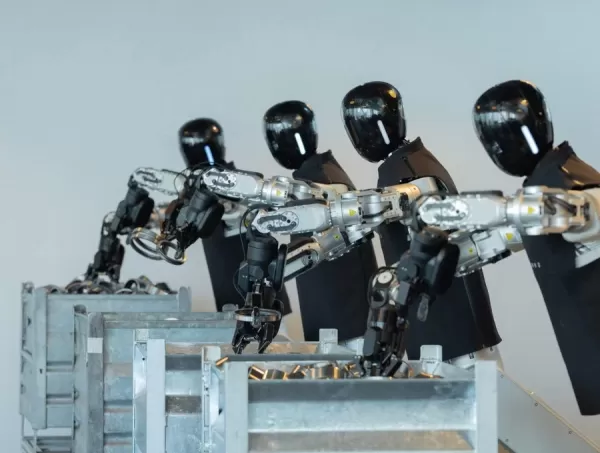 Hexagon: More than half of adults excited by robots
Robots are increasingly integrated into business operations. Credit: HumanoidHexagon data reveals 59% of adults are excited to work with robots, but a rising “Robot Generation” of children is far more eager for AI workplacesNew data from Hexagon sugg
Hexagon: More than half of adults excited by robots
Robots are increasingly integrated into business operations. Credit: HumanoidHexagon data reveals 59% of adults are excited to work with robots, but a rising “Robot Generation” of children is far more eager for AI workplacesNew data from Hexagon sugg
 Meta Expands Subscription Push With New AI-Focused Plans
Meta launched Meta One on Tuesday, a new subscription tier delivering expanded AI capabilities and premium perks across Facebook, Instagram, and WhatsApp. Subscribers gain access to a suite of AI tools for image and video creation, alongside in-app f
Meta Expands Subscription Push With New AI-Focused Plans
Meta launched Meta One on Tuesday, a new subscription tier delivering expanded AI capabilities and premium perks across Facebook, Instagram, and WhatsApp. Subscribers gain access to a suite of AI tools for image and video creation, alongside in-app f

2026 Latest Best ChatGPT Ad Copy Tools Reviewed! This curated top-rated list offers powerful game-changing solutions to help you craft high-converting copy for Meta campaigns, landing pages, and creative testing. Get a free vs paid comparison along with real-world tests and detailed rankings to find the must-try tool that boosts your productivity significantly. Explore now at XIX.AI to unlock your AI edge!
11 tools
xix.ai

2026 Latest Best Top-rated AI Pricing Strategy Tools for Market Testing! XIX.AI has curated a powerful game-changing collection of must-try tools, featuring weekly updated rankings and free vs paid comparison. These top-rated solutions help businesses run real-world tests, boost productivity, and discover the perfect pricing model to stand out in competitive markets. Explore now to Unlock your AI edge!
9 tools
xix.ai

2026 Latest Best Top-rated AI PDF Citation Extractors for Journal Articles, Methods Sections, and References are here on XIX.AI. This curated list features powerful game-changing tools that go through real-world tests to deliver accurate results every time. You can find a free vs paid comparison along with detailed rankings to help you choose the must-try option that boosts your research efficiency significantly. Explore now to discover your perfect tool for faster academic work!
9 tools
xix.ai
2026 Latest Best Canva AI Brand Kit Assistants for Social Creatives, Decks, and Campaign Assets! This curated top-rated list features powerful game-changing tools that help social creatives streamline content creation, boost writing efficiency, and produce high-quality assets fast through real-world tests. XIX.AI offers a free vs paid comparison to help you find the perfect fit. Explore now to unlock your AI edge!
12 tools
xix.ai

2026 Latest Best AI Integration Tools for No Code Automation Teams are here on XIX.AI! This curated list features top-rated, powerful solutions that help teams streamline workflows, boost productivity, and tackle complex automation tasks with ease. We conduct real-world tests to deliver accurate rankings and a free vs paid comparison, making it simple to find the must-try option that fits your needs. Explore now to uncover your perfect tool for seamless no code integration!
8 tools
xix.ai

2026 Latest Best Top-rated AI screen recording editors curated by XIX.AI for product demos, walkthroughs, and training clips. These powerful game-changing tools offer real-world tests, free vs paid comparison, and weekly updated rankings to help you boost productivity significantly. Explore now to Discover your perfect tool for streamlining creative workflows! 238 characters
10 tools
xix.ai












