


 Home
HomeHumanoid Robotics Era Emerges as a Present-Day Reality
Earlier this month, at a high school graduation ceremony in Fujian, China, a humanoid robot named Shuang Shuang took the stage to receive a diploma—shaking hands and sparking delight among students and teachers. Moments like these mark a meaningful shift, as humanoid robots increasingly enter public life in visible ways.
These events reflect more than fleeting curiosity—they signal a genuine move toward real-world integration. This article explores how humanoids evolve from mere spectacle to becoming functional tools—and why this achievement, while seemingly hardware-driven, depends deeply on the integrated intelligence that lets them walk, interact, and learn in unscripted environments. We’ll also look at how we approach commercialization through early deployment and lasting partnerships.
How humanoids push AI into the real world
One of the most overlooked challenges in AI remains the gap between virtual performance and physical reliability. While a chatbot can generate fluent text without acting on it, and a vision model can identify a step in a photo without ever navigating it or risking a fall, humanoids don’t have that luxury.
For AI to function in the real world, it must step beyond static datasets and controlled settings. It must perceive, decide, and act amid constantly shifting conditions—such as uneven flooring, misplaced objects, unpredictable human behavior, and subtle nonverbal cues. This means facing noise, ambiguity, and the possibility of failure on a daily basis.
This is where embodied reasoning—where language connects to space, time, and consequences—surpasses simple token prediction. For example, when someone says, “Be careful—it’s slippery,” the robot must grasp not just the phrase’s literal meaning but also the spatial risks and necessary real-time adjustments.
At the same time, multimodal learning becomes vital, because no single input channel is reliable enough on its own. A camera can miss a slick floor, but pressure sensors in the feet can detect a sudden loss of traction. Similarly, speech recognition might falter in a noisy warehouse—yet visual or gestural cues can help fill the gap.
Generalization also proves essential. A robot can’t count on seeing the exact same environment twice. It must adapt when the floors are wet, lighting changes, or a box isn’t where it was yesterday. That difference determines whether it succeeds or fails.
At Humanoid, that’s why we begin testing early with commercial partners. By placing our robots into active environments, we uncover potential flaws and optimize function prior to rollout. A robot that excels in simulation or a scripted demo is not the same as one that earns trust under pressure—trust built through real-world learning.
We know humanoids will be commercially available within the next two years. But we don’t wait. For us, commercialization starts early. It requires building long-term collaborations around real use cases. Through pilot programs, we not only introduce partners to the technology—we learn alongside them. This learning process also helps us refine cost structures and performance reliability from day one, ensuring an optimal total cost of ownership as we scale.
Why humanoids are the ultimate testbed for general intelligence
Over the last century, we’ve built an environment tailored to human scale. Door handles, forklifts, warehouses—all assume specific dimensions, movement ranges, and unspoken social behaviors. Humanoids must adapt to this reality or risk limited utility.
Whether climbing stairs, carrying objects, interpreting pointing gestures, or detecting hesitation in speech, a robot must grasp context far beyond visual classification or preprogrammed motion. It needs to infer intention, learn new tasks by observation, apply skills in varied layouts, and improve with repetition. In practice, this system expands what AI can achieve in real-world scenarios.
At Humanoid, we accelerate this development using teleoperation. In early stages, human operators guide robots through key tasks. This hands-on data trains new behaviors. Over time, these examples inform our end-to-end models, moving us steadily toward dependable autonomy.
From narrow systems to integrated intelligence
Today’s AI systems often excel at isolated tasks. But humanoids don’t need separate specialists. To integrate smoothly, they require systems that can reason across modalities and timescales.
Consider a simple command: “Go bring me the yellow box from the storage room across the hall.” A humanoid must break this down into steps: locate the speaker, navigate the corridor, identify the correct box, adjust its grip, avoid obstacles, and return safely.
Every step engages different subsystems—vision, navigation, language, manipulation, and feedback. The reliability of the whole depends on seamless communication across these parts amid shifting conditions.
Our solution is modular architecture. It lets us develop subsystems independently while maintaining system-wide coordination. This also allows us to scale capabilities across multiple environments without rebuilding from the ground up. It’s how we go from staged demos to open-world performance.
The stakes are massive — and they’re global
It's easy to dismiss humanoids as futuristic. Yet our customers tell us the need is urgent. Warehouses, assembly lines, and other work sites once bustling with people now struggle to stay staffed.
Labor shortages reflect deep demographic shifts. In Japan, nearly 30% of the population is over 65. In Europe, critical sectors—with a combined payroll of $1.7 trillion—struggle to attract younger workers. Many of these roles are no longer desired or accepted by the workforce.
By serving as helpful aides, not replacements, humanoids can handle repetitive, strenuous, or hazardous duties—moving stock, loading pallets, operating machinery—without risk of exhaustion or harm. That frees human workers to focus on complex, creative, or interpersonal responsibilities.
This also boosts long-term economic resilience. When labor is scarce or unreliable, intelligent machines help maintain continuity—without sacrificing safety, quality, or adaptability.
Another critical factor is compliance. While many teams, especially in less-regulated regions, delay tackling this issue, we started here. Europe’s safety and data laws are among the strictest worldwide. Rather than viewing them as hurdles, we treat them as competitive advantages. As other markets tighten their rules, we’ll be ready—while others may lag behind.
A new AI race — but not the one you think
Today’s AI discussions often revolve around compute power, parameter counts, and training datasets. Yet the real breakthrough may come from a different direction: integrating intelligence into the physical world. Here, AI must perform—not just predict.
In that sense, the real race is about creating capable systems—ones that operate safely in public, comply with regulations, and collaborate naturally with people. These systems learn not just from data, but through real-world experience—fitting seamlessly into daily workflows.
That’s why we don’t wait until deployment to begin. From the outset, we work with commercial partners to embed systems in real settings—ensuring improvement where it counts most: through practice.
This kind of practical learning is precisely where narrow AI systems fall short. Though they’ve brought us far, they weren’t built to handle such complexity. Humanoids demand something more—coordination, sturdiness, and the ability to learn from surprises.
That’s the massive opportunity ahead: not to automate everything, but to build machines that understand, navigate, and cooperate within our human-centered world.
Related article
 Toyota’s $6.4bn robotics estimate puts physical AI in focus
Toyota Motor projects that rolling out automation across its manufacturing facilities, subsidiaries, and key suppliers may require approximately 400,000 robots and an annual expenditure of roughly 1 trillion yen ($6.4 billion) starting in 2028.Accord
Japan tackles labor shortage with AI model for 10 million robots
Japan’s AI robotics initiative has transitioned from a discussion topic into an official national strategy. The government recently validated widely cited projections: deploying 10 million AI-driven robots across 18 sectors by 2040, supported by publ
Universal Robots Unveils Gen 7 for Physical AI Deployment
Will Healy, Director of Product & Industry Marketing at Universal Robots, credited for the imageWill Healy, Director of Product & Industry Marketing at Universal Robots, emphasizes that following the Gen 7 release, AI-driven robots must prioritize ad
Related Special Topic Recommendations
Design & Art
Toyota’s $6.4bn robotics estimate puts physical AI in focus
Toyota Motor projects that rolling out automation across its manufacturing facilities, subsidiaries, and key suppliers may require approximately 400,000 robots and an annual expenditure of roughly 1 trillion yen ($6.4 billion) starting in 2028.Accord
Japan tackles labor shortage with AI model for 10 million robots
Japan’s AI robotics initiative has transitioned from a discussion topic into an official national strategy. The government recently validated widely cited projections: deploying 10 million AI-driven robots across 18 sectors by 2040, supported by publ
Universal Robots Unveils Gen 7 for Physical AI Deployment
Will Healy, Director of Product & Industry Marketing at Universal Robots, credited for the imageWill Healy, Director of Product & Industry Marketing at Universal Robots, emphasizes that following the Gen 7 release, AI-driven robots must prioritize ad
Related Special Topic Recommendations
Design & Art
 Top AI Illustration Tools: Create Editorial Scenes and Cover Art Faster
2026 Latest Top-rated AI Illustration Tools: Our curated list features the best powerfully designed tools for creating stunning editorial scenes and eye-catching cover art quickly. Each option has gone through rigorous real-world tests, offering a free vs paid comparison to help you find the perfect match for your workflow. Try these must-try solutions today to unlock your AI edge and boost your creative productivity. Explore now at XIX.AI.
 10 tools
 xix.ai
Education and Learning
Top AI Tutors for Exam Prep: Practice Math, Science, and English
xix.ai
Education and Learning
Top AI Tutors for Exam Prep: Practice Math, Science, and English
2026 Latest Top-Rated Best AI Tutors for Exam Prep are here on XIX.AI! Our curated list features powerful game-changing tools that offer free vs paid comparison, real-world tests, and weekly updated rankings. They help boost your writing efficiency, simplify complex topic learning, and unlock your academic potential. Explore now to Discover your perfect exam prep tool and Start creating today to Unlock your AI edge!
10 tools
xix.ai
Finance
AI Budget Planning Tools for Personal Money Management
2026 Latest Best Top-Rated AI Budget Planning Tools for Personal Money Management are here on XIX.AI! This curated collection features powerful, game-changing solutions that help you conduct real-world tests, understand spending habits, and create personalized plans to boost productivity. Enjoy a free vs paid comparison along with detailed rankings. Must-try tools designed to simplify money management and unlock your AI edge. Explore now!
11 tools
xix.ai
Health & Wellness
AI Sleep Tracking Assistants: Improve Recovery with Better Bedtime Habits
2026 Latest Best Top-Rated AI Sleep Tracking Assistants curated for ultimate recovery. This fully updated weekly guide features powerful tools that deliver real-world tests, free vs paid comparison, and detailed rankings to help you find the must-try solution that boosts sleep quality and supports better bedtime habits. Explore now at XIX.AI to Unlock your AI edge.
10 tools
xix.ai
Data Analysis
AI SQL Copilots for Product and Revenue Analytics
2026 Latest Best Top-Rated AI SQL Copilots for Product and Revenue Analytics! XIX.AI has curated a powerful, game-changing collection of must-try tools that undergo real-world tests through weekly updated rankings. These tools help users boost productivity significantly by accelerating data analysis, streamlining complex queries, and generating accurate insights to drive smarter business decisions. Explore now to Discover your perfect tool for unlocking your AI edge!
14 tools
xix.ai
Education and Learning
Best AI Homework Helpers That Teach: Learn Concepts, Not Just Answers
2026 Latest Best Top-Rated AI Homework Helpers That Teach Core Concepts Not Just Answers Powerful Tools for Students Must-Try Curated List Weekly Updated Free vs Paid Comparison Real-World Tests Accurate Rankings to Help You Unlock Your Full Learning Potential Explore now to Discover your perfect tool for smarter studying.
10 tools
xix.ai

 Comments (3)
0/500
Comments (3)
0/500
![AlbertGarcía]()
Shuang Shuang shaking hands at a graduation ceremony? That's cute but also makes me think: are we really ready for humanoid robots in such intimate settings? 🤔 It's a fun glimpse into the future, but I'd rather keep them away from my diploma for now.
![EdwardMartinez]()
Okay, this is both cool and a bit unsettling. A robot getting a diploma? It's a neat PR stunt, but makes you wonder about the real-world applications beyond these symbolic gestures. Are we focusing on the flashy stuff while the core tech for useful labor is still years away? 🤔 The handshake part is wild, though.
![RalphSmith]()
Робот получает диплом вместо ученика? 😂 Интересно, сколько таких «студентов» уже работает в компаниях. Может, скоро начальником отдела станет андроид с красным дипломом? Честно говоря, это одновременно восхищает и пугает — где грань между помощью и заменой людей?
Earlier this month, at a high school graduation ceremony in Fujian, China, a humanoid robot named Shuang Shuang took the stage to receive a diploma—shaking hands and sparking delight among students and teachers. Moments like these mark a meaningful shift, as humanoid robots increasingly enter public life in visible ways.
These events reflect more than fleeting curiosity—they signal a genuine move toward real-world integration. This article explores how humanoids evolve from mere spectacle to becoming functional tools—and why this achievement, while seemingly hardware-driven, depends deeply on the integrated intelligence that lets them walk, interact, and learn in unscripted environments. We’ll also look at how we approach commercialization through early deployment and lasting partnerships.
How humanoids push AI into the real world
One of the most overlooked challenges in AI remains the gap between virtual performance and physical reliability. While a chatbot can generate fluent text without acting on it, and a vision model can identify a step in a photo without ever navigating it or risking a fall, humanoids don’t have that luxury.
For AI to function in the real world, it must step beyond static datasets and controlled settings. It must perceive, decide, and act amid constantly shifting conditions—such as uneven flooring, misplaced objects, unpredictable human behavior, and subtle nonverbal cues. This means facing noise, ambiguity, and the possibility of failure on a daily basis.
This is where embodied reasoning—where language connects to space, time, and consequences—surpasses simple token prediction. For example, when someone says, “Be careful—it’s slippery,” the robot must grasp not just the phrase’s literal meaning but also the spatial risks and necessary real-time adjustments.
At the same time, multimodal learning becomes vital, because no single input channel is reliable enough on its own. A camera can miss a slick floor, but pressure sensors in the feet can detect a sudden loss of traction. Similarly, speech recognition might falter in a noisy warehouse—yet visual or gestural cues can help fill the gap.
Generalization also proves essential. A robot can’t count on seeing the exact same environment twice. It must adapt when the floors are wet, lighting changes, or a box isn’t where it was yesterday. That difference determines whether it succeeds or fails.
At Humanoid, that’s why we begin testing early with commercial partners. By placing our robots into active environments, we uncover potential flaws and optimize function prior to rollout. A robot that excels in simulation or a scripted demo is not the same as one that earns trust under pressure—trust built through real-world learning.
We know humanoids will be commercially available within the next two years. But we don’t wait. For us, commercialization starts early. It requires building long-term collaborations around real use cases. Through pilot programs, we not only introduce partners to the technology—we learn alongside them. This learning process also helps us refine cost structures and performance reliability from day one, ensuring an optimal total cost of ownership as we scale.
Why humanoids are the ultimate testbed for general intelligence
Over the last century, we’ve built an environment tailored to human scale. Door handles, forklifts, warehouses—all assume specific dimensions, movement ranges, and unspoken social behaviors. Humanoids must adapt to this reality or risk limited utility.
Whether climbing stairs, carrying objects, interpreting pointing gestures, or detecting hesitation in speech, a robot must grasp context far beyond visual classification or preprogrammed motion. It needs to infer intention, learn new tasks by observation, apply skills in varied layouts, and improve with repetition. In practice, this system expands what AI can achieve in real-world scenarios.
At Humanoid, we accelerate this development using teleoperation. In early stages, human operators guide robots through key tasks. This hands-on data trains new behaviors. Over time, these examples inform our end-to-end models, moving us steadily toward dependable autonomy.
From narrow systems to integrated intelligence
Today’s AI systems often excel at isolated tasks. But humanoids don’t need separate specialists. To integrate smoothly, they require systems that can reason across modalities and timescales.
Consider a simple command: “Go bring me the yellow box from the storage room across the hall.” A humanoid must break this down into steps: locate the speaker, navigate the corridor, identify the correct box, adjust its grip, avoid obstacles, and return safely.
Every step engages different subsystems—vision, navigation, language, manipulation, and feedback. The reliability of the whole depends on seamless communication across these parts amid shifting conditions.
Our solution is modular architecture. It lets us develop subsystems independently while maintaining system-wide coordination. This also allows us to scale capabilities across multiple environments without rebuilding from the ground up. It’s how we go from staged demos to open-world performance.
The stakes are massive — and they’re global
It's easy to dismiss humanoids as futuristic. Yet our customers tell us the need is urgent. Warehouses, assembly lines, and other work sites once bustling with people now struggle to stay staffed.
Labor shortages reflect deep demographic shifts. In Japan, nearly 30% of the population is over 65. In Europe, critical sectors—with a combined payroll of $1.7 trillion—struggle to attract younger workers. Many of these roles are no longer desired or accepted by the workforce.
By serving as helpful aides, not replacements, humanoids can handle repetitive, strenuous, or hazardous duties—moving stock, loading pallets, operating machinery—without risk of exhaustion or harm. That frees human workers to focus on complex, creative, or interpersonal responsibilities.
This also boosts long-term economic resilience. When labor is scarce or unreliable, intelligent machines help maintain continuity—without sacrificing safety, quality, or adaptability.
Another critical factor is compliance. While many teams, especially in less-regulated regions, delay tackling this issue, we started here. Europe’s safety and data laws are among the strictest worldwide. Rather than viewing them as hurdles, we treat them as competitive advantages. As other markets tighten their rules, we’ll be ready—while others may lag behind.
A new AI race — but not the one you think
Today’s AI discussions often revolve around compute power, parameter counts, and training datasets. Yet the real breakthrough may come from a different direction: integrating intelligence into the physical world. Here, AI must perform—not just predict.
In that sense, the real race is about creating capable systems—ones that operate safely in public, comply with regulations, and collaborate naturally with people. These systems learn not just from data, but through real-world experience—fitting seamlessly into daily workflows.
That’s why we don’t wait until deployment to begin. From the outset, we work with commercial partners to embed systems in real settings—ensuring improvement where it counts most: through practice.
This kind of practical learning is precisely where narrow AI systems fall short. Though they’ve brought us far, they weren’t built to handle such complexity. Humanoids demand something more—coordination, sturdiness, and the ability to learn from surprises.
That’s the massive opportunity ahead: not to automate everything, but to build machines that understand, navigate, and cooperate within our human-centered world.








 Toyota’s $6.4bn robotics estimate puts physical AI in focus
Toyota Motor projects that rolling out automation across its manufacturing facilities, subsidiaries, and key suppliers may require approximately 400,000 robots and an annual expenditure of roughly 1 trillion yen ($6.4 billion) starting in 2028.Accord
Toyota’s $6.4bn robotics estimate puts physical AI in focus
Toyota Motor projects that rolling out automation across its manufacturing facilities, subsidiaries, and key suppliers may require approximately 400,000 robots and an annual expenditure of roughly 1 trillion yen ($6.4 billion) starting in 2028.Accord
 Japan tackles labor shortage with AI model for 10 million robots
Japan’s AI robotics initiative has transitioned from a discussion topic into an official national strategy. The government recently validated widely cited projections: deploying 10 million AI-driven robots across 18 sectors by 2040, supported by publ
Japan tackles labor shortage with AI model for 10 million robots
Japan’s AI robotics initiative has transitioned from a discussion topic into an official national strategy. The government recently validated widely cited projections: deploying 10 million AI-driven robots across 18 sectors by 2040, supported by publ
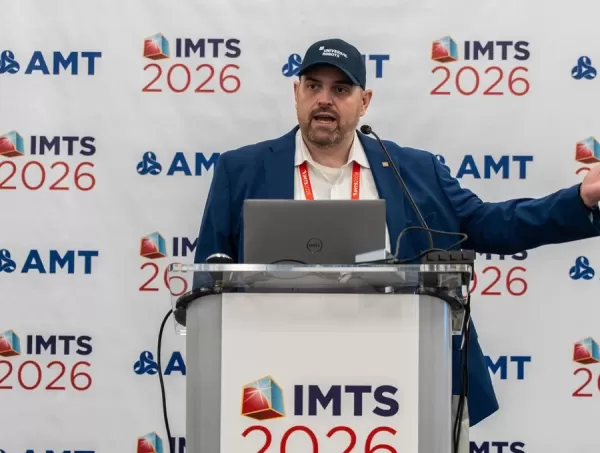 Universal Robots Unveils Gen 7 for Physical AI Deployment
Will Healy, Director of Product & Industry Marketing at Universal Robots, credited for the imageWill Healy, Director of Product & Industry Marketing at Universal Robots, emphasizes that following the Gen 7 release, AI-driven robots must prioritize ad
Universal Robots Unveils Gen 7 for Physical AI Deployment
Will Healy, Director of Product & Industry Marketing at Universal Robots, credited for the imageWill Healy, Director of Product & Industry Marketing at Universal Robots, emphasizes that following the Gen 7 release, AI-driven robots must prioritize ad

2026 Latest Top-rated AI Illustration Tools: Our curated list features the best powerfully designed tools for creating stunning editorial scenes and eye-catching cover art quickly. Each option has gone through rigorous real-world tests, offering a free vs paid comparison to help you find the perfect match for your workflow. Try these must-try solutions today to unlock your AI edge and boost your creative productivity. Explore now at XIX.AI.
10 tools
xix.ai

2026 Latest Top-Rated Best AI Tutors for Exam Prep are here on XIX.AI! Our curated list features powerful game-changing tools that offer free vs paid comparison, real-world tests, and weekly updated rankings. They help boost your writing efficiency, simplify complex topic learning, and unlock your academic potential. Explore now to Discover your perfect exam prep tool and Start creating today to Unlock your AI edge!
10 tools
xix.ai

2026 Latest Best Top-Rated AI Budget Planning Tools for Personal Money Management are here on XIX.AI! This curated collection features powerful, game-changing solutions that help you conduct real-world tests, understand spending habits, and create personalized plans to boost productivity. Enjoy a free vs paid comparison along with detailed rankings. Must-try tools designed to simplify money management and unlock your AI edge. Explore now!
11 tools
xix.ai

2026 Latest Best Top-Rated AI Sleep Tracking Assistants curated for ultimate recovery. This fully updated weekly guide features powerful tools that deliver real-world tests, free vs paid comparison, and detailed rankings to help you find the must-try solution that boosts sleep quality and supports better bedtime habits. Explore now at XIX.AI to Unlock your AI edge.
10 tools
xix.ai

2026 Latest Best Top-Rated AI SQL Copilots for Product and Revenue Analytics! XIX.AI has curated a powerful, game-changing collection of must-try tools that undergo real-world tests through weekly updated rankings. These tools help users boost productivity significantly by accelerating data analysis, streamlining complex queries, and generating accurate insights to drive smarter business decisions. Explore now to Discover your perfect tool for unlocking your AI edge!
14 tools
xix.ai

2026 Latest Best Top-Rated AI Homework Helpers That Teach Core Concepts Not Just Answers Powerful Tools for Students Must-Try Curated List Weekly Updated Free vs Paid Comparison Real-World Tests Accurate Rankings to Help You Unlock Your Full Learning Potential Explore now to Discover your perfect tool for smarter studying.
10 tools
xix.ai

Shuang Shuang shaking hands at a graduation ceremony? That's cute but also makes me think: are we really ready for humanoid robots in such intimate settings? 🤔 It's a fun glimpse into the future, but I'd rather keep them away from my diploma for now.
Okay, this is both cool and a bit unsettling. A robot getting a diploma? It's a neat PR stunt, but makes you wonder about the real-world applications beyond these symbolic gestures. Are we focusing on the flashy stuff while the core tech for useful labor is still years away? 🤔 The handshake part is wild, though.
Робот получает диплом вместо ученика? 😂 Интересно, сколько таких «студентов» уже работает в компаниях. Может, скоро начальником отдела станет андроид с красным дипломом? Честно говоря, это одновременно восхищает и пугает — где грань между помощью и заменой людей?












