


 Home
HomeOpenAI's GPT-4.5 Model Unveiled: A Critical Assessment
The AI community is abuzz with OpenAI's recent GPT-4.5 announcement. Following the livestream reveal, the central question remains: does this represent a major breakthrough, or merely a subtle upgrade? Our in-depth analysis examines the claims surrounding GPT-4.5, comparing it to its predecessors and rivals to separate fact from the promotional hype.
Key Points
GPT-4.5 is marketed as a versatile, general-purpose model with enhanced pre-training.
Early benchmark data presents a mixed picture, showing GPT-4.5 lagging behind certain open-source models on specific tasks.
The API pricing for GPT-4.5 is substantially higher than previous versions.
Questions are emerging about whether OpenAI is prioritizing sheer scale over genuine, innovative improvements in model architecture and training methodologies.
Alternatives such as DeepSeek V3 offer a strong open-source option with comparable performance and greater efficiency.
GPT-4.5: Promise vs. Reality
Initial Reactions and Unanswered Questions
The reaction to the GPT-4.5 unveiling has been a blend of excitement and doubt.

The emphasis on making the model seem "more natural" prompts questions about its concrete, measurable advancements. Many are left wondering: Are its hallucinations reduced? How much does it truly surpass GPT-4o in everyday applications? These unresolved queries call for a deeper look into the model's performance and technical foundations.
A sense of disappointment is palpable within the AI field. Users are seeking quantifiable progress that goes beyond a superficially natural conversational style. The real measure of its success will be its capacity to manage complex tasks, provide practical solutions, and produce genuinely creative results.
Ultimately, any AI model is judged by its objective performance and cost-effectiveness. Without major strides in these key areas, the appeal of a "more natural" interaction may not be sufficient to warrant an upgrade.
Benchmark Comparisons: A Closer Look
The official benchmark data for GPT-4.5 paints a somewhat lackluster picture.
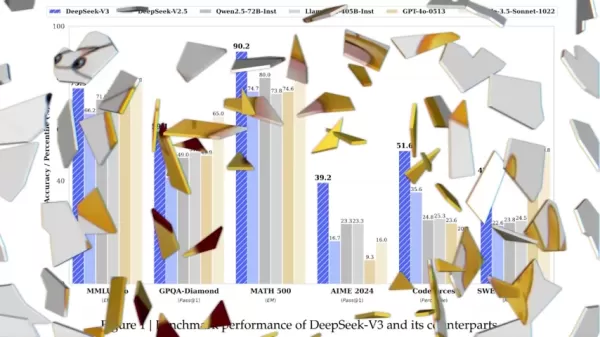
While it demonstrates gains in certain domains, its performance notably falls short against DeepSeek V3, a relatively new open-source model. This is surprising, considering OpenAI's vast resources and expertise. The decision to primarily compare GPT-4.5 against its direct predecessor, GPT-4o, instead of a wider array of modern competitors, further deepens the skepticism.
Here's a breakdown of the benchmark performance, highlighting key areas of concern:
- Math (AIME '24): GPT-4.5 achieves a 36.7% accuracy rate, which is relatively low compared to other foundational models available. This is a crucial capability, as robust mathematical reasoning is essential for numerous real-world applications.
- Science (GPQA): Here, GPT-4.5 performs more robustly, reaching 71.4% accuracy. This suggests a solid understanding of scientific principles, though it doesn't automatically imply superior overall capability.
- Coding (SWE-Bench Verified): GPT-4.5 scores 38%, indicating a significant weakness in programming tasks.
It's vital to remember that these benchmarks offer only a limited view of the model's abilities in specific, controlled scenarios. A thorough assessment demands testing across diverse, real-world applications to accurately gauge its potential.
Task GPT-4.5 Accuracy GPT-4o Accuracy GPQA (Science) 71.4% 53.6% AIME '24 (Math) 36.7% 9.3% SWE-Bench Verified (Coding) 38% 31% MMMU (Multimodal) 74.4% 69.1%
API Pricing: A Premium for 'Naturalness'?
The cost of using the GPT-4.5 API is markedly steeper than earlier models.

This pricing strategy raises important questions about accessibility, especially for smaller companies and independent developers. Is the perceived improvement in “naturalness” compelling enough to justify the substantial price increase?
For a majority, the answer will probably be negative. The fundamental value of an AI model lies in its performance, precision, and operational efficiency. If GPT-4.5 fails to deliver a substantial leap forward in these core metrics, its premium cost becomes difficult to defend. More affordable open-source alternatives are likely to gain significant traction.
Consider the Aider coding benchmark: Executing it on GPT-4.5 is far more expensive than using DeepSeek V3. This kind of price disparity creates a higher barrier to entry and could hinder GPT-4.5's widespread adoption among developers.
Furthermore, it is reportedly hundreds of times more expensive than DeepSeek. This cost factor alone could be a decisive reason for many to bypass GPT-4.5 in favor of more economical systems.
Model Input Price (per 1M tokens) Output Price (per 1M tokens) GPT-4.5 $75.00 $150.00 GPT-4o $2.50 $10.00
The Rise of Open-Source Alternatives: DeepSeek V3
Why DeepSeek V3 Deserves Attention
The rise of high-performance open-source models like DeepSeek V3 poses a serious challenge to OpenAI's market leadership.
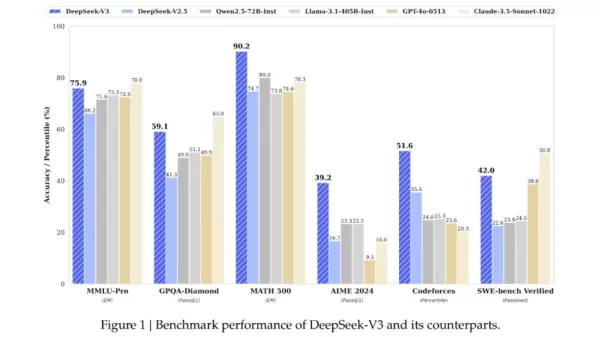
DeepSeek V3 provides an attractive package of competitive performance, operational efficiency, and model transparency. It reportedly costs hundreds of times less than GPT-4.5.
Here are some of its primary benefits:
- Competitive Performance: As benchmarks indicate, DeepSeek V3 competes with, and sometimes surpasses, GPT-4.5 in key areas like mathematics and coding.
- Cost Efficiency: Being open-source, DeepSeek V3 has no associated API costs, making it vastly more affordable to deploy. This opens up advanced AI to a much broader audience.
- Transparency and Customization: Open-source models provide greater visibility into their workings and allow for extensive customization. Developers can adapt the model for specific uses and participate in its evolution.
It's worth noting that DeepSeek recently held an "open source week," releasing multiple repositories focused on GPU efficiency and optimization. This is the type of practical innovation many businesses need to scale their operations, rather than simply refining a model's conversational feel.
GPT-4.5: Weighing the Pros and Cons
Pros
Potential for more natural and fluid language interactions.
Possible specialized advancements in certain task categories.
Ongoing development and maintenance support from OpenAI.
Strong general language proficiency.
Cons
Prohibitively high API costs relative to competing models.
Performance that trails behind leading open-source alternatives in several benchmarks.
A lack of clarity regarding the model's internal architecture and training data.
Demonstrated weaknesses in mathematical and coding tasks.
Priced 12 to 30 times higher than GPT-4o.
Frequently Asked Questions
Is GPT-4.5 a significant upgrade from GPT-4o?
Initial benchmark results are inconsistent. It shows progress in some disciplines but falls short against other open-source models on specific challenges. More comprehensive, real-world evaluation is required to definitively assess its value.
Is GPT-4.5 worth the high API cost?
The answer hinges on your particular requirements and financial constraints. If you need top-tier performance for specific, critical applications, it may warrant consideration. However, for most users, the steep price is hard to justify, particularly with capable and freely available open-source options.
What are the key advantages of open-source AI models like DeepSeek V3?
Open-source models provide competitive performance, exceptional cost-efficiency, greater operational transparency, and flexibility for customization. They make powerful AI tools accessible to everyone and encourage community-driven innovation.
Related Questions
What is the future of AI model development?
The trajectory of AI development will likely involve a synergy between proprietary and open-source efforts. Major tech firms like OpenAI will continue to advance the state of the art with large-scale models, while the open-source community will be crucial in democratizing AI access and fostering innovation through collaborative development and customization. It's important to recognize that GPT-4.5 has notable shortcomings, and OpenAI will need to address several aspects to effectively compete with other open-source models.
Related article
 Ctrip Business Travel Unveils AI Ecosystem with 7 Industry Agents and 17 Core Capabilities
Ctrip Business Travel has officially unveiled the "Ctrip Business Travel AI Ecosystem," leveraging large language models to fundamentally restructure corporate travel management. This comprehensive ecosystem addresses four core scenarios: travel arra
Stripe to Acquire OpenRouter as AI Model Routing Gains Momentum
Stripe has agreed to acquire OpenRouter, an AI model-routing platform that gives developers access to hundreds of models through a single interface. The deal adds model selection and routing to Stripe’s existing work around AI usage and token-based b
Former OpenAI Researcher Barrett Zoph Returns to Google to Support Gemini Development
Barret Zoph, who previously abruptly left and joined OpenAI due to a disagreement with Thinking Machines Lab CEO Miriam Mularati, has once again changed employers. Alphabet's Google announced that Zoph will return as Vice President of Research, bring
Related Special Topic Recommendations
Design & Art
Ctrip Business Travel Unveils AI Ecosystem with 7 Industry Agents and 17 Core Capabilities
Ctrip Business Travel has officially unveiled the "Ctrip Business Travel AI Ecosystem," leveraging large language models to fundamentally restructure corporate travel management. This comprehensive ecosystem addresses four core scenarios: travel arra
Stripe to Acquire OpenRouter as AI Model Routing Gains Momentum
Stripe has agreed to acquire OpenRouter, an AI model-routing platform that gives developers access to hundreds of models through a single interface. The deal adds model selection and routing to Stripe’s existing work around AI usage and token-based b
Former OpenAI Researcher Barrett Zoph Returns to Google to Support Gemini Development
Barret Zoph, who previously abruptly left and joined OpenAI due to a disagreement with Thinking Machines Lab CEO Miriam Mularati, has once again changed employers. Alphabet's Google announced that Zoph will return as Vice President of Research, bring
Related Special Topic Recommendations
Design & Art
 Top AI Illustration Tools: Create Editorial Scenes and Cover Art Faster
2026 Latest Top-rated AI Illustration Tools: Our curated list features the best powerfully designed tools for creating stunning editorial scenes and eye-catching cover art quickly. Each option has gone through rigorous real-world tests, offering a free vs paid comparison to help you find the perfect match for your workflow. Try these must-try solutions today to unlock your AI edge and boost your creative productivity. Explore now at XIX.AI.
 10 tools
 xix.ai
Education and Learning
Top AI Tutors for Exam Prep: Practice Math, Science, and English
xix.ai
Education and Learning
Top AI Tutors for Exam Prep: Practice Math, Science, and English
2026 Latest Top-Rated Best AI Tutors for Exam Prep are here on XIX.AI! Our curated list features powerful game-changing tools that offer free vs paid comparison, real-world tests, and weekly updated rankings. They help boost your writing efficiency, simplify complex topic learning, and unlock your academic potential. Explore now to Discover your perfect exam prep tool and Start creating today to Unlock your AI edge!
10 tools
xix.ai
Finance
AI Budget Planning Tools for Personal Money Management
2026 Latest Best Top-Rated AI Budget Planning Tools for Personal Money Management are here on XIX.AI! This curated collection features powerful, game-changing solutions that help you conduct real-world tests, understand spending habits, and create personalized plans to boost productivity. Enjoy a free vs paid comparison along with detailed rankings. Must-try tools designed to simplify money management and unlock your AI edge. Explore now!
11 tools
xix.ai
Health & Wellness
AI Sleep Tracking Assistants: Improve Recovery with Better Bedtime Habits
2026 Latest Best Top-Rated AI Sleep Tracking Assistants curated for ultimate recovery. This fully updated weekly guide features powerful tools that deliver real-world tests, free vs paid comparison, and detailed rankings to help you find the must-try solution that boosts sleep quality and supports better bedtime habits. Explore now at XIX.AI to Unlock your AI edge.
10 tools
xix.ai
Data Analysis
AI SQL Copilots for Product and Revenue Analytics
2026 Latest Best Top-Rated AI SQL Copilots for Product and Revenue Analytics! XIX.AI has curated a powerful, game-changing collection of must-try tools that undergo real-world tests through weekly updated rankings. These tools help users boost productivity significantly by accelerating data analysis, streamlining complex queries, and generating accurate insights to drive smarter business decisions. Explore now to Discover your perfect tool for unlocking your AI edge!
14 tools
xix.ai
Education and Learning
Best AI Homework Helpers That Teach: Learn Concepts, Not Just Answers
2026 Latest Best Top-Rated AI Homework Helpers That Teach Core Concepts Not Just Answers Powerful Tools for Students Must-Try Curated List Weekly Updated Free vs Paid Comparison Real-World Tests Accurate Rankings to Help You Unlock Your Full Learning Potential Explore now to Discover your perfect tool for smarter studying.
10 tools
xix.ai

 Comments (15)
0/500
Comments (15)
0/500
![NicholasLewis]()
Mais uma atualização menor disfarçada de revolução? O mercado está saturado e essas promessas repetidas já não empolgam. Vou esperar para ver se os resultados reais justificam o barulho.
![JoeLee]()
Otra actualización menor disfrazada de revolución. El mercado está saturado y estas promesas repetidas ya no emocionan. Esperaré a ver si los resultados reales justifican el ruido.
![WilliamYoung]()
GPT-4.5? Klingt nach Marketing, nicht nach Innovation. Die Analyse zeigt eher kleine Schritte als einen Quantensprung. Ich bleibe skeptisch, bis mehr Daten vorliegen.
![WillLopez]()
GPT-4.5 발표, 솔직히 기대 이하인 것 같아요. 큰 혁신보다는 점진적 개선에 가깝고, 가격 대비 성능이 궁금하네요. 아직은观望 중입니다.
![BenWalker]()
Снова обещают прорыв, а на деле — косметические улучшения. Рынок перегрет, и такие анонсы уже не вызывают восторга. Нужно больше доказательств реальной пользы.
![CarlMartin]()
Encore une mise à jour mineure déguisée en révolution ? Le marché est saturé, et ces annonces répétées lassent. J'attends de voir si les performances réelles justifient le buzz.
The AI community is abuzz with OpenAI's recent GPT-4.5 announcement. Following the livestream reveal, the central question remains: does this represent a major breakthrough, or merely a subtle upgrade? Our in-depth analysis examines the claims surrounding GPT-4.5, comparing it to its predecessors and rivals to separate fact from the promotional hype.
Key Points
GPT-4.5 is marketed as a versatile, general-purpose model with enhanced pre-training.
Early benchmark data presents a mixed picture, showing GPT-4.5 lagging behind certain open-source models on specific tasks.
The API pricing for GPT-4.5 is substantially higher than previous versions.
Questions are emerging about whether OpenAI is prioritizing sheer scale over genuine, innovative improvements in model architecture and training methodologies.
Alternatives such as DeepSeek V3 offer a strong open-source option with comparable performance and greater efficiency.
GPT-4.5: Promise vs. Reality
Initial Reactions and Unanswered Questions
The reaction to the GPT-4.5 unveiling has been a blend of excitement and doubt.
The emphasis on making the model seem "more natural" prompts questions about its concrete, measurable advancements. Many are left wondering: Are its hallucinations reduced? How much does it truly surpass GPT-4o in everyday applications? These unresolved queries call for a deeper look into the model's performance and technical foundations.
A sense of disappointment is palpable within the AI field. Users are seeking quantifiable progress that goes beyond a superficially natural conversational style. The real measure of its success will be its capacity to manage complex tasks, provide practical solutions, and produce genuinely creative results.
Ultimately, any AI model is judged by its objective performance and cost-effectiveness. Without major strides in these key areas, the appeal of a "more natural" interaction may not be sufficient to warrant an upgrade.
Benchmark Comparisons: A Closer Look
The official benchmark data for GPT-4.5 paints a somewhat lackluster picture.
While it demonstrates gains in certain domains, its performance notably falls short against DeepSeek V3, a relatively new open-source model. This is surprising, considering OpenAI's vast resources and expertise. The decision to primarily compare GPT-4.5 against its direct predecessor, GPT-4o, instead of a wider array of modern competitors, further deepens the skepticism.
Here's a breakdown of the benchmark performance, highlighting key areas of concern:
- Math (AIME '24): GPT-4.5 achieves a 36.7% accuracy rate, which is relatively low compared to other foundational models available. This is a crucial capability, as robust mathematical reasoning is essential for numerous real-world applications.
- Science (GPQA): Here, GPT-4.5 performs more robustly, reaching 71.4% accuracy. This suggests a solid understanding of scientific principles, though it doesn't automatically imply superior overall capability.
- Coding (SWE-Bench Verified): GPT-4.5 scores 38%, indicating a significant weakness in programming tasks.
It's vital to remember that these benchmarks offer only a limited view of the model's abilities in specific, controlled scenarios. A thorough assessment demands testing across diverse, real-world applications to accurately gauge its potential.
| Task | GPT-4.5 Accuracy | GPT-4o Accuracy |
|---|---|---|
| GPQA (Science) | 71.4% | 53.6% |
| AIME '24 (Math) | 36.7% | 9.3% |
| SWE-Bench Verified (Coding) | 38% | 31% |
| MMMU (Multimodal) | 74.4% | 69.1% |
API Pricing: A Premium for 'Naturalness'?
The cost of using the GPT-4.5 API is markedly steeper than earlier models.
This pricing strategy raises important questions about accessibility, especially for smaller companies and independent developers. Is the perceived improvement in “naturalness” compelling enough to justify the substantial price increase?
For a majority, the answer will probably be negative. The fundamental value of an AI model lies in its performance, precision, and operational efficiency. If GPT-4.5 fails to deliver a substantial leap forward in these core metrics, its premium cost becomes difficult to defend. More affordable open-source alternatives are likely to gain significant traction.
Consider the Aider coding benchmark: Executing it on GPT-4.5 is far more expensive than using DeepSeek V3. This kind of price disparity creates a higher barrier to entry and could hinder GPT-4.5's widespread adoption among developers.
Furthermore, it is reportedly hundreds of times more expensive than DeepSeek. This cost factor alone could be a decisive reason for many to bypass GPT-4.5 in favor of more economical systems.
| Model | Input Price (per 1M tokens) | Output Price (per 1M tokens) |
|---|---|---|
| GPT-4.5 | $75.00 | $150.00 |
| GPT-4o | $2.50 | $10.00 |
The Rise of Open-Source Alternatives: DeepSeek V3
Why DeepSeek V3 Deserves Attention
The rise of high-performance open-source models like DeepSeek V3 poses a serious challenge to OpenAI's market leadership.
DeepSeek V3 provides an attractive package of competitive performance, operational efficiency, and model transparency. It reportedly costs hundreds of times less than GPT-4.5.
Here are some of its primary benefits:
- Competitive Performance: As benchmarks indicate, DeepSeek V3 competes with, and sometimes surpasses, GPT-4.5 in key areas like mathematics and coding.
- Cost Efficiency: Being open-source, DeepSeek V3 has no associated API costs, making it vastly more affordable to deploy. This opens up advanced AI to a much broader audience.
- Transparency and Customization: Open-source models provide greater visibility into their workings and allow for extensive customization. Developers can adapt the model for specific uses and participate in its evolution.
It's worth noting that DeepSeek recently held an "open source week," releasing multiple repositories focused on GPU efficiency and optimization. This is the type of practical innovation many businesses need to scale their operations, rather than simply refining a model's conversational feel.
GPT-4.5: Weighing the Pros and Cons
Pros
Potential for more natural and fluid language interactions.
Possible specialized advancements in certain task categories.
Ongoing development and maintenance support from OpenAI.
Strong general language proficiency.
Cons
Prohibitively high API costs relative to competing models.
Performance that trails behind leading open-source alternatives in several benchmarks.
A lack of clarity regarding the model's internal architecture and training data.
Demonstrated weaknesses in mathematical and coding tasks.
Priced 12 to 30 times higher than GPT-4o.
Frequently Asked Questions
Is GPT-4.5 a significant upgrade from GPT-4o?
Initial benchmark results are inconsistent. It shows progress in some disciplines but falls short against other open-source models on specific challenges. More comprehensive, real-world evaluation is required to definitively assess its value.
Is GPT-4.5 worth the high API cost?
The answer hinges on your particular requirements and financial constraints. If you need top-tier performance for specific, critical applications, it may warrant consideration. However, for most users, the steep price is hard to justify, particularly with capable and freely available open-source options.
What are the key advantages of open-source AI models like DeepSeek V3?
Open-source models provide competitive performance, exceptional cost-efficiency, greater operational transparency, and flexibility for customization. They make powerful AI tools accessible to everyone and encourage community-driven innovation.
Related Questions
What is the future of AI model development?
The trajectory of AI development will likely involve a synergy between proprietary and open-source efforts. Major tech firms like OpenAI will continue to advance the state of the art with large-scale models, while the open-source community will be crucial in democratizing AI access and fostering innovation through collaborative development and customization. It's important to recognize that GPT-4.5 has notable shortcomings, and OpenAI will need to address several aspects to effectively compete with other open-source models.








 Ctrip Business Travel Unveils AI Ecosystem with 7 Industry Agents and 17 Core Capabilities
Ctrip Business Travel has officially unveiled the "Ctrip Business Travel AI Ecosystem," leveraging large language models to fundamentally restructure corporate travel management. This comprehensive ecosystem addresses four core scenarios: travel arra
Ctrip Business Travel Unveils AI Ecosystem with 7 Industry Agents and 17 Core Capabilities
Ctrip Business Travel has officially unveiled the "Ctrip Business Travel AI Ecosystem," leveraging large language models to fundamentally restructure corporate travel management. This comprehensive ecosystem addresses four core scenarios: travel arra
 Stripe to Acquire OpenRouter as AI Model Routing Gains Momentum
Stripe has agreed to acquire OpenRouter, an AI model-routing platform that gives developers access to hundreds of models through a single interface. The deal adds model selection and routing to Stripe’s existing work around AI usage and token-based b
Stripe to Acquire OpenRouter as AI Model Routing Gains Momentum
Stripe has agreed to acquire OpenRouter, an AI model-routing platform that gives developers access to hundreds of models through a single interface. The deal adds model selection and routing to Stripe’s existing work around AI usage and token-based b
 Former OpenAI Researcher Barrett Zoph Returns to Google to Support Gemini Development
Barret Zoph, who previously abruptly left and joined OpenAI due to a disagreement with Thinking Machines Lab CEO Miriam Mularati, has once again changed employers. Alphabet's Google announced that Zoph will return as Vice President of Research, bring
Former OpenAI Researcher Barrett Zoph Returns to Google to Support Gemini Development
Barret Zoph, who previously abruptly left and joined OpenAI due to a disagreement with Thinking Machines Lab CEO Miriam Mularati, has once again changed employers. Alphabet's Google announced that Zoph will return as Vice President of Research, bring

2026 Latest Top-rated AI Illustration Tools: Our curated list features the best powerfully designed tools for creating stunning editorial scenes and eye-catching cover art quickly. Each option has gone through rigorous real-world tests, offering a free vs paid comparison to help you find the perfect match for your workflow. Try these must-try solutions today to unlock your AI edge and boost your creative productivity. Explore now at XIX.AI.
10 tools
xix.ai

2026 Latest Top-Rated Best AI Tutors for Exam Prep are here on XIX.AI! Our curated list features powerful game-changing tools that offer free vs paid comparison, real-world tests, and weekly updated rankings. They help boost your writing efficiency, simplify complex topic learning, and unlock your academic potential. Explore now to Discover your perfect exam prep tool and Start creating today to Unlock your AI edge!
10 tools
xix.ai

2026 Latest Best Top-Rated AI Budget Planning Tools for Personal Money Management are here on XIX.AI! This curated collection features powerful, game-changing solutions that help you conduct real-world tests, understand spending habits, and create personalized plans to boost productivity. Enjoy a free vs paid comparison along with detailed rankings. Must-try tools designed to simplify money management and unlock your AI edge. Explore now!
11 tools
xix.ai

2026 Latest Best Top-Rated AI Sleep Tracking Assistants curated for ultimate recovery. This fully updated weekly guide features powerful tools that deliver real-world tests, free vs paid comparison, and detailed rankings to help you find the must-try solution that boosts sleep quality and supports better bedtime habits. Explore now at XIX.AI to Unlock your AI edge.
10 tools
xix.ai

2026 Latest Best Top-Rated AI SQL Copilots for Product and Revenue Analytics! XIX.AI has curated a powerful, game-changing collection of must-try tools that undergo real-world tests through weekly updated rankings. These tools help users boost productivity significantly by accelerating data analysis, streamlining complex queries, and generating accurate insights to drive smarter business decisions. Explore now to Discover your perfect tool for unlocking your AI edge!
14 tools
xix.ai

2026 Latest Best Top-Rated AI Homework Helpers That Teach Core Concepts Not Just Answers Powerful Tools for Students Must-Try Curated List Weekly Updated Free vs Paid Comparison Real-World Tests Accurate Rankings to Help You Unlock Your Full Learning Potential Explore now to Discover your perfect tool for smarter studying.
10 tools
xix.ai

Mais uma atualização menor disfarçada de revolução? O mercado está saturado e essas promessas repetidas já não empolgam. Vou esperar para ver se os resultados reais justificam o barulho.
Otra actualización menor disfrazada de revolución. El mercado está saturado y estas promesas repetidas ya no emocionan. Esperaré a ver si los resultados reales justifican el ruido.
GPT-4.5? Klingt nach Marketing, nicht nach Innovation. Die Analyse zeigt eher kleine Schritte als einen Quantensprung. Ich bleibe skeptisch, bis mehr Daten vorliegen.
GPT-4.5 발표, 솔직히 기대 이하인 것 같아요. 큰 혁신보다는 점진적 개선에 가깝고, 가격 대비 성능이 궁금하네요. 아직은观望 중입니다.
Снова обещают прорыв, а на деле — косметические улучшения. Рынок перегрет, и такие анонсы уже не вызывают восторга. Нужно больше доказательств реальной пользы.
Encore une mise à jour mineure déguisée en révolution ? Le marché est saturé, et ces annonces répétées lassent. J'attends de voir si les performances réelles justifient le buzz.












