


 Home
HomeGoogle Gemini One-Click Import Lets You Skip Starting from Scratch
Amid the intense competition among AI assistants, the "switching cost" for users moving between platforms has long been a key battleground for major companies. On March 27, Google's Gemini assistant officially launched the "Memory Import" feature, aiming to dismantle data silos that separate different AI platforms.
This new capability lets users seamlessly migrate their conversation history and personal preferences from other AI assistants to Gemini, addressing the common frustration of having to retrain the AI and re-express habits and needs after switching tools.
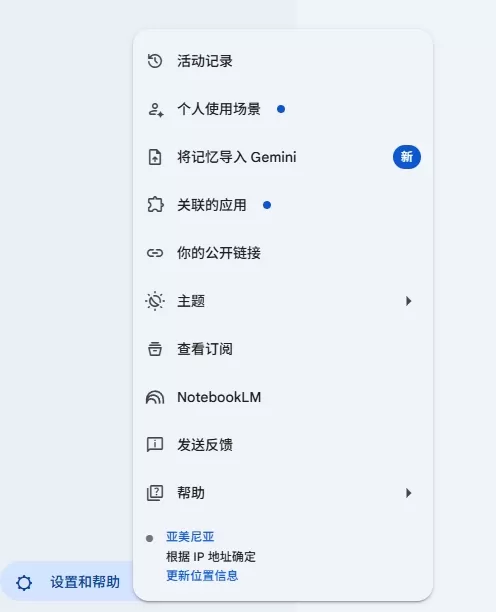
Two Migration Paths: Flexible Solutions for Short-Term and Long-Term Data
Gemini's import feature provides two distinct paths tailored to different needs. The first, called "Prompt Copy Migration," involves running a specific summary command within the original AI chat interface. This command generates a concise report on user preferences and habits, which can then be copied and pasted into Gemini to complete the migration.
The second option, "Bulk Dialog Data Import," allows users to export full historical data packages from other providers and upload them to Gemini as compressed files, with a maximum file size of 5GB. This method preserves detailed long-term interaction records, helping Gemini quickly grasp complex work contexts or creative projects.
Breaking Down Platform Barriers: Balancing Data Sovereignty with Service Optimization
Google's initiative is widely viewed as a response to users' demand for data portability. With a one-click migration, Gemini can seamlessly resume incomplete schedule settings, adopt preferred communication styles, or understand specialized industry backgrounds. According to the feature description, all imported data and subsequent interactions are logged in the user's activity profile and used to deliver personalized services and refine model performance.
Meanwhile, users retain full control over their data, which can be viewed or permanently deleted at any time. This approach of reducing migration friction not only makes Gemini more appealing but also signals a shift in the AI assistant industry from walled-garden strategies toward a more open model of data mobility.
Related article
 DeepMind CEO Hassabis: I sleep six hours a day, usually feel energetic around 1 a.m.
Fortune recently featured an interview with Demis Hassabis, CEO of Google DeepMind, revealing his unconventional approach to rest and productivity. Hassabis disclosed that he sleeps very little, structuring his waking hours into two distinct work blo
OpenAI, Anthropic Vie for Market Share Despite Revenue Shortfalls
Despite recent reports suggesting OpenAI missed revenue targets, creating pressure on tech stocks this Tuesday, private AI lab investors remain resilient. Seasoned backers have confirmed they will not reduce investment despite negative media coverage
California AV Compliance: A New Era of Tickets, Geofences, and 1M Miles
Guident operates an AuveTech shuttle in South Florida, managing a four-mile route in West Palm Beach and a one-mile route in Boca Raton using its remote monitoring technology. | Credit: GuidentCalifornia is redefining the regulatory landscape for dri
Related Special Topic Recommendations
writing
DeepMind CEO Hassabis: I sleep six hours a day, usually feel energetic around 1 a.m.
Fortune recently featured an interview with Demis Hassabis, CEO of Google DeepMind, revealing his unconventional approach to rest and productivity. Hassabis disclosed that he sleeps very little, structuring his waking hours into two distinct work blo
OpenAI, Anthropic Vie for Market Share Despite Revenue Shortfalls
Despite recent reports suggesting OpenAI missed revenue targets, creating pressure on tech stocks this Tuesday, private AI lab investors remain resilient. Seasoned backers have confirmed they will not reduce investment despite negative media coverage
California AV Compliance: A New Era of Tickets, Geofences, and 1M Miles
Guident operates an AuveTech shuttle in South Florida, managing a four-mile route in West Palm Beach and a one-mile route in Boca Raton using its remote monitoring technology. | Credit: GuidentCalifornia is redefining the regulatory landscape for dri
Related Special Topic Recommendations
writing
 AI Article Outline Tools for Long Form Writing
2026 Latest Best Top-Rated AI Article Outline Tools for Long Form Writing! This curated collection features powerful, game-changing tools that deliver accurate, structured outlines with real-world tests to boost writing efficiency significantly. XIX.AI is part of this elite selection. Get a free vs paid comparison to help you choose the perfect tool. Explore now and Unlock your AI edge!
 9 tools
 xix.ai
chatbot
Best AI Roleplay Chat Apps for Language Practice, Interview Prep, and Daily Fluency
xix.ai
chatbot
Best AI Roleplay Chat Apps for Language Practice, Interview Prep, and Daily Fluency
2026 Latest Best Top-rated AI Roleplay Chat Apps for Language Practice, Interview Prep, and Daily Fluency! XIX.AI curates a powerful game-changing collection that offers free vs paid comparison, real-world tests, and updated rankings weekly. These must-try tools help you boost writing skills, overcome fluency challenges, and improve communication efficiency across all daily scenarios. Explore now to discover your perfect tool for language growth!
10 tools
xix.ai
Music composition
AI Stem Separation Tools for Remix Production, Sampling Prep, and Karaoke Masters
2026 Latest Best Top-rated AI Stem Separation Tools Curated for Remix Production, Sampling Prep, and Karaoke Masters. These powerful game-changing tools offer real-world tests to deliver precise audio isolation, boosting productivity significantly. XIX.AI provides a weekly updated free vs paid comparison guide to help you find the must-try solution that suits your needs. Explore now to unlock your AI edge.
8 tools
xix.ai
Data Analysis
AI SQL Copilots for Revenue Dashboards, Funnel Analysis, and Product Metrics
2026 Latest Best AI SQL Copilots Ranked Top-Rated! XIX.AI curates a powerful game-changing collection for weekly updated real-world tests. These must-try tools help you generate accurate revenue dashboards, analyze sales funnels, and track product metrics swiftly, boosting productivity massively. Explore now to Discover your perfect tool for data-driven decision making! 238 characters
9 tools
xix.ai
Music composition
Best AI Melody Writing Tools for Song Drafts
2026 Latest Best Top-Rated AI Melody Writing Tools for Song Drafts! XIX.AI has curated a highly powerful game-changing collection that goes through rigorous real-world tests to deliver the best writing experience. You can find detailed free vs paid comparisons, accurate rankings, and must-try options designed to help you create stunning song drafts effortlessly and boost your creative productivity significantly. Explore now to discover your perfect tool!
8 tools
xix.ai
chatbot
Best AI Conversation Trainer Tools for Interview Practice
2026 Latest Best Top-rated AI Conversation Trainer Tools for Interview Practice are here on XIX.AI! This curated collection features powerful, game-changing tools that go through rigorous real-world tests to deliver accurate feedback. You’ll find a free vs paid comparison and detailed rankings to help you choose the must-try option that boosts your confidence and skills. Explore now to Discover your perfect tool for interview success!
12 tools
xix.ai

 Comments (1)
0/500
Comments (1)
0/500
![FrankSmith]()
와... 정말 이 기능은 AI 도우미 플랫폼 전환의 큰 장벽을 없앤 것 같아요! 특히 오랜 대화 기록이나 개인화 데이터를 손쉽게 이전할 수 있다니, 새 플랫폼을 시도하는 데 부담이 줄어들 것 같아요? 하지만 구글은 이런 편의성을 통해 우리 데이터 묶음에 더 깊이 들어오려는 건 아닐까요? 😅 마치 집을 옮길 때 이삿짐 센터가 자비롭게 도와주지만, 그 대가로 우리 집의 모든 물건 목록을 가지고 가는 느낌이에요. 앞으로 AI 시장은 어떤 방향으로 발전할지 너무 궁금해요.
Amid the intense competition among AI assistants, the "switching cost" for users moving between platforms has long been a key battleground for major companies. On March 27, Google's Gemini assistant officially launched the "Memory Import" feature, aiming to dismantle data silos that separate different AI platforms.
This new capability lets users seamlessly migrate their conversation history and personal preferences from other AI assistants to Gemini, addressing the common frustration of having to retrain the AI and re-express habits and needs after switching tools.
Two Migration Paths: Flexible Solutions for Short-Term and Long-Term Data
Gemini's import feature provides two distinct paths tailored to different needs. The first, called "Prompt Copy Migration," involves running a specific summary command within the original AI chat interface. This command generates a concise report on user preferences and habits, which can then be copied and pasted into Gemini to complete the migration.
The second option, "Bulk Dialog Data Import," allows users to export full historical data packages from other providers and upload them to Gemini as compressed files, with a maximum file size of 5GB. This method preserves detailed long-term interaction records, helping Gemini quickly grasp complex work contexts or creative projects.
Breaking Down Platform Barriers: Balancing Data Sovereignty with Service Optimization
Google's initiative is widely viewed as a response to users' demand for data portability. With a one-click migration, Gemini can seamlessly resume incomplete schedule settings, adopt preferred communication styles, or understand specialized industry backgrounds. According to the feature description, all imported data and subsequent interactions are logged in the user's activity profile and used to deliver personalized services and refine model performance.
Meanwhile, users retain full control over their data, which can be viewed or permanently deleted at any time. This approach of reducing migration friction not only makes Gemini more appealing but also signals a shift in the AI assistant industry from walled-garden strategies toward a more open model of data mobility.








 DeepMind CEO Hassabis: I sleep six hours a day, usually feel energetic around 1 a.m.
Fortune recently featured an interview with Demis Hassabis, CEO of Google DeepMind, revealing his unconventional approach to rest and productivity. Hassabis disclosed that he sleeps very little, structuring his waking hours into two distinct work blo
DeepMind CEO Hassabis: I sleep six hours a day, usually feel energetic around 1 a.m.
Fortune recently featured an interview with Demis Hassabis, CEO of Google DeepMind, revealing his unconventional approach to rest and productivity. Hassabis disclosed that he sleeps very little, structuring his waking hours into two distinct work blo
 OpenAI, Anthropic Vie for Market Share Despite Revenue Shortfalls
Despite recent reports suggesting OpenAI missed revenue targets, creating pressure on tech stocks this Tuesday, private AI lab investors remain resilient. Seasoned backers have confirmed they will not reduce investment despite negative media coverage
California AV Compliance: A New Era of Tickets, Geofences, and 1M Miles
Guident operates an AuveTech shuttle in South Florida, managing a four-mile route in West Palm Beach and a one-mile route in Boca Raton using its remote monitoring technology. | Credit: GuidentCalifornia is redefining the regulatory landscape for dri
OpenAI, Anthropic Vie for Market Share Despite Revenue Shortfalls
Despite recent reports suggesting OpenAI missed revenue targets, creating pressure on tech stocks this Tuesday, private AI lab investors remain resilient. Seasoned backers have confirmed they will not reduce investment despite negative media coverage
California AV Compliance: A New Era of Tickets, Geofences, and 1M Miles
Guident operates an AuveTech shuttle in South Florida, managing a four-mile route in West Palm Beach and a one-mile route in Boca Raton using its remote monitoring technology. | Credit: GuidentCalifornia is redefining the regulatory landscape for dri

2026 Latest Best Top-Rated AI Article Outline Tools for Long Form Writing! This curated collection features powerful, game-changing tools that deliver accurate, structured outlines with real-world tests to boost writing efficiency significantly. XIX.AI is part of this elite selection. Get a free vs paid comparison to help you choose the perfect tool. Explore now and Unlock your AI edge!
9 tools
xix.ai

2026 Latest Best Top-rated AI Roleplay Chat Apps for Language Practice, Interview Prep, and Daily Fluency! XIX.AI curates a powerful game-changing collection that offers free vs paid comparison, real-world tests, and updated rankings weekly. These must-try tools help you boost writing skills, overcome fluency challenges, and improve communication efficiency across all daily scenarios. Explore now to discover your perfect tool for language growth!
10 tools
xix.ai
2026 Latest Best Top-rated AI Stem Separation Tools Curated for Remix Production, Sampling Prep, and Karaoke Masters. These powerful game-changing tools offer real-world tests to deliver precise audio isolation, boosting productivity significantly. XIX.AI provides a weekly updated free vs paid comparison guide to help you find the must-try solution that suits your needs. Explore now to unlock your AI edge.
8 tools
xix.ai

2026 Latest Best AI SQL Copilots Ranked Top-Rated! XIX.AI curates a powerful game-changing collection for weekly updated real-world tests. These must-try tools help you generate accurate revenue dashboards, analyze sales funnels, and track product metrics swiftly, boosting productivity massively. Explore now to Discover your perfect tool for data-driven decision making! 238 characters
9 tools
xix.ai

2026 Latest Best Top-Rated AI Melody Writing Tools for Song Drafts! XIX.AI has curated a highly powerful game-changing collection that goes through rigorous real-world tests to deliver the best writing experience. You can find detailed free vs paid comparisons, accurate rankings, and must-try options designed to help you create stunning song drafts effortlessly and boost your creative productivity significantly. Explore now to discover your perfect tool!
8 tools
xix.ai

2026 Latest Best Top-rated AI Conversation Trainer Tools for Interview Practice are here on XIX.AI! This curated collection features powerful, game-changing tools that go through rigorous real-world tests to deliver accurate feedback. You’ll find a free vs paid comparison and detailed rankings to help you choose the must-try option that boosts your confidence and skills. Explore now to Discover your perfect tool for interview success!
12 tools
xix.ai

와... 정말 이 기능은 AI 도우미 플랫폼 전환의 큰 장벽을 없앤 것 같아요! 특히 오랜 대화 기록이나 개인화 데이터를 손쉽게 이전할 수 있다니, 새 플랫폼을 시도하는 데 부담이 줄어들 것 같아요? 하지만 구글은 이런 편의성을 통해 우리 데이터 묶음에 더 깊이 들어오려는 건 아닐까요? 😅 마치 집을 옮길 때 이삿짐 센터가 자비롭게 도와주지만, 그 대가로 우리 집의 모든 물건 목록을 가지고 가는 느낌이에요. 앞으로 AI 시장은 어떤 방향으로 발전할지 너무 궁금해요.












