


 Home
HomeGEO Optimization Rankings: Which Companies Help Brands Seize AI Search?
Recently, a colleague approached me with a question: "Why do competitors always get mentioned when ChatGPT users ask for 'a recommendation for an XX tool,' while our brand seems to disappear from the conversation?"
Frankly, I've been tracking this shift since last year. Traffic is quietly migrating—from traditional Google search bars to AI-powered chat interfaces. Ranking first on Baidu means little if AI assistants don't acknowledge your brand; it's as if you don't exist in that new space.
This is precisely the challenge Generative Engine Optimization (GEO) addresses: ensuring AI models prioritize and recommend your brand when responding to user queries.

What GEO Tools Are Currently Available?
The market now offers several GEO monitoring solutions, but most are international tools focused primarily on ChatGPT and Perplexity, often overlooking major domestic AI platforms.
Common types of tools include:
International Tools (e.g., Semrush AI, BrightEdge): These provide rich data for platforms like ChatGPT and Gemini but largely ignore domestic players such as Doubao, DeepSeek, and Tongyi Qianwen. This is a significant gap for brands targeting local markets.
"AI Add-ons" in Traditional SEO Tools: Many established SEO platforms have tacked on AI monitoring modules to follow the trend. However, these features are often superficial, serving more as marketing checkboxes than core, robust capabilities.
New, GEO-Focused Tools: Built from the ground up for AI visibility, these tools offer more comprehensive data dimensions and a deeper understanding of GEO's strategic principles.
What Should Domestic Brands Prioritize?
After testing several tools, a critical insight emerged: for domestic brands, the core battleground is domestic AI platforms, yet most tools fail to cover them adequately.
User query volume on Doubao, DeepSeek, and Tongyi Qianwen rivals that of ChatGPT. What is your brand's exposure level on these platforms? How frequently is it mentioned, and at what ranking? How do competitors perform? International tools typically cannot answer these vital questions.
Furthermore, effective GEO monitoring goes beyond mere mention counts. It must also analyze:
Whether the AI's description of your brand is positive, neutral, or negative.Which sources the AI cites (this directly informs your content optimization strategy).In which specific query scenarios competitors are recommended over your brand.The Tool I Currently Use: GEObase
Lately, I've been using GEObase (geo.aibase.com). It stands out as the most comprehensive domestic GEO monitoring tool I've encountered.
It uniquely monitors five major domestic AI platforms: Doubao, DeepSeek, Tongyi Qianwen, Tencent Yuanbao, and Wenxin Yiyan. This coverage alone differentiates it from many alternatives.
Its most valuable features include:
Brand Exposure Analysis: Tracks real-time mention counts and exposure trends across AI platforms, showing whether your brand's "presence" within the AI ecosystem is growing or declining.
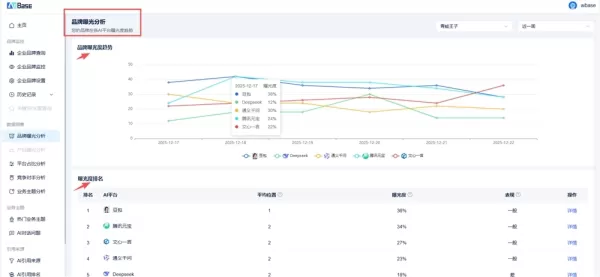
Figure: GEObase Brand Exposure Analysis Interface
Competitor Comparison: Enables direct comparison of how competitors perform in AI responses—revealing which queries trigger their recommendations and their respective rankings.
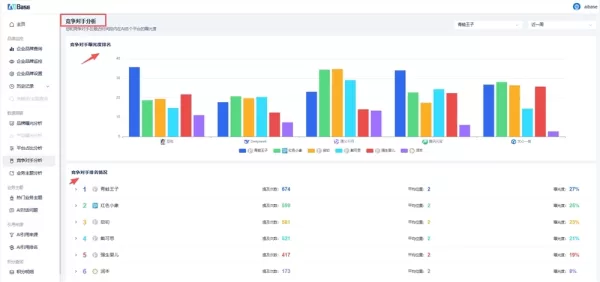
Figure: GEObase Competitor Analysis Feature
Platform Performance Insights: Analyzes which AI platform your brand performs best on and identifies platforms with performance gaps, helping you allocate optimization resources strategically.
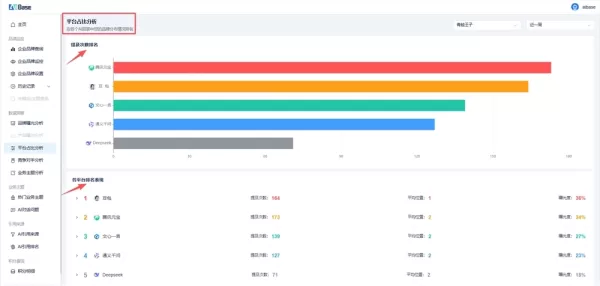
Figure: GEObase AI Platform Proportion Distribution
A Recommendation for Those Still Hesitating
GEO isn't a future consideration—it's a present necessity. Market data indicates that in 2024, over 58% of Google searches ended without a click, as users received answers directly from AI.
If your brand isn't yet monitoring its performance on AI platforms, I recommend starting by assessing your exposure at geo.aibase.com. Discover in which queries your brand is mentioned and, crucially, in which scenarios it is absent. Understand your current standing before formulating an optimization strategy.
Related article
 Stripe to Acquire OpenRouter as AI Model Routing Gains Momentum
Stripe has agreed to acquire OpenRouter, an AI model-routing platform that gives developers access to hundreds of models through a single interface. The deal adds model selection and routing to Stripe’s existing work around AI usage and token-based b
Former OpenAI Researcher Barrett Zoph Returns to Google to Support Gemini Development
Barret Zoph, who previously abruptly left and joined OpenAI due to a disagreement with Thinking Machines Lab CEO Miriam Mularati, has once again changed employers. Alphabet's Google announced that Zoph will return as Vice President of Research, bring
How Recursive Intelligence Raised $335M at $4B Valuation in 4 Months
The co-founders of startup Ricursive Intelligence seemed destined to be co-founders.Anna Goldie, CEO, and Azalia Mirhoseini, CTO, are so well-known in the AI community that they were among those AI engineers who “got those weird emails from Zuckerber
Related Special Topic Recommendations
Design & Art
Stripe to Acquire OpenRouter as AI Model Routing Gains Momentum
Stripe has agreed to acquire OpenRouter, an AI model-routing platform that gives developers access to hundreds of models through a single interface. The deal adds model selection and routing to Stripe’s existing work around AI usage and token-based b
Former OpenAI Researcher Barrett Zoph Returns to Google to Support Gemini Development
Barret Zoph, who previously abruptly left and joined OpenAI due to a disagreement with Thinking Machines Lab CEO Miriam Mularati, has once again changed employers. Alphabet's Google announced that Zoph will return as Vice President of Research, bring
How Recursive Intelligence Raised $335M at $4B Valuation in 4 Months
The co-founders of startup Ricursive Intelligence seemed destined to be co-founders.Anna Goldie, CEO, and Azalia Mirhoseini, CTO, are so well-known in the AI community that they were among those AI engineers who “got those weird emails from Zuckerber
Related Special Topic Recommendations
Design & Art
 Top AI Illustration Tools: Create Editorial Scenes and Cover Art Faster
2026 Latest Top-rated AI Illustration Tools: Our curated list features the best powerfully designed tools for creating stunning editorial scenes and eye-catching cover art quickly. Each option has gone through rigorous real-world tests, offering a free vs paid comparison to help you find the perfect match for your workflow. Try these must-try solutions today to unlock your AI edge and boost your creative productivity. Explore now at XIX.AI.
 10 tools
 xix.ai
Education and Learning
Top AI Tutors for Exam Prep: Practice Math, Science, and English
xix.ai
Education and Learning
Top AI Tutors for Exam Prep: Practice Math, Science, and English
2026 Latest Top-Rated Best AI Tutors for Exam Prep are here on XIX.AI! Our curated list features powerful game-changing tools that offer free vs paid comparison, real-world tests, and weekly updated rankings. They help boost your writing efficiency, simplify complex topic learning, and unlock your academic potential. Explore now to Discover your perfect exam prep tool and Start creating today to Unlock your AI edge!
10 tools
xix.ai
Finance
AI Budget Planning Tools for Personal Money Management
2026 Latest Best Top-Rated AI Budget Planning Tools for Personal Money Management are here on XIX.AI! This curated collection features powerful, game-changing solutions that help you conduct real-world tests, understand spending habits, and create personalized plans to boost productivity. Enjoy a free vs paid comparison along with detailed rankings. Must-try tools designed to simplify money management and unlock your AI edge. Explore now!
11 tools
xix.ai
Health & Wellness
AI Sleep Tracking Assistants: Improve Recovery with Better Bedtime Habits
2026 Latest Best Top-Rated AI Sleep Tracking Assistants curated for ultimate recovery. This fully updated weekly guide features powerful tools that deliver real-world tests, free vs paid comparison, and detailed rankings to help you find the must-try solution that boosts sleep quality and supports better bedtime habits. Explore now at XIX.AI to Unlock your AI edge.
10 tools
xix.ai
Data Analysis
AI SQL Copilots for Product and Revenue Analytics
2026 Latest Best Top-Rated AI SQL Copilots for Product and Revenue Analytics! XIX.AI has curated a powerful, game-changing collection of must-try tools that undergo real-world tests through weekly updated rankings. These tools help users boost productivity significantly by accelerating data analysis, streamlining complex queries, and generating accurate insights to drive smarter business decisions. Explore now to Discover your perfect tool for unlocking your AI edge!
14 tools
xix.ai
Education and Learning
Best AI Homework Helpers That Teach: Learn Concepts, Not Just Answers
2026 Latest Best Top-Rated AI Homework Helpers That Teach Core Concepts Not Just Answers Powerful Tools for Students Must-Try Curated List Weekly Updated Free vs Paid Comparison Real-World Tests Accurate Rankings to Help You Unlock Your Full Learning Potential Explore now to Discover your perfect tool for smarter studying.
10 tools
xix.ai

 Comments (2)
0/500
Comments (2)
0/500
![FredGreen]()
Honestly, it's frustrating when your brand gets ignored in AI recommendations. It feels like we're shouting into a void while competitors get all the attention. Does anyone else feel like SEO is becoming obsolete with these new AI tools? We need a strategy that actually works, not just old-school keywords. #AIsearch #frustrated
![WilliamCarter]()
Honestly, it's wild how AI search is reshaping visibility. If your brand isn't optimized for these new 'GEO' standards, you're basically invisible to millions of users. My company just lost a lead because we weren't in the top AI response, so yeah, this is a wake-up call for all of us. 📉
Recently, a colleague approached me with a question: "Why do competitors always get mentioned when ChatGPT users ask for 'a recommendation for an XX tool,' while our brand seems to disappear from the conversation?"
Frankly, I've been tracking this shift since last year. Traffic is quietly migrating—from traditional Google search bars to AI-powered chat interfaces. Ranking first on Baidu means little if AI assistants don't acknowledge your brand; it's as if you don't exist in that new space.
This is precisely the challenge Generative Engine Optimization (GEO) addresses: ensuring AI models prioritize and recommend your brand when responding to user queries.
What GEO Tools Are Currently Available?
The market now offers several GEO monitoring solutions, but most are international tools focused primarily on ChatGPT and Perplexity, often overlooking major domestic AI platforms.
Common types of tools include:
International Tools (e.g., Semrush AI, BrightEdge): These provide rich data for platforms like ChatGPT and Gemini but largely ignore domestic players such as Doubao, DeepSeek, and Tongyi Qianwen. This is a significant gap for brands targeting local markets.
"AI Add-ons" in Traditional SEO Tools: Many established SEO platforms have tacked on AI monitoring modules to follow the trend. However, these features are often superficial, serving more as marketing checkboxes than core, robust capabilities.
New, GEO-Focused Tools: Built from the ground up for AI visibility, these tools offer more comprehensive data dimensions and a deeper understanding of GEO's strategic principles.
What Should Domestic Brands Prioritize?
After testing several tools, a critical insight emerged: for domestic brands, the core battleground is domestic AI platforms, yet most tools fail to cover them adequately.
User query volume on Doubao, DeepSeek, and Tongyi Qianwen rivals that of ChatGPT. What is your brand's exposure level on these platforms? How frequently is it mentioned, and at what ranking? How do competitors perform? International tools typically cannot answer these vital questions.
Furthermore, effective GEO monitoring goes beyond mere mention counts. It must also analyze:
Whether the AI's description of your brand is positive, neutral, or negative.Which sources the AI cites (this directly informs your content optimization strategy).In which specific query scenarios competitors are recommended over your brand.The Tool I Currently Use: GEObase
Lately, I've been using GEObase (geo.aibase.com). It stands out as the most comprehensive domestic GEO monitoring tool I've encountered.
It uniquely monitors five major domestic AI platforms: Doubao, DeepSeek, Tongyi Qianwen, Tencent Yuanbao, and Wenxin Yiyan. This coverage alone differentiates it from many alternatives.
Its most valuable features include:
Brand Exposure Analysis: Tracks real-time mention counts and exposure trends across AI platforms, showing whether your brand's "presence" within the AI ecosystem is growing or declining.
Figure: GEObase Brand Exposure Analysis Interface
Competitor Comparison: Enables direct comparison of how competitors perform in AI responses—revealing which queries trigger their recommendations and their respective rankings.
Figure: GEObase Competitor Analysis Feature
Platform Performance Insights: Analyzes which AI platform your brand performs best on and identifies platforms with performance gaps, helping you allocate optimization resources strategically.
Figure: GEObase AI Platform Proportion Distribution
A Recommendation for Those Still Hesitating
GEO isn't a future consideration—it's a present necessity. Market data indicates that in 2024, over 58% of Google searches ended without a click, as users received answers directly from AI.
If your brand isn't yet monitoring its performance on AI platforms, I recommend starting by assessing your exposure at geo.aibase.com. Discover in which queries your brand is mentioned and, crucially, in which scenarios it is absent. Understand your current standing before formulating an optimization strategy.








 Stripe to Acquire OpenRouter as AI Model Routing Gains Momentum
Stripe has agreed to acquire OpenRouter, an AI model-routing platform that gives developers access to hundreds of models through a single interface. The deal adds model selection and routing to Stripe’s existing work around AI usage and token-based b
Stripe to Acquire OpenRouter as AI Model Routing Gains Momentum
Stripe has agreed to acquire OpenRouter, an AI model-routing platform that gives developers access to hundreds of models through a single interface. The deal adds model selection and routing to Stripe’s existing work around AI usage and token-based b
 Former OpenAI Researcher Barrett Zoph Returns to Google to Support Gemini Development
Barret Zoph, who previously abruptly left and joined OpenAI due to a disagreement with Thinking Machines Lab CEO Miriam Mularati, has once again changed employers. Alphabet's Google announced that Zoph will return as Vice President of Research, bring
Former OpenAI Researcher Barrett Zoph Returns to Google to Support Gemini Development
Barret Zoph, who previously abruptly left and joined OpenAI due to a disagreement with Thinking Machines Lab CEO Miriam Mularati, has once again changed employers. Alphabet's Google announced that Zoph will return as Vice President of Research, bring
 How Recursive Intelligence Raised $335M at $4B Valuation in 4 Months
The co-founders of startup Ricursive Intelligence seemed destined to be co-founders.Anna Goldie, CEO, and Azalia Mirhoseini, CTO, are so well-known in the AI community that they were among those AI engineers who “got those weird emails from Zuckerber
How Recursive Intelligence Raised $335M at $4B Valuation in 4 Months
The co-founders of startup Ricursive Intelligence seemed destined to be co-founders.Anna Goldie, CEO, and Azalia Mirhoseini, CTO, are so well-known in the AI community that they were among those AI engineers who “got those weird emails from Zuckerber

2026 Latest Top-rated AI Illustration Tools: Our curated list features the best powerfully designed tools for creating stunning editorial scenes and eye-catching cover art quickly. Each option has gone through rigorous real-world tests, offering a free vs paid comparison to help you find the perfect match for your workflow. Try these must-try solutions today to unlock your AI edge and boost your creative productivity. Explore now at XIX.AI.
10 tools
xix.ai

2026 Latest Top-Rated Best AI Tutors for Exam Prep are here on XIX.AI! Our curated list features powerful game-changing tools that offer free vs paid comparison, real-world tests, and weekly updated rankings. They help boost your writing efficiency, simplify complex topic learning, and unlock your academic potential. Explore now to Discover your perfect exam prep tool and Start creating today to Unlock your AI edge!
10 tools
xix.ai

2026 Latest Best Top-Rated AI Budget Planning Tools for Personal Money Management are here on XIX.AI! This curated collection features powerful, game-changing solutions that help you conduct real-world tests, understand spending habits, and create personalized plans to boost productivity. Enjoy a free vs paid comparison along with detailed rankings. Must-try tools designed to simplify money management and unlock your AI edge. Explore now!
11 tools
xix.ai

2026 Latest Best Top-Rated AI Sleep Tracking Assistants curated for ultimate recovery. This fully updated weekly guide features powerful tools that deliver real-world tests, free vs paid comparison, and detailed rankings to help you find the must-try solution that boosts sleep quality and supports better bedtime habits. Explore now at XIX.AI to Unlock your AI edge.
10 tools
xix.ai

2026 Latest Best Top-Rated AI SQL Copilots for Product and Revenue Analytics! XIX.AI has curated a powerful, game-changing collection of must-try tools that undergo real-world tests through weekly updated rankings. These tools help users boost productivity significantly by accelerating data analysis, streamlining complex queries, and generating accurate insights to drive smarter business decisions. Explore now to Discover your perfect tool for unlocking your AI edge!
14 tools
xix.ai

2026 Latest Best Top-Rated AI Homework Helpers That Teach Core Concepts Not Just Answers Powerful Tools for Students Must-Try Curated List Weekly Updated Free vs Paid Comparison Real-World Tests Accurate Rankings to Help You Unlock Your Full Learning Potential Explore now to Discover your perfect tool for smarter studying.
10 tools
xix.ai

Honestly, it's frustrating when your brand gets ignored in AI recommendations. It feels like we're shouting into a void while competitors get all the attention. Does anyone else feel like SEO is becoming obsolete with these new AI tools? We need a strategy that actually works, not just old-school keywords. #AIsearch #frustrated
Honestly, it's wild how AI search is reshaping visibility. If your brand isn't optimized for these new 'GEO' standards, you're basically invisible to millions of users. My company just lost a lead because we weren't in the top AI response, so yeah, this is a wake-up call for all of us. 📉












