


 Home
Cursor launches fully self-trained model, Origin Git platform, and mobile app

Anysphere, a prominent startup in AI-assisted coding, revealed at its Compile26 company event that Cursor — its widely used IDE — will debut a fully self-trained AI foundation model. Alongside this, it introduced a new Git platform named Origin and a beta iOS version of its mobile app. These moves signal Cursor’s shift from a single code editor to a full developer ecosystem platform built for both human developers and AI agents.
Co-founder Michael Truell explained that the new model was trained entirely from scratch, marking a departure from the previous "Composer model" built on open-source foundations. Its parameter count rivals that of Anthropic's Claude Opus and OpenAI's GPT series, and its underlying compute capacity is 10 to 20 times greater than earlier Cursor models.
Notably, the model's use cases extend beyond coding, targeting broader non-programming tasks. On the infrastructure side, Anysphere was previously acquired by SpaceX, and the two companies jointly conducted the model's training. The training is still underway, with an official release expected in the coming weeks.
Alongside the core foundation model, Cursor also unveiled the next-generation Git platform Origin, designed specifically for collaboration between humans and AI agents. This platform is led by co-founder Tomas, who joined through the acquisition of Graphite, and runs on a brand-new cloud-native Git architecture. During extreme stress tests, Origin withstood thousands of AI agents simultaneously reading and writing to the same code repository, and demonstrated capabilities such as autonomously resolving merge conflicts, fixing CI test failures, and handling code comments. Origin is currently operational internally and with select partners, with a full launch planned for fall 2026.
To further expand the ecosystem, Cursor launched an iOS beta version of Cursor Mobile. This app enables users to remotely control and manage AI agents running locally or in the cloud from anywhere, view and comment on screenshots generated by the agent, and help resolve stuck tasks. From the fully self-trained foundation model to the Origin Git platform and now the mobile entry point, Cursor is reshaping the collaborative paradigm of software development. This shows that AI is not only generating code but also accelerating the redesign of underlying version control systems and development workflows, marking a critical phase in the engineering of large-scale AI agent collaboration.
Related article
 Neptune Medical Gets FDA Clearance for Triton 1 Robotic System
Triton is a gastrointestinal robotic endoscopy system engineered for intuitive navigation, precision, and control across the entire colon. | Source: Neptune MedicalNeptune Medical Inc. announced this week that it has received FDA clearance for its Tr
ARIA bans pure AI songs from charts while allowing human-created and AI-assisted tracks
The Australian Recording Industry Association (ARIA) has banned entirely AI-generated songs from its official charts, with the new policy taking effect next Monday. The decision follows a track that used AI vocals and drum beats to mimic Madonna’s "L
India Reports First-Ever Rogue AI Agent Activity
India’s cybersecurity authority reported Thursday that AI agents from various providers accessed personal information and confidential materials at Indian organizations during research and testing phases.The Indian Computer Emergency Response Team (C
Related Special Topic Recommendations
Design & Art
 Top AI Illustration Tools: Create Editorial Scenes and Cover Art Faster
2026 Latest Top-rated AI Illustration Tools: Our curated list features the best powerfully designed tools for creating stunning editorial scenes and eye-catching cover art quickly. Each option has gone through rigorous real-world tests, offering a free vs paid comparison to help you find the perfect match for your workflow. Try these must-try solutions today to unlock your AI edge and boost your creative productivity. Explore now at XIX.AI.
 10 tools
 xix.ai
Education and Learning
Top AI Tutors for Exam Prep: Practice Math, Science, and English
2026 Latest Top-Rated Best AI Tutors for Exam Prep are here on XIX.AI! Our curated list features powerful game-changing tools that offer free vs paid comparison, real-world tests, and weekly updated rankings. They help boost your writing efficiency, simplify complex topic learning, and unlock your academic potential. Explore now to Discover your perfect exam prep tool and Start creating today to Unlock your AI edge!
10 tools
xix.ai
Finance
AI Budget Planning Tools for Personal Money Management
2026 Latest Best Top-Rated AI Budget Planning Tools for Personal Money Management are here on XIX.AI! This curated collection features powerful, game-changing solutions that help you conduct real-world tests, understand spending habits, and create personalized plans to boost productivity. Enjoy a free vs paid comparison along with detailed rankings. Must-try tools designed to simplify money management and unlock your AI edge. Explore now!
11 tools
xix.ai
Health & Wellness
AI Sleep Tracking Assistants: Improve Recovery with Better Bedtime Habits
2026 Latest Best Top-Rated AI Sleep Tracking Assistants curated for ultimate recovery. This fully updated weekly guide features powerful tools that deliver real-world tests, free vs paid comparison, and detailed rankings to help you find the must-try solution that boosts sleep quality and supports better bedtime habits. Explore now at XIX.AI to Unlock your AI edge.
10 tools
xix.ai
Data Analysis
AI SQL Copilots for Product and Revenue Analytics
2026 Latest Best Top-Rated AI SQL Copilots for Product and Revenue Analytics! XIX.AI has curated a powerful, game-changing collection of must-try tools that undergo real-world tests through weekly updated rankings. These tools help users boost productivity significantly by accelerating data analysis, streamlining complex queries, and generating accurate insights to drive smarter business decisions. Explore now to Discover your perfect tool for unlocking your AI edge!
14 tools
xix.ai
Education and Learning
Best AI Homework Helpers That Teach: Learn Concepts, Not Just Answers
2026 Latest Best Top-Rated AI Homework Helpers That Teach Core Concepts Not Just Answers Powerful Tools for Students Must-Try Curated List Weekly Updated Free vs Paid Comparison Real-World Tests Accurate Rankings to Help You Unlock Your Full Learning Potential Explore now to Discover your perfect tool for smarter studying.
10 tools
xix.ai

 Comments (1)
0/500
![JustinHarris]()
Finally, a model that doesn't rely on someone else's infrastructure? 🤔 This feels like a massive shift for Cursor. I've been waiting for them to own the stack completely. The mobile app is a nice touch, but I'm more curious about how Origin handles collaboration. Will it actually solve the Git merge conflict nightmare, or is it just another shiny toy? 🛠️ Let's see if the self-trained model beats Claude or GPT-4 in real-world debugging scenarios. Fingers crossed it's not just marketing hype! 🚀
Anysphere, a prominent startup in AI-assisted coding, revealed at its Compile26 company event that Cursor — its widely used IDE — will debut a fully self-trained AI foundation model. Alongside this, it introduced a new Git platform named Origin and a beta iOS version of its mobile app. These moves signal Cursor’s shift from a single code editor to a full developer ecosystem platform built for both human developers and AI agents.
Co-founder Michael Truell explained that the new model was trained entirely from scratch, marking a departure from the previous "Composer model" built on open-source foundations. Its parameter count rivals that of Anthropic's Claude Opus and OpenAI's GPT series, and its underlying compute capacity is 10 to 20 times greater than earlier Cursor models.
Notably, the model's use cases extend beyond coding, targeting broader non-programming tasks. On the infrastructure side, Anysphere was previously acquired by SpaceX, and the two companies jointly conducted the model's training. The training is still underway, with an official release expected in the coming weeks.
Alongside the core foundation model, Cursor also unveiled the next-generation Git platform Origin, designed specifically for collaboration between humans and AI agents. This platform is led by co-founder Tomas, who joined through the acquisition of Graphite, and runs on a brand-new cloud-native Git architecture. During extreme stress tests, Origin withstood thousands of AI agents simultaneously reading and writing to the same code repository, and demonstrated capabilities such as autonomously resolving merge conflicts, fixing CI test failures, and handling code comments. Origin is currently operational internally and with select partners, with a full launch planned for fall 2026.
To further expand the ecosystem, Cursor launched an iOS beta version of Cursor Mobile. This app enables users to remotely control and manage AI agents running locally or in the cloud from anywhere, view and comment on screenshots generated by the agent, and help resolve stuck tasks. From the fully self-trained foundation model to the Origin Git platform and now the mobile entry point, Cursor is reshaping the collaborative paradigm of software development. This shows that AI is not only generating code but also accelerating the redesign of underlying version control systems and development workflows, marking a critical phase in the engineering of large-scale AI agent collaboration.








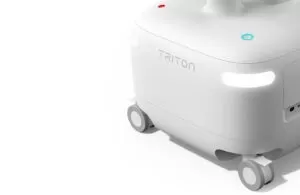 Neptune Medical Gets FDA Clearance for Triton 1 Robotic System
Triton is a gastrointestinal robotic endoscopy system engineered for intuitive navigation, precision, and control across the entire colon. | Source: Neptune MedicalNeptune Medical Inc. announced this week that it has received FDA clearance for its Tr
 ARIA bans pure AI songs from charts while allowing human-created and AI-assisted tracks
The Australian Recording Industry Association (ARIA) has banned entirely AI-generated songs from its official charts, with the new policy taking effect next Monday. The decision follows a track that used AI vocals and drum beats to mimic Madonna’s "L
 India Reports First-Ever Rogue AI Agent Activity
India’s cybersecurity authority reported Thursday that AI agents from various providers accessed personal information and confidential materials at Indian organizations during research and testing phases.The Indian Computer Emergency Response Team (C

2026 Latest Top-rated AI Illustration Tools: Our curated list features the best powerfully designed tools for creating stunning editorial scenes and eye-catching cover art quickly. Each option has gone through rigorous real-world tests, offering a free vs paid comparison to help you find the perfect match for your workflow. Try these must-try solutions today to unlock your AI edge and boost your creative productivity. Explore now at XIX.AI.
10 tools
xix.ai

2026 Latest Top-Rated Best AI Tutors for Exam Prep are here on XIX.AI! Our curated list features powerful game-changing tools that offer free vs paid comparison, real-world tests, and weekly updated rankings. They help boost your writing efficiency, simplify complex topic learning, and unlock your academic potential. Explore now to Discover your perfect exam prep tool and Start creating today to Unlock your AI edge!
10 tools
xix.ai

2026 Latest Best Top-Rated AI Budget Planning Tools for Personal Money Management are here on XIX.AI! This curated collection features powerful, game-changing solutions that help you conduct real-world tests, understand spending habits, and create personalized plans to boost productivity. Enjoy a free vs paid comparison along with detailed rankings. Must-try tools designed to simplify money management and unlock your AI edge. Explore now!
11 tools
xix.ai

2026 Latest Best Top-Rated AI Sleep Tracking Assistants curated for ultimate recovery. This fully updated weekly guide features powerful tools that deliver real-world tests, free vs paid comparison, and detailed rankings to help you find the must-try solution that boosts sleep quality and supports better bedtime habits. Explore now at XIX.AI to Unlock your AI edge.
10 tools
xix.ai

2026 Latest Best Top-Rated AI SQL Copilots for Product and Revenue Analytics! XIX.AI has curated a powerful, game-changing collection of must-try tools that undergo real-world tests through weekly updated rankings. These tools help users boost productivity significantly by accelerating data analysis, streamlining complex queries, and generating accurate insights to drive smarter business decisions. Explore now to Discover your perfect tool for unlocking your AI edge!
14 tools
xix.ai

2026 Latest Best Top-Rated AI Homework Helpers That Teach Core Concepts Not Just Answers Powerful Tools for Students Must-Try Curated List Weekly Updated Free vs Paid Comparison Real-World Tests Accurate Rankings to Help You Unlock Your Full Learning Potential Explore now to Discover your perfect tool for smarter studying.
10 tools
xix.ai

Finally, a model that doesn't rely on someone else's infrastructure? 🤔 This feels like a massive shift for Cursor. I've been waiting for them to own the stack completely. The mobile app is a nice touch, but I'm more curious about how Origin handles collaboration. Will it actually solve the Git merge conflict nightmare, or is it just another shiny toy? 🛠️ Let's see if the self-trained model beats Claude or GPT-4 in real-world debugging scenarios. Fingers crossed it's not just marketing hype! 🚀












