


 Home
HomeHow to Make AI Singing Avatars Easily: Complete Beginner's Guide
Artificial intelligence is revolutionizing digital content creation, particularly through AI-powered singing avatars that deliver remarkably lifelike performances. With intuitive platforms like Hedra AI, anyone can now craft custom digital performers complete with precise lip synchronization - no technical expertise required. This comprehensive tutorial will guide you through every step of creating engaging AI vocal avatars for marketing, education, entertainment and beyond.
Key Points
Accessible Avatar Creation: Modern platforms democratize digital performer development with user-friendly workflows.
Prompt Crafting Essentials: Detailed text descriptions significantly impact avatar quality and realism.
Audio Optimization: High-quality vocal tracks ensure natural-looking mouth movements and expressions.
Creative Customization: Experiment with diverse visual styles from anime to photorealistic characters.
Multi-Industry Applications: These tools serve content creators across marketing, education, customer service and entertainment sectors.
Introduction to AI Singing Avatars
Understanding Digital Vocal Performers
AI singing avatars represent a breakthrough in synthetic media, combining computer-generated imagery with advanced speech synchronization. These digital performers begin as text-based character descriptions that AI transforms into visual representations. When paired with audio tracks (whether recorded or AI-generated), sophisticated algorithms animate the avatar's facial features to match the vocal performance with convincing accuracy.
The technology's versatility opens doors for numerous applications. Marketers can develop branded virtual spokespeople, educators create animated instructors, and entertainers produce virtual bands or digital influencers. Platforms like Hedra AI simplify this process through intuitive interfaces that guide users from concept to final product without requiring animation expertise.
Advantages Over Traditional Animation
AI-powered avatar creation offers distinct benefits compared to conventional animation techniques:
- Time Efficiency: Reduce production timelines from weeks to hours
- Budget Friendly: Eliminate expensive animation studio costs
- Creative Freedom: Rapidly iterate through character designs
- Accessibility: User-friendly platforms require no specialized training
- Consistency: Maintain uniform quality across multiple avatars
Crafting High-Quality AI Avatars
Mastering Text Prompts
Exceptional avatar generation begins with detailed descriptive prompts. Consider these best practices:
- Specify visual details (hairstyle, clothing, facial features)
- Include artistic style preferences (anime, 3D, photorealistic)
- Describe personality traits through physical attributes
- Reference lighting conditions and background elements
- Use comparative language ("resembles young David Bowie")
Example improvement:
Basic: "Create a girl"
Enhanced: "Generate a vibrant anime character with rainbow-streaked pigtails wearing a leather jacket and neon choker, throwing rock horns with electric energy radiating from her hands"
Optimizing Audio Inputs
Natural-looking lip sync requires careful audio preparation:
- Record in acoustically treated spaces with professional microphones
- Maintain consistent volume and pitch throughout recordings
- Add natural pauses between phrases for breathing room
- Consider vocal characteristics matching avatar appearance
- Use noise reduction tools to eliminate background artifacts
Step-by-Step Creation with Hedra AI
Platform Navigation
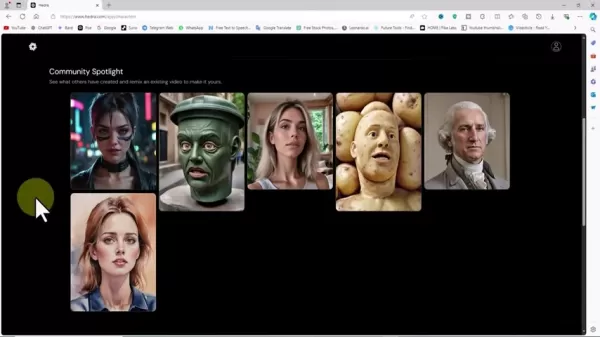
- Access Hedra AI through their official website
- Register using your preferred credentials
- Explore the beta dashboard interface
Three Core Workflow Panels
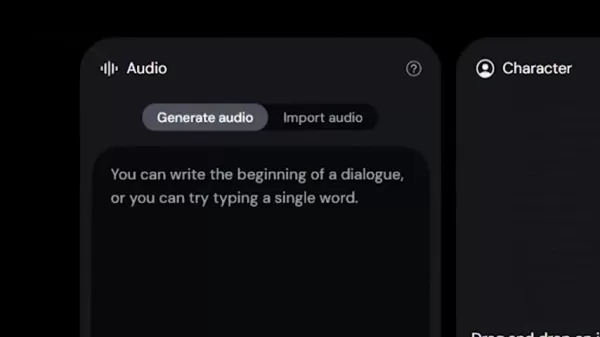
- Audio Module: Upload recordings or generate synthetic vocals
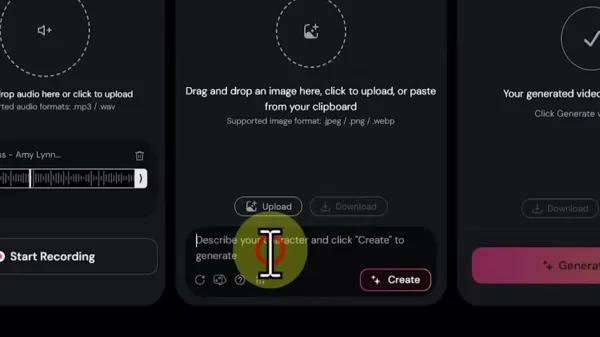
- Character Builder: Design avatars via text prompts or image uploads
- Video Generator: Combine elements and render final output
Audio Integration Process
- Select audio source (file upload/recording/TTS conversion)
- For TTS: Input text (300 character limit) and select voice profile
- For uploads: Use MP3/WAV files recorded at 44.1kHz or higher
- Adjust timing markers for precise sync points
Visual Design Phase
- Choose between image upload or AI generation
- For AI creation: Input detailed character description
- Utilize seed randomization for variant exploration
- Adjust generation parameters for style refinement
Final Rendering
- Preview synchronization accuracy
- Adjust timing offsets if needed
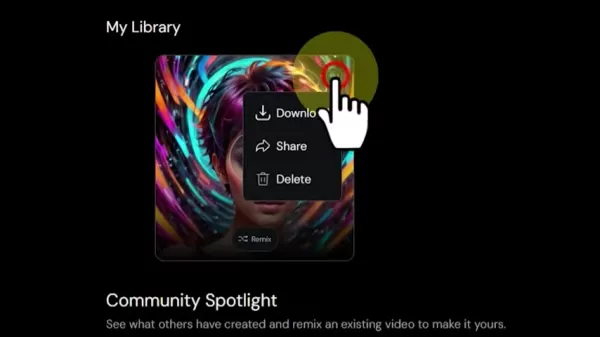
- Render project at optimal resolution
- Download completed video file
Hedra AI Features Breakdown
Core Capabilities
- Advanced text-to-image character generation
- Frame-accurate lip synchronization technology
- Multilingual text-to-speech with emotion modulation
- Cloud-based processing for hardware independence
Practical Applications
Marketing Implementations
- Virtual product demonstrators
- Personalized video messaging
- Interactive digital spokesmodels
Educational Uses
- Animated lecture presentations
- Language learning assistants
- Historical figure reenactments
Entertainment Concepts
- Virtual music performers
- Animated podcast hosts
- Interactive story narrators
Common Questions
Audio Duration Guidelines
For optimal processing efficiency and sync accuracy, limit continuous audio segments to under 3 minutes. Consider breaking longer content into chapters with separate renders.
Image Specifications
Upload high-resolution images (minimum 1024px width) with clearly visible facial features. Avoid copyrighted material or protected likenesses without proper authorization.
Related article
 Former OpenAI Chief Scientist Ilya’s SSI Unveils First Model
AI has achieved another major milestone. Following his departure from OpenAI, former chief scientist Ilya Sutskever established Safe Superintelligence Inc. (SSI), which has recently unveiled details regarding its inaugural model. Reports from oversea
Lovable Leads Atech's Seed Round as AI Ambient Coding Officially Enters the Hardware Field
On May 14, 2026, AI application development platform Lovable announced its participation in the $800,000 seed funding round for Danish hardware startup Atech. Led by Lovable, the round attracted top-tier venture capital firms including the a16z Scout
Anthropic Expands Claude AI Coding Tools to Japan in Push for Overseas Growth
Anthropic, a prominent U.S. artificial intelligence firm, is intensifying its global outreach. On Wednesday, the company hosted a major developer gathering, "Code with Claude," in Tokyo, drawing close to 500 software engineers. This initiative seeks
Related Special Topic Recommendations
chatbot
Former OpenAI Chief Scientist Ilya’s SSI Unveils First Model
AI has achieved another major milestone. Following his departure from OpenAI, former chief scientist Ilya Sutskever established Safe Superintelligence Inc. (SSI), which has recently unveiled details regarding its inaugural model. Reports from oversea
Lovable Leads Atech's Seed Round as AI Ambient Coding Officially Enters the Hardware Field
On May 14, 2026, AI application development platform Lovable announced its participation in the $800,000 seed funding round for Danish hardware startup Atech. Led by Lovable, the round attracted top-tier venture capital firms including the a16z Scout
Anthropic Expands Claude AI Coding Tools to Japan in Push for Overseas Growth
Anthropic, a prominent U.S. artificial intelligence firm, is intensifying its global outreach. On Wednesday, the company hosted a major developer gathering, "Code with Claude," in Tokyo, drawing close to 500 software engineers. This initiative seeks
Related Special Topic Recommendations
chatbot
 Best AI Conversation Trainer Tools for Interview Practice
2026 Latest Best Top-rated AI Conversation Trainer Tools for Interview Practice are here on XIX.AI! This curated collection features powerful, game-changing tools that go through rigorous real-world tests to deliver accurate feedback. You’ll find a free vs paid comparison and detailed rankings to help you choose the must-try option that boosts your confidence and skills. Explore now to Discover your perfect tool for interview success!
 12 tools
 xix.ai
Design & Art
Best AI Style Transfer Tools for Creative Experiments
xix.ai
Design & Art
Best AI Style Transfer Tools for Creative Experiments
2026 Latest Best Top-rated AI Style Transfer Tools for Creative Experiments! XIX.AI has curated a powerful, game-changing collection of must-try tools that deliver exceptional results through real-world tests and rigorous rankings. These top solutions help creatives boost productivity significantly by accelerating content creation and unlocking endless creative possibilities. Explore now to discover your perfect tool and start creating today!
9 tools
xix.ai
Comic Creation
Best AI Dialogue Bubble Tools for Visual Storytelling
2026 Latest Best Top-Rated AI Dialogue Bubble Tools for Visual Storytelling are here on XIX.AI! This curated collection features powerful, game-changing tools that help creators boost productivity and overcome creative bottlenecks. Get a free vs paid comparison, see real-world tests, and check the latest rankings to find the must-try solutions perfect for crafting engaging visual narratives. Explore now to discover your ideal tool!
10 tools
xix.ai
Meeting Assistant
Top AI Meeting Summary Tools: Track Decisions and Follow-Ups Clearly
2026 Latest Top-Rated Best AI Meeting Summary Tools for Clear Decision Tracking and Effortless Follow-Ups. This curated list showcases powerful, game-changing solutions that boost productivity dramatically by automating meeting notes, identifying key action items, and streamlining team coordination across all projects. Get a free vs paid comparison along with real-world tests and weekly updated rankings to help you find the perfect tool. Explore now to unlock your AI edge!
9 tools
xix.ai
Data Analysis
Best AI Data Cleaning Tools: Fix Missing Values and Duplicates Fast
2026 Latest Best Top-rated AI Data Cleaning Tools for quick fixing of missing values and duplicates. This curated list showcases powerful, game-changing solutions that boost productivity significantly. Each option has undergone rigorous real-world tests to ensure reliability. Get a free vs paid comparison and discover the must-try tool that fits your needs best. Explore now at XIX.AI to Unlock your AI edge.
11 tools
xix.ai
Design & Art
Best AI Creative Ideation Tools for Artists: Break Through Visual Blocks
2026 Latest Best Top-Rated AI Creative Ideation Tools for Artists are curated by XIX.AI to help creators break through visual blocks and boost creativity instantly. These powerful game-changing tools offer real-world tests, detailed free vs paid comparison, and weekly updated rankings. Discover your perfect tool to accelerate content creation and unlock your AI edge today. Explore now!
14 tools
xix.ai

 Comments (3)
0/500
Comments (3)
0/500
![BenGarcía]()
This guide is super helpful for beginners! I've been wanting to create a virtual singer for my music covers, and Hedra AI seems like the perfect starting point. The idea of AI making performances more 'lifelike' is both exciting and a bit scary for future human artists, though. 😅 Can't wait to try it this weekend!
![GeorgeJones]()
이 가이드 진짜 도움 많이 되네요 👍 헤드라 AI 같은 플랫폼 덕분에 초보자도 AI 가상 가수를 만들 수 있다니… 기술 발전 속도가 놀라워요. 혹시 창작한 아바타로 콘서트나 라이브 스트리밍도 가능할까요? 앞으로 가상 아이돌 시장이 어떻게 변할지 궁금해요 🎤
![WalterWalker]()
AIで歌うアバターを作るなんて、SFの世界みたい!でも技術の進歩は本当にすごいね。個人的には、VTuberやバーチャルアイドルに使えそうで楽しみだけど、著作権や声の権利問題は大丈夫かな?ちょっと心配…😅
Artificial intelligence is revolutionizing digital content creation, particularly through AI-powered singing avatars that deliver remarkably lifelike performances. With intuitive platforms like Hedra AI, anyone can now craft custom digital performers complete with precise lip synchronization - no technical expertise required. This comprehensive tutorial will guide you through every step of creating engaging AI vocal avatars for marketing, education, entertainment and beyond.
Key Points
Accessible Avatar Creation: Modern platforms democratize digital performer development with user-friendly workflows.
Prompt Crafting Essentials: Detailed text descriptions significantly impact avatar quality and realism.
Audio Optimization: High-quality vocal tracks ensure natural-looking mouth movements and expressions.
Creative Customization: Experiment with diverse visual styles from anime to photorealistic characters.
Multi-Industry Applications: These tools serve content creators across marketing, education, customer service and entertainment sectors.
Introduction to AI Singing Avatars
Understanding Digital Vocal Performers
AI singing avatars represent a breakthrough in synthetic media, combining computer-generated imagery with advanced speech synchronization. These digital performers begin as text-based character descriptions that AI transforms into visual representations. When paired with audio tracks (whether recorded or AI-generated), sophisticated algorithms animate the avatar's facial features to match the vocal performance with convincing accuracy.
The technology's versatility opens doors for numerous applications. Marketers can develop branded virtual spokespeople, educators create animated instructors, and entertainers produce virtual bands or digital influencers. Platforms like Hedra AI simplify this process through intuitive interfaces that guide users from concept to final product without requiring animation expertise.
Advantages Over Traditional Animation
AI-powered avatar creation offers distinct benefits compared to conventional animation techniques:
- Time Efficiency: Reduce production timelines from weeks to hours
- Budget Friendly: Eliminate expensive animation studio costs
- Creative Freedom: Rapidly iterate through character designs
- Accessibility: User-friendly platforms require no specialized training
- Consistency: Maintain uniform quality across multiple avatars
Crafting High-Quality AI Avatars
Mastering Text Prompts
Exceptional avatar generation begins with detailed descriptive prompts. Consider these best practices:
- Specify visual details (hairstyle, clothing, facial features)
- Include artistic style preferences (anime, 3D, photorealistic)
- Describe personality traits through physical attributes
- Reference lighting conditions and background elements
- Use comparative language ("resembles young David Bowie")
Example improvement:
Basic: "Create a girl"
Enhanced: "Generate a vibrant anime character with rainbow-streaked pigtails wearing a leather jacket and neon choker, throwing rock horns with electric energy radiating from her hands"
Optimizing Audio Inputs
Natural-looking lip sync requires careful audio preparation:
- Record in acoustically treated spaces with professional microphones
- Maintain consistent volume and pitch throughout recordings
- Add natural pauses between phrases for breathing room
- Consider vocal characteristics matching avatar appearance
- Use noise reduction tools to eliminate background artifacts
Step-by-Step Creation with Hedra AI
Platform Navigation
- Access Hedra AI through their official website
- Register using your preferred credentials
- Explore the beta dashboard interface
Three Core Workflow Panels
- Audio Module: Upload recordings or generate synthetic vocals
- Character Builder: Design avatars via text prompts or image uploads
- Video Generator: Combine elements and render final output
Audio Integration Process
- Select audio source (file upload/recording/TTS conversion)
- For TTS: Input text (300 character limit) and select voice profile
- For uploads: Use MP3/WAV files recorded at 44.1kHz or higher
- Adjust timing markers for precise sync points
Visual Design Phase
- Choose between image upload or AI generation
- For AI creation: Input detailed character description
- Utilize seed randomization for variant exploration
- Adjust generation parameters for style refinement
Final Rendering
- Preview synchronization accuracy
- Adjust timing offsets if needed
- Render project at optimal resolution
- Download completed video file
Hedra AI Features Breakdown
Core Capabilities
- Advanced text-to-image character generation
- Frame-accurate lip synchronization technology
- Multilingual text-to-speech with emotion modulation
- Cloud-based processing for hardware independence
Practical Applications
Marketing Implementations
- Virtual product demonstrators
- Personalized video messaging
- Interactive digital spokesmodels
Educational Uses
- Animated lecture presentations
- Language learning assistants
- Historical figure reenactments
Entertainment Concepts
- Virtual music performers
- Animated podcast hosts
- Interactive story narrators
Common Questions
Audio Duration Guidelines
For optimal processing efficiency and sync accuracy, limit continuous audio segments to under 3 minutes. Consider breaking longer content into chapters with separate renders.
Image Specifications
Upload high-resolution images (minimum 1024px width) with clearly visible facial features. Avoid copyrighted material or protected likenesses without proper authorization.








 Former OpenAI Chief Scientist Ilya’s SSI Unveils First Model
AI has achieved another major milestone. Following his departure from OpenAI, former chief scientist Ilya Sutskever established Safe Superintelligence Inc. (SSI), which has recently unveiled details regarding its inaugural model. Reports from oversea
Former OpenAI Chief Scientist Ilya’s SSI Unveils First Model
AI has achieved another major milestone. Following his departure from OpenAI, former chief scientist Ilya Sutskever established Safe Superintelligence Inc. (SSI), which has recently unveiled details regarding its inaugural model. Reports from oversea
 Lovable Leads Atech's Seed Round as AI Ambient Coding Officially Enters the Hardware Field
On May 14, 2026, AI application development platform Lovable announced its participation in the $800,000 seed funding round for Danish hardware startup Atech. Led by Lovable, the round attracted top-tier venture capital firms including the a16z Scout
Lovable Leads Atech's Seed Round as AI Ambient Coding Officially Enters the Hardware Field
On May 14, 2026, AI application development platform Lovable announced its participation in the $800,000 seed funding round for Danish hardware startup Atech. Led by Lovable, the round attracted top-tier venture capital firms including the a16z Scout
 Anthropic Expands Claude AI Coding Tools to Japan in Push for Overseas Growth
Anthropic, a prominent U.S. artificial intelligence firm, is intensifying its global outreach. On Wednesday, the company hosted a major developer gathering, "Code with Claude," in Tokyo, drawing close to 500 software engineers. This initiative seeks
Anthropic Expands Claude AI Coding Tools to Japan in Push for Overseas Growth
Anthropic, a prominent U.S. artificial intelligence firm, is intensifying its global outreach. On Wednesday, the company hosted a major developer gathering, "Code with Claude," in Tokyo, drawing close to 500 software engineers. This initiative seeks
2026 Latest Best Top-rated AI Conversation Trainer Tools for Interview Practice are here on XIX.AI! This curated collection features powerful, game-changing tools that go through rigorous real-world tests to deliver accurate feedback. You’ll find a free vs paid comparison and detailed rankings to help you choose the must-try option that boosts your confidence and skills. Explore now to Discover your perfect tool for interview success!
12 tools
xix.ai
2026 Latest Best Top-rated AI Style Transfer Tools for Creative Experiments! XIX.AI has curated a powerful, game-changing collection of must-try tools that deliver exceptional results through real-world tests and rigorous rankings. These top solutions help creatives boost productivity significantly by accelerating content creation and unlocking endless creative possibilities. Explore now to discover your perfect tool and start creating today!
9 tools
xix.ai
2026 Latest Best Top-Rated AI Dialogue Bubble Tools for Visual Storytelling are here on XIX.AI! This curated collection features powerful, game-changing tools that help creators boost productivity and overcome creative bottlenecks. Get a free vs paid comparison, see real-world tests, and check the latest rankings to find the must-try solutions perfect for crafting engaging visual narratives. Explore now to discover your ideal tool!
10 tools
xix.ai

2026 Latest Top-Rated Best AI Meeting Summary Tools for Clear Decision Tracking and Effortless Follow-Ups. This curated list showcases powerful, game-changing solutions that boost productivity dramatically by automating meeting notes, identifying key action items, and streamlining team coordination across all projects. Get a free vs paid comparison along with real-world tests and weekly updated rankings to help you find the perfect tool. Explore now to unlock your AI edge!
9 tools
xix.ai

2026 Latest Best Top-rated AI Data Cleaning Tools for quick fixing of missing values and duplicates. This curated list showcases powerful, game-changing solutions that boost productivity significantly. Each option has undergone rigorous real-world tests to ensure reliability. Get a free vs paid comparison and discover the must-try tool that fits your needs best. Explore now at XIX.AI to Unlock your AI edge.
11 tools
xix.ai
2026 Latest Best Top-Rated AI Creative Ideation Tools for Artists are curated by XIX.AI to help creators break through visual blocks and boost creativity instantly. These powerful game-changing tools offer real-world tests, detailed free vs paid comparison, and weekly updated rankings. Discover your perfect tool to accelerate content creation and unlock your AI edge today. Explore now!
14 tools
xix.ai

This guide is super helpful for beginners! I've been wanting to create a virtual singer for my music covers, and Hedra AI seems like the perfect starting point. The idea of AI making performances more 'lifelike' is both exciting and a bit scary for future human artists, though. 😅 Can't wait to try it this weekend!
이 가이드 진짜 도움 많이 되네요 👍 헤드라 AI 같은 플랫폼 덕분에 초보자도 AI 가상 가수를 만들 수 있다니… 기술 발전 속도가 놀라워요. 혹시 창작한 아바타로 콘서트나 라이브 스트리밍도 가능할까요? 앞으로 가상 아이돌 시장이 어떻게 변할지 궁금해요 🎤
AIで歌うアバターを作るなんて、SFの世界みたい!でも技術の進歩は本当にすごいね。個人的には、VTuberやバーチャルアイドルに使えそうで楽しみだけど、著作権や声の権利問題は大丈夫かな?ちょっと心配…😅












