


 Home
HomeClaude Expands AI Office Coverage as Revision Mode Takes Center Stage in Ongoing Talks

Anthropic has recently launched the public beta of Claude for Word, marking a significant milestone in its integration with Microsoft Office. Within just six months, Claude has embedded itself into the core trio of Office applications—Excel, PowerPoint, and Word—completing its ecosystem rollout. This latest iteration highlights the "Track Changes" feature as a key differentiator, aiming to establish a competitive advantage in regulated sectors like law and finance.
Contrary to the perception of novelty, "Track Changes" is not an AI invention but a staple of Word and WPS for over two decades. Anthropic’s strategy involves layering AI-generated suggestions onto this established review mechanism: original text is struck through, while proposed edits appear as insertions. This "old wine in new bottles" approach is designed to seamlessly integrate AI capabilities into professional workflows.
Divergent Strategies, Shared Goals: The Integration Debate
The race for AI-powered office tools reveals distinct evolutionary paths for Claude and WPS AI. Claude prioritizes an "AI-native" experience, linking Word, Excel, and PPT via APIs to enable cross-application context sharing. While ambitious, this method often introduces latency and compatibility challenges when switching between apps.
Conversely, WPS AI adopts a pragmatic "integration" model. By operating within a single application architecture, it allows users to perform tasks ranging from data extraction to PPT summarization without switching contexts. Embedding AI directly into one product minimizes account-switching friction and reduces the risk of format loss.
Local Edge: From Reactive Commands to Proactive Context
Beyond interaction design, scenario awareness is becoming a critical competitive factor. Currently, Claude relies on user-driven commands—essentially "ask and answer." In contrast, WPS AI, leveraging its deep roots in the local market, is evolving toward proactive scenario awareness. For instance, when a user opens a legal contract or financial statement, the AI can automatically detect the document type and suggest risk reviews or trend analyses.
This distinction highlights a battle of data accumulation. Local office tools possess superior knowledge and data in vertical domains, including Chinese contract libraries, official document formats, and domestic financial standards.
Conclusion: Intelligence Is Not the Sole Metric of Efficiency
Claude’s entry into Word is a landmark event in the global AI office landscape, signaling the robust influence of large language models on traditional workflows. However, the true value of office tools remains rooted in enhancing user efficiency.
Related article
 ZeroTech Unveils G1+ Humanoid Robot with Upgraded Motors, Vision, and Battery Life; Standard Version Priced at 95,000 RMB
Yuque Technology has officially unveiled the G1+ humanoid robot, introducing six key enhancements across motion performance, perception and interaction, and intelligent capabilities. Building on the G1’s strong cost-performance ratio, the G1+ improve
Tencent, JD.com Deepen AI Agent Tie-Up as Physical Transactions Enter Trial
The artificial intelligence sector is shifting toward "practical application." Tencent and JD.com have recently formed a strategic partnership focused on developing AI Agents, signaling that domestic AI applications have entered a phase of "transacti
OpenClaw Launches iOS and Android Apps for Open-Source AI Agent
On June 30, the highly anticipated open-source AI agent project, OpenClaw, officially released its iOS and Android mobile apps at the X Conference, marking its full transition to mobile platforms. The app allows users to connect their devices to the
Related Special Topic Recommendations
Social Media
ZeroTech Unveils G1+ Humanoid Robot with Upgraded Motors, Vision, and Battery Life; Standard Version Priced at 95,000 RMB
Yuque Technology has officially unveiled the G1+ humanoid robot, introducing six key enhancements across motion performance, perception and interaction, and intelligent capabilities. Building on the G1’s strong cost-performance ratio, the G1+ improve
Tencent, JD.com Deepen AI Agent Tie-Up as Physical Transactions Enter Trial
The artificial intelligence sector is shifting toward "practical application." Tencent and JD.com have recently formed a strategic partnership focused on developing AI Agents, signaling that domestic AI applications have entered a phase of "transacti
OpenClaw Launches iOS and Android Apps for Open-Source AI Agent
On June 30, the highly anticipated open-source AI agent project, OpenClaw, officially released its iOS and Android mobile apps at the X Conference, marking its full transition to mobile platforms. The app allows users to connect their devices to the
Related Special Topic Recommendations
Social Media
 AI Comment Moderation Tools for TikTok Shops and High-Volume Brand Communities
2026 Latest Best Top-rated AI Comment Moderation Tools for TikTok Shops and High-Volume Brand Communities are curated here by XIX.AI. Our weekly updated rankings feature powerful, game-changing solutions that deliver real-world tests results to help you boost content quality, enhance writing efficiency, and streamline community management effortlessly. Free vs paid comparison insights are also available. Explore now to Discover your perfect tool for unlocking your AI edge!
 9 tools
 xix.ai
Video creation
CapCut AI Video Editors for Reels, Shorts, Ads, and Social Commerce Launches
xix.ai
Video creation
CapCut AI Video Editors for Reels, Shorts, Ads, and Social Commerce Launches
2026 Latest Best CapCut AI Video Editors for Reels Shorts Ads and Social Commerce Launches! This curated list features top-rated powerful game-changing tools that deliver impressive results through real-world tests. You’ll find a free vs paid comparison along with detailed rankings to help you choose the perfect fit. XIX.AI offers expert insights to help you unlock your AI edge in content creation. Explore now to discover your ideal tool and boost your productivity today!
14 tools
xix.ai
Academic Research
Best AI Study Discovery Tools: Find Journals, Datasets, and Trends Quickly
2026 Latest Best Top-rated AI Study Discovery Tools are here on XIX.AI! This curated list includes powerful game-changing resources for quick access to journals, datasets, and industry trends. Get a free vs paid comparison along with real-world tests and updated rankings weekly. Must-try options help boost your research efficiency and unlock your AI edge. Explore now to discover your perfect tool!
10 tools
xix.ai
Marketing
AI Email Campaign Tools for Lifecycle Marketing
2026 Latest Best Top-Rated AI Email Campaign Tools for Lifecycle Marketing! XIX.AI has curated a powerful, game-changing collection of must-try solutions that boost writing efficiency, help create highly targeted content, and streamline entire marketing workflows. Enjoy weekly updated rankings, real-world tests, and a free vs paid comparison to find the perfect tool for your needs. Explore now to unlock your AI edge!
11 tools
xix.ai
Finance
Top AI Investment Research Tools: Compare Signals and Portfolio Risks
2026 Latest Top-Rated Best AI Investment Research Tools are here on XIX.AI! This curated list includes powerfully accurate signals to assess portfolio risks and help you make smarter, data-driven decisions. We conduct real-world tests weekly to update rankings and offer a free vs paid comparison. Discover your perfect tool to boost investment analysis efficiency today. Explore now!
10 tools
xix.ai
chatbot
AI Customer Chatbot Tools for Website Support
2026 Latest Best Top-Rated AI Customer Chatbot Tools for Website Support are here on XIX.AI! Our curated list features powerful, game-changing solutions that boost response speeds, improve customer satisfaction, and save tons of manual work. Each option goes through rigorous real-world tests, complete with free vs paid comparison details. Explore now to find the perfect tool that boosts your online support efficiency!
10 tools
xix.ai

 Comments (0)
0/500
Comments (0)
0/500
Anthropic has recently launched the public beta of Claude for Word, marking a significant milestone in its integration with Microsoft Office. Within just six months, Claude has embedded itself into the core trio of Office applications—Excel, PowerPoint, and Word—completing its ecosystem rollout. This latest iteration highlights the "Track Changes" feature as a key differentiator, aiming to establish a competitive advantage in regulated sectors like law and finance.
Contrary to the perception of novelty, "Track Changes" is not an AI invention but a staple of Word and WPS for over two decades. Anthropic’s strategy involves layering AI-generated suggestions onto this established review mechanism: original text is struck through, while proposed edits appear as insertions. This "old wine in new bottles" approach is designed to seamlessly integrate AI capabilities into professional workflows.
Divergent Strategies, Shared Goals: The Integration Debate
The race for AI-powered office tools reveals distinct evolutionary paths for Claude and WPS AI. Claude prioritizes an "AI-native" experience, linking Word, Excel, and PPT via APIs to enable cross-application context sharing. While ambitious, this method often introduces latency and compatibility challenges when switching between apps.
Conversely, WPS AI adopts a pragmatic "integration" model. By operating within a single application architecture, it allows users to perform tasks ranging from data extraction to PPT summarization without switching contexts. Embedding AI directly into one product minimizes account-switching friction and reduces the risk of format loss.
Local Edge: From Reactive Commands to Proactive Context
Beyond interaction design, scenario awareness is becoming a critical competitive factor. Currently, Claude relies on user-driven commands—essentially "ask and answer." In contrast, WPS AI, leveraging its deep roots in the local market, is evolving toward proactive scenario awareness. For instance, when a user opens a legal contract or financial statement, the AI can automatically detect the document type and suggest risk reviews or trend analyses.
This distinction highlights a battle of data accumulation. Local office tools possess superior knowledge and data in vertical domains, including Chinese contract libraries, official document formats, and domestic financial standards.
Conclusion: Intelligence Is Not the Sole Metric of Efficiency
Claude’s entry into Word is a landmark event in the global AI office landscape, signaling the robust influence of large language models on traditional workflows. However, the true value of office tools remains rooted in enhancing user efficiency.








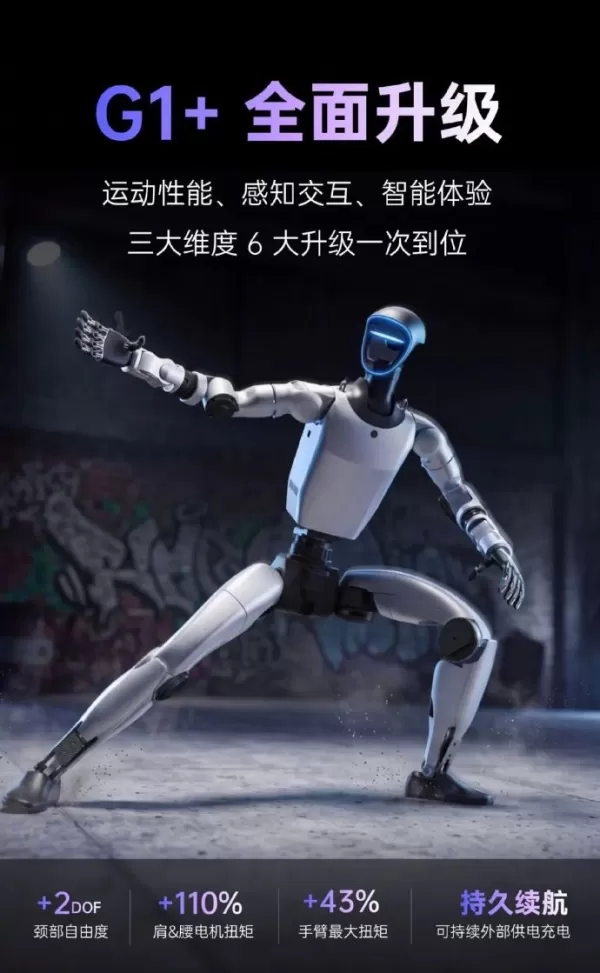 ZeroTech Unveils G1+ Humanoid Robot with Upgraded Motors, Vision, and Battery Life; Standard Version Priced at 95,000 RMB
Yuque Technology has officially unveiled the G1+ humanoid robot, introducing six key enhancements across motion performance, perception and interaction, and intelligent capabilities. Building on the G1’s strong cost-performance ratio, the G1+ improve
ZeroTech Unveils G1+ Humanoid Robot with Upgraded Motors, Vision, and Battery Life; Standard Version Priced at 95,000 RMB
Yuque Technology has officially unveiled the G1+ humanoid robot, introducing six key enhancements across motion performance, perception and interaction, and intelligent capabilities. Building on the G1’s strong cost-performance ratio, the G1+ improve
 Tencent, JD.com Deepen AI Agent Tie-Up as Physical Transactions Enter Trial
The artificial intelligence sector is shifting toward "practical application." Tencent and JD.com have recently formed a strategic partnership focused on developing AI Agents, signaling that domestic AI applications have entered a phase of "transacti
Tencent, JD.com Deepen AI Agent Tie-Up as Physical Transactions Enter Trial
The artificial intelligence sector is shifting toward "practical application." Tencent and JD.com have recently formed a strategic partnership focused on developing AI Agents, signaling that domestic AI applications have entered a phase of "transacti
 OpenClaw Launches iOS and Android Apps for Open-Source AI Agent
On June 30, the highly anticipated open-source AI agent project, OpenClaw, officially released its iOS and Android mobile apps at the X Conference, marking its full transition to mobile platforms. The app allows users to connect their devices to the
OpenClaw Launches iOS and Android Apps for Open-Source AI Agent
On June 30, the highly anticipated open-source AI agent project, OpenClaw, officially released its iOS and Android mobile apps at the X Conference, marking its full transition to mobile platforms. The app allows users to connect their devices to the
2026 Latest Best Top-rated AI Comment Moderation Tools for TikTok Shops and High-Volume Brand Communities are curated here by XIX.AI. Our weekly updated rankings feature powerful, game-changing solutions that deliver real-world tests results to help you boost content quality, enhance writing efficiency, and streamline community management effortlessly. Free vs paid comparison insights are also available. Explore now to Discover your perfect tool for unlocking your AI edge!
9 tools
xix.ai

2026 Latest Best CapCut AI Video Editors for Reels Shorts Ads and Social Commerce Launches! This curated list features top-rated powerful game-changing tools that deliver impressive results through real-world tests. You’ll find a free vs paid comparison along with detailed rankings to help you choose the perfect fit. XIX.AI offers expert insights to help you unlock your AI edge in content creation. Explore now to discover your ideal tool and boost your productivity today!
14 tools
xix.ai

2026 Latest Best Top-rated AI Study Discovery Tools are here on XIX.AI! This curated list includes powerful game-changing resources for quick access to journals, datasets, and industry trends. Get a free vs paid comparison along with real-world tests and updated rankings weekly. Must-try options help boost your research efficiency and unlock your AI edge. Explore now to discover your perfect tool!
10 tools
xix.ai

2026 Latest Best Top-Rated AI Email Campaign Tools for Lifecycle Marketing! XIX.AI has curated a powerful, game-changing collection of must-try solutions that boost writing efficiency, help create highly targeted content, and streamline entire marketing workflows. Enjoy weekly updated rankings, real-world tests, and a free vs paid comparison to find the perfect tool for your needs. Explore now to unlock your AI edge!
11 tools
xix.ai

2026 Latest Top-Rated Best AI Investment Research Tools are here on XIX.AI! This curated list includes powerfully accurate signals to assess portfolio risks and help you make smarter, data-driven decisions. We conduct real-world tests weekly to update rankings and offer a free vs paid comparison. Discover your perfect tool to boost investment analysis efficiency today. Explore now!
10 tools
xix.ai

2026 Latest Best Top-Rated AI Customer Chatbot Tools for Website Support are here on XIX.AI! Our curated list features powerful, game-changing solutions that boost response speeds, improve customer satisfaction, and save tons of manual work. Each option goes through rigorous real-world tests, complete with free vs paid comparison details. Explore now to find the perfect tool that boosts your online support efficiency!
10 tools
xix.ai












