


 Home
HomeChatGPT Unveils Age Detection to Enhance Teen Safety
As generative AI captures global attention, safeguarding minors remains a critical public concern. OpenAI has announced that its flagship product, ChatGPT, officially launched an "age prediction" feature this week. This global initiative uses intelligent identification to deliver more accurate, age-appropriate experiences for younger users. It represents a significant shift in AI governance, moving from a broad-brush approach to a more precise, tailored strategy.
To accomplish this, OpenAI employs a dual safeguard mechanism combining "big data analysis with third-party verification." The system utilizes deep learning to analyze various account-related dimensions, such as the topics users frequently discuss and their active hours. By examining these subtle interaction patterns, it can help predict whether a user is likely a minor.
If the system identifies a user as under 18, ChatGPT will automatically enable a strict safety filter. In this mode, teens are shielded from commercial advertising. Furthermore, OpenAI explicitly states it will strictly limit sensitive content, including violent imagery, high-risk challenges, romantic role-play, and material promoting extreme aesthetics or unhealthy diets. This ensures AI outputs support the healthy psychological development of young people.
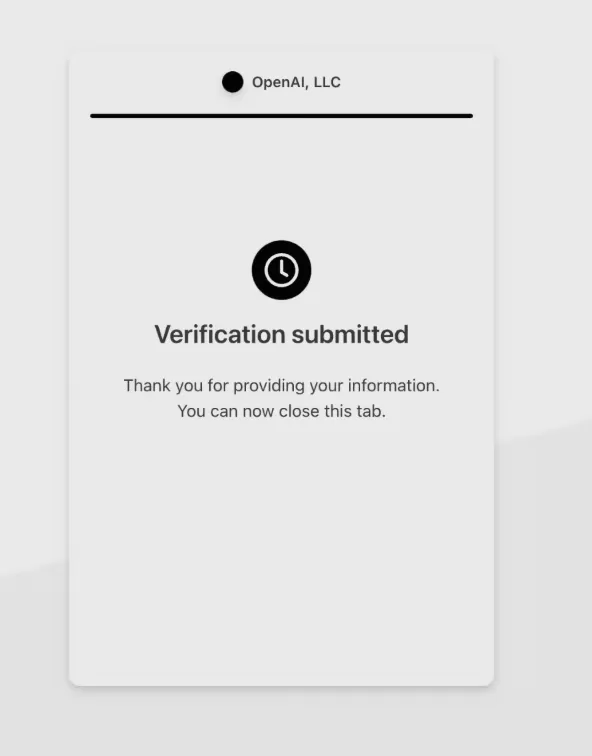
Notably, to bolster verification credibility, OpenAI has integrated a third-party service called Persona. Users who need to confirm they are adults to lift restrictions must complete verification via a real-time selfie or by submitting a valid government ID. This real-name verification logic not only addresses tightening global data protection laws but also helps build a reliable and authentic user profile.
The feature is now live in most global regions. Due to Europe's distinct regulatory landscape, OpenAI plans to extend it to EU member states in the coming weeks to ensure full legal compliance. From technological advancement to ethical safeguards, this update to ChatGPT illustrates how leading AI companies are seeking a new equilibrium between innovation and social responsibility.
Related article
 DeepMind CEO Hassabis: I sleep six hours a day, usually feel energetic around 1 a.m.
Fortune recently featured an interview with Demis Hassabis, CEO of Google DeepMind, revealing his unconventional approach to rest and productivity. Hassabis disclosed that he sleeps very little, structuring his waking hours into two distinct work blo
OpenAI, Anthropic Vie for Market Share Despite Revenue Shortfalls
Despite recent reports suggesting OpenAI missed revenue targets, creating pressure on tech stocks this Tuesday, private AI lab investors remain resilient. Seasoned backers have confirmed they will not reduce investment despite negative media coverage
California AV Compliance: A New Era of Tickets, Geofences, and 1M Miles
Guident operates an AuveTech shuttle in South Florida, managing a four-mile route in West Palm Beach and a one-mile route in Boca Raton using its remote monitoring technology. | Credit: GuidentCalifornia is redefining the regulatory landscape for dri
Related Special Topic Recommendations
Video creation
DeepMind CEO Hassabis: I sleep six hours a day, usually feel energetic around 1 a.m.
Fortune recently featured an interview with Demis Hassabis, CEO of Google DeepMind, revealing his unconventional approach to rest and productivity. Hassabis disclosed that he sleeps very little, structuring his waking hours into two distinct work blo
OpenAI, Anthropic Vie for Market Share Despite Revenue Shortfalls
Despite recent reports suggesting OpenAI missed revenue targets, creating pressure on tech stocks this Tuesday, private AI lab investors remain resilient. Seasoned backers have confirmed they will not reduce investment despite negative media coverage
California AV Compliance: A New Era of Tickets, Geofences, and 1M Miles
Guident operates an AuveTech shuttle in South Florida, managing a four-mile route in West Palm Beach and a one-mile route in Boca Raton using its remote monitoring technology. | Credit: GuidentCalifornia is redefining the regulatory landscape for dri
Related Special Topic Recommendations
Video creation
 AI Short-Form Video Hook Generators for Reels, Shorts, and Product Launch Campaigns
2026 Latest Best AI Short-Form Video Hook Generators for Reels Shorts and Product Launch Campaigns! XIX.AI curates top-rated powerful game-changing tools that deliver must-try results through real-world tests. This weekly updated page offers free vs paid comparison rankings to help you find the perfect solution for boosting content creativity and productivity. Explore now to Unlock your AI edge!
 11 tools
 xix.ai
writing
AI Article Outline Tools for Long Form Writing
xix.ai
writing
AI Article Outline Tools for Long Form Writing
2026 Latest Best Top-Rated AI Article Outline Tools for Long Form Writing! This curated collection features powerful, game-changing tools that deliver accurate, structured outlines with real-world tests to boost writing efficiency significantly. XIX.AI is part of this elite selection. Get a free vs paid comparison to help you choose the perfect tool. Explore now and Unlock your AI edge!
9 tools
xix.ai
chatbot
Best AI Roleplay Chat Apps for Language Practice, Interview Prep, and Daily Fluency
2026 Latest Best Top-rated AI Roleplay Chat Apps for Language Practice, Interview Prep, and Daily Fluency! XIX.AI curates a powerful game-changing collection that offers free vs paid comparison, real-world tests, and updated rankings weekly. These must-try tools help you boost writing skills, overcome fluency challenges, and improve communication efficiency across all daily scenarios. Explore now to discover your perfect tool for language growth!
10 tools
xix.ai
Music composition
AI Stem Separation Tools for Remix Production, Sampling Prep, and Karaoke Masters
2026 Latest Best Top-rated AI Stem Separation Tools Curated for Remix Production, Sampling Prep, and Karaoke Masters. These powerful game-changing tools offer real-world tests to deliver precise audio isolation, boosting productivity significantly. XIX.AI provides a weekly updated free vs paid comparison guide to help you find the must-try solution that suits your needs. Explore now to unlock your AI edge.
8 tools
xix.ai
Data Analysis
AI SQL Copilots for Revenue Dashboards, Funnel Analysis, and Product Metrics
2026 Latest Best AI SQL Copilots Ranked Top-Rated! XIX.AI curates a powerful game-changing collection for weekly updated real-world tests. These must-try tools help you generate accurate revenue dashboards, analyze sales funnels, and track product metrics swiftly, boosting productivity massively. Explore now to Discover your perfect tool for data-driven decision making! 238 characters
9 tools
xix.ai
Music composition
Best AI Melody Writing Tools for Song Drafts
2026 Latest Best Top-Rated AI Melody Writing Tools for Song Drafts! XIX.AI has curated a highly powerful game-changing collection that goes through rigorous real-world tests to deliver the best writing experience. You can find detailed free vs paid comparisons, accurate rankings, and must-try options designed to help you create stunning song drafts effortlessly and boost your creative productivity significantly. Explore now to discover your perfect tool!
8 tools
xix.ai

 Comments (1)
0/500
Comments (1)
0/500
![RogerLee]()
Honestly, the age prediction feature feels like a double-edged sword 🗡️. On one hand, it's great for protecting teens from inappropriate content, but on the other, I'm worried about privacy and how accurate it actually is. What if it misclassifies adults? Also, will this data be stored or used for other purposes? Just feels like another step toward AI babysitting us all. Still, better than nothing I guess 🤷♂️.
As generative AI captures global attention, safeguarding minors remains a critical public concern. OpenAI has announced that its flagship product, ChatGPT, officially launched an "age prediction" feature this week. This global initiative uses intelligent identification to deliver more accurate, age-appropriate experiences for younger users. It represents a significant shift in AI governance, moving from a broad-brush approach to a more precise, tailored strategy.
To accomplish this, OpenAI employs a dual safeguard mechanism combining "big data analysis with third-party verification." The system utilizes deep learning to analyze various account-related dimensions, such as the topics users frequently discuss and their active hours. By examining these subtle interaction patterns, it can help predict whether a user is likely a minor.
If the system identifies a user as under 18, ChatGPT will automatically enable a strict safety filter. In this mode, teens are shielded from commercial advertising. Furthermore, OpenAI explicitly states it will strictly limit sensitive content, including violent imagery, high-risk challenges, romantic role-play, and material promoting extreme aesthetics or unhealthy diets. This ensures AI outputs support the healthy psychological development of young people.
Notably, to bolster verification credibility, OpenAI has integrated a third-party service called Persona. Users who need to confirm they are adults to lift restrictions must complete verification via a real-time selfie or by submitting a valid government ID. This real-name verification logic not only addresses tightening global data protection laws but also helps build a reliable and authentic user profile.
The feature is now live in most global regions. Due to Europe's distinct regulatory landscape, OpenAI plans to extend it to EU member states in the coming weeks to ensure full legal compliance. From technological advancement to ethical safeguards, this update to ChatGPT illustrates how leading AI companies are seeking a new equilibrium between innovation and social responsibility.








 DeepMind CEO Hassabis: I sleep six hours a day, usually feel energetic around 1 a.m.
Fortune recently featured an interview with Demis Hassabis, CEO of Google DeepMind, revealing his unconventional approach to rest and productivity. Hassabis disclosed that he sleeps very little, structuring his waking hours into two distinct work blo
DeepMind CEO Hassabis: I sleep six hours a day, usually feel energetic around 1 a.m.
Fortune recently featured an interview with Demis Hassabis, CEO of Google DeepMind, revealing his unconventional approach to rest and productivity. Hassabis disclosed that he sleeps very little, structuring his waking hours into two distinct work blo
 OpenAI, Anthropic Vie for Market Share Despite Revenue Shortfalls
Despite recent reports suggesting OpenAI missed revenue targets, creating pressure on tech stocks this Tuesday, private AI lab investors remain resilient. Seasoned backers have confirmed they will not reduce investment despite negative media coverage
California AV Compliance: A New Era of Tickets, Geofences, and 1M Miles
Guident operates an AuveTech shuttle in South Florida, managing a four-mile route in West Palm Beach and a one-mile route in Boca Raton using its remote monitoring technology. | Credit: GuidentCalifornia is redefining the regulatory landscape for dri
OpenAI, Anthropic Vie for Market Share Despite Revenue Shortfalls
Despite recent reports suggesting OpenAI missed revenue targets, creating pressure on tech stocks this Tuesday, private AI lab investors remain resilient. Seasoned backers have confirmed they will not reduce investment despite negative media coverage
California AV Compliance: A New Era of Tickets, Geofences, and 1M Miles
Guident operates an AuveTech shuttle in South Florida, managing a four-mile route in West Palm Beach and a one-mile route in Boca Raton using its remote monitoring technology. | Credit: GuidentCalifornia is redefining the regulatory landscape for dri

2026 Latest Best AI Short-Form Video Hook Generators for Reels Shorts and Product Launch Campaigns! XIX.AI curates top-rated powerful game-changing tools that deliver must-try results through real-world tests. This weekly updated page offers free vs paid comparison rankings to help you find the perfect solution for boosting content creativity and productivity. Explore now to Unlock your AI edge!
11 tools
xix.ai

2026 Latest Best Top-Rated AI Article Outline Tools for Long Form Writing! This curated collection features powerful, game-changing tools that deliver accurate, structured outlines with real-world tests to boost writing efficiency significantly. XIX.AI is part of this elite selection. Get a free vs paid comparison to help you choose the perfect tool. Explore now and Unlock your AI edge!
9 tools
xix.ai

2026 Latest Best Top-rated AI Roleplay Chat Apps for Language Practice, Interview Prep, and Daily Fluency! XIX.AI curates a powerful game-changing collection that offers free vs paid comparison, real-world tests, and updated rankings weekly. These must-try tools help you boost writing skills, overcome fluency challenges, and improve communication efficiency across all daily scenarios. Explore now to discover your perfect tool for language growth!
10 tools
xix.ai
2026 Latest Best Top-rated AI Stem Separation Tools Curated for Remix Production, Sampling Prep, and Karaoke Masters. These powerful game-changing tools offer real-world tests to deliver precise audio isolation, boosting productivity significantly. XIX.AI provides a weekly updated free vs paid comparison guide to help you find the must-try solution that suits your needs. Explore now to unlock your AI edge.
8 tools
xix.ai

2026 Latest Best AI SQL Copilots Ranked Top-Rated! XIX.AI curates a powerful game-changing collection for weekly updated real-world tests. These must-try tools help you generate accurate revenue dashboards, analyze sales funnels, and track product metrics swiftly, boosting productivity massively. Explore now to Discover your perfect tool for data-driven decision making! 238 characters
9 tools
xix.ai

2026 Latest Best Top-Rated AI Melody Writing Tools for Song Drafts! XIX.AI has curated a highly powerful game-changing collection that goes through rigorous real-world tests to deliver the best writing experience. You can find detailed free vs paid comparisons, accurate rankings, and must-try options designed to help you create stunning song drafts effortlessly and boost your creative productivity significantly. Explore now to discover your perfect tool!
8 tools
xix.ai

Honestly, the age prediction feature feels like a double-edged sword 🗡️. On one hand, it's great for protecting teens from inappropriate content, but on the other, I'm worried about privacy and how accurate it actually is. What if it misclassifies adults? Also, will this data be stored or used for other purposes? Just feels like another step toward AI babysitting us all. Still, better than nothing I guess 🤷♂️.












