


 Home
HomeCaptain AI Launches Autonomous Navigation System for Ships
As artificial intelligence reshapes global industries, the maritime sector is undergoing its own profound transformation. Captain AI stands at the forefront of this change, offering a revolutionary system designed to redefine ship navigation. This innovative solution provides AI-powered autopilot, intelligent route optimization, and real-time obstacle detection, all aimed at boosting safety, operational efficiency, and environmental sustainability. This exploration delves into how Captain AI is charting a course toward a new era of autonomous navigation, seamlessly connecting disparate processes to transform how vessels traverse the world's oceans.
Key Points
Captain AI unifies voyage scheduling, route optimization, and execution into a single, seamless workflow.
Its AI autopilot enables autonomous navigation, significantly enhancing both efficiency and safety.
The system provides proactive, real-time obstacle avoidance, dynamically recalculating routes when necessary.
It leverages existing maritime infrastructure and data streams to power superior decision-making.
A core objective is to reduce fuel consumption and emissions, advancing sustainable maritime practices.
The solution has been rigorously validated in a realistic simulator, ensuring proven reliability and effectiveness.
Captain AI effectively bridges the critical gap between voyage planning and physical execution.
It delivers a comprehensive operational view, incorporating radar data and advanced 3D visualization.
Understanding Captain AI: The Future of Autonomous Maritime Navigation
What is Captain AI?
Captain AI represents a major leap in maritime technology, delivering a comprehensive autonomous navigation system. It harnesses artificial intelligence to automate and optimize every stage of ship navigation, from initial planning and scheduling to precise route execution and hazard avoidance.
This AI-driven autopilot is engineered to elevate safety, efficiency, and sustainability, integrating traditionally separate operations into a cohesive workflow. Captain AI goes beyond mere automation; it fosters a smarter, more responsive maritime ecosystem.
The system's fundamental purpose is to connect a ship's scheduled voyage with its optimally executed route. It aims to seamlessly link strategic voyage planning with real-time, AI-piloted execution. By unifying these elements, Captain AI transforms maritime operations, making them safer and more efficient. This innovation holds the potential to redefine navigation through optimized routing, reduced fuel use, enhanced safety protocols, and a lower risk of collisions.
Captain AI is built on the principle that AI can augment human expertise, particularly in complex environments like the open sea. It aggregates data from diverse sources, including radar and geographical databases, to build a complete picture of the vessel's environment. Advanced algorithms then process this data to make intelligent decisions on routing, speed, and obstacle avoidance. The result is more reliable, efficient, and environmentally conscious maritime operations. Consistent reference to Captain AI underscores its central role as the article's primary subject, optimizing search engine visibility for this key term in maritime AI.
Connecting the Dots: Integrating Maritime Processes with Captain AI
A primary advantage of Captain AI is its capacity to unify disparate maritime navigation processes.
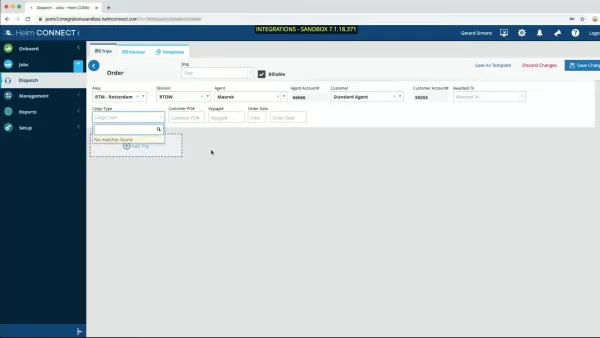
Traditionally, scheduling, route optimization, and execution have been siloed, often creating inefficiencies and communication breakdowns. Captain AI addresses this by integrating these components into a single, unified platform. This connectivity ensures decisions made during scheduling are directly translated into optimized routes, which are then executed precisely by the AI autopilot.
The system facilitates dispatch via OptiPort. This enables back-on-the-boat communication, where the captain receives a notification to accept a new, more optimized route based on the vessel's current environment. Upon acceptance, the new job is activated.
This integrated approach streamlines operations and significantly improves voyage safety. By delivering real-time data and decision support, Captain AI empowers captains and crews to make better-informed choices, reducing accident risks and improving emergency response times. The system optimizes the entire journey from scheduling to execution for maximum efficiency.
The Role of AI Autopilot in Captain AI's Autonomous Navigation
The core of Captain AI is its AI autopilot system, which enables true autonomous navigation. Using machine learning algorithms, it analyzes sensor, radar, and other data to determine the vessel's optimal course. The AI autopilot adapts to changing conditions like weather patterns and traffic, ensuring the ship stays on track and avoids hazards. Its goal is to navigate from point A to point B using the most efficient routes possible, factoring in environmental conditions and the positions of other vessels.
Implementing AI autopilot reduces the human operator's workload while improving navigational accuracy and consistency. By automating routine tasks like steering and speed control, it allows the crew to concentrate on critical management aspects like safety and security. Furthermore, the AI autopilot learns from experience, continuously enhancing its performance.
The AI autopilot is also crucial for optimizing fuel consumption and reducing emissions. By identifying the most efficient routes and speeds, it helps minimize the environmental footprint of maritime operations. This feature is especially valuable in an era of growing environmental awareness, aligning with the demand for sustainable shipping.
Real-Time Obstacle Avoidance: Enhancing Maritime Safety with AI
A vital feature of Captain AI is its real-time obstacle avoidance system.
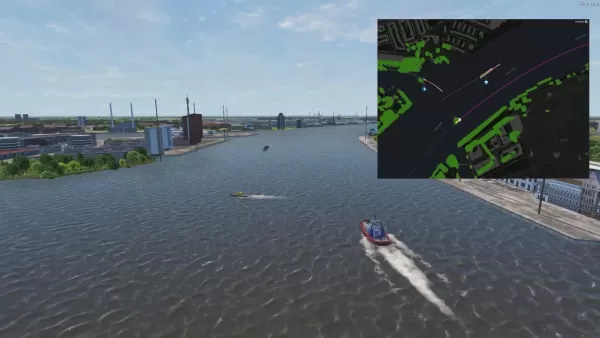
This system employs AI algorithms to identify and evade potential hazards like other vessels, debris, and navigational obstacles. It continuously scans the vessel's surroundings, recalculating routes as necessary to maintain a safe course. This capability is essential in congested waterways and high-traffic areas where collision risk is elevated.
The system also incorporates predictive analytics, allowing it to anticipate potential hazards before they become immediate threats. By analyzing historical and current data, it can identify patterns and predict other vessels' movements, enabling the AI autopilot to take proactive collision-avoidance measures. The Captain AI system notifies the captain of the chosen route and detects when an object may intersect with it. It will then recalculate and reroute to account for the new obstacle.
This predictive capability is a game-changer for maritime safety, moving beyond reactive responses to active risk mitigation. The integrated real-time radar helps visualize potential intersecting objects. By providing early warnings and intelligent decision support, Captain AI empowers crews to make better choices, reducing accident likelihood and improving overall operational safety. The software used in Captain AI simulations has one-to-one parity with real-world applications, including vessel detection of intersecting routes, ensuring the simulation is as realistic as possible.
Captain AI's Integration with Existing Maritime Infrastructure and Data
Leveraging Maritime Data for Improved Decision-Making
Captain AI does not operate in a vacuum; it leverages existing maritime infrastructure and data to enhance its decision-making.

The system integrates with various data sources, including electronic navigation charts, weather forecasts, and traffic information, to create a comprehensive situational awareness picture. This data is processed with advanced algorithms to optimize routes, reduce fuel consumption, and minimize emissions. By utilizing existing data, Captain AI delivers accurate, reliable guidance. The simulator aids in collecting new data, such as from advanced radar technology, to further improve these capabilities. Radar imagery is projected in 3D, allowing captains and crew to visualize distant objects and targets that may affect their current route.
Sustainable Maritime Practices: Reducing Fuel Consumption and Emissions
In an era of heightened environmental focus, sustainability is a key priority for the maritime industry. Captain AI is designed to promote sustainable practices by reducing fuel consumption and emissions. Its AI algorithms identify the most efficient routes and speeds, minimizing environmental impact. Furthermore, Captain AI can integrate with alternative propulsion systems like electric or hybrid engines for even greater emissions reductions.
Vessel control is highly dynamic and customizable through individual rotor control. For vessels with three rotors, independent control of each enables a wide range of precise maneuvers and motions. By optimizing routes and speeds, Captain AI minimizes fuel consumption, thereby reducing the environmental impact of maritime operations. Supporting sustainable practices is a major draw for those aiming to cut fuel use and emissions, which Captain AI achieves by finding optimal routes.
How to Implement and Use Captain AI for Maritime Navigation
Step-by-Step Guide to Using Captain AI
Implementing Captain AI follows a structured process to ensure seamless integration and optimal performance. This guide provides a step-by-step overview:
Initial Setup: Begin by installing the Captain AI software on your vessel's navigation system. Ensure all sensors, radar, and communication systems are properly connected and configured.
Data Integration: Integrate Captain AI with your existing maritime data sources, such as electronic navigation charts, live weather feeds, and traffic information systems.
Route Planning: Utilize Captain AI's planning tools to define the vessel's intended course. The system will automatically optimize the route for safety, efficiency, and sustainability.
AI Autopilot Activation: Engage the AI autopilot system to commence automated navigation. Monitor the system's performance and be prepared to make manual adjustments if required.
Real-Time Monitoring: Continuously monitor the vessel's environment using Captain AI's real-time obstacle avoidance system. Maintain readiness to assume manual control in emergency situations.
Interface Configuration:

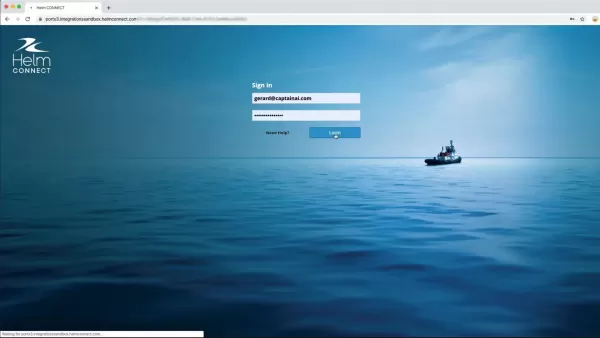
Upon login, you will be presented with a blank interface designed to be custom-tailored to your specific vessel or operational task.
Course Integration: Start by integrating your intended course for maximum efficiency. Configure the AI to prioritize safety, efficiency, and sustainability in its optimization.
Ongoing Monitoring: With the autopilot active, you can continuously monitor the vessel's surroundings and traffic. Adjust settings as necessary, always prioritizing safety as the top concern.
By following these steps, captains and crews can effectively implement and utilize Captain AI to enhance maritime navigation and promote sustainable practices.
Weighing the Benefits and Drawbacks: Pros and Cons of Captain AI
Pros
Enhanced Safety: Real-time obstacle avoidance and predictive analytics substantially lower the risk of accidents.
Increased Efficiency: AI autopilot and route optimization minimize transit times and fuel consumption.
Reduced Workload: Automating routine tasks frees the crew to focus on more critical activities.
Sustainability: Fuel optimization and emissions reduction support environmentally friendly operations.
Compatibility: Designed for seamless integration with existing ship systems and data sources.
Cons
Regulatory Uncertainty: Evolving and unclear regulatory frameworks for autonomous navigation may slow adoption.
Cybersecurity Risks: Increased connectivity introduces potential vulnerabilities to cyber threats.
Job Displacement: Automation raises concerns about potential job losses for maritime professionals.
Technology Dependency: Over-reliance on AI systems could erode human operators' skills for handling unexpected situations.
Initial Investment: The upfront cost of implementing Captain AI may be prohibitive for some ship owners.
Frequently Asked Questions about Captain AI
How does Captain AI improve maritime safety?
Captain AI enhances maritime safety through its real-time obstacle avoidance, predictive analytics, and AI autopilot. The system continuously scans the vessel's surroundings, dynamically recalculating routes to avoid hazards. Its predictive capability allows it to anticipate risks before they become immediate threats, enabling proactive prevention measures. By automating navigation and providing constant assessment, Captain AI reduces human workload, increases automation, and decreases the potential for collisions or hazardous routes.
Can Captain AI be integrated with existing ship systems?
Yes, Captain AI is designed for compatibility with a wide range of existing ship systems. It integrates with various data sources, including electronic navigation charts, weather forecasts, and traffic information. The system also offers interfaces for integration with alternative propulsion systems, such as electric or hybrid engines. This ensures Captain AI can be implemented on diverse vessels regardless of age or configuration. Since the software has one-to-one parity with real-world applications, the integration process is relatively seamless.
How does Captain AI reduce fuel consumption and emissions?
Captain AI reduces fuel consumption and emissions by identifying the most efficient routes and speeds for the vessel. Its AI algorithms analyze data from sensors, radar, and other sources to determine the optimal course. The AI autopilot adapts to changing conditions like weather and traffic, ensuring the ship remains on the most efficient path. By optimizing routing and speed, Captain AI minimizes the environmental impact of maritime operations.
What are the main challenges in implementing autonomous navigation systems like Captain AI?
Several challenges accompany the integration of AI systems like Captain AI, though Captain AI itself helps mitigate many common issues. Regulatory Hurdles: Maritime regulations are gradually evolving to match technological advances. Cybersecurity: Increased connectivity brings inherent risks of cyber threats. Job Displacement: Concerns exist regarding automation's impact on maritime employment. Captain AI addresses this by allowing crews to focus on higher-level management tasks. Furthermore, the AI autopilot continuously learns and improves from experience over time.
Related Questions
What are the key benefits of using AI in maritime navigation?
Integrating artificial intelligence into maritime navigation delivers significant benefits that enhance operational efficiency, safety, and environmental sustainability. A primary advantage is real-time route optimization. AI algorithms can analyze vast datasets—including weather patterns, traffic density, and navigational hazards—to determine the safest and most efficient path. This leads to reduced fuel consumption, lower emissions, and shorter transit times. AI also enables predictive maintenance, analyzing sensor data from ship machinery to identify potential failures before they happen, allowing for timely repairs that prevent costly breakdowns and ensure vessel availability. Furthermore, AI automates routine tasks, freeing human operators to concentrate on critical aspects like safety and security. Autonomous systems reduce operator workload, fostering a safer and more efficient working environment. AI algorithms are adept at detecting and avoiding potential collisions. By synthesizing data from radar, cameras, and other sensors, AI can identify hazards and take proactive evasive actions. This is particularly crucial in congested waterways. The use of AI in maritime navigation is poised to transform the industry, offering substantial improvements in efficiency, safety, and sustainability. As the technology evolves, we can expect even more innovative applications to further enhance maritime operations.
How does Captain AI compare to other autonomous navigation systems?
The following data is current as of 2025.FeatureCaptain AICompetitor ACompetitor BAutopilotAI-driven with real-time route optimizationRule-based with limited adaptationMachine learning-based with predictive capabilities but less integrationObstacle AvoidancePredictive and reactive with sensor fusionReactive only with radar-based detectionPrimarily camera-based with limitations in adverse weather conditionsData IntegrationComprehensive (navigation charts, weather, traffic)Limited to navigation charts and weatherPrimarily traffic data with navigation chart integrationSustainabilityFuel optimization and emissions reductionFuel optimization onlyPartial fuel optimization with limited emissions reductionAI ControlFull Dynamic with individual rotor controlReactive only with limited rangePartial rotor controlWhile Competitor A offers reliable rule-based autopilot, it lacks Captain AI’s dynamic adaptability to real-time conditions. Competitor B, while strong in predictive analytics via machine learning, falls short in integrating multiple data sources for holistic decision-making. The comparison highlights that Captain AI’s sensor fusion enables more precise and adaptive navigation, especially in poor weather. Its comprehensive data integration and AI-driven predictive capabilities deliver a more seamless and efficient maritime operational experience.
Related article
 DeepMind CEO Hassabis: I sleep six hours a day, usually feel energetic around 1 a.m.
Fortune recently featured an interview with Demis Hassabis, CEO of Google DeepMind, revealing his unconventional approach to rest and productivity. Hassabis disclosed that he sleeps very little, structuring his waking hours into two distinct work blo
OpenAI, Anthropic Vie for Market Share Despite Revenue Shortfalls
Despite recent reports suggesting OpenAI missed revenue targets, creating pressure on tech stocks this Tuesday, private AI lab investors remain resilient. Seasoned backers have confirmed they will not reduce investment despite negative media coverage
California AV Compliance: A New Era of Tickets, Geofences, and 1M Miles
Guident operates an AuveTech shuttle in South Florida, managing a four-mile route in West Palm Beach and a one-mile route in Boca Raton using its remote monitoring technology. | Credit: GuidentCalifornia is redefining the regulatory landscape for dri
Related Special Topic Recommendations
Video creation
DeepMind CEO Hassabis: I sleep six hours a day, usually feel energetic around 1 a.m.
Fortune recently featured an interview with Demis Hassabis, CEO of Google DeepMind, revealing his unconventional approach to rest and productivity. Hassabis disclosed that he sleeps very little, structuring his waking hours into two distinct work blo
OpenAI, Anthropic Vie for Market Share Despite Revenue Shortfalls
Despite recent reports suggesting OpenAI missed revenue targets, creating pressure on tech stocks this Tuesday, private AI lab investors remain resilient. Seasoned backers have confirmed they will not reduce investment despite negative media coverage
California AV Compliance: A New Era of Tickets, Geofences, and 1M Miles
Guident operates an AuveTech shuttle in South Florida, managing a four-mile route in West Palm Beach and a one-mile route in Boca Raton using its remote monitoring technology. | Credit: GuidentCalifornia is redefining the regulatory landscape for dri
Related Special Topic Recommendations
Video creation
 AI Short-Form Video Hook Generators for Reels, Shorts, and Product Launch Campaigns
2026 Latest Best AI Short-Form Video Hook Generators for Reels Shorts and Product Launch Campaigns! XIX.AI curates top-rated powerful game-changing tools that deliver must-try results through real-world tests. This weekly updated page offers free vs paid comparison rankings to help you find the perfect solution for boosting content creativity and productivity. Explore now to Unlock your AI edge!
 11 tools
 xix.ai
writing
AI Article Outline Tools for Long Form Writing
xix.ai
writing
AI Article Outline Tools for Long Form Writing
2026 Latest Best Top-Rated AI Article Outline Tools for Long Form Writing! This curated collection features powerful, game-changing tools that deliver accurate, structured outlines with real-world tests to boost writing efficiency significantly. XIX.AI is part of this elite selection. Get a free vs paid comparison to help you choose the perfect tool. Explore now and Unlock your AI edge!
9 tools
xix.ai
chatbot
Best AI Roleplay Chat Apps for Language Practice, Interview Prep, and Daily Fluency
2026 Latest Best Top-rated AI Roleplay Chat Apps for Language Practice, Interview Prep, and Daily Fluency! XIX.AI curates a powerful game-changing collection that offers free vs paid comparison, real-world tests, and updated rankings weekly. These must-try tools help you boost writing skills, overcome fluency challenges, and improve communication efficiency across all daily scenarios. Explore now to discover your perfect tool for language growth!
10 tools
xix.ai
Music composition
AI Stem Separation Tools for Remix Production, Sampling Prep, and Karaoke Masters
2026 Latest Best Top-rated AI Stem Separation Tools Curated for Remix Production, Sampling Prep, and Karaoke Masters. These powerful game-changing tools offer real-world tests to deliver precise audio isolation, boosting productivity significantly. XIX.AI provides a weekly updated free vs paid comparison guide to help you find the must-try solution that suits your needs. Explore now to unlock your AI edge.
8 tools
xix.ai
Data Analysis
AI SQL Copilots for Revenue Dashboards, Funnel Analysis, and Product Metrics
2026 Latest Best AI SQL Copilots Ranked Top-Rated! XIX.AI curates a powerful game-changing collection for weekly updated real-world tests. These must-try tools help you generate accurate revenue dashboards, analyze sales funnels, and track product metrics swiftly, boosting productivity massively. Explore now to Discover your perfect tool for data-driven decision making! 238 characters
9 tools
xix.ai
Music composition
Best AI Melody Writing Tools for Song Drafts
2026 Latest Best Top-Rated AI Melody Writing Tools for Song Drafts! XIX.AI has curated a highly powerful game-changing collection that goes through rigorous real-world tests to deliver the best writing experience. You can find detailed free vs paid comparisons, accurate rankings, and must-try options designed to help you create stunning song drafts effortlessly and boost your creative productivity significantly. Explore now to discover your perfect tool!
8 tools
xix.ai

 Comments (1)
0/500
Comments (1)
0/500
![DonaldJackson]()
So Captain AI is basically handing the helm to a computer? I mean, sure, autopilot exists, but full autonomous navigation for ships? That's wild. Imagine a cargo vessel silently steering itself through a storm while the crew just watches Netflix. 🚢🤖 But what about piracy or cyberattacks? One hacker could reroute a whole fleet. Anyway, curious how regulators will handle this — or if they'll just let the AI figure it out.
As artificial intelligence reshapes global industries, the maritime sector is undergoing its own profound transformation. Captain AI stands at the forefront of this change, offering a revolutionary system designed to redefine ship navigation. This innovative solution provides AI-powered autopilot, intelligent route optimization, and real-time obstacle detection, all aimed at boosting safety, operational efficiency, and environmental sustainability. This exploration delves into how Captain AI is charting a course toward a new era of autonomous navigation, seamlessly connecting disparate processes to transform how vessels traverse the world's oceans.
Key Points
Captain AI unifies voyage scheduling, route optimization, and execution into a single, seamless workflow.
Its AI autopilot enables autonomous navigation, significantly enhancing both efficiency and safety.
The system provides proactive, real-time obstacle avoidance, dynamically recalculating routes when necessary.
It leverages existing maritime infrastructure and data streams to power superior decision-making.
A core objective is to reduce fuel consumption and emissions, advancing sustainable maritime practices.
The solution has been rigorously validated in a realistic simulator, ensuring proven reliability and effectiveness.
Captain AI effectively bridges the critical gap between voyage planning and physical execution.
It delivers a comprehensive operational view, incorporating radar data and advanced 3D visualization.
Understanding Captain AI: The Future of Autonomous Maritime Navigation
What is Captain AI?
Captain AI represents a major leap in maritime technology, delivering a comprehensive autonomous navigation system. It harnesses artificial intelligence to automate and optimize every stage of ship navigation, from initial planning and scheduling to precise route execution and hazard avoidance.
This AI-driven autopilot is engineered to elevate safety, efficiency, and sustainability, integrating traditionally separate operations into a cohesive workflow. Captain AI goes beyond mere automation; it fosters a smarter, more responsive maritime ecosystem.
The system's fundamental purpose is to connect a ship's scheduled voyage with its optimally executed route. It aims to seamlessly link strategic voyage planning with real-time, AI-piloted execution. By unifying these elements, Captain AI transforms maritime operations, making them safer and more efficient. This innovation holds the potential to redefine navigation through optimized routing, reduced fuel use, enhanced safety protocols, and a lower risk of collisions.
Captain AI is built on the principle that AI can augment human expertise, particularly in complex environments like the open sea. It aggregates data from diverse sources, including radar and geographical databases, to build a complete picture of the vessel's environment. Advanced algorithms then process this data to make intelligent decisions on routing, speed, and obstacle avoidance. The result is more reliable, efficient, and environmentally conscious maritime operations. Consistent reference to Captain AI underscores its central role as the article's primary subject, optimizing search engine visibility for this key term in maritime AI.
Connecting the Dots: Integrating Maritime Processes with Captain AI
A primary advantage of Captain AI is its capacity to unify disparate maritime navigation processes.
Traditionally, scheduling, route optimization, and execution have been siloed, often creating inefficiencies and communication breakdowns. Captain AI addresses this by integrating these components into a single, unified platform. This connectivity ensures decisions made during scheduling are directly translated into optimized routes, which are then executed precisely by the AI autopilot.
The system facilitates dispatch via OptiPort. This enables back-on-the-boat communication, where the captain receives a notification to accept a new, more optimized route based on the vessel's current environment. Upon acceptance, the new job is activated.
This integrated approach streamlines operations and significantly improves voyage safety. By delivering real-time data and decision support, Captain AI empowers captains and crews to make better-informed choices, reducing accident risks and improving emergency response times. The system optimizes the entire journey from scheduling to execution for maximum efficiency.
The Role of AI Autopilot in Captain AI's Autonomous Navigation
The core of Captain AI is its AI autopilot system, which enables true autonomous navigation. Using machine learning algorithms, it analyzes sensor, radar, and other data to determine the vessel's optimal course. The AI autopilot adapts to changing conditions like weather patterns and traffic, ensuring the ship stays on track and avoids hazards. Its goal is to navigate from point A to point B using the most efficient routes possible, factoring in environmental conditions and the positions of other vessels.
Implementing AI autopilot reduces the human operator's workload while improving navigational accuracy and consistency. By automating routine tasks like steering and speed control, it allows the crew to concentrate on critical management aspects like safety and security. Furthermore, the AI autopilot learns from experience, continuously enhancing its performance.
The AI autopilot is also crucial for optimizing fuel consumption and reducing emissions. By identifying the most efficient routes and speeds, it helps minimize the environmental footprint of maritime operations. This feature is especially valuable in an era of growing environmental awareness, aligning with the demand for sustainable shipping.
Real-Time Obstacle Avoidance: Enhancing Maritime Safety with AI
A vital feature of Captain AI is its real-time obstacle avoidance system.
This system employs AI algorithms to identify and evade potential hazards like other vessels, debris, and navigational obstacles. It continuously scans the vessel's surroundings, recalculating routes as necessary to maintain a safe course. This capability is essential in congested waterways and high-traffic areas where collision risk is elevated.
The system also incorporates predictive analytics, allowing it to anticipate potential hazards before they become immediate threats. By analyzing historical and current data, it can identify patterns and predict other vessels' movements, enabling the AI autopilot to take proactive collision-avoidance measures. The Captain AI system notifies the captain of the chosen route and detects when an object may intersect with it. It will then recalculate and reroute to account for the new obstacle.
This predictive capability is a game-changer for maritime safety, moving beyond reactive responses to active risk mitigation. The integrated real-time radar helps visualize potential intersecting objects. By providing early warnings and intelligent decision support, Captain AI empowers crews to make better choices, reducing accident likelihood and improving overall operational safety. The software used in Captain AI simulations has one-to-one parity with real-world applications, including vessel detection of intersecting routes, ensuring the simulation is as realistic as possible.
Captain AI's Integration with Existing Maritime Infrastructure and Data
Leveraging Maritime Data for Improved Decision-Making
Captain AI does not operate in a vacuum; it leverages existing maritime infrastructure and data to enhance its decision-making.
The system integrates with various data sources, including electronic navigation charts, weather forecasts, and traffic information, to create a comprehensive situational awareness picture. This data is processed with advanced algorithms to optimize routes, reduce fuel consumption, and minimize emissions. By utilizing existing data, Captain AI delivers accurate, reliable guidance. The simulator aids in collecting new data, such as from advanced radar technology, to further improve these capabilities. Radar imagery is projected in 3D, allowing captains and crew to visualize distant objects and targets that may affect their current route.
Sustainable Maritime Practices: Reducing Fuel Consumption and Emissions
In an era of heightened environmental focus, sustainability is a key priority for the maritime industry. Captain AI is designed to promote sustainable practices by reducing fuel consumption and emissions. Its AI algorithms identify the most efficient routes and speeds, minimizing environmental impact. Furthermore, Captain AI can integrate with alternative propulsion systems like electric or hybrid engines for even greater emissions reductions.
Vessel control is highly dynamic and customizable through individual rotor control. For vessels with three rotors, independent control of each enables a wide range of precise maneuvers and motions. By optimizing routes and speeds, Captain AI minimizes fuel consumption, thereby reducing the environmental impact of maritime operations. Supporting sustainable practices is a major draw for those aiming to cut fuel use and emissions, which Captain AI achieves by finding optimal routes.
How to Implement and Use Captain AI for Maritime Navigation
Step-by-Step Guide to Using Captain AI
Implementing Captain AI follows a structured process to ensure seamless integration and optimal performance. This guide provides a step-by-step overview:
Initial Setup: Begin by installing the Captain AI software on your vessel's navigation system. Ensure all sensors, radar, and communication systems are properly connected and configured.
Data Integration: Integrate Captain AI with your existing maritime data sources, such as electronic navigation charts, live weather feeds, and traffic information systems.
Route Planning: Utilize Captain AI's planning tools to define the vessel's intended course. The system will automatically optimize the route for safety, efficiency, and sustainability.
AI Autopilot Activation: Engage the AI autopilot system to commence automated navigation. Monitor the system's performance and be prepared to make manual adjustments if required.
Real-Time Monitoring: Continuously monitor the vessel's environment using Captain AI's real-time obstacle avoidance system. Maintain readiness to assume manual control in emergency situations.
Interface Configuration:
Upon login, you will be presented with a blank interface designed to be custom-tailored to your specific vessel or operational task.
Course Integration: Start by integrating your intended course for maximum efficiency. Configure the AI to prioritize safety, efficiency, and sustainability in its optimization.
Ongoing Monitoring: With the autopilot active, you can continuously monitor the vessel's surroundings and traffic. Adjust settings as necessary, always prioritizing safety as the top concern.
By following these steps, captains and crews can effectively implement and utilize Captain AI to enhance maritime navigation and promote sustainable practices.
Weighing the Benefits and Drawbacks: Pros and Cons of Captain AI
Pros
Enhanced Safety: Real-time obstacle avoidance and predictive analytics substantially lower the risk of accidents.
Increased Efficiency: AI autopilot and route optimization minimize transit times and fuel consumption.
Reduced Workload: Automating routine tasks frees the crew to focus on more critical activities.
Sustainability: Fuel optimization and emissions reduction support environmentally friendly operations.
Compatibility: Designed for seamless integration with existing ship systems and data sources.
Cons
Regulatory Uncertainty: Evolving and unclear regulatory frameworks for autonomous navigation may slow adoption.
Cybersecurity Risks: Increased connectivity introduces potential vulnerabilities to cyber threats.
Job Displacement: Automation raises concerns about potential job losses for maritime professionals.
Technology Dependency: Over-reliance on AI systems could erode human operators' skills for handling unexpected situations.
Initial Investment: The upfront cost of implementing Captain AI may be prohibitive for some ship owners.
Frequently Asked Questions about Captain AI
How does Captain AI improve maritime safety?
Captain AI enhances maritime safety through its real-time obstacle avoidance, predictive analytics, and AI autopilot. The system continuously scans the vessel's surroundings, dynamically recalculating routes to avoid hazards. Its predictive capability allows it to anticipate risks before they become immediate threats, enabling proactive prevention measures. By automating navigation and providing constant assessment, Captain AI reduces human workload, increases automation, and decreases the potential for collisions or hazardous routes.
Can Captain AI be integrated with existing ship systems?
Yes, Captain AI is designed for compatibility with a wide range of existing ship systems. It integrates with various data sources, including electronic navigation charts, weather forecasts, and traffic information. The system also offers interfaces for integration with alternative propulsion systems, such as electric or hybrid engines. This ensures Captain AI can be implemented on diverse vessels regardless of age or configuration. Since the software has one-to-one parity with real-world applications, the integration process is relatively seamless.
How does Captain AI reduce fuel consumption and emissions?
Captain AI reduces fuel consumption and emissions by identifying the most efficient routes and speeds for the vessel. Its AI algorithms analyze data from sensors, radar, and other sources to determine the optimal course. The AI autopilot adapts to changing conditions like weather and traffic, ensuring the ship remains on the most efficient path. By optimizing routing and speed, Captain AI minimizes the environmental impact of maritime operations.
What are the main challenges in implementing autonomous navigation systems like Captain AI?
Several challenges accompany the integration of AI systems like Captain AI, though Captain AI itself helps mitigate many common issues. Regulatory Hurdles: Maritime regulations are gradually evolving to match technological advances. Cybersecurity: Increased connectivity brings inherent risks of cyber threats. Job Displacement: Concerns exist regarding automation's impact on maritime employment. Captain AI addresses this by allowing crews to focus on higher-level management tasks. Furthermore, the AI autopilot continuously learns and improves from experience over time.
Related Questions
What are the key benefits of using AI in maritime navigation?
Integrating artificial intelligence into maritime navigation delivers significant benefits that enhance operational efficiency, safety, and environmental sustainability. A primary advantage is real-time route optimization. AI algorithms can analyze vast datasets—including weather patterns, traffic density, and navigational hazards—to determine the safest and most efficient path. This leads to reduced fuel consumption, lower emissions, and shorter transit times. AI also enables predictive maintenance, analyzing sensor data from ship machinery to identify potential failures before they happen, allowing for timely repairs that prevent costly breakdowns and ensure vessel availability. Furthermore, AI automates routine tasks, freeing human operators to concentrate on critical aspects like safety and security. Autonomous systems reduce operator workload, fostering a safer and more efficient working environment. AI algorithms are adept at detecting and avoiding potential collisions. By synthesizing data from radar, cameras, and other sensors, AI can identify hazards and take proactive evasive actions. This is particularly crucial in congested waterways. The use of AI in maritime navigation is poised to transform the industry, offering substantial improvements in efficiency, safety, and sustainability. As the technology evolves, we can expect even more innovative applications to further enhance maritime operations.
How does Captain AI compare to other autonomous navigation systems?
The following data is current as of 2025.FeatureCaptain AICompetitor ACompetitor BAutopilotAI-driven with real-time route optimizationRule-based with limited adaptationMachine learning-based with predictive capabilities but less integrationObstacle AvoidancePredictive and reactive with sensor fusionReactive only with radar-based detectionPrimarily camera-based with limitations in adverse weather conditionsData IntegrationComprehensive (navigation charts, weather, traffic)Limited to navigation charts and weatherPrimarily traffic data with navigation chart integrationSustainabilityFuel optimization and emissions reductionFuel optimization onlyPartial fuel optimization with limited emissions reductionAI ControlFull Dynamic with individual rotor controlReactive only with limited rangePartial rotor controlWhile Competitor A offers reliable rule-based autopilot, it lacks Captain AI’s dynamic adaptability to real-time conditions. Competitor B, while strong in predictive analytics via machine learning, falls short in integrating multiple data sources for holistic decision-making. The comparison highlights that Captain AI’s sensor fusion enables more precise and adaptive navigation, especially in poor weather. Its comprehensive data integration and AI-driven predictive capabilities deliver a more seamless and efficient maritime operational experience.








 DeepMind CEO Hassabis: I sleep six hours a day, usually feel energetic around 1 a.m.
Fortune recently featured an interview with Demis Hassabis, CEO of Google DeepMind, revealing his unconventional approach to rest and productivity. Hassabis disclosed that he sleeps very little, structuring his waking hours into two distinct work blo
DeepMind CEO Hassabis: I sleep six hours a day, usually feel energetic around 1 a.m.
Fortune recently featured an interview with Demis Hassabis, CEO of Google DeepMind, revealing his unconventional approach to rest and productivity. Hassabis disclosed that he sleeps very little, structuring his waking hours into two distinct work blo
 OpenAI, Anthropic Vie for Market Share Despite Revenue Shortfalls
Despite recent reports suggesting OpenAI missed revenue targets, creating pressure on tech stocks this Tuesday, private AI lab investors remain resilient. Seasoned backers have confirmed they will not reduce investment despite negative media coverage
California AV Compliance: A New Era of Tickets, Geofences, and 1M Miles
Guident operates an AuveTech shuttle in South Florida, managing a four-mile route in West Palm Beach and a one-mile route in Boca Raton using its remote monitoring technology. | Credit: GuidentCalifornia is redefining the regulatory landscape for dri
OpenAI, Anthropic Vie for Market Share Despite Revenue Shortfalls
Despite recent reports suggesting OpenAI missed revenue targets, creating pressure on tech stocks this Tuesday, private AI lab investors remain resilient. Seasoned backers have confirmed they will not reduce investment despite negative media coverage
California AV Compliance: A New Era of Tickets, Geofences, and 1M Miles
Guident operates an AuveTech shuttle in South Florida, managing a four-mile route in West Palm Beach and a one-mile route in Boca Raton using its remote monitoring technology. | Credit: GuidentCalifornia is redefining the regulatory landscape for dri

2026 Latest Best AI Short-Form Video Hook Generators for Reels Shorts and Product Launch Campaigns! XIX.AI curates top-rated powerful game-changing tools that deliver must-try results through real-world tests. This weekly updated page offers free vs paid comparison rankings to help you find the perfect solution for boosting content creativity and productivity. Explore now to Unlock your AI edge!
11 tools
xix.ai

2026 Latest Best Top-Rated AI Article Outline Tools for Long Form Writing! This curated collection features powerful, game-changing tools that deliver accurate, structured outlines with real-world tests to boost writing efficiency significantly. XIX.AI is part of this elite selection. Get a free vs paid comparison to help you choose the perfect tool. Explore now and Unlock your AI edge!
9 tools
xix.ai

2026 Latest Best Top-rated AI Roleplay Chat Apps for Language Practice, Interview Prep, and Daily Fluency! XIX.AI curates a powerful game-changing collection that offers free vs paid comparison, real-world tests, and updated rankings weekly. These must-try tools help you boost writing skills, overcome fluency challenges, and improve communication efficiency across all daily scenarios. Explore now to discover your perfect tool for language growth!
10 tools
xix.ai

2026 Latest Best Top-rated AI Stem Separation Tools Curated for Remix Production, Sampling Prep, and Karaoke Masters. These powerful game-changing tools offer real-world tests to deliver precise audio isolation, boosting productivity significantly. XIX.AI provides a weekly updated free vs paid comparison guide to help you find the must-try solution that suits your needs. Explore now to unlock your AI edge.
8 tools
xix.ai

2026 Latest Best AI SQL Copilots Ranked Top-Rated! XIX.AI curates a powerful game-changing collection for weekly updated real-world tests. These must-try tools help you generate accurate revenue dashboards, analyze sales funnels, and track product metrics swiftly, boosting productivity massively. Explore now to Discover your perfect tool for data-driven decision making! 238 characters
9 tools
xix.ai

2026 Latest Best Top-Rated AI Melody Writing Tools for Song Drafts! XIX.AI has curated a highly powerful game-changing collection that goes through rigorous real-world tests to deliver the best writing experience. You can find detailed free vs paid comparisons, accurate rankings, and must-try options designed to help you create stunning song drafts effortlessly and boost your creative productivity significantly. Explore now to discover your perfect tool!
8 tools
xix.ai

So Captain AI is basically handing the helm to a computer? I mean, sure, autopilot exists, but full autonomous navigation for ships? That's wild. Imagine a cargo vessel silently steering itself through a storm while the crew just watches Netflix. 🚢🤖 But what about piracy or cyberattacks? One hacker could reroute a whole fleet. Anyway, curious how regulators will handle this — or if they'll just let the AI figure it out.












