


 Home
HomeAnalyzing the Rise of AI-Generated Billie Eilish Music Covers
The music landscape is in a state of constant transformation, and artificial intelligence is at the forefront of this change, expanding the possibilities of creative expression. A fascinating illustration of this progress is the AI-generated rendition of Billie Eilish's "I Still Say Goodnight." This version presents a fresh interpretation of the track, merging Eilish's unique aesthetic with the innovative potential of AI. This convergence marks an exhilarating moment for both music and tech, unlocking new avenues for artistic creation and audience connection.
Key Points
The AI cover faithfully reproduces Billie Eilish's signature vocal tone.
AI-generated music is achieving remarkable levels of sophistication.
The cover's emotional subtlety provides a distinct and engaging auditory experience.
The application of AI in creative industries is expanding rapidly.
Addressing the ethical implications of AI music is now more critical than ever.
Diving Deep into the AI Billie Eilish Cover
The Rise of AI Music and Vocal Cloning
Artificial intelligence is swiftly reshaping creative fields, with the music industry being a prime example. AI music utilizes algorithms and machine learning to compose, perform, or alter musical works. Vocal cloning, a specific application of this technology, aims to duplicate a particular artist's voice to perform new material. The AI version of "I Still Say Goodnight" is a perfect case study, demonstrating how an AI can emulate the vocal qualities of Billie Eilish to produce a captivating piece. The ethical questions surrounding voice cloning demand careful thought and robust legal protections, particularly regarding copyright and the rights of the original artist.
Analyzing Vocal Nuances and Emotional Delivery
A particularly impressive feature of the AI cover is its capacity to capture the delicate vocal details that are characteristic of Billie Eilish's sound. The AI shows a grasp of her performance style, from her airy, intimate whispers to her subtle use of vibrato. Nevertheless, a side-by-side comparison with the original recording reveals slight variations in genuine emotional resonance. While the AI performs with high technical precision, it does not entirely replicate the profound emotional complexity a human artist conveys. The depth of feeling and the human element remain significant distinguishing factors.
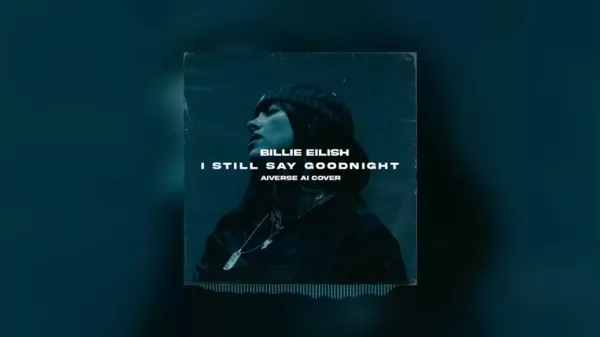
The AI-synthesized vocals are a technical marvel, faithfully recreating Billie Eilish's unique vocal signature, including her breathy texture and subtle phrasing.
The Technological Underpinnings of AI Music
The creation of AI music relies on advanced machine learning methods. AI systems are trained on enormous collections of audio recordings, from which they learn musical patterns, structures, and stylistic elements. For vocal cloning, the AI meticulously studies the target singer's voice, identifying key attributes like pitch, tone color, and pronunciation. This data is then used to generate new vocal tracks that imitate the artist's sound. As AI technology progresses, the realism and expressive quality of AI-generated music are set to improve, further muddying the distinction between human and computer-created art. The process depends on continuous data feeding and algorithm optimization to refine the AI's comprehension and reproduction of musical intricacies.
Ethical and Legal Implications of AI Music
Copyright and Ownership
The integration of AI into music production introduces complex copyright and ownership dilemmas. Who holds the rights to a song created by an AI? Is it the AI's programmer, the individual who provided the input, or the artist whose voice was cloned? Current copyright legislation often fails to cover these novel situations, creating a legal gray area. Developing a balanced solution that safeguards original artists' rights while encouraging AI innovation is essential. Establishing clear legal guidelines to determine ownership and usage rights for AI-generated material is a necessary step. The emergence of AI music calls for an update to copyright laws to prevent misuse and guarantee that artists are fairly compensated.
Artistic Authenticity and Human Creativity
The growing capabilities of AI music generators prompt debates about artistic authenticity and the essence of human creativity. If an AI can produce music that is sonically identical to a human creation, how does this affect the perceived value of human artistry? Some contend that AI music lacks the genuine expressiveness and emotional depth inherent to human performers. Conversely, others view AI as a powerful instrument that can enhance human creativity, opening doors to unprecedented sonic landscapes and compositional techniques. The long-term role of AI in music will ultimately be shaped by public perception of its relationship to human art. Finding a middle ground that welcomes technological progress while honoring the distinctive aspects of human creativity is key. By treating AI as a collaborative tool rather than a substitute, we can harness its potential to enrich the creative journey.
Pros and Cons of AI Music Covers
Pros
Opens Doors to Novel Musical Discoveries
Streamlines and Accelerates the Production Process
Makes Music Creation More Accessible to a Wider Audience
Cons
Raises Significant Copyright Issues
May Lack the Authentic Emotional Impact of Human Performance
Could Potentially Reduce Opportunities for Human Musicians
Frequently Asked Questions (FAQ)
What exactly is an AI cover?
An AI cover is a musical performance where artificial intelligence is used to imitate the voice of a particular singer. The AI is trained on extensive audio samples of the artist, allowing it to produce new vocal tracks that closely match their style.
How does AI music work?
AI music generation employs machine learning algorithms to compose, perform, or edit music. These systems analyze large libraries of existing music to learn how to create new pieces in a specified style.
What are the ethical considerations of AI music?
Key ethical concerns involve copyright and ownership disputes, questions of artistic originality, and the possible economic impact on working musicians. Developing legal standards to manage these challenges is imperative.
Will AI replace human musicians?
It is improbable that AI will entirely supplant human musicians. Instead, it can act as a creative aid, helping artists discover new sounds and arrangements. The inimitable emotional resonance and authenticity of human performance continue to hold immense value.
How can I create my own AI music?
A variety of online platforms and software tools, like Amper Music, Jukebox, and AIVA, enable users to create AI music. These services typically let you set various parameters to generate original compositions.
Related Questions
What are the implications for the music industry?
The music industry is encountering both promising opportunities and complex challenges with the advent of AI music. Potential benefits include new artistic frontiers, faster production workflows, and customized listening experiences. Conversely, challenges encompass legal conflicts over copyright, questions about how to distribute royalties, and the risk of reduced demand for human talent. To navigate this shift, the industry must develop new business practices and legal structures that ensure fairness for all parties involved. Embracing technological change is essential for remaining relevant.
How will AI influence the future of music creation?
AI is set to profoundly impact music creation by facilitating new types of human-machine collaboration. Musicians can use AI software to brainstorm concepts, test out different genres, and polish their work. AI also lowers the barrier to entry, allowing people without extensive musical background to compose. The intersection of human imagination and AI is expected to give rise to innovative and thrilling new musical forms. This synergy between artist and algorithm will undoubtedly continue to redefine the sound of music.
Related article
 DeepMind CEO Hassabis: I sleep six hours a day, usually feel energetic around 1 a.m.
Fortune recently featured an interview with Demis Hassabis, CEO of Google DeepMind, revealing his unconventional approach to rest and productivity. Hassabis disclosed that he sleeps very little, structuring his waking hours into two distinct work blo
OpenAI, Anthropic Vie for Market Share Despite Revenue Shortfalls
Despite recent reports suggesting OpenAI missed revenue targets, creating pressure on tech stocks this Tuesday, private AI lab investors remain resilient. Seasoned backers have confirmed they will not reduce investment despite negative media coverage
California AV Compliance: A New Era of Tickets, Geofences, and 1M Miles
Guident operates an AuveTech shuttle in South Florida, managing a four-mile route in West Palm Beach and a one-mile route in Boca Raton using its remote monitoring technology. | Credit: GuidentCalifornia is redefining the regulatory landscape for dri
Related Special Topic Recommendations
Video creation
DeepMind CEO Hassabis: I sleep six hours a day, usually feel energetic around 1 a.m.
Fortune recently featured an interview with Demis Hassabis, CEO of Google DeepMind, revealing his unconventional approach to rest and productivity. Hassabis disclosed that he sleeps very little, structuring his waking hours into two distinct work blo
OpenAI, Anthropic Vie for Market Share Despite Revenue Shortfalls
Despite recent reports suggesting OpenAI missed revenue targets, creating pressure on tech stocks this Tuesday, private AI lab investors remain resilient. Seasoned backers have confirmed they will not reduce investment despite negative media coverage
California AV Compliance: A New Era of Tickets, Geofences, and 1M Miles
Guident operates an AuveTech shuttle in South Florida, managing a four-mile route in West Palm Beach and a one-mile route in Boca Raton using its remote monitoring technology. | Credit: GuidentCalifornia is redefining the regulatory landscape for dri
Related Special Topic Recommendations
Video creation
 AI Short-Form Video Hook Generators for Reels, Shorts, and Product Launch Campaigns
2026 Latest Best AI Short-Form Video Hook Generators for Reels Shorts and Product Launch Campaigns! XIX.AI curates top-rated powerful game-changing tools that deliver must-try results through real-world tests. This weekly updated page offers free vs paid comparison rankings to help you find the perfect solution for boosting content creativity and productivity. Explore now to Unlock your AI edge!
 11 tools
 xix.ai
writing
AI Article Outline Tools for Long Form Writing
xix.ai
writing
AI Article Outline Tools for Long Form Writing
2026 Latest Best Top-Rated AI Article Outline Tools for Long Form Writing! This curated collection features powerful, game-changing tools that deliver accurate, structured outlines with real-world tests to boost writing efficiency significantly. XIX.AI is part of this elite selection. Get a free vs paid comparison to help you choose the perfect tool. Explore now and Unlock your AI edge!
9 tools
xix.ai
chatbot
Best AI Roleplay Chat Apps for Language Practice, Interview Prep, and Daily Fluency
2026 Latest Best Top-rated AI Roleplay Chat Apps for Language Practice, Interview Prep, and Daily Fluency! XIX.AI curates a powerful game-changing collection that offers free vs paid comparison, real-world tests, and updated rankings weekly. These must-try tools help you boost writing skills, overcome fluency challenges, and improve communication efficiency across all daily scenarios. Explore now to discover your perfect tool for language growth!
10 tools
xix.ai
Music composition
AI Stem Separation Tools for Remix Production, Sampling Prep, and Karaoke Masters
2026 Latest Best Top-rated AI Stem Separation Tools Curated for Remix Production, Sampling Prep, and Karaoke Masters. These powerful game-changing tools offer real-world tests to deliver precise audio isolation, boosting productivity significantly. XIX.AI provides a weekly updated free vs paid comparison guide to help you find the must-try solution that suits your needs. Explore now to unlock your AI edge.
8 tools
xix.ai
Data Analysis
AI SQL Copilots for Revenue Dashboards, Funnel Analysis, and Product Metrics
2026 Latest Best AI SQL Copilots Ranked Top-Rated! XIX.AI curates a powerful game-changing collection for weekly updated real-world tests. These must-try tools help you generate accurate revenue dashboards, analyze sales funnels, and track product metrics swiftly, boosting productivity massively. Explore now to Discover your perfect tool for data-driven decision making! 238 characters
9 tools
xix.ai
Music composition
Best AI Melody Writing Tools for Song Drafts
2026 Latest Best Top-Rated AI Melody Writing Tools for Song Drafts! XIX.AI has curated a highly powerful game-changing collection that goes through rigorous real-world tests to deliver the best writing experience. You can find detailed free vs paid comparisons, accurate rankings, and must-try options designed to help you create stunning song drafts effortlessly and boost your creative productivity significantly. Explore now to discover your perfect tool!
8 tools
xix.ai

 Comments (4)
0/500
Comments (4)
0/500
![CharlesNelson]()
These AI covers of Billie Eilish are wild — they sound almost too real, but there's something unsettling about an algorithm mimicking her voice. Makes you wonder if we'll ever be able to tell the difference between human and machine art. 😬
![CharlesHernández]()
It's wild how AI can mimic Billie's ethereal voice, but does it capture the soul? Kinda creepy yet fascinating. 🎵
![DouglasAnderson]()
Die KI-Cover von Billie Eilish sind echt faszinierend, aber irgendwie auch gruselig. Wo zieht man die Grenze zwischen Hommage und Identitätsdiebstahl? 🎤 Die Technik ist beeindruckend, aber ich frage mich, wie Künstler*innen selbst dazu stehen. Wird das die Musikindustrie revolutionieren oder nur zu noch mehr rechtlichen Grauzonen führen? Spannend und beängstigend zugleich.
![BrianMartinez]()
¿Pero quién necesita más covers de Billie Eilish? 😅 El contenido de esta nota me da mucho que pensar... por un lado es genial ver cómo la IA puede imitar voces, pero al final solo alimenta un ciclo de contenido 'fácil' que deja sin trabajo a muchos artistas novatos. ¿A dónde vamos a llegar con esto? En 5 años, ¿tendremos más música AI que humana en Spotify?
The music landscape is in a state of constant transformation, and artificial intelligence is at the forefront of this change, expanding the possibilities of creative expression. A fascinating illustration of this progress is the AI-generated rendition of Billie Eilish's "I Still Say Goodnight." This version presents a fresh interpretation of the track, merging Eilish's unique aesthetic with the innovative potential of AI. This convergence marks an exhilarating moment for both music and tech, unlocking new avenues for artistic creation and audience connection.
Key Points
The AI cover faithfully reproduces Billie Eilish's signature vocal tone.
AI-generated music is achieving remarkable levels of sophistication.
The cover's emotional subtlety provides a distinct and engaging auditory experience.
The application of AI in creative industries is expanding rapidly.
Addressing the ethical implications of AI music is now more critical than ever.
Diving Deep into the AI Billie Eilish Cover
The Rise of AI Music and Vocal Cloning
Artificial intelligence is swiftly reshaping creative fields, with the music industry being a prime example. AI music utilizes algorithms and machine learning to compose, perform, or alter musical works. Vocal cloning, a specific application of this technology, aims to duplicate a particular artist's voice to perform new material. The AI version of "I Still Say Goodnight" is a perfect case study, demonstrating how an AI can emulate the vocal qualities of Billie Eilish to produce a captivating piece. The ethical questions surrounding voice cloning demand careful thought and robust legal protections, particularly regarding copyright and the rights of the original artist.
Analyzing Vocal Nuances and Emotional Delivery
A particularly impressive feature of the AI cover is its capacity to capture the delicate vocal details that are characteristic of Billie Eilish's sound. The AI shows a grasp of her performance style, from her airy, intimate whispers to her subtle use of vibrato. Nevertheless, a side-by-side comparison with the original recording reveals slight variations in genuine emotional resonance. While the AI performs with high technical precision, it does not entirely replicate the profound emotional complexity a human artist conveys. The depth of feeling and the human element remain significant distinguishing factors.
The AI-synthesized vocals are a technical marvel, faithfully recreating Billie Eilish's unique vocal signature, including her breathy texture and subtle phrasing.
The Technological Underpinnings of AI Music
The creation of AI music relies on advanced machine learning methods. AI systems are trained on enormous collections of audio recordings, from which they learn musical patterns, structures, and stylistic elements. For vocal cloning, the AI meticulously studies the target singer's voice, identifying key attributes like pitch, tone color, and pronunciation. This data is then used to generate new vocal tracks that imitate the artist's sound. As AI technology progresses, the realism and expressive quality of AI-generated music are set to improve, further muddying the distinction between human and computer-created art. The process depends on continuous data feeding and algorithm optimization to refine the AI's comprehension and reproduction of musical intricacies.
Ethical and Legal Implications of AI Music
Copyright and Ownership
The integration of AI into music production introduces complex copyright and ownership dilemmas. Who holds the rights to a song created by an AI? Is it the AI's programmer, the individual who provided the input, or the artist whose voice was cloned? Current copyright legislation often fails to cover these novel situations, creating a legal gray area. Developing a balanced solution that safeguards original artists' rights while encouraging AI innovation is essential. Establishing clear legal guidelines to determine ownership and usage rights for AI-generated material is a necessary step. The emergence of AI music calls for an update to copyright laws to prevent misuse and guarantee that artists are fairly compensated.
Artistic Authenticity and Human Creativity
The growing capabilities of AI music generators prompt debates about artistic authenticity and the essence of human creativity. If an AI can produce music that is sonically identical to a human creation, how does this affect the perceived value of human artistry? Some contend that AI music lacks the genuine expressiveness and emotional depth inherent to human performers. Conversely, others view AI as a powerful instrument that can enhance human creativity, opening doors to unprecedented sonic landscapes and compositional techniques. The long-term role of AI in music will ultimately be shaped by public perception of its relationship to human art. Finding a middle ground that welcomes technological progress while honoring the distinctive aspects of human creativity is key. By treating AI as a collaborative tool rather than a substitute, we can harness its potential to enrich the creative journey.
Pros and Cons of AI Music Covers
Pros
Opens Doors to Novel Musical Discoveries
Streamlines and Accelerates the Production Process
Makes Music Creation More Accessible to a Wider Audience
Cons
Raises Significant Copyright Issues
May Lack the Authentic Emotional Impact of Human Performance
Could Potentially Reduce Opportunities for Human Musicians
Frequently Asked Questions (FAQ)
What exactly is an AI cover?
An AI cover is a musical performance where artificial intelligence is used to imitate the voice of a particular singer. The AI is trained on extensive audio samples of the artist, allowing it to produce new vocal tracks that closely match their style.
How does AI music work?
AI music generation employs machine learning algorithms to compose, perform, or edit music. These systems analyze large libraries of existing music to learn how to create new pieces in a specified style.
What are the ethical considerations of AI music?
Key ethical concerns involve copyright and ownership disputes, questions of artistic originality, and the possible economic impact on working musicians. Developing legal standards to manage these challenges is imperative.
Will AI replace human musicians?
It is improbable that AI will entirely supplant human musicians. Instead, it can act as a creative aid, helping artists discover new sounds and arrangements. The inimitable emotional resonance and authenticity of human performance continue to hold immense value.
How can I create my own AI music?
A variety of online platforms and software tools, like Amper Music, Jukebox, and AIVA, enable users to create AI music. These services typically let you set various parameters to generate original compositions.
Related Questions
What are the implications for the music industry?
The music industry is encountering both promising opportunities and complex challenges with the advent of AI music. Potential benefits include new artistic frontiers, faster production workflows, and customized listening experiences. Conversely, challenges encompass legal conflicts over copyright, questions about how to distribute royalties, and the risk of reduced demand for human talent. To navigate this shift, the industry must develop new business practices and legal structures that ensure fairness for all parties involved. Embracing technological change is essential for remaining relevant.
How will AI influence the future of music creation?
AI is set to profoundly impact music creation by facilitating new types of human-machine collaboration. Musicians can use AI software to brainstorm concepts, test out different genres, and polish their work. AI also lowers the barrier to entry, allowing people without extensive musical background to compose. The intersection of human imagination and AI is expected to give rise to innovative and thrilling new musical forms. This synergy between artist and algorithm will undoubtedly continue to redefine the sound of music.








 DeepMind CEO Hassabis: I sleep six hours a day, usually feel energetic around 1 a.m.
Fortune recently featured an interview with Demis Hassabis, CEO of Google DeepMind, revealing his unconventional approach to rest and productivity. Hassabis disclosed that he sleeps very little, structuring his waking hours into two distinct work blo
DeepMind CEO Hassabis: I sleep six hours a day, usually feel energetic around 1 a.m.
Fortune recently featured an interview with Demis Hassabis, CEO of Google DeepMind, revealing his unconventional approach to rest and productivity. Hassabis disclosed that he sleeps very little, structuring his waking hours into two distinct work blo
 OpenAI, Anthropic Vie for Market Share Despite Revenue Shortfalls
Despite recent reports suggesting OpenAI missed revenue targets, creating pressure on tech stocks this Tuesday, private AI lab investors remain resilient. Seasoned backers have confirmed they will not reduce investment despite negative media coverage
California AV Compliance: A New Era of Tickets, Geofences, and 1M Miles
Guident operates an AuveTech shuttle in South Florida, managing a four-mile route in West Palm Beach and a one-mile route in Boca Raton using its remote monitoring technology. | Credit: GuidentCalifornia is redefining the regulatory landscape for dri
OpenAI, Anthropic Vie for Market Share Despite Revenue Shortfalls
Despite recent reports suggesting OpenAI missed revenue targets, creating pressure on tech stocks this Tuesday, private AI lab investors remain resilient. Seasoned backers have confirmed they will not reduce investment despite negative media coverage
California AV Compliance: A New Era of Tickets, Geofences, and 1M Miles
Guident operates an AuveTech shuttle in South Florida, managing a four-mile route in West Palm Beach and a one-mile route in Boca Raton using its remote monitoring technology. | Credit: GuidentCalifornia is redefining the regulatory landscape for dri

2026 Latest Best AI Short-Form Video Hook Generators for Reels Shorts and Product Launch Campaigns! XIX.AI curates top-rated powerful game-changing tools that deliver must-try results through real-world tests. This weekly updated page offers free vs paid comparison rankings to help you find the perfect solution for boosting content creativity and productivity. Explore now to Unlock your AI edge!
11 tools
xix.ai
2026 Latest Best Top-Rated AI Article Outline Tools for Long Form Writing! This curated collection features powerful, game-changing tools that deliver accurate, structured outlines with real-world tests to boost writing efficiency significantly. XIX.AI is part of this elite selection. Get a free vs paid comparison to help you choose the perfect tool. Explore now and Unlock your AI edge!
9 tools
xix.ai

2026 Latest Best Top-rated AI Roleplay Chat Apps for Language Practice, Interview Prep, and Daily Fluency! XIX.AI curates a powerful game-changing collection that offers free vs paid comparison, real-world tests, and updated rankings weekly. These must-try tools help you boost writing skills, overcome fluency challenges, and improve communication efficiency across all daily scenarios. Explore now to discover your perfect tool for language growth!
10 tools
xix.ai
2026 Latest Best Top-rated AI Stem Separation Tools Curated for Remix Production, Sampling Prep, and Karaoke Masters. These powerful game-changing tools offer real-world tests to deliver precise audio isolation, boosting productivity significantly. XIX.AI provides a weekly updated free vs paid comparison guide to help you find the must-try solution that suits your needs. Explore now to unlock your AI edge.
8 tools
xix.ai

2026 Latest Best AI SQL Copilots Ranked Top-Rated! XIX.AI curates a powerful game-changing collection for weekly updated real-world tests. These must-try tools help you generate accurate revenue dashboards, analyze sales funnels, and track product metrics swiftly, boosting productivity massively. Explore now to Discover your perfect tool for data-driven decision making! 238 characters
9 tools
xix.ai

2026 Latest Best Top-Rated AI Melody Writing Tools for Song Drafts! XIX.AI has curated a highly powerful game-changing collection that goes through rigorous real-world tests to deliver the best writing experience. You can find detailed free vs paid comparisons, accurate rankings, and must-try options designed to help you create stunning song drafts effortlessly and boost your creative productivity significantly. Explore now to discover your perfect tool!
8 tools
xix.ai

These AI covers of Billie Eilish are wild — they sound almost too real, but there's something unsettling about an algorithm mimicking her voice. Makes you wonder if we'll ever be able to tell the difference between human and machine art. 😬
It's wild how AI can mimic Billie's ethereal voice, but does it capture the soul? Kinda creepy yet fascinating. 🎵
Die KI-Cover von Billie Eilish sind echt faszinierend, aber irgendwie auch gruselig. Wo zieht man die Grenze zwischen Hommage und Identitätsdiebstahl? 🎤 Die Technik ist beeindruckend, aber ich frage mich, wie Künstler*innen selbst dazu stehen. Wird das die Musikindustrie revolutionieren oder nur zu noch mehr rechtlichen Grauzonen führen? Spannend und beängstigend zugleich.
¿Pero quién necesita más covers de Billie Eilish? 😅 El contenido de esta nota me da mucho que pensar... por un lado es genial ver cómo la IA puede imitar voces, pero al final solo alimenta un ciclo de contenido 'fácil' que deja sin trabajo a muchos artistas novatos. ¿A dónde vamos a llegar con esto? En 5 años, ¿tendremos más música AI que humana en Spotify?












