


 Home
HomeBigBear.ai's US Army Contract: AI's Transformative Power
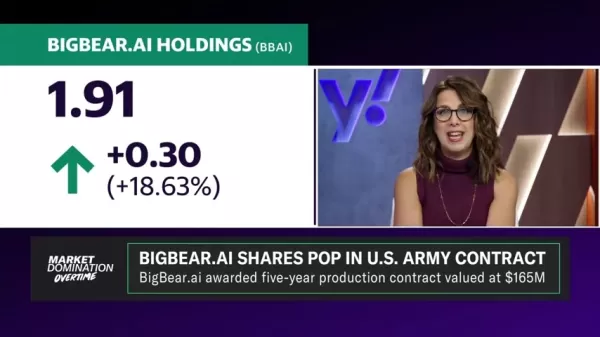
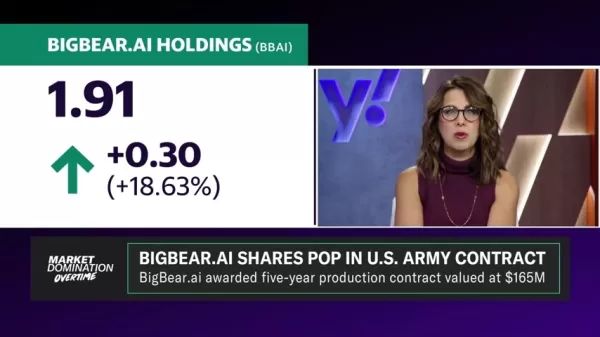
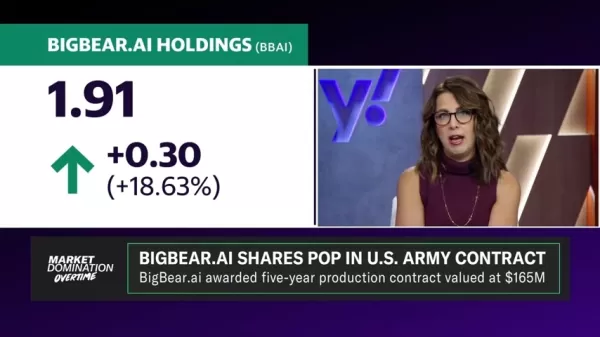
In the fast-paced world of artificial intelligence, BigBear.ai Holdings (BBAI) has carved out a significant niche, especially in the defense sector. The company recently landed a hefty $165 million contract from the U.S. Army, signaling a major step forward in the Army's digital transformation journey. This five-year deal not only boosts BigBear.ai's stock but also highlights the growing role of AI in shaping military strategy and decision-making. Let's dive into what this means for BigBear.ai, the U.S. Army, and the wider AI ecosystem.
BigBear.ai and the U.S. Army Contract
The Significance of the $165 Million Contract
BigBear.ai's stock got a nice bump after securing a whopping $165 million contract from the U.S. Army. This isn't just about the money; it's a strategic alliance aimed at beefing up the Army's digital toolkit. The focus is on decision intelligence, using AI to help senior leaders and combat commanders make smarter, data-driven choices about force structure. It's all about ensuring the Army is well-manned, equipped, trained, and resourced. The team at BigBear.ai has been eagerly awaiting this contract, and it's a testament to the value of their GFIM platform in empowering military decision-making.
Understanding Decision Intelligence and GFIM
At the core of this contract is decision intelligence, a game-changer in military strategy. It's about using AI to sift through mountains of data, spot patterns, and deliver actionable insights to commanders. This helps them make better decisions, manage resources more effectively, and stay ahead of evolving threats. BigBear.ai's GFIM platform is central to this effort, empowering senior military leaders to make data-driven decisions with confidence. The goal? To make sure the Army is always ready, by analyzing data on personnel, equipment, training, and resources to pinpoint areas for improvement.

Competitive Landscape and BigBear.ai's Advantage
Competing with Defense Industry Giants
Snagging a contract this size means BigBear.ai is going toe-to-toe with some of the biggest names in defense. It's a tough crowd, with established players who've been in the game for years. But what gives BigBear.ai the edge? Their focus on cutting-edge AI and their knack for delivering innovative solutions to the Department of Defense's (DoD) toughest challenges. They're all about building deep, meaningful partnerships and pushing the boundaries of technology. This contract, a sole-source prime award, is a major milestone in their pursuit of GFIM.
A Next-Generation Contractor?
This deal marks a shift in the defense contracting world, where smaller, more nimble companies like BigBear.ai are stepping into the spotlight. These next-gen contractors are often better at rolling out AI-driven solutions than their larger, more bureaucratic counterparts. They bring fresh ideas, innovative approaches, and a readiness to embrace new tech, making them invaluable allies for the U.S. military. Plus, they're pushing AI to the edge, deploying infrastructure that's ready to meet the future head-on.
BigBear.ai's AI Implementation
Pros
- The ability to introduce automation, streamlining processes and boosting efficiency.
- Greater data insights, leading to more informed decision-making.
- Ensuring the Army is properly manned, equipped, trained, and sourced.
- The capability of edge technology, bringing AI closer to where it's needed.
Cons
- The esoteric use of AI, which can be complex and hard to grasp.
- Expensive AI solutions, which might strain budgets.
- Increased AI adoption, which requires significant change management.
- Dealing with new technology, which always comes with a learning curve.
BigBear.ai Customers
BigBear.ai Sectors
BigBear.ai isn't just about defense; they're making waves across various industries. Their AI technology has a range of applications:
- Manufacturing and Warehouse Operations: Enhancing efficiency through automation.
- Government and Defense: Providing cutting-edge solutions for national security.
- Healthcare and Life Sciences: Improving patient care and operational efficiency.
By introducing automation, BigBear.ai helps these sectors become more efficient, especially where patterns in data can be leveraged for better outcomes.
FAQ
What is the value of the contract BigBear.ai and the US Army have?
BigBear.ai secured a $165 million, five-year production contract from the US Army, propelling them to contribute significantly to the Army's digital transformation efforts.
What does the digital transformation entail for the US Army?
BigBear.ai aims to help the US Army become properly manned, equipped, trained, and resourced. Their technology makes it easier to identify areas for improvement, ensuring the Army is always ready for action.
Related Questions
What industries can benefit from BigBear.ai?
BigBear.ai's AI technology can enhance operations in manufacturing and warehouse operations, government and defense, and healthcare and life sciences. They're focused on driving efficiency through automation, particularly where data patterns can be leveraged for maximum impact.
Related article
 DeepMind CEO Hassabis: I sleep six hours a day, usually feel energetic around 1 a.m.
Fortune recently featured an interview with Demis Hassabis, CEO of Google DeepMind, revealing his unconventional approach to rest and productivity. Hassabis disclosed that he sleeps very little, structuring his waking hours into two distinct work blo
OpenAI, Anthropic Vie for Market Share Despite Revenue Shortfalls
Despite recent reports suggesting OpenAI missed revenue targets, creating pressure on tech stocks this Tuesday, private AI lab investors remain resilient. Seasoned backers have confirmed they will not reduce investment despite negative media coverage
California AV Compliance: A New Era of Tickets, Geofences, and 1M Miles
Guident operates an AuveTech shuttle in South Florida, managing a four-mile route in West Palm Beach and a one-mile route in Boca Raton using its remote monitoring technology. | Credit: GuidentCalifornia is redefining the regulatory landscape for dri
Related Special Topic Recommendations
Music composition
DeepMind CEO Hassabis: I sleep six hours a day, usually feel energetic around 1 a.m.
Fortune recently featured an interview with Demis Hassabis, CEO of Google DeepMind, revealing his unconventional approach to rest and productivity. Hassabis disclosed that he sleeps very little, structuring his waking hours into two distinct work blo
OpenAI, Anthropic Vie for Market Share Despite Revenue Shortfalls
Despite recent reports suggesting OpenAI missed revenue targets, creating pressure on tech stocks this Tuesday, private AI lab investors remain resilient. Seasoned backers have confirmed they will not reduce investment despite negative media coverage
California AV Compliance: A New Era of Tickets, Geofences, and 1M Miles
Guident operates an AuveTech shuttle in South Florida, managing a four-mile route in West Palm Beach and a one-mile route in Boca Raton using its remote monitoring technology. | Credit: GuidentCalifornia is redefining the regulatory landscape for dri
Related Special Topic Recommendations
Music composition
 AI Stem Separation Tools for Remix Production, Sampling Prep, and Karaoke Masters
2026 Latest Best Top-rated AI Stem Separation Tools Curated for Remix Production, Sampling Prep, and Karaoke Masters. These powerful game-changing tools offer real-world tests to deliver precise audio isolation, boosting productivity significantly. XIX.AI provides a weekly updated free vs paid comparison guide to help you find the must-try solution that suits your needs. Explore now to unlock your AI edge.
 8 tools
 xix.ai
Data Analysis
AI SQL Copilots for Revenue Dashboards, Funnel Analysis, and Product Metrics
xix.ai
Data Analysis
AI SQL Copilots for Revenue Dashboards, Funnel Analysis, and Product Metrics
2026 Latest Best AI SQL Copilots Ranked Top-Rated! XIX.AI curates a powerful game-changing collection for weekly updated real-world tests. These must-try tools help you generate accurate revenue dashboards, analyze sales funnels, and track product metrics swiftly, boosting productivity massively. Explore now to Discover your perfect tool for data-driven decision making! 238 characters
9 tools
xix.ai
Music composition
Best AI Melody Writing Tools for Song Drafts
2026 Latest Best Top-Rated AI Melody Writing Tools for Song Drafts! XIX.AI has curated a highly powerful game-changing collection that goes through rigorous real-world tests to deliver the best writing experience. You can find detailed free vs paid comparisons, accurate rankings, and must-try options designed to help you create stunning song drafts effortlessly and boost your creative productivity significantly. Explore now to discover your perfect tool!
8 tools
xix.ai
chatbot
Best AI Conversation Trainer Tools for Interview Practice
2026 Latest Best Top-rated AI Conversation Trainer Tools for Interview Practice are here on XIX.AI! This curated collection features powerful, game-changing tools that go through rigorous real-world tests to deliver accurate feedback. You’ll find a free vs paid comparison and detailed rankings to help you choose the must-try option that boosts your confidence and skills. Explore now to Discover your perfect tool for interview success!
12 tools
xix.ai
Design & Art
Best AI Style Transfer Tools for Creative Experiments
2026 Latest Best Top-rated AI Style Transfer Tools for Creative Experiments! XIX.AI has curated a powerful, game-changing collection of must-try tools that deliver exceptional results through real-world tests and rigorous rankings. These top solutions help creatives boost productivity significantly by accelerating content creation and unlocking endless creative possibilities. Explore now to discover your perfect tool and start creating today!
9 tools
xix.ai
Comic Creation
Best AI Dialogue Bubble Tools for Visual Storytelling
2026 Latest Best Top-Rated AI Dialogue Bubble Tools for Visual Storytelling are here on XIX.AI! This curated collection features powerful, game-changing tools that help creators boost productivity and overcome creative bottlenecks. Get a free vs paid comparison, see real-world tests, and check the latest rankings to find the must-try solutions perfect for crafting engaging visual narratives. Explore now to discover your ideal tool!
10 tools
xix.ai

 Comments (2)
0/500
Comments (2)
0/500
![SamuelAllen]()
Wow, $165 million for the Army? 🤯 BigBear.ai is definitely riding the AI wave hard. Makes me wonder how much of that budget goes to actual AI vs. just buying expensive servers. Still, cool to see defense tech moving so fast! 🚀
![PaulHarris]()
This AI contract with the Army is wild! $165M is no joke—BigBear.ai is clearly leveling up. Wonder how this tech will actually change warfare... Exciting but kinda scary too! 😮
In the fast-paced world of artificial intelligence, BigBear.ai Holdings (BBAI) has carved out a significant niche, especially in the defense sector. The company recently landed a hefty $165 million contract from the U.S. Army, signaling a major step forward in the Army's digital transformation journey. This five-year deal not only boosts BigBear.ai's stock but also highlights the growing role of AI in shaping military strategy and decision-making. Let's dive into what this means for BigBear.ai, the U.S. Army, and the wider AI ecosystem.
BigBear.ai and the U.S. Army Contract
The Significance of the $165 Million Contract
BigBear.ai's stock got a nice bump after securing a whopping $165 million contract from the U.S. Army. This isn't just about the money; it's a strategic alliance aimed at beefing up the Army's digital toolkit. The focus is on decision intelligence, using AI to help senior leaders and combat commanders make smarter, data-driven choices about force structure. It's all about ensuring the Army is well-manned, equipped, trained, and resourced. The team at BigBear.ai has been eagerly awaiting this contract, and it's a testament to the value of their GFIM platform in empowering military decision-making.
Understanding Decision Intelligence and GFIM
At the core of this contract is decision intelligence, a game-changer in military strategy. It's about using AI to sift through mountains of data, spot patterns, and deliver actionable insights to commanders. This helps them make better decisions, manage resources more effectively, and stay ahead of evolving threats. BigBear.ai's GFIM platform is central to this effort, empowering senior military leaders to make data-driven decisions with confidence. The goal? To make sure the Army is always ready, by analyzing data on personnel, equipment, training, and resources to pinpoint areas for improvement.
Competitive Landscape and BigBear.ai's Advantage
Competing with Defense Industry Giants
Snagging a contract this size means BigBear.ai is going toe-to-toe with some of the biggest names in defense. It's a tough crowd, with established players who've been in the game for years. But what gives BigBear.ai the edge? Their focus on cutting-edge AI and their knack for delivering innovative solutions to the Department of Defense's (DoD) toughest challenges. They're all about building deep, meaningful partnerships and pushing the boundaries of technology. This contract, a sole-source prime award, is a major milestone in their pursuit of GFIM.
A Next-Generation Contractor?
This deal marks a shift in the defense contracting world, where smaller, more nimble companies like BigBear.ai are stepping into the spotlight. These next-gen contractors are often better at rolling out AI-driven solutions than their larger, more bureaucratic counterparts. They bring fresh ideas, innovative approaches, and a readiness to embrace new tech, making them invaluable allies for the U.S. military. Plus, they're pushing AI to the edge, deploying infrastructure that's ready to meet the future head-on.
BigBear.ai's AI Implementation
Pros
- The ability to introduce automation, streamlining processes and boosting efficiency.
- Greater data insights, leading to more informed decision-making.
- Ensuring the Army is properly manned, equipped, trained, and sourced.
- The capability of edge technology, bringing AI closer to where it's needed.
Cons
- The esoteric use of AI, which can be complex and hard to grasp.
- Expensive AI solutions, which might strain budgets.
- Increased AI adoption, which requires significant change management.
- Dealing with new technology, which always comes with a learning curve.
BigBear.ai Customers
BigBear.ai Sectors
BigBear.ai isn't just about defense; they're making waves across various industries. Their AI technology has a range of applications:
- Manufacturing and Warehouse Operations: Enhancing efficiency through automation.
- Government and Defense: Providing cutting-edge solutions for national security.
- Healthcare and Life Sciences: Improving patient care and operational efficiency.
By introducing automation, BigBear.ai helps these sectors become more efficient, especially where patterns in data can be leveraged for better outcomes.
FAQ
What is the value of the contract BigBear.ai and the US Army have?
BigBear.ai secured a $165 million, five-year production contract from the US Army, propelling them to contribute significantly to the Army's digital transformation efforts.
What does the digital transformation entail for the US Army?
BigBear.ai aims to help the US Army become properly manned, equipped, trained, and resourced. Their technology makes it easier to identify areas for improvement, ensuring the Army is always ready for action.
Related Questions
What industries can benefit from BigBear.ai?
BigBear.ai's AI technology can enhance operations in manufacturing and warehouse operations, government and defense, and healthcare and life sciences. They're focused on driving efficiency through automation, particularly where data patterns can be leveraged for maximum impact.








 DeepMind CEO Hassabis: I sleep six hours a day, usually feel energetic around 1 a.m.
Fortune recently featured an interview with Demis Hassabis, CEO of Google DeepMind, revealing his unconventional approach to rest and productivity. Hassabis disclosed that he sleeps very little, structuring his waking hours into two distinct work blo
DeepMind CEO Hassabis: I sleep six hours a day, usually feel energetic around 1 a.m.
Fortune recently featured an interview with Demis Hassabis, CEO of Google DeepMind, revealing his unconventional approach to rest and productivity. Hassabis disclosed that he sleeps very little, structuring his waking hours into two distinct work blo
 OpenAI, Anthropic Vie for Market Share Despite Revenue Shortfalls
Despite recent reports suggesting OpenAI missed revenue targets, creating pressure on tech stocks this Tuesday, private AI lab investors remain resilient. Seasoned backers have confirmed they will not reduce investment despite negative media coverage
California AV Compliance: A New Era of Tickets, Geofences, and 1M Miles
Guident operates an AuveTech shuttle in South Florida, managing a four-mile route in West Palm Beach and a one-mile route in Boca Raton using its remote monitoring technology. | Credit: GuidentCalifornia is redefining the regulatory landscape for dri
OpenAI, Anthropic Vie for Market Share Despite Revenue Shortfalls
Despite recent reports suggesting OpenAI missed revenue targets, creating pressure on tech stocks this Tuesday, private AI lab investors remain resilient. Seasoned backers have confirmed they will not reduce investment despite negative media coverage
California AV Compliance: A New Era of Tickets, Geofences, and 1M Miles
Guident operates an AuveTech shuttle in South Florida, managing a four-mile route in West Palm Beach and a one-mile route in Boca Raton using its remote monitoring technology. | Credit: GuidentCalifornia is redefining the regulatory landscape for dri

2026 Latest Best Top-rated AI Stem Separation Tools Curated for Remix Production, Sampling Prep, and Karaoke Masters. These powerful game-changing tools offer real-world tests to deliver precise audio isolation, boosting productivity significantly. XIX.AI provides a weekly updated free vs paid comparison guide to help you find the must-try solution that suits your needs. Explore now to unlock your AI edge.
8 tools
xix.ai

2026 Latest Best AI SQL Copilots Ranked Top-Rated! XIX.AI curates a powerful game-changing collection for weekly updated real-world tests. These must-try tools help you generate accurate revenue dashboards, analyze sales funnels, and track product metrics swiftly, boosting productivity massively. Explore now to Discover your perfect tool for data-driven decision making! 238 characters
9 tools
xix.ai

2026 Latest Best Top-Rated AI Melody Writing Tools for Song Drafts! XIX.AI has curated a highly powerful game-changing collection that goes through rigorous real-world tests to deliver the best writing experience. You can find detailed free vs paid comparisons, accurate rankings, and must-try options designed to help you create stunning song drafts effortlessly and boost your creative productivity significantly. Explore now to discover your perfect tool!
8 tools
xix.ai

2026 Latest Best Top-rated AI Conversation Trainer Tools for Interview Practice are here on XIX.AI! This curated collection features powerful, game-changing tools that go through rigorous real-world tests to deliver accurate feedback. You’ll find a free vs paid comparison and detailed rankings to help you choose the must-try option that boosts your confidence and skills. Explore now to Discover your perfect tool for interview success!
12 tools
xix.ai

2026 Latest Best Top-rated AI Style Transfer Tools for Creative Experiments! XIX.AI has curated a powerful, game-changing collection of must-try tools that deliver exceptional results through real-world tests and rigorous rankings. These top solutions help creatives boost productivity significantly by accelerating content creation and unlocking endless creative possibilities. Explore now to discover your perfect tool and start creating today!
9 tools
xix.ai

2026 Latest Best Top-Rated AI Dialogue Bubble Tools for Visual Storytelling are here on XIX.AI! This curated collection features powerful, game-changing tools that help creators boost productivity and overcome creative bottlenecks. Get a free vs paid comparison, see real-world tests, and check the latest rankings to find the must-try solutions perfect for crafting engaging visual narratives. Explore now to discover your ideal tool!
10 tools
xix.ai

Wow, $165 million for the Army? 🤯 BigBear.ai is definitely riding the AI wave hard. Makes me wonder how much of that budget goes to actual AI vs. just buying expensive servers. Still, cool to see defense tech moving so fast! 🚀
This AI contract with the Army is wild! $165M is no joke—BigBear.ai is clearly leveling up. Wonder how this tech will actually change warfare... Exciting but kinda scary too! 😮












