


 Home
HomeAI-Powered Quotation Automation: A Complete Guide
In today's fast-paced business landscape, achieving peak efficiency is a top priority for companies striving to streamline operations, minimize manual labor, and accelerate project timelines. Leveraging Artificial Intelligence (AI) to automate the quotation process represents a powerful advancement. This guide delves into how AI can transform business quoting workflows, delivering significant time and resource savings while bolstering accuracy and client satisfaction.
Key Points
AI automation drastically cuts down on manual data entry for order management.
Quotation templates are automatically filled with data pulled from multiple sources.
Automated email dispatch guarantees prompt communication with customers.
Dedicated folders can securely store all created quotes for straightforward access and management.
Batch processing of quotes can be scheduled to efficiently manage workload peaks.
AI integration boosts precision and consistency in generating quotes.
Automated quotation systems conserve substantial time and company resources.
The Challenge of Manual Quotation Processes
The Time-Consuming Nature of Manual Data Entry
Many organizations still depend on manual data entry for handling orders, especially those receiving a high volume of client requests.
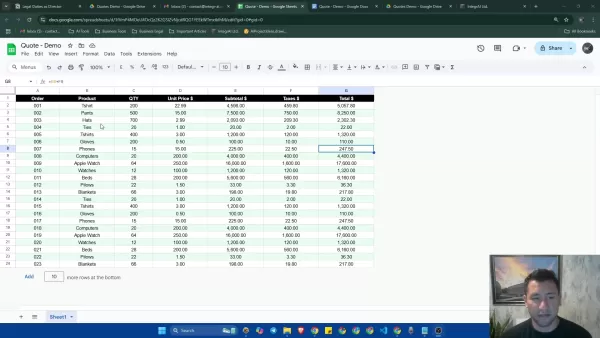
This process requires staff to manually input information into tracking systems, spreadsheets, and quote templates, which is not only tedious but also increases the risk of errors. For instance, a wholesale distributor managing a diverse inventory like t-shirts, gloves, and blankets would find manually generating quotes for every order immensely burdensome, pulling resources away from more strategic work.
The Need for Automation: To overcome these inefficiencies, businesses are increasingly adopting automation. Automating the quotation process removes the necessity for manual data entry, allowing employees to dedicate their time to higher-value tasks. This shift not only boosts operational efficiency but also minimizes error rates, resulting in more dependable and precise quotes.
Manual Quote Template Updates
Historically, updating quotation templates has been a labor-intensive task, consuming considerable time and effort.
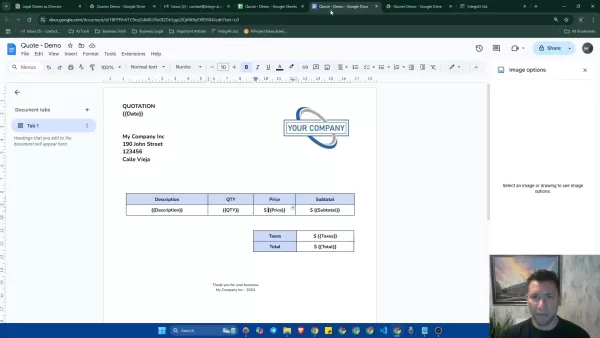
Every new order, price adjustment, or product update necessitates manual modifications to the templates to ensure correctness. This method is inefficient and vulnerable to mistakes, which can cause pricing inaccuracies and customer dissatisfaction.
Consider the challenge of updating the price for every item in your catalog whenever a supplier alters their rates. This task becomes increasingly difficult as the product range expands, making it hard to maintain accuracy without an automated system.
Moreover, manual updates often lack uniformity. Different employees might apply updates inconsistently, leading to variations in the format and content of quotes. This inconsistency can undermine client trust and harm the company's professional reputation.
Automation as a Solution: Automating template updates resolves these issues. By connecting templates directly to live data sources such as product databases and pricing sheets, changes are instantly reflected across all relevant quotes. This guarantees that every quotation is current, accurate, and uniform, reducing errors and enhancing client satisfaction.
The Benefits of Automation
Automating quote template updates delivers numerous advantages.
- Improved Accuracy: Automated updates ensure all quotes contain the latest information, minimizing errors and inconsistencies.
- Enhanced Efficiency: Automation drastically reduces the time and effort needed to maintain templates, freeing staff for other responsibilities.
- Increased Consistency: Automated updates guarantee that every quote follows a standard format and style, strengthening brand identity and professionalism.
- Faster Turnaround: Instant updates enable quicker quote generation, allowing companies to respond rapidly to customer inquiries and seize sales opportunities.
Embracing Automated Quote Management: Adopting an automated quote management system improves accuracy, efficiency, and consistency. This not only lowers operational costs but also boosts customer satisfaction, leading to increased sales and improved profitability.
AI-Powered Quotation Automation: A Step-by-Step Overview
Data Integration and Automated Population
AI-driven quotation automation starts with seamless data integration.
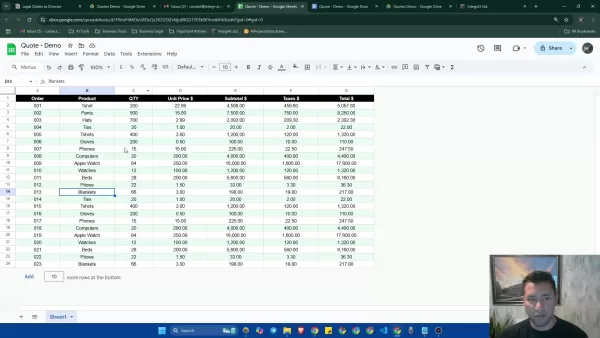
The system connects to various data sources, including order entries, customer databases, and product catalogs. This integration ensures that when an order arrives, all relevant details are automatically extracted and fed into a centralized table.
Example: Imagine a customer orders several items:
- 22 pillows
- 66 blankets
- 20 computers
Instead of manual entry for each item, quantity, and price, the AI system populates this data directly into a spreadsheet or database. This significantly lowers the chance of human error and saves substantial time.
Benefits of Automated Population: Automating data entry delivers key benefits:
- Time Savings: Automated data entry drastically cuts down the time needed to process orders.
- Reduced Errors: Automated systems minimize risks associated with manual input, ensuring more accurate quotes.
- Improved Efficiency: By handling repetitive tasks, automation allows employees to concentrate on more strategic work.
Seamless Integration with Spreadsheets: Many companies use platforms like Google Sheets for order tracking and data management. An AI automation system can integrate seamlessly with these spreadsheets, automatically updating them with new order information. This eliminates manual updates, ensuring data is always current. Utilizing this technology helps businesses streamline operations and enhance overall efficiency.
Automated Quote Generation and Template Utilization
The next phase involves generating quotes using pre-designed templates.
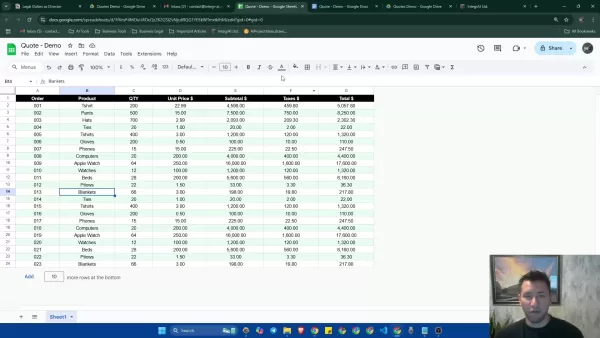
The AI system takes data from the centralized table and automatically inputs it into a professional quote template. This template includes fields for essential information such as:
- Product descriptions
- Quantities
- Unit prices
- Subtotals
- Taxes
- Total amounts
By auto-filling these fields, the AI system produces a complete and accurate quote with minimal human input. This ensures every quote maintains a consistent format and content, reinforcing brand identity and professionalism.
Benefits of Automated Quote Generation: Automating quote creation offers several advantages:
- Faster Turnaround Times: Automated generation allows for quicker responses to customer inquiries, improving satisfaction.
- Reduced Workload: Automation lightens the load for sales and administrative staff, enabling them to focus on other duties.
- Consistent Quality: Automated systems ensure every quote meets the same high standards of accuracy and professionalism.
Customizable Templates: AI-powered systems often support customizable templates, allowing businesses to tailor quotes to specific client needs or branding guidelines. This flexibility ensures quotes are not only accurate but also visually appealing and aligned with the company's marketing strategy.
Automated Email Sending and Distribution
Once a quote is generated, the AI system can automatically email it to the customer.
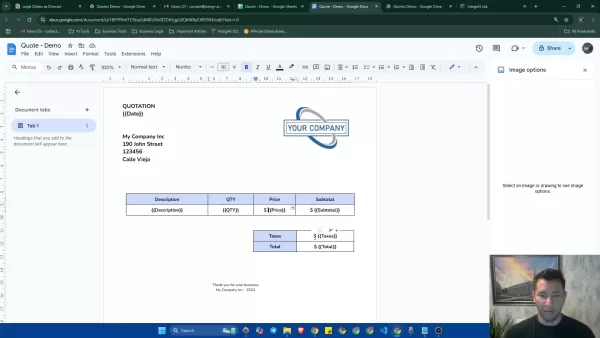
This automated email includes the quote as an attachment, along with a personalized message acknowledging the order. The system can also track email opens and monitor whether the customer has accepted the quote.
Benefits of Automated Email Sending: Automating email distribution provides several benefits:
- Timely Communication: Automated emails ensure customers receive quotes promptly, enhancing their experience.
- Reduced Manual Effort: Automation reduces the workload on sales teams, freeing them for other tasks.
- Improved Tracking: Automated tracking lets businesses monitor quote status and follow up with customers as needed.
Personalized Messaging: AI systems often allow for personalized email content, enabling businesses to tailor messages to specific customer preferences. This personal touch can improve engagement and increase the likelihood of a positive response.
By automating these steps, businesses can significantly reduce manual effort, improve operational efficiency, and enhance customer satisfaction. This saves time and resources, allowing companies to focus on growth-oriented activities.
Automated Storage and Organization
Beyond creation and delivery, effective storage and organization of quotes are vital.
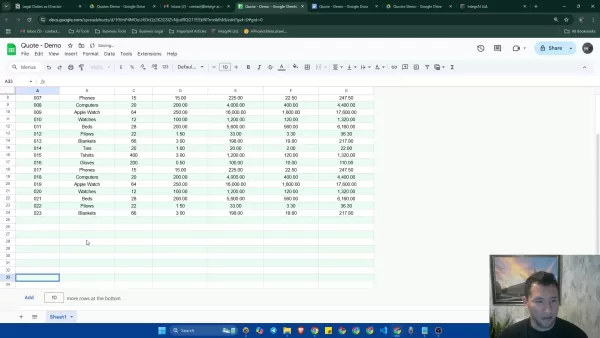
AI systems can automatically save all generated quotes into designated folders, ensuring easy retrieval and systematic organization. This eliminates manual filing and reduces the risk of lost or misplaced documents.
Designated Folder Structures: The system can create a logical folder hierarchy based on criteria such as:
- Customer name
- Order date
- Quote status
This structure makes it simple to locate any quote, regardless of the search parameters.
Benefits of Automated Storage: Automating storage offers key advantages:
- Easy Access: Automated storage ensures quotes are always easy to find, reducing time spent searching.
- Streamlined Organization: Automated systems maintain a consistent folder structure, improving overall document management.
- Reduced Risk: Automated storage lowers the risk of lost documents, ensuring critical information is always accessible.
By automating quote storage and organization, businesses can further enhance efficiency and reduce administrative overhead. This allows them to concentrate on strategic initiatives that drive growth and profitability.
Implementing AI Quotation Automation: A Practical Guide
Step 1: Assess Your Current Quotation Process
Before implementing an AI quotation system, conduct a thorough assessment of your existing process. Identify bottlenecks, pain points, and areas where automation would deliver the greatest value.
Key Questions to Consider:
- How much time is spent manually creating quotes?
- What is the current error rate in your quotation process?
- How long does it typically take to respond to customer quote requests?
- Which key data sources need to be integrated?
Answering these questions provides a clear picture of your current workflow and pinpoints specific areas for improvement. This assessment also helps set realistic goals and metrics for measuring the success of your AI implementation.
Step 2: Choose the Right AI Quotation Automation Solution
The market offers various AI quotation automation solutions, each with distinct features. When selecting a solution, consider factors such as:
- Integration Capabilities: Does it integrate with your existing systems like CRM, ERP, and accounting software?
- Customization Options: Can you tailor the solution to your specific business needs?
- Scalability: Can the solution grow with your business?
- Pricing: Does the pricing model fit your budget?
Reading reviews and testimonials from other users can provide valuable insights into the solution's performance and reliability.
Step 3: Configure and Customize the Solution
After selecting a solution, the next step is to configure and customize it for your business. This involves:
- Connecting the solution to your data sources
- Creating and customizing quote templates
- Configuring email settings
- Setting up organizational folder structures
Many solutions offer user-friendly interfaces for configuration, though you may need IT support or consultants to ensure proper integration with existing systems.
Step 4: Test and Refine the Solution
Before full deployment, thoroughly test the solution. Generate sample quotes, send them to test accounts, and monitor the outcomes.
Key Areas to Test:
- Accuracy of data population
- Functionality of quote templates
- Delivery of automated emails
- Organization of stored quotes
Testing helps identify any issues or areas needing improvement. This iterative process ensures the solution is optimized for your specific requirements.
Step 5: Deploy and Monitor the Solution
Once testing is satisfactory, deploy the solution across your organization. Train staff on its use and continuously monitor performance to ensure it meets your objectives.
Key Metrics to Track:
- Time saved in quote creation
- Error rate in quotes
- Customer satisfaction levels
Tracking these metrics allows for continuous improvement and maximizes the solution's benefits. Regular monitoring also ensures the system adapts to evolving business needs.
Understanding the Pricing of AI Quotation Automation Solutions
Factors Influencing Pricing
The cost of AI quotation automation solutions varies based on several factors. Understanding these helps businesses select a solution that fits their budget and requirements.
- Features and Functionality: Solutions with advanced features like customizable templates, integration capabilities, and analytics tools generally cost more. The scope of functionality is a primary driver of price.
- Number of Users: Many SaaS providers price their solutions based on the number of users. Pricing scales with the size of the team using the system.
- Volume of Quotes: Some providers base pricing on the monthly volume of quotes generated. High-volume businesses may need higher-tier plans.
- Customization and Support: Solutions requiring significant customization or ongoing support may involve additional costs for implementation, training, and maintenance.
- Deployment Model: Pricing is affected by the deployment model—on-premise or cloud-based. On-premise solutions usually have higher upfront costs, while cloud-based options offer subscription models.
Evaluating these factors helps businesses compare pricing structures and select a solution that offers the best value.
Common Pricing Models
AI quotation automation solutions offer various pricing models to suit different business needs.
- Subscription-Based Pricing: This common model, especially for cloud solutions, involves a recurring fee (monthly or annual) for software access. Plans are often tiered with different features and limits.
- Usage-Based Pricing: This model charges based on actual software usage, ideal for companies with fluctuating quote volumes.
- Perpetual Licensing: A one-time payment grants perpetual software use, though maintenance and support may require additional fees.
- Custom Pricing: Some providers offer tailored plans for enterprise clients, often combining subscription and usage-based fees with charges for customization and support.
When evaluating models, consider long-term needs, expected quote volumes, and budget. Also factor in the total cost of ownership, including implementation and ongoing costs.
Advantages and Disadvantages of Implementing AI in Quote Automation
Pros
Increased Operational Efficiency
Reduced Error Rates
Faster Response Times
Improved Customer Satisfaction
Enhanced Business Scalability
Cons
Significant Initial Investment
Complex System Integration
Reliance on Accurate Data Inputs
Potential Reduction in Personal Interaction
Possible Impact on Certain Job Roles
Key Features of AI Quotation Automation Solutions
Automated Data Extraction and Population
A core feature of these solutions is the automatic extraction of data from various sources and its population into quote templates. This eliminates manual entry, reducing errors and saving time. The system can pull data from:
- Order entries
- Customer databases
- Product catalogs
- Pricing sheets
Auto-populating this data ensures every quote is accurate and current.
Customizable Quote Templates
AI solutions provide customizable quote templates, allowing businesses to tailor quotes to specific client needs or branding. Templates include fields for key information like product descriptions, quantities, prices, and totals. Businesses can customize them to include:
- Company logos
- Contact information
- Terms and conditions
This flexibility ensures quotes are both accurate and professionally branded.
Automated Email Sending and Tracking
These solutions can automatically email quotes to customers, eliminating manual sending and improving communication. The system can track email opens and quote acceptance, enabling businesses to monitor status and follow up as needed.
Reporting and Analytics
AI quotation tools offer reporting and analytics, providing insights into the quotation process. They track metrics such as:
- Quote volume
- Quote acceptance rate
- Average turnaround time
Analyzing these metrics helps identify improvement areas and optimize the process for increased sales and satisfaction.
Integration with Existing Systems
These solutions integrate with existing systems like CRM, ERP, and accounting software. This streamlines operations and improves data accuracy. CRM integration helps track customer interactions for personalized quotes. ERP integration ensures quotes use accurate product and pricing data. Accounting software integration allows automatic invoice generation from accepted quotes.
Real-World Use Cases for AI Quotation Automation
Manufacturing
In manufacturing, AI quotation automation streamlines creating quotes for custom products and large orders. By auto-extracting data from customer specs and product catalogs, the system generates accurate, detailed quotes much faster than manual methods. This enables manufacturers to respond quickly to inquiries and secure more business.
Wholesale Distribution
Wholesale distributors handling high order volumes for diverse products can use AI to streamline quoting. Auto-extracting data from orders and pricing sheets creates accurate quotes per order, enabling faster processing and reduced error risk.
Construction
In construction, generating accurate quotes for complex projects is challenging and time-consuming. AI automation helps by auto-extracting data from project specs and material catalogs to create detailed quotes including materials, labor, and other costs. This allows construction firms to respond swiftly to bids and win more projects.
Retail
Retailers can use AI quotation automation for large orders and custom products. Auto-extracting data from customer requests and catalogs creates
Related article
 Hiroshi Fujiwara and Robert Little Win 2026 Engelberger Robotics Awards
Hiroshi Fujiwara (left) and Robert Little (right) are the 2026 recipients of the Joseph F. Engelberger Robotics Award. | Credit: A3The Association for Advancing Automation (A3) has announced Hiroshi Fujiwara and Robert Little as the winners of the 20
AI Transforms Data Science: Automate Your SQL Queries
In the fast-moving field of data science, efficiency is essential. Automating repetitive tasks frees up valuable time for deeper analysis and model development. This guide explains how to use AI to automate SQL database queries, cutting down the manu
AI Voice Agents Streamline Sales: A Look at CallFluent
In the fast-paced landscape of modern business, automation has shifted from a luxury to an essential tool. AI-powered voice agents are fundamentally changing how companies manage sales and customer support, delivering exceptional efficiency and signi
Related Special Topic Recommendations
chatbot
Hiroshi Fujiwara and Robert Little Win 2026 Engelberger Robotics Awards
Hiroshi Fujiwara (left) and Robert Little (right) are the 2026 recipients of the Joseph F. Engelberger Robotics Award. | Credit: A3The Association for Advancing Automation (A3) has announced Hiroshi Fujiwara and Robert Little as the winners of the 20
AI Transforms Data Science: Automate Your SQL Queries
In the fast-moving field of data science, efficiency is essential. Automating repetitive tasks frees up valuable time for deeper analysis and model development. This guide explains how to use AI to automate SQL database queries, cutting down the manu
AI Voice Agents Streamline Sales: A Look at CallFluent
In the fast-paced landscape of modern business, automation has shifted from a luxury to an essential tool. AI-powered voice agents are fundamentally changing how companies manage sales and customer support, delivering exceptional efficiency and signi
Related Special Topic Recommendations
chatbot
 Best AI Conversation Trainer Tools for Interview Practice
2026 Latest Best Top-rated AI Conversation Trainer Tools for Interview Practice are here on XIX.AI! This curated collection features powerful, game-changing tools that go through rigorous real-world tests to deliver accurate feedback. You’ll find a free vs paid comparison and detailed rankings to help you choose the must-try option that boosts your confidence and skills. Explore now to Discover your perfect tool for interview success!
 12 tools
 xix.ai
Design & Art
Best AI Style Transfer Tools for Creative Experiments
xix.ai
Design & Art
Best AI Style Transfer Tools for Creative Experiments
2026 Latest Best Top-rated AI Style Transfer Tools for Creative Experiments! XIX.AI has curated a powerful, game-changing collection of must-try tools that deliver exceptional results through real-world tests and rigorous rankings. These top solutions help creatives boost productivity significantly by accelerating content creation and unlocking endless creative possibilities. Explore now to discover your perfect tool and start creating today!
9 tools
xix.ai
Comic Creation
Best AI Dialogue Bubble Tools for Visual Storytelling
2026 Latest Best Top-Rated AI Dialogue Bubble Tools for Visual Storytelling are here on XIX.AI! This curated collection features powerful, game-changing tools that help creators boost productivity and overcome creative bottlenecks. Get a free vs paid comparison, see real-world tests, and check the latest rankings to find the must-try solutions perfect for crafting engaging visual narratives. Explore now to discover your ideal tool!
10 tools
xix.ai
Meeting Assistant
Top AI Meeting Summary Tools: Track Decisions and Follow-Ups Clearly
2026 Latest Top-Rated Best AI Meeting Summary Tools for Clear Decision Tracking and Effortless Follow-Ups. This curated list showcases powerful, game-changing solutions that boost productivity dramatically by automating meeting notes, identifying key action items, and streamlining team coordination across all projects. Get a free vs paid comparison along with real-world tests and weekly updated rankings to help you find the perfect tool. Explore now to unlock your AI edge!
9 tools
xix.ai
Data Analysis
Best AI Data Cleaning Tools: Fix Missing Values and Duplicates Fast
2026 Latest Best Top-rated AI Data Cleaning Tools for quick fixing of missing values and duplicates. This curated list showcases powerful, game-changing solutions that boost productivity significantly. Each option has undergone rigorous real-world tests to ensure reliability. Get a free vs paid comparison and discover the must-try tool that fits your needs best. Explore now at XIX.AI to Unlock your AI edge.
11 tools
xix.ai
Design & Art
Best AI Creative Ideation Tools for Artists: Break Through Visual Blocks
2026 Latest Best Top-Rated AI Creative Ideation Tools for Artists are curated by XIX.AI to help creators break through visual blocks and boost creativity instantly. These powerful game-changing tools offer real-world tests, detailed free vs paid comparison, and weekly updated rankings. Discover your perfect tool to accelerate content creation and unlock your AI edge today. Explore now!
14 tools
xix.ai

 Comments (3)
0/500
Comments (3)
0/500
![KeithSanchez]()
Les systèmes d'automatisation basés sur l'IA, comme pour les devis, sont très pratiques en théorie. Cependant, je me demande si la précision sera vraiment fiable dans des situations complexes où les clients ont des demandes très spécifiques... Il faudra probablement toujours une vérification humaine au final. 😅
![DouglasCarter]()
Автоматизация цитат с помощью ИИ — звучит круто, но не приведёт ли это к тому, что люди совсем перестанут думать самостоятельно? 😅 Интересно, как эта технология справляется с креативными задачами, где нужен человеческий подход.
![EdwardMoore]()
This guide is actually helpful - my team still wastes hours on manual quotes! The ROI on AI automation seems huge, but the real question is how we prevent bias in pricing algorithms. Anyone dealing with that in implementation? 🤔
In today's fast-paced business landscape, achieving peak efficiency is a top priority for companies striving to streamline operations, minimize manual labor, and accelerate project timelines. Leveraging Artificial Intelligence (AI) to automate the quotation process represents a powerful advancement. This guide delves into how AI can transform business quoting workflows, delivering significant time and resource savings while bolstering accuracy and client satisfaction.
Key Points
AI automation drastically cuts down on manual data entry for order management.
Quotation templates are automatically filled with data pulled from multiple sources.
Automated email dispatch guarantees prompt communication with customers.
Dedicated folders can securely store all created quotes for straightforward access and management.
Batch processing of quotes can be scheduled to efficiently manage workload peaks.
AI integration boosts precision and consistency in generating quotes.
Automated quotation systems conserve substantial time and company resources.
The Challenge of Manual Quotation Processes
The Time-Consuming Nature of Manual Data Entry
Many organizations still depend on manual data entry for handling orders, especially those receiving a high volume of client requests.
This process requires staff to manually input information into tracking systems, spreadsheets, and quote templates, which is not only tedious but also increases the risk of errors. For instance, a wholesale distributor managing a diverse inventory like t-shirts, gloves, and blankets would find manually generating quotes for every order immensely burdensome, pulling resources away from more strategic work.
The Need for Automation: To overcome these inefficiencies, businesses are increasingly adopting automation. Automating the quotation process removes the necessity for manual data entry, allowing employees to dedicate their time to higher-value tasks. This shift not only boosts operational efficiency but also minimizes error rates, resulting in more dependable and precise quotes.
Manual Quote Template Updates
Historically, updating quotation templates has been a labor-intensive task, consuming considerable time and effort.
Every new order, price adjustment, or product update necessitates manual modifications to the templates to ensure correctness. This method is inefficient and vulnerable to mistakes, which can cause pricing inaccuracies and customer dissatisfaction.
Consider the challenge of updating the price for every item in your catalog whenever a supplier alters their rates. This task becomes increasingly difficult as the product range expands, making it hard to maintain accuracy without an automated system.
Moreover, manual updates often lack uniformity. Different employees might apply updates inconsistently, leading to variations in the format and content of quotes. This inconsistency can undermine client trust and harm the company's professional reputation.
Automation as a Solution: Automating template updates resolves these issues. By connecting templates directly to live data sources such as product databases and pricing sheets, changes are instantly reflected across all relevant quotes. This guarantees that every quotation is current, accurate, and uniform, reducing errors and enhancing client satisfaction.
The Benefits of Automation
Automating quote template updates delivers numerous advantages.
- Improved Accuracy: Automated updates ensure all quotes contain the latest information, minimizing errors and inconsistencies.
- Enhanced Efficiency: Automation drastically reduces the time and effort needed to maintain templates, freeing staff for other responsibilities.
- Increased Consistency: Automated updates guarantee that every quote follows a standard format and style, strengthening brand identity and professionalism.
- Faster Turnaround: Instant updates enable quicker quote generation, allowing companies to respond rapidly to customer inquiries and seize sales opportunities.
Embracing Automated Quote Management: Adopting an automated quote management system improves accuracy, efficiency, and consistency. This not only lowers operational costs but also boosts customer satisfaction, leading to increased sales and improved profitability.
AI-Powered Quotation Automation: A Step-by-Step Overview
Data Integration and Automated Population
AI-driven quotation automation starts with seamless data integration.
The system connects to various data sources, including order entries, customer databases, and product catalogs. This integration ensures that when an order arrives, all relevant details are automatically extracted and fed into a centralized table.
Example: Imagine a customer orders several items:
- 22 pillows
- 66 blankets
- 20 computers
Instead of manual entry for each item, quantity, and price, the AI system populates this data directly into a spreadsheet or database. This significantly lowers the chance of human error and saves substantial time.
Benefits of Automated Population: Automating data entry delivers key benefits:
- Time Savings: Automated data entry drastically cuts down the time needed to process orders.
- Reduced Errors: Automated systems minimize risks associated with manual input, ensuring more accurate quotes.
- Improved Efficiency: By handling repetitive tasks, automation allows employees to concentrate on more strategic work.
Seamless Integration with Spreadsheets: Many companies use platforms like Google Sheets for order tracking and data management. An AI automation system can integrate seamlessly with these spreadsheets, automatically updating them with new order information. This eliminates manual updates, ensuring data is always current. Utilizing this technology helps businesses streamline operations and enhance overall efficiency.
Automated Quote Generation and Template Utilization
The next phase involves generating quotes using pre-designed templates.
The AI system takes data from the centralized table and automatically inputs it into a professional quote template. This template includes fields for essential information such as:
- Product descriptions
- Quantities
- Unit prices
- Subtotals
- Taxes
- Total amounts
By auto-filling these fields, the AI system produces a complete and accurate quote with minimal human input. This ensures every quote maintains a consistent format and content, reinforcing brand identity and professionalism.
Benefits of Automated Quote Generation: Automating quote creation offers several advantages:
- Faster Turnaround Times: Automated generation allows for quicker responses to customer inquiries, improving satisfaction.
- Reduced Workload: Automation lightens the load for sales and administrative staff, enabling them to focus on other duties.
- Consistent Quality: Automated systems ensure every quote meets the same high standards of accuracy and professionalism.
Customizable Templates: AI-powered systems often support customizable templates, allowing businesses to tailor quotes to specific client needs or branding guidelines. This flexibility ensures quotes are not only accurate but also visually appealing and aligned with the company's marketing strategy.
Automated Email Sending and Distribution
Once a quote is generated, the AI system can automatically email it to the customer.
This automated email includes the quote as an attachment, along with a personalized message acknowledging the order. The system can also track email opens and monitor whether the customer has accepted the quote.
Benefits of Automated Email Sending: Automating email distribution provides several benefits:
- Timely Communication: Automated emails ensure customers receive quotes promptly, enhancing their experience.
- Reduced Manual Effort: Automation reduces the workload on sales teams, freeing them for other tasks.
- Improved Tracking: Automated tracking lets businesses monitor quote status and follow up with customers as needed.
Personalized Messaging: AI systems often allow for personalized email content, enabling businesses to tailor messages to specific customer preferences. This personal touch can improve engagement and increase the likelihood of a positive response.
By automating these steps, businesses can significantly reduce manual effort, improve operational efficiency, and enhance customer satisfaction. This saves time and resources, allowing companies to focus on growth-oriented activities.
Automated Storage and Organization
Beyond creation and delivery, effective storage and organization of quotes are vital.
AI systems can automatically save all generated quotes into designated folders, ensuring easy retrieval and systematic organization. This eliminates manual filing and reduces the risk of lost or misplaced documents.
Designated Folder Structures: The system can create a logical folder hierarchy based on criteria such as:
- Customer name
- Order date
- Quote status
This structure makes it simple to locate any quote, regardless of the search parameters.
Benefits of Automated Storage: Automating storage offers key advantages:
- Easy Access: Automated storage ensures quotes are always easy to find, reducing time spent searching.
- Streamlined Organization: Automated systems maintain a consistent folder structure, improving overall document management.
- Reduced Risk: Automated storage lowers the risk of lost documents, ensuring critical information is always accessible.
By automating quote storage and organization, businesses can further enhance efficiency and reduce administrative overhead. This allows them to concentrate on strategic initiatives that drive growth and profitability.
Implementing AI Quotation Automation: A Practical Guide
Step 1: Assess Your Current Quotation Process
Before implementing an AI quotation system, conduct a thorough assessment of your existing process. Identify bottlenecks, pain points, and areas where automation would deliver the greatest value.
Key Questions to Consider:
- How much time is spent manually creating quotes?
- What is the current error rate in your quotation process?
- How long does it typically take to respond to customer quote requests?
- Which key data sources need to be integrated?
Answering these questions provides a clear picture of your current workflow and pinpoints specific areas for improvement. This assessment also helps set realistic goals and metrics for measuring the success of your AI implementation.
Step 2: Choose the Right AI Quotation Automation Solution
The market offers various AI quotation automation solutions, each with distinct features. When selecting a solution, consider factors such as:
- Integration Capabilities: Does it integrate with your existing systems like CRM, ERP, and accounting software?
- Customization Options: Can you tailor the solution to your specific business needs?
- Scalability: Can the solution grow with your business?
- Pricing: Does the pricing model fit your budget?
Reading reviews and testimonials from other users can provide valuable insights into the solution's performance and reliability.
Step 3: Configure and Customize the Solution
After selecting a solution, the next step is to configure and customize it for your business. This involves:
- Connecting the solution to your data sources
- Creating and customizing quote templates
- Configuring email settings
- Setting up organizational folder structures
Many solutions offer user-friendly interfaces for configuration, though you may need IT support or consultants to ensure proper integration with existing systems.
Step 4: Test and Refine the Solution
Before full deployment, thoroughly test the solution. Generate sample quotes, send them to test accounts, and monitor the outcomes.
Key Areas to Test:
- Accuracy of data population
- Functionality of quote templates
- Delivery of automated emails
- Organization of stored quotes
Testing helps identify any issues or areas needing improvement. This iterative process ensures the solution is optimized for your specific requirements.
Step 5: Deploy and Monitor the Solution
Once testing is satisfactory, deploy the solution across your organization. Train staff on its use and continuously monitor performance to ensure it meets your objectives.
Key Metrics to Track:
- Time saved in quote creation
- Error rate in quotes
- Customer satisfaction levels
Tracking these metrics allows for continuous improvement and maximizes the solution's benefits. Regular monitoring also ensures the system adapts to evolving business needs.
Understanding the Pricing of AI Quotation Automation Solutions
Factors Influencing Pricing
The cost of AI quotation automation solutions varies based on several factors. Understanding these helps businesses select a solution that fits their budget and requirements.
- Features and Functionality: Solutions with advanced features like customizable templates, integration capabilities, and analytics tools generally cost more. The scope of functionality is a primary driver of price.
- Number of Users: Many SaaS providers price their solutions based on the number of users. Pricing scales with the size of the team using the system.
- Volume of Quotes: Some providers base pricing on the monthly volume of quotes generated. High-volume businesses may need higher-tier plans.
- Customization and Support: Solutions requiring significant customization or ongoing support may involve additional costs for implementation, training, and maintenance.
- Deployment Model: Pricing is affected by the deployment model—on-premise or cloud-based. On-premise solutions usually have higher upfront costs, while cloud-based options offer subscription models.
Evaluating these factors helps businesses compare pricing structures and select a solution that offers the best value.
Common Pricing Models
AI quotation automation solutions offer various pricing models to suit different business needs.
- Subscription-Based Pricing: This common model, especially for cloud solutions, involves a recurring fee (monthly or annual) for software access. Plans are often tiered with different features and limits.
- Usage-Based Pricing: This model charges based on actual software usage, ideal for companies with fluctuating quote volumes.
- Perpetual Licensing: A one-time payment grants perpetual software use, though maintenance and support may require additional fees.
- Custom Pricing: Some providers offer tailored plans for enterprise clients, often combining subscription and usage-based fees with charges for customization and support.
When evaluating models, consider long-term needs, expected quote volumes, and budget. Also factor in the total cost of ownership, including implementation and ongoing costs.
Advantages and Disadvantages of Implementing AI in Quote Automation
Pros
Increased Operational Efficiency
Reduced Error Rates
Faster Response Times
Improved Customer Satisfaction
Enhanced Business Scalability
Cons
Significant Initial Investment
Complex System Integration
Reliance on Accurate Data Inputs
Potential Reduction in Personal Interaction
Possible Impact on Certain Job Roles
Key Features of AI Quotation Automation Solutions
Automated Data Extraction and Population
A core feature of these solutions is the automatic extraction of data from various sources and its population into quote templates. This eliminates manual entry, reducing errors and saving time. The system can pull data from:
- Order entries
- Customer databases
- Product catalogs
- Pricing sheets
Auto-populating this data ensures every quote is accurate and current.
Customizable Quote Templates
AI solutions provide customizable quote templates, allowing businesses to tailor quotes to specific client needs or branding. Templates include fields for key information like product descriptions, quantities, prices, and totals. Businesses can customize them to include:
- Company logos
- Contact information
- Terms and conditions
This flexibility ensures quotes are both accurate and professionally branded.
Automated Email Sending and Tracking
These solutions can automatically email quotes to customers, eliminating manual sending and improving communication. The system can track email opens and quote acceptance, enabling businesses to monitor status and follow up as needed.
Reporting and Analytics
AI quotation tools offer reporting and analytics, providing insights into the quotation process. They track metrics such as:
- Quote volume
- Quote acceptance rate
- Average turnaround time
Analyzing these metrics helps identify improvement areas and optimize the process for increased sales and satisfaction.
Integration with Existing Systems
These solutions integrate with existing systems like CRM, ERP, and accounting software. This streamlines operations and improves data accuracy. CRM integration helps track customer interactions for personalized quotes. ERP integration ensures quotes use accurate product and pricing data. Accounting software integration allows automatic invoice generation from accepted quotes.
Real-World Use Cases for AI Quotation Automation
Manufacturing
In manufacturing, AI quotation automation streamlines creating quotes for custom products and large orders. By auto-extracting data from customer specs and product catalogs, the system generates accurate, detailed quotes much faster than manual methods. This enables manufacturers to respond quickly to inquiries and secure more business.
Wholesale Distribution
Wholesale distributors handling high order volumes for diverse products can use AI to streamline quoting. Auto-extracting data from orders and pricing sheets creates accurate quotes per order, enabling faster processing and reduced error risk.
Construction
In construction, generating accurate quotes for complex projects is challenging and time-consuming. AI automation helps by auto-extracting data from project specs and material catalogs to create detailed quotes including materials, labor, and other costs. This allows construction firms to respond swiftly to bids and win more projects.
Retail
Retailers can use AI quotation automation for large orders and custom products. Auto-extracting data from customer requests and catalogs creates







 Hiroshi Fujiwara and Robert Little Win 2026 Engelberger Robotics Awards
Hiroshi Fujiwara (left) and Robert Little (right) are the 2026 recipients of the Joseph F. Engelberger Robotics Award. | Credit: A3The Association for Advancing Automation (A3) has announced Hiroshi Fujiwara and Robert Little as the winners of the 20
Hiroshi Fujiwara and Robert Little Win 2026 Engelberger Robotics Awards
Hiroshi Fujiwara (left) and Robert Little (right) are the 2026 recipients of the Joseph F. Engelberger Robotics Award. | Credit: A3The Association for Advancing Automation (A3) has announced Hiroshi Fujiwara and Robert Little as the winners of the 20
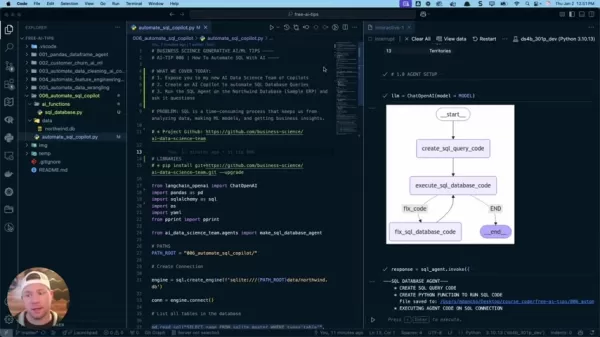 AI Transforms Data Science: Automate Your SQL Queries
In the fast-moving field of data science, efficiency is essential. Automating repetitive tasks frees up valuable time for deeper analysis and model development. This guide explains how to use AI to automate SQL database queries, cutting down the manu
AI Transforms Data Science: Automate Your SQL Queries
In the fast-moving field of data science, efficiency is essential. Automating repetitive tasks frees up valuable time for deeper analysis and model development. This guide explains how to use AI to automate SQL database queries, cutting down the manu
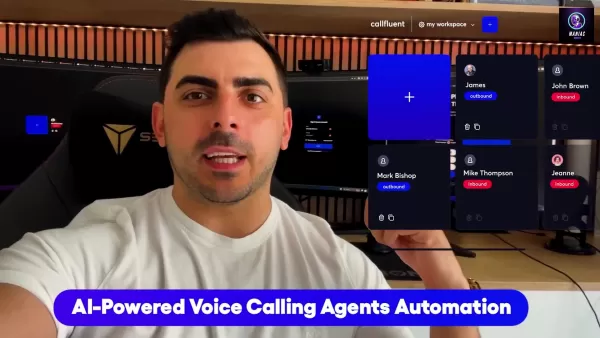 AI Voice Agents Streamline Sales: A Look at CallFluent
In the fast-paced landscape of modern business, automation has shifted from a luxury to an essential tool. AI-powered voice agents are fundamentally changing how companies manage sales and customer support, delivering exceptional efficiency and signi
AI Voice Agents Streamline Sales: A Look at CallFluent
In the fast-paced landscape of modern business, automation has shifted from a luxury to an essential tool. AI-powered voice agents are fundamentally changing how companies manage sales and customer support, delivering exceptional efficiency and signi
2026 Latest Best Top-rated AI Conversation Trainer Tools for Interview Practice are here on XIX.AI! This curated collection features powerful, game-changing tools that go through rigorous real-world tests to deliver accurate feedback. You’ll find a free vs paid comparison and detailed rankings to help you choose the must-try option that boosts your confidence and skills. Explore now to Discover your perfect tool for interview success!
12 tools
xix.ai

2026 Latest Best Top-rated AI Style Transfer Tools for Creative Experiments! XIX.AI has curated a powerful, game-changing collection of must-try tools that deliver exceptional results through real-world tests and rigorous rankings. These top solutions help creatives boost productivity significantly by accelerating content creation and unlocking endless creative possibilities. Explore now to discover your perfect tool and start creating today!
9 tools
xix.ai

2026 Latest Best Top-Rated AI Dialogue Bubble Tools for Visual Storytelling are here on XIX.AI! This curated collection features powerful, game-changing tools that help creators boost productivity and overcome creative bottlenecks. Get a free vs paid comparison, see real-world tests, and check the latest rankings to find the must-try solutions perfect for crafting engaging visual narratives. Explore now to discover your ideal tool!
10 tools
xix.ai
2026 Latest Top-Rated Best AI Meeting Summary Tools for Clear Decision Tracking and Effortless Follow-Ups. This curated list showcases powerful, game-changing solutions that boost productivity dramatically by automating meeting notes, identifying key action items, and streamlining team coordination across all projects. Get a free vs paid comparison along with real-world tests and weekly updated rankings to help you find the perfect tool. Explore now to unlock your AI edge!
9 tools
xix.ai
2026 Latest Best Top-rated AI Data Cleaning Tools for quick fixing of missing values and duplicates. This curated list showcases powerful, game-changing solutions that boost productivity significantly. Each option has undergone rigorous real-world tests to ensure reliability. Get a free vs paid comparison and discover the must-try tool that fits your needs best. Explore now at XIX.AI to Unlock your AI edge.
11 tools
xix.ai

2026 Latest Best Top-Rated AI Creative Ideation Tools for Artists are curated by XIX.AI to help creators break through visual blocks and boost creativity instantly. These powerful game-changing tools offer real-world tests, detailed free vs paid comparison, and weekly updated rankings. Discover your perfect tool to accelerate content creation and unlock your AI edge today. Explore now!
14 tools
xix.ai

Les systèmes d'automatisation basés sur l'IA, comme pour les devis, sont très pratiques en théorie. Cependant, je me demande si la précision sera vraiment fiable dans des situations complexes où les clients ont des demandes très spécifiques... Il faudra probablement toujours une vérification humaine au final. 😅
Автоматизация цитат с помощью ИИ — звучит круто, но не приведёт ли это к тому, что люди совсем перестанут думать самостоятельно? 😅 Интересно, как эта технология справляется с креативными задачами, где нужен человеческий подход.
This guide is actually helpful - my team still wastes hours on manual quotes! The ROI on AI automation seems huge, but the real question is how we prevent bias in pricing algorithms. Anyone dealing with that in implementation? 🤔












