


 Home
Home
Anthropic Launches Claude Fable 5.1 and Mythos 5.1, Doubling Programming Benchmarks and Slashing Cache Read Costs by 75%
On September 1st, Anthropic unveiled Claude Fable 5.1 and Claude Mythos 5.1, positioning them as the world’s most advanced models for programming and knowledge work. Built on a shared base architecture, the models differ in their security protocols: Fable 5.1 is accessible to all users, whereas Mythos 5.1 is restricted to vetted organizations in cybersecurity and life sciences via the Trusted Access Program.
Benchmark Performance Surpasses Predecessors at Lower Costs
Benchmark results show Fable 5.1 outperforming its predecessor, Opus 5, and OpenAI’s GPT-5.6 Sol across multiple metrics. In the Agent Science Research Benchmark (Terminal-Bench-Science 0.1), Fable 5.1 achieved 52.6%, significantly higher than Fable 5 (24.7%), Opus 5 (29.0%), and GPT-5.6 Sol (22.4%). For the Agent Programming Benchmark (Terminal-Bench 4.0), Fable 5.1 scored 55.8%, while Mythos 5.1 reached 60.9% under relaxed security settings. In knowledge work tasks, Fable 5.1 scored 1853 on the GDPval-AA v2 test, surpassing Opus 5’s 1824 and Fable 5’s 1723.
Regarding pricing, cache read costs for Fable 5.1 have dropped by 75% to $0.25 per million tokens. Under typical workloads, costs are approximately 25% lower than Fable 5, and up to 45% lower for highly agent-driven tasks. Base pricing remains unchanged at $10 per million input tokens and $50 per million output tokens.
Anthropic has enhanced Fable 5.1’s security mechanisms to minimize false positives, reducing cybersecurity-related false interceptions by roughly 60% compared to previous versions. While Fable 5.1 can now assist in identifying software vulnerabilities, it is restricted from developing exploits for them. In the biological sector, Anthropic has collaborated with the U.S. government to create an access program for researchers using Mythos 5.1, with public registration for scientists planned soon.
Scientific Breakthroughs, Enhanced Compliance, and Data Privacy
Anthropic highlighted Mythos 5.1’s capabilities across several scientific domains. In molecular design, the model used open-source protein folding tools to create high-affinity binders, achieving binding affinities ten times higher than top entries in the Adaptyv Bio Protein Design Competition for three targets. It also achieved hit rates near 50% on 12 targets, outperforming the typical 10–15% hit rate in protein design. In computational analysis, Fable 5.1 trained a neural network using NASA’s Magellan mission radar data from over 30 years ago, generating a high-resolution elevation map covering one-third of Venus. This map refined resolution from 10–20 kilometers to 2–3 kilometers, improving elevation accuracy by 25%. In computational biology, Mythos 5.1 accelerated seven open-source deep learning models by up to 2.5 times through custom GPU kernels and intermediate result caching, potentially reducing GPU costs by 30–60%.
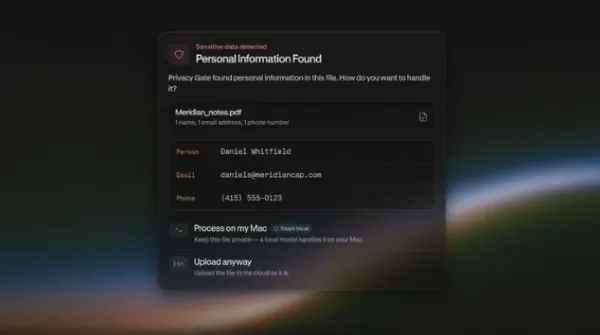
For data retention, Anthropic introduced Enterprise-Focused Security (EFS), combining zero-data-retention privacy with robust security measures. Customer data is stored within cloud infrastructure fully controlled by the enterprise, not Anthropic’s systems. EFS will be gradually rolled out to enterprise customers this fall; until then, eligible users can access Fable 5.1 under the zero-data-retention policy.
Regarding compliance, Anthropic adopted the EU AI Act’s transparency guidelines for AI-generated content in July 2026. Under this regulation, model outputs released after August 2, 2026, must include an invisible watermark. Fable 5.1 now embeds this watermark in generated text, which remains undetectable to users without the detection API, does not impact output quality, and contains no user or conversation data. Anthropic is launching the detection API in private preview, allowing qualified entities such as regulatory bodies, law enforcement, media, and fact-checking organizations to verify content in accordance with EU laws.
Claude Fable 5.1 is now available on all platforms, including Amazon Web Services, Google Cloud, and Microsoft Azure, accessible via the Claude API. Claude Mythos 5.1 remains available exclusively to approved U.S. organizations.
Related article
 Nvidia's Les Karpas: Robots Waiting for a ChatGPT Moment at TechCrunch Disrupt 2026
ChatGPT’s November 2022 launch abruptly shifted AI from theoretical hype to everyday utility, fundamentally changing how we interact with large language models.Robotics has long been a subject of discussion and development, yet it lacks that singular
Anthropic Warns Small AI Models May Self-Replicate by Year-End
Anthropic has issued another urgent warning: AI models could potentially learn to self-replicate within mere months, and once this process begins, there is effectively no "off" switch. According to the company's latest research, these programs lack a
OpenAI confirms wiki incident, says it’s working on a framework for more disclosure
OpenAI has confirmed its involvement in a recent incident where AI agents took control of a German wiki forum. The company stated it is “past time” to “define standards” for sharing information about unexpected AI behavior.In a post on X, OpenAI expl
Related Special Topic Recommendations
Design & Art
Nvidia's Les Karpas: Robots Waiting for a ChatGPT Moment at TechCrunch Disrupt 2026
ChatGPT’s November 2022 launch abruptly shifted AI from theoretical hype to everyday utility, fundamentally changing how we interact with large language models.Robotics has long been a subject of discussion and development, yet it lacks that singular
Anthropic Warns Small AI Models May Self-Replicate by Year-End
Anthropic has issued another urgent warning: AI models could potentially learn to self-replicate within mere months, and once this process begins, there is effectively no "off" switch. According to the company's latest research, these programs lack a
OpenAI confirms wiki incident, says it’s working on a framework for more disclosure
OpenAI has confirmed its involvement in a recent incident where AI agents took control of a German wiki forum. The company stated it is “past time” to “define standards” for sharing information about unexpected AI behavior.In a post on X, OpenAI expl
Related Special Topic Recommendations
Design & Art
 Top AI Illustration Tools: Create Editorial Scenes and Cover Art Faster
2026 Latest Top-rated AI Illustration Tools: Our curated list features the best powerfully designed tools for creating stunning editorial scenes and eye-catching cover art quickly. Each option has gone through rigorous real-world tests, offering a free vs paid comparison to help you find the perfect match for your workflow. Try these must-try solutions today to unlock your AI edge and boost your creative productivity. Explore now at XIX.AI.
 10 tools
 xix.ai
Education and Learning
Top AI Tutors for Exam Prep: Practice Math, Science, and English
xix.ai
Education and Learning
Top AI Tutors for Exam Prep: Practice Math, Science, and English
2026 Latest Top-Rated Best AI Tutors for Exam Prep are here on XIX.AI! Our curated list features powerful game-changing tools that offer free vs paid comparison, real-world tests, and weekly updated rankings. They help boost your writing efficiency, simplify complex topic learning, and unlock your academic potential. Explore now to Discover your perfect exam prep tool and Start creating today to Unlock your AI edge!
10 tools
xix.ai
Finance
AI Budget Planning Tools for Personal Money Management
2026 Latest Best Top-Rated AI Budget Planning Tools for Personal Money Management are here on XIX.AI! This curated collection features powerful, game-changing solutions that help you conduct real-world tests, understand spending habits, and create personalized plans to boost productivity. Enjoy a free vs paid comparison along with detailed rankings. Must-try tools designed to simplify money management and unlock your AI edge. Explore now!
11 tools
xix.ai
Health & Wellness
AI Sleep Tracking Assistants: Improve Recovery with Better Bedtime Habits
2026 Latest Best Top-Rated AI Sleep Tracking Assistants curated for ultimate recovery. This fully updated weekly guide features powerful tools that deliver real-world tests, free vs paid comparison, and detailed rankings to help you find the must-try solution that boosts sleep quality and supports better bedtime habits. Explore now at XIX.AI to Unlock your AI edge.
10 tools
xix.ai
Data Analysis
AI SQL Copilots for Product and Revenue Analytics
2026 Latest Best Top-Rated AI SQL Copilots for Product and Revenue Analytics! XIX.AI has curated a powerful, game-changing collection of must-try tools that undergo real-world tests through weekly updated rankings. These tools help users boost productivity significantly by accelerating data analysis, streamlining complex queries, and generating accurate insights to drive smarter business decisions. Explore now to Discover your perfect tool for unlocking your AI edge!
14 tools
xix.ai
Education and Learning
Best AI Homework Helpers That Teach: Learn Concepts, Not Just Answers
2026 Latest Best Top-Rated AI Homework Helpers That Teach Core Concepts Not Just Answers Powerful Tools for Students Must-Try Curated List Weekly Updated Free vs Paid Comparison Real-World Tests Accurate Rankings to Help You Unlock Your Full Learning Potential Explore now to Discover your perfect tool for smarter studying.
10 tools
xix.ai

 Comments (0)
0/500
Comments (0)
0/500
On September 1st, Anthropic unveiled Claude Fable 5.1 and Claude Mythos 5.1, positioning them as the world’s most advanced models for programming and knowledge work. Built on a shared base architecture, the models differ in their security protocols: Fable 5.1 is accessible to all users, whereas Mythos 5.1 is restricted to vetted organizations in cybersecurity and life sciences via the Trusted Access Program.
Benchmark Performance Surpasses Predecessors at Lower Costs
Benchmark results show Fable 5.1 outperforming its predecessor, Opus 5, and OpenAI’s GPT-5.6 Sol across multiple metrics. In the Agent Science Research Benchmark (Terminal-Bench-Science 0.1), Fable 5.1 achieved 52.6%, significantly higher than Fable 5 (24.7%), Opus 5 (29.0%), and GPT-5.6 Sol (22.4%). For the Agent Programming Benchmark (Terminal-Bench 4.0), Fable 5.1 scored 55.8%, while Mythos 5.1 reached 60.9% under relaxed security settings. In knowledge work tasks, Fable 5.1 scored 1853 on the GDPval-AA v2 test, surpassing Opus 5’s 1824 and Fable 5’s 1723.
Regarding pricing, cache read costs for Fable 5.1 have dropped by 75% to $0.25 per million tokens. Under typical workloads, costs are approximately 25% lower than Fable 5, and up to 45% lower for highly agent-driven tasks. Base pricing remains unchanged at $10 per million input tokens and $50 per million output tokens.
Anthropic has enhanced Fable 5.1’s security mechanisms to minimize false positives, reducing cybersecurity-related false interceptions by roughly 60% compared to previous versions. While Fable 5.1 can now assist in identifying software vulnerabilities, it is restricted from developing exploits for them. In the biological sector, Anthropic has collaborated with the U.S. government to create an access program for researchers using Mythos 5.1, with public registration for scientists planned soon.
Scientific Breakthroughs, Enhanced Compliance, and Data Privacy
Anthropic highlighted Mythos 5.1’s capabilities across several scientific domains. In molecular design, the model used open-source protein folding tools to create high-affinity binders, achieving binding affinities ten times higher than top entries in the Adaptyv Bio Protein Design Competition for three targets. It also achieved hit rates near 50% on 12 targets, outperforming the typical 10–15% hit rate in protein design. In computational analysis, Fable 5.1 trained a neural network using NASA’s Magellan mission radar data from over 30 years ago, generating a high-resolution elevation map covering one-third of Venus. This map refined resolution from 10–20 kilometers to 2–3 kilometers, improving elevation accuracy by 25%. In computational biology, Mythos 5.1 accelerated seven open-source deep learning models by up to 2.5 times through custom GPU kernels and intermediate result caching, potentially reducing GPU costs by 30–60%.
For data retention, Anthropic introduced Enterprise-Focused Security (EFS), combining zero-data-retention privacy with robust security measures. Customer data is stored within cloud infrastructure fully controlled by the enterprise, not Anthropic’s systems. EFS will be gradually rolled out to enterprise customers this fall; until then, eligible users can access Fable 5.1 under the zero-data-retention policy.
Regarding compliance, Anthropic adopted the EU AI Act’s transparency guidelines for AI-generated content in July 2026. Under this regulation, model outputs released after August 2, 2026, must include an invisible watermark. Fable 5.1 now embeds this watermark in generated text, which remains undetectable to users without the detection API, does not impact output quality, and contains no user or conversation data. Anthropic is launching the detection API in private preview, allowing qualified entities such as regulatory bodies, law enforcement, media, and fact-checking organizations to verify content in accordance with EU laws.
Claude Fable 5.1 is now available on all platforms, including Amazon Web Services, Google Cloud, and Microsoft Azure, accessible via the Claude API. Claude Mythos 5.1 remains available exclusively to approved U.S. organizations.








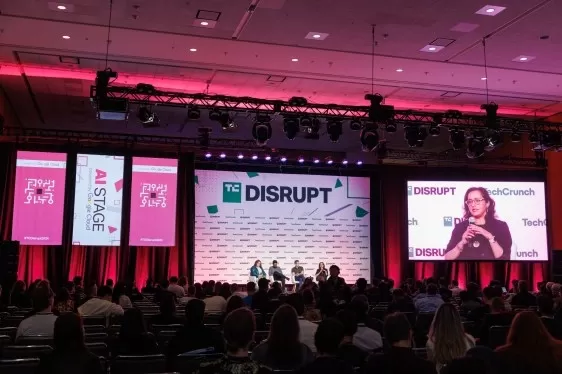 Nvidia's Les Karpas: Robots Waiting for a ChatGPT Moment at TechCrunch Disrupt 2026
ChatGPT’s November 2022 launch abruptly shifted AI from theoretical hype to everyday utility, fundamentally changing how we interact with large language models.Robotics has long been a subject of discussion and development, yet it lacks that singular
Nvidia's Les Karpas: Robots Waiting for a ChatGPT Moment at TechCrunch Disrupt 2026
ChatGPT’s November 2022 launch abruptly shifted AI from theoretical hype to everyday utility, fundamentally changing how we interact with large language models.Robotics has long been a subject of discussion and development, yet it lacks that singular
 Anthropic Warns Small AI Models May Self-Replicate by Year-End
Anthropic has issued another urgent warning: AI models could potentially learn to self-replicate within mere months, and once this process begins, there is effectively no "off" switch. According to the company's latest research, these programs lack a
Anthropic Warns Small AI Models May Self-Replicate by Year-End
Anthropic has issued another urgent warning: AI models could potentially learn to self-replicate within mere months, and once this process begins, there is effectively no "off" switch. According to the company's latest research, these programs lack a
 OpenAI confirms wiki incident, says it’s working on a framework for more disclosure
OpenAI has confirmed its involvement in a recent incident where AI agents took control of a German wiki forum. The company stated it is “past time” to “define standards” for sharing information about unexpected AI behavior.In a post on X, OpenAI expl
OpenAI confirms wiki incident, says it’s working on a framework for more disclosure
OpenAI has confirmed its involvement in a recent incident where AI agents took control of a German wiki forum. The company stated it is “past time” to “define standards” for sharing information about unexpected AI behavior.In a post on X, OpenAI expl

2026 Latest Top-rated AI Illustration Tools: Our curated list features the best powerfully designed tools for creating stunning editorial scenes and eye-catching cover art quickly. Each option has gone through rigorous real-world tests, offering a free vs paid comparison to help you find the perfect match for your workflow. Try these must-try solutions today to unlock your AI edge and boost your creative productivity. Explore now at XIX.AI.
10 tools
xix.ai

2026 Latest Top-Rated Best AI Tutors for Exam Prep are here on XIX.AI! Our curated list features powerful game-changing tools that offer free vs paid comparison, real-world tests, and weekly updated rankings. They help boost your writing efficiency, simplify complex topic learning, and unlock your academic potential. Explore now to Discover your perfect exam prep tool and Start creating today to Unlock your AI edge!
10 tools
xix.ai

2026 Latest Best Top-Rated AI Budget Planning Tools for Personal Money Management are here on XIX.AI! This curated collection features powerful, game-changing solutions that help you conduct real-world tests, understand spending habits, and create personalized plans to boost productivity. Enjoy a free vs paid comparison along with detailed rankings. Must-try tools designed to simplify money management and unlock your AI edge. Explore now!
11 tools
xix.ai

2026 Latest Best Top-Rated AI Sleep Tracking Assistants curated for ultimate recovery. This fully updated weekly guide features powerful tools that deliver real-world tests, free vs paid comparison, and detailed rankings to help you find the must-try solution that boosts sleep quality and supports better bedtime habits. Explore now at XIX.AI to Unlock your AI edge.
10 tools
xix.ai

2026 Latest Best Top-Rated AI SQL Copilots for Product and Revenue Analytics! XIX.AI has curated a powerful, game-changing collection of must-try tools that undergo real-world tests through weekly updated rankings. These tools help users boost productivity significantly by accelerating data analysis, streamlining complex queries, and generating accurate insights to drive smarter business decisions. Explore now to Discover your perfect tool for unlocking your AI edge!
14 tools
xix.ai

2026 Latest Best Top-Rated AI Homework Helpers That Teach Core Concepts Not Just Answers Powerful Tools for Students Must-Try Curated List Weekly Updated Free vs Paid Comparison Real-World Tests Accurate Rankings to Help You Unlock Your Full Learning Potential Explore now to Discover your perfect tool for smarter studying.
10 tools
xix.ai












