


 Home
HomeAmazon Acquires AI Wearable Startup Bee in Strategic Move
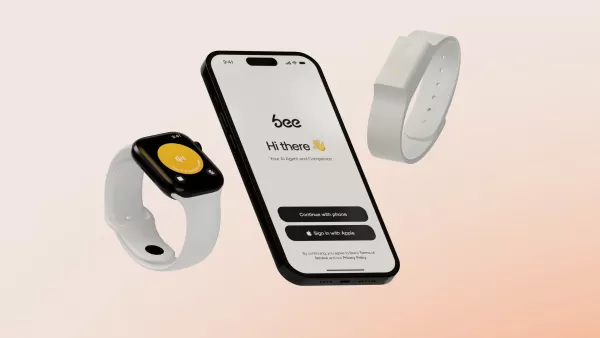
Smart rings, smart displays, smart TVs, smart pins—even smart ice makers? Absolutely! Artificial intelligence was ubiquitous at this year's Consumer Electronics Show (CES) in Las Vegas, with companies of all sizes showcasing how they're integrating AI into more everyday gadgets. For Amazon, CES served as the platform to introduce its latest acquisition in this arena: Bee, an AI-powered device that can be worn as a clip-on pin or a bracelet.
Amazon already has a foothold in the consumer AI market with Alexa. Its enhanced AI version, Alexa+, is compatible with 97% of the hardware devices Amazon has shipped. However, Bee offers the company a wearable device that could expand its influence beyond the home environment.
Primarily designed for recording conversations such as interviews, meetings, or lectures, Bee also functions as an AI companion. The system is equipped with general knowledge and learns more about you by combining your recorded interactions with data from connected services like Gmail, Google Calendar, your phone's contacts, and Apple Health.
Given that Amazon has previously integrated Alexa into wearables like earbuds and glasses, introducing another AI companion might appear to complicate its product strategy. Still, earlier Alexa-enabled wearables haven't gained significant traction against competitors such as Apple's AirPods and Ray-Ban Meta smart glasses. Amazon seems aware of this, which explains the decision to incorporate Bee into its portfolio.
“We see each other as complementary companions,” explained Bee co-founder Maria de Lourdes Zollo, describing Bee's relationship with Alexa during an interview at CES last week. “Bee understands life outside the home, while Alexa understands life inside it. Naturally, there will come a time when these two experiences merge.”
That future integration doesn't necessarily mean Bee's AI will be replaced by Alexa. Daniel Rausch, Vice President of Amazon Alexa, emphasized that the Bee team has developed an “important and delightful user experience.” He characterized Bee as a “deeply engaging and personal” AI, while acknowledging that eventually, Alexa and Bee are likely to converge.
“We believe that combining these AI experiences will deliver greater value to customers than either could alone,” Rausch explained. “When you have continuous access to the capabilities of these AI assistants throughout your day, we’ll be able to accomplish so much more for users.”
De Lourdes Zollo noted that Bee adapts to its users by learning their routines, preferences, and responsibilities, enabling it to recommend tasks and follow-up actions as needed.
Early adopters have included students recording lectures, older adults who need memory support, and professionals who rely on verbal communication and prefer not to take manual notes.
“They simply want a centralized tool that summarizes everything they’ve discussed,” the Bee co-founder stated. “Using this information, we build a comprehensive knowledge profile about you. This allows you to interact with Bee and gain insights into your past experiences as well as your personal growth over time,” de Lourdes Zollo added.
Like Alexa, Bee operates using multiple AI models, though it is considering integrating Amazon's own AI technology. After transcribing conversations, Bee deletes the audio recordings, which may limit its usefulness in professional scenarios where verbatim playback is required for accuracy.
De Lourdes Zollo hinted that Bee has ambitious plans for 2026, without revealing specifics. In addition to recently announced features—such as voice memos, templates, daily insights, and more—the eight-person team is developing “many new innovations” from their San Francisco headquarters, where Amazon already employs numerous hardware and Alexa specialists.
“Honestly, the possibilities are now endless, and that’s one reason we’re thrilled to be part of Amazon,” she said.
Related article
 Anthropic Expands Claude AI Coding Tools to Japan in Push for Overseas Growth
Anthropic, a prominent U.S. artificial intelligence firm, is intensifying its global outreach. On Wednesday, the company hosted a major developer gathering, "Code with Claude," in Tokyo, drawing close to 500 software engineers. This initiative seeks
India’s Software Giant Cuts Hiring, Promises No Layoffs as AI Agents Scale Up
As artificial intelligence reshapes traditional labor-intensive business models, Tata Consultancy Services (TCS), a premier Indian software outsourcing firm, has unveiled its strategic response. During Tuesday’s annual general meeting, the chairman o
China Locks AI Models During Gaokam to Block Instant Homework Help
With the 2026 Gaokao fast approaching, rumors regarding the suspension of AI tools during the exam period have ignited intense online debate. In response to public concern, major AI platforms and educational apps have clarified their stance: rather t
Related Special Topic Recommendations
Design & Art
Anthropic Expands Claude AI Coding Tools to Japan in Push for Overseas Growth
Anthropic, a prominent U.S. artificial intelligence firm, is intensifying its global outreach. On Wednesday, the company hosted a major developer gathering, "Code with Claude," in Tokyo, drawing close to 500 software engineers. This initiative seeks
India’s Software Giant Cuts Hiring, Promises No Layoffs as AI Agents Scale Up
As artificial intelligence reshapes traditional labor-intensive business models, Tata Consultancy Services (TCS), a premier Indian software outsourcing firm, has unveiled its strategic response. During Tuesday’s annual general meeting, the chairman o
China Locks AI Models During Gaokam to Block Instant Homework Help
With the 2026 Gaokao fast approaching, rumors regarding the suspension of AI tools during the exam period have ignited intense online debate. In response to public concern, major AI platforms and educational apps have clarified their stance: rather t
Related Special Topic Recommendations
Design & Art
 Best AI Style Transfer Tools for Creative Experiments
2026 Latest Best Top-rated AI Style Transfer Tools for Creative Experiments! XIX.AI has curated a powerful, game-changing collection of must-try tools that deliver exceptional results through real-world tests and rigorous rankings. These top solutions help creatives boost productivity significantly by accelerating content creation and unlocking endless creative possibilities. Explore now to discover your perfect tool and start creating today!
 9 tools
 xix.ai
Comic Creation
Best AI Dialogue Bubble Tools for Visual Storytelling
xix.ai
Comic Creation
Best AI Dialogue Bubble Tools for Visual Storytelling
2026 Latest Best Top-Rated AI Dialogue Bubble Tools for Visual Storytelling are here on XIX.AI! This curated collection features powerful, game-changing tools that help creators boost productivity and overcome creative bottlenecks. Get a free vs paid comparison, see real-world tests, and check the latest rankings to find the must-try solutions perfect for crafting engaging visual narratives. Explore now to discover your ideal tool!
10 tools
xix.ai
Meeting Assistant
Top AI Meeting Summary Tools: Track Decisions and Follow-Ups Clearly
2026 Latest Top-Rated Best AI Meeting Summary Tools for Clear Decision Tracking and Effortless Follow-Ups. This curated list showcases powerful, game-changing solutions that boost productivity dramatically by automating meeting notes, identifying key action items, and streamlining team coordination across all projects. Get a free vs paid comparison along with real-world tests and weekly updated rankings to help you find the perfect tool. Explore now to unlock your AI edge!
9 tools
xix.ai
Data Analysis
Best AI Data Cleaning Tools: Fix Missing Values and Duplicates Fast
2026 Latest Best Top-rated AI Data Cleaning Tools for quick fixing of missing values and duplicates. This curated list showcases powerful, game-changing solutions that boost productivity significantly. Each option has undergone rigorous real-world tests to ensure reliability. Get a free vs paid comparison and discover the must-try tool that fits your needs best. Explore now at XIX.AI to Unlock your AI edge.
11 tools
xix.ai
Design & Art
Best AI Creative Ideation Tools for Artists: Break Through Visual Blocks
2026 Latest Best Top-Rated AI Creative Ideation Tools for Artists are curated by XIX.AI to help creators break through visual blocks and boost creativity instantly. These powerful game-changing tools offer real-world tests, detailed free vs paid comparison, and weekly updated rankings. Discover your perfect tool to accelerate content creation and unlock your AI edge today. Explore now!
14 tools
xix.ai
Music composition
AI Beat Makers for TikTok Background Tracks, Reels Audio, and Creator Promo Music
2026 Latest Best AI Beat Makers for TikTok Background Tracks, Reels Audio, and Creator Promo Music! XIX.AI has curated a top-rated list of powerful game-changing tools that go through real-world tests to deliver flawless music for every content need. You’ll find detailed free vs paid comparison data, weekly updated rankings, and must-try options to help you boost creativity and productivity. Explore now to discover your perfect tool!
11 tools
xix.ai

 Comments (1)
0/500
Comments (1)
0/500
![WilliamGonzalez]()
Finally, Amazon isn’t just chasing the next smart fridge—they’re betting on something that actually straps to your finger. Bee’s tech could make pins and rings less gimmicky and more useful, but I’m still waiting to see if they’ll avoid the usual corporate graveyard after acquisition. 🤔
Smart rings, smart displays, smart TVs, smart pins—even smart ice makers? Absolutely! Artificial intelligence was ubiquitous at this year's Consumer Electronics Show (CES) in Las Vegas, with companies of all sizes showcasing how they're integrating AI into more everyday gadgets. For Amazon, CES served as the platform to introduce its latest acquisition in this arena: Bee, an AI-powered device that can be worn as a clip-on pin or a bracelet.
Amazon already has a foothold in the consumer AI market with Alexa. Its enhanced AI version, Alexa+, is compatible with 97% of the hardware devices Amazon has shipped. However, Bee offers the company a wearable device that could expand its influence beyond the home environment.
Primarily designed for recording conversations such as interviews, meetings, or lectures, Bee also functions as an AI companion. The system is equipped with general knowledge and learns more about you by combining your recorded interactions with data from connected services like Gmail, Google Calendar, your phone's contacts, and Apple Health.
Given that Amazon has previously integrated Alexa into wearables like earbuds and glasses, introducing another AI companion might appear to complicate its product strategy. Still, earlier Alexa-enabled wearables haven't gained significant traction against competitors such as Apple's AirPods and Ray-Ban Meta smart glasses. Amazon seems aware of this, which explains the decision to incorporate Bee into its portfolio.
“We see each other as complementary companions,” explained Bee co-founder Maria de Lourdes Zollo, describing Bee's relationship with Alexa during an interview at CES last week. “Bee understands life outside the home, while Alexa understands life inside it. Naturally, there will come a time when these two experiences merge.”
That future integration doesn't necessarily mean Bee's AI will be replaced by Alexa. Daniel Rausch, Vice President of Amazon Alexa, emphasized that the Bee team has developed an “important and delightful user experience.” He characterized Bee as a “deeply engaging and personal” AI, while acknowledging that eventually, Alexa and Bee are likely to converge.
“We believe that combining these AI experiences will deliver greater value to customers than either could alone,” Rausch explained. “When you have continuous access to the capabilities of these AI assistants throughout your day, we’ll be able to accomplish so much more for users.”
De Lourdes Zollo noted that Bee adapts to its users by learning their routines, preferences, and responsibilities, enabling it to recommend tasks and follow-up actions as needed.
Early adopters have included students recording lectures, older adults who need memory support, and professionals who rely on verbal communication and prefer not to take manual notes.
“They simply want a centralized tool that summarizes everything they’ve discussed,” the Bee co-founder stated. “Using this information, we build a comprehensive knowledge profile about you. This allows you to interact with Bee and gain insights into your past experiences as well as your personal growth over time,” de Lourdes Zollo added.
Like Alexa, Bee operates using multiple AI models, though it is considering integrating Amazon's own AI technology. After transcribing conversations, Bee deletes the audio recordings, which may limit its usefulness in professional scenarios where verbatim playback is required for accuracy.
De Lourdes Zollo hinted that Bee has ambitious plans for 2026, without revealing specifics. In addition to recently announced features—such as voice memos, templates, daily insights, and more—the eight-person team is developing “many new innovations” from their San Francisco headquarters, where Amazon already employs numerous hardware and Alexa specialists.
“Honestly, the possibilities are now endless, and that’s one reason we’re thrilled to be part of Amazon,” she said.








 Anthropic Expands Claude AI Coding Tools to Japan in Push for Overseas Growth
Anthropic, a prominent U.S. artificial intelligence firm, is intensifying its global outreach. On Wednesday, the company hosted a major developer gathering, "Code with Claude," in Tokyo, drawing close to 500 software engineers. This initiative seeks
Anthropic Expands Claude AI Coding Tools to Japan in Push for Overseas Growth
Anthropic, a prominent U.S. artificial intelligence firm, is intensifying its global outreach. On Wednesday, the company hosted a major developer gathering, "Code with Claude," in Tokyo, drawing close to 500 software engineers. This initiative seeks
 India’s Software Giant Cuts Hiring, Promises No Layoffs as AI Agents Scale Up
As artificial intelligence reshapes traditional labor-intensive business models, Tata Consultancy Services (TCS), a premier Indian software outsourcing firm, has unveiled its strategic response. During Tuesday’s annual general meeting, the chairman o
India’s Software Giant Cuts Hiring, Promises No Layoffs as AI Agents Scale Up
As artificial intelligence reshapes traditional labor-intensive business models, Tata Consultancy Services (TCS), a premier Indian software outsourcing firm, has unveiled its strategic response. During Tuesday’s annual general meeting, the chairman o
 China Locks AI Models During Gaokam to Block Instant Homework Help
With the 2026 Gaokao fast approaching, rumors regarding the suspension of AI tools during the exam period have ignited intense online debate. In response to public concern, major AI platforms and educational apps have clarified their stance: rather t
China Locks AI Models During Gaokam to Block Instant Homework Help
With the 2026 Gaokao fast approaching, rumors regarding the suspension of AI tools during the exam period have ignited intense online debate. In response to public concern, major AI platforms and educational apps have clarified their stance: rather t

2026 Latest Best Top-rated AI Style Transfer Tools for Creative Experiments! XIX.AI has curated a powerful, game-changing collection of must-try tools that deliver exceptional results through real-world tests and rigorous rankings. These top solutions help creatives boost productivity significantly by accelerating content creation and unlocking endless creative possibilities. Explore now to discover your perfect tool and start creating today!
9 tools
xix.ai

2026 Latest Best Top-Rated AI Dialogue Bubble Tools for Visual Storytelling are here on XIX.AI! This curated collection features powerful, game-changing tools that help creators boost productivity and overcome creative bottlenecks. Get a free vs paid comparison, see real-world tests, and check the latest rankings to find the must-try solutions perfect for crafting engaging visual narratives. Explore now to discover your ideal tool!
10 tools
xix.ai

2026 Latest Top-Rated Best AI Meeting Summary Tools for Clear Decision Tracking and Effortless Follow-Ups. This curated list showcases powerful, game-changing solutions that boost productivity dramatically by automating meeting notes, identifying key action items, and streamlining team coordination across all projects. Get a free vs paid comparison along with real-world tests and weekly updated rankings to help you find the perfect tool. Explore now to unlock your AI edge!
9 tools
xix.ai

2026 Latest Best Top-rated AI Data Cleaning Tools for quick fixing of missing values and duplicates. This curated list showcases powerful, game-changing solutions that boost productivity significantly. Each option has undergone rigorous real-world tests to ensure reliability. Get a free vs paid comparison and discover the must-try tool that fits your needs best. Explore now at XIX.AI to Unlock your AI edge.
11 tools
xix.ai

2026 Latest Best Top-Rated AI Creative Ideation Tools for Artists are curated by XIX.AI to help creators break through visual blocks and boost creativity instantly. These powerful game-changing tools offer real-world tests, detailed free vs paid comparison, and weekly updated rankings. Discover your perfect tool to accelerate content creation and unlock your AI edge today. Explore now!
14 tools
xix.ai

2026 Latest Best AI Beat Makers for TikTok Background Tracks, Reels Audio, and Creator Promo Music! XIX.AI has curated a top-rated list of powerful game-changing tools that go through real-world tests to deliver flawless music for every content need. You’ll find detailed free vs paid comparison data, weekly updated rankings, and must-try options to help you boost creativity and productivity. Explore now to discover your perfect tool!
11 tools
xix.ai

Finally, Amazon isn’t just chasing the next smart fridge—they’re betting on something that actually straps to your finger. Bee’s tech could make pins and rings less gimmicky and more useful, but I’m still waiting to see if they’ll avoid the usual corporate graveyard after acquisition. 🤔












