


 Home
HomeAlibaba Unveils HappyShrimp 1.0, an AI Music Model That Turns Natural Language Into Songs
Alibaba unveiled its inaugural self-developed AI music generation model, HappyShrimp (Chinese name: Kuaile Xiaomi), on August 17. This innovation dismantles the professional barriers of conventional AI music tools that depend on "tag-based input," enabling a complete natural language-driven creation process—from lyric writing and composition to arrangement and vocalization. This allows everyday users to produce original music with high industrial quality.
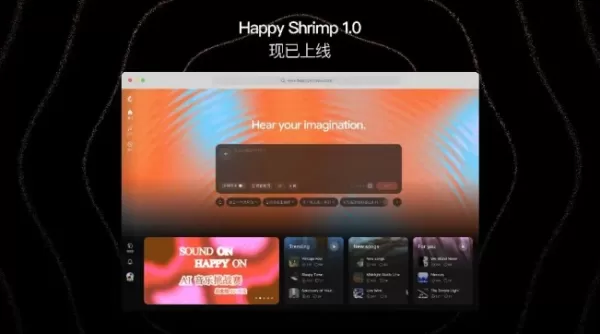
Unlike existing AI music tools that require stacking professional terms like "Lo-fi R&B" or "808 drum patterns," HappyShrimp treats music as a "special language with grammar, semantics, and context." Utilizing end-to-end whole-song generation technology, it avoids issues such as lyrical and musical misalignment or fragmented listening experiences often caused by multi-module combinations. In test cases, when users input "monologue of a ghost being abandoned," the model autonomously completed the entire structural design, from organ atmosphere setting, male voice slow storytelling, to emotional climax, with lyrics and melodies perfectly matching and an immersive experience.
Its core capability also lies in precise control over complex instructions: when given a composite request such as "70s soul music, Black male voice, warm analog recording texture," the generated segment presented a thick and realistic vocal at 18 seconds, with smooth vibrato close to that of a professional singer; for scenarios such as "car movie theme song, male and female rap duet," the work not only matched Hans Zimmer's film score style but also recreated the tension of a race track through string progression and intertwined male and female voices.
On its first day, HappyShrimp announced a strategic cooperation with Tahe Music Group, and the two parties will explore areas such as building the music industry ecosystem, operating AI music platforms, and co-creating with musicians. In addition, the model will be showcased at the 2026 Aanaia Xiami Music Festival from August 28 to 30, and will release thematic ambient music inspired by the festival on-site.
Currently, HappyShrimp is available both domestically (https://www.happyshrimp.cn/) and internationally (https://www.happyshrimp.ai/). New users can claim large amounts of free credits for trial use. Industry insiders believe that the launch of this product will further expand the creative boundaries of AI music and bring new production models to the music industry.
Related article
 YouTube Unveils Facial and Voiceprint Recognition Tech, Sparking Digital Double Debate in Entertainment
With generative AI barriers falling, regulating deepfakes has become an urgent industry challenge. YouTube, Google’s video platform, is now making its advanced facial and voice recognition technology available to the entertainment sector.This initiat
Bristol Myers Squibb acquires Nvidia AI platform to accelerate drug discovery
Bristol Myers Squibb has acquired an Nvidia DGX SuperPOD powered by the Vera Rubin architecture to accelerate artificial intelligence applications in its drug discovery and development pipeline.The pharmaceutical giant will be the first life sciences
Anthropic Unveils Sonnet 5.5 as Faster, Cheaper Work Partner
Amidst the ongoing competition among AI models, Anthropic has launched the latest iteration of Sonnet, its mid-range offering, promising substantially improved speed and lower costs compared to the previous version.Anthropic positions Sonnet 5.5 as a
Related Special Topic Recommendations
SEO
YouTube Unveils Facial and Voiceprint Recognition Tech, Sparking Digital Double Debate in Entertainment
With generative AI barriers falling, regulating deepfakes has become an urgent industry challenge. YouTube, Google’s video platform, is now making its advanced facial and voice recognition technology available to the entertainment sector.This initiat
Bristol Myers Squibb acquires Nvidia AI platform to accelerate drug discovery
Bristol Myers Squibb has acquired an Nvidia DGX SuperPOD powered by the Vera Rubin architecture to accelerate artificial intelligence applications in its drug discovery and development pipeline.The pharmaceutical giant will be the first life sciences
Anthropic Unveils Sonnet 5.5 as Faster, Cheaper Work Partner
Amidst the ongoing competition among AI models, Anthropic has launched the latest iteration of Sonnet, its mid-range offering, promising substantially improved speed and lower costs compared to the previous version.Anthropic positions Sonnet 5.5 as a
Related Special Topic Recommendations
SEO
 Top AI SEO Auditors for Small Teams: Fix Issues Before Rankings Slip
2026 Latest Top-rated AI SEO Auditors for Small Teams are here on XIX.AI! Our curated list features powerful tools that help you fix hidden issues fast, boost your rankings, and save time. Get a free vs paid comparison along with real-world tests to choose the best option for your needs. Explore now to Discover your perfect tool and Unlock your AI edge.
 11 tools
 xix.ai
Text-to-speech
AI Podcast Voice Cloning Tools for Long-Form Narration
xix.ai
Text-to-speech
AI Podcast Voice Cloning Tools for Long-Form Narration
2026 Latest Best Top-Rated AI Podcast Voice Cloning Tools for Long-Form Narration are here on XIX.AI! This curated list features powerful, game-changing solutions that deliver professional-quality audio with zero effort. We conduct real-world tests and provide a free vs paid comparison along with weekly updated rankings to help you find the must-try tool that boosts your productivity significantly. Explore now to unlock your AI edge!
10 tools
xix.ai
SEO
Best AI Internal Linking Tools: Grow Content Hubs with Less Manual Work
2026 Latest Best Top-rated AI Internal Linking Tools for Content Hubs: This curated list features powerful game-changing solutions that drastically cut manual work. XIX.AI has conducted real-world tests and provided a detailed free vs paid comparison alongside weekly updated rankings to help you find the must-try tool that boosts productivity and supercharges your content strategy. Explore now to unlock your AI edge!
10 tools
xix.ai
design
AI UI Design Tools for Web and Mobile Projects
2026 Latest Best AI UI Design Tools for Web and Mobile Projects are here on XIX.AI! This curated list features top-rated, powerful tools that go through rigorous real-world tests to deliver game-changing results for boosting creativity and productivity. You’ll also find a free vs paid comparison, weekly updated rankings, and detailed insights. Must-try options help you overcome design bottlenecks and create high-quality interfaces faster. Explore now to discover your perfect tool!
8 tools
xix.ai
Prompt
Top Prompt Engineering Tools: Test, Version, and Improve Team Prompts
2026 Latest Top-rated Best Prompt Engineering Tools for Teams are featured here on XIX.AI. This curated collection includes powerful game-changing options that go through rigorous real-world tests. You’ll find a free vs paid comparison, detailed rankings, and easy tools to test, version track, and refine team prompts to boost productivity significantly. Explore now to Discover your perfect tool!
9 tools
xix.ai
Prompt
Best AI Prompt Libraries for Work: Reuse Proven Prompts Across Tasks
2026 Latest Best AI Prompt Libraries for Work: XIX.AI curates a top-rated collection of powerful, game-changing prompt sets designed to help you reuse proven templates across countless tasks and boost your productivity significantly. Enjoy free vs paid comparison, detailed real-world tests, and updated rankings weekly. Explore now to discover your perfect tool and unlock your AI edge!
11 tools
xix.ai

 Comments (0)
0/500
Comments (0)
0/500
Alibaba unveiled its inaugural self-developed AI music generation model, HappyShrimp (Chinese name: Kuaile Xiaomi), on August 17. This innovation dismantles the professional barriers of conventional AI music tools that depend on "tag-based input," enabling a complete natural language-driven creation process—from lyric writing and composition to arrangement and vocalization. This allows everyday users to produce original music with high industrial quality.
Unlike existing AI music tools that require stacking professional terms like "Lo-fi R&B" or "808 drum patterns," HappyShrimp treats music as a "special language with grammar, semantics, and context." Utilizing end-to-end whole-song generation technology, it avoids issues such as lyrical and musical misalignment or fragmented listening experiences often caused by multi-module combinations. In test cases, when users input "monologue of a ghost being abandoned," the model autonomously completed the entire structural design, from organ atmosphere setting, male voice slow storytelling, to emotional climax, with lyrics and melodies perfectly matching and an immersive experience.
Its core capability also lies in precise control over complex instructions: when given a composite request such as "70s soul music, Black male voice, warm analog recording texture," the generated segment presented a thick and realistic vocal at 18 seconds, with smooth vibrato close to that of a professional singer; for scenarios such as "car movie theme song, male and female rap duet," the work not only matched Hans Zimmer's film score style but also recreated the tension of a race track through string progression and intertwined male and female voices.
On its first day, HappyShrimp announced a strategic cooperation with Tahe Music Group, and the two parties will explore areas such as building the music industry ecosystem, operating AI music platforms, and co-creating with musicians. In addition, the model will be showcased at the 2026 Aanaia Xiami Music Festival from August 28 to 30, and will release thematic ambient music inspired by the festival on-site.
Currently, HappyShrimp is available both domestically (https://www.happyshrimp.cn/) and internationally (https://www.happyshrimp.ai/). New users can claim large amounts of free credits for trial use. Industry insiders believe that the launch of this product will further expand the creative boundaries of AI music and bring new production models to the music industry.








 YouTube Unveils Facial and Voiceprint Recognition Tech, Sparking Digital Double Debate in Entertainment
With generative AI barriers falling, regulating deepfakes has become an urgent industry challenge. YouTube, Google’s video platform, is now making its advanced facial and voice recognition technology available to the entertainment sector.This initiat
YouTube Unveils Facial and Voiceprint Recognition Tech, Sparking Digital Double Debate in Entertainment
With generative AI barriers falling, regulating deepfakes has become an urgent industry challenge. YouTube, Google’s video platform, is now making its advanced facial and voice recognition technology available to the entertainment sector.This initiat
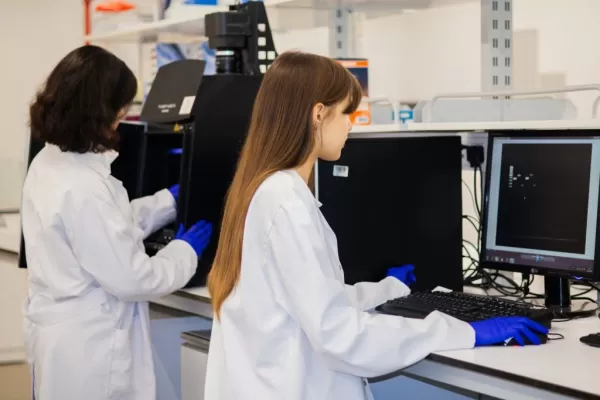 Bristol Myers Squibb acquires Nvidia AI platform to accelerate drug discovery
Bristol Myers Squibb has acquired an Nvidia DGX SuperPOD powered by the Vera Rubin architecture to accelerate artificial intelligence applications in its drug discovery and development pipeline.The pharmaceutical giant will be the first life sciences
Bristol Myers Squibb acquires Nvidia AI platform to accelerate drug discovery
Bristol Myers Squibb has acquired an Nvidia DGX SuperPOD powered by the Vera Rubin architecture to accelerate artificial intelligence applications in its drug discovery and development pipeline.The pharmaceutical giant will be the first life sciences
 Anthropic Unveils Sonnet 5.5 as Faster, Cheaper Work Partner
Amidst the ongoing competition among AI models, Anthropic has launched the latest iteration of Sonnet, its mid-range offering, promising substantially improved speed and lower costs compared to the previous version.Anthropic positions Sonnet 5.5 as a
Anthropic Unveils Sonnet 5.5 as Faster, Cheaper Work Partner
Amidst the ongoing competition among AI models, Anthropic has launched the latest iteration of Sonnet, its mid-range offering, promising substantially improved speed and lower costs compared to the previous version.Anthropic positions Sonnet 5.5 as a

2026 Latest Top-rated AI SEO Auditors for Small Teams are here on XIX.AI! Our curated list features powerful tools that help you fix hidden issues fast, boost your rankings, and save time. Get a free vs paid comparison along with real-world tests to choose the best option for your needs. Explore now to Discover your perfect tool and Unlock your AI edge.
11 tools
xix.ai

2026 Latest Best Top-Rated AI Podcast Voice Cloning Tools for Long-Form Narration are here on XIX.AI! This curated list features powerful, game-changing solutions that deliver professional-quality audio with zero effort. We conduct real-world tests and provide a free vs paid comparison along with weekly updated rankings to help you find the must-try tool that boosts your productivity significantly. Explore now to unlock your AI edge!
10 tools
xix.ai

2026 Latest Best Top-rated AI Internal Linking Tools for Content Hubs: This curated list features powerful game-changing solutions that drastically cut manual work. XIX.AI has conducted real-world tests and provided a detailed free vs paid comparison alongside weekly updated rankings to help you find the must-try tool that boosts productivity and supercharges your content strategy. Explore now to unlock your AI edge!
10 tools
xix.ai

2026 Latest Best AI UI Design Tools for Web and Mobile Projects are here on XIX.AI! This curated list features top-rated, powerful tools that go through rigorous real-world tests to deliver game-changing results for boosting creativity and productivity. You’ll also find a free vs paid comparison, weekly updated rankings, and detailed insights. Must-try options help you overcome design bottlenecks and create high-quality interfaces faster. Explore now to discover your perfect tool!
8 tools
xix.ai
2026 Latest Top-rated Best Prompt Engineering Tools for Teams are featured here on XIX.AI. This curated collection includes powerful game-changing options that go through rigorous real-world tests. You’ll find a free vs paid comparison, detailed rankings, and easy tools to test, version track, and refine team prompts to boost productivity significantly. Explore now to Discover your perfect tool!
9 tools
xix.ai

2026 Latest Best AI Prompt Libraries for Work: XIX.AI curates a top-rated collection of powerful, game-changing prompt sets designed to help you reuse proven templates across countless tasks and boost your productivity significantly. Enjoy free vs paid comparison, detailed real-world tests, and updated rankings weekly. Explore now to discover your perfect tool and unlock your AI edge!
11 tools
xix.ai












