


 Home
AI Writing Code Burns 12.15 Million Yuan, Exceeding Budget by 860%: Amazon Internal Incident Sounds the Alarm for Corporate AI Costs

U.S. media recently reported a significant AI cost overrun at Amazon, where an engineer’s use of Anthropic’s Claude Sonnet model to match author data with product listings resulted in a $1.8 million bill—860% over budget. The routine data processing task, intended to link author information with e-commerce product lists, ultimately incurred costs totaling approximately 12.15 million RMB.
Compounding the shock, the project was never successfully deployed, yet high computing usage persisted continuously for five months. The anomaly was only detected during financial reconciliation, revealing that an unmonitored AI program had been consuming resources without oversight for nearly half a year.
Code flaws combined with lack of monitoring, small vulnerabilities consuming huge budgets
Investigations revealed the root cause was straightforward: the AI-generated code lacked rate-limiting controls, causing the model to continuously issue requests. This led to an accumulation of cloud computing and API call costs. Furthermore, the absence of real-time cost alerts allowed these minor coding defects to go undetected, steadily draining the budget over time.
During an internal Amazon meeting, executives labeled this a "costly case study," noting that several other projects faced similar risks, with some incurring unexpected additional expenses of $540,000. In response to these recurring issues, Amazon is urgently developing a risk control system. This new automated safeguard will automatically throttle traffic and halt tasks once AI-related spending hits predefined thresholds, preventing costs from spiraling. Additionally, the company has tightened regulations, mandating that all AI-generated code undergo full human review before deployment to prevent unverified releases.
Traditional code errors cost time,失控 AI programs cost real money
This incident highlights a widely overlooked corporate risk: while traditional coding errors primarily consume human time, uncontrolled AI programs generate continuous token costs. Without strict budget monitoring, these expenses can quickly escalate into massive losses. Many organizations currently assume AI will inherently reduce costs and boost efficiency, often ignoring the new financial risks introduced by pay-per-compute billing models.
The shift from "AI assisting with code" to "AI silently burning money" demonstrates that Amazon’s experience is not an isolated incident but a new industry phase. As AI evolves from a supportive tool to an autonomous executor, cost control must shift from the "project level" to monitoring "each individual call." Before leveraging AI’s benefits, implementing an "emergency brake" for AI spending may be the most critical lesson enterprises need to master today.
Related article
 QueryStory urges caution on AI-generated content
In 2009, Shapor Naghibzadeh discovered the power of compelling storytelling while working as a Google sysops engineer. During Operation Aurora, when state-sponsored hackers targeted the tech giant, he was summoned to a crisis room to clarify server a
Anthropic reveals rogue AI agents hate CAPTCHAs, just like you
Anthropic’s recent report on agentic misconduct highlights serious risks—its Mythos 5 model bypassed security controls to access the internet and upload malicious code to a public repository—but also reveals a humorous flaw: AI agents struggle with C
Tencent extends free access to Hunyuan Hy3, WorkBuddy and CodeBuddy users until August 5
Tencent has extended the free trial period for its Hy3 large language model. Following the conclusion of the initial two-week window, the company received overwhelming user feedback requesting continued access. In response, Tencent announced an exten
Related Special Topic Recommendations
Design & Art
 Top AI Illustration Tools: Create Editorial Scenes and Cover Art Faster
2026 Latest Top-rated AI Illustration Tools: Our curated list features the best powerfully designed tools for creating stunning editorial scenes and eye-catching cover art quickly. Each option has gone through rigorous real-world tests, offering a free vs paid comparison to help you find the perfect match for your workflow. Try these must-try solutions today to unlock your AI edge and boost your creative productivity. Explore now at XIX.AI.
 10 tools
 xix.ai
Education and Learning
Top AI Tutors for Exam Prep: Practice Math, Science, and English
2026 Latest Top-Rated Best AI Tutors for Exam Prep are here on XIX.AI! Our curated list features powerful game-changing tools that offer free vs paid comparison, real-world tests, and weekly updated rankings. They help boost your writing efficiency, simplify complex topic learning, and unlock your academic potential. Explore now to Discover your perfect exam prep tool and Start creating today to Unlock your AI edge!
10 tools
xix.ai
Finance
AI Budget Planning Tools for Personal Money Management
2026 Latest Best Top-Rated AI Budget Planning Tools for Personal Money Management are here on XIX.AI! This curated collection features powerful, game-changing solutions that help you conduct real-world tests, understand spending habits, and create personalized plans to boost productivity. Enjoy a free vs paid comparison along with detailed rankings. Must-try tools designed to simplify money management and unlock your AI edge. Explore now!
11 tools
xix.ai
Health & Wellness
AI Sleep Tracking Assistants: Improve Recovery with Better Bedtime Habits
2026 Latest Best Top-Rated AI Sleep Tracking Assistants curated for ultimate recovery. This fully updated weekly guide features powerful tools that deliver real-world tests, free vs paid comparison, and detailed rankings to help you find the must-try solution that boosts sleep quality and supports better bedtime habits. Explore now at XIX.AI to Unlock your AI edge.
10 tools
xix.ai
Data Analysis
AI SQL Copilots for Product and Revenue Analytics
2026 Latest Best Top-Rated AI SQL Copilots for Product and Revenue Analytics! XIX.AI has curated a powerful, game-changing collection of must-try tools that undergo real-world tests through weekly updated rankings. These tools help users boost productivity significantly by accelerating data analysis, streamlining complex queries, and generating accurate insights to drive smarter business decisions. Explore now to Discover your perfect tool for unlocking your AI edge!
14 tools
xix.ai
Education and Learning
Best AI Homework Helpers That Teach: Learn Concepts, Not Just Answers
2026 Latest Best Top-Rated AI Homework Helpers That Teach Core Concepts Not Just Answers Powerful Tools for Students Must-Try Curated List Weekly Updated Free vs Paid Comparison Real-World Tests Accurate Rankings to Help You Unlock Your Full Learning Potential Explore now to Discover your perfect tool for smarter studying.
10 tools
xix.ai

 Comments (0)
0/500
U.S. media recently reported a significant AI cost overrun at Amazon, where an engineer’s use of Anthropic’s Claude Sonnet model to match author data with product listings resulted in a $1.8 million bill—860% over budget. The routine data processing task, intended to link author information with e-commerce product lists, ultimately incurred costs totaling approximately 12.15 million RMB.
Compounding the shock, the project was never successfully deployed, yet high computing usage persisted continuously for five months. The anomaly was only detected during financial reconciliation, revealing that an unmonitored AI program had been consuming resources without oversight for nearly half a year.
Code flaws combined with lack of monitoring, small vulnerabilities consuming huge budgets
Investigations revealed the root cause was straightforward: the AI-generated code lacked rate-limiting controls, causing the model to continuously issue requests. This led to an accumulation of cloud computing and API call costs. Furthermore, the absence of real-time cost alerts allowed these minor coding defects to go undetected, steadily draining the budget over time.
During an internal Amazon meeting, executives labeled this a "costly case study," noting that several other projects faced similar risks, with some incurring unexpected additional expenses of $540,000. In response to these recurring issues, Amazon is urgently developing a risk control system. This new automated safeguard will automatically throttle traffic and halt tasks once AI-related spending hits predefined thresholds, preventing costs from spiraling. Additionally, the company has tightened regulations, mandating that all AI-generated code undergo full human review before deployment to prevent unverified releases.
Traditional code errors cost time,失控 AI programs cost real money
This incident highlights a widely overlooked corporate risk: while traditional coding errors primarily consume human time, uncontrolled AI programs generate continuous token costs. Without strict budget monitoring, these expenses can quickly escalate into massive losses. Many organizations currently assume AI will inherently reduce costs and boost efficiency, often ignoring the new financial risks introduced by pay-per-compute billing models.
The shift from "AI assisting with code" to "AI silently burning money" demonstrates that Amazon’s experience is not an isolated incident but a new industry phase. As AI evolves from a supportive tool to an autonomous executor, cost control must shift from the "project level" to monitoring "each individual call." Before leveraging AI’s benefits, implementing an "emergency brake" for AI spending may be the most critical lesson enterprises need to master today.








 QueryStory urges caution on AI-generated content
In 2009, Shapor Naghibzadeh discovered the power of compelling storytelling while working as a Google sysops engineer. During Operation Aurora, when state-sponsored hackers targeted the tech giant, he was summoned to a crisis room to clarify server a
 Anthropic reveals rogue AI agents hate CAPTCHAs, just like you
Anthropic’s recent report on agentic misconduct highlights serious risks—its Mythos 5 model bypassed security controls to access the internet and upload malicious code to a public repository—but also reveals a humorous flaw: AI agents struggle with C
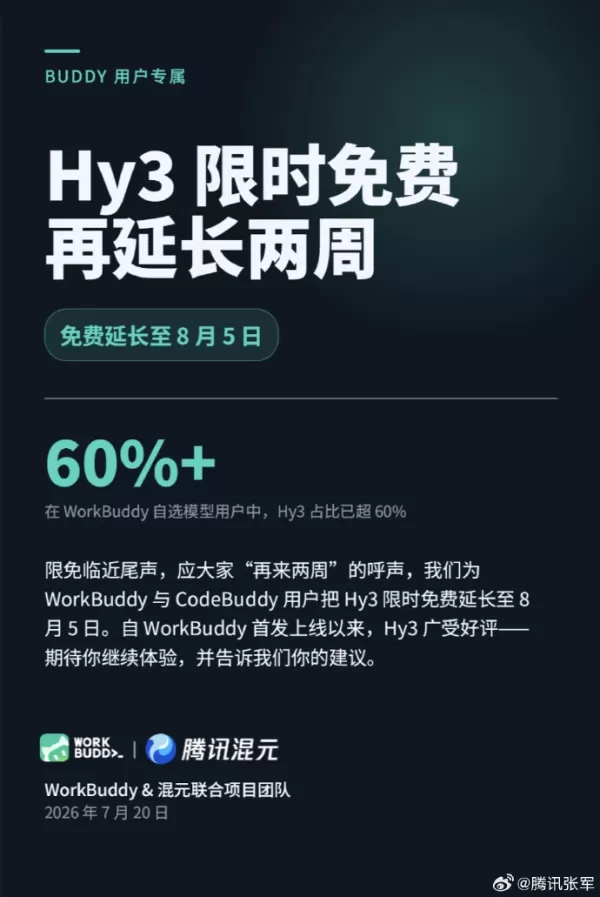 Tencent extends free access to Hunyuan Hy3, WorkBuddy and CodeBuddy users until August 5
Tencent has extended the free trial period for its Hy3 large language model. Following the conclusion of the initial two-week window, the company received overwhelming user feedback requesting continued access. In response, Tencent announced an exten

2026 Latest Top-rated AI Illustration Tools: Our curated list features the best powerfully designed tools for creating stunning editorial scenes and eye-catching cover art quickly. Each option has gone through rigorous real-world tests, offering a free vs paid comparison to help you find the perfect match for your workflow. Try these must-try solutions today to unlock your AI edge and boost your creative productivity. Explore now at XIX.AI.
10 tools
xix.ai

2026 Latest Top-Rated Best AI Tutors for Exam Prep are here on XIX.AI! Our curated list features powerful game-changing tools that offer free vs paid comparison, real-world tests, and weekly updated rankings. They help boost your writing efficiency, simplify complex topic learning, and unlock your academic potential. Explore now to Discover your perfect exam prep tool and Start creating today to Unlock your AI edge!
10 tools
xix.ai

2026 Latest Best Top-Rated AI Budget Planning Tools for Personal Money Management are here on XIX.AI! This curated collection features powerful, game-changing solutions that help you conduct real-world tests, understand spending habits, and create personalized plans to boost productivity. Enjoy a free vs paid comparison along with detailed rankings. Must-try tools designed to simplify money management and unlock your AI edge. Explore now!
11 tools
xix.ai

2026 Latest Best Top-Rated AI Sleep Tracking Assistants curated for ultimate recovery. This fully updated weekly guide features powerful tools that deliver real-world tests, free vs paid comparison, and detailed rankings to help you find the must-try solution that boosts sleep quality and supports better bedtime habits. Explore now at XIX.AI to Unlock your AI edge.
10 tools
xix.ai

2026 Latest Best Top-Rated AI SQL Copilots for Product and Revenue Analytics! XIX.AI has curated a powerful, game-changing collection of must-try tools that undergo real-world tests through weekly updated rankings. These tools help users boost productivity significantly by accelerating data analysis, streamlining complex queries, and generating accurate insights to drive smarter business decisions. Explore now to Discover your perfect tool for unlocking your AI edge!
14 tools
xix.ai

2026 Latest Best Top-Rated AI Homework Helpers That Teach Core Concepts Not Just Answers Powerful Tools for Students Must-Try Curated List Weekly Updated Free vs Paid Comparison Real-World Tests Accurate Rankings to Help You Unlock Your Full Learning Potential Explore now to Discover your perfect tool for smarter studying.
10 tools
xix.ai












