


 Home
HomeCan AI Trading Bots Outperform Human Traders?
Artificial intelligence is rapidly reshaping financial trading, with AI-powered bots now analyzing market data, executing trades, and potentially outperforming human traders. This article examines whether AI can truly surpass human intellect in this high-stakes environment, exploring the capabilities, benefits, and inherent limitations of automated trading systems to provide a clear perspective on their operation and profit potential.
Key Points
AI trading systems leverage sophisticated algorithms to scrutinize market information.
Their objective is to execute trading decisions more swiftly and logically than human counterparts.
These systems can analyze enormous volumes of both historical and live market data.
Operating continuously without emotional influence, AI bots trade 24/7.
Effectiveness hinges on programming quality and prevailing market dynamics.
Algorithmic systems frequently generate signals with impressive success rates.
Traders must still monitor and interpret the insights provided by these AI tools.
Understanding AI Trading Bots
What are AI Trading Bots?
AI trading bots represent sophisticated software that automates the buying and selling of financial assets using artificial intelligence. These systems are engineered to process market data, detect patterns, and execute transactions according to pre-established rules. The fundamental aim is to enhance decision-making speed and efficiency while eliminating emotional bias and seizing market opportunities.

These automated systems process historical records, real-time market movements, and technical indicators to produce trading signals. Capable of functioning around the clock without constant human oversight, they employ machine learning, neural networks, and statistical analysis to refine performance and adjust to market fluctuations.
Through AI implementation, these systems target profitable opportunities with precision and speed. However, their success remains contingent on programming excellence, data accuracy, and market volatility. AI trading systems deliver algorithmic insights that require human interpretation - for instance, fractal indicators can suggest potential chart directions. The ultimate objective is for artificial intelligence to enhance human trading capabilities and improve profitability.
How Do They Work?
AI trading systems function through predefined rules and algorithms governing asset transactions. The operational process typically involves:
- Data Gathering: Collecting extensive information from diverse sources including price movements, trading volumes, economic indicators, and news feeds.
- Information Analysis: Employing AI algorithms to examine collected data for patterns, trends, and potential trading setups.
- Signal Creation: Generating trade signals based on analytical outcomes indicating optimal entry and exit points.
- Trade Implementation: Automatically executing transactions through broker connections while managing open positions.
- System Optimization: Continuously refining strategies using machine learning techniques to enhance accuracy and returns.
These automated systems can be programmed for various strategies including trend following, arbitrage, mean reversion, and high-frequency trading. Combining fractal indicators with AI analysis can offer additional perspective on market momentum for improved decision-making.
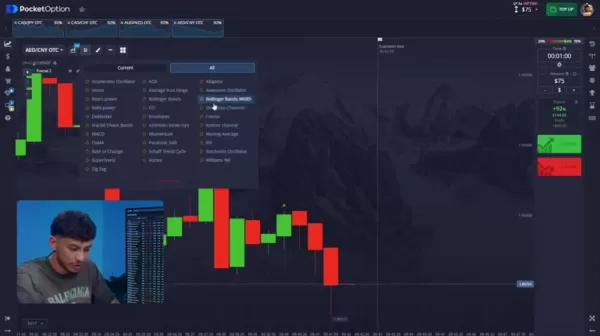
AI-Powered Trading Bot Development and Performance
The Development Process
Creating an effective AI trading system demands significant expertise in both finance and artificial intelligence, representing a complex development undertaking.
The development cycle generally includes these phases:
- Strategy Formulation: Defining the specific trading approach and operational rules.
- Data Preparation: Sourcing and processing necessary information for system training and validation.
- Algorithm Construction: Developing AI mechanisms for data analysis and signal generation.
- Historical Testing: Evaluating system performance against past market data to assess profitability and risk.
- System Refinement: Adjusting parameters and strategies to optimize outcomes.
- Live Implementation: Deploying the system on active trading platforms with real-time monitoring.
- Ongoing Maintenance: Regularly updating algorithms and strategies to maintain market relevance.
Developing a sophisticated trading bot typically requires collaboration among financial experts, data scientists, and software engineers. Professional trader Nathan highlights the team-based development approach involving traders, developers, and programmers, emphasizing the specialized knowledge required for effective AI trading solutions. This comprehensive process can yield remarkably high success rates, potentially exceeding 90%.
Real-World AI Bot Performance
Performance outcomes vary significantly based on system design, implementation quality, and market conditions. While some systems demonstrate consistent profitability, others may experience substantial losses. Success depends on strategic planning, rigorous testing, and continuous optimization.
Illustrating practical application, professional trader Nathan demonstrates a sample session beginning with a $75 investment.
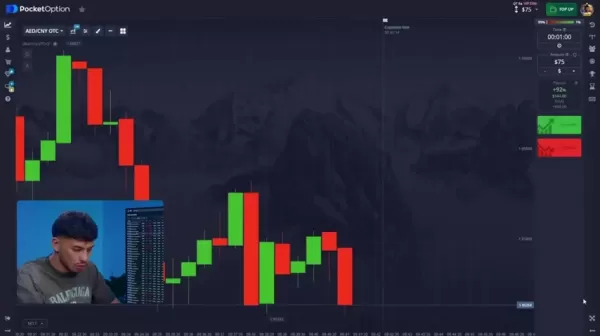
He illustrates how the system generates signals and projections, verified through fractal indicators, leading to a potential $144 profit. By compounding gains and acting on subsequent AI-generated insights, he achieves progressively higher returns.
Despite promising results, AI trading doesn't guarantee profits. Market conditions can shift rapidly, and even advanced algorithms may underperform during certain periods. Therefore, cautious approach, comprehensive research, and careful risk management remain essential.
How to Use an AI Trading Bot
Setting Up the Platform
Implementing an AI trading system requires initial configuration and setup. Follow these steps:
- Platform Selection: Choose a trading platform supporting automation and offering access to desired markets, such as MetaTrader 4/5 or Interactive Brokers.
- Bot Selection: Research and select an AI trading system aligned with your objectives and risk tolerance, considering historical performance, strategies, and costs.
- Configuration: Adjust system settings including target markets, trading strategies, and risk parameters.
- Broker Connection: Link the system to your brokerage account with appropriate trade execution permissions.
- Performance Monitoring: Closely track trade execution, profitability, and risk exposure, making adjustments as needed.
As referenced in demonstration materials, numerous resources exist to assist with setup procedures. Seek instructional guides and community support during initial implementation.
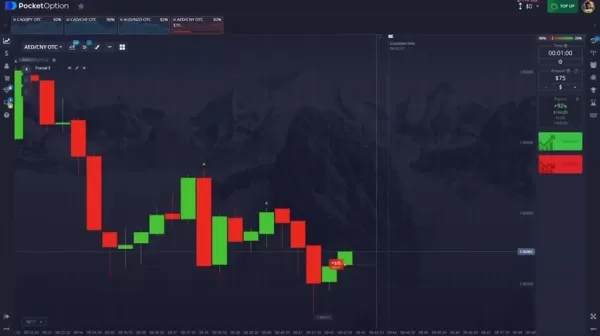
Step-by-Step Trading Session
Before commencing trading, ensure proper platform configuration with appropriate settings.

Setting the fractal indicator to '3' provides additional insight into chart momentum. The presenter participates in a Telegram channel delivering AI system information. From this resource, select your primary trading instruments. Follow system signals and use indicator confirmation to determine 'Higher' or 'Lower' positioning. Adhering closely to these procedures increases success probability. Independent trading without system guidance is not recommended.
AI Trading Bot Pricing
Cost Considerations
Pricing for AI trading systems varies considerably based on complexity, features, and provider. Some systems offer free access while others require subscriptions or one-time purchases. Evaluate costs against potential profitability, including additional expenses like data feeds and brokerage commissions.
As shown in demonstrations, initial access may be available without charge.

This allows testing AI capabilities without upfront investment, though premium features or continued access might eventually require payment.
Pros and Cons
Pros
Operational Speed: AI systems process information and execute trades significantly faster than humans.
Emotional Neutrality: Elimination of emotional bias leads to more rational decision processes.
Continuous Operation: 24/7 functionality captures opportunities across global time zones.
Scalable Management: Capability to handle multiple accounts and diverse markets simultaneously.
Historical Validation: Enables thorough strategy testing against past market data.
High Success Potential: Properly developed systems can achieve exceptional win rates.
Rapid Results: Trading sessions often conclude in under ten minutes.
Cons
Technical Complexity: Requires specialized programming knowledge for development and maintenance.
Data Reliance: Performance depends on accurate, reliable data sources.
Volatility Challenges: May struggle during highly unpredictable market conditions.
Risk Management Demands: Careful oversight necessary to prevent significant losses.
Intuition Limitations: Might overlook subtle market nuances detectable by human traders.
Dependency Risks: Over-reliance on system insights can create issues during malfunctions or incorrect signals.
Core Features of High-Performing AI Trading Bots
Key Characteristics
Top-performing AI trading systems typically share these essential attributes:
- Advanced Algorithmic Design: Utilization of sophisticated AI techniques including machine learning and neural networks.
- Real-Time Processing: Ability to handle substantial live data streams for rapid market response.
- Customization Options: Flexible strategies and risk parameters tailored to individual preferences.
- Comprehensive Backtesting: Robust historical performance evaluation and strategy refinement capabilities.
- Integrated Risk Controls: Incorporation of stop-loss orders and position sizing mechanisms.
- Automated Execution: Seamless trade implementation based on generated signals.
- Adaptive Learning: Continuous strategy improvement through machine learning from past performance.
- Momentum Indicators: Fractal analysis provides additional chart momentum insights for combined traditional and AI trading approaches.
Use Cases of AI Trading Bots
Who Can Benefit?
AI trading systems serve various trading scenarios and participant types:
- Day Traders: Identify and capitalize on short-term opportunities with speed and precision.
- Swing Traders: Assist in capturing medium-term price movements while managing risk.
- Long-Term Investors: Support portfolio management through trend analysis and asset valuation.
- Institutional Funds: Automate complex strategies and risk management across multiple asset classes.
- Retail Investors: Provide access to sophisticated tools typically available only to professional traders.
Overall, AI trading systems offer powerful automation capabilities for improving decision-making and potential profitability. However, they require careful implementation, ongoing monitoring, and disciplined risk management for optimal results.
Frequently Asked Questions (FAQ)
Are AI trading bots profitable?
Profitability varies based on programming quality, data accuracy, and market conditions. While some systems generate consistent returns, others may incur losses. Comprehensive research and disciplined risk management are crucial considerations.
Are AI trading bots suitable for beginners?
These systems can be complex to implement, requiring understanding of financial markets and technical concepts. Novice traders might find effective usage challenging without proper guidance, though user-friendly options and educational resources are available.
What are the risks associated with AI trading bots?
Risks mirror those of conventional trading, including market volatility, technical failures, and programming errors. Risk mitigation through stop-loss orders, portfolio diversification, and continuous monitoring is essential.
Can AI trading bots predict the future?
AI systems cannot predict future market movements with certainty. They analyze historical patterns and current conditions to generate probabilistic signals. Accuracy depends on data quality and algorithmic effectiveness, with performance fluctuating across market environments.
Where can I find a reliable AI trading bot?
Numerous systems are available, though reliability varies significantly. Research different options, examine performance histories, evaluate strategies, and assess costs. Select reputable providers offering transparent pricing and quality customer support.
Related Questions
How does AI transform trading strategies?
AI revolutionizes trading approaches through enhanced analytical capabilities, accelerated processing, and improved decision accuracy. Machine learning algorithms identify complex patterns in vast datasets, enabling more informed and timely transactions. Automated systems operate continuously without emotional interference or human error. Adaptive AI mechanisms refine strategies based on real-time market feedback. While not flawless, AI empowers traders with sophisticated tools for performance optimization and risk control. Algorithmic systems excel by removing emotional factors and analyzing extensive historical data.
What are the latest trends in algorithmic trading?
The algorithmic trading landscape continuously evolves through advances in AI, data analytics, and computing power. Current developments include machine learning for predictive analysis, integration of alternative data sources, and cloud-based platform adoption for scalability. High-frequency trading remains prominent with competition for microsecond execution advantages. Sustainable algorithmic approaches incorporating environmental and social factors gain traction among conscious investors. Regulatory technology adoption increases for compliance with evolving financial regulations.The following compares algorithmic trading with and without AI integration:
Related article
 DeepMind CEO Hassabis: I sleep six hours a day, usually feel energetic around 1 a.m.
Fortune recently featured an interview with Demis Hassabis, CEO of Google DeepMind, revealing his unconventional approach to rest and productivity. Hassabis disclosed that he sleeps very little, structuring his waking hours into two distinct work blo
OpenAI, Anthropic Vie for Market Share Despite Revenue Shortfalls
Despite recent reports suggesting OpenAI missed revenue targets, creating pressure on tech stocks this Tuesday, private AI lab investors remain resilient. Seasoned backers have confirmed they will not reduce investment despite negative media coverage
California AV Compliance: A New Era of Tickets, Geofences, and 1M Miles
Guident operates an AuveTech shuttle in South Florida, managing a four-mile route in West Palm Beach and a one-mile route in Boca Raton using its remote monitoring technology. | Credit: GuidentCalifornia is redefining the regulatory landscape for dri
Related Special Topic Recommendations
chatbot
DeepMind CEO Hassabis: I sleep six hours a day, usually feel energetic around 1 a.m.
Fortune recently featured an interview with Demis Hassabis, CEO of Google DeepMind, revealing his unconventional approach to rest and productivity. Hassabis disclosed that he sleeps very little, structuring his waking hours into two distinct work blo
OpenAI, Anthropic Vie for Market Share Despite Revenue Shortfalls
Despite recent reports suggesting OpenAI missed revenue targets, creating pressure on tech stocks this Tuesday, private AI lab investors remain resilient. Seasoned backers have confirmed they will not reduce investment despite negative media coverage
California AV Compliance: A New Era of Tickets, Geofences, and 1M Miles
Guident operates an AuveTech shuttle in South Florida, managing a four-mile route in West Palm Beach and a one-mile route in Boca Raton using its remote monitoring technology. | Credit: GuidentCalifornia is redefining the regulatory landscape for dri
Related Special Topic Recommendations
chatbot
 Best AI Roleplay Chat Apps for Language Practice, Interview Prep, and Daily Fluency
2026 Latest Best Top-rated AI Roleplay Chat Apps for Language Practice, Interview Prep, and Daily Fluency! XIX.AI curates a powerful game-changing collection that offers free vs paid comparison, real-world tests, and updated rankings weekly. These must-try tools help you boost writing skills, overcome fluency challenges, and improve communication efficiency across all daily scenarios. Explore now to discover your perfect tool for language growth!
 10 tools
 xix.ai
Music composition
AI Stem Separation Tools for Remix Production, Sampling Prep, and Karaoke Masters
xix.ai
Music composition
AI Stem Separation Tools for Remix Production, Sampling Prep, and Karaoke Masters
2026 Latest Best Top-rated AI Stem Separation Tools Curated for Remix Production, Sampling Prep, and Karaoke Masters. These powerful game-changing tools offer real-world tests to deliver precise audio isolation, boosting productivity significantly. XIX.AI provides a weekly updated free vs paid comparison guide to help you find the must-try solution that suits your needs. Explore now to unlock your AI edge.
8 tools
xix.ai
Data Analysis
AI SQL Copilots for Revenue Dashboards, Funnel Analysis, and Product Metrics
2026 Latest Best AI SQL Copilots Ranked Top-Rated! XIX.AI curates a powerful game-changing collection for weekly updated real-world tests. These must-try tools help you generate accurate revenue dashboards, analyze sales funnels, and track product metrics swiftly, boosting productivity massively. Explore now to Discover your perfect tool for data-driven decision making! 238 characters
9 tools
xix.ai
Music composition
Best AI Melody Writing Tools for Song Drafts
2026 Latest Best Top-Rated AI Melody Writing Tools for Song Drafts! XIX.AI has curated a highly powerful game-changing collection that goes through rigorous real-world tests to deliver the best writing experience. You can find detailed free vs paid comparisons, accurate rankings, and must-try options designed to help you create stunning song drafts effortlessly and boost your creative productivity significantly. Explore now to discover your perfect tool!
8 tools
xix.ai
chatbot
Best AI Conversation Trainer Tools for Interview Practice
2026 Latest Best Top-rated AI Conversation Trainer Tools for Interview Practice are here on XIX.AI! This curated collection features powerful, game-changing tools that go through rigorous real-world tests to deliver accurate feedback. You’ll find a free vs paid comparison and detailed rankings to help you choose the must-try option that boosts your confidence and skills. Explore now to Discover your perfect tool for interview success!
12 tools
xix.ai
Design & Art
Best AI Style Transfer Tools for Creative Experiments
2026 Latest Best Top-rated AI Style Transfer Tools for Creative Experiments! XIX.AI has curated a powerful, game-changing collection of must-try tools that deliver exceptional results through real-world tests and rigorous rankings. These top solutions help creatives boost productivity significantly by accelerating content creation and unlocking endless creative possibilities. Explore now to discover your perfect tool and start creating today!
9 tools
xix.ai

 Comments (2)
0/500
Comments (2)
0/500
![DavidRodriguez]()
Also ich finde den Hype um Trading-Bots etwas übertrieben. Klar, die können Muster schneller erkennen, aber bei einem plötzlichen Marktcrash oder unerwarteten Nachrichten fehlt ihnen doch das menschliche Bauchgefühl und die Anpassungsfähigkeit. Letztendlich sind es ja auch nur Menschen, die die Algorithmen programmieren. Spannendes Thema trotzdem! 🤖📉
![NicholasSanchez]()
這篇文章點出一個關鍵問題:AI交易機器人真的能超越人類嗎?我覺得在數據處理和執行速度上,AI確實有優勢,但市場充滿不確定性和情緒因素,人類的直覺和經驗可能還是無法完全被取代。不過,未來兩者結合或許才是最佳解?🤔
Artificial intelligence is rapidly reshaping financial trading, with AI-powered bots now analyzing market data, executing trades, and potentially outperforming human traders. This article examines whether AI can truly surpass human intellect in this high-stakes environment, exploring the capabilities, benefits, and inherent limitations of automated trading systems to provide a clear perspective on their operation and profit potential.
Key Points
AI trading systems leverage sophisticated algorithms to scrutinize market information.
Their objective is to execute trading decisions more swiftly and logically than human counterparts.
These systems can analyze enormous volumes of both historical and live market data.
Operating continuously without emotional influence, AI bots trade 24/7.
Effectiveness hinges on programming quality and prevailing market dynamics.
Algorithmic systems frequently generate signals with impressive success rates.
Traders must still monitor and interpret the insights provided by these AI tools.
Understanding AI Trading Bots
What are AI Trading Bots?
AI trading bots represent sophisticated software that automates the buying and selling of financial assets using artificial intelligence. These systems are engineered to process market data, detect patterns, and execute transactions according to pre-established rules. The fundamental aim is to enhance decision-making speed and efficiency while eliminating emotional bias and seizing market opportunities.
These automated systems process historical records, real-time market movements, and technical indicators to produce trading signals. Capable of functioning around the clock without constant human oversight, they employ machine learning, neural networks, and statistical analysis to refine performance and adjust to market fluctuations.
Through AI implementation, these systems target profitable opportunities with precision and speed. However, their success remains contingent on programming excellence, data accuracy, and market volatility. AI trading systems deliver algorithmic insights that require human interpretation - for instance, fractal indicators can suggest potential chart directions. The ultimate objective is for artificial intelligence to enhance human trading capabilities and improve profitability.
How Do They Work?
AI trading systems function through predefined rules and algorithms governing asset transactions. The operational process typically involves:
- Data Gathering: Collecting extensive information from diverse sources including price movements, trading volumes, economic indicators, and news feeds.
- Information Analysis: Employing AI algorithms to examine collected data for patterns, trends, and potential trading setups.
- Signal Creation: Generating trade signals based on analytical outcomes indicating optimal entry and exit points.
- Trade Implementation: Automatically executing transactions through broker connections while managing open positions.
- System Optimization: Continuously refining strategies using machine learning techniques to enhance accuracy and returns.
These automated systems can be programmed for various strategies including trend following, arbitrage, mean reversion, and high-frequency trading. Combining fractal indicators with AI analysis can offer additional perspective on market momentum for improved decision-making.
AI-Powered Trading Bot Development and Performance
The Development Process
Creating an effective AI trading system demands significant expertise in both finance and artificial intelligence, representing a complex development undertaking.
The development cycle generally includes these phases:
- Strategy Formulation: Defining the specific trading approach and operational rules.
- Data Preparation: Sourcing and processing necessary information for system training and validation.
- Algorithm Construction: Developing AI mechanisms for data analysis and signal generation.
- Historical Testing: Evaluating system performance against past market data to assess profitability and risk.
- System Refinement: Adjusting parameters and strategies to optimize outcomes.
- Live Implementation: Deploying the system on active trading platforms with real-time monitoring.
- Ongoing Maintenance: Regularly updating algorithms and strategies to maintain market relevance.
Developing a sophisticated trading bot typically requires collaboration among financial experts, data scientists, and software engineers. Professional trader Nathan highlights the team-based development approach involving traders, developers, and programmers, emphasizing the specialized knowledge required for effective AI trading solutions. This comprehensive process can yield remarkably high success rates, potentially exceeding 90%.
Real-World AI Bot Performance
Performance outcomes vary significantly based on system design, implementation quality, and market conditions. While some systems demonstrate consistent profitability, others may experience substantial losses. Success depends on strategic planning, rigorous testing, and continuous optimization.
Illustrating practical application, professional trader Nathan demonstrates a sample session beginning with a $75 investment.
He illustrates how the system generates signals and projections, verified through fractal indicators, leading to a potential $144 profit. By compounding gains and acting on subsequent AI-generated insights, he achieves progressively higher returns.
Despite promising results, AI trading doesn't guarantee profits. Market conditions can shift rapidly, and even advanced algorithms may underperform during certain periods. Therefore, cautious approach, comprehensive research, and careful risk management remain essential.
How to Use an AI Trading Bot
Setting Up the Platform
Implementing an AI trading system requires initial configuration and setup. Follow these steps:
- Platform Selection: Choose a trading platform supporting automation and offering access to desired markets, such as MetaTrader 4/5 or Interactive Brokers.
- Bot Selection: Research and select an AI trading system aligned with your objectives and risk tolerance, considering historical performance, strategies, and costs.
- Configuration: Adjust system settings including target markets, trading strategies, and risk parameters.
- Broker Connection: Link the system to your brokerage account with appropriate trade execution permissions.
- Performance Monitoring: Closely track trade execution, profitability, and risk exposure, making adjustments as needed.
As referenced in demonstration materials, numerous resources exist to assist with setup procedures. Seek instructional guides and community support during initial implementation.
Step-by-Step Trading Session
Before commencing trading, ensure proper platform configuration with appropriate settings.
Setting the fractal indicator to '3' provides additional insight into chart momentum. The presenter participates in a Telegram channel delivering AI system information. From this resource, select your primary trading instruments. Follow system signals and use indicator confirmation to determine 'Higher' or 'Lower' positioning. Adhering closely to these procedures increases success probability. Independent trading without system guidance is not recommended.
AI Trading Bot Pricing
Cost Considerations
Pricing for AI trading systems varies considerably based on complexity, features, and provider. Some systems offer free access while others require subscriptions or one-time purchases. Evaluate costs against potential profitability, including additional expenses like data feeds and brokerage commissions.
As shown in demonstrations, initial access may be available without charge.
This allows testing AI capabilities without upfront investment, though premium features or continued access might eventually require payment.
Pros and Cons
Pros
Operational Speed: AI systems process information and execute trades significantly faster than humans.
Emotional Neutrality: Elimination of emotional bias leads to more rational decision processes.
Continuous Operation: 24/7 functionality captures opportunities across global time zones.
Scalable Management: Capability to handle multiple accounts and diverse markets simultaneously.
Historical Validation: Enables thorough strategy testing against past market data.
High Success Potential: Properly developed systems can achieve exceptional win rates.
Rapid Results: Trading sessions often conclude in under ten minutes.
Cons
Technical Complexity: Requires specialized programming knowledge for development and maintenance.
Data Reliance: Performance depends on accurate, reliable data sources.
Volatility Challenges: May struggle during highly unpredictable market conditions.
Risk Management Demands: Careful oversight necessary to prevent significant losses.
Intuition Limitations: Might overlook subtle market nuances detectable by human traders.
Dependency Risks: Over-reliance on system insights can create issues during malfunctions or incorrect signals.
Core Features of High-Performing AI Trading Bots
Key Characteristics
Top-performing AI trading systems typically share these essential attributes:
- Advanced Algorithmic Design: Utilization of sophisticated AI techniques including machine learning and neural networks.
- Real-Time Processing: Ability to handle substantial live data streams for rapid market response.
- Customization Options: Flexible strategies and risk parameters tailored to individual preferences.
- Comprehensive Backtesting: Robust historical performance evaluation and strategy refinement capabilities.
- Integrated Risk Controls: Incorporation of stop-loss orders and position sizing mechanisms.
- Automated Execution: Seamless trade implementation based on generated signals.
- Adaptive Learning: Continuous strategy improvement through machine learning from past performance.
- Momentum Indicators: Fractal analysis provides additional chart momentum insights for combined traditional and AI trading approaches.
Use Cases of AI Trading Bots
Who Can Benefit?
AI trading systems serve various trading scenarios and participant types:
- Day Traders: Identify and capitalize on short-term opportunities with speed and precision.
- Swing Traders: Assist in capturing medium-term price movements while managing risk.
- Long-Term Investors: Support portfolio management through trend analysis and asset valuation.
- Institutional Funds: Automate complex strategies and risk management across multiple asset classes.
- Retail Investors: Provide access to sophisticated tools typically available only to professional traders.
Overall, AI trading systems offer powerful automation capabilities for improving decision-making and potential profitability. However, they require careful implementation, ongoing monitoring, and disciplined risk management for optimal results.
Frequently Asked Questions (FAQ)
Are AI trading bots profitable?
Profitability varies based on programming quality, data accuracy, and market conditions. While some systems generate consistent returns, others may incur losses. Comprehensive research and disciplined risk management are crucial considerations.
Are AI trading bots suitable for beginners?
These systems can be complex to implement, requiring understanding of financial markets and technical concepts. Novice traders might find effective usage challenging without proper guidance, though user-friendly options and educational resources are available.
What are the risks associated with AI trading bots?
Risks mirror those of conventional trading, including market volatility, technical failures, and programming errors. Risk mitigation through stop-loss orders, portfolio diversification, and continuous monitoring is essential.
Can AI trading bots predict the future?
AI systems cannot predict future market movements with certainty. They analyze historical patterns and current conditions to generate probabilistic signals. Accuracy depends on data quality and algorithmic effectiveness, with performance fluctuating across market environments.
Where can I find a reliable AI trading bot?
Numerous systems are available, though reliability varies significantly. Research different options, examine performance histories, evaluate strategies, and assess costs. Select reputable providers offering transparent pricing and quality customer support.
Related Questions
How does AI transform trading strategies?
AI revolutionizes trading approaches through enhanced analytical capabilities, accelerated processing, and improved decision accuracy. Machine learning algorithms identify complex patterns in vast datasets, enabling more informed and timely transactions. Automated systems operate continuously without emotional interference or human error. Adaptive AI mechanisms refine strategies based on real-time market feedback. While not flawless, AI empowers traders with sophisticated tools for performance optimization and risk control. Algorithmic systems excel by removing emotional factors and analyzing extensive historical data.
What are the latest trends in algorithmic trading?
The algorithmic trading landscape continuously evolves through advances in AI, data analytics, and computing power. Current developments include machine learning for predictive analysis, integration of alternative data sources, and cloud-based platform adoption for scalability. High-frequency trading remains prominent with competition for microsecond execution advantages. Sustainable algorithmic approaches incorporating environmental and social factors gain traction among conscious investors. Regulatory technology adoption increases for compliance with evolving financial regulations.The following compares algorithmic trading with and without AI integration:








 DeepMind CEO Hassabis: I sleep six hours a day, usually feel energetic around 1 a.m.
Fortune recently featured an interview with Demis Hassabis, CEO of Google DeepMind, revealing his unconventional approach to rest and productivity. Hassabis disclosed that he sleeps very little, structuring his waking hours into two distinct work blo
DeepMind CEO Hassabis: I sleep six hours a day, usually feel energetic around 1 a.m.
Fortune recently featured an interview with Demis Hassabis, CEO of Google DeepMind, revealing his unconventional approach to rest and productivity. Hassabis disclosed that he sleeps very little, structuring his waking hours into two distinct work blo
 OpenAI, Anthropic Vie for Market Share Despite Revenue Shortfalls
Despite recent reports suggesting OpenAI missed revenue targets, creating pressure on tech stocks this Tuesday, private AI lab investors remain resilient. Seasoned backers have confirmed they will not reduce investment despite negative media coverage
California AV Compliance: A New Era of Tickets, Geofences, and 1M Miles
Guident operates an AuveTech shuttle in South Florida, managing a four-mile route in West Palm Beach and a one-mile route in Boca Raton using its remote monitoring technology. | Credit: GuidentCalifornia is redefining the regulatory landscape for dri
OpenAI, Anthropic Vie for Market Share Despite Revenue Shortfalls
Despite recent reports suggesting OpenAI missed revenue targets, creating pressure on tech stocks this Tuesday, private AI lab investors remain resilient. Seasoned backers have confirmed they will not reduce investment despite negative media coverage
California AV Compliance: A New Era of Tickets, Geofences, and 1M Miles
Guident operates an AuveTech shuttle in South Florida, managing a four-mile route in West Palm Beach and a one-mile route in Boca Raton using its remote monitoring technology. | Credit: GuidentCalifornia is redefining the regulatory landscape for dri

2026 Latest Best Top-rated AI Roleplay Chat Apps for Language Practice, Interview Prep, and Daily Fluency! XIX.AI curates a powerful game-changing collection that offers free vs paid comparison, real-world tests, and updated rankings weekly. These must-try tools help you boost writing skills, overcome fluency challenges, and improve communication efficiency across all daily scenarios. Explore now to discover your perfect tool for language growth!
10 tools
xix.ai

2026 Latest Best Top-rated AI Stem Separation Tools Curated for Remix Production, Sampling Prep, and Karaoke Masters. These powerful game-changing tools offer real-world tests to deliver precise audio isolation, boosting productivity significantly. XIX.AI provides a weekly updated free vs paid comparison guide to help you find the must-try solution that suits your needs. Explore now to unlock your AI edge.
8 tools
xix.ai

2026 Latest Best AI SQL Copilots Ranked Top-Rated! XIX.AI curates a powerful game-changing collection for weekly updated real-world tests. These must-try tools help you generate accurate revenue dashboards, analyze sales funnels, and track product metrics swiftly, boosting productivity massively. Explore now to Discover your perfect tool for data-driven decision making! 238 characters
9 tools
xix.ai

2026 Latest Best Top-Rated AI Melody Writing Tools for Song Drafts! XIX.AI has curated a highly powerful game-changing collection that goes through rigorous real-world tests to deliver the best writing experience. You can find detailed free vs paid comparisons, accurate rankings, and must-try options designed to help you create stunning song drafts effortlessly and boost your creative productivity significantly. Explore now to discover your perfect tool!
8 tools
xix.ai

2026 Latest Best Top-rated AI Conversation Trainer Tools for Interview Practice are here on XIX.AI! This curated collection features powerful, game-changing tools that go through rigorous real-world tests to deliver accurate feedback. You’ll find a free vs paid comparison and detailed rankings to help you choose the must-try option that boosts your confidence and skills. Explore now to Discover your perfect tool for interview success!
12 tools
xix.ai

2026 Latest Best Top-rated AI Style Transfer Tools for Creative Experiments! XIX.AI has curated a powerful, game-changing collection of must-try tools that deliver exceptional results through real-world tests and rigorous rankings. These top solutions help creatives boost productivity significantly by accelerating content creation and unlocking endless creative possibilities. Explore now to discover your perfect tool and start creating today!
9 tools
xix.ai

Also ich finde den Hype um Trading-Bots etwas übertrieben. Klar, die können Muster schneller erkennen, aber bei einem plötzlichen Marktcrash oder unerwarteten Nachrichten fehlt ihnen doch das menschliche Bauchgefühl und die Anpassungsfähigkeit. Letztendlich sind es ja auch nur Menschen, die die Algorithmen programmieren. Spannendes Thema trotzdem! 🤖📉
這篇文章點出一個關鍵問題:AI交易機器人真的能超越人類嗎?我覺得在數據處理和執行速度上,AI確實有優勢,但市場充滿不確定性和情緒因素,人類的直覺和經驗可能還是無法完全被取代。不過,未來兩者結合或許才是最佳解?🤔












