


 Home
HomeAI token futures trading set to launch soon

The next major market could revolve around LLM tokens, with financial institutions racing to build supporting infrastructure.
According to Reuters, the Shanghai Futures Exchange is developing a derivatives market for AI tokens. This follows separate announcements from CME Group and the Intercontinental Exchange, owner of the NYSE, that they are working on futures contracts for GPU rentals.
While the GPU market is still maturing, the wide range of companies using, selling, and renting GPUs has created a robust spot market for GPU rental, typically billed by the hour. AI Mining Co., which tracks daily GPU rental pricing across 28 marketplaces and cloud providers, reports median prices for Nvidia H100 GPUs ranging from $1.40 to $4.27 per hour across 13 marketplaces, while H200 GPUs average between $2.34 and $5 per hour across 10 marketplaces. Over the past seven days alone, average H100 prices have fluctuated between $2.79 and $3.33.
Though GPU markets are well established, token infrastructure remains underdeveloped. Tokens are the fundamental units of modern AI models, and major AI companies often price enterprise plans based on token usage. For instance, OpenAI charges $5 per million input tokens and $30 per million output tokens for its latest GPT‑5.5 API. Cloud providers like Amazon’s Bedrock are also adopting per‑token pricing.
This development coincides with an unprecedented expansion of AI infrastructure. Cloud service providers, private equity firms, and infrastructure companies have invested hundreds of billions in data centers, anticipating continued growth in demand for GPUs and compute. A new wave of global neocloud companies is also competing for a share of this demand, with some specializing in inference and others challenging giants like Oracle, AWS, and Google Cloud for AI company contracts.
By targeting AI tokens, the Shanghai exchange’s derivative product would be tied directly to how AI companies price their services, offering businesses, investors, and data center operators a way to hedge against compute costs.
Related article
 Clawdmeter transforms Claude Code usage data into a compact desktop dashboard
The tokenmaxxing trend in Silicon Valley now has its own physical device. A new open source project converts your Claude Code usage statistics into a compact desktop dashboard, enabling AI power users to monitor their consumption at a glance.Of cours
Reid Hoffman Addresses the 'Tokenmaxxing' Debate
Days after Meta shut down its internal "tokenmaxxing" dashboard following news of the AI leaderboard leaking to the press, LinkedIn co-founder and venture capitalist Reid Hoffman voiced support for the concept that has recently taken Silicon Valley b
DeepMind CEO Hassabis: I sleep six hours a day, usually feel energetic around 1 a.m.
Fortune recently featured an interview with Demis Hassabis, CEO of Google DeepMind, revealing his unconventional approach to rest and productivity. Hassabis disclosed that he sleeps very little, structuring his waking hours into two distinct work blo
Related Special Topic Recommendations
Music composition
Clawdmeter transforms Claude Code usage data into a compact desktop dashboard
The tokenmaxxing trend in Silicon Valley now has its own physical device. A new open source project converts your Claude Code usage statistics into a compact desktop dashboard, enabling AI power users to monitor their consumption at a glance.Of cours
Reid Hoffman Addresses the 'Tokenmaxxing' Debate
Days after Meta shut down its internal "tokenmaxxing" dashboard following news of the AI leaderboard leaking to the press, LinkedIn co-founder and venture capitalist Reid Hoffman voiced support for the concept that has recently taken Silicon Valley b
DeepMind CEO Hassabis: I sleep six hours a day, usually feel energetic around 1 a.m.
Fortune recently featured an interview with Demis Hassabis, CEO of Google DeepMind, revealing his unconventional approach to rest and productivity. Hassabis disclosed that he sleeps very little, structuring his waking hours into two distinct work blo
Related Special Topic Recommendations
Music composition
 AI Stem Separation Tools for Remix Production, Sampling Prep, and Karaoke Masters
2026 Latest Best Top-rated AI Stem Separation Tools Curated for Remix Production, Sampling Prep, and Karaoke Masters. These powerful game-changing tools offer real-world tests to deliver precise audio isolation, boosting productivity significantly. XIX.AI provides a weekly updated free vs paid comparison guide to help you find the must-try solution that suits your needs. Explore now to unlock your AI edge.
 8 tools
 xix.ai
Data Analysis
AI SQL Copilots for Revenue Dashboards, Funnel Analysis, and Product Metrics
xix.ai
Data Analysis
AI SQL Copilots for Revenue Dashboards, Funnel Analysis, and Product Metrics
2026 Latest Best AI SQL Copilots Ranked Top-Rated! XIX.AI curates a powerful game-changing collection for weekly updated real-world tests. These must-try tools help you generate accurate revenue dashboards, analyze sales funnels, and track product metrics swiftly, boosting productivity massively. Explore now to Discover your perfect tool for data-driven decision making! 238 characters
9 tools
xix.ai
Music composition
Best AI Melody Writing Tools for Song Drafts
2026 Latest Best Top-Rated AI Melody Writing Tools for Song Drafts! XIX.AI has curated a highly powerful game-changing collection that goes through rigorous real-world tests to deliver the best writing experience. You can find detailed free vs paid comparisons, accurate rankings, and must-try options designed to help you create stunning song drafts effortlessly and boost your creative productivity significantly. Explore now to discover your perfect tool!
8 tools
xix.ai
chatbot
Best AI Conversation Trainer Tools for Interview Practice
2026 Latest Best Top-rated AI Conversation Trainer Tools for Interview Practice are here on XIX.AI! This curated collection features powerful, game-changing tools that go through rigorous real-world tests to deliver accurate feedback. You’ll find a free vs paid comparison and detailed rankings to help you choose the must-try option that boosts your confidence and skills. Explore now to Discover your perfect tool for interview success!
12 tools
xix.ai
Design & Art
Best AI Style Transfer Tools for Creative Experiments
2026 Latest Best Top-rated AI Style Transfer Tools for Creative Experiments! XIX.AI has curated a powerful, game-changing collection of must-try tools that deliver exceptional results through real-world tests and rigorous rankings. These top solutions help creatives boost productivity significantly by accelerating content creation and unlocking endless creative possibilities. Explore now to discover your perfect tool and start creating today!
9 tools
xix.ai
Comic Creation
Best AI Dialogue Bubble Tools for Visual Storytelling
2026 Latest Best Top-Rated AI Dialogue Bubble Tools for Visual Storytelling are here on XIX.AI! This curated collection features powerful, game-changing tools that help creators boost productivity and overcome creative bottlenecks. Get a free vs paid comparison, see real-world tests, and check the latest rankings to find the must-try solutions perfect for crafting engaging visual narratives. Explore now to discover your ideal tool!
10 tools
xix.ai

 Comments (0)
0/500
Comments (0)
0/500
The next major market could revolve around LLM tokens, with financial institutions racing to build supporting infrastructure.
According to Reuters, the Shanghai Futures Exchange is developing a derivatives market for AI tokens. This follows separate announcements from CME Group and the Intercontinental Exchange, owner of the NYSE, that they are working on futures contracts for GPU rentals.
While the GPU market is still maturing, the wide range of companies using, selling, and renting GPUs has created a robust spot market for GPU rental, typically billed by the hour. AI Mining Co., which tracks daily GPU rental pricing across 28 marketplaces and cloud providers, reports median prices for Nvidia H100 GPUs ranging from $1.40 to $4.27 per hour across 13 marketplaces, while H200 GPUs average between $2.34 and $5 per hour across 10 marketplaces. Over the past seven days alone, average H100 prices have fluctuated between $2.79 and $3.33.
Though GPU markets are well established, token infrastructure remains underdeveloped. Tokens are the fundamental units of modern AI models, and major AI companies often price enterprise plans based on token usage. For instance, OpenAI charges $5 per million input tokens and $30 per million output tokens for its latest GPT‑5.5 API. Cloud providers like Amazon’s Bedrock are also adopting per‑token pricing.
This development coincides with an unprecedented expansion of AI infrastructure. Cloud service providers, private equity firms, and infrastructure companies have invested hundreds of billions in data centers, anticipating continued growth in demand for GPUs and compute. A new wave of global neocloud companies is also competing for a share of this demand, with some specializing in inference and others challenging giants like Oracle, AWS, and Google Cloud for AI company contracts.
By targeting AI tokens, the Shanghai exchange’s derivative product would be tied directly to how AI companies price their services, offering businesses, investors, and data center operators a way to hedge against compute costs.








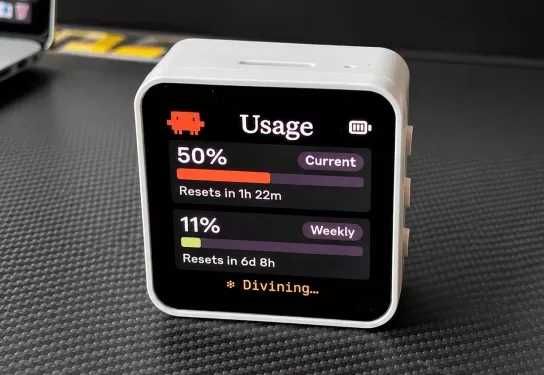 Clawdmeter transforms Claude Code usage data into a compact desktop dashboard
The tokenmaxxing trend in Silicon Valley now has its own physical device. A new open source project converts your Claude Code usage statistics into a compact desktop dashboard, enabling AI power users to monitor their consumption at a glance.Of cours
Clawdmeter transforms Claude Code usage data into a compact desktop dashboard
The tokenmaxxing trend in Silicon Valley now has its own physical device. A new open source project converts your Claude Code usage statistics into a compact desktop dashboard, enabling AI power users to monitor their consumption at a glance.Of cours
 Reid Hoffman Addresses the 'Tokenmaxxing' Debate
Days after Meta shut down its internal "tokenmaxxing" dashboard following news of the AI leaderboard leaking to the press, LinkedIn co-founder and venture capitalist Reid Hoffman voiced support for the concept that has recently taken Silicon Valley b
Reid Hoffman Addresses the 'Tokenmaxxing' Debate
Days after Meta shut down its internal "tokenmaxxing" dashboard following news of the AI leaderboard leaking to the press, LinkedIn co-founder and venture capitalist Reid Hoffman voiced support for the concept that has recently taken Silicon Valley b
 DeepMind CEO Hassabis: I sleep six hours a day, usually feel energetic around 1 a.m.
Fortune recently featured an interview with Demis Hassabis, CEO of Google DeepMind, revealing his unconventional approach to rest and productivity. Hassabis disclosed that he sleeps very little, structuring his waking hours into two distinct work blo
DeepMind CEO Hassabis: I sleep six hours a day, usually feel energetic around 1 a.m.
Fortune recently featured an interview with Demis Hassabis, CEO of Google DeepMind, revealing his unconventional approach to rest and productivity. Hassabis disclosed that he sleeps very little, structuring his waking hours into two distinct work blo
2026 Latest Best Top-rated AI Stem Separation Tools Curated for Remix Production, Sampling Prep, and Karaoke Masters. These powerful game-changing tools offer real-world tests to deliver precise audio isolation, boosting productivity significantly. XIX.AI provides a weekly updated free vs paid comparison guide to help you find the must-try solution that suits your needs. Explore now to unlock your AI edge.
8 tools
xix.ai
2026 Latest Best AI SQL Copilots Ranked Top-Rated! XIX.AI curates a powerful game-changing collection for weekly updated real-world tests. These must-try tools help you generate accurate revenue dashboards, analyze sales funnels, and track product metrics swiftly, boosting productivity massively. Explore now to Discover your perfect tool for data-driven decision making! 238 characters
9 tools
xix.ai

2026 Latest Best Top-Rated AI Melody Writing Tools for Song Drafts! XIX.AI has curated a highly powerful game-changing collection that goes through rigorous real-world tests to deliver the best writing experience. You can find detailed free vs paid comparisons, accurate rankings, and must-try options designed to help you create stunning song drafts effortlessly and boost your creative productivity significantly. Explore now to discover your perfect tool!
8 tools
xix.ai

2026 Latest Best Top-rated AI Conversation Trainer Tools for Interview Practice are here on XIX.AI! This curated collection features powerful, game-changing tools that go through rigorous real-world tests to deliver accurate feedback. You’ll find a free vs paid comparison and detailed rankings to help you choose the must-try option that boosts your confidence and skills. Explore now to Discover your perfect tool for interview success!
12 tools
xix.ai

2026 Latest Best Top-rated AI Style Transfer Tools for Creative Experiments! XIX.AI has curated a powerful, game-changing collection of must-try tools that deliver exceptional results through real-world tests and rigorous rankings. These top solutions help creatives boost productivity significantly by accelerating content creation and unlocking endless creative possibilities. Explore now to discover your perfect tool and start creating today!
9 tools
xix.ai

2026 Latest Best Top-Rated AI Dialogue Bubble Tools for Visual Storytelling are here on XIX.AI! This curated collection features powerful, game-changing tools that help creators boost productivity and overcome creative bottlenecks. Get a free vs paid comparison, see real-world tests, and check the latest rankings to find the must-try solutions perfect for crafting engaging visual narratives. Explore now to discover your ideal tool!
10 tools
xix.ai












