


 Home
Will Software Engineers Survive the AI Revolution?
The rise of artificial intelligence has led to widespread anxiety regarding job security, particularly within software engineering. While it's undeniable that AI will transform some roles, the situation is more complex than simple replacement. This article examines how AI is redefining the software engineering profession, highlighting the roles most vulnerable to change, the potential for AI to empower senior engineers, and practical strategies for adapting to ensure long-term relevance and competitiveness.
Key Takeaways
AI is expected to reshape software engineering, with entry-level positions being the most susceptible to automation.
Mid-level and senior engineers will likely see sustained demand, leveraging AI to boost their productivity and output.
Specializing in cybersecurity represents a strategic career path for engineers seeking to future-proof their skills.
The supply of high-quality data for training AI models may dwindle, presenting new challenges and opportunities.
Committing to continuous learning and adaptability is essential for software engineers to succeed in this new era.
The Changing Landscape of Software Engineering
The Impact of AI on Job Demand and Salaries

Current market data reveals a notable shift for software engineers. Demand is softening, salary growth is slowing, and the overall market expansion has cooled. These trends understandably cause concern, particularly for those new to the field. What is driving this change, and how can professionals adapt to secure their careers? The influence of AI tools like Claude and ChatGPT is a major factor. Many tasks traditionally assigned to junior engineers are now automated, reducing the need for entry-level hires. This evolution demands a reassessment of the skills and strategies required to stay competitive. Adopting AI is more than a cost-cutting tactic; it fundamentally changes which skills are most valuable. Adaptability and strategic insight are becoming as important as pure coding ability. The goal is to use AI to enhance your capabilities, not to be supplanted by it.
The Paradox of AI Efficiency: Jevons Paradox

Grasping Jevons Paradox is crucial to understanding AI's long-term impact. This economic principle states that improvements in a resource's efficiency can unexpectedly lead to greater overall consumption of that resource. In software engineering, if AI tools make development significantly faster and cheaper, the demand for software could surge, ultimately increasing the need for engineers—even after an initial disruption to junior roles. What long-term effects will AI have on the job market? Could this surge in efficiency unlock new demands and opportunities? Navigating this shift requires strategic career planning and skill development. Engineers who excel at complex problem-solving, innovation, and managing the ethical dimensions of AI will be best positioned to thrive. The profession is moving from repetitive coding toward higher-level strategic design and innovation, demanding a new skill set for the future.
The AI Training Data Shortage Challenge

A critical, often underestimated factor is the looming shortage of high-quality training data for AI models. An AI system's performance is directly tied to the data it learns from, which is historically derived from human solutions. As AI adoption grows, the pool of freely available, high-quality data is shrinking. Furthermore, as models are trained on this finite open data, they may also make it harder for human data scientists to solve novel problems, potentially stifling the creation of new training data. This data constraint will fundamentally shape how AI is applied in software engineering moving forward.
Transforming Skills to Thrive in the Age of AI
Embrace Cybersecurity: A Strategic Career Move

Building expertise in cybersecurity is a strategic career move for software engineers aiming to secure their future. In an age where AI can generate code rapidly, ensuring that code is secure becomes paramount. The ability to identify and remediate vulnerabilities in AI-generated output will be a highly valued skill, making cybersecurity knowledge indispensable. As blockchain technology becomes more widespread, the world will require skilled professionals to rigorously test its security. AI is ultimately a tool, and human expertise in cybersecurity is essential to control it. It's no longer just about writing code; it's about writing secure, ethical code. Continuous learning is non-negotiable. Staying current with the latest threats, vulnerabilities, and defense strategies will give you a competitive edge and make you an invaluable asset to any team.
Practical Steps to Future-Proof Your Career
Step 1: Continuous Education and Skill Upgradation

Make a commitment to lifelong learning. Enroll in courses, attend workshops, and pursue certifications in emerging technologies and security best practices. Platforms like Updraft offer tailored programs for Web3 developers, smart contract engineers, and security auditors.
Step 2: Embrace AI Tools and Experiment

Instead of avoiding AI tools, integrate them into your daily workflow. Proactively experiment with AI-powered code generators, debuggers, and testing suites to understand their strengths and weaknesses. The deeper your understanding of the tool, the more valuable you become.
Step 3: Focus on Strategic and Creative Tasks
Shift your focus from routine coding to strategic roles that demand problem-solving, system architecture, and high-level design planning. These are domains where human creativity, judgment, and expertise remain irreplaceable.
AI in Software Engineering: Weighing the Advantages and Disadvantages
Pros
Dramatically increased coding speed and efficiency
Automation of repetitive and mundane tasks
Frees up engineers for more strategic and innovative work
Helps in identifying and patching security vulnerabilities
Contributes to overall higher software quality
Cons
Potential displacement of jobs, especially at the junior level
Risk of generating code with inherent biases or inaccuracies
Over-dependence could lead to the erosion of fundamental skills
Raises significant ethical questions around data privacy and security
Creates a constant need for upskilling and adaptation
Transforming Smart Contracts with AI Audits
Competitive Security Audits: A Proactive Defense
Competitive security audits, exemplified by platforms like CodeHawks, represent a proactive approach to risk management. By incentivizing security researchers to uncover vulnerabilities in smart contracts, these platforms expose weaknesses before malicious actors can exploit them. This model effectively marries technological innovation with critical human expertise.
Frequently Asked Questions
Will AI completely replace software engineers?
No, a complete replacement is highly unlikely. The more probable outcome is AI automating routine tasks, which allows engineers to concentrate on higher-value work involving strategy, creativity, and complex problem-solving.
Which software engineering roles are most at risk from AI?
Junior-level positions focused on basic coding, bug fixes, and repetitive tasks are most vulnerable to AI automation. Roles that require critical thinking, architectural design, and specialized knowledge in areas like cybersecurity will continue to be in strong demand.
What skills should software engineers develop to stay competitive?
To stay ahead, engineers should cultivate expertise in cybersecurity, strategic system design, creative problem-solving, and maintain a mindset of continuous learning and adaptability.
How can AI assist senior software engineers?
AI can serve as a powerful accelerator for senior engineers, enabling them to architect more complex systems, identify and resolve more bugs during testing, write robust code more efficiently, and dedicate more time to security oversight and strategic planning.
Why is Cybersecurity becoming more important with AI?
With the proliferation of AI-generated code, ensuring its security is critical. Professionals skilled at identifying and mitigating vulnerabilities introduced or missed by AI will be essential for securing applications, networks, and sensitive data.
Other Questions to Consider
What are the long-term ethical implications of using AI in software engineering?
As AI assumes more development responsibilities, addressing ethical considerations becomes paramount. Algorithmic transparency, bias mitigation, and the societal impact on employment are all pressing issues. Concurrently, the open-source community may see a renaissance fueled by AI, capable of generating vast amounts of content. While this improves discoverability, it raises concerns about data sourcing and integrity. AI must not become a tool for data exploitation. This underscores the growing importance of responsible web data extraction—a low-code paradigm for ethically integrating and transforming data for applications. The central challenge is ensuring AI is used responsibly and ethically in software engineering. What standards, regulations, and frameworks are needed to guide its development and deployment? These questions require proactive and thoughtful engagement as the technology evolves. The focus must shift from fears of AI misusing data to building systems for responsible use. Through collaborative effort, the open-source community can help ensure AI contributes to, rather than depletes, the future pool of open knowledge and data.
Related article
 Meta Wants Your Next Gadget to Be Muse-Infused
Meta’s Muse, an AI assistant that handles travel bookings, form submissions, and shopping, has gained widespread adoption, yet a new initiative may especially intrigue developers and hardware enthusiasts.On Friday, Meta unveiled Muse Gadgets, an open
Wan-Streamer v0.2 delivers ultra-low latency AI chat
As modern technology advances rapidly, human-AI interaction is becoming more common. Traditional video calls often struggle with lag, delays, and audio-visual desynchronization. Wan-Streamer v0.2, the latest release from Tongyi Lab, overcomes these c
Meta Joins TSMC and Micron to Equip New Servers with Old Memory
As artificial intelligence adoption accelerates worldwide, next-generation DDR5 memory is experiencing a critical supply shortage. To avoid delays in AI data center deployments, Meta has partnered with industry leaders like TSMC and Micron to enginee
Related Special Topic Recommendations
Design & Art
 Top AI Illustration Tools: Create Editorial Scenes and Cover Art Faster
2026 Latest Top-rated AI Illustration Tools: Our curated list features the best powerfully designed tools for creating stunning editorial scenes and eye-catching cover art quickly. Each option has gone through rigorous real-world tests, offering a free vs paid comparison to help you find the perfect match for your workflow. Try these must-try solutions today to unlock your AI edge and boost your creative productivity. Explore now at XIX.AI.
 10 tools
 xix.ai
Education and Learning
Top AI Tutors for Exam Prep: Practice Math, Science, and English
2026 Latest Top-Rated Best AI Tutors for Exam Prep are here on XIX.AI! Our curated list features powerful game-changing tools that offer free vs paid comparison, real-world tests, and weekly updated rankings. They help boost your writing efficiency, simplify complex topic learning, and unlock your academic potential. Explore now to Discover your perfect exam prep tool and Start creating today to Unlock your AI edge!
10 tools
xix.ai
Finance
AI Budget Planning Tools for Personal Money Management
2026 Latest Best Top-Rated AI Budget Planning Tools for Personal Money Management are here on XIX.AI! This curated collection features powerful, game-changing solutions that help you conduct real-world tests, understand spending habits, and create personalized plans to boost productivity. Enjoy a free vs paid comparison along with detailed rankings. Must-try tools designed to simplify money management and unlock your AI edge. Explore now!
11 tools
xix.ai
Health & Wellness
AI Sleep Tracking Assistants: Improve Recovery with Better Bedtime Habits
2026 Latest Best Top-Rated AI Sleep Tracking Assistants curated for ultimate recovery. This fully updated weekly guide features powerful tools that deliver real-world tests, free vs paid comparison, and detailed rankings to help you find the must-try solution that boosts sleep quality and supports better bedtime habits. Explore now at XIX.AI to Unlock your AI edge.
10 tools
xix.ai
Data Analysis
AI SQL Copilots for Product and Revenue Analytics
2026 Latest Best Top-Rated AI SQL Copilots for Product and Revenue Analytics! XIX.AI has curated a powerful, game-changing collection of must-try tools that undergo real-world tests through weekly updated rankings. These tools help users boost productivity significantly by accelerating data analysis, streamlining complex queries, and generating accurate insights to drive smarter business decisions. Explore now to Discover your perfect tool for unlocking your AI edge!
14 tools
xix.ai
Education and Learning
Best AI Homework Helpers That Teach: Learn Concepts, Not Just Answers
2026 Latest Best Top-Rated AI Homework Helpers That Teach Core Concepts Not Just Answers Powerful Tools for Students Must-Try Curated List Weekly Updated Free vs Paid Comparison Real-World Tests Accurate Rankings to Help You Unlock Your Full Learning Potential Explore now to Discover your perfect tool for smarter studying.
10 tools
xix.ai

 Comments (1)
0/500
![AlbertAllen]()
Honestly, I think it's less about survival and more about adaptation. AI might kill junior dev roles, but senior engineers who understand system design and business logic will be even more valuable. Just look at how many new tools are popping up that actually make coding faster—it's not all doom and gloom. 🚀
The rise of artificial intelligence has led to widespread anxiety regarding job security, particularly within software engineering. While it's undeniable that AI will transform some roles, the situation is more complex than simple replacement. This article examines how AI is redefining the software engineering profession, highlighting the roles most vulnerable to change, the potential for AI to empower senior engineers, and practical strategies for adapting to ensure long-term relevance and competitiveness.
Key Takeaways
AI is expected to reshape software engineering, with entry-level positions being the most susceptible to automation.
Mid-level and senior engineers will likely see sustained demand, leveraging AI to boost their productivity and output.
Specializing in cybersecurity represents a strategic career path for engineers seeking to future-proof their skills.
The supply of high-quality data for training AI models may dwindle, presenting new challenges and opportunities.
Committing to continuous learning and adaptability is essential for software engineers to succeed in this new era.
The Changing Landscape of Software Engineering
The Impact of AI on Job Demand and Salaries
Current market data reveals a notable shift for software engineers. Demand is softening, salary growth is slowing, and the overall market expansion has cooled. These trends understandably cause concern, particularly for those new to the field. What is driving this change, and how can professionals adapt to secure their careers? The influence of AI tools like Claude and ChatGPT is a major factor. Many tasks traditionally assigned to junior engineers are now automated, reducing the need for entry-level hires. This evolution demands a reassessment of the skills and strategies required to stay competitive. Adopting AI is more than a cost-cutting tactic; it fundamentally changes which skills are most valuable. Adaptability and strategic insight are becoming as important as pure coding ability. The goal is to use AI to enhance your capabilities, not to be supplanted by it.
The Paradox of AI Efficiency: Jevons Paradox
Grasping Jevons Paradox is crucial to understanding AI's long-term impact. This economic principle states that improvements in a resource's efficiency can unexpectedly lead to greater overall consumption of that resource. In software engineering, if AI tools make development significantly faster and cheaper, the demand for software could surge, ultimately increasing the need for engineers—even after an initial disruption to junior roles. What long-term effects will AI have on the job market? Could this surge in efficiency unlock new demands and opportunities? Navigating this shift requires strategic career planning and skill development. Engineers who excel at complex problem-solving, innovation, and managing the ethical dimensions of AI will be best positioned to thrive. The profession is moving from repetitive coding toward higher-level strategic design and innovation, demanding a new skill set for the future.
The AI Training Data Shortage Challenge
A critical, often underestimated factor is the looming shortage of high-quality training data for AI models. An AI system's performance is directly tied to the data it learns from, which is historically derived from human solutions. As AI adoption grows, the pool of freely available, high-quality data is shrinking. Furthermore, as models are trained on this finite open data, they may also make it harder for human data scientists to solve novel problems, potentially stifling the creation of new training data. This data constraint will fundamentally shape how AI is applied in software engineering moving forward.
Transforming Skills to Thrive in the Age of AI
Embrace Cybersecurity: A Strategic Career Move
Building expertise in cybersecurity is a strategic career move for software engineers aiming to secure their future. In an age where AI can generate code rapidly, ensuring that code is secure becomes paramount. The ability to identify and remediate vulnerabilities in AI-generated output will be a highly valued skill, making cybersecurity knowledge indispensable. As blockchain technology becomes more widespread, the world will require skilled professionals to rigorously test its security. AI is ultimately a tool, and human expertise in cybersecurity is essential to control it. It's no longer just about writing code; it's about writing secure, ethical code. Continuous learning is non-negotiable. Staying current with the latest threats, vulnerabilities, and defense strategies will give you a competitive edge and make you an invaluable asset to any team.
Practical Steps to Future-Proof Your Career
Step 1: Continuous Education and Skill Upgradation
Make a commitment to lifelong learning. Enroll in courses, attend workshops, and pursue certifications in emerging technologies and security best practices. Platforms like Updraft offer tailored programs for Web3 developers, smart contract engineers, and security auditors.
Step 2: Embrace AI Tools and Experiment
Instead of avoiding AI tools, integrate them into your daily workflow. Proactively experiment with AI-powered code generators, debuggers, and testing suites to understand their strengths and weaknesses. The deeper your understanding of the tool, the more valuable you become.
Step 3: Focus on Strategic and Creative Tasks
Shift your focus from routine coding to strategic roles that demand problem-solving, system architecture, and high-level design planning. These are domains where human creativity, judgment, and expertise remain irreplaceable.
AI in Software Engineering: Weighing the Advantages and Disadvantages
Pros
Dramatically increased coding speed and efficiency
Automation of repetitive and mundane tasks
Frees up engineers for more strategic and innovative work
Helps in identifying and patching security vulnerabilities
Contributes to overall higher software quality
Cons
Potential displacement of jobs, especially at the junior level
Risk of generating code with inherent biases or inaccuracies
Over-dependence could lead to the erosion of fundamental skills
Raises significant ethical questions around data privacy and security
Creates a constant need for upskilling and adaptation
Transforming Smart Contracts with AI Audits
Competitive Security Audits: A Proactive Defense
Competitive security audits, exemplified by platforms like CodeHawks, represent a proactive approach to risk management. By incentivizing security researchers to uncover vulnerabilities in smart contracts, these platforms expose weaknesses before malicious actors can exploit them. This model effectively marries technological innovation with critical human expertise.
Frequently Asked Questions
Will AI completely replace software engineers?
No, a complete replacement is highly unlikely. The more probable outcome is AI automating routine tasks, which allows engineers to concentrate on higher-value work involving strategy, creativity, and complex problem-solving.
Which software engineering roles are most at risk from AI?
Junior-level positions focused on basic coding, bug fixes, and repetitive tasks are most vulnerable to AI automation. Roles that require critical thinking, architectural design, and specialized knowledge in areas like cybersecurity will continue to be in strong demand.
What skills should software engineers develop to stay competitive?
To stay ahead, engineers should cultivate expertise in cybersecurity, strategic system design, creative problem-solving, and maintain a mindset of continuous learning and adaptability.
How can AI assist senior software engineers?
AI can serve as a powerful accelerator for senior engineers, enabling them to architect more complex systems, identify and resolve more bugs during testing, write robust code more efficiently, and dedicate more time to security oversight and strategic planning.
Why is Cybersecurity becoming more important with AI?
With the proliferation of AI-generated code, ensuring its security is critical. Professionals skilled at identifying and mitigating vulnerabilities introduced or missed by AI will be essential for securing applications, networks, and sensitive data.
Other Questions to Consider
What are the long-term ethical implications of using AI in software engineering?
As AI assumes more development responsibilities, addressing ethical considerations becomes paramount. Algorithmic transparency, bias mitigation, and the societal impact on employment are all pressing issues. Concurrently, the open-source community may see a renaissance fueled by AI, capable of generating vast amounts of content. While this improves discoverability, it raises concerns about data sourcing and integrity. AI must not become a tool for data exploitation. This underscores the growing importance of responsible web data extraction—a low-code paradigm for ethically integrating and transforming data for applications. The central challenge is ensuring AI is used responsibly and ethically in software engineering. What standards, regulations, and frameworks are needed to guide its development and deployment? These questions require proactive and thoughtful engagement as the technology evolves. The focus must shift from fears of AI misusing data to building systems for responsible use. Through collaborative effort, the open-source community can help ensure AI contributes to, rather than depletes, the future pool of open knowledge and data.








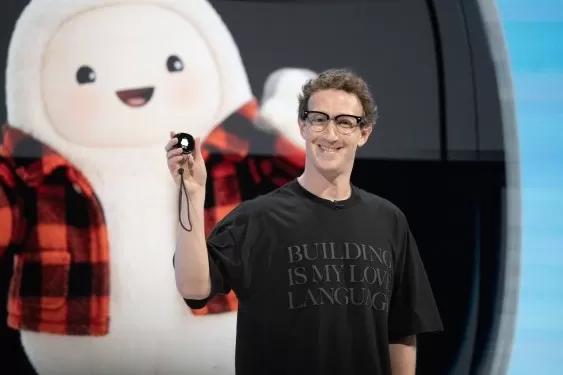 Meta Wants Your Next Gadget to Be Muse-Infused
Meta’s Muse, an AI assistant that handles travel bookings, form submissions, and shopping, has gained widespread adoption, yet a new initiative may especially intrigue developers and hardware enthusiasts.On Friday, Meta unveiled Muse Gadgets, an open
 Wan-Streamer v0.2 delivers ultra-low latency AI chat
As modern technology advances rapidly, human-AI interaction is becoming more common. Traditional video calls often struggle with lag, delays, and audio-visual desynchronization. Wan-Streamer v0.2, the latest release from Tongyi Lab, overcomes these c
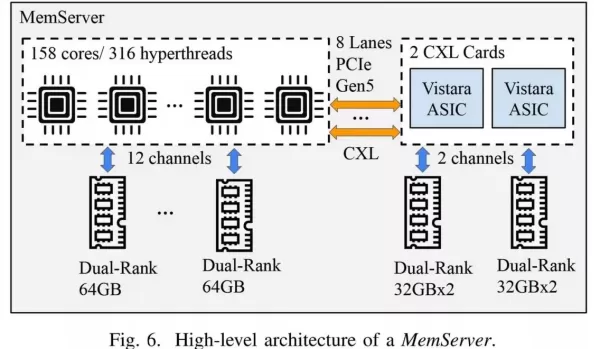 Meta Joins TSMC and Micron to Equip New Servers with Old Memory
As artificial intelligence adoption accelerates worldwide, next-generation DDR5 memory is experiencing a critical supply shortage. To avoid delays in AI data center deployments, Meta has partnered with industry leaders like TSMC and Micron to enginee

2026 Latest Top-rated AI Illustration Tools: Our curated list features the best powerfully designed tools for creating stunning editorial scenes and eye-catching cover art quickly. Each option has gone through rigorous real-world tests, offering a free vs paid comparison to help you find the perfect match for your workflow. Try these must-try solutions today to unlock your AI edge and boost your creative productivity. Explore now at XIX.AI.
10 tools
xix.ai

2026 Latest Top-Rated Best AI Tutors for Exam Prep are here on XIX.AI! Our curated list features powerful game-changing tools that offer free vs paid comparison, real-world tests, and weekly updated rankings. They help boost your writing efficiency, simplify complex topic learning, and unlock your academic potential. Explore now to Discover your perfect exam prep tool and Start creating today to Unlock your AI edge!
10 tools
xix.ai

2026 Latest Best Top-Rated AI Budget Planning Tools for Personal Money Management are here on XIX.AI! This curated collection features powerful, game-changing solutions that help you conduct real-world tests, understand spending habits, and create personalized plans to boost productivity. Enjoy a free vs paid comparison along with detailed rankings. Must-try tools designed to simplify money management and unlock your AI edge. Explore now!
11 tools
xix.ai

2026 Latest Best Top-Rated AI Sleep Tracking Assistants curated for ultimate recovery. This fully updated weekly guide features powerful tools that deliver real-world tests, free vs paid comparison, and detailed rankings to help you find the must-try solution that boosts sleep quality and supports better bedtime habits. Explore now at XIX.AI to Unlock your AI edge.
10 tools
xix.ai

2026 Latest Best Top-Rated AI SQL Copilots for Product and Revenue Analytics! XIX.AI has curated a powerful, game-changing collection of must-try tools that undergo real-world tests through weekly updated rankings. These tools help users boost productivity significantly by accelerating data analysis, streamlining complex queries, and generating accurate insights to drive smarter business decisions. Explore now to Discover your perfect tool for unlocking your AI edge!
14 tools
xix.ai

2026 Latest Best Top-Rated AI Homework Helpers That Teach Core Concepts Not Just Answers Powerful Tools for Students Must-Try Curated List Weekly Updated Free vs Paid Comparison Real-World Tests Accurate Rankings to Help You Unlock Your Full Learning Potential Explore now to Discover your perfect tool for smarter studying.
10 tools
xix.ai

Honestly, I think it's less about survival and more about adaptation. AI might kill junior dev roles, but senior engineers who understand system design and business logic will be even more valuable. Just look at how many new tools are popping up that actually make coding faster—it's not all doom and gloom. 🚀












